Subwoofers
Compact Subwoofer Comparison: REL T/0 MK3, KEF KC62, and SVS 3000 Micro
A measured look at three small sealed subwoofers, what each one actually delivers, and which trade-offs matter in a small room.
Introduction
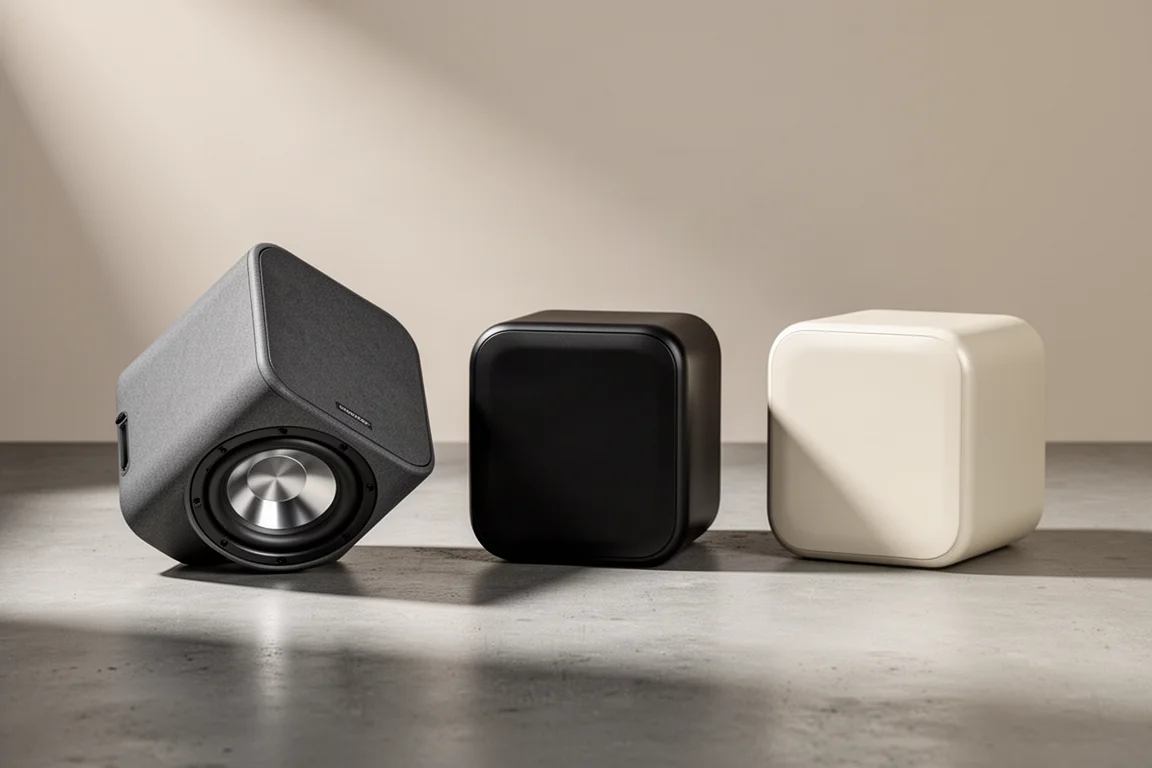
Small subwoofers ask a fair question: how much low end can a genuinely compact cabinet deliver? The REL T/0 MK3 is one answer, and it sits in a category where expectations matter more than specifications. At around $500 it is the least expensive of the three compact subwoofers covered here, and it is also the least ambitious in terms of deep bass. The KEF KC62 and the SVS 3000 Micro cost more and deliver more output, but they take different routes to get there. This comparison looks at measured behaviour and practical use, so you can decide which trade-off fits your room and your speakers.
What These Three Compact Subwoofers Have in Common
All three are small, sealed subwoofers built for rooms where a 12-inch or 15-inch cabinet is not realistic. Each is intended to fill the gap left by compact bookshelf speakers rather than to deliver cinema-style infrasonic output.
They are also measured the same way. CEA-2010A testing establishes how much clean output a subwoofer can produce at a given frequency before harmonic distortion crosses an allowable threshold, which makes the results directly comparable across the three. That shared frame matters, because the differences between them come down to how low they reach, how loud they stay clean, and how consistently they behave as volume rises.
REL T/0 MK3: Linear Response and Clear Limits
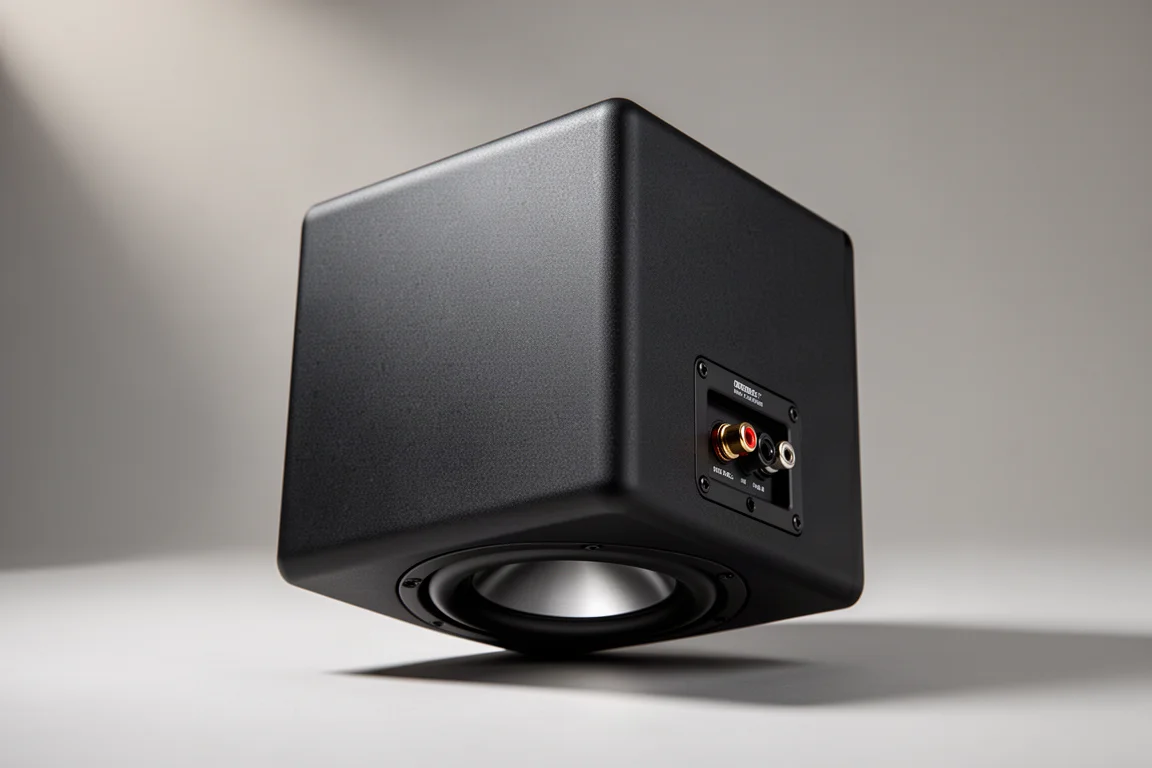
The REL T/0 MK3 uses a sealed enclosure with a 6.5-inch aluminium cone driver mounted downward, powered by a 100 W RMS Class D amplifier. The cabinet weighs roughly 15 lb. Connections include a high-level Neutrik Speakon input alongside low-level RCA and LFE RCA inputs, which gives it flexibility in both stereo and home cinema setups.
REL specifies the -6 dB point at 37 Hz, and the measured result lines up closely with that claim, landing at roughly 35 Hz. Measured F3 sits near 47 Hz, and maximum output reaches about 88 to 89 dB at one metre.
What stands out is consistency. Measured at a low level around 65 dB, at roughly 85 dB, and at maximum output, the frequency response shape stays essentially the same. Many small subwoofers use limiting or DSP to protect the driver, which allows higher output but changes the response shape as volume rises. The REL T/0 MK3 does not do that, so its low-frequency character sounds the same at quiet and loud listening levels. The trade-off is a firm ceiling on overall output.
In CEA-2010A testing, the REL T/0 MK3 did not pass at 20 Hz, which means the fundamental or its harmonics were not clean enough at that frequency. It passed at 25 Hz, but at roughly 10 dB below the SVS 3000 Micro and around 14 dB below the KEF KC62. In practice it does not reach much below 40 Hz in a room. That makes it best understood as a mid-bass module: it covers roughly the 40 to 100 Hz region well, which is exactly where small bookshelf speakers tend to fall away.
KEF KC62: Deeper Low-End Reach at a Higher Price
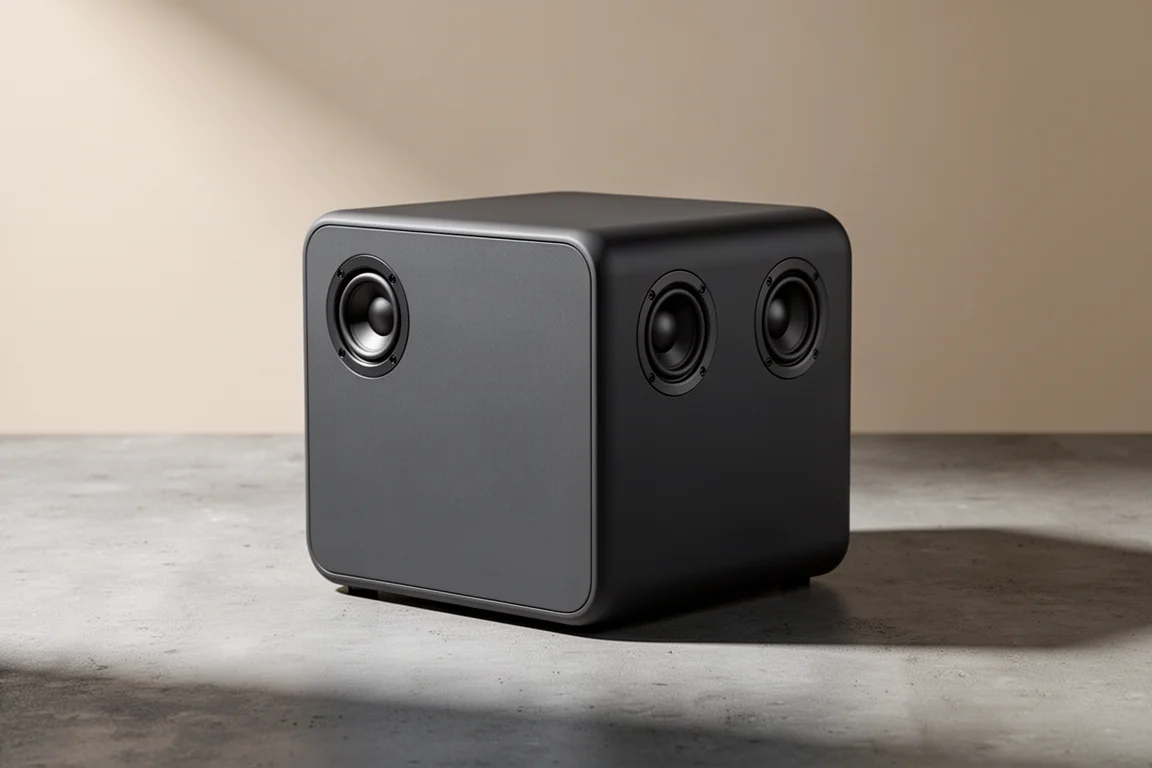
The KEF KC62 is the most expensive of the three at around $1,500, and the measurements justify part of that premium. It passed CEA-2010A testing at 20 Hz, and it performs best of the three on the lowest frequencies. If genuinely deep output from a small cabinet is the priority, this is the one that delivers it.
The KEF KC62 relies on DSP, and that shows up in its group delay. Its group delay tracks lower than the other two until roughly 40 Hz, then ramps up as the DSP works to extend the low end. Its frequency response shape also changes as output increases, with the lowest octaves rolling off more at higher volumes while the 60 to 100 Hz region stays relatively stronger. That is a different listening experience from the REL T/0 MK3: more low-end reach at moderate levels, but a shifting balance as you turn the volume up.
SVS 3000 Micro: More Output, One Integration Caveat
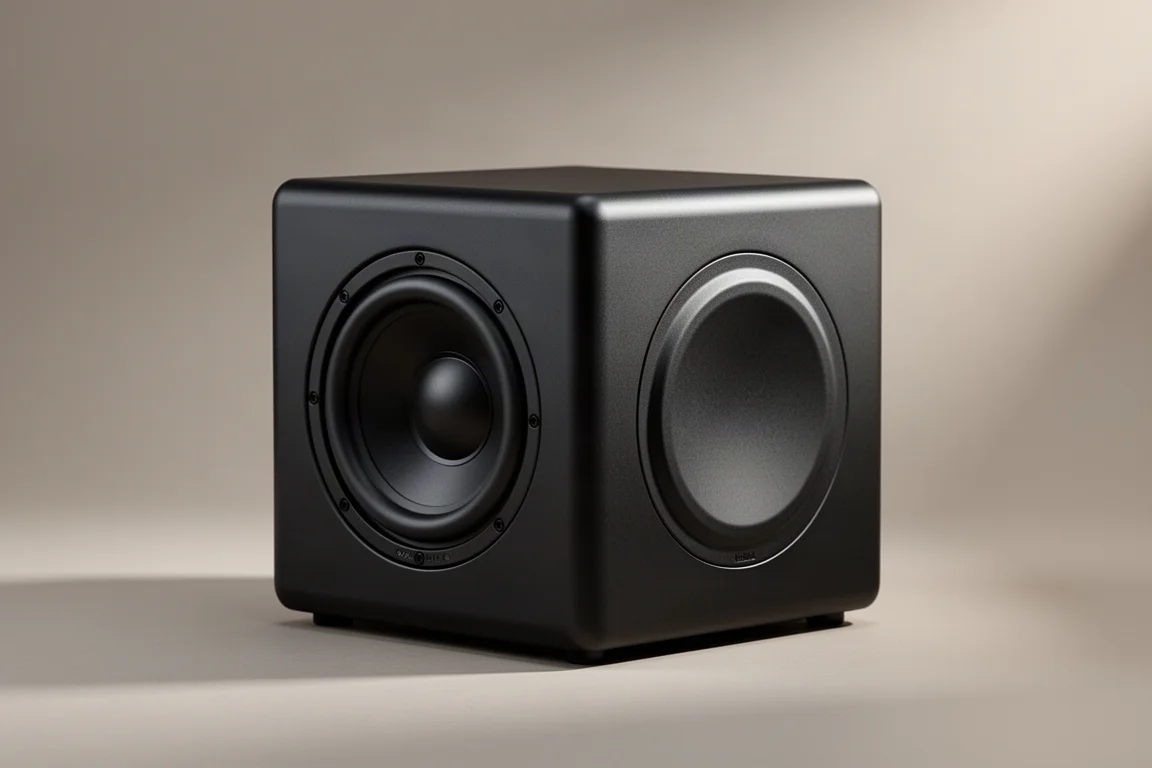
The SVS 3000 Micro sits at around $800, roughly $300 more than the REL T/0 MK3, and it delivers noticeably more output. It passed CEA-2010A testing at 20 Hz, and it produces considerably more mid-bass output than the REL, with a strong showing through the upper bass region.
Its group delay behaviour is the detail worth noting. Between roughly 60 and 80 Hz the SVS 3000 Micro shows a dip of about 8 milliseconds, dropping from around 18 milliseconds to about 10 milliseconds across roughly a third of an octave. That sits inside the region where subwoofers are typically crossed over to main speakers, and a shift in group delay there can make phase alignment with mains or bookshelf speakers harder to achieve. Like the KEF KC62, it also changes its response shape as output increases.
Group Delay and Crossover Behaviour
Group delay is often discussed in vague terms, but the practical question is narrower: does it stay stable through the crossover region? The REL T/0 MK3 holds a relatively flat group delay of around 15 milliseconds through most of its band, trailing down slightly as frequency rises. The KEF KC62 sits lower until about 40 Hz and then climbs, and the SVS 3000 Micro changes character in the 50 to 60 Hz region.
Where group delay is constant, timing can be managed with placement or delay settings. Where it shifts through the crossover region, integration demands more attention. On that measure, the REL T/0 MK3 and the KEF KC62 are the more predictable pair, while the SVS 3000 Micro is the one to plan around.
How the Output Data Compares
Across CEA-2010A testing, the REL T/0 MK3 maintains the profile of a sealed subwoofer without significant DSP shaping: modest output, consistent behaviour. It fails at 20 Hz, where the other two pass. At 25 Hz it is about 10 dB behind the SVS 3000 Micro and roughly 14 dB behind the KEF KC62, and that gap widens as frequency climbs, with the SVS 3000 Micro taking a clear lead in the upper bass.
Put simply: the SVS 3000 Micro wins on outright output capability, the KEF KC62 wins on the lowest frequencies, and the REL T/0 MK3 wins on linearity. Which of those matters most depends on what you listen to and how loudly you listen to it.
Practical Setup Notes for Small Rooms
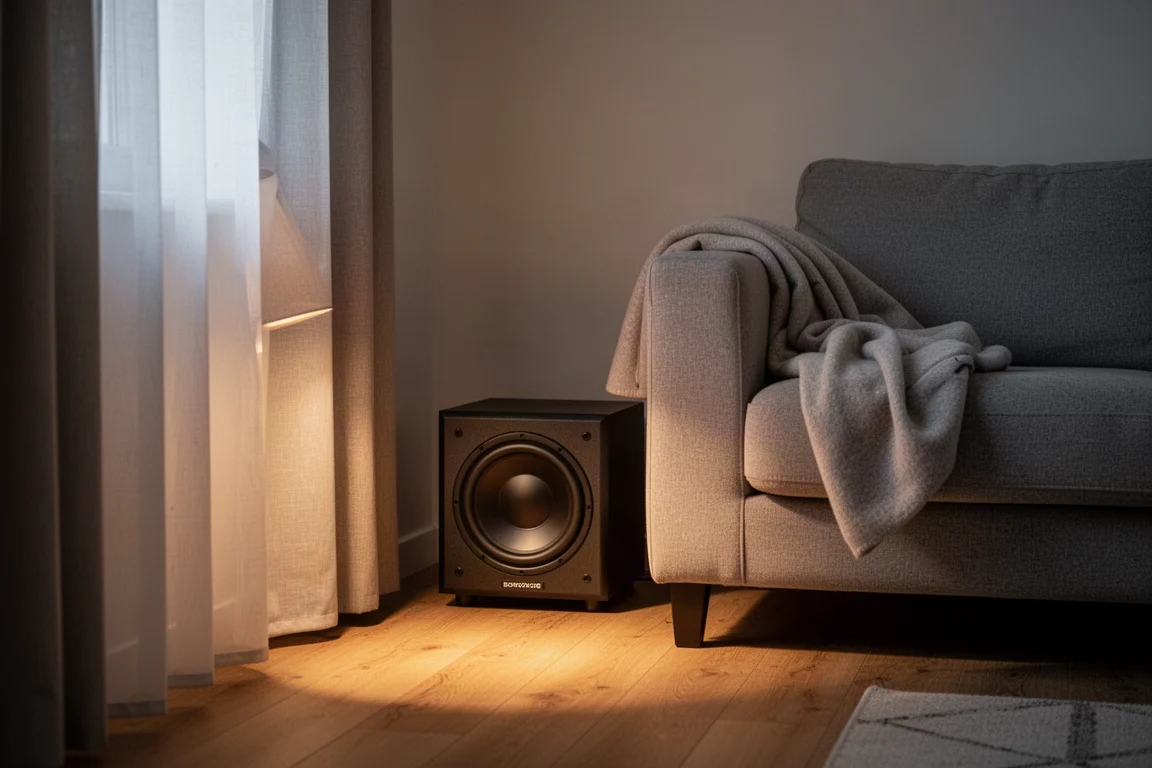
The REL T/0 MK3 makes most sense in a small room paired with compact bookshelf speakers, where the goal is filling the 40 to 100 Hz region rather than pressurising the room. Its high-level Neutrik Speakon input is useful for stereo systems, and the low-level RCA and LFE inputs cover home cinema use.
Room size matters for all three. A larger space will expose the output ceiling of the REL T/0 MK3 quickly, while the KEF KC62 and SVS 3000 Micro have more headroom to work with. Placement and crossover settings will do more for integration than any single specification.
Buying Advice: Choosing Between the Three
At around $500, the REL T/0 MK3 makes sense if you want a very small subwoofer that behaves predictably, keeps the same tonal balance at every volume, and is not asked to deliver deep bass. It is a mid-bass module, and it is honest about that.
The SVS 3000 Micro costs around $300 more and gives you meaningfully more output, including content the REL T/0 MK3 cannot reproduce cleanly at 20 Hz. The KEF KC62 costs around $1,500 and is the choice for the deepest low-frequency output of the three. Both alternatives change their response shape as volume increases, which is the compromise you accept in exchange for that extra capability.
If you want the smallest, most linear option and your material does not demand content below 30 Hz, the REL T/0 MK3 is a coherent purchase. If deep bass matters to you, the extra spend buys real capability rather than just a bigger box.
Conclusion
Three compact subwoofers, three different priorities. The REL T/0 MK3 keeps a consistent response at every volume and covers the mid-bass region well, with output limits that are easy to predict. The SVS 3000 Micro offers more output for more money, with a group delay shift to plan around. The KEF KC62 reaches lowest of the three at the highest price. Match the choice to your room, your speakers, and the content you actually play.
Further reading
Related Reviews
Subwoofers
Arendal 1961 Subwoofer 1S Review: Beautiful Build, Modest Punch at $1,000
A sealed $1,000 subwoofer with a gorgeous cabinet, plus three lower-priced alternatives that deliver more impact for movie nights.
Subwoofers
Arendal Sound 1723 2V Subwoofer Review: Dual 13.8-Inch Drivers Under $3,000
A flagship ported subwoofer with dual opposing 13.8-inch drivers, a 1,200W RMS amplifier, app-based DSP, and a 10-year warranty.
Subwoofers
Ascendo 16 Sub Active Sealed Review: Sealed Bass Built on Real Engineering
A close look at the Ascendo 16 Sub Active Sealed, a 16-inch sealed home theater subwoofer with independently verified measurements, a purpose-built driver, and genuinely controlled output.