Camping Tents
Columbia Mammoth Creek 10-Person Cabin Tent Review: Rain Performance After a Full Night Out
A spacious 10-person cabin tent that kept its fabric, doors, and floor dry through hours of rain, with corners that should be sealed before a wet trip.
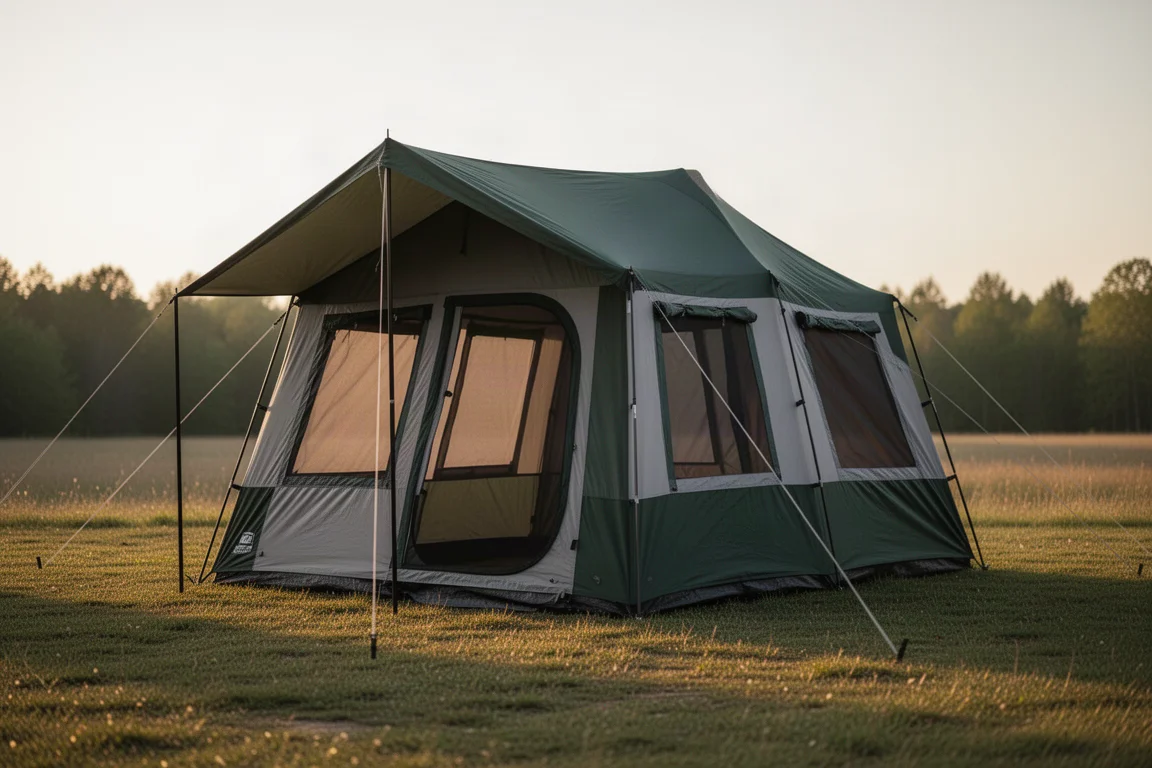
Introduction
The Columbia Mammoth Creek 10-Person Cabin Tent is a large cabin-style shelter built for group and family camping, and the question most buyers ask about a tent this size is simple: does it stay dry when the weather turns? In sustained light to moderate rainfall lasting roughly ten hours, with the ground partially flooded and the tent sitting in about an inch of water, this one held up better than its modest rainfly might suggest. The fabric and floor stayed dry through the first hour of moderate rain, and the interior remained usable overnight even as a small amount of water worked its way in at the corners.
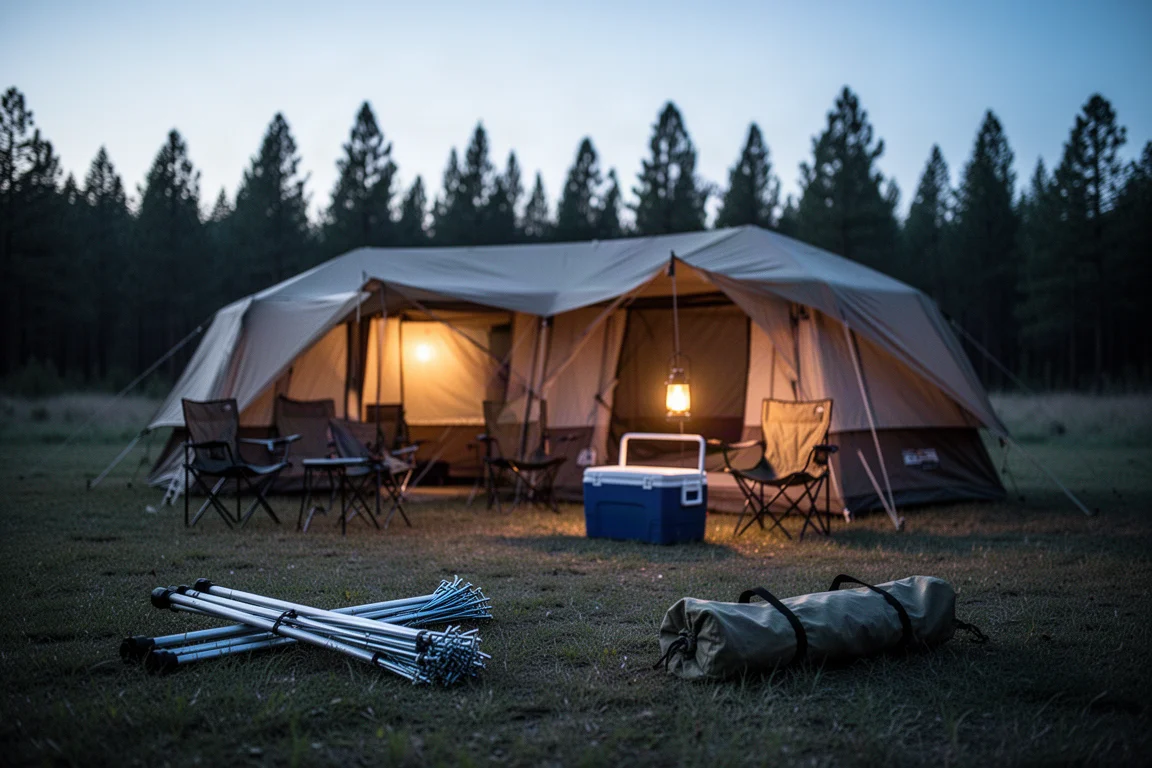
The short version: the main body fabric, the doors, the windows, and the bathtub floor all performed well. The weak point is the corners, which began to leak after a full night of rain and benefit from sealing before a wet-weather trip.
Who This Tent Is For
This tent suits campers who want a spacious cabin layout for several people and who expect to encounter rain rather than avoid it. The 10-person capacity and cabin shape make it a reasonable choice for family trips, group camps, and longer stays where standing room and gear space matter.
It is also a good fit for campers who like ventilation in wet weather. Two tilted pull-out windows can stay open during light to moderate rain without letting water inside, which keeps air moving when the rest of the tent is closed up. Buyers who want a shelter that needs no preparation at all in a downpour should plan on sealing the corners as part of their setup routine.
Main Strengths
Fabric performance is the standout. Even after hours of rainfall, none of the main tent body fabric became wet, including the lighter blue panels that were more exposed to the weather. Both doors stayed dry as well, helped by small details like a zipper pouch for the door and a rain collar that shields the closure.
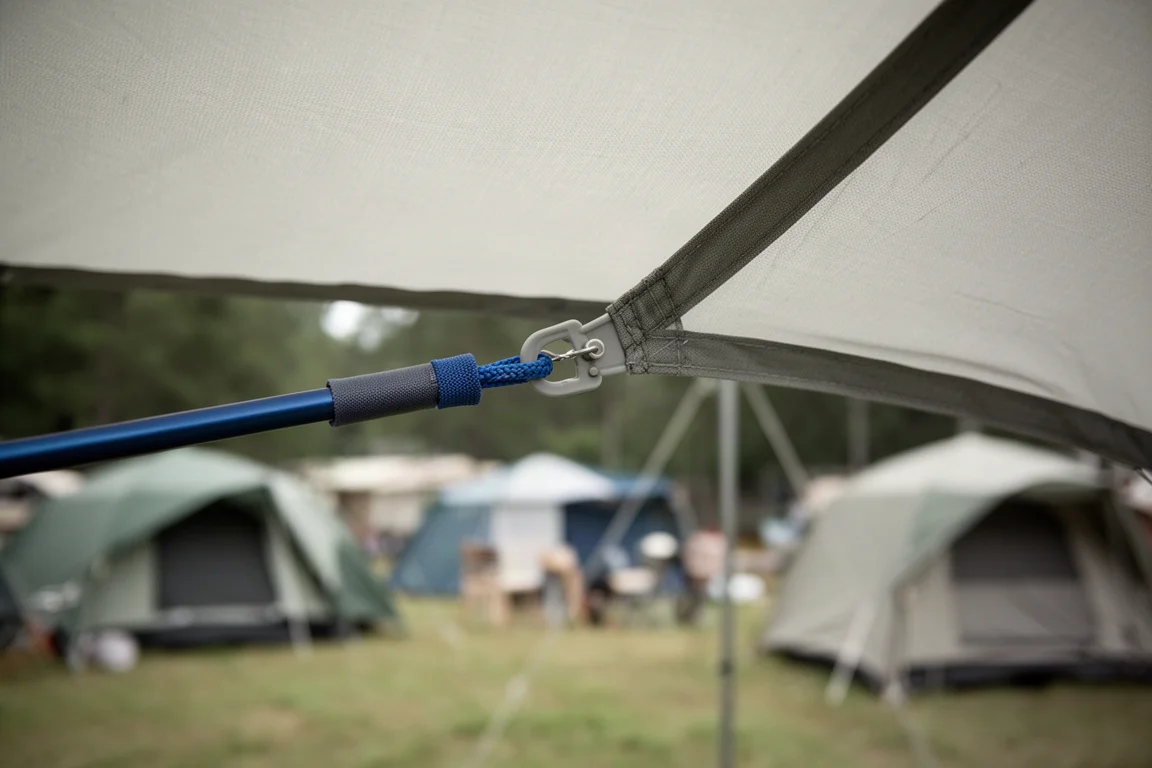
Short exposure results were clean. After 60 minutes of moderate rain, there were no leaks at all: the fabric and flooring were bone dry and even the corners were holding. The curved roof also earns its place, since water runs off instead of pooling at the top where it could weigh the tent down.
Rainfly Coverage, Seams, and Windows
The rainfly covers the tent only partially, which is deliberate. It keeps water from seeping in through the ceiling mesh while leaving the sides ventilated, and the vertical seams on the rainfly are taped. Because the rainfly is fairly small, light rainfall does reach the window mesh, so the standard side windows are best kept closed in rain.
Seam taping across the tent is thorough. The vertical seams on the tent body are taped up to a certain point, the second horizontal seam from the top is taped, and the lowest horizontal seam that joins the blue tent fabric to the flooring is taped as well. The topmost horizontal seam is not taped, but the rainfly protects it and no leaking was observed there. Windows, both doors, and the ground vent are all seam taped.
Flooring and Wet-Ground Performance
The bathtub flooring stands roughly six inches high, which matters when the ground is saturated. With the tent sitting in about an inch of standing water, very little water made its way inside.
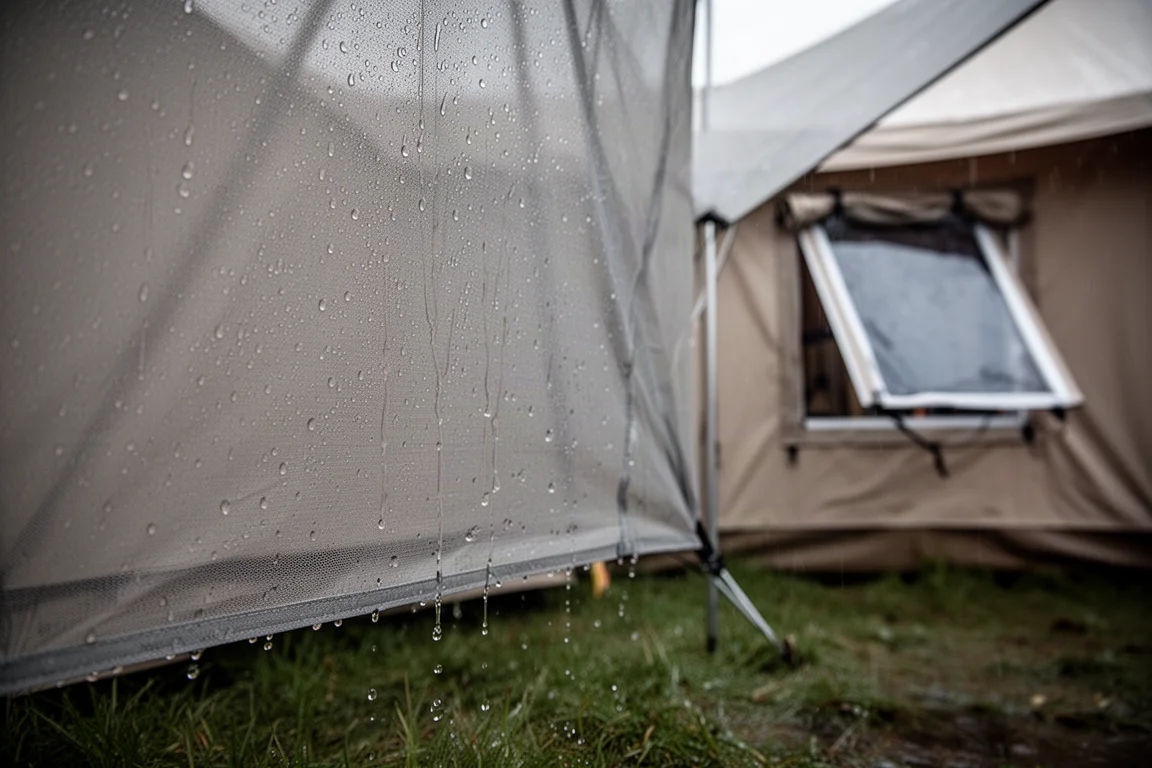
After a full night of light to moderate rain, a small amount of water reached the interior through the corners by morning. The result was manageable rather than flooded, and the corners are the one area that clearly needs sealing. Apart from those corners, no water passed through the flooring and the interior stayed dry through many hours of rainfall. One further drip appeared where a piece of seam tape was slightly damaged, which is an easy fix rather than a structural concern.
Things to Consider Before Buying
The corners are the main item to plan for. They leaked after an entire night of rain, so sealing them before a wet trip is worth the effort.
The rainfly is intentionally small, which means side window mesh can get wet in light rain, and those windows should stay closed during wet weather. The two pull-out windows are the exception and can remain open in light to moderate rain. Finally, seam tape can be damaged over time, and a small damaged section let water drip through, so it is worth inspecting taped seams periodically.
Buying Advice
Approach this tent as a capable three-season shelter that rewards a small amount of preparation. Seal the corners before your first wet trip, keep the standard side windows closed when rain is forecast, and rely on the pull-out windows for airflow.
For campers who want a roomy cabin tent that keeps fabric, doors, and flooring dry through long rainy stretches, this one delivers, provided the corners are sealed. Buyers who want a shelter that needs no preparation at all in heavy rain should weigh that corner detail carefully.
Conclusion
The Columbia Mammoth Creek 10-Person Cabin Tent handled sustained rain well: dry fabric, dry doors, taped seams, and a bathtub floor that kept standing water out. Its corners let in a limited amount of water after a full night of rain and need sealing, and the small rainfly means the side windows should stay closed. With those two points addressed, it is a practical, spacious choice for group camping in changeable weather.
Product link
View more details for Columbia Mammoth Creek 10-Person Cabin Tent
This product is mentioned in the review. Check the specifications, options, and compatibility before buying.
View more details for Columbia Mammoth Creek 10-Person Cabin TentFurther reading
Related Reviews
Camping Tents
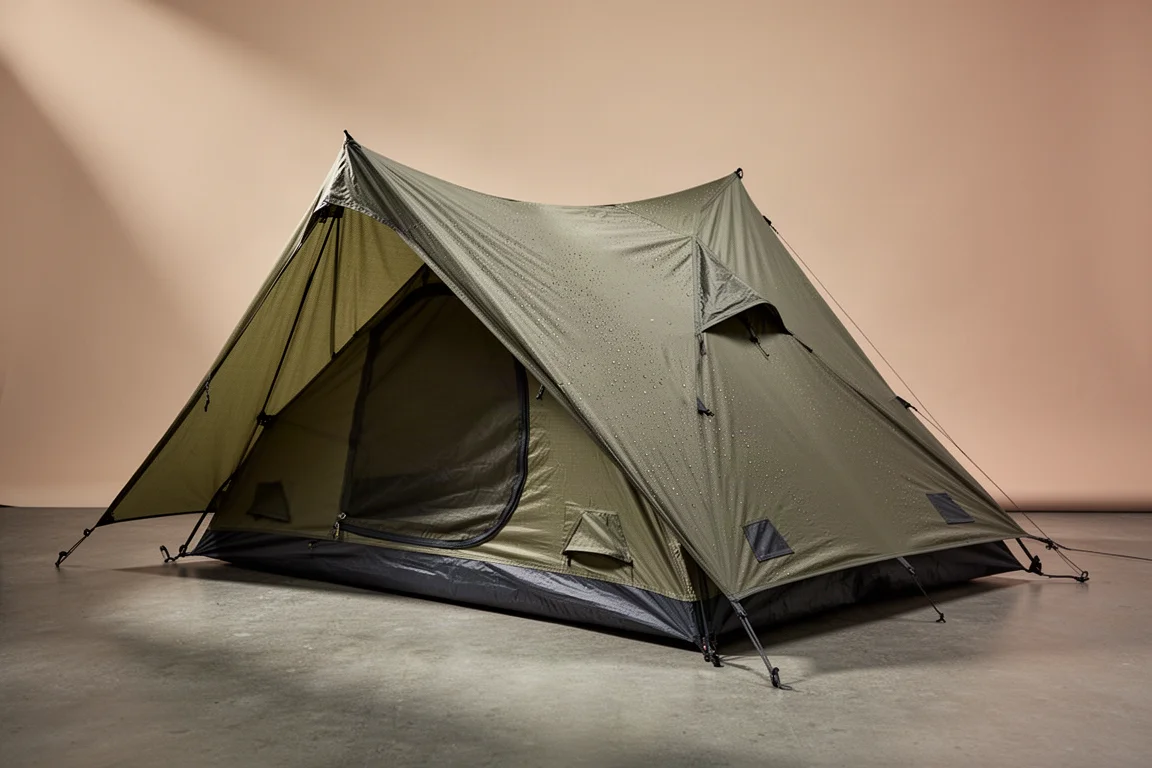
3F UL Gear Taiji Two-Person Tent Review: Field Waterproofing Results and Buying Advice
The Taiji pairs an attached fly with a removable inner, but sustained rain exposed untaped vent seams that need sealing before this shelter can be trusted.
Camping Tents
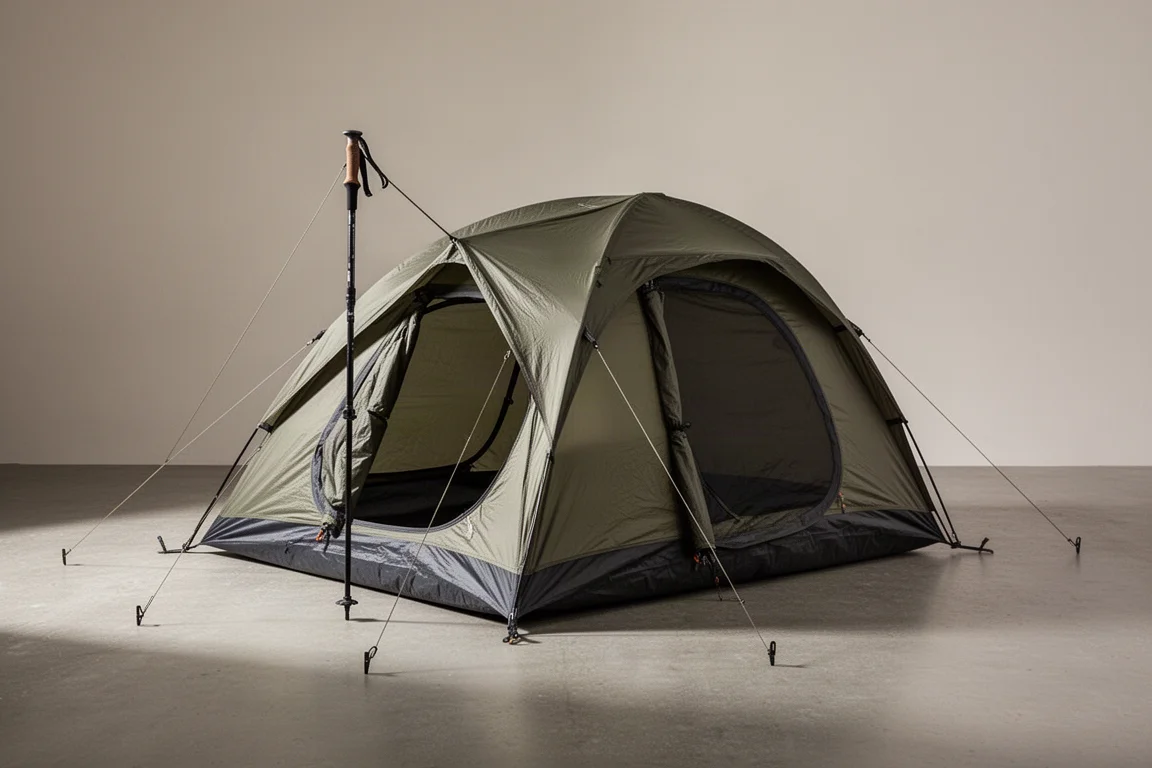
3FUL Gear Lanshan 2 Pro 4-Season Review: A Sub-$200 Single-Wall Trekking Pole Tent
An early look at the 3FUL Gear Lanshan 2 Pro 4-Season, covering its straightforward pitch, generous interior space, and the condensation and seam-sealing questions that come with any single-wall shelter.
Camping Tents
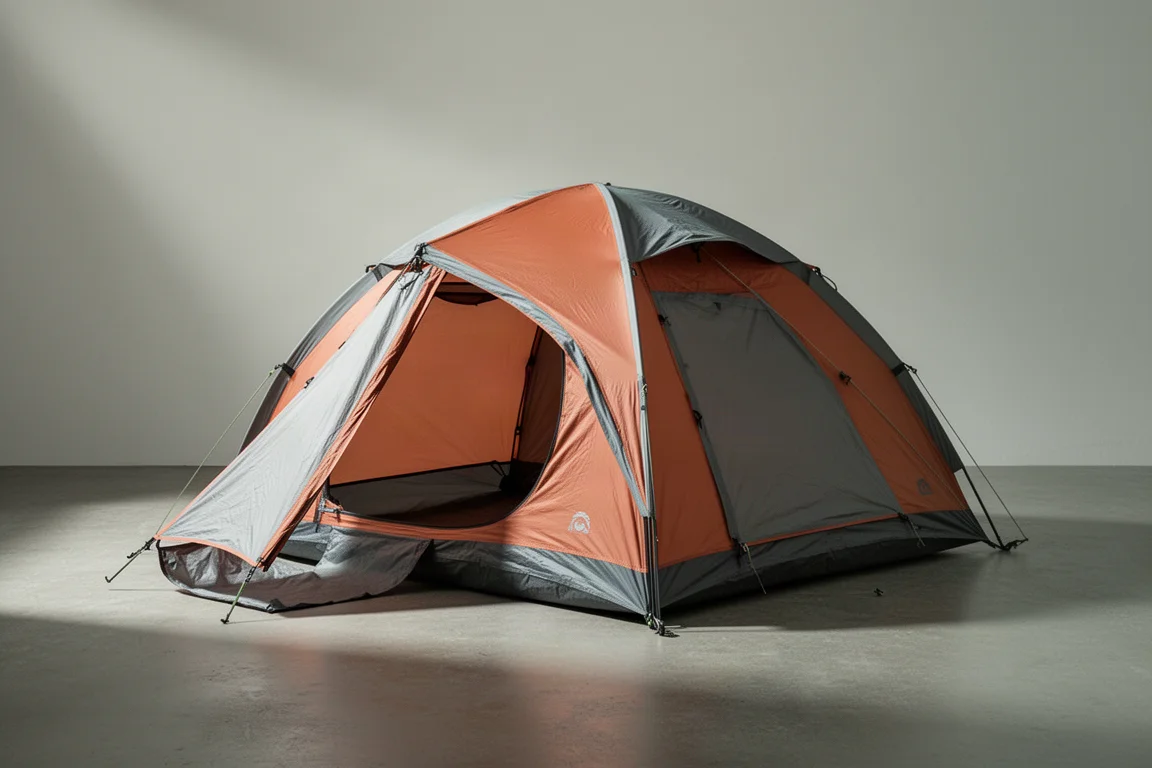
Alps Mountaineering Lynx 1-Person Tent Review: Big Value in a Small Budget Tent
A close look at the Alps Mountaineering Lynx 1-Person Tent, covering real interior dimensions, materials, setup time, ventilation limits, and who should buy it.