Camping Tents
Coleman WeatherMaster 10-Person vs Montana 8-Person Tent: A Practical Family Tent Comparison
Two large Coleman family tents compared on setup time, headroom, floor area, ventilation, rain behaviour, packed size, weight, and price.
Introduction
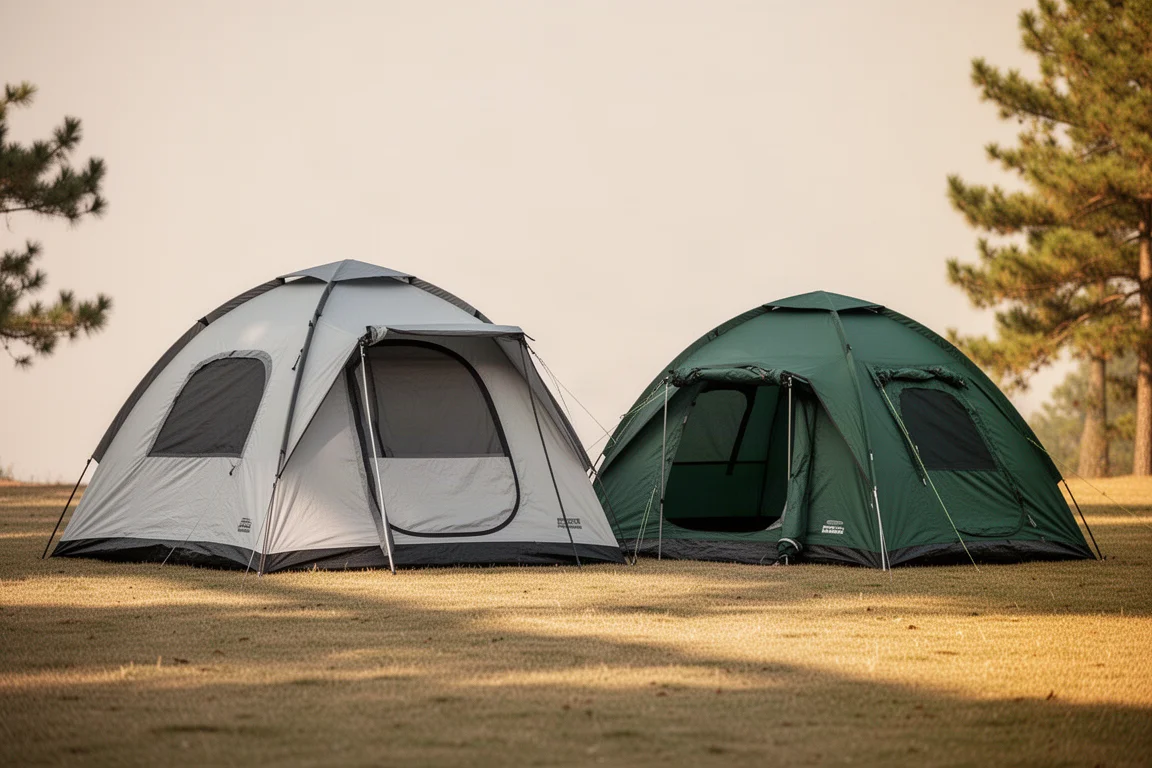
Coleman’s large family tents are built for car campers who want a lot of sheltered floor space without spending a fortune. The WeatherMaster 10-Person Tent and the Montana 8-Person Tent sit at two very different points in that lineup. One is taller, wider, and far better ventilated. The other is lighter, cheaper, and comes with a small covered porch.
This comparison looks at setup and take-down times, pole construction, peak height, floor area, doors, storage, ventilation, rain behaviour, packed size, weight, and price. The goal is straightforward: match the tent to the way you actually camp.
What Sets These Two Tents Apart
The gap shows up before either tent is fully standing. The WeatherMaster pitches in about 19 minutes for one person, while the smaller Montana takes around 22 minutes. Pole material explains most of that. The WeatherMaster uses thicker steel poles that hold their shape and lift into position more predictably. The Montana uses thinner fiberglass poles that flex more, which makes solo pitching fiddlier, though a second pair of hands makes it considerably easier.
The frame sequence differs as well. The WeatherMaster threads three curved poles through sleeves across the width of the tent, adds six more poles on each side, then raises the middle pole first and the two next to it. The Montana threads two long fiberglass poles through two centre sleeves and raises them one at a time until the dome takes shape.
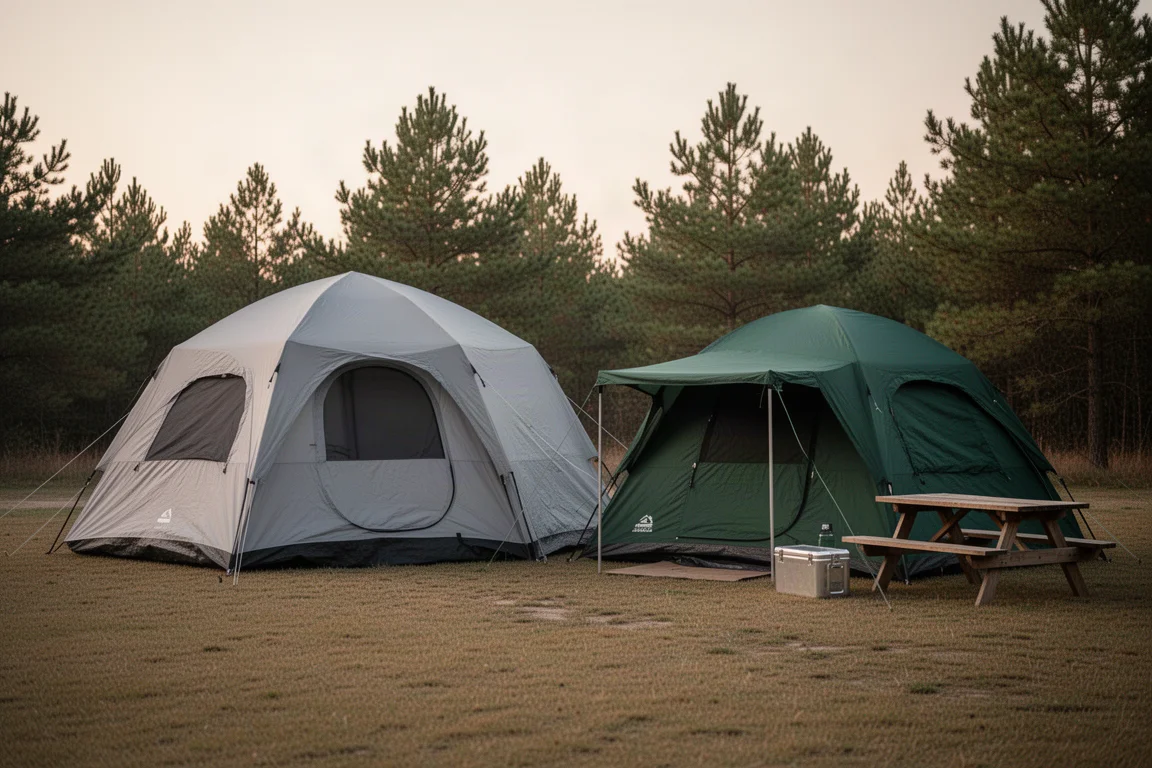
Weight and packed volume follow the same pattern. The WeatherMaster is roughly 30 percent heavier and about 40 percent larger when packed, so it asks more of your car and your back on every trip.
Coleman WeatherMaster 10-Person Tent
The WeatherMaster’s headline number is headroom. Peak height reaches 80.5 inches, tall enough that the top of the tent is only within reach on tiptoes with an arm stretched out. In practice you can stand almost anywhere inside, with only a small triangular space at each side where the walls slope in. The steel pole frame has held up over three to four years of use without a broken pole.
Floor area is the second argument in its favour. Measured at 16 feet 8 inches long by 9 feet 1 inch wide, the base covers 143.6 square feet, roughly 40 percent more than the Montana. Ten regular sleeping pads fit with a little space left over. Three queen beds is the practical maximum, because the footprint is not a clean rectangle, and there is still room left for gear alongside them.
Two doors make a real difference in a tent this size. The front door is a hinged D-door, while the back door is a standard zippered panel held open with two latches. A room divider splits the interior into two rooms, each large enough for five sleeping pads or one queen bed plus an extra pad, with one room accessing each door. The divider is the weakest part of the package, leaving noticeable gaps at the top, along both sides, and at the bottom.
Storage and ventilation are generous. Four pockets sit inside, two on each side, with one e-port at the bottom and one lantern loop at the top centre. Roof mesh is extensive, and six windows around the tent add up to 5,500 square inches of ventilation. Two of those windows are angled, so they can stay open in light to moderate rain and can be zipped shut from inside when the wind picks up.
In rain testing, the WeatherMaster stayed dry for about 15 minutes before the first drop appeared, entering at the front where the rainfly is short. Seam sealant on the most exposed bathtub floor seam should extend that to one to two hours in heavy rain. Packed size is 31 by 18 by 12 inches, total weight is 30.6 pounds, and the price sits close to $300.
Coleman Montana 8-Person Tent
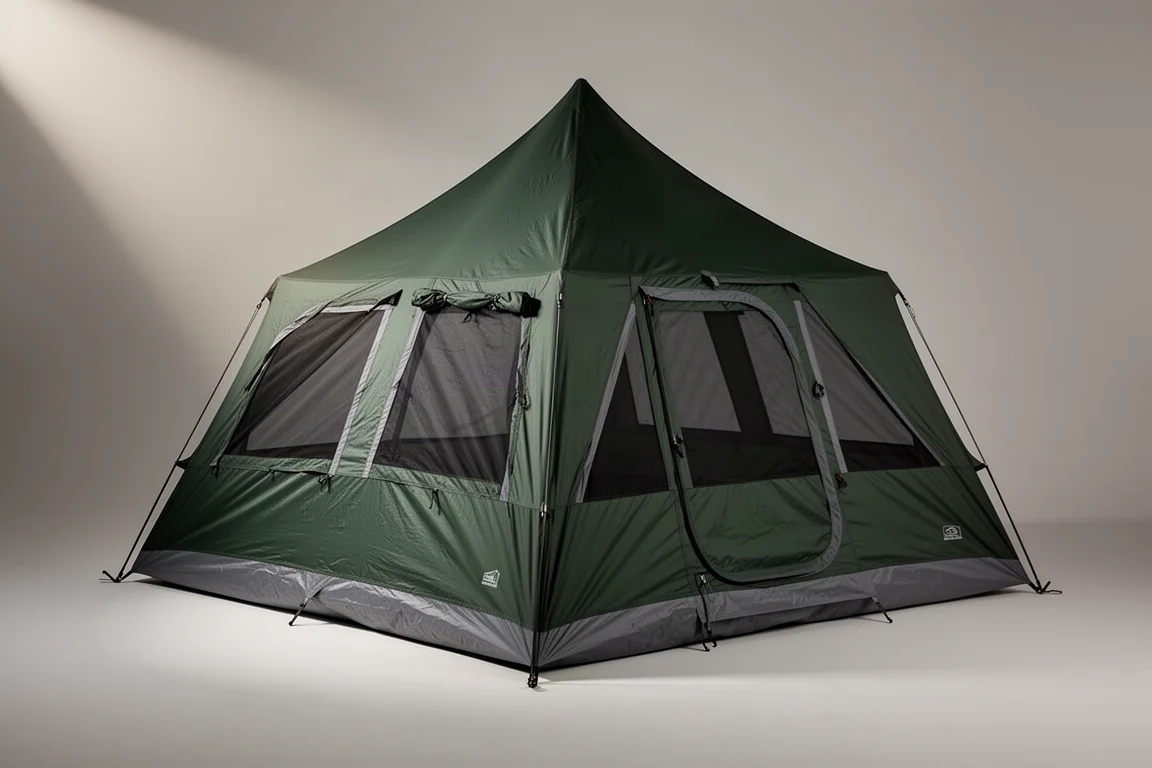
The Montana 8-Person Tent takes the opposite approach. Its two long fiberglass poles are thin and wobbly next to the WeatherMaster’s steel set, and each pole has to be propped up individually until the dome forms, which is a struggle for a shorter camper working alone. Take-down is quicker than setup, though, at around 14 and a half minutes.
Peak height is about 74 inches, enough to stand upright at the centre. Away from the centre it is a different story. The roof mesh droops, and three steps toward the side walls brings the ceiling down to around 61 inches, where a standing camper’s head meets the mesh.
Floor area comes to 103.5 square feet, measured at 15 feet 4 inches long by 6 feet 9 inches wide. Eight regular sleeping pads fill it with nothing left over, and three queen beds fit the same way, edge to edge with no spare space for gear.
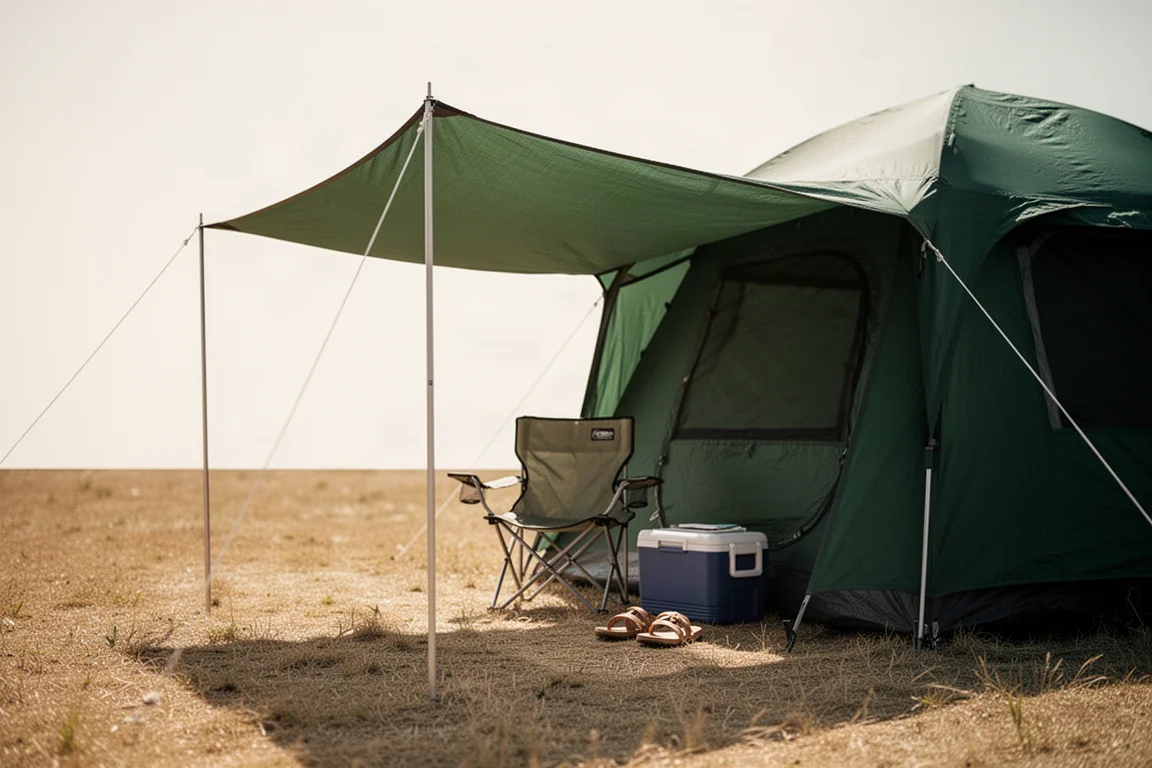
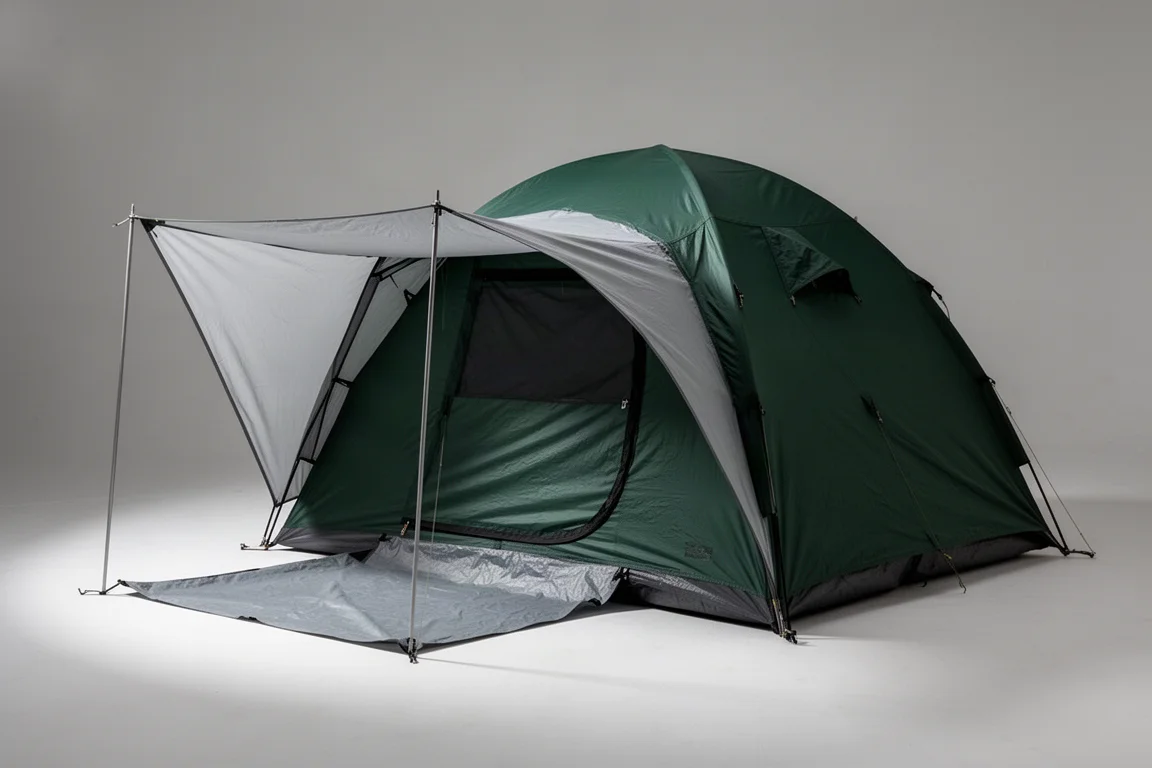
The feature the WeatherMaster lacks is the porch. A canopy roughly 103 inches long and 32 inches wide extends from the front of the tent, providing shade and a place to leave gear or sandals out of the sun. The single entry is a hinged door, supported by two fiberglass poles threaded through dedicated door sleeves.
Inside there are two pockets, one e-port at the bottom, and one lantern loop at the top centre. Ceiling mesh is reasonable, but there are only three windows, adding up to about 2,200 square inches of ventilation, less than half of what the WeatherMaster offers. The side windows are not angled and they took on water during heavy rain, so ventilation is limited once the weather turns. In the same rain test the Montana stayed dry for about 15 minutes, with the first leak arriving at the sides, where the rainfly does not cover the tent body. Seam sealant on the bathtub floor seam should help it last one to two hours in heavy rain.
Packed size is 26 by 15 by 12 inches and weight is 23.4 pounds, both noticeably friendlier than the larger tent. Price is the other advantage, at slightly over $100.
Setup and Take-Down Compared
Setup favours the WeatherMaster at about 19 minutes against 22 for the Montana, while take-down flips the order. The Montana comes down in roughly 14 and a half minutes and the WeatherMaster in about 16. Both tents use Coleman’s carry bag design, which has a strip along the bottom you can tear out to widen the opening. Even with that strip removed, the WeatherMaster’s bag stays a tight fit, because there is simply more fabric and more poles to pack away.
Peak Height and Livable Space
Peak height is 80.5 inches on the WeatherMaster and about 74 inches on the Montana, and that gap understates the real difference. The WeatherMaster’s three-pole structure keeps the ceiling high across most of the floor, so standing room extends almost everywhere except small triangular pockets at the sides. On the Montana, full height exists only along the centre line. Move three steps toward the sides and the drooping mesh drops the usable ceiling to around 61 inches.
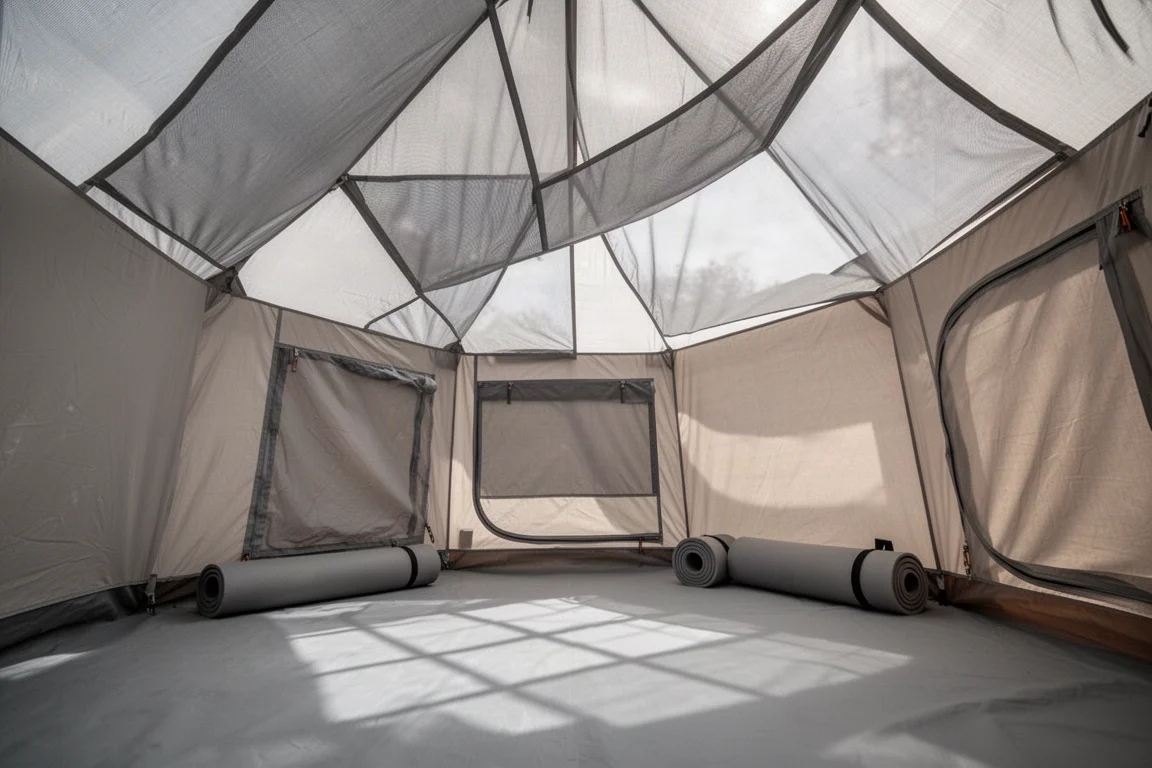
For taller campers, or anyone who spends a rainy afternoon standing and moving around inside, that difference in livable space is likely to matter more than raw floor area.
Ventilation and Rain Performance
Hot weather is where the two tents separate most clearly. The WeatherMaster combines extensive roof mesh with six windows for a total of 5,500 square inches of ventilation. The Montana has a decent amount of ceiling mesh but only three relatively small windows, for about 2,200 square inches.
Wet weather widens the gap further. The WeatherMaster’s two large angled windows can stay open in light to moderate and even heavy rain, and can be closed from inside when the wind rises. The Montana’s side windows are flat rather than angled, so they cannot be left open in a downpour, and they soaked through during heavy rain. Both tents stayed dry for roughly 15 minutes before the first drop of water entered. On the Montana the leak began at the sides, where the rainfly does not cover the body of the tent. On the WeatherMaster it began at the front, where the rainfly is short. Seam sealant applied to the most vulnerable bathtub floor seam is the sensible upgrade for either tent, and should extend dry performance to one to two hours in heavy rain.
Doors, Storage, and Interior Layout
The WeatherMaster offers two doors, one at each end, with a hinged D-door at the front and a zippered door with two latches at the back. The Montana has a single hinged door at the front, created with two fiberglass poles in dedicated sleeves. Both tents include one e-port at the bottom and one lantern loop at the top centre. Storage differs: four pockets in the WeatherMaster, two in the Montana. The WeatherMaster also includes a room divider that splits the tent into two rooms of roughly equal size, each with access to a door, though the divider leaves gaps at the top, sides, and bottom. The Montana has no divider.
Overall Buying Advice
If space, headroom, and ventilation are the priorities, the WeatherMaster 10-Person Tent is the more capable option. It stands taller across more of the floor, offers 143.6 square feet of base area, adds a second door, a room divider, two extra pockets, and more than twice the ventilation. It also costs close to $300, weighs 30.6 pounds, and packs down around 40 percent larger than the Montana.
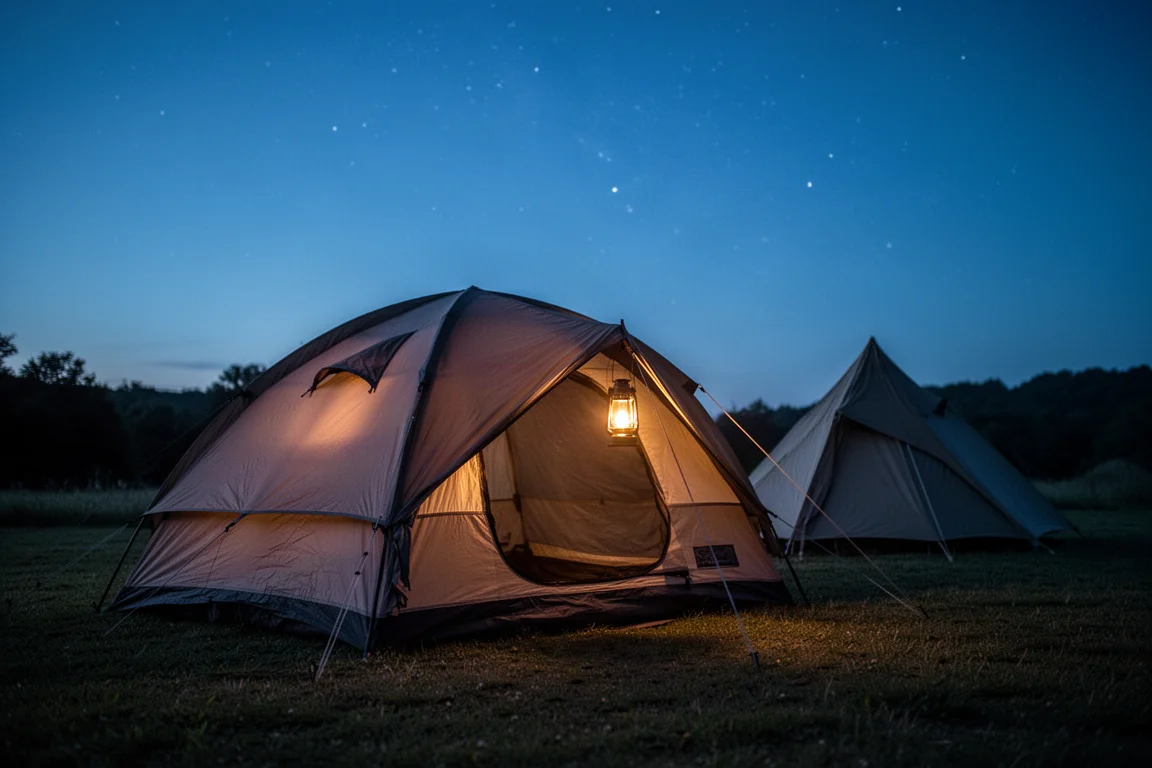
The Montana 8-Person Tent makes more sense on a tighter budget. At slightly over $100 it delivers a usable 103.5 square feet, a hinged door, a shaded porch the WeatherMaster does not have, and a 23.4 pound weight that is far easier to handle. The trade-offs are the thinner fiberglass poles, the lower usable ceiling away from the centre, a single door, and limited ventilation when it rains.
A practical way to decide: if you camp close to the car, want room to stand and move, and expect warm or wet weather, the WeatherMaster earns its price. If you want a lighter, cheaper family tent with a porch for shade and gear, the Montana covers the basics well.
Conclusion
Both tents come from the same family of designs, but they solve different problems. The WeatherMaster 10-Person Tent is the roomier, better ventilated option with two doors and a divider, at the cost of weight, packed size, and price. The Montana 8-Person Tent is the lighter, more affordable choice with a porch, as long as you can live with one door, thinner poles, and less ventilation. Match the tent to your campsite, your vehicle, and your budget, and either one will do the job it was built for.
Further reading
Related Reviews
Camping Tents
3F UL Gear Taiji Two-Person Tent Review: Field Waterproofing Results and Buying Advice
The Taiji pairs an attached fly with a removable inner, but sustained rain exposed untaped vent seams that need sealing before this shelter can be trusted.
Camping Tents
3FUL Gear Lanshan 2 Pro 4-Season Review: A Sub-$200 Single-Wall Trekking Pole Tent
An early look at the 3FUL Gear Lanshan 2 Pro 4-Season, covering its straightforward pitch, generous interior space, and the condensation and seam-sealing questions that come with any single-wall shelter.
Camping Tents
Alps Mountaineering Lynx 1-Person Tent Review: Big Value in a Small Budget Tent
A close look at the Alps Mountaineering Lynx 1-Person Tent, covering real interior dimensions, materials, setup time, ventilation limits, and who should buy it.