Camping Tents
Coleman WeatherMaster 10-Person Tent Review: Space, Setup, and Rain Performance
A practical look at the Coleman WeatherMaster 10-Person Tent, covering setup times, interior space, ventilation, rain behaviour, and how the materials hold up over years of use.
Introduction
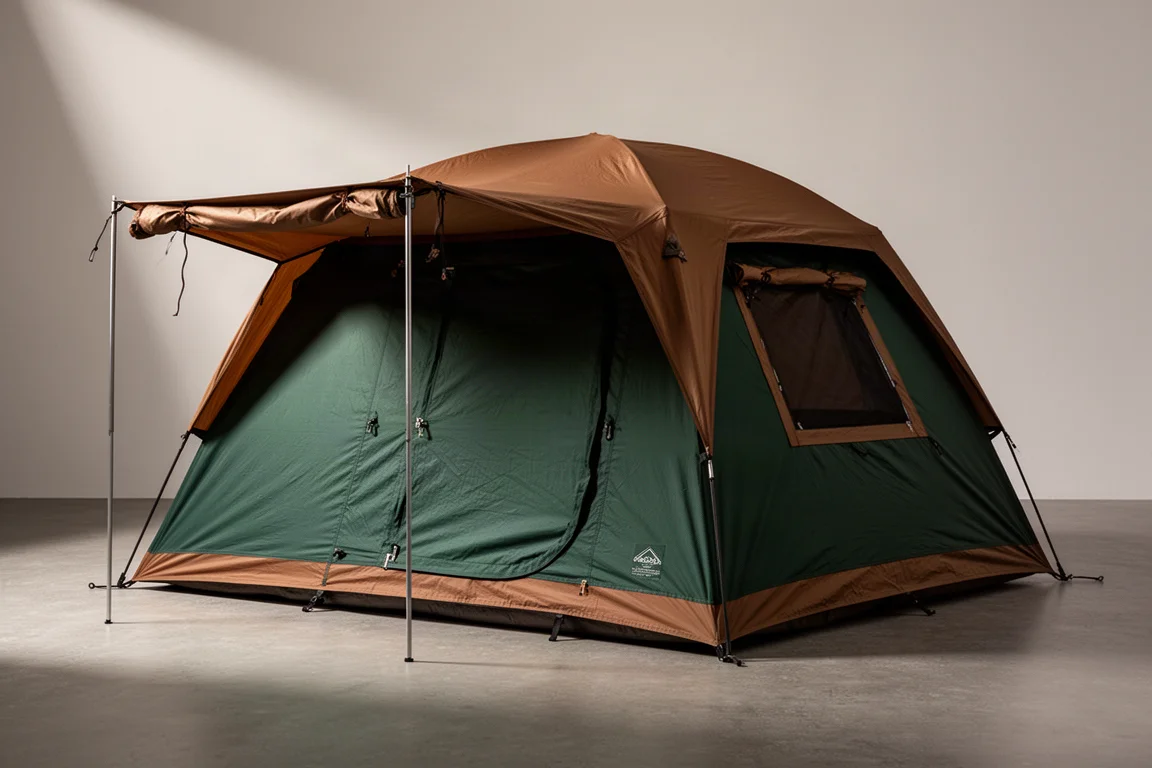
A ten-person tent has to do more than sleep a crowd. It needs to go up without an argument, stay comfortable through a hot afternoon, and keep the weather out when the forecast turns. The Coleman WeatherMaster 10-Person Tent aims at exactly that balance, with an 80.5-inch peak height, a hinged D-door, six windows, and a removable room divider that splits the interior into two rooms.
This review covers what matters most in daily use: how long setup and pack-down take, how the interior actually feels with mattresses inside, how ventilation behaves in warm and wet conditions, how the fabric and floor handle rain, and how the poles and stitching hold up after several seasons.
Who this product is for
This tent suits families and groups who drive to their campsite and want a tall, roomy shelter with a familiar layout. The floor takes three queen-size camping mattresses, or up to ten single sleeping pads or sleeping bags, and the room divider lets you run it as two separate sleeping areas or as one bedroom plus a living space. It is a car camping tent rather than a backpacking one, given a packed size of about 31 by 18 by 12 inches and a total weight of roughly 30.5 pounds.
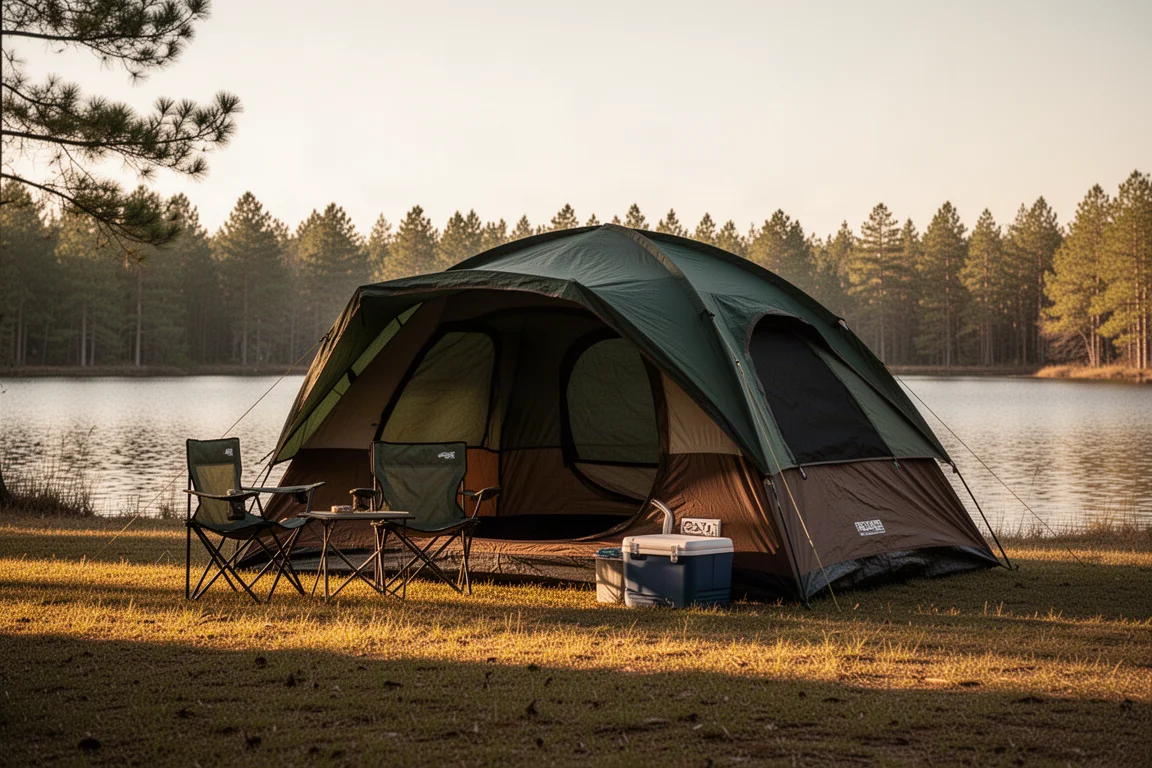
It is also a realistic option for one person to manage alone. Setup takes about ten minutes with two people and roughly 19 minutes solo, and pack-down runs about eight and a half minutes for a pair or around 16 minutes for one person, not counting washing and drying. The carry strap is barely long enough to work as a shoulder strap, so expect to carry it by the handles or with a second pair of hands.
Main strengths
The WeatherMaster stands out in three areas: a genuinely tall interior, a pitching process that a single person can complete, and a price-to-feature ratio that is hard to argue with for a tent this size.
A tall, livable interior
The peak height is 80.5 inches, which is enough for most adults to stand upright in the centre and even to reach the ceiling on tiptoes. The lowest point inside is about 58 inches at the four corners, so you may need a small step sideways to stand fully at the very edges, but the majority of the floor allows standing. The hinged D-door measures about 47 by 30 inches and sits about 59 inches from the ground to the top, so a slight duck is needed on the way in and out. The rear door is larger at about 57 by 34 inches and about 65 inches tall, and it uses a zip rather than a hinge.
The interior runs about 16 feet 8 inches at its longest and about 9 feet 1 inch at its widest, though the base is not a clean rectangle, which is why three queen-size mattresses is the realistic maximum. With the divider in place, each room fits five sleeping pads or one queen mattress plus an extra pad. Four triangular pockets, roughly 20 by 10 inches each, are spread across both sides, and there is a single lantern loop at the centre of the ceiling plus a zippered e-port at the base.
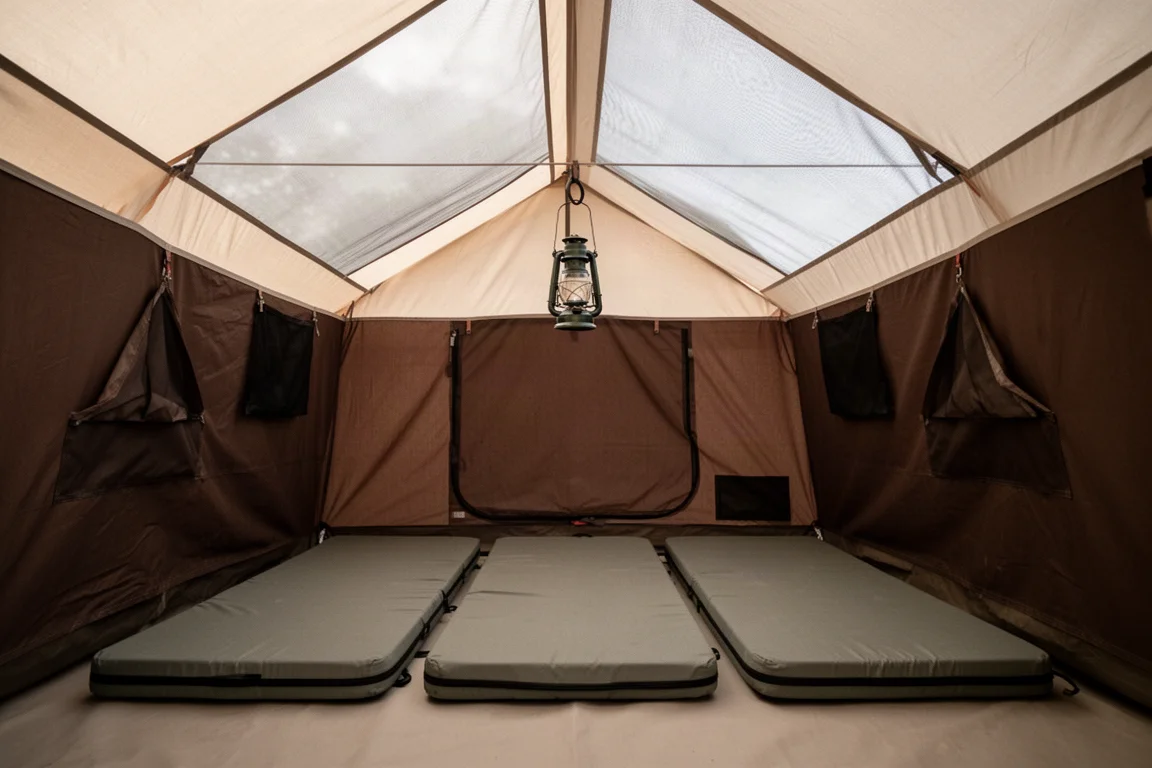
The two doors sit on opposite lengths of the tent, so each room has its own exit when the divider is up. That layout is convenient for families, since nobody has to cross a sleeping area to reach the door at night.
Setup that one person can manage
The frame uses three slightly curved steel poles that slide through sleeves, plus six straight steel poles that attach to them before the whole structure is stood upright and pinned at the base. Fiberglass poles handle the hinged D-door and the two angled windows, and pole clips connect the body to the nearest steel pole. The rainfly drapes over the top and secures with S-hooks and Velcro, and staking uses ten steel stakes around the base plus six yellow stakes for the guylines, which arrive pre-attached. Pole sleeves are snag-free, and the whole process stays manageable solo, even for a shorter camper.
Weather protection and materials
The floor is polyethylene, with a bathtub section that rises about seven and a half inches up the walls. In an hour of moderate to heavy rain directed at the front length, no water seeped through that bathtub floor, and it stayed dry. The main body is 68D polyester, while the rainfly is 75D polyester taffeta rated at 450mm of water resistance. Stitching is consistent and inverted throughout, including on the doors and windows, and the zippers are smooth with no leaking through them.
The weak point shows up in sustained rain. Water began entering through the untaped inverted seam where the darker brown body fabric meets the bathtub floor after roughly 15 minutes of moderate to heavy rain, and the exposed brown fabric felt slightly damp after a full hour of it. In an hour of light rain, that same fabric stayed dry. Wind behaviour is reasonable rather than exceptional: six guylines held the tent steady in light winds, though confidence drops in moderate to stronger conditions given the tall profile.
Things to consider before buying
Ventilation and window size
There is a large amount of mesh across the roof, and the rainfly comes off completely when skies are clear, which makes for excellent airflow and a clear view of the night sky. The two angled windows, each roughly 60 by 17.5 inches, can stay open in moderate rain, which is a real advantage when you want air movement without letting water in. The remaining windows, about 30 by 28.5 inches each, are smaller than ideal on hot days, and there are no dedicated vents, so most airflow depends on the angled windows and the gap between the rainfly and the ceiling mesh. The mesh itself has fairly large holes, so it is not no-see-um grade.
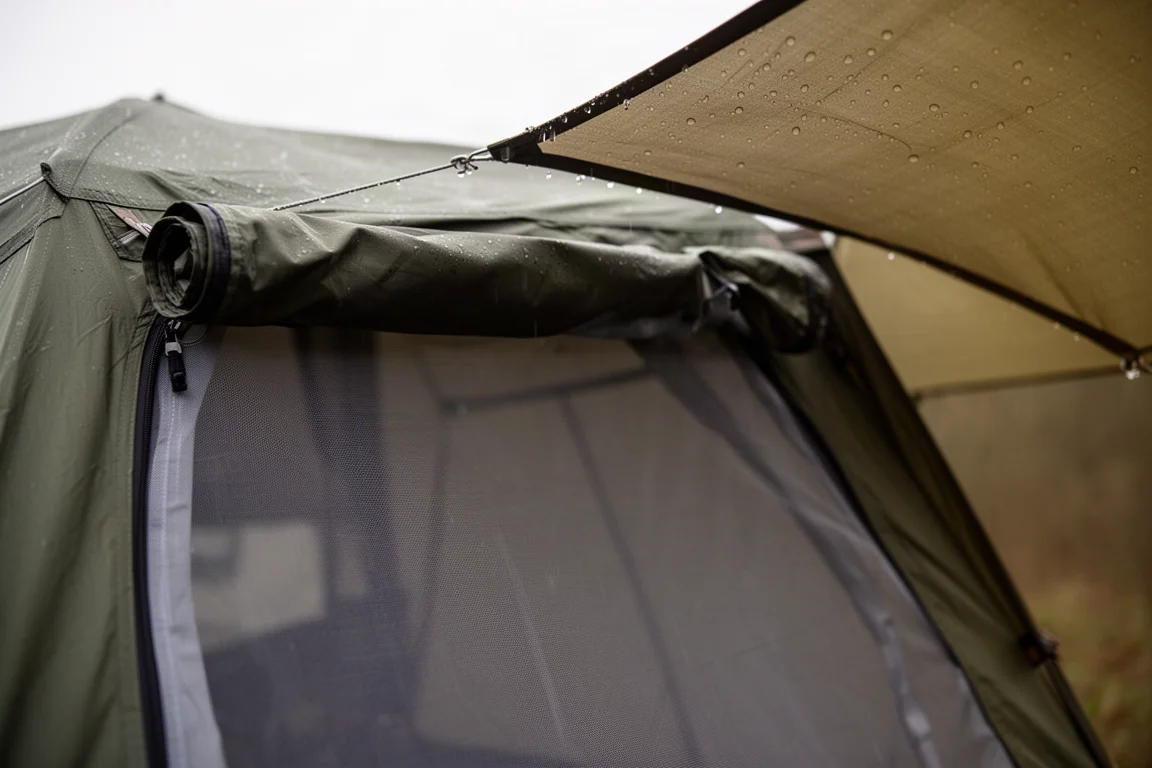
If heavy wind drives rain sideways, the angled windows need to be zipped shut along with the rest, because the rainfly is fairly compact and water can reach the door and window mesh.
Long-term ownership notes
After more than two years of regular use, a few wear points appear. Some steel poles with the silver push-button connectors become stiff to assemble, though the frame still feels sturdy once it is up. The thin fiberglass pole that bends around the curved section of the hinged D-door eventually cracked and was repaired with duct tape, and the pole tip pulled out and lodged in the rubber gasket without affecting function. The guylines are not reflective, which is worth noting for dark campsites.
Two smaller annoyances are worth planning around. The room divider leaves noticeable gaps at the sides, top, and bottom, so it separates space rather than sealing it, and the carry bag is a tight fit when everything goes back in.
Buying advice
For family car camping, this tent makes a strong case. The interior height, the hinged door, the two-room layout, and the solo-friendly pitching process cover the things people actually complain about in large tents, and the value for the feature set is a genuine part of the appeal. If you want to remove the main drawback, sealing the inverted seam at the floor yourself addresses the one place where water gets through in heavy rain.
Choose something else if your trips regularly involve prolonged downpours or strong exposed wind, or if you camp in hot, bug-heavy conditions where you need maximum mesh area and no-see-um protection. For fair-weather family weekends with occasional rain, the WeatherMaster delivers a lot of usable space for the money.
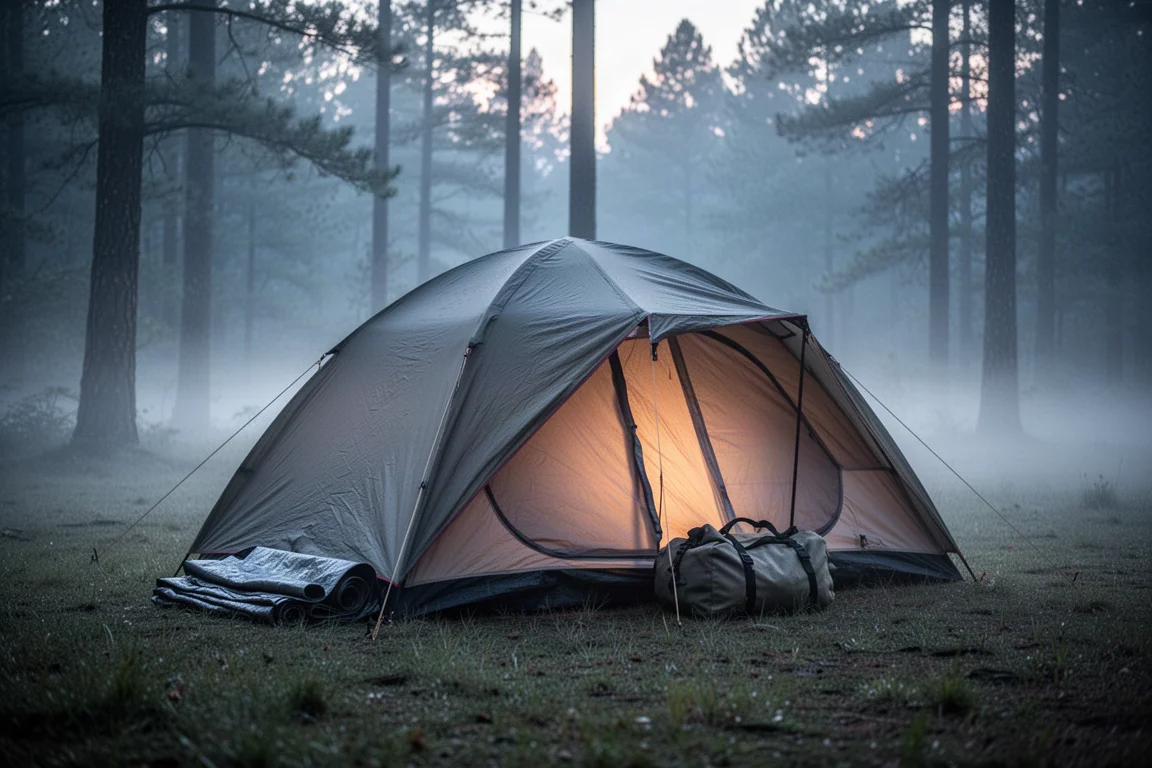
It also helps to think about how you will move it. At around 30.5 pounds and a bulky packed size, this is a tent that lives in a vehicle rather than on your back, and having a second person for setup turns a 19-minute job into a ten-minute one.
Conclusion
The Coleman WeatherMaster 10-Person Tent gets the fundamentals right. It is tall enough to stand in, large enough for three queen mattresses or ten sleeping pads, easy enough for one person to pitch, and well equipped with a hinged D-door, angled windows that stay open in rain, a room divider, pockets, a lantern loop, and an e-port. The bathtub floor held up completely in testing, and the build quality has survived years of use with only minor pole wear.
The trade-offs are clear and mostly manageable: an untaped inverted seam that lets water in during heavy rain, smaller non-angled windows, coarse mesh, a divider with gaps, and a tight carry bag. Seal that seam and the list of real complaints gets very short, which is why this tent remains an easy recommendation for family camping on a sensible budget.
Product link
View more details for Coleman WeatherMaster 10-Person Tent
This product is mentioned in the review. Check the specifications, options, and compatibility before buying.
View more details for Coleman WeatherMaster 10-Person TentFurther reading
Related Reviews
Camping Tents
3F UL Gear Taiji Two-Person Tent Review: Field Waterproofing Results and Buying Advice
The Taiji pairs an attached fly with a removable inner, but sustained rain exposed untaped vent seams that need sealing before this shelter can be trusted.
Camping Tents
3FUL Gear Lanshan 2 Pro 4-Season Review: A Sub-$200 Single-Wall Trekking Pole Tent
An early look at the 3FUL Gear Lanshan 2 Pro 4-Season, covering its straightforward pitch, generous interior space, and the condensation and seam-sealing questions that come with any single-wall shelter.
Camping Tents
Alps Mountaineering Lynx 1-Person Tent Review: Big Value in a Small Budget Tent
A close look at the Alps Mountaineering Lynx 1-Person Tent, covering real interior dimensions, materials, setup time, ventilation limits, and who should buy it.