Camping Tents
Coleman Sundome 2-Person Tent Review: Compact, Affordable, and Quick to Pitch
A practical look at the Coleman Sundome 2-Person Tent, covering setup speed, real interior space, ventilation, build quality, and the trade-offs worth knowing before you buy.
Introduction
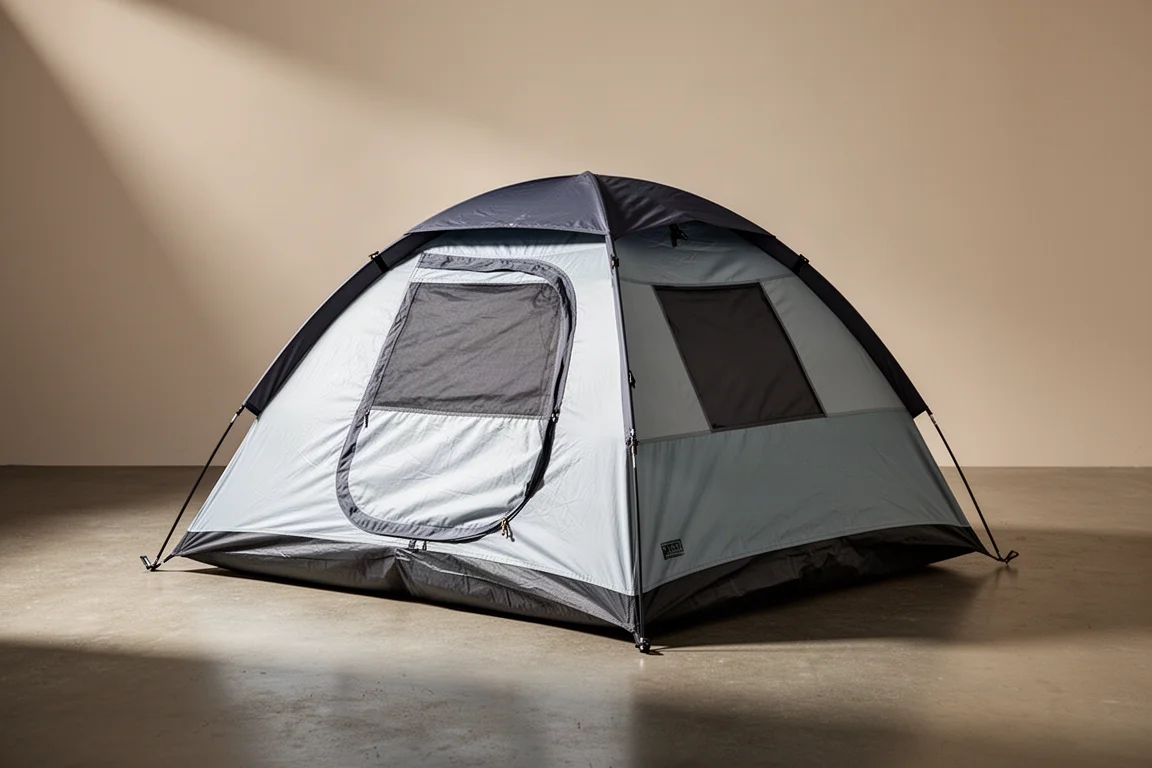
The Coleman Sundome 2-Person Tent is a compact dome tent built for campers who want simple, affordable shelter that goes up quickly and packs away without a fight. It is not a backpacking tent and it does not pretend to be one. What it offers is a low price, a straightforward pole-and-sleeve pitch, and a floor plan that is more flexible than the two-person label suggests.
This review covers the areas that matter most in daily use: setup and take down, interior space, ventilation, and build quality. It also flags the trade-offs worth knowing before you buy, particularly if you are tall or you plan to sleep on a thick inflatable mattress.
Who This Tent Is For
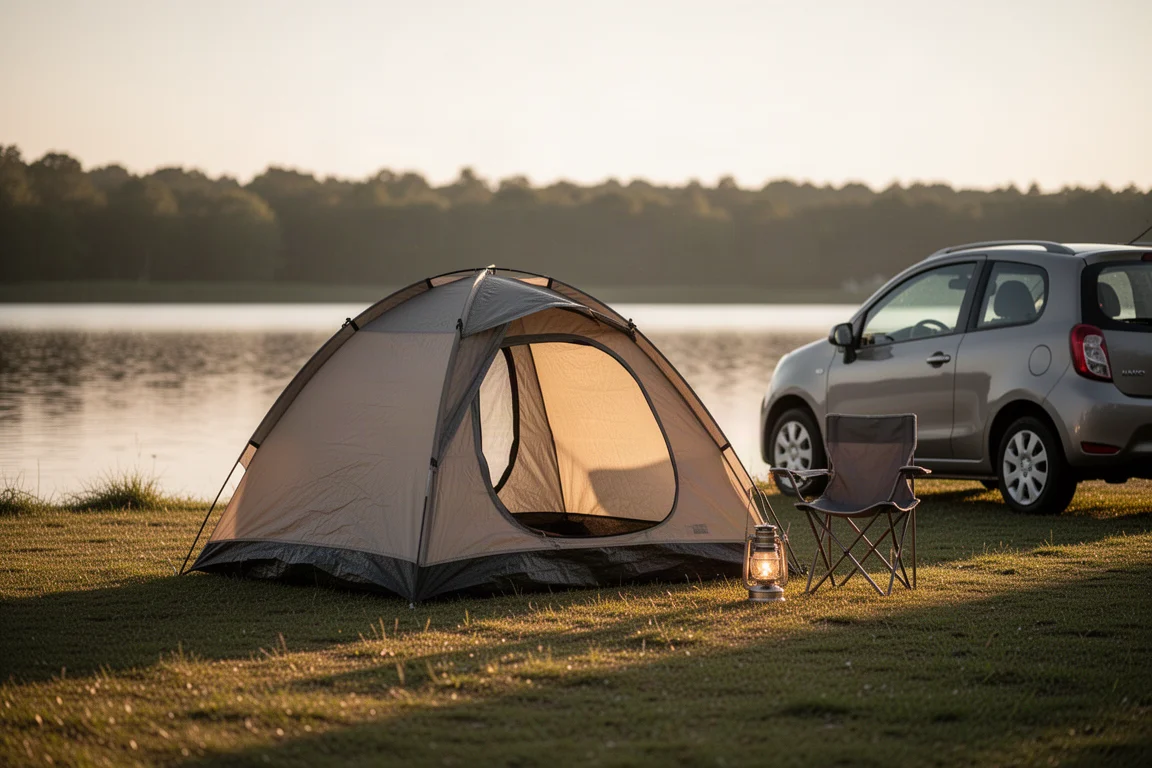
Budget-conscious car campers are the clearest fit. The Sundome 2-Person is inexpensive enough to work as a first tent, a spare for guests, or a shelter for short weekend trips where weight and packed volume are not major concerns.
Solo campers who want more room than a one-person tent will also find it comfortable, and two people on standard sleeping pads fit without much trouble. The base area is generous for the class, which gives the tent more versatility than its size category suggests.
If you are tall, or if you like to stand up and move around inside your shelter, this is not the right model. The Sundome 2-Person is a sit-up tent with sloping walls, and that shape becomes more noticeable the longer you spend inside it.
Main Strengths
The strengths here are practical rather than technical. It pitches fast, packs down without a wrestling match, and costs very little compared with most tents of a similar size.
Setup and Take Down
Setup follows a conventional dome sequence. The tent body goes on the ground, two fiberglass poles slide into the green sleeves at the centre, and the corners are staked lightly. Each pole end then seats into a pin at the corner, the four pole clips attach around the body, and the shortest pole with black tips threads down the centre of the rainfly. The rainfly drapes over the top, its pole sits above the door, and four S-hooks connect it to the rings at the corners. Two guylines get staked out, and the ground vent at the rear is pegged down last.
The whole process took about five and a half minutes to complete solo, which is quick for a tent in this price bracket. Take down and pack up ran to roughly five minutes, and everything went back into the carry bag without needing to open the expansion strip at the bottom.
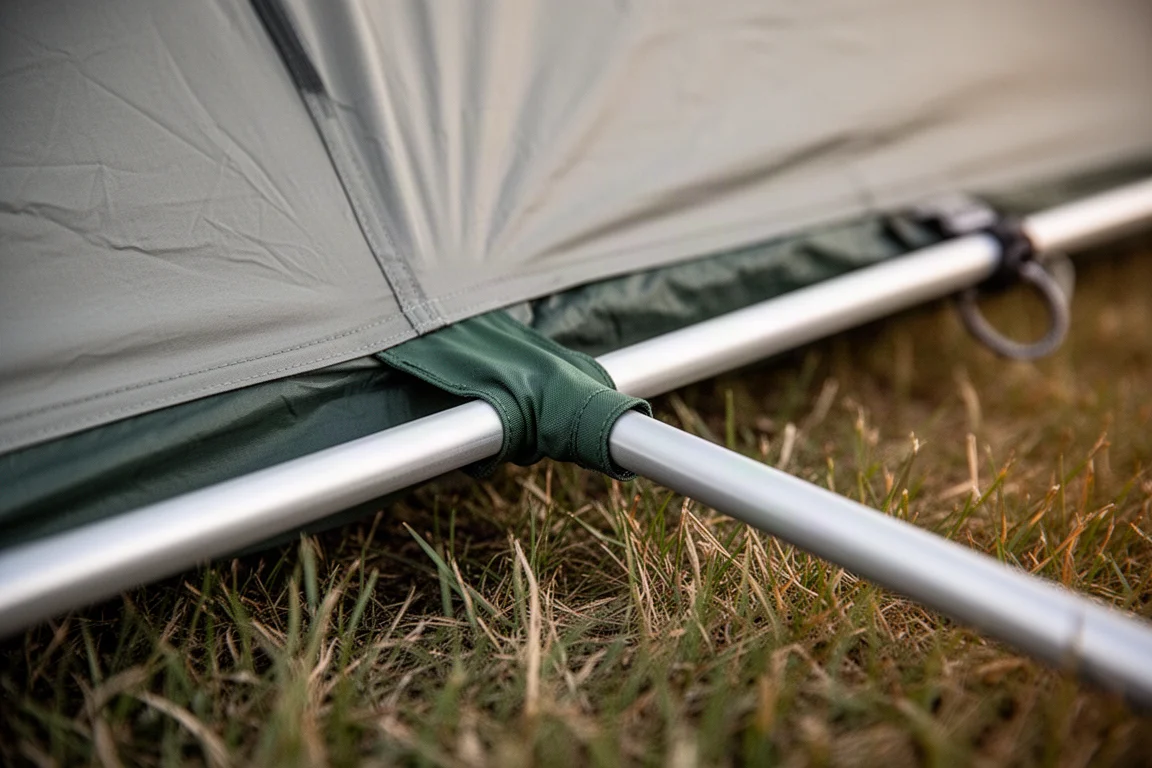
The pole sleeves are short and the poles slide through without snagging, which is a meaningful detail on a budget tent. The rainfly also comes with two pre-attached guylines, so there is no separate cord to sort out at camp.
Interior Space and Headroom
Peak height inside is about 48.5 inches at the centre, enough to sit upright with headroom to spare and to kneel without touching the roof. That height exists only at the middle of the tent, though, and the walls slope down from there.
Floor dimensions measure roughly 6 feet 9 inches by 4 feet 9 inches, a few inches short of the marketed 7 by 5 feet. In practice that is still enough for two regular sleeping pads, and a double pad such as an Exped MegaMat Duo fits with a few inches left over for gear. A queen-size camping mattress will also fit, but it uses the entire floor and leaves nowhere to put anything else.
Mattress thickness changes the feel of the interior noticeably. A 4-inch sleeping pad barely reduces usable space, while a 9-inch mattress makes the tent feel tight even though sitting up is still possible.
Ventilation and Weather Protection
Warm-weather ventilation is one of the better parts of the design. Remove the rainfly and air moves through the door, the window, and two large mesh walls. The trade-off is privacy, since those mesh panels are fairly open to view.
In wet weather the rainfly needs to stay in place, and the mesh walls convert into vents running the full width of the tent, roughly nine inches wide from the outside. A ground vent at the rear adds a little more airflow, measuring about 35 by 8 inches from inside. The rainfly carries its own vent at the back of the tent as well.
The tent was not put through a dedicated rain test, so wet-weather performance here rests on the design features rather than a measured result.
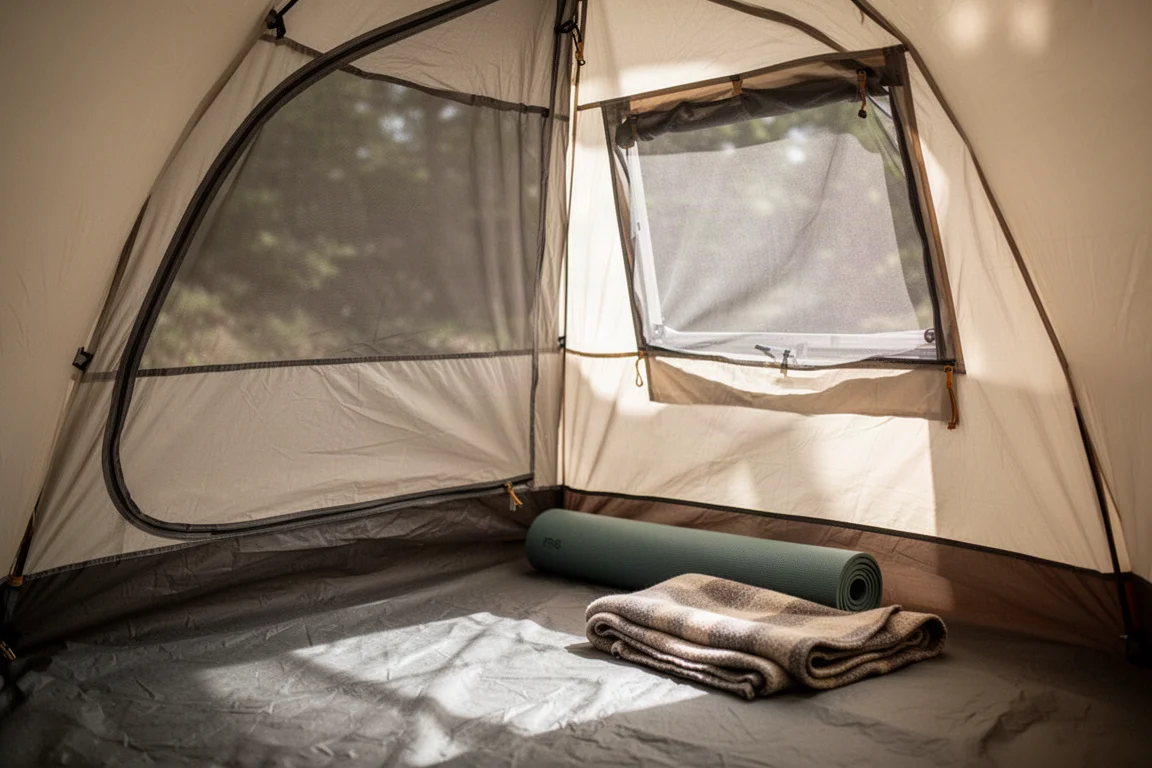
There are two windows, one on each long side. Each has two white zippers, a bug net, and a latch to hold the fabric open. The rear window measures about 29 by 12 inches and the front window about 26 by 13 inches, and the front window is built into the single door.
Materials and Build Quality
The floor is polyethylene with a bathtub-style edge that rises about 7.5 inches up the walls, which helps keep ground moisture away from bedding. The tent body and rainfly are both polyester.
Seam quality is mostly fine, with double stitching along most joins, though one seam looks like patchwork and its stitching is noticeably weaker. The mesh is standard tent mesh rather than no-see-um, and it holds up acceptably. Zippers are decent and run without catching, and neither the windows nor the door snagged during use.
One design quirk is worth knowing. The rain cover can sit in the path of the zippers, so from the inside you need to push it out of the way while zipping up, and from the outside you need to hold it clear. It is a small habit to learn rather than a fault.
Things to Consider Before Buying
Height is the main consideration. The sloping walls brush against the head of taller users, and a thick mattress brings the ceiling closer still. Inflating a queen-size mattress inside the tent is also awkward, especially if the valve sits at the foot end, because there is very little room to move around while the mattress fills.
Privacy is another point to weigh. With the rainfly off, the large mesh walls deliver good airflow but limited cover, so the tent is best suited to campsites where that is not a concern.
Packed size is 24 by 9 by 6 inches and the complete kit weighs about 6.5 pounds. That makes it a car camping tent rather than something to carry long distances on foot.
Buying Advice
For most buyers, the Sundome 2-Person makes sense when the priorities are price, quick setup, and a compact footprint. It is a strong value at under $50, and pricing at that level has held up over time, which is unusual for a tent of this size and quality.
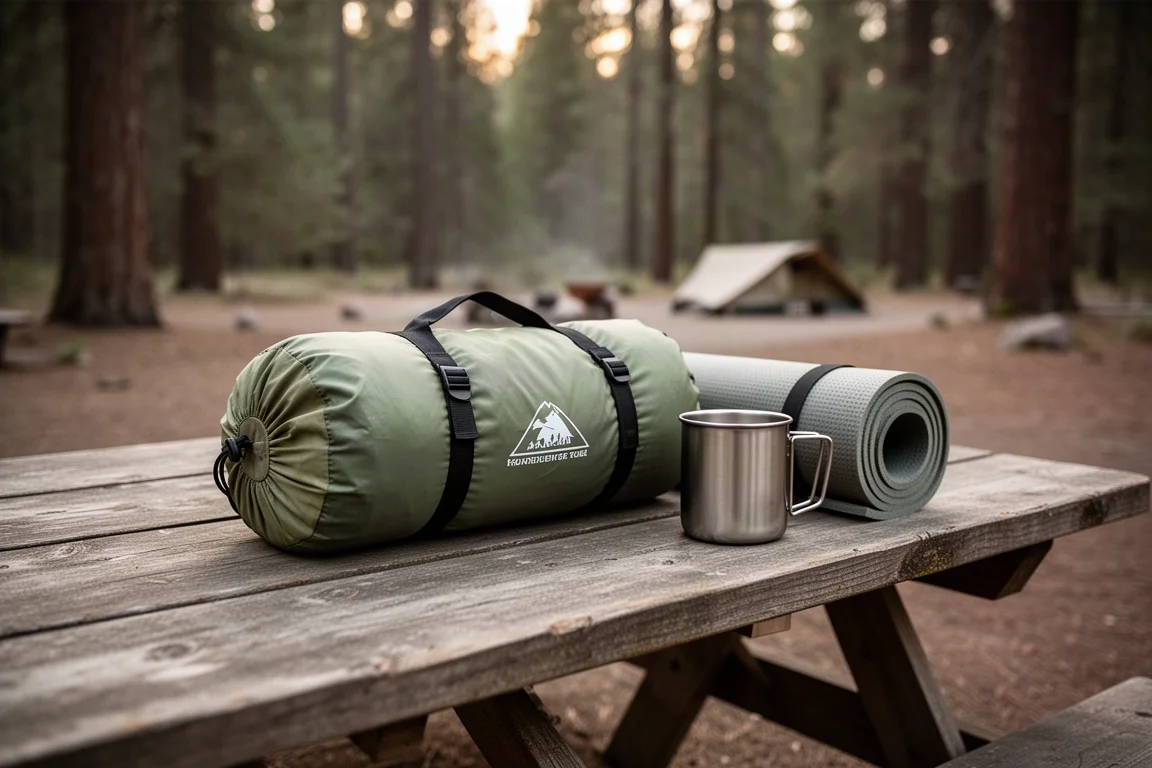
Buyers who want more headroom should look at the larger Sundome models instead. The 6-Person version offers a six-foot peak height that allows standing up and moving around freely, and the Dark Room version adds a darker interior for better sleep. Both were priced at around $100, so they cost more but address the main limitations of the two-person model.
If your camping is mostly short trips and you rarely spend long hours inside the tent, the 2-Person Sundome covers the basics well.
Conclusion
The Coleman Sundome 2-Person Tent is a good example of a budget tent that gets the fundamentals right. It pitches quickly, packs away easily, fits two sleeping pads, and costs very little. The compromises are predictable: limited headroom, sloping walls, and a floor that gets crowded once you add a thick mattress or bulky gear.
Choose it if you want an inexpensive, easy tent for casual car camping. Step up to a larger Sundome model if interior space matters more to you than price or packed size.
Product link
View more details for Coleman Sundome 2-Person Tent
This product is mentioned in the review. Check the specifications, options, and compatibility before buying.
View more details for Coleman Sundome 2-Person TentFurther reading
Related Reviews
Camping Tents
3F UL Gear Taiji Two-Person Tent Review: Field Waterproofing Results and Buying Advice
The Taiji pairs an attached fly with a removable inner, but sustained rain exposed untaped vent seams that need sealing before this shelter can be trusted.
Camping Tents
3FUL Gear Lanshan 2 Pro 4-Season Review: A Sub-$200 Single-Wall Trekking Pole Tent
An early look at the 3FUL Gear Lanshan 2 Pro 4-Season, covering its straightforward pitch, generous interior space, and the condensation and seam-sealing questions that come with any single-wall shelter.
Camping Tents
Alps Mountaineering Lynx 1-Person Tent Review: Big Value in a Small Budget Tent
A close look at the Alps Mountaineering Lynx 1-Person Tent, covering real interior dimensions, materials, setup time, ventilation limits, and who should buy it.