Camping Tents
Coleman Skydome vs Sundome: Four Tents Compared Before You Buy
How the Coleman 4-Person Skydome compares with the 2-, 4-, and 6-Person Sundome tents on setup time, headroom, storage, ventilation, and rain protection.
Introduction
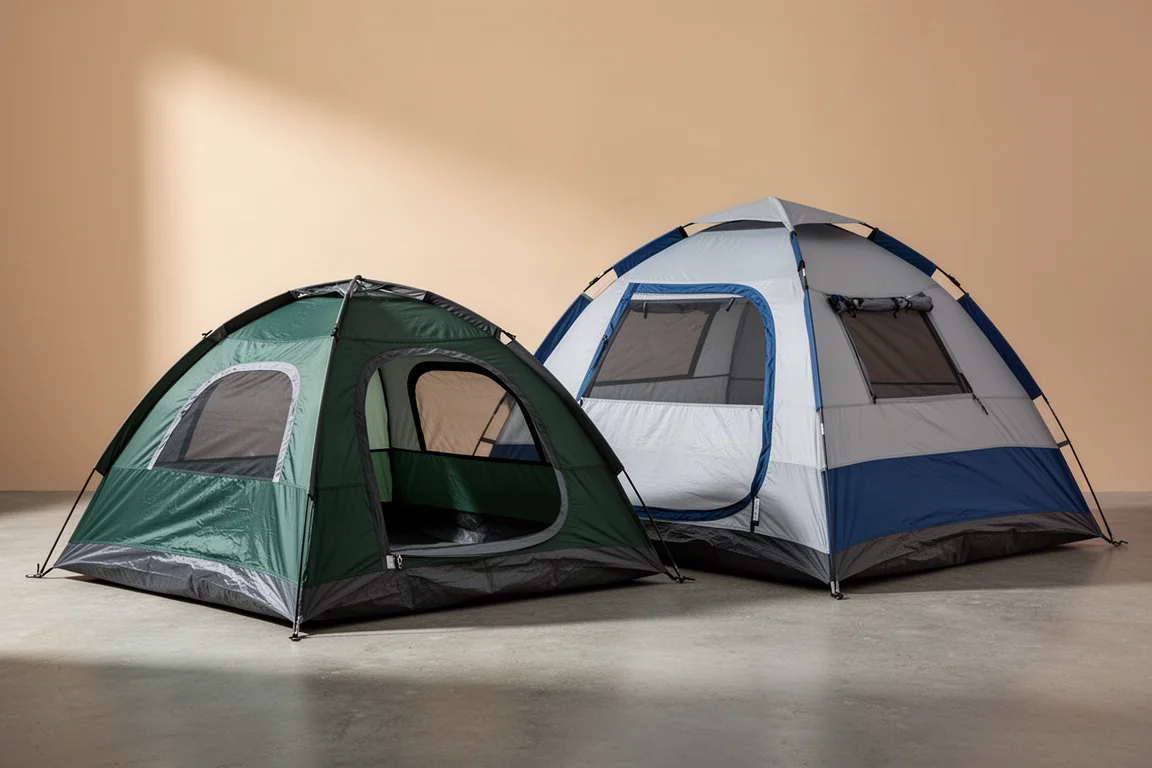
Coleman’s Skydome and Sundome tents sit close together in the lineup, and at a glance they can look almost interchangeable. They are not. The 4-Person Skydome adds a wider door, more interior storage, and extra mesh, while the Sundome family keeps things simple across three sizes: 2, 4, and 6 person.
The differences show up in four practical places: how long the tent takes to pitch, how much headroom and floor space you actually get, how easy the door and pockets are to live with, and how well the rainfly keeps water out.
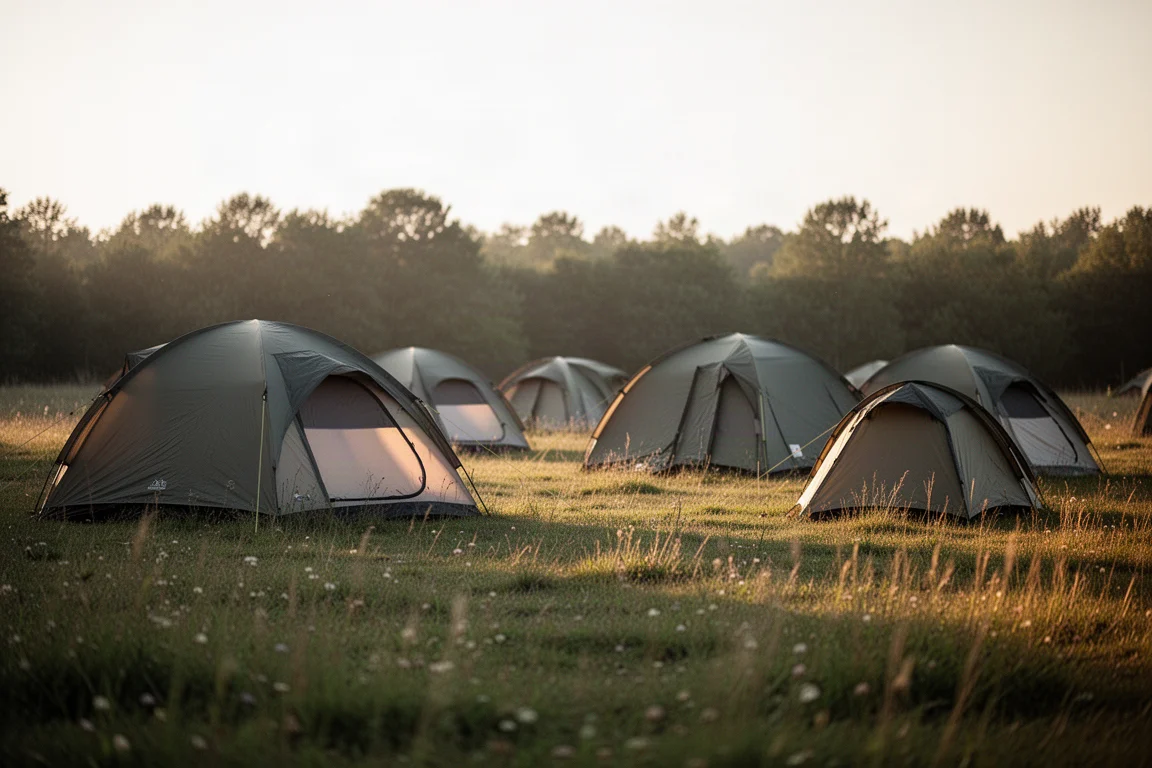
This comparison covers the 4-Person Skydome alongside the 2-, 4-, and 6-Person Sundome, so you can match a tent to the way you actually camp rather than to the marketing bullet points.
What Sets the Skydome and Sundome Apart
Before comparing models, it helps to know which details actually change the experience: setup method (pole clips versus pole sleeves), floor dimensions and peak height, door design, storage pockets, mesh walls and vents, windows, and rainfly coverage.
Sundome tents across every size share two small pockets, an e-port for running a power cord inside, two mesh walls, and two windows. The 4-Person Skydome in this comparison brings a different feature set: a much larger door, a dedicated door pocket, more storage including a gear loft, three large mesh walls, a single front window, and no e-port.
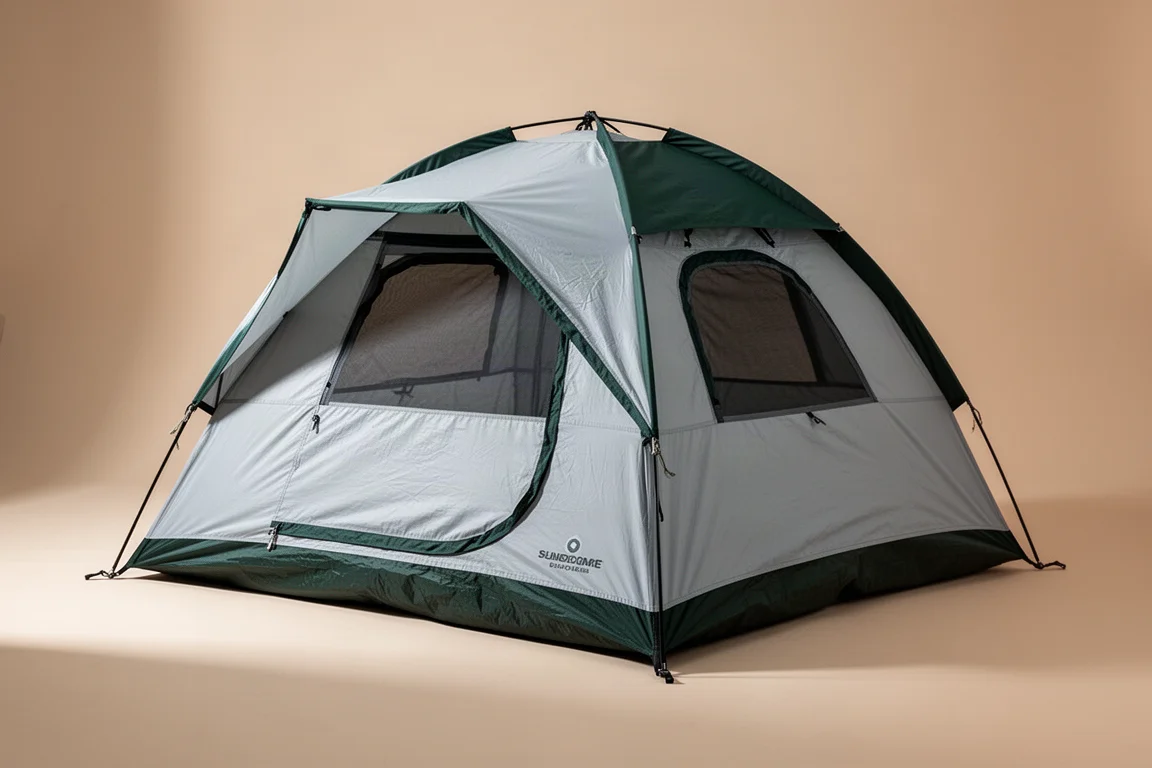
Coleman 4-Person Skydome Tent: Bigger Door, More Storage
Setup takes roughly nine and a half minutes, about a minute longer than the 4-Person Sundome. The tent is sold as a quick pitch in under five minutes with pre-attached poles, fast-fitting feet, and pole clips instead of pole sleeves. In practice, the poles are only pre-attached at the back of the tent, so the pole still has to be assembled and the far end secured before 14 pole clips around the body can be clipped into place.
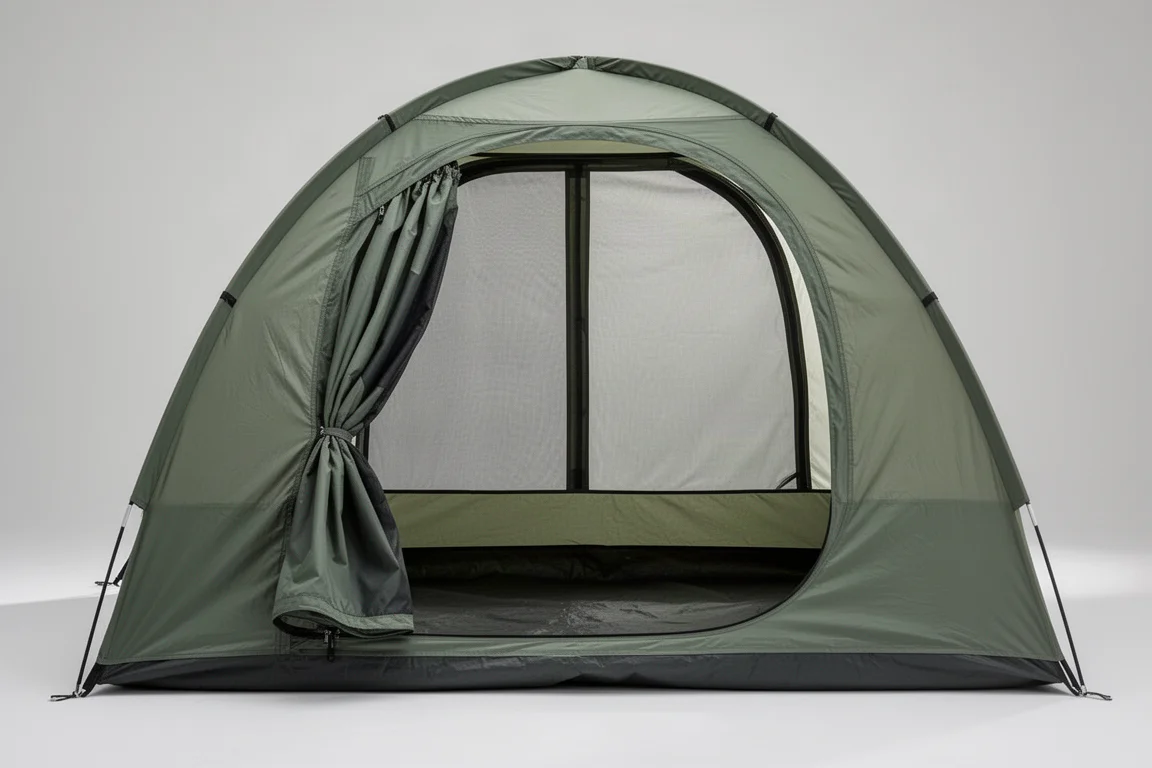
Coleman states 20 percent more headroom, produced by pole clips that pull the tent body upward and outward. The interior does feel a little roomier. Peak height is 59 inches, about the same as a standard Sundome, but the floor is one foot shorter at 8 by 7 feet compared with 9 by 7 feet on the 4-Person Sundome. Even so, four regular sleeping pads or two double pads fit with no leftover space, and a queen-size bed leaves plenty of room to spare.
The door is the standout feature. At 4 feet long it is far easier to walk through than a standard tent door, and a pocket beside it holds the door fabric when it is open. Sundome doors instead use two side latches to tie the fabric back, which takes more fumbling.
Storage is generous: a pocket behind the door pocket, a large pocket split into four sections, and a gear loft at the top of the tent. There is no e-port for routing a power cord.
Ventilation is strong. Three large mesh walls keep air moving on hot days with the rainfly off, and the same three mesh vents remain exposed with the rainfly on. The trade-off is a single window at the front, so there is less to look through when the fly is up.
Rain protection is where the design gives ground. The rainfly runs long on three sides but is noticeably shorter across the front, and water reached the flooring seam after about 15 minutes. The rainfly pole also does not extend far enough over the door, so water on the roof drips inside once the door is open. Adding seam sealant is worthwhile.
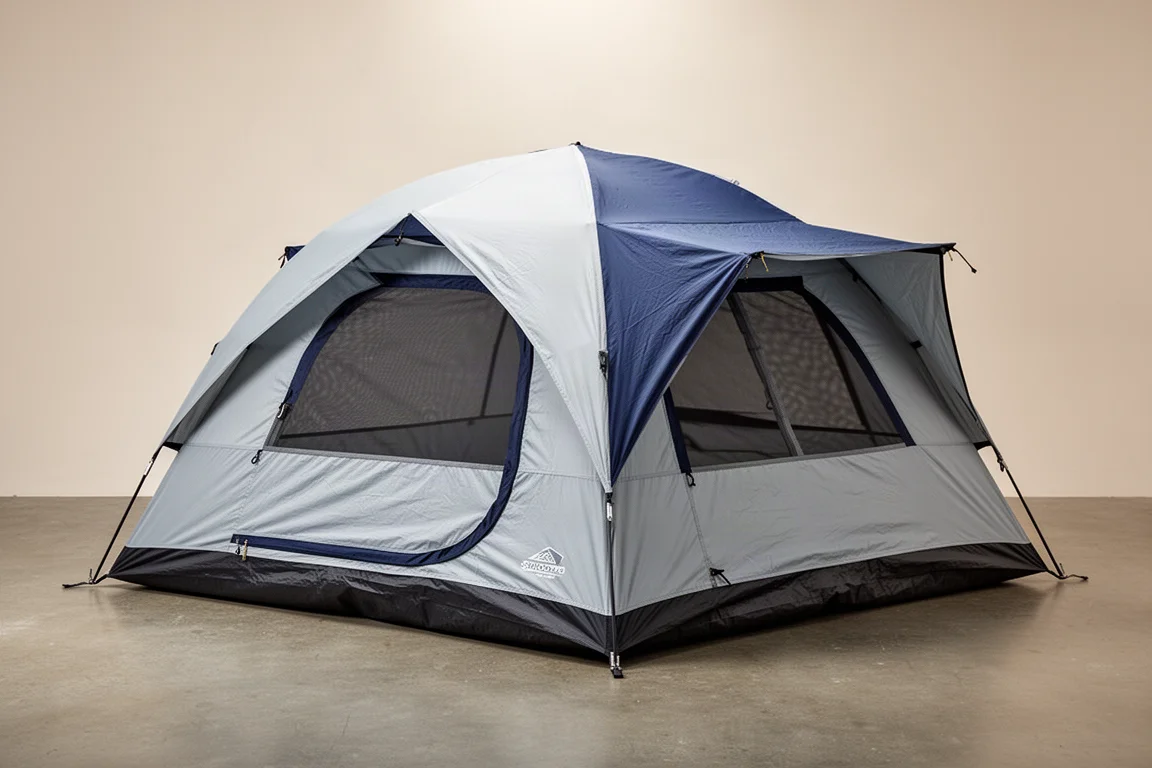
Coleman 4-Person Sundome Tent: The Classic Value Option
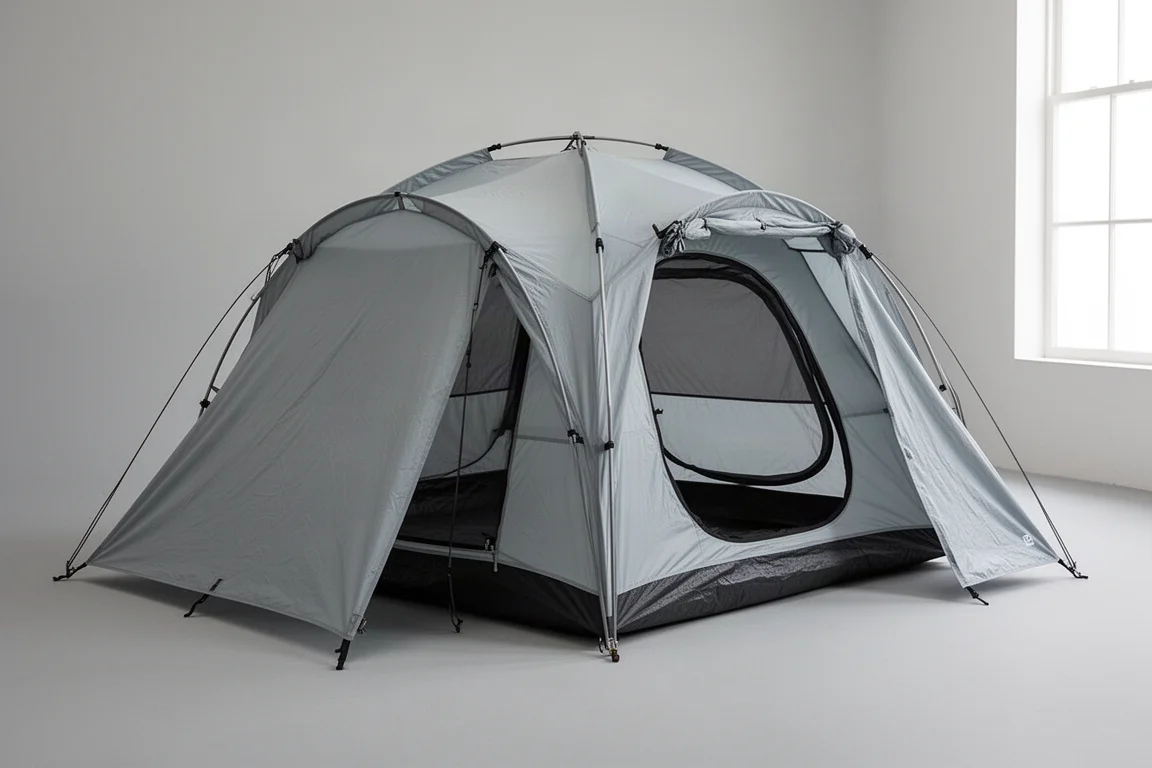
Setup takes about eight and a half minutes, helped by pole sleeves that are short and snag-free. The 9 by 7 foot floor and 59-inch peak height give it a familiar dome shape, and the same layout handles four sleeping pads or a queen-size bed. The single door ties back with two side latches rather than a dedicated pocket, and storage is limited to two small pockets no matter which Sundome size you pick.
Where the Sundome clearly leads is weather coverage. Its rainfly covers roughly one third of the tent body and held out until about 30 to 35 minutes of rain, well beyond the point where water appeared in the Skydome. An e-port lets a power cord run inside, two mesh walls handle ventilation with a small third ground vent adding a little more airflow, and two windows keep the view open when the fly is on. For the money, this is the tent that asks the least of you.
Coleman 6-Person Sundome Tent: Family-Size Floor Space
The 6-Person Sundome keeps the same straightforward build as the rest of the line and can be pitched solo without much trouble, thanks to those short pole sleeves. It carries the full Sundome feature set: an e-port, two small pockets, two mesh walls, and two windows, with a small ground vent adding extra airflow.
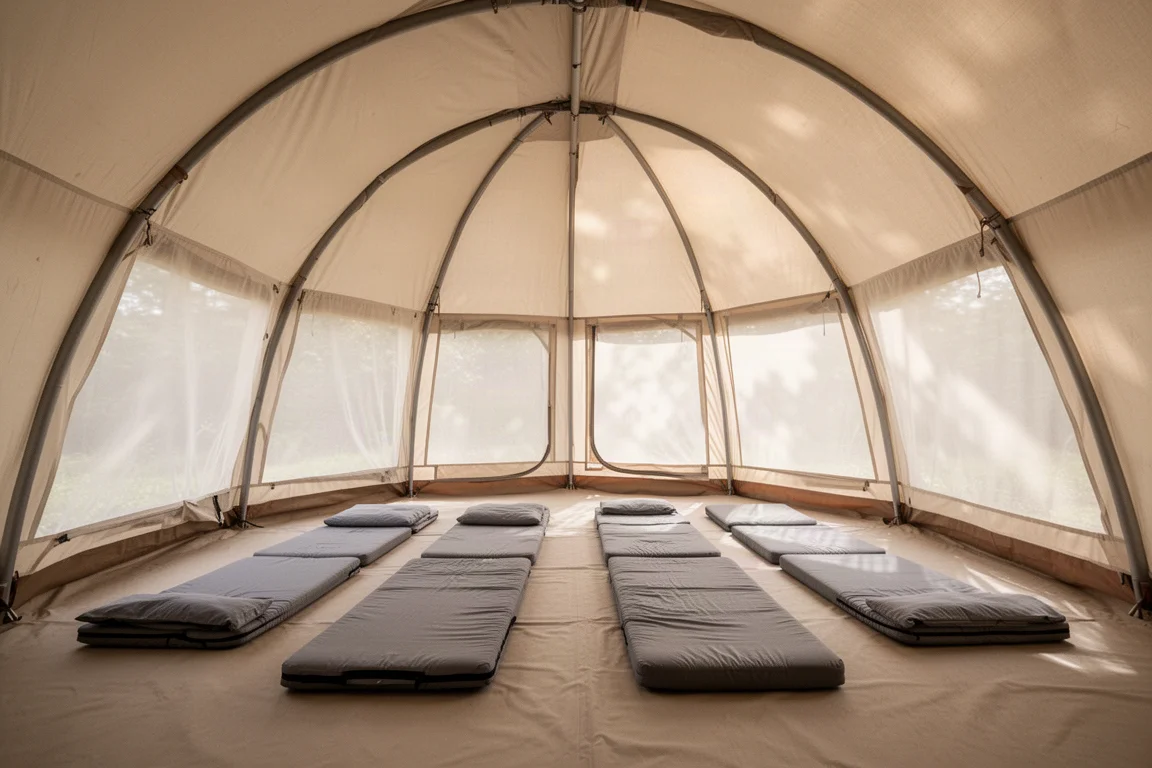
Choosing the six-person size is mostly about floor area for sleeping pads and gear. The setup process stays the same, so the extra space does not come with extra pitching effort. If you need a larger tent for a group and value simplicity over extra pockets and a wider door, this is the sensible pick in the range.
Coleman 2-Person Sundome Tent: A Compact Solo Option
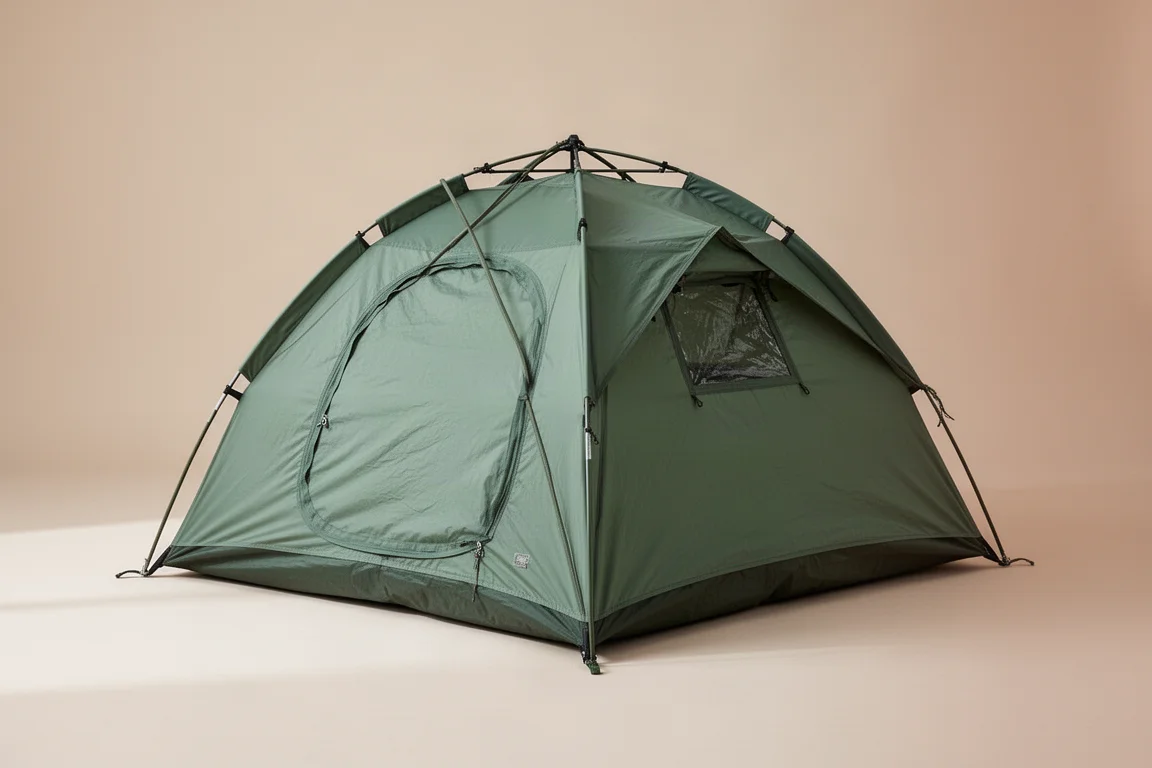
The smallest tent in this comparison follows the same formula. Short, snag-free pole sleeves make solo pitching easy, an e-port lets you run power inside, and two windows plus two mesh walls keep the interior comfortable in warm weather. Storage stays at two small pockets, and the door ties back with two side latches.
Its main appeal is simplicity and a small footprint, which suits solo campers and couples who want a predictable setup rather than a feature-heavy interior.
Buying Advice: Choosing Between Skydome and Sundome
The Skydome is a genuine step forward in several areas: more headroom in practice, a much more usable door with its own fabric pocket, better storage including a gear loft, and stronger ventilation from three mesh walls. Those are real day-to-day improvements rather than spec sheet extras.

The rainfly is the sticking point. Until the front coverage is lengthened and the rainfly pole extends further over the door, the Sundome remains the better value, particularly because it is so inexpensive for what it offers.
Choose the Skydome if you camp mostly in warm, dry conditions and want easier entry plus more places to put things. Choose a Sundome if rain protection and price matter more, then pick the size that matches your group: 2-person for solo trips and couples, 4-person for small groups, and 6-person when you need the most floor space.
Either way, plan around your sleeping pads. A 4-person Sundome floor measures 9 by 7 feet and the 4-Person Skydome measures 8 by 7 feet, which is enough for four regular pads, two double pads, or one queen-size bed with room left over.
Conclusion
Coleman’s Skydome and Sundome lines solve the same problem in slightly different ways. The 4-Person Skydome wins on door design, storage, and ventilation, and gives up some floor length and a good deal of rain protection to get there. The Sundome family, in 2, 4, and 6 person sizes, keeps setup simple, covers the weather more effectively, and stays inexpensive. Buy the Skydome for comfort in fair weather. Buy a Sundome if dependable value is what you are after.
Further reading
Related Reviews
Camping Tents
3F UL Gear Taiji Two-Person Tent Review: Field Waterproofing Results and Buying Advice
The Taiji pairs an attached fly with a removable inner, but sustained rain exposed untaped vent seams that need sealing before this shelter can be trusted.
Camping Tents
3FUL Gear Lanshan 2 Pro 4-Season Review: A Sub-$200 Single-Wall Trekking Pole Tent
An early look at the 3FUL Gear Lanshan 2 Pro 4-Season, covering its straightforward pitch, generous interior space, and the condensation and seam-sealing questions that come with any single-wall shelter.
Camping Tents
Alps Mountaineering Lynx 1-Person Tent Review: Big Value in a Small Budget Tent
A close look at the Alps Mountaineering Lynx 1-Person Tent, covering real interior dimensions, materials, setup time, ventilation limits, and who should buy it.