Camping Tents
Coleman Skydome 4-Person Tent Review: Heavy Rain Performance
A practical look at how the Coleman Skydome 4-Person Tent handles sustained heavy rain, which seams are taped, and where water gets in.
Introduction
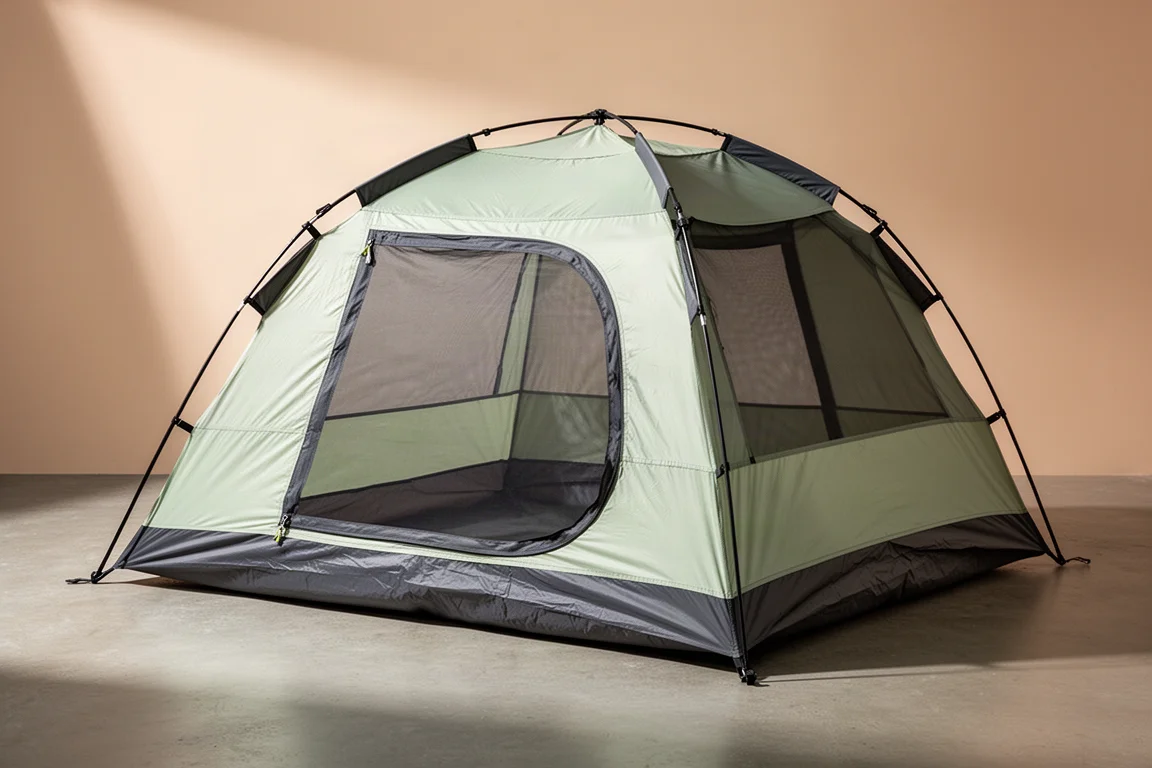
The Coleman Skydome 4-Person Tent is a dome-style camping tent with a bathtub floor and a rainfly that covers part of the tent body. It is a simple, approachable design, and on a dry weekend the details of seam construction never come up. In sustained rain, they decide everything.
This article focuses on how the Skydome behaves when water is coming down hard: which seams are taped, which are inverted, how far the bathtub floor rises, how much of the body the rainfly covers, and where water eventually finds a way in. The tent was put through a hose test with rainfall spread evenly across the whole shelter, and then through a longer stretch of heavy rain lasting around 45 minutes.
Who This Tent Is For
This tent suits campers who want a straightforward four-person dome tent for three-season trips and who mostly expect dry weather or light rain. It also suits buyers who are willing to spend a few minutes reinforcing seams before a wet trip, because the tent’s weak points are specific and predictable rather than random.
Against rain, the Skydome lands around average. It did not leak badly in very heavy rain, but it is not the strongest Coleman tent for wet weather either, and it is not the weakest. The result depends heavily on which side of the tent the rain is hitting.
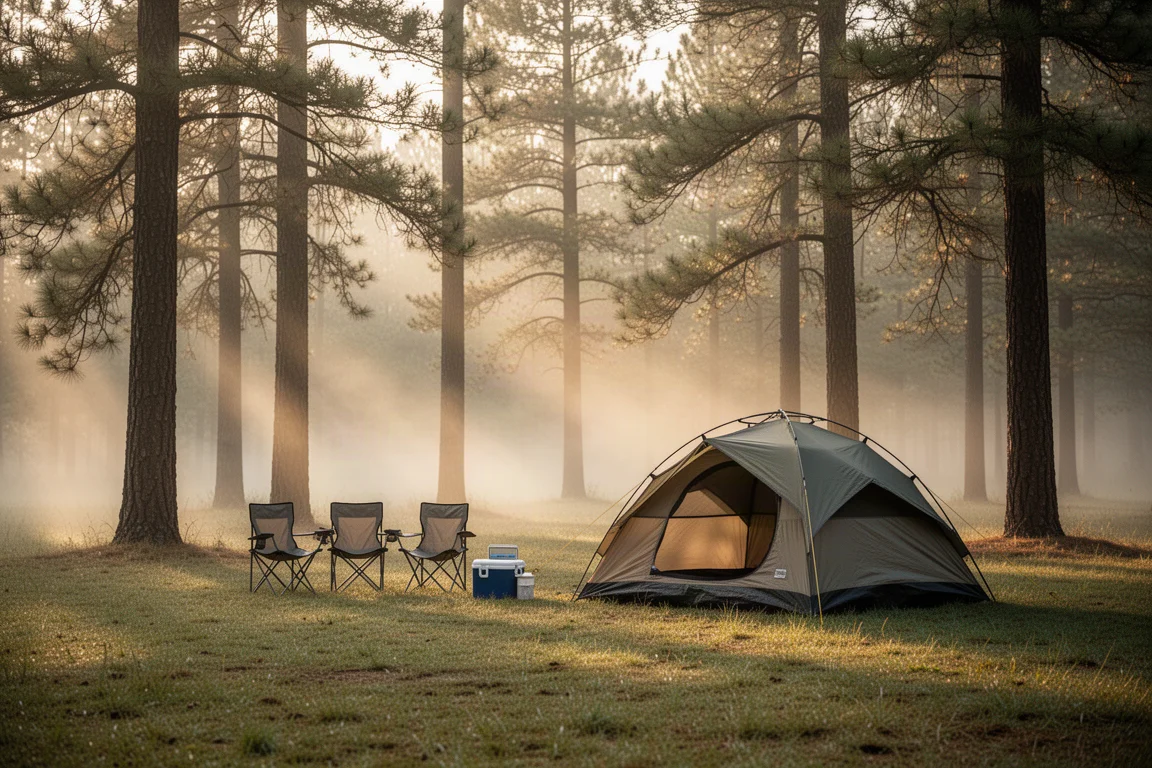
Campers who pitch in exposed, wind-driven sites, or who plan trips around a wet forecast, should read the seam and preparation sections below carefully. The reassuring part is that most of the tent performed well: three of the four sides stayed dry even through the longer test.
Main Strengths: Rainfly Coverage and a Dry Interior
On three of the four sides, the rainfly runs well down the tent body and covers at least three-quarters of it. Through the longer rain test, no water reached the interior through the mesh on those sides, and neither the bathtub flooring seam nor the tent fabric leaked there. Vent mesh, tent body fabric, and rainfly all stayed dry.
The rainfly pole at the front does more than hold the fly up. Even with a short front rainfly, the pole diverts falling water away from the window and toward the two sides of the tent. After 15 minutes of heavy rain the window mesh was completely dry, and it stayed largely dry through the longer test even with a little wind.
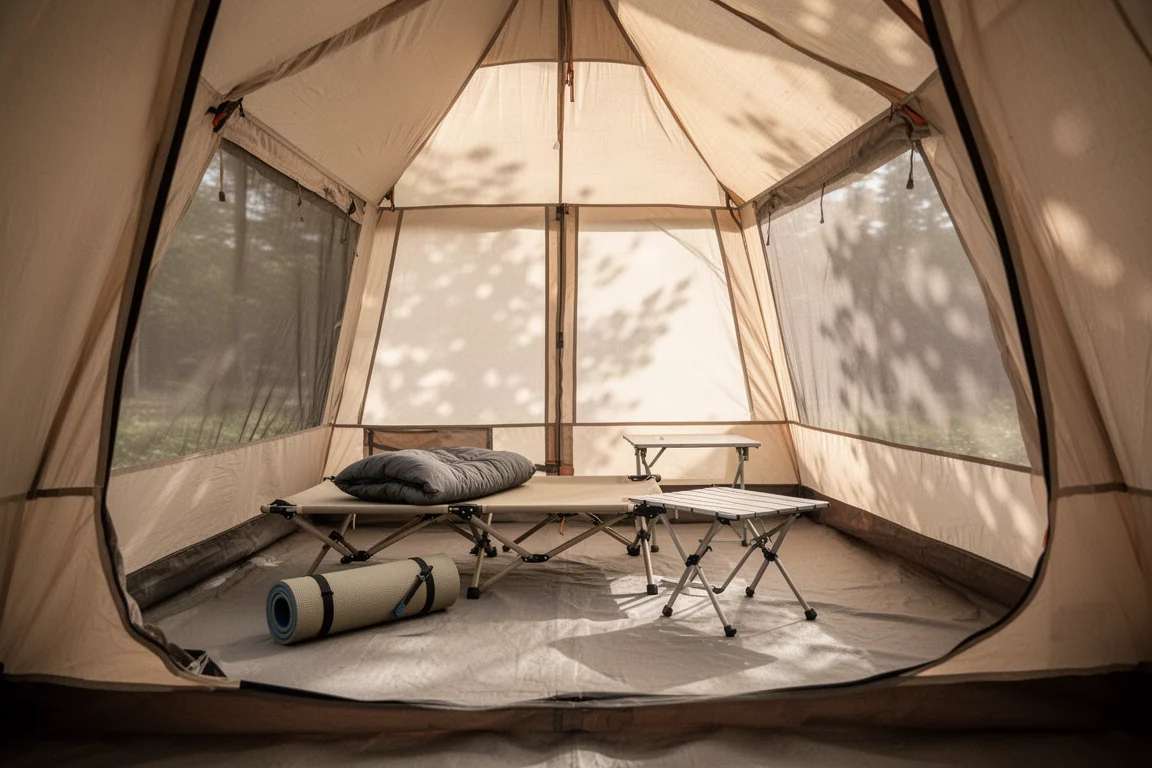
The bathtub flooring adds another layer of reassurance. It extends up the sides to about six and a half inches, which keeps splashing and shallow pooling away from the sleeping area and gives a useful margin above ground level.
Seam Construction and Bathtub Flooring
Seam treatment is not uniform across the tent, and the pattern explains exactly where water shows up later.
- Every rainfly seam is taped.
- The seam between the light blue and dark blue fabric on the side is taped, and so is the bottom window seam on that side. Neither of those seams has additional rain protection, which is why they are taped.
- Vertical seams are not taped, but they are inverted.
- The door seam is not taped, but it is inverted and sits behind a rain cover for extra protection.
- The mesh seam is neither taped nor inverted, but it is sheltered by the vent on the outside.
- At the back, the seam between the light blue tent fabric and the bathtub flooring is not taped and is inverted rather than covered.
That last seam is the one to remember. It is the most exposed point on the tent body and the first place water appears.
How It Handled Extended Heavy Rain
After 15 minutes of heavy rain, the bottom of the door was wet, so the door deserves care when opening. Inside, the untaped bathtub flooring seam had started to leak a few small droplets. The larger drops came from water sitting on the roof of the tent, which fell inward once the door was opened rather than from a failed seam.
At the front, the short rainfly offers less protection. A lot of water ran over the lower part of the tent fabric and the flooring seam there, which produced the leaking. On the other three sides, where the rainfly is much longer, there was no leaking at all, not even at the seam, because the rainfall barely touched the tent body.
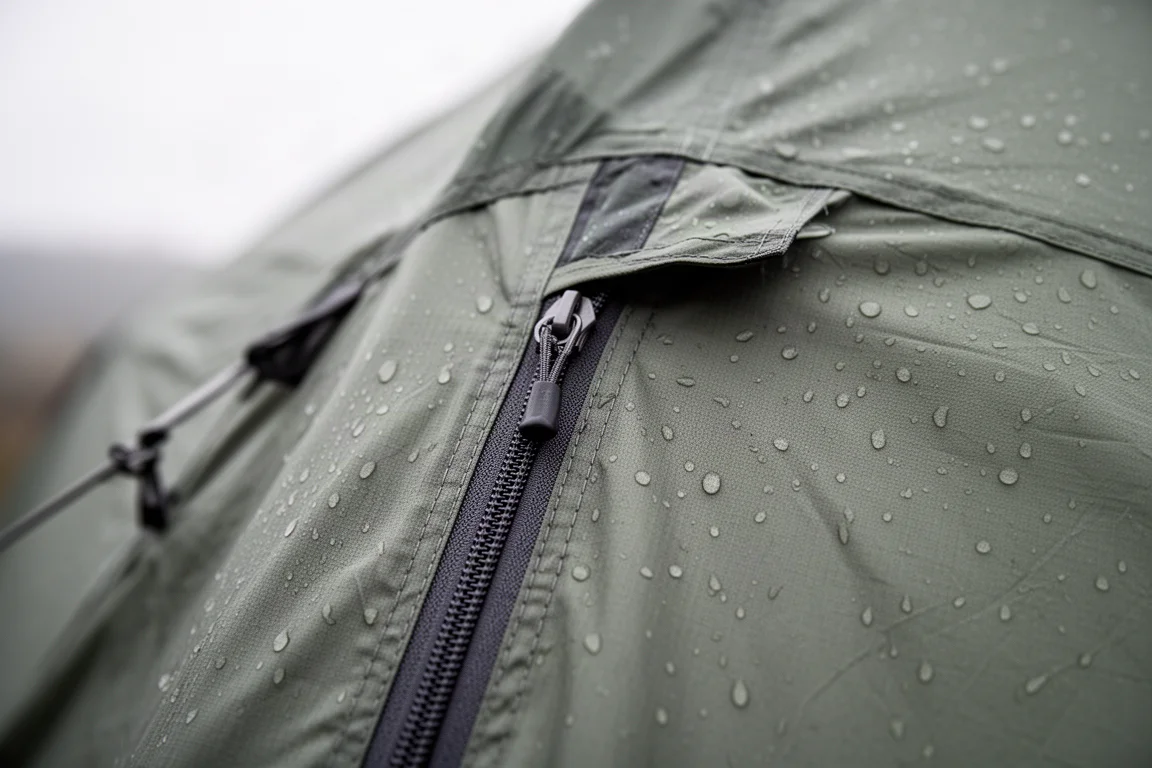
The longer test covered roughly 45 minutes of heavy rain with a little wind. The front window mesh still stayed fairly dry, which was better than expected, although the fabric below the window mesh was damp. After the rain stopped, a sizable puddle had formed at the front of the tent, leaking through the untaped bathtub flooring seam, and the light blue front fabric was slightly damp after taking so much rainfall.
The remaining sides held up. No water came through the mesh, and there was no leaking through the bathtub flooring seam or the fabric. One corner seam in the flooring did leak a little, which is worth knowing before a wet trip.
Things to Consider Before Buying
- The front rainfly is short, so more water runs over the front fabric and its seams than on the other three sides.
- The untaped bathtub flooring seam and the flooring corner seams are the most vulnerable points in heavy rain and the most exposed to water.
- The bottom of the door gets wet. Open it slowly, and expect some water pooled on the roof to drip in when you do.
- The rain testing took place in a yard with limited wind. Wind-driven rain can behave differently, so the dry window mesh result should be read as a low-wind outcome rather than a guarantee.
- Rain performance is about average overall, which is worth weighing against how much wet weather you actually camp in.
Preparing the Tent for Heavy Rain
If heavy rain is in the forecast, seal the bathtub flooring seam and the flooring corners before the trip. Those are the areas that leaked, and they are also the most exposed to running water. A short session with seam sealant addresses the tent’s main weakness directly.
Two habits help as well. Pitch the tent so the long-rainfly sides face the prevailing weather, and keep an eye on how much water is pooling on the roof so it does not drop inside when the door opens. Neither step costs anything, and both reduce the chance of waking up to a damp sleeping area.
Buying Advice
The Skydome 4-Person Tent makes sense for campers who want a simple four-person dome tent for general three-season use and who are willing to seal two seams before a wet trip. Its long rainfly coverage on three sides is a genuine strength, and the bathtub floor adds a useful margin above the ground.
If heavy rain is a regular part of your camping season, a tent with a longer front rainfly will shed water away from the front fabric more effectively. The Coleman Sundome Tent, whose rainfly covers more of the tent body, withstood 30 minutes of heavy rain in comparable testing, compared with about 15 minutes for the Skydome.
If you already own the Skydome, it remains a workable wet-weather shelter once the flooring seam and corners are sealed, and the three sides with long rainfly coverage performed well throughout. The tent is at its best in moderate weather and at its most average when the rain is relentless, which is a fair description of what buyers should expect from this design.
Conclusion
The Coleman Skydome 4-Person Tent is a capable, simple four-person dome tent whose rain performance sits in the middle of the range. Its long rainfly coverage on three sides, taped rainfly seams, and six-and-a-half-inch bathtub floor are real advantages in wet weather. The short front rainfly and the untaped bathtub flooring seam are the trade-offs, and both are manageable with a little preparation.
For campers who want a dependable tent for typical three-season trips and are willing to seal the exposed seams, the Skydome is a reasonable choice. For campers who expect heavy rain on most trips, a design with fuller rainfly coverage will be the more comfortable pick.
Product link
View more details for Coleman Skydome 4-Person Tent
This product is mentioned in the review. Check the specifications, options, and compatibility before buying.
View more details for Coleman Skydome 4-Person TentFurther reading
Related Reviews
Camping Tents
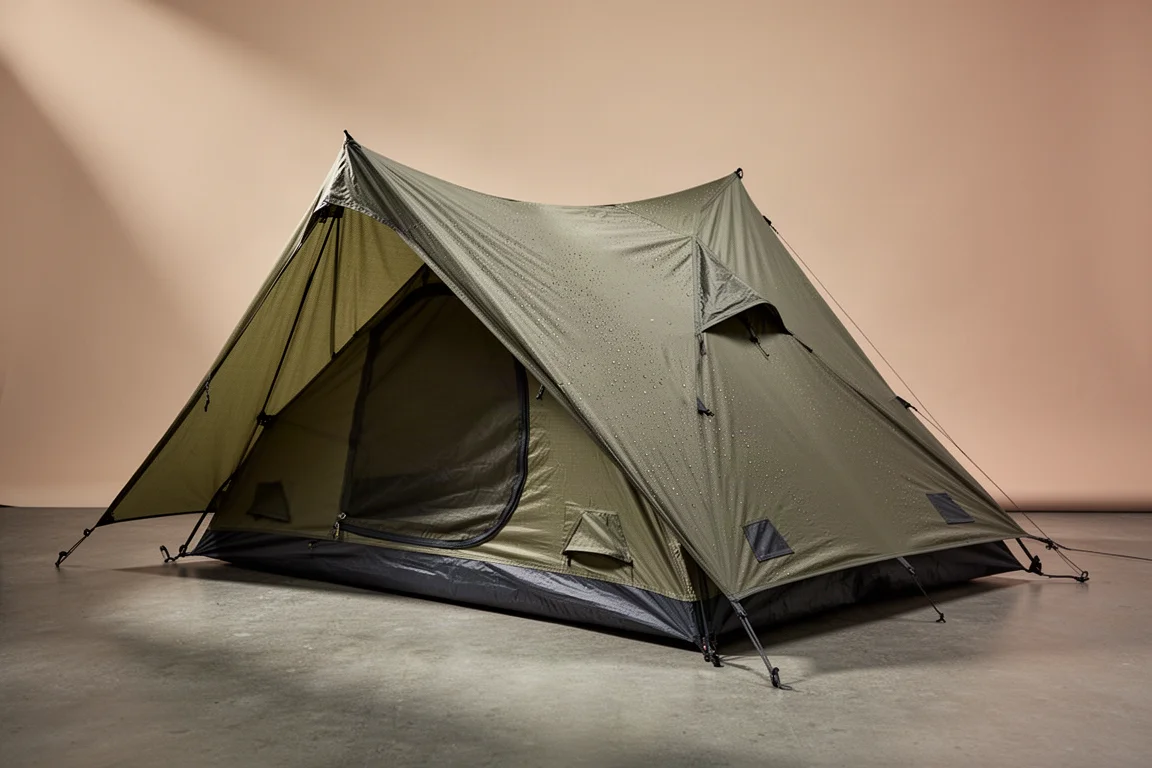
3F UL Gear Taiji Two-Person Tent Review: Field Waterproofing Results and Buying Advice
The Taiji pairs an attached fly with a removable inner, but sustained rain exposed untaped vent seams that need sealing before this shelter can be trusted.
Camping Tents
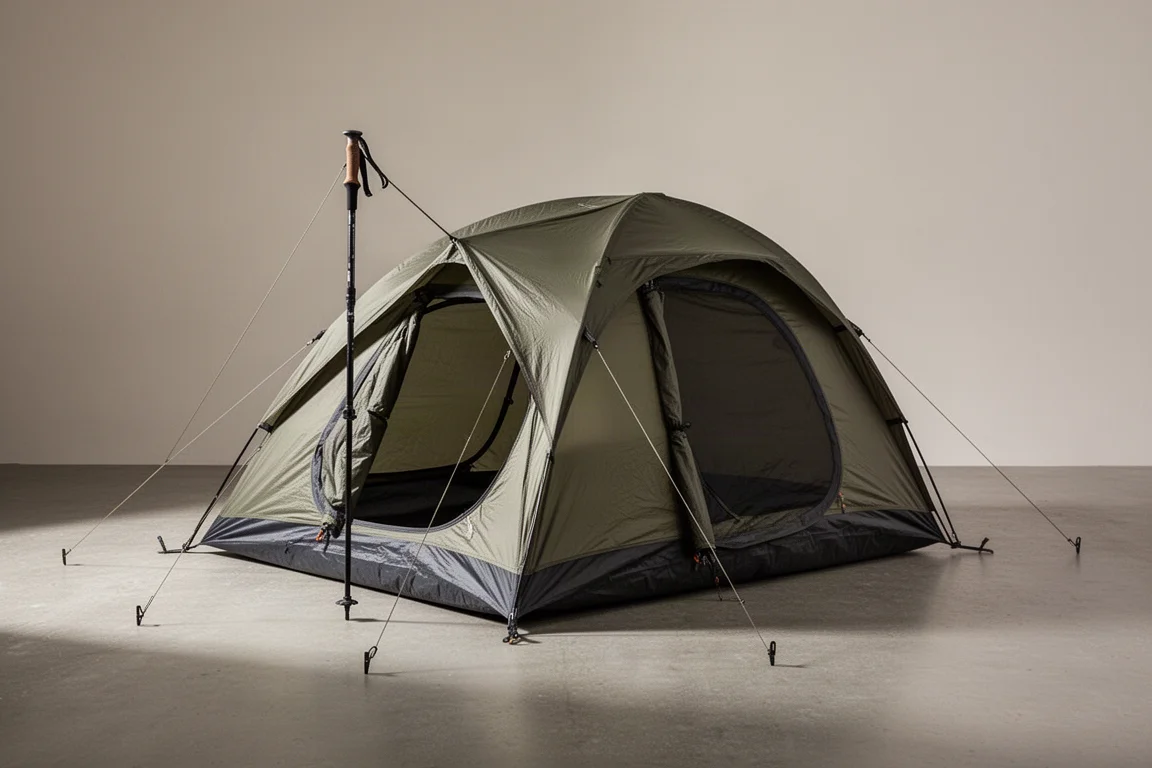
3FUL Gear Lanshan 2 Pro 4-Season Review: A Sub-$200 Single-Wall Trekking Pole Tent
An early look at the 3FUL Gear Lanshan 2 Pro 4-Season, covering its straightforward pitch, generous interior space, and the condensation and seam-sealing questions that come with any single-wall shelter.
Camping Tents
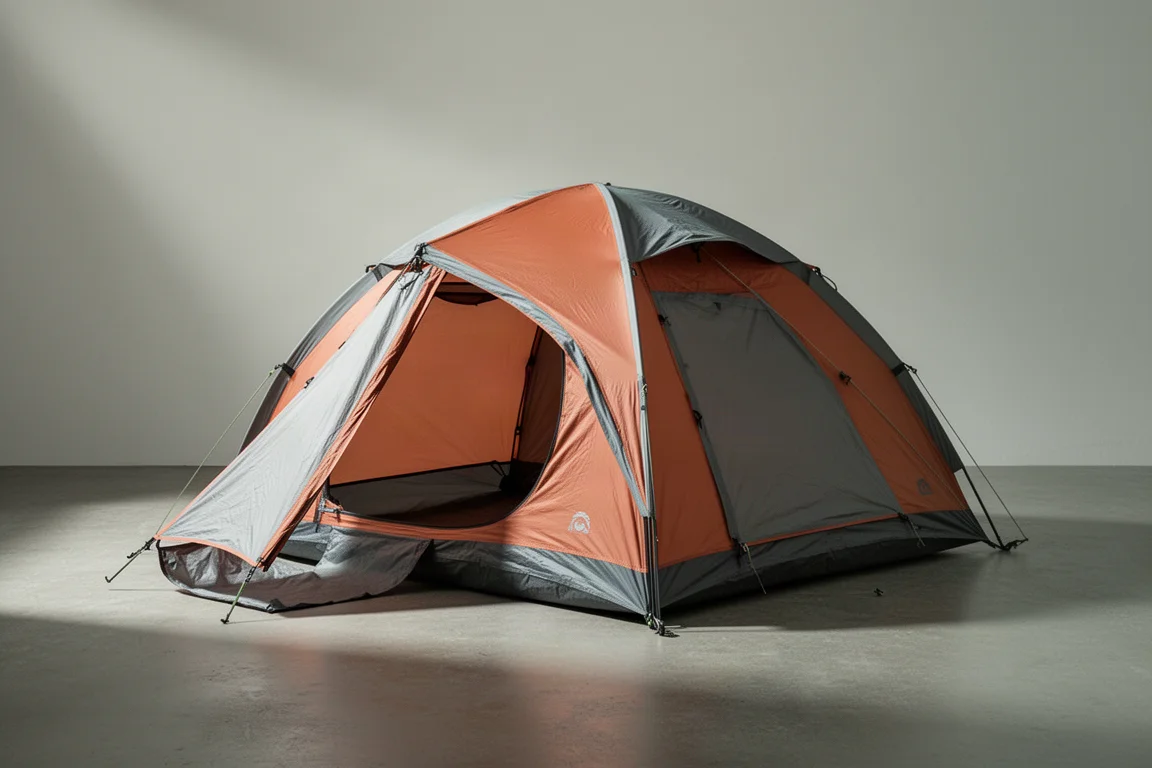
Alps Mountaineering Lynx 1-Person Tent Review: Big Value in a Small Budget Tent
A close look at the Alps Mountaineering Lynx 1-Person Tent, covering real interior dimensions, materials, setup time, ventilation limits, and who should buy it.