Camping Tents
Coleman Red Canyon 8-Person Tent Review: Huge Floor Space at a Budget Price
A spacious extended dome family tent with a base area over 140 square feet, a full accessory kit, and a few real trade-offs to weigh before buying.
Introduction
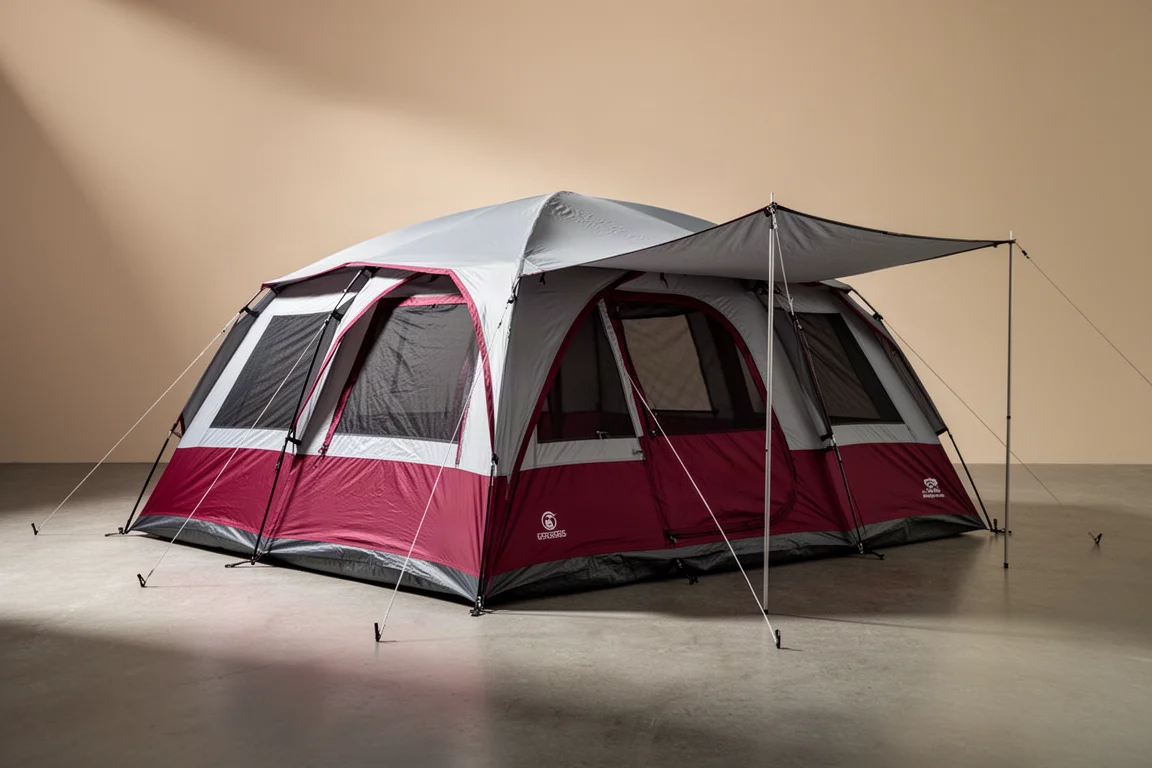
The Coleman Red Canyon 8-Person Tent is an extended dome family tent built around one clear idea: give a large group as much usable floor as possible without pushing the price up. It arrives as a complete kit, including a gear loft, a floor mat, a carry case holding 17 stakes, two room dividers, the full pole set, the tent body and a rainfly.
The shape matters more than the headline number. The 73-inch peak height sits only at the centre of the roof, and the panels slope away from that point in every direction. Step back a few paces from the middle and the mesh above is already within reach of a standing adult. The longest length measures about 16 feet 4 inches and the longest width about 9 feet 7 inches, both slightly under the marketed figures.
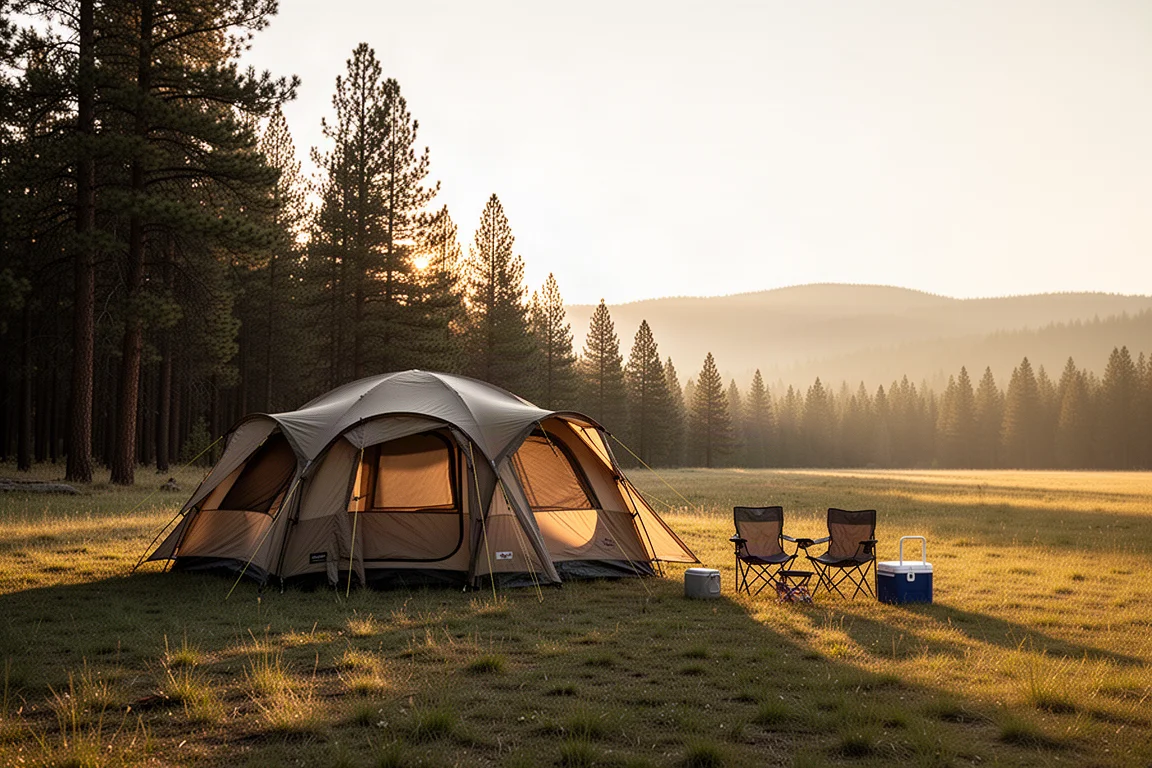
The practical result is a tent that feels enormous in the centre and progressively tighter toward the edges, and that single characteristic shapes almost every recommendation in this review.
Who This Tent Is For
This is a car camping tent for families and groups who value floor space above all else. The base area is genuinely large for an eight-person model, and the layout works best when the tent is pitched close to a vehicle, since everything together weighs about 20 pounds and packs down to roughly 26 by 13 by 10 inches.
It suits households that want one tent to sleep a crowd, and it suits budget-conscious buyers who are willing to accept simpler hardware in exchange for volume. It is not aimed at backpackers, and it is not the right choice for anyone who expects two entrances, a hinged door, or an electrical port.
Main Strengths
The base area is the standout. Measured out at a little over 140 square feet, it is comparable to some 10-person tents. Eight regular sleeping pads fit across the floor with leftover room at the sides, and the sides are the better place for that gear, because the corners slope inward enough that a seated adult’s head meets the wall. Swap the pads for three queen-size camping mattresses and there is still comfortable space left over for bags and boxes.
The feature set is generous for the price. There is one lantern loop at the top of the tent plus four more loops for the included square gear loft, eight loops for hanging the two supplied dividers, and two pre-attached strings on the divider loops that work as a clothesline. Two pockets, one on each width, measure about nine by eight inches. Ventilation is another genuine strength: with the rainfly removed, the ceiling mesh opens the tent right up, and even in heavy rain the three vents keep some air moving.
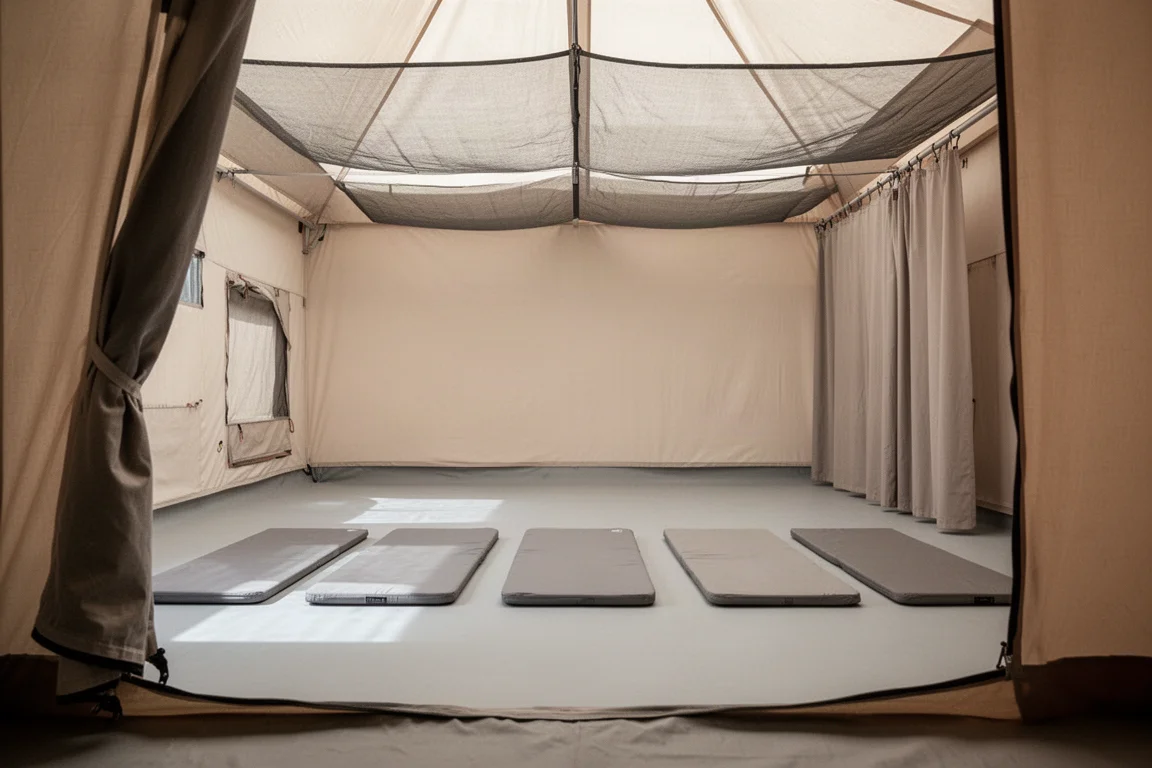
The floor plan is flexible too. With both dividers up, the centre fits four regular sleeping pads or two double pads, and the space behind each divider takes either a double pad or two separate pads. It is a useful way to split a big tent into quieter zones without buying anything extra.
Setup, Take Down, and Packed Size
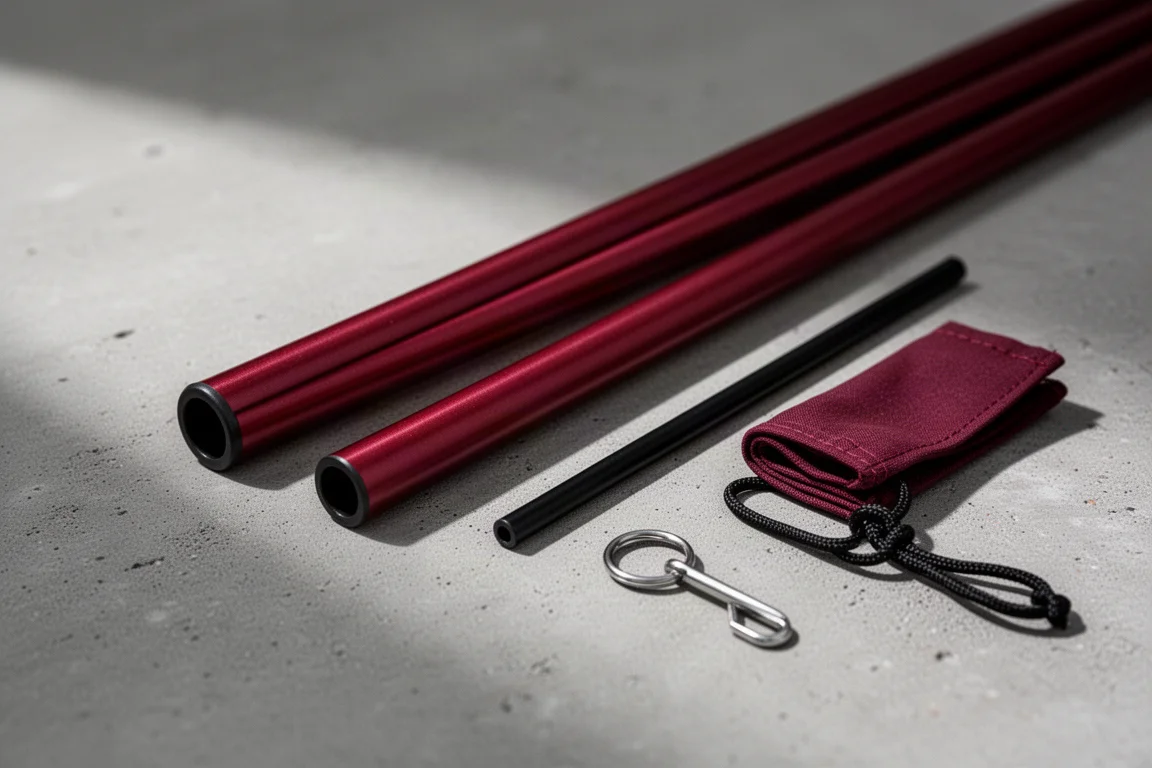
Setup is logical and colour coded. The two longest red fibreglass poles go into the red sleeves at the centre of the tent, their ends seat into pins, and the pole clips snap on. Two white poles handle the sides. The rainfly then drapes over the top and its S-hooks clip to the rings at the base where the main poles attach. The two shortest and thinnest black poles hold the rainfly away from the tent body, one at the front and one at the back, each running through a short sleeve at the tip of the rainfly and seating into two rings in the tent body. From there it is a matter of staking the tent, tensioning the six pre-attached guylines, and pegging out the vent at the back.
With two people working together, the full pitch takes about ten minutes, and a solo pitch takes roughly 19 and a half minutes, a little under double the time. Take down and pack up run about seven minutes with two people and about 14 minutes alone. The two long red poles are the fiddliest part of a solo setup until the technique clicks.
Things to Consider Before Buying
All six poles are fibreglass, which keeps the price down but is not the sturdiest material. One of the thin black rainfly poles broke on its first use, and a duct tape repair did not hold, which left nothing to hold the rainfly clear of the body. On hot days that blocks half of a window, and in rain the window mesh soaks through. A second thin rainfly pole bent permanently after a few days of use. The rainfly and its poles are the weakest part of the design.
There is only one door, on the front length, measuring about 51 inches by 39 inches and about 53 inches from the ground to the top. That is a modest opening for a tent this size, and shorter adults will still need to duck on the way in and out. Two entrances would suit a tent with this much floor area far better.
The two dividers are functional rather than refined. The fabric is somewhat see-through, there are gaps at the top and at both sides, and there is no zip down the middle, so moving between rooms means undoing a latch and climbing over. There is also no electrical port and no hinged D-door.
One more thing to plan for: the peak height only exists at the very centre. If standing room matters to you, treat the middle of the tent as the only place you will get it.
Weather Performance and Ventilation
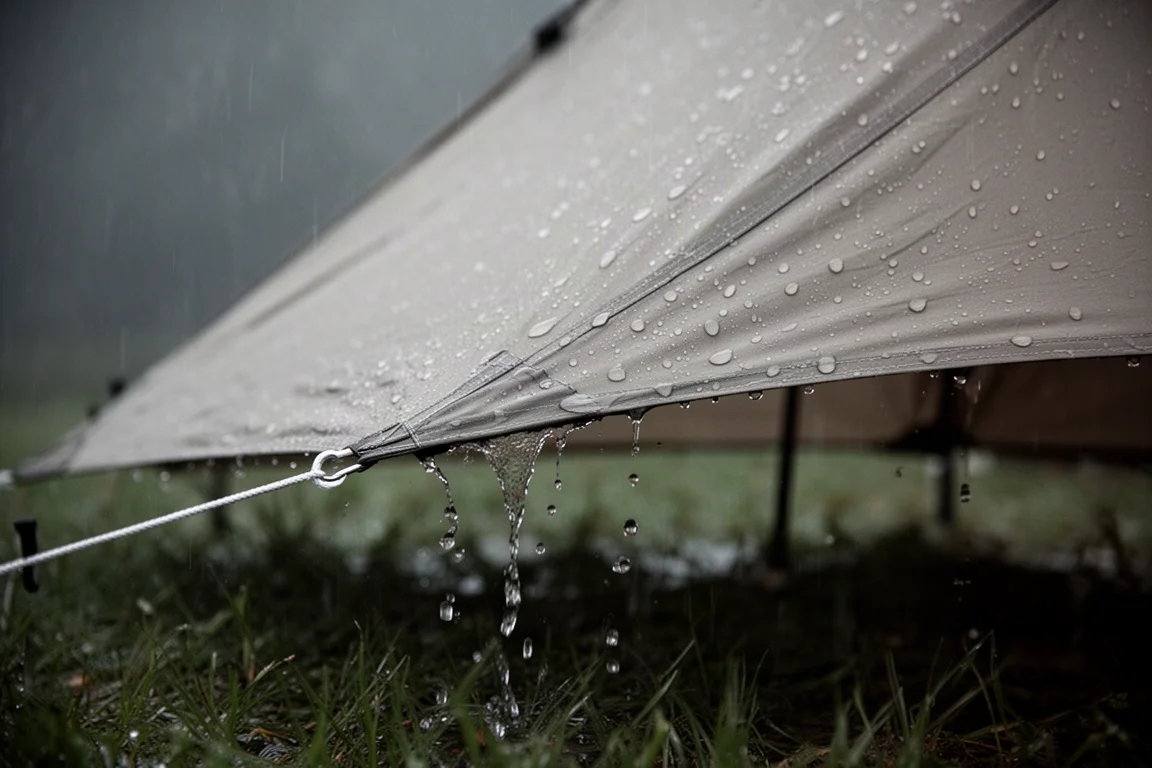
In light rain, the tent held up well. After roughly 15 minutes of steady drizzle there were no leaks inside and the interior stayed dry. The rainfly poles earned their place here, because they kept the door and window mesh clear of the fabric so those openings could stay unzipped in light rain. They only cover up to the edge of the tent, though, so anything left outside still gets wet.
A heavier test told a more nuanced story. With concentrated rainfall on the front length of the tent, a few droplets seeped in after 15 minutes through the untaped seam where the tent body meets the bathtub flooring, with a slightly larger amount around the corner. The bathtub floor itself, which rises about eight inches up the walls, stayed completely watertight. The polyester body and rainfly, described as double-thick Polyguard, stayed dry in both the white and red panels, as did the rainfly.
Most seams are inverted but not taped; only the vent seam and the rainfly seams are taped. Stitching is consistent and good quality, with a few loose threads and one small hole found in a seam. The mesh is standard mesh rather than no-see-um, and the zippers are decent, catch-free on both the door and the windows, with no leaking issues.
Ventilation is handled by three vents: two larger ones at about 31 by 21 inches and a smaller one at about 23 by 9 inches near the bottom. The two larger vents function more as vents than windows, since you cannot see out of them and they cannot be zipped shut. Their mesh stayed dry through the heavy rain test. On a hot day, pulling the rainfly off from the outside opens up the ceiling mesh and exposes the two side vents, effectively giving you four openings.
Buying Advice
The Red Canyon makes the most sense for buyers who want the largest possible floor area for the least money, and who accept that the hardware reflects that priority. If your trips are mostly fair-weather car camping with a group, the space and the accessory kit deliver a lot for the outlay, and the tent is widely described as very inexpensive for an eight-person model.
Two small additions are worth budgeting for. A tube of seam sealant applied to the seam between the red tent fabric and the bathtub flooring is a sensible precaution given how that seam behaved under heavy rain. A spare or upgraded rainfly pole is also worth considering, since the thin fibreglass poles are the part most likely to let the tent down.
If you need two doors, sturdier poles, or a tent that shrugs off sustained heavy rain without any seepage, this is not the model to choose. If you need sheer volume on a tight budget and can work around those limits, the trade-off is straightforward and easy to live with.
Conclusion
The Coleman Red Canyon 8-Person Tent is a lot of tent for the money. Its base area is closer to a 10-person tent than most eight-person rivals, it sleeps eight on pads or three queen mattresses with room to spare, and it ships with a gear loft, two dividers, a clothesline and a full stake set. Setup is colour coded and quick with a second pair of hands, and ventilation is strong whether the rainfly is on or off.
The compromises are equally clear. The thin fibreglass rainfly poles are fragile, one door is limiting on a tent this wide, and the untaped body-to-floor seam lets a small amount of water through in a sustained downpour. Buyers who weigh space and price above refinement will find this an easy recommendation; buyers who want tougher hardware and a second entrance should look further up the range.
Product link
View more details for Coleman Red Canyon 8-Person Tent
This product is mentioned in the review. Check the specifications, options, and compatibility before buying.
View more details for Coleman Red Canyon 8-Person TentFurther reading
Related Reviews
Camping Tents
3F UL Gear Taiji Two-Person Tent Review: Field Waterproofing Results and Buying Advice
The Taiji pairs an attached fly with a removable inner, but sustained rain exposed untaped vent seams that need sealing before this shelter can be trusted.
Camping Tents
3FUL Gear Lanshan 2 Pro 4-Season Review: A Sub-$200 Single-Wall Trekking Pole Tent
An early look at the 3FUL Gear Lanshan 2 Pro 4-Season, covering its straightforward pitch, generous interior space, and the condensation and seam-sealing questions that come with any single-wall shelter.
Camping Tents
Alps Mountaineering Lynx 1-Person Tent Review: Big Value in a Small Budget Tent
A close look at the Alps Mountaineering Lynx 1-Person Tent, covering real interior dimensions, materials, setup time, ventilation limits, and who should buy it.