Camping Tents
Coleman Pop Up vs Instant Tents: Which Style Suits Your Camping Trip
A practical comparison of Coleman Pop Up and Instant tents, covering setup time, peak height, ventilation, rain performance, packed weight, and value.
Introduction
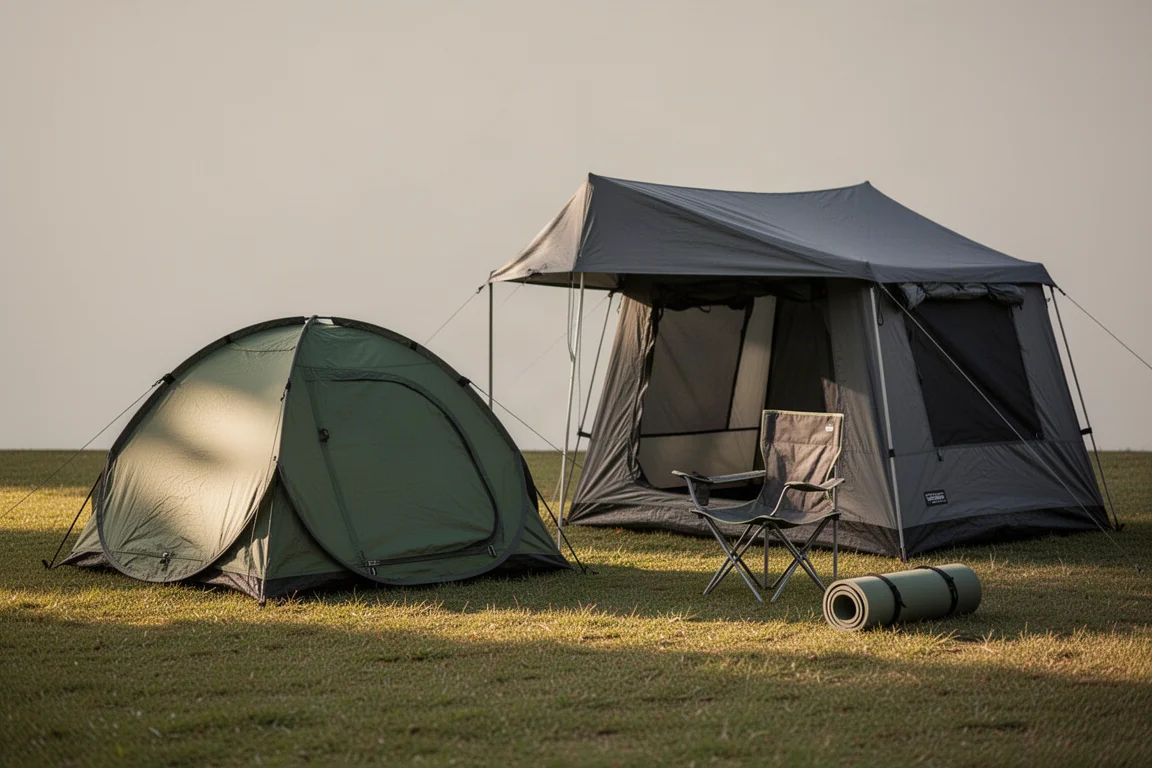
Coleman builds two very different styles of camping tent, and the gap between them shows up long before you reach the campsite. The Pop Up range relies on tensioned poles that spring into shape the moment the carry strap comes off. The Instant range uses a frame you raise by hand, with telescoping wall poles and elbow joints that lock into position.
That single design decision shapes almost everything else: setup time, packed shape, weight, peak height, ventilation, and how each tent copes with a downpour. In a four-person comparison, the Pop Up Tent went from bag to standing in about a minute and a half, while the four-person Instant Tent took roughly four and a half minutes. Both offer around 55 square feet of floor area, so the choice comes down to how you plan to camp rather than how much floor space you get.
What Separates the Pop Up and Instant Designs
The pole systems are the first dividing line. On the Pop Up Tent, removing the black strap across the folded tent releases all the pole tension at once and the tent opens by itself. On the Instant Tent, you pull on the elbow joints to prop the poles up and then extend every telescoping wall pole upward before the tent looks set up.
Rainfly attachment is the second difference. The Pop Up Tent ships with its rainfly already attached, so there is nothing to fit in the field. The Instant Tent’s rainfly has to be draped over the roof, positioned correctly, clipped at its four extended tips just below the Instant Tent label, tightened at the strap, and secured with Velcro underneath to the poles. One practical shortcut: leave the rainfly on when you pack up, and the next setup drops from about four and a half minutes to roughly three.
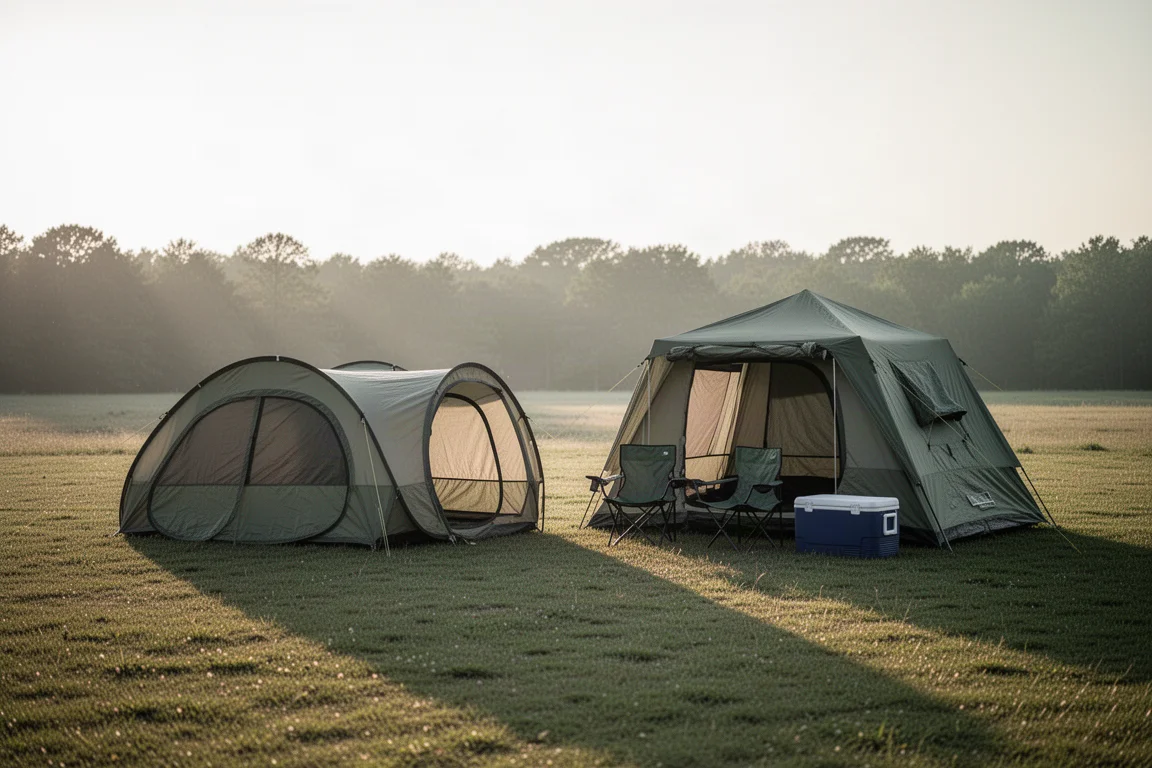
Packing up follows the same pattern. The Pop Up Tent folds into a taco shape, folds again, and collapses into a circle that slides straight into its bag in about two minutes. The Instant Tent has to be stripped of its rainfly, unlocked at the silver button on each telescoping pole, pushed down, folded, and compressed before it fits its bag, which takes around five minutes, or about three and a half with the rainfly left in place.
Coleman 4-Person Pop Up Tent
The four-person Pop Up Tent is the quickest tent here to put up and the lightest to carry, at 8.2 lbs. The trade-offs appear once you are inside. Peak height is 39 inches, and with a six-inch air mattress in place, sitting upright puts your head against the mesh at the top. A mattress no thicker than six inches is the sensible limit.
The floor measures around 55 square feet, but it is oval rather than rectangular. That shape fits three single sleeping pads with room left over, or one queen bed with generous space around it. Ventilation is limited to a single window built into the door plus ceiling mesh, and neither is easy to manage from inside: opening the window means unzipping the window, unzipping the door, tying the door fabric back, and zipping the window again. Getting air through the ceiling mesh requires unhooking and removing the rainfly from outside.
Storage is one pocket split into two, with no lantern loop, so a lantern has to hang from the door latch attachment. The fabric is mostly polyester, roughly 68D throughout including the floor, and the poles are fiberglass. The rainfly covers only the ceiling mesh. In a hose-based rain test, water came through the door, the taped seam between the floor and the tent body, and the fabric itself, with drips falling from the ceiling mesh into the tent. This is best treated as fair-weather gear. It sells for under $100 and comes in two-person and four-person sizes.
Coleman 4-Person Instant Tent
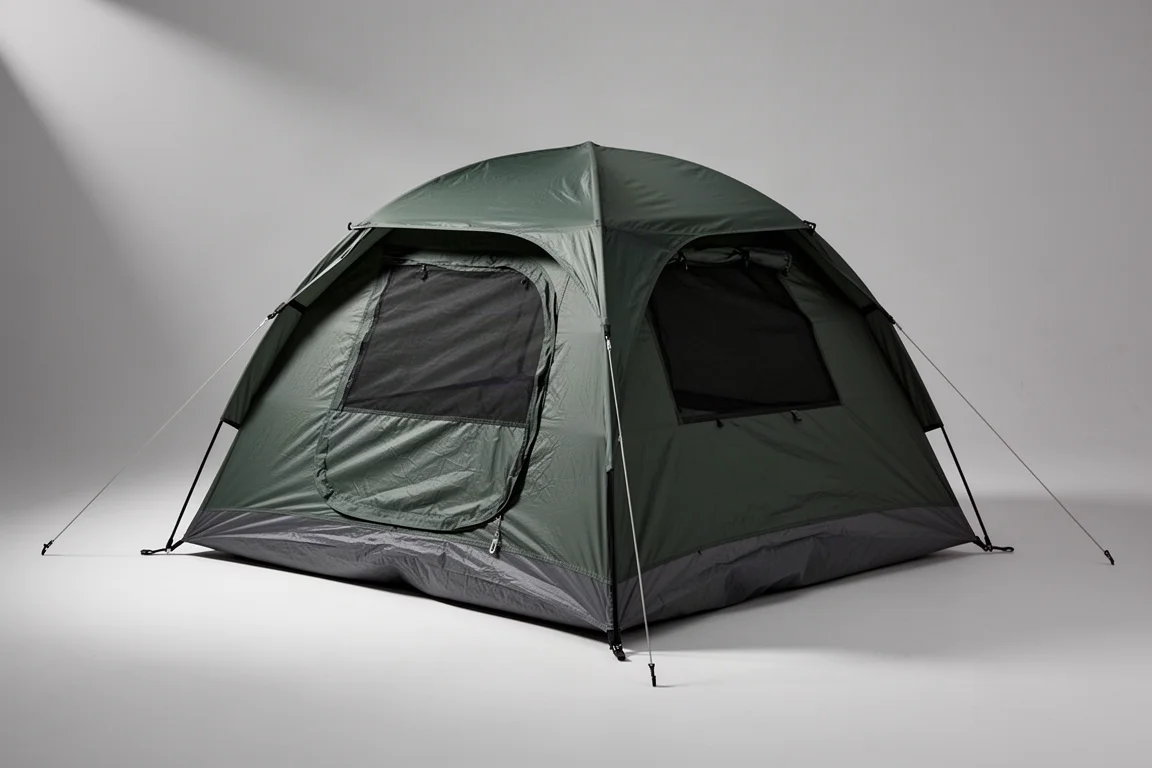
The four-person Instant Tent takes longer to raise but gives back a much more comfortable interior. Peak height is 61 inches, slightly less than standing height for an average adult, yet tall enough to fit a thick air mattress without the mattress crowding the living space. The near-vertical side walls create a cabin shape with room to stretch your arms out.
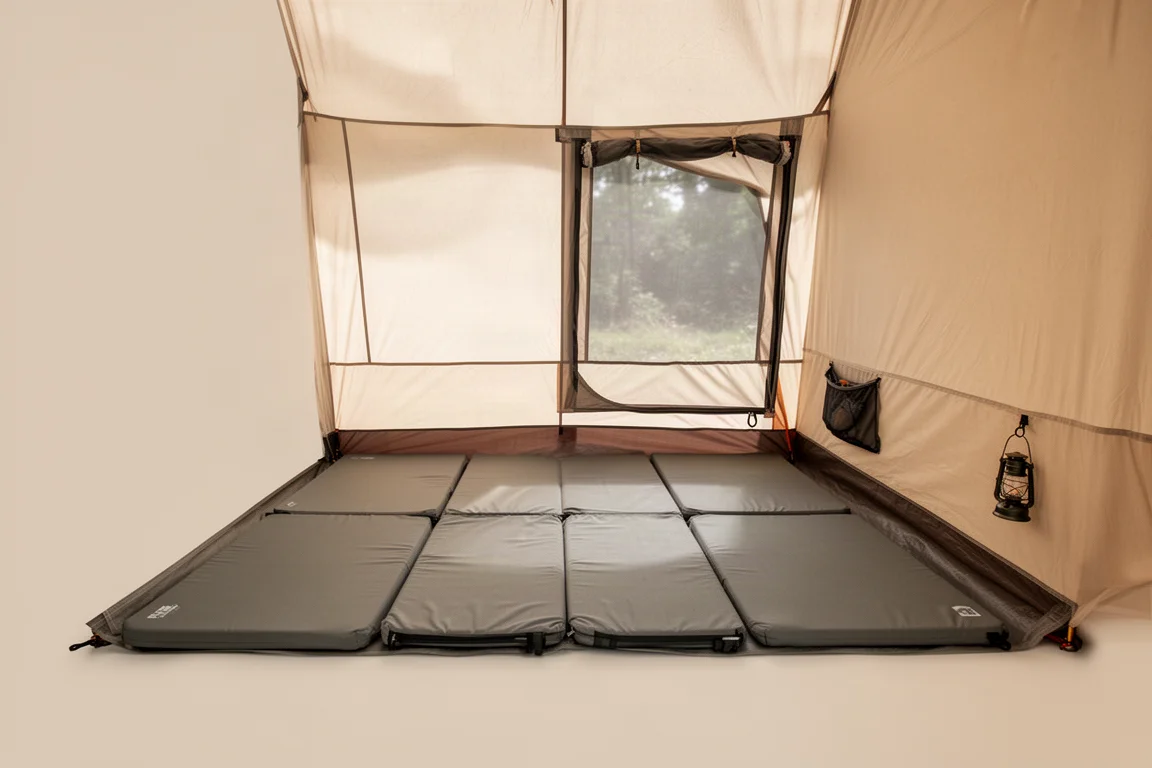
The rectangular floor is about the same 55 square feet as the Pop Up Tent, but the shape matters. Four single sleeping pads fit edge to edge with no wasted space, and one queen bed still leaves plenty of room. Four windows cover three of the walls, all of them zippable from inside, and there are two interior pockets plus a lantern loop. The tub floor rises about four inches, which helps in light flooding.
Rain protection is the weak point. In the same hose test, the Instant Tent stayed dry for about ten minutes before the first drop appeared, and after fifteen minutes water was coming through the seam joining the bathtub floor to the black tent fabric, which is inverted rather than seam taped, as well as through the pocket. The fabric was damp and the rainfly was slightly damp too. The supplied rainfly is small, covering only the very top of the tent and extending at most ten inches down the walls. The rainfly is also not included: it is bought separately for around $30 and arrives with eight extra stakes. Expect to pay more than $100 for the tent itself, roughly 20 to 30 percent more than the Pop Up Tent before the rainfly is added.
Coleman 2-Person Pop Up Tent
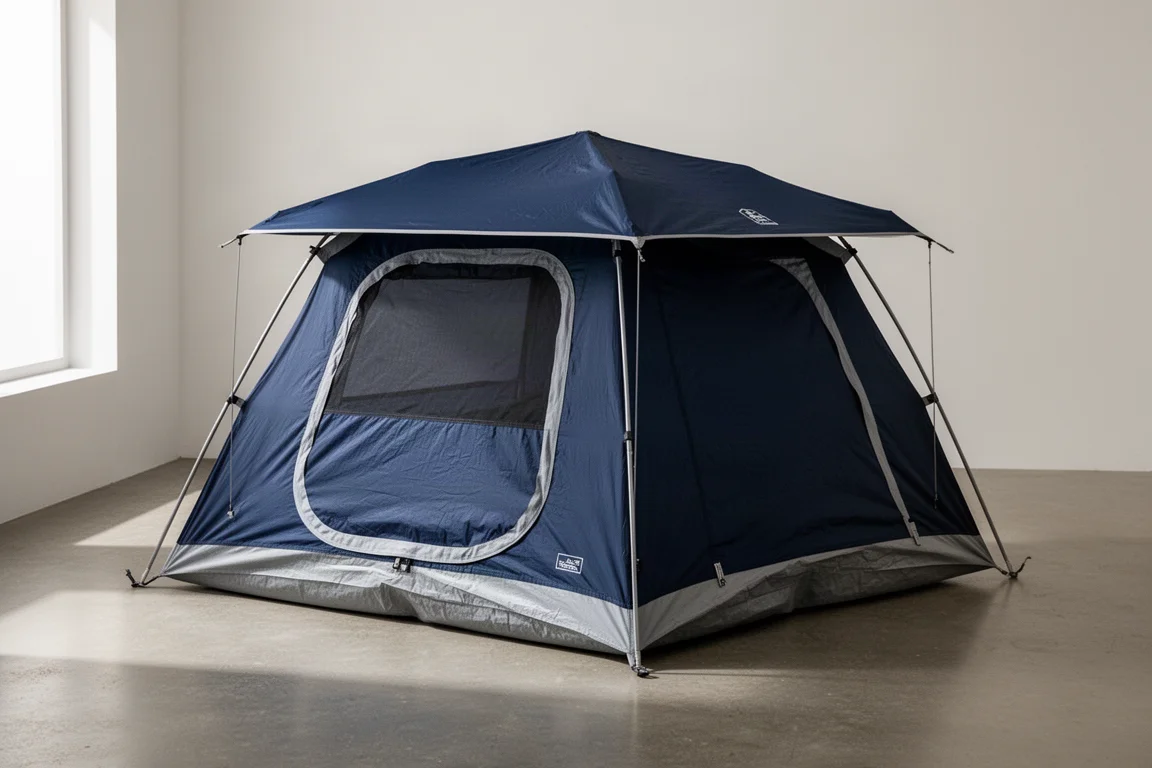
The two-person Pop Up Tent follows the same formula in a smaller package: tensioned poles, a pre-attached rainfly, and a quick fold-down into a circular packed shape. In the hose test it fared worse than its four-person sibling. Water poured through the door, the taped seam between the floor and the tent body leaked, every fabric panel soaked through, and the underside of the rainfly stayed wet and dripped through the ceiling mesh into the tent.
That makes it a reasonable pick for one or two campers who want the fastest possible setup in mild conditions, and a poor one for anyone expecting to ride out sustained rain. Storage and ventilation follow the same limits as the larger Pop Up model.
Coleman 10-Person Instant Tent
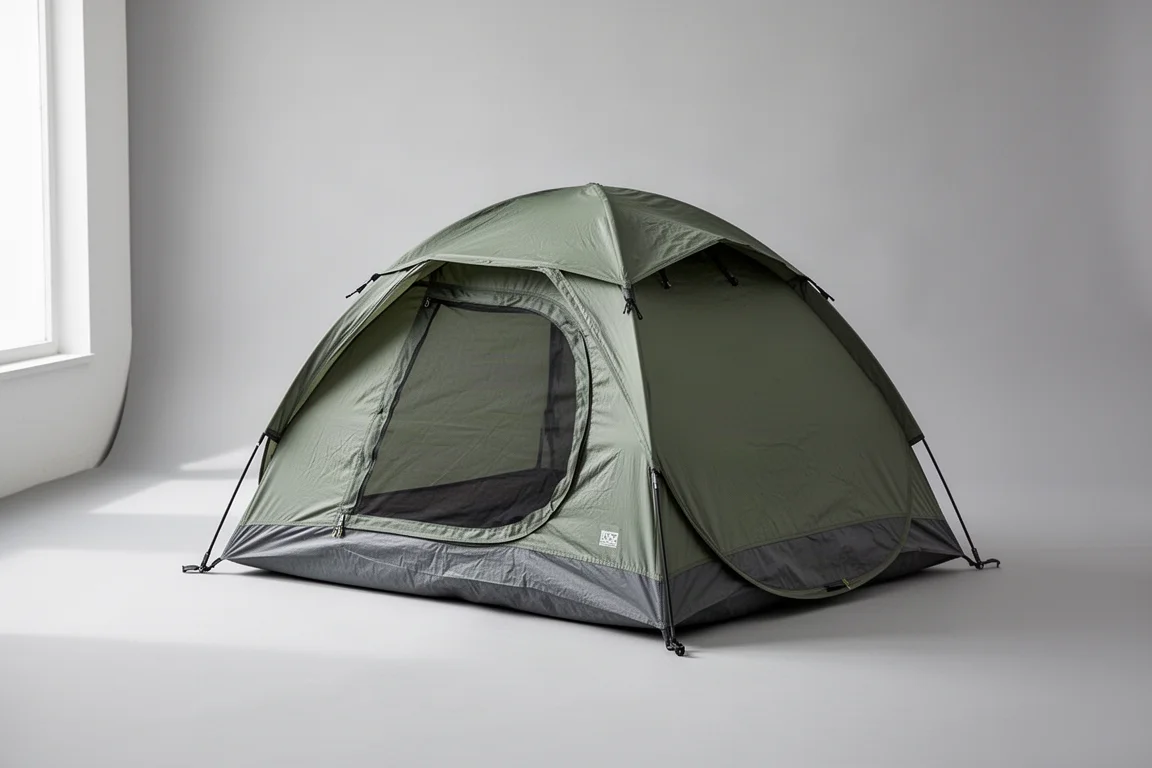
The Instant line reaches well beyond four people, up to a ten-person size, and the largest model solves a problem the smaller tents cannot: heat. It is built for hot summer days, with windows on every wall, ceiling mesh, and blackout fabric that keeps the interior cooler under direct sun. There is enough headroom to stand up anywhere inside.
It is also the only tent in this comparison that includes its rainfly with the purchase rather than charging for it separately, which changes the value calculation for a family that wants one tent for group trips.

For anyone who camps in high summer with several people, the combination of cross ventilation, blackout fabric, and full standing height is a meaningful step up from a compact four-person model. The trade-off is the space it takes up to pitch, transport, and store.
Rain Protection and Ventilation Compared
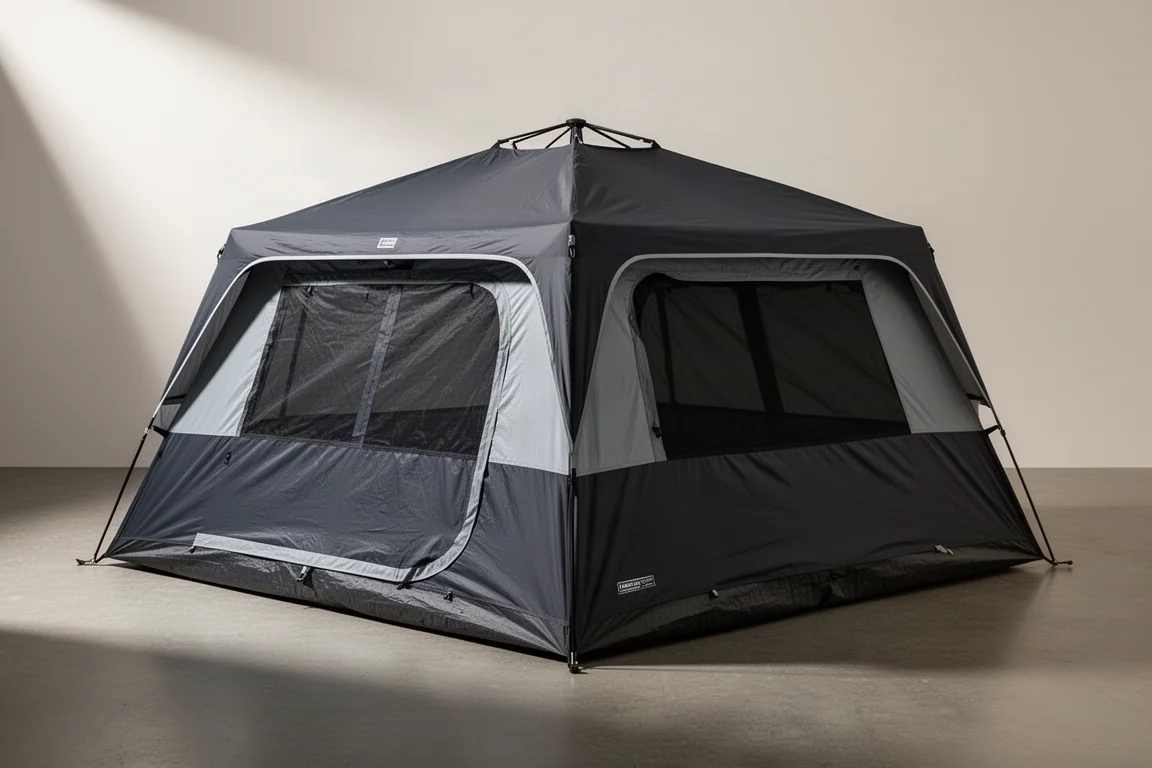
Both designs share the same weakness: a rainfly that covers very little of the tent. The Instant Tent’s rainfly stops at about ten inches down the walls, and the Pop Up Tent’s is smaller still, covering only the ceiling mesh. Once the fabric is saturated, the windows on either design become unusable on a rainy day, so ventilation disappears exactly when you want it least.
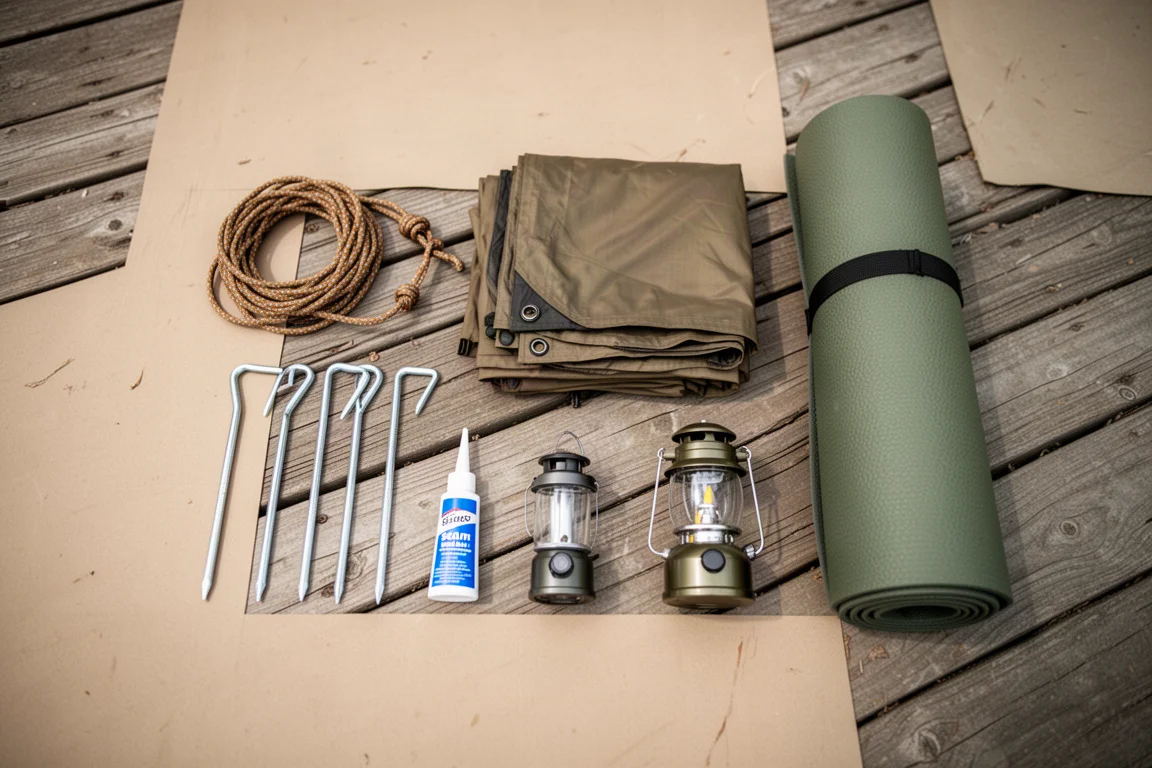
The Instant Tent has two structural advantages in wet weather. Its tub floor rises about four inches, which contains light flooding, and its inverted floor seam and untaped seams can be treated with seam sealant and a waterproofing spray. The Pop Up Tent has no tub floor at all, and its polyester body and floor absorb water more readily.
Buying Advice: Matching a Tent to Your Trip
Choose the Pop Up Tent if speed and price matter most. It goes up in about a minute and a half, packs down in about two minutes, weighs 8.2 lbs, and costs under $100. It suits backyard camping, festival weekends, and trips where the forecast is reliable. Budget a little patience for the first few pack-downs, since the folding sequence takes practice and a circular packed shape needs a little room to store.
Choose the Instant Tent if you want livable space, standing headroom in the four-person model, four windows you can open from inside, thicker steel poles, and double-thick fabric. Plan on sealing the seams and treating the fabric if rain is likely, and factor in the cost of the separate rainfly. Its long packed shape also stores more easily than a large circle.
For groups and hot-weather camping, the ten-person Instant Tent is the one to look at, with ventilation on every wall, ceiling mesh, blackout fabric, and a rainfly included.
Two practical checks before ordering: confirm the packed shape fits your storage space, since the Pop Up Tent folds into a wide circle, and confirm your air mattress height, since the Pop Up Tent tops out at 39 inches of peak height while the Instant Tent reaches 61 inches.
Conclusion
Coleman’s Pop Up and Instant tents are not really competitors, they are answers to different priorities. The Pop Up Tent wins on setup speed, packed weight, and price, with clear limits on headroom, ventilation, and rain performance. The Instant Tent costs more, weighs considerably more, and needs a separate rainfly, but it returns a cabin-shaped interior, four windows, a tub floor, and heavier materials that hold up better with a little seam sealing. The ten-person Instant Tent extends that same formula to group camping with ventilation on every wall and a rainfly included.
Further reading
Related Reviews
Camping Tents
3F UL Gear Taiji Two-Person Tent Review: Field Waterproofing Results and Buying Advice
The Taiji pairs an attached fly with a removable inner, but sustained rain exposed untaped vent seams that need sealing before this shelter can be trusted.
Camping Tents
3FUL Gear Lanshan 2 Pro 4-Season Review: A Sub-$200 Single-Wall Trekking Pole Tent
An early look at the 3FUL Gear Lanshan 2 Pro 4-Season, covering its straightforward pitch, generous interior space, and the condensation and seam-sealing questions that come with any single-wall shelter.
Camping Tents
Alps Mountaineering Lynx 1-Person Tent Review: Big Value in a Small Budget Tent
A close look at the Alps Mountaineering Lynx 1-Person Tent, covering real interior dimensions, materials, setup time, ventilation limits, and who should buy it.