Camping Tents
Coleman Pop Up Tents Rain Test: 2-Person vs 4-Person Water Resistance
A close look at how the Coleman 2-Person and 4-Person Pop Up Tents handle rain, where water gets in, and who these fast-pitching tents actually suit.
Introduction
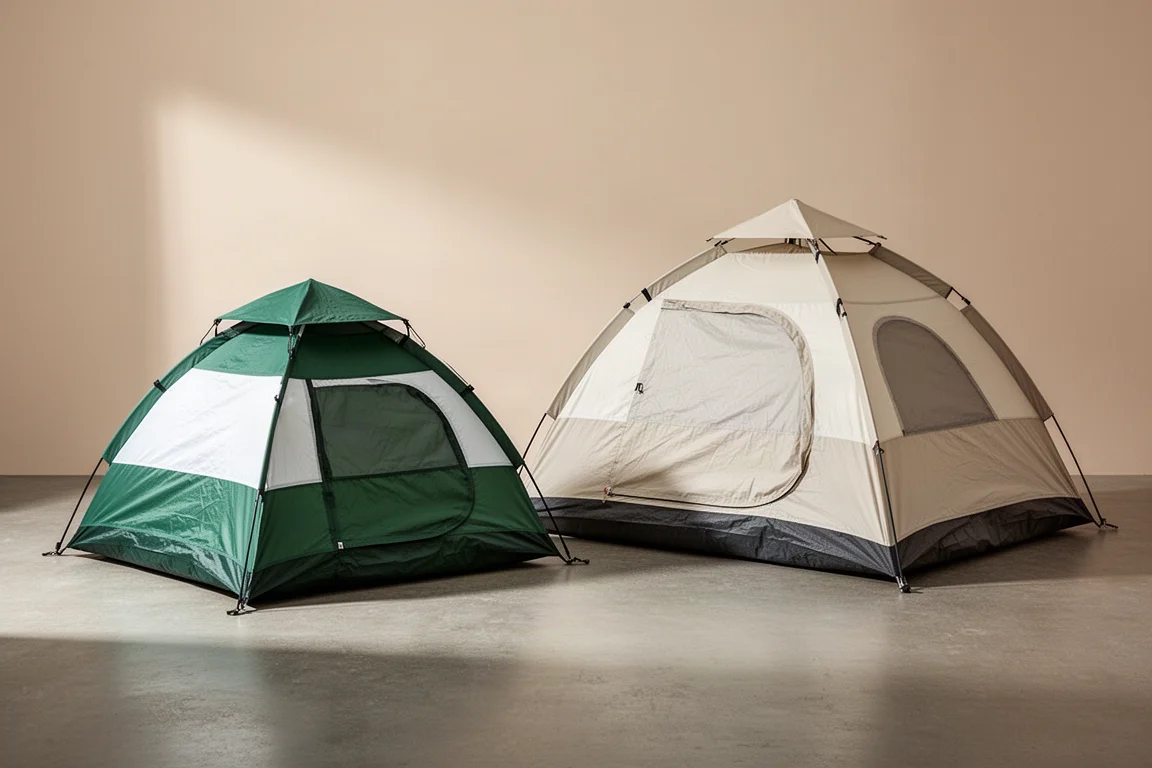
Pop up tents trade setup time for simplicity, and the Coleman Pop Up Tents are a clear example of that trade-off. Both the 2-person and the 4-person versions pitch in seconds, which makes them appealing for backyard nights and easy summer trips. The open question is how much rain they can actually take.
To find out, both tents were put through controlled rain testing: the 2-person model under a hose simulating heavy rain, and the 4-person model under roughly 10 minutes of light to moderate rain. The results give a practical picture of where these tents are strong and exactly where their limits sit.
How the Rain Tests Were Run
Before any water was applied, the seams on both tents were inspected. On the 2-person model most seams are taped, including every seam on the rainfly. Two exceptions stand out: the door seam is not taped because a grey rain cover shields it from the outside, and the roof seams are not taped because the rainfly sits over them. The 4-person model follows the same approach, with the seam joining the floor to the tent body taped on the inside and all four rainfly seams taped as well.
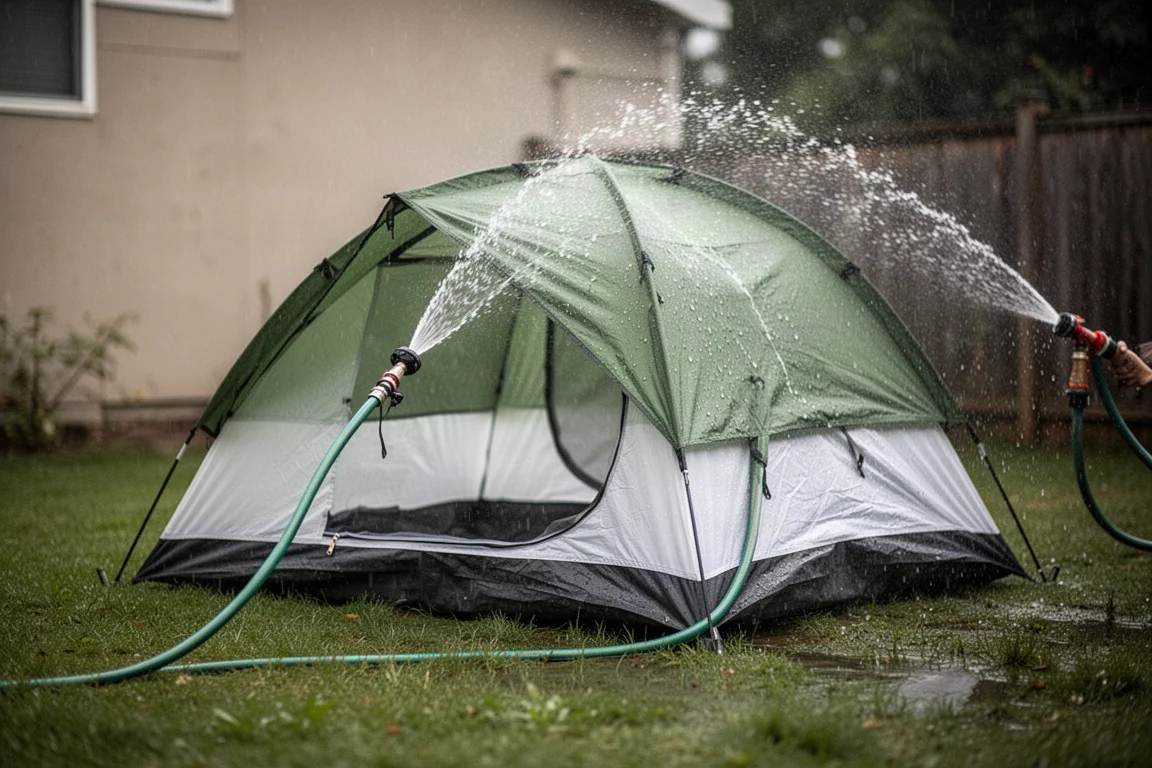
The 2-person tent was then tested with a hose to simulate heavy rain, timed with a stopwatch. The 4-person tent was tested under light to moderate rain for about 10 minutes. Both tests looked at the same points: the door, the floor seam, the tent fabric, and the rainfly.
Coleman 2-Person Pop Up Tent: Heavy Rain Results
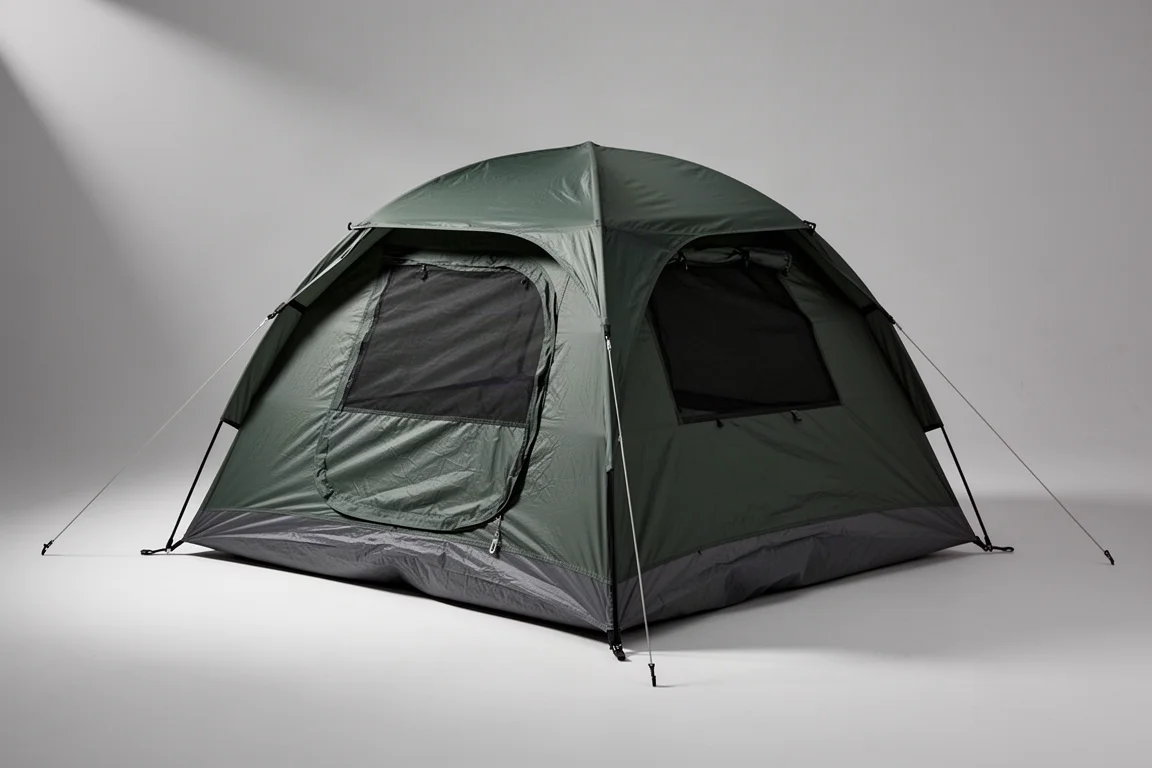
The rainfly is shaped with a downward curve so water runs off instead of pooling on top, and that part works as intended. The problem is coverage: the rainfly is quite small and protects only part of the tent.
Water began seeping through the door at around the four minute mark, and by eight minutes the patch had grown noticeably larger. At the 15 minute check, leaking from the door alone had formed large puddles on the floor, even with care taken not to let the door droop back inside.
Other weak points appeared at the same time. Water crept in through the taped seam between the floor and the tent body, possibly because the holes in the floor seam are fairly large and some of the tape was not applied cleanly. Both the green and white fabric soaked through within 15 minutes of heavy rain, and the rain cover over the door zip was saturated too. Water also collected on the ceiling mesh and dripped down to the floor. When the rainfly was unhooked and lifted, its underside was already wet and the whole panel had soaked through.
Coleman 4-Person Pop Up Tent: Light to Moderate Rain Results
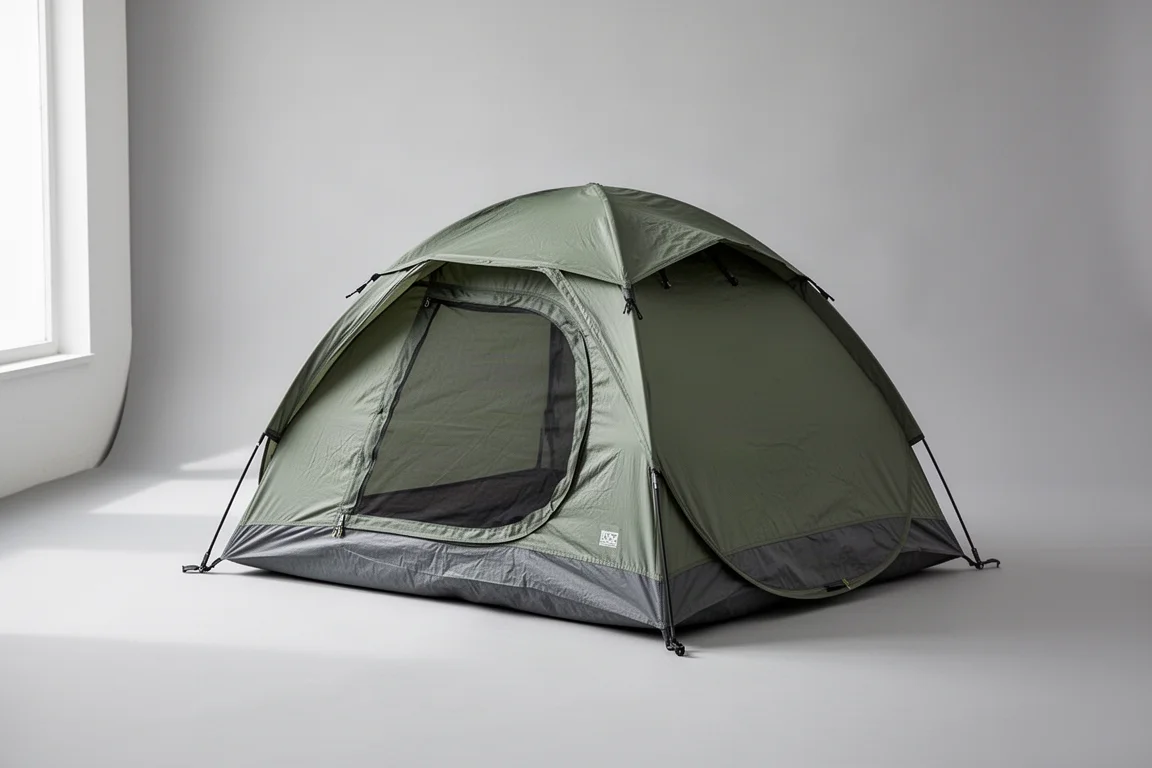
The 4-person tent held up better, though not without caveats. A small pool of water formed on the rainfly during the test, but it stayed manageable and did not develop into anything more serious. After roughly 10 minutes of light to moderate rain, most of the tent body was still dry.
The first signs of trouble appeared near the bottom of the tent, where a small amount of water began seeping through the white fabric and left it slightly damp. Water also started working through the holes along the floor seam. The seam tape stopped most of it, but the leakage looked like it would worsen with more rain, and one small spot of water did make it through the tape itself.
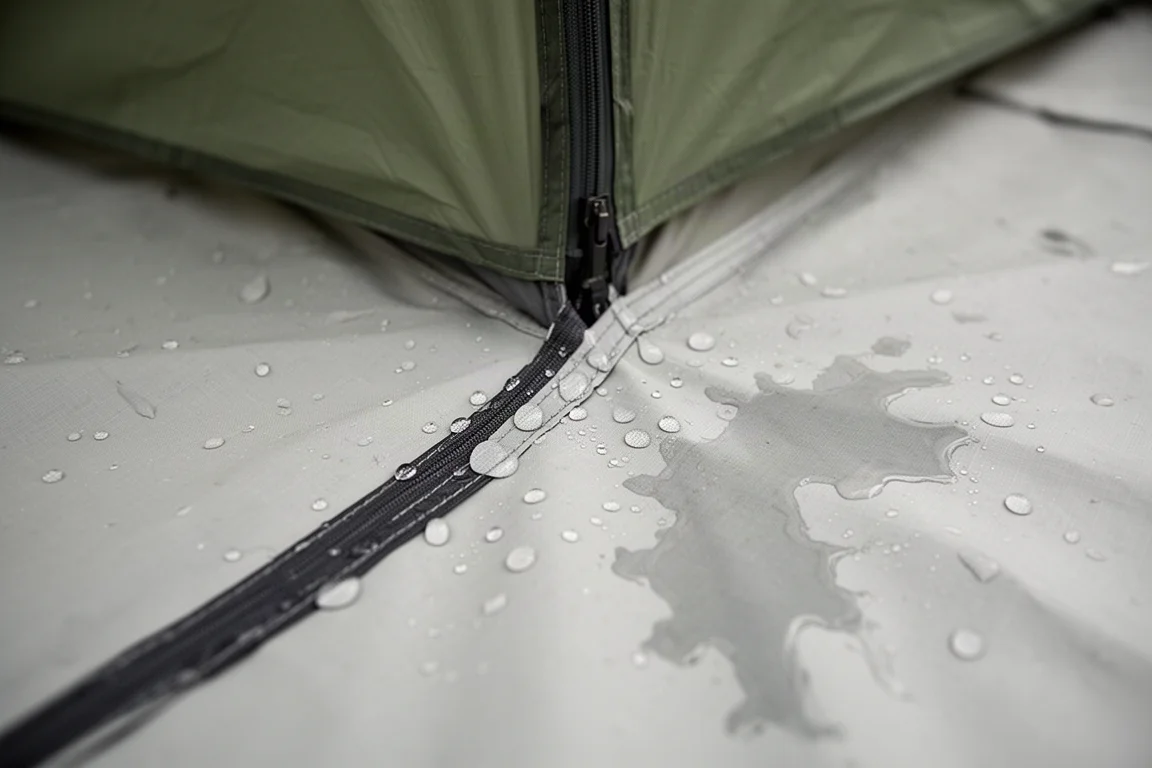
That pattern is worth remembering: the 4-person model buys you more time than the 2-person version in the same conditions, but the same weak points, the floor seam and the lower fabric, are where the water finds its way in.
Water Resistance: What the Tests Showed
Taken together, both tents show minimal water resistance. The 2-person model was completely soaked after 15 minutes of heavy rain, rainfly included. The 4-person model showed dampness and minor seepage after only 10 minutes of light to moderate rain, which is the gentler of the two tests.
That puts the practical limit for either tent at roughly 10 to 15 minutes of light to moderate rain. Beyond that, and especially in heavy rain, you should expect water inside the tent.
Door Design and Everyday Handling
The door is the least rain-friendly part of the design. Even when the door is kept from drooping back into the tent, water still finds its way inside. That makes it a genuine weak point in sustained wet weather rather than something you can manage through careful handling.
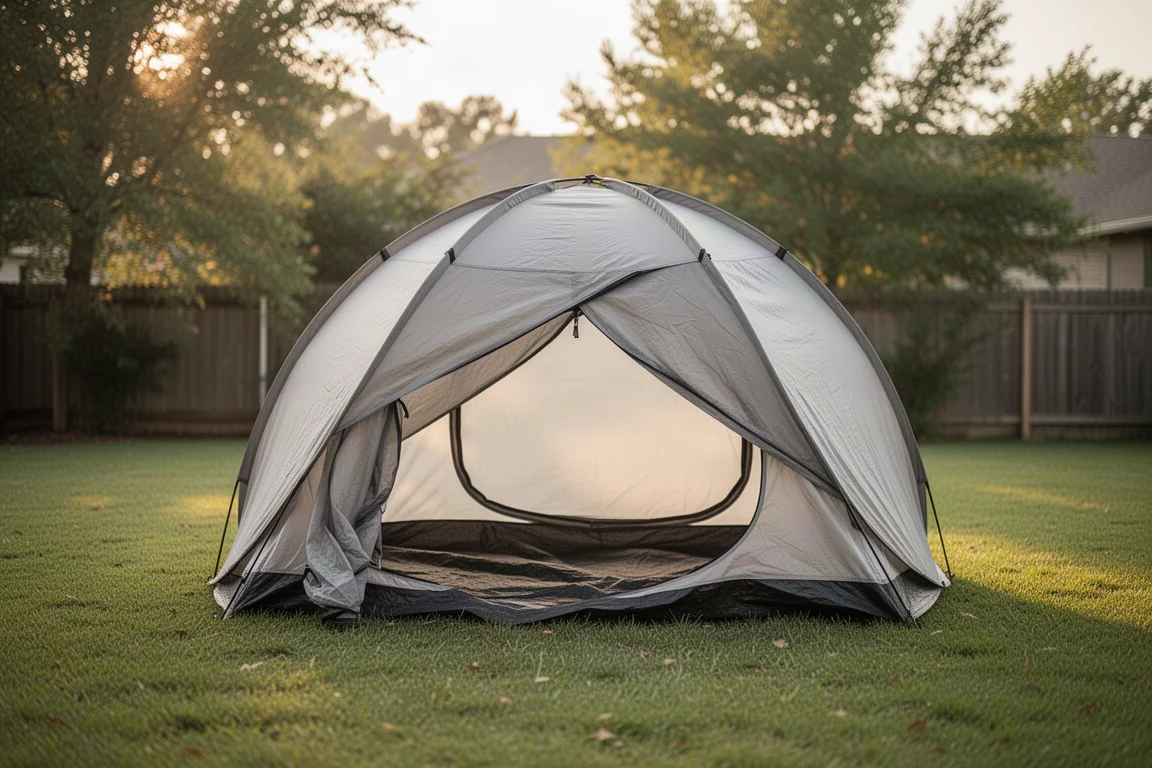
Setup is where these tents shine. The pop up mechanism removes the need to assemble poles, which is exactly what makes them appealing for casual use. That speed is the main reason to choose one, provided the forecast is on your side.
Who These Tents Suit
These tents make the most sense for indoor camping, or for backyard camping in the summer with clear skies. In those settings the fast setup is a real advantage and the limited rain protection never comes into play.
If rain is part of the plan, or even a realistic possibility, these tents are a difficult recommendation. They can absorb a few minutes of light to moderate rain, but the margin is thin, and the 2-person model in particular struggles as soon as the rain turns heavy.
Buying Advice
Choosing between the two comes down to space and how much rain exposure you expect. The 4-person model offers more room and performed better in the gentler test, with most of the interior still dry after 10 minutes of light to moderate rain. If you are camping with more than one person and want a little more buffer, it is the more sensible pick of the two.
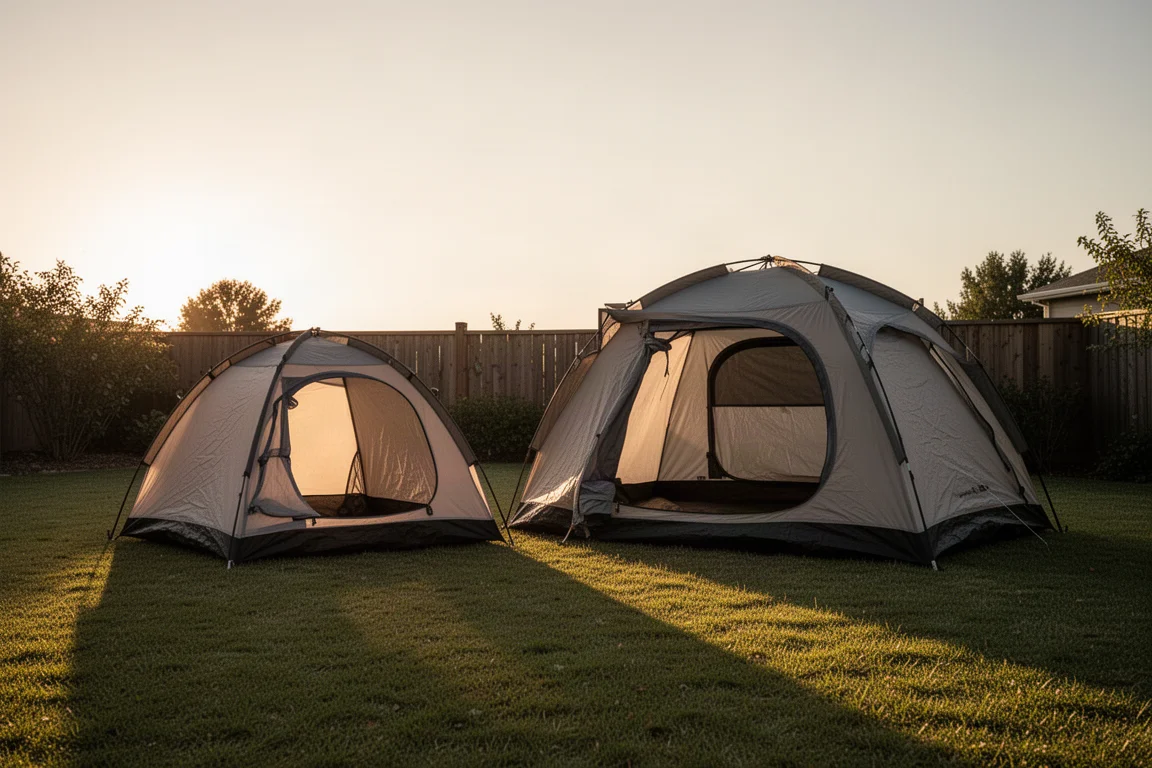
The 2-person model is the smaller, simpler option for solo or paired use, but its door and floor seam leaked quickly under heavy rain. Neither tent should be treated as a shelter you can rely on when the weather turns. Buy one for fair-weather convenience, keep a backup plan for wet nights, and you will get the most out of what these pop up designs do well.
Conclusion
The Coleman Pop Up Tents deliver on setup speed and simplicity, and the seam taping shows that some thought went into rain protection. The testing makes the limits clear, though: roughly 10 to 15 minutes of light to moderate rain is about as far as either tent goes, and heavy rain soaks them through. For indoor or fair-weather backyard camping that is a workable trade-off. For anything wetter, look elsewhere.
Further reading
Related Reviews
Camping Tents
3F UL Gear Taiji Two-Person Tent Review: Field Waterproofing Results and Buying Advice
The Taiji pairs an attached fly with a removable inner, but sustained rain exposed untaped vent seams that need sealing before this shelter can be trusted.
Camping Tents
3FUL Gear Lanshan 2 Pro 4-Season Review: A Sub-$200 Single-Wall Trekking Pole Tent
An early look at the 3FUL Gear Lanshan 2 Pro 4-Season, covering its straightforward pitch, generous interior space, and the condensation and seam-sealing questions that come with any single-wall shelter.
Camping Tents
Alps Mountaineering Lynx 1-Person Tent Review: Big Value in a Small Budget Tent
A close look at the Alps Mountaineering Lynx 1-Person Tent, covering real interior dimensions, materials, setup time, ventilation limits, and who should buy it.