Camping Tents
Coleman Pop Up Tent vs Sundome Tent: Which Coleman Tent Should You Buy?
A practical comparison of the Coleman 2-Person Pop Up Tent, the 2-Person Sundome Tent, and the 4-Person Pop Up Tent, covering setup speed, rain performance, interior space, and packed size.
Introduction
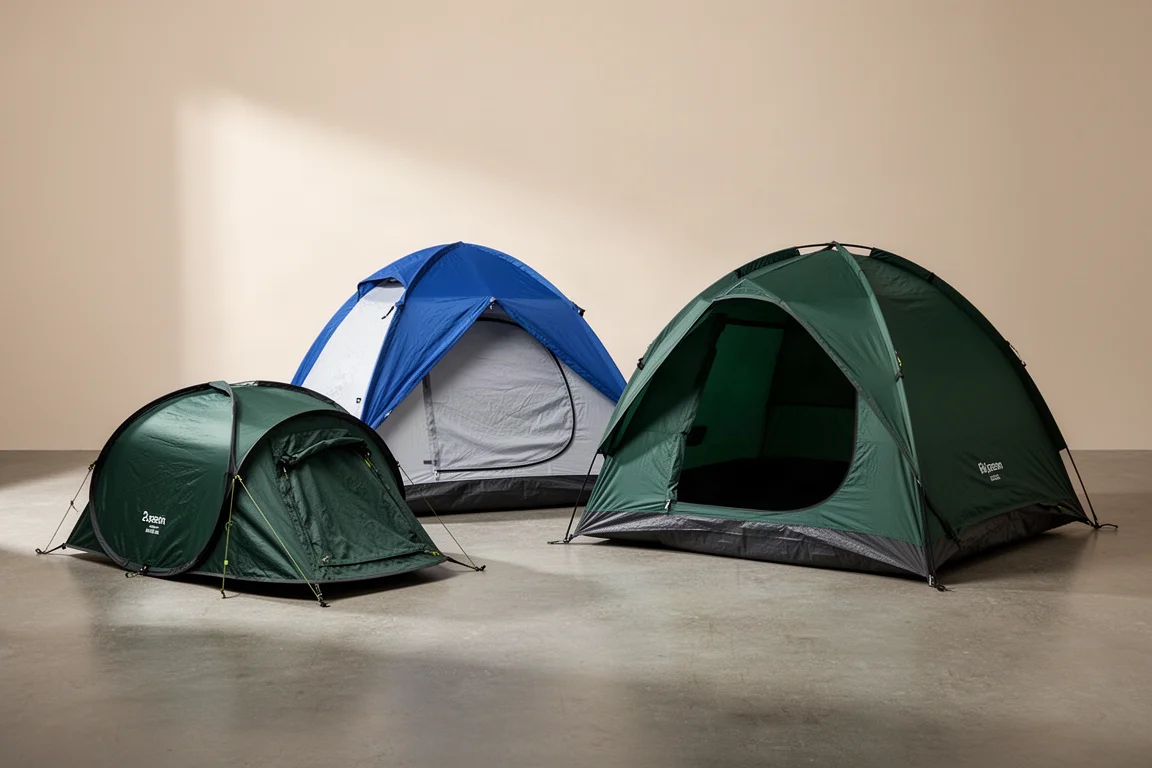
Coleman builds two very different kinds of small tent. The Pop Up Tent arrives with its rainfly already attached and springs open in seconds, while the Sundome Tent uses conventional poles and a considerably longer rainfly. Both come in two-person versions with almost identical floor areas, yet they behave very differently once the weather turns or once two people actually try to sleep inside.
This comparison covers the Coleman 2-Person Pop Up Tent, the Coleman 2-Person Sundome Tent, and the Coleman 4-Person Pop Up Tent, and explains which one suits which kind of trip.
What Matters Most in a Small Camping Tent
Five things separate these tents in real use.
Setup and pack-down time. The pop-up design springs open in about 15 seconds, and staking it out adds roughly a minute and 15 seconds. The Sundome takes around five and a half minutes to pitch and about five minutes to pack away.
Usable interior space. Floor area is nearly identical, at slightly over 30 square feet each, but peak height is not: 32.5 inches for the 2-Person Pop Up Tent against 48.5 inches for the Sundome.
Rain protection. A short rainfly, the absence of a bathtub floor, and untaped seams decide how long a tent stays dry.
Ventilation. Vents, mesh walls, and windows matter on warm nights and on wet ones alike.
Packed size and weight. The two-person tents weigh almost the same, but their packed volumes differ considerably.
The practical takeaway is that no single tent wins every category. The pop-up design wins on speed, while the Sundome wins on weather resistance, headroom, and ventilation.
Coleman 2-Person Pop Up Tent: The Fastest Tent to Pitch
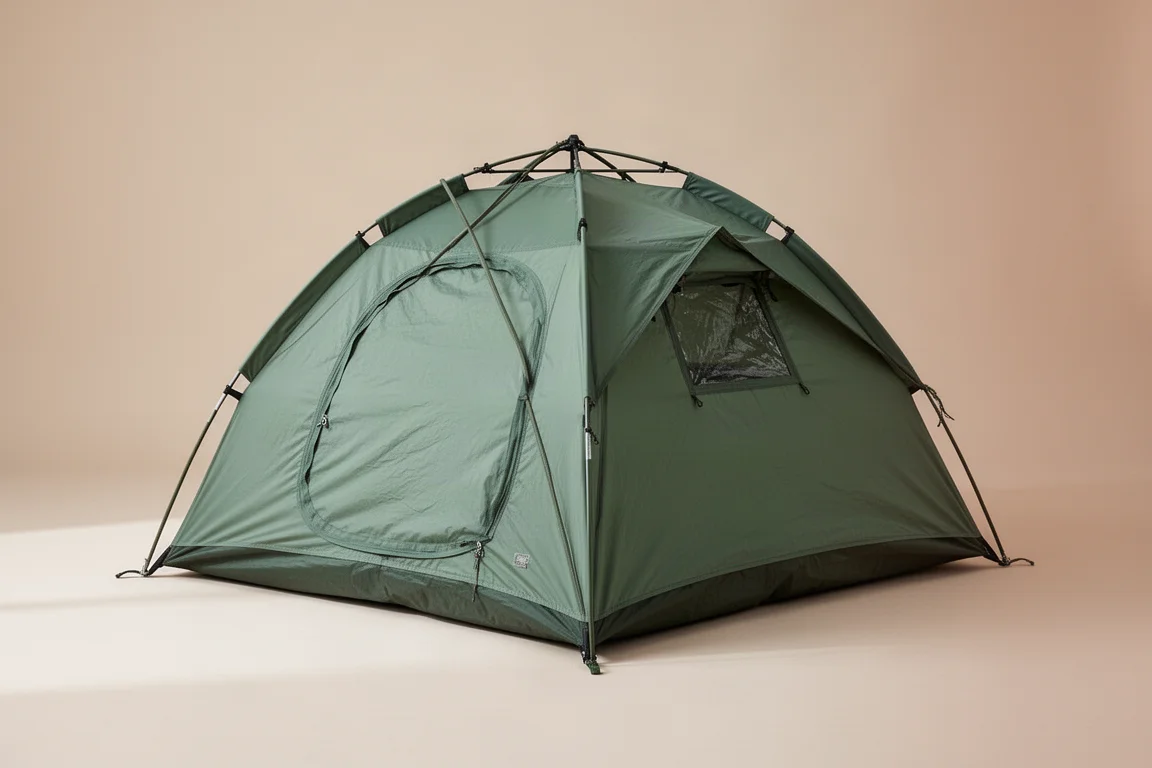
Setup on this tent is almost entirely mechanical. Take it out of the carry bag, remove the black strap, and toss it away from you. It pops open with the rainfly already attached, which takes about 15 seconds. Guying it out and staking it down adds another minute and 15 seconds, for a total of roughly one and a half minutes. Packing it away is just as quick: fold the tent until it looks like a taco, then fold the taco down, and it is back in the bag in under two minutes.
The trade-offs appear inside. Peak height is only 32.5 inches, and a mattress thicker than about four inches is not recommended. The base covers slightly over 30 square feet, but it is oval rather than rectangular. A double-wide sleeping pad filled the space corner to corner, and a full-size mattress could not be inflated completely inside.
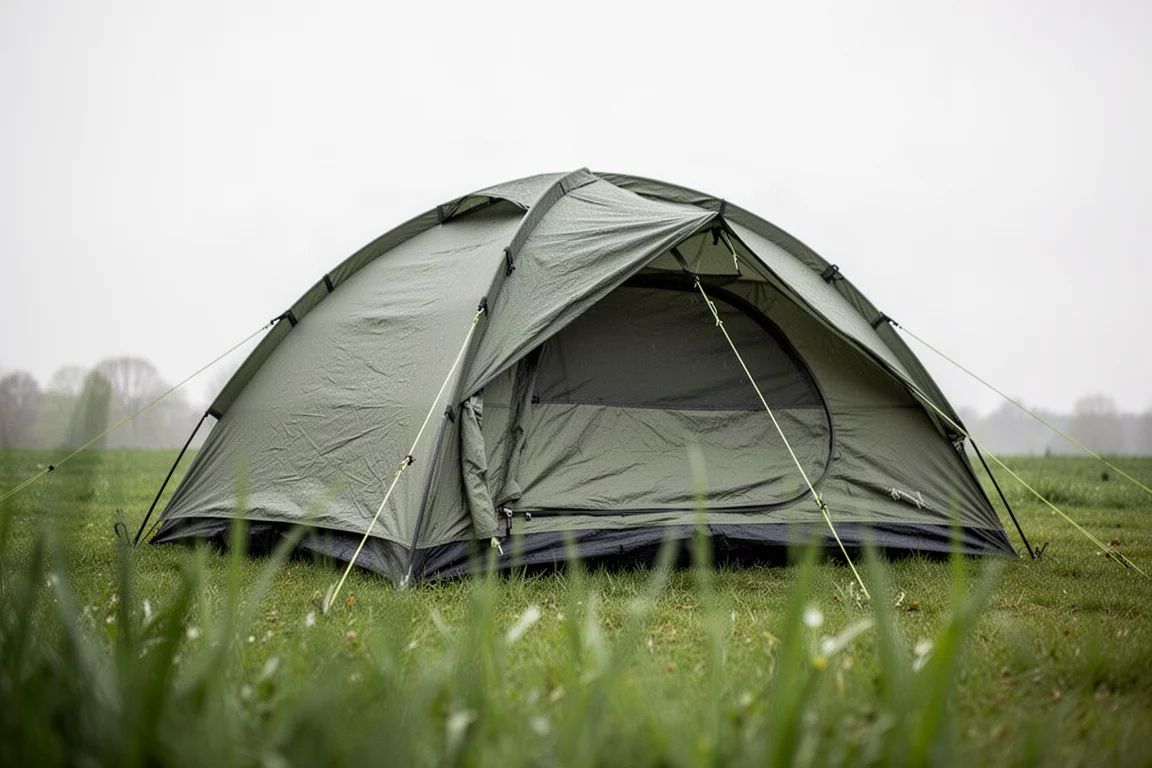
Rain is where this tent struggles most. After 15 minutes of heavy rain the entire tent was soaked through: the door leaked, the taped seam between the floor and the body leaked, all the interior fabric was wet, and even the underside of the rainfly was damp. There is no bathtub floor and no vent of any kind, so wet days offer no ventilation either. Storage is limited to a single pocket that is split into two, with no lantern loop and no e-port. This is a fair-weather tent in the truest sense, and it is at its best in a backyard.
Coleman 2-Person Sundome Tent: The Weather-Ready Option
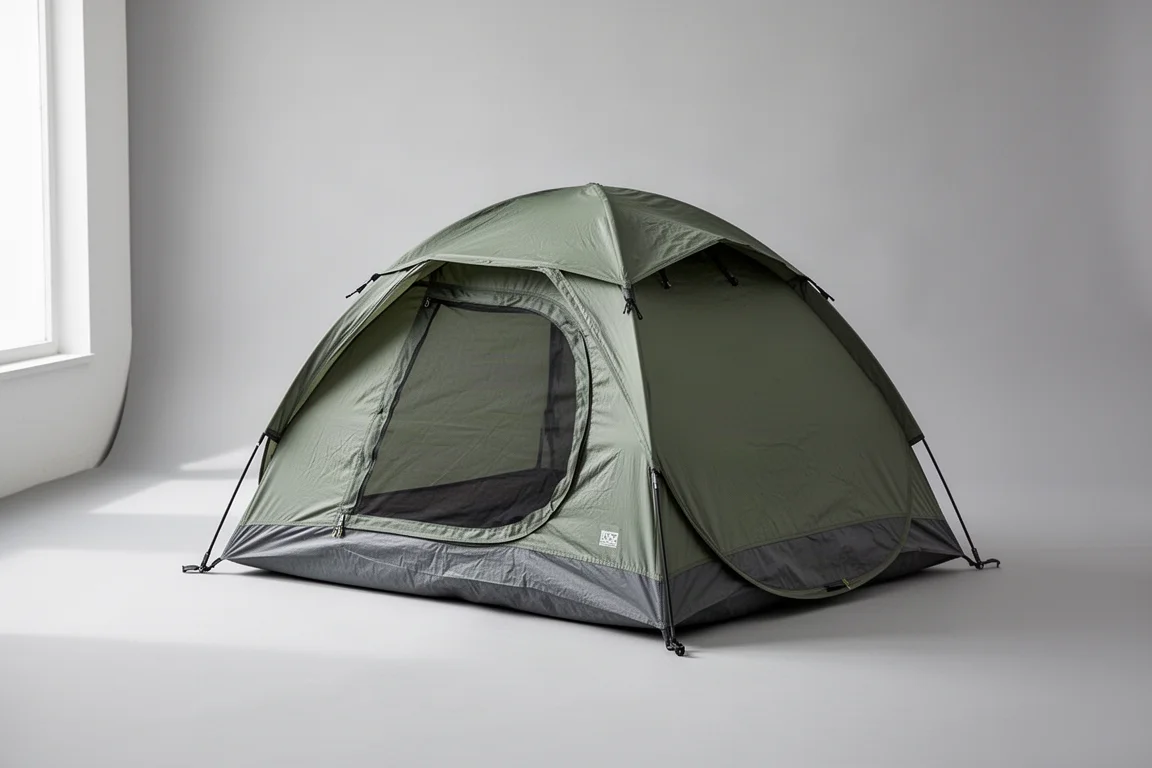
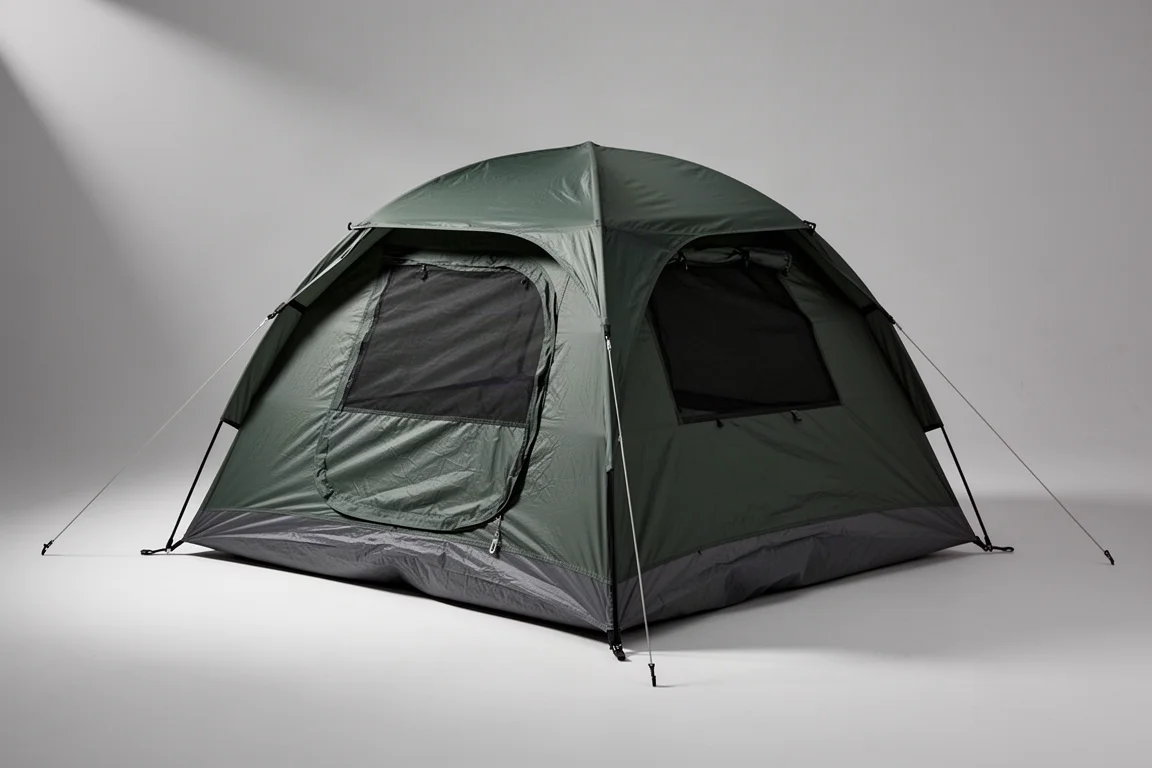
The Sundome asks for a conventional pitch: thread the poles through the sleeves, prop them up, seat them into the pins, attach the pole clips, drape and secure the rainfly, stake the tent down, and guy it out. That sequence takes around five and a half minutes, and packing it away takes about five minutes, since the body, the rainfly, the poles, and the stakes all have to be folded and stowed separately.
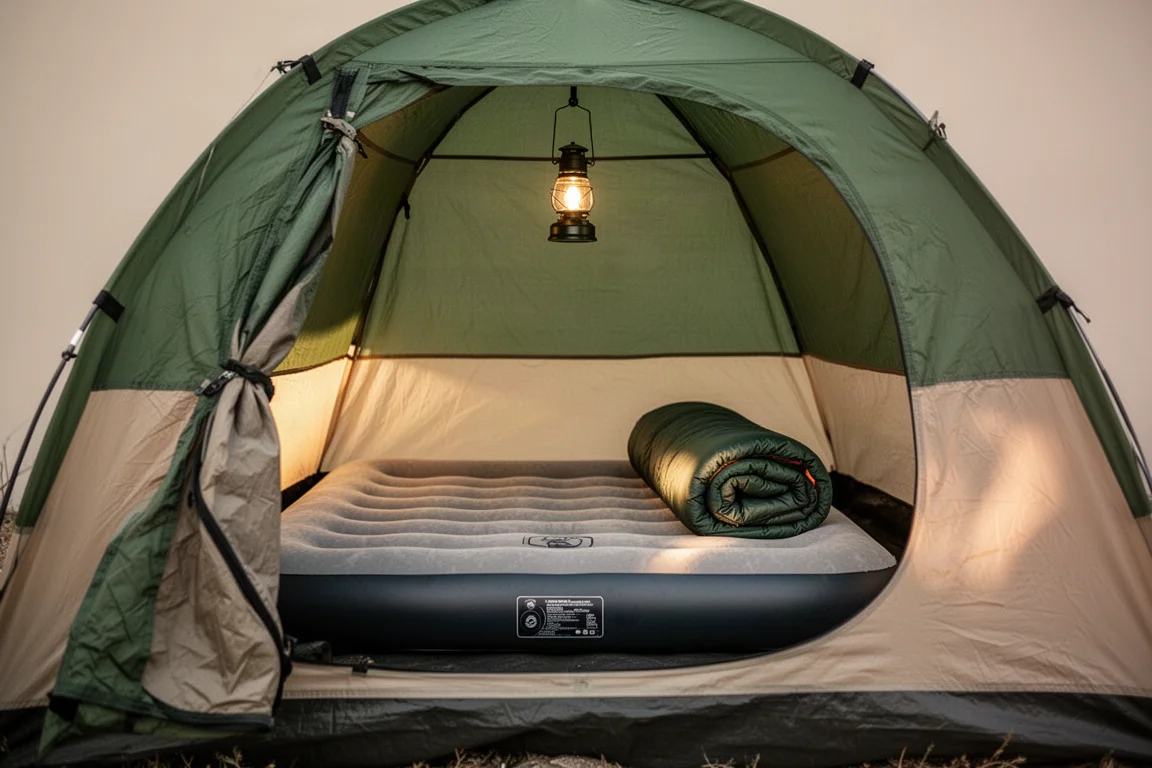
What you get in return is space and shelter. The 48.5-inch peak height comfortably fits a mattress up to nine inches thick without feeling cramped, and the floor, also slightly over 30 square feet, can take a full queen bed. Inside there are two pockets, a lantern loop at the top, and an e-port at the bottom for a power cable.
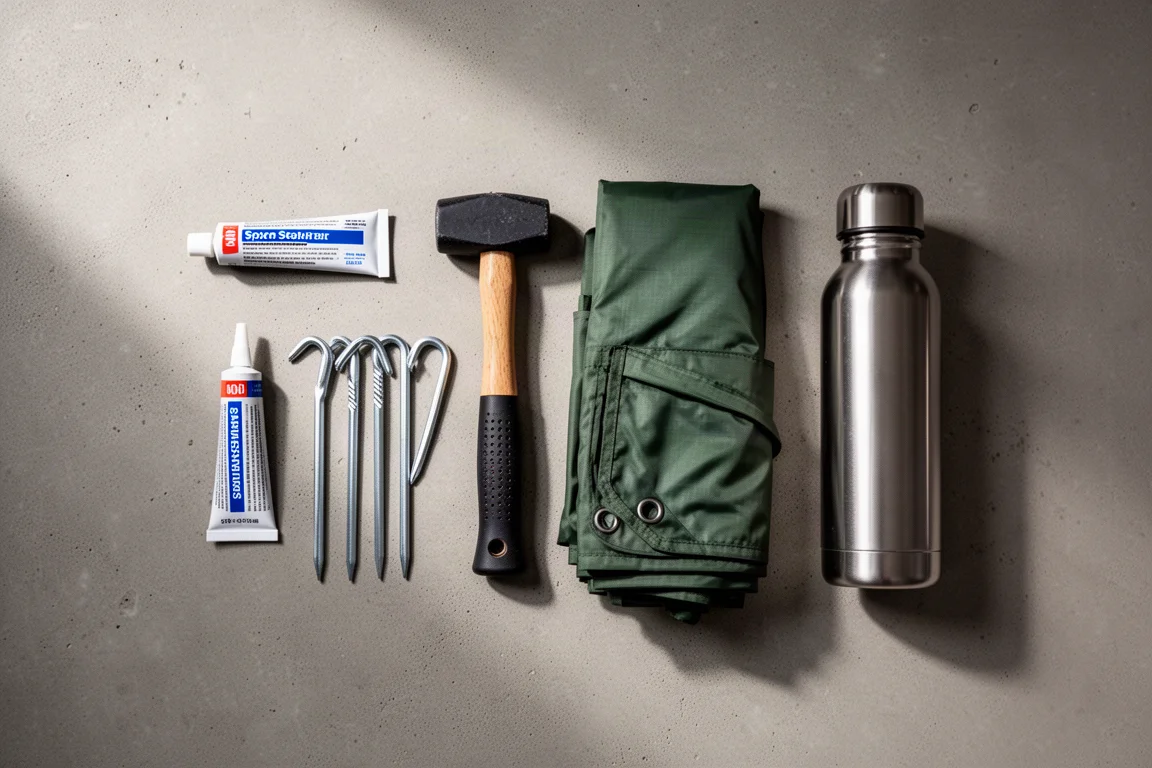
The rainfly is considerably longer than the pop-up tent’s, and the difference shows in wet weather. The first drop of water only began seeping through the untaped flooring seam after about 35 minutes of heavy rain. A little seam sealant on that seam should extend protection to a couple of hours or more. An eight-inch bathtub floor keeps ground water away from the sleeping area, and two large wall vents plus a small ground vent keep air moving on rainy days. With the rainfly removed on a hot day, the Sundome opens up through two large mesh walls, a window, and the door.
Coleman 4-Person Pop Up Tent: More Room, Same Quick Pitch
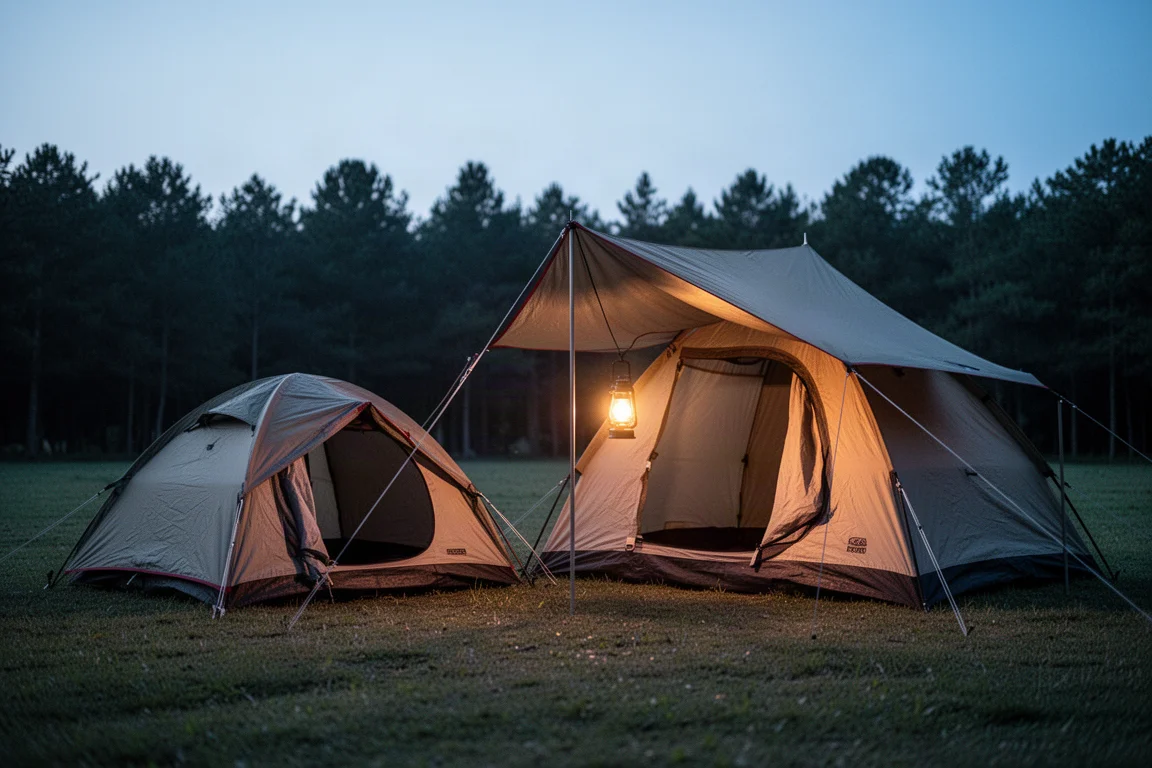
If the speed of the pop-up design appeals but the two-person version feels too tight, the 4-Person Pop Up Tent is the more versatile choice. It keeps the same spring-open mechanism and the same easy fold-and-store packing, but it fits a queen bed and adds six inches of headroom, which means slightly thicker air mattresses can be squeezed in.
That extra room matters. In the two-person pop-up tent, even an eight-inch mattress consumed so much of the livable space that moving around became awkward, and a full-size mattress could not be fully inflated.
The caveats carry over from the smaller pop-up model. This is not the most rugged or the most weather-resistant tent in the Coleman range. It does not perform well in rain, ventilation is limited, and the packed size is bulky.
Which Coleman Tent Should You Choose?
The decision comes down to the weather you expect and the way you camp.
Choose the Coleman 2-Person Pop Up Tent if speed is everything: backyard nights, fair-weather weekends, and trips where you want the tent standing in a minute and a half and packed away in under two.
Choose the Coleman 2-Person Sundome Tent if you camp in the rain, want to sit up inside, or plan to sleep on a thick mattress. Budget for a tube of seam sealant, and the flooring seam should hold up far longer in heavy rain.
Choose the Coleman 4-Person Pop Up Tent if you want pop-up convenience with enough room for a queen bed and a little more headroom. Simply accept the same limitations on rain and ventilation as the smaller pop-up model.
If rain is a regular part of your camping calendar, the Sundome is the safer purchase. If your trips are mostly short and dry, the pop-up tents deliver convenience that is hard to match.
Conclusion
The Coleman 2-Person Sundome Tent is the more capable tent overall, with genuine headroom, better ventilation, and rain protection that lasts. The pop-up tents trade that protection for the fastest setup and pack-down available, and the 4-Person Pop Up Tent is the stronger of the two thanks to its queen-bed floor and extra headroom. Match the tent to the conditions you actually camp in, and either approach will serve you well.
Further reading
Related Reviews
Camping Tents
3F UL Gear Taiji Two-Person Tent Review: Field Waterproofing Results and Buying Advice
The Taiji pairs an attached fly with a removable inner, but sustained rain exposed untaped vent seams that need sealing before this shelter can be trusted.
Camping Tents
3FUL Gear Lanshan 2 Pro 4-Season Review: A Sub-$200 Single-Wall Trekking Pole Tent
An early look at the 3FUL Gear Lanshan 2 Pro 4-Season, covering its straightforward pitch, generous interior space, and the condensation and seam-sealing questions that come with any single-wall shelter.
Camping Tents
Alps Mountaineering Lynx 1-Person Tent Review: Big Value in a Small Budget Tent
A close look at the Alps Mountaineering Lynx 1-Person Tent, covering real interior dimensions, materials, setup time, ventilation limits, and who should buy it.