Camping Tents
Coleman Montana vs Red Canyon 8-Person Tent: Which Family Tent Fits Your Camping Style
A measured comparison of two affordable Coleman 8-person tents covering floor area, ventilation, doors, packed weight, and rain performance.
Introduction
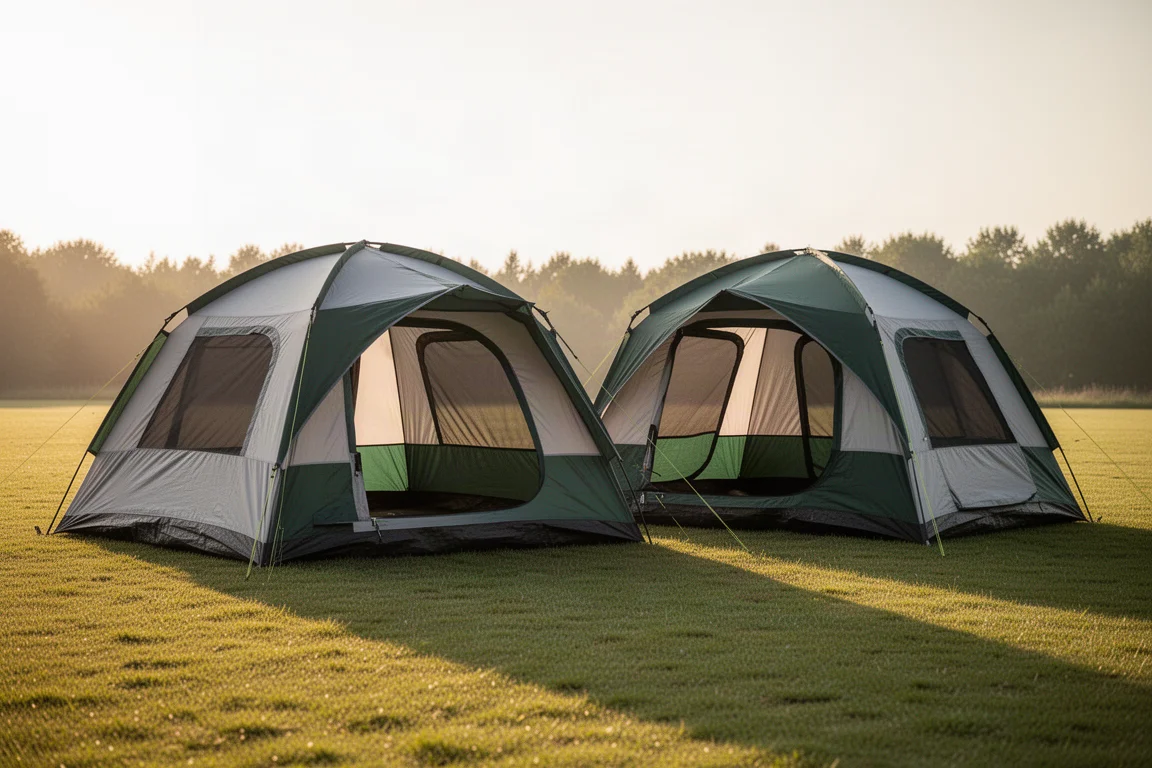
Two Coleman eight-person tents, the Red Canyon and the Montana, land at almost the same price and target the same buyer: families who want a large dome tent without spending a fortune. From the outside they look closely related, and their peak heights sit within an inch of each other. The differences appear once you start measuring floor area, ventilation, doors, and packed weight. This comparison walks through what each tent does well and where each one asks for a compromise, so the layout can be matched to the way you actually camp.
How These Two Tents Compared in Testing
Both tents were pitched solo and timed. The Red Canyon went up in about 20 and a half minutes, while the Montana took roughly 22 minutes. The extra time on the Montana came from two additional fiberglass poles that support the hinged D-door, plus a rainfly pole that has to be threaded into a sleeve, secured with four Velcro attachments, bent into place, hooked up with s-hooks, and staked out along its extended edges. Takedown and packing were nearly identical: about 14 minutes for the Red Canyon and 14 and a half minutes for the Montana.
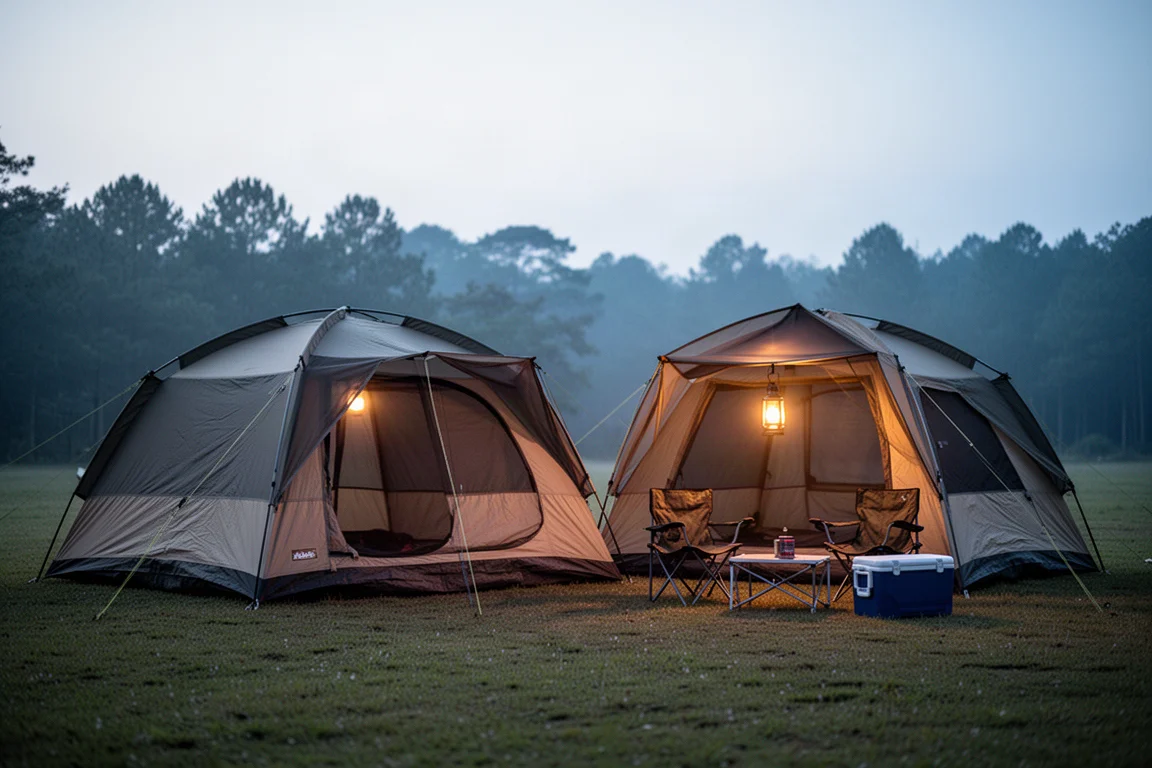
Measurements covered base dimensions, peak height, mesh area with the rainfly removed, and the number of windows or vents that can stay open in heavy rain. Both tents also went through the same rain test to see how long they stayed dry.
Coleman Red Canyon 8-Person Tent: Room to Spread Out
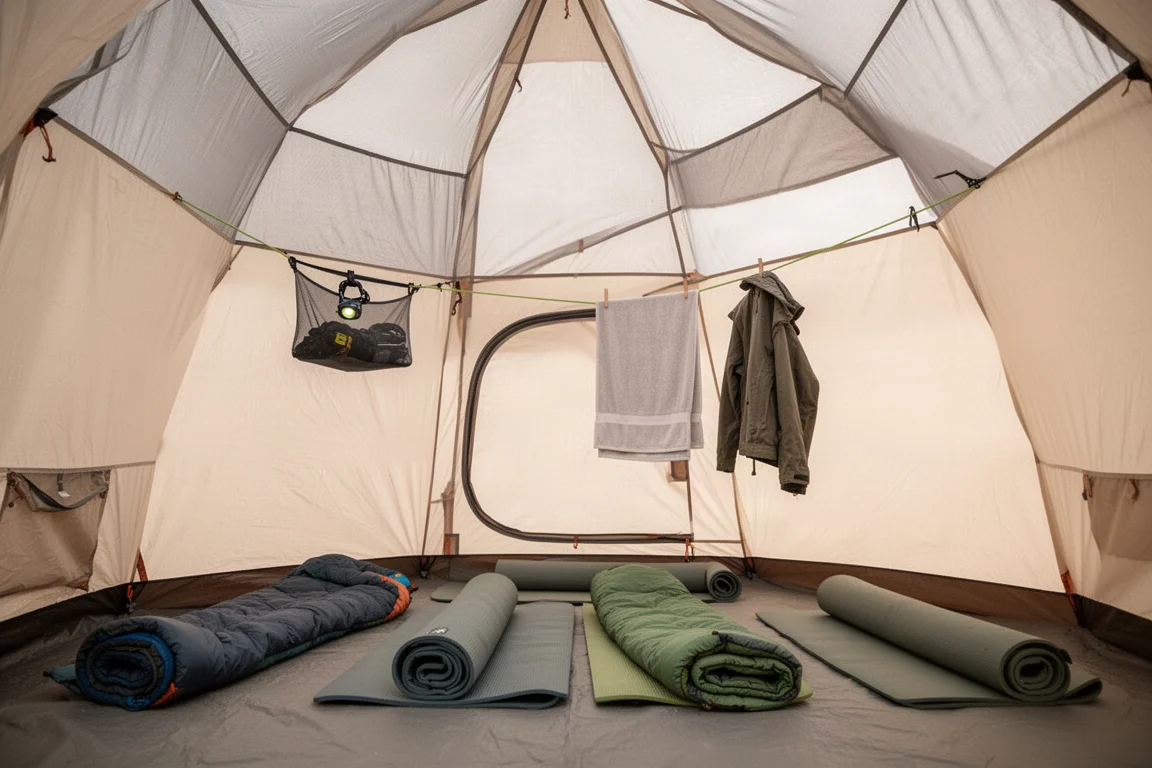
The Red Canyon is the larger of the two by a wide margin. Its longest length measures about 16 feet 4 inches and its longest width about 9 feet 7 inches, for a total base area of roughly 140.6 square feet. That is enough for eight sleeping pads with space left over at the sides for gear, and it could realistically take two more pads.
Peak height is 73 inches, and like the Montana it uses an extended dome shape, so that height is only at the center of the tent. Move a few steps away from the middle and headroom drops quickly.
Coleman Red Canyon 8-Person Tent: Dividers, Storage, and Ventilation
The Red Canyon ships with two room dividers that attach at the sides of the tent. In the middle section you can fit four regular sleeping pads or two double pads. Behind each divider there is room for a double pad or two separate pads and nothing larger. There is no zip opening down the middle, so getting into a divided room means undoing a latch and climbing over the fabric, which is not the friendliest arrangement.
Storage is where this tent pulls ahead. Both tents include two pockets and a lantern loop, but the Red Canyon adds a gear loft at the top and a pre-attached clothesline. It does not include an e-port. Hot-weather ventilation is the strongest of the two, with ceiling mesh plus four windows totaling about 3,300 square inches of window ventilation. In heavy rain only three small vents can stay open, so airflow drops off sharply in wet weather.
The carry bag is thicker and higher quality than the Montana’s, but it cannot be expanded, so the tent has to be folded neatly to fit back inside.
Coleman Montana 8-Person Tent: Hinged Door, Porch, and E-Port
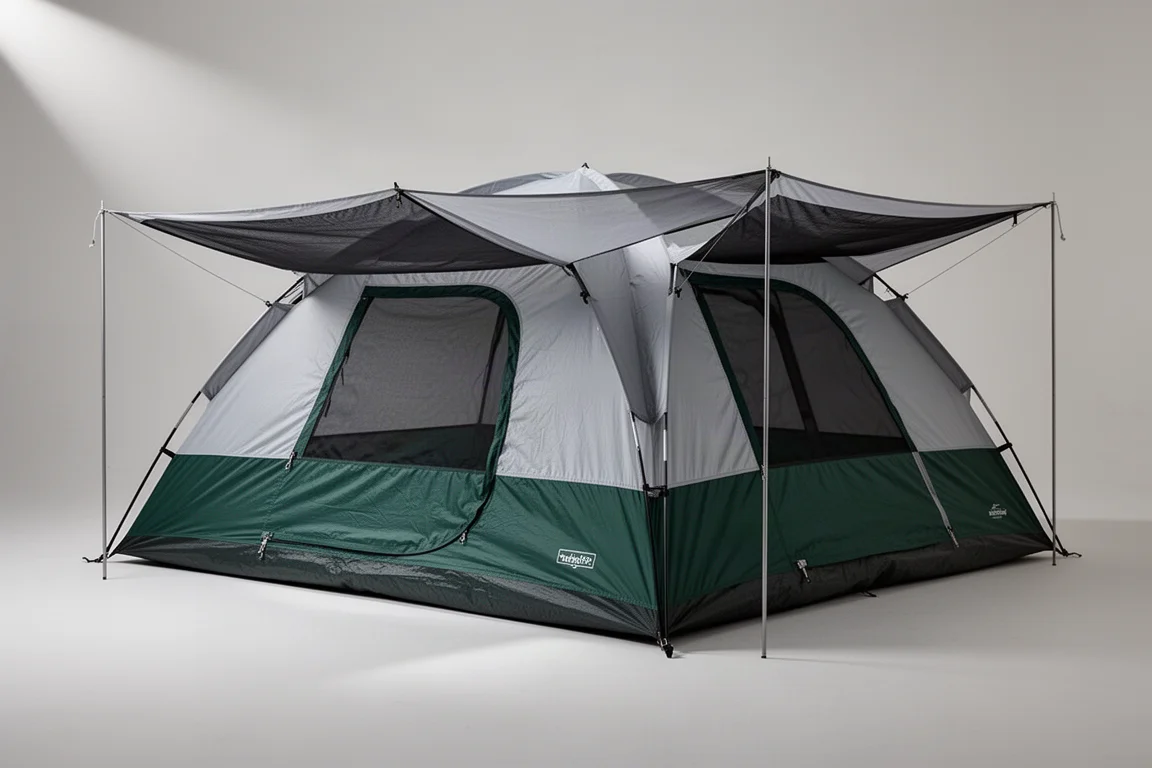
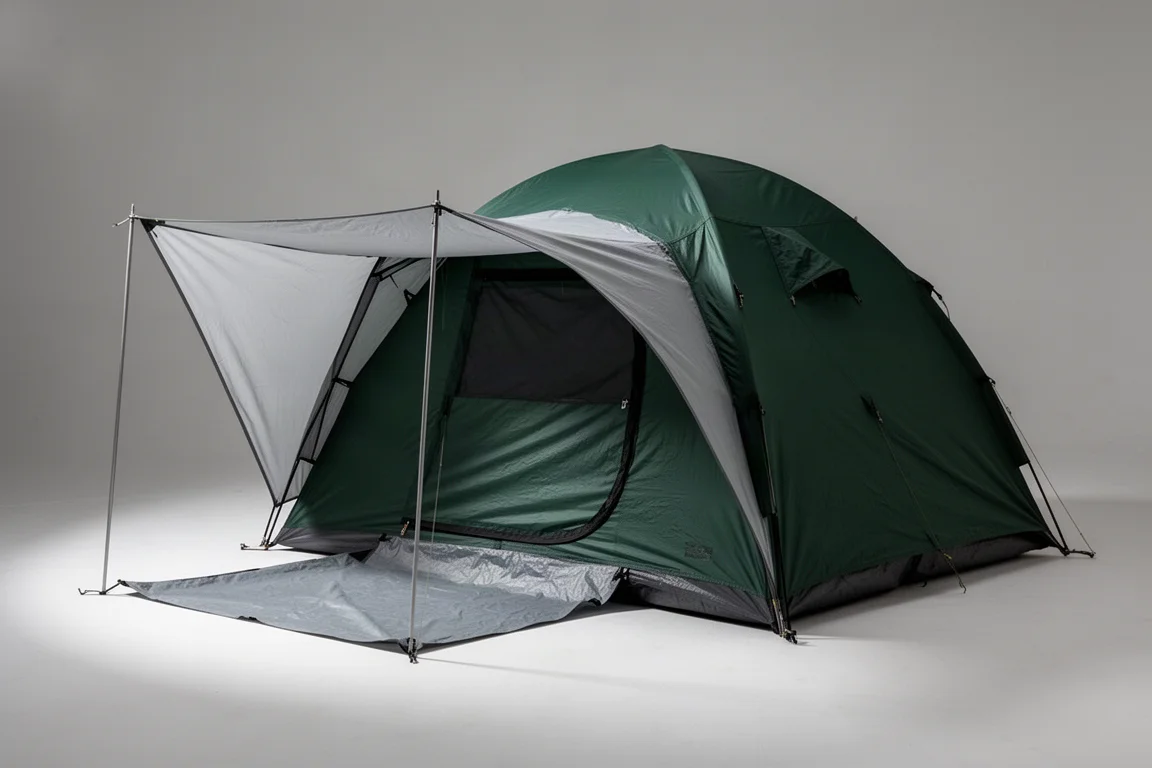
The Montana’s standout feature is its hinged D-door. It has handles on both the inside and the outside, works like a regular door rather than a zippered panel, and can be pushed open and held behind the black fiberglass pole so it stays out of the way. The Red Canyon door relies on zippers, plus two side latches if you want it left open.
A porch area measuring about 103 inches by 32 inches is unique to the Montana. It provides meaningful shade and a place to leave gear or footwear, keeping items out of direct sun. The Montana also includes an e-port at the bottom of the tent with a zippered closure for running a power cord, something the Red Canyon lacks.
Floor space is the trade-off. The Montana measures about 15 feet 4 inches by 6 feet 9 inches, roughly 103.5 square feet, which fits eight pads side by side with no leftover space. Peak height is 74 inches. Ventilation with the rainfly off comes to about 2,200 square inches across three windows, roughly two-thirds of the Red Canyon’s figure. There are no room dividers.
Setup, Packing, and Portability
Portability favors the Red Canyon. It weighs 20.2 pounds and packs to 26 by 13 by 10 inches. The Montana weighs 23.4 pounds and packs to 26 by 15 by 12 inches, about 30 percent bulkier. That difference matters when the tent has to travel in a car trunk or be carried from the vehicle to the site.
The Montana’s carry bag can be expanded by tearing out a strip at the bottom, which makes repacking more forgiving. The Red Canyon’s bag has no such feature, so a tidy fold is the only way to get it closed.
Weather Performance and Rainfly Coverage
In the rain test, both tents stayed dry for about 15 minutes before the first drop of water entered. On the Montana, the leak started at a section not covered by the rainfly, despite a reasonably long rainfly overall. On the Red Canyon, the front of the tent has a short rainfly length, and that is where water came through first.
The underlying reason is that these tents use inverted seams rather than taped seams. Sealing the seams should extend dry performance to at least a couple of hours under heavy rain.
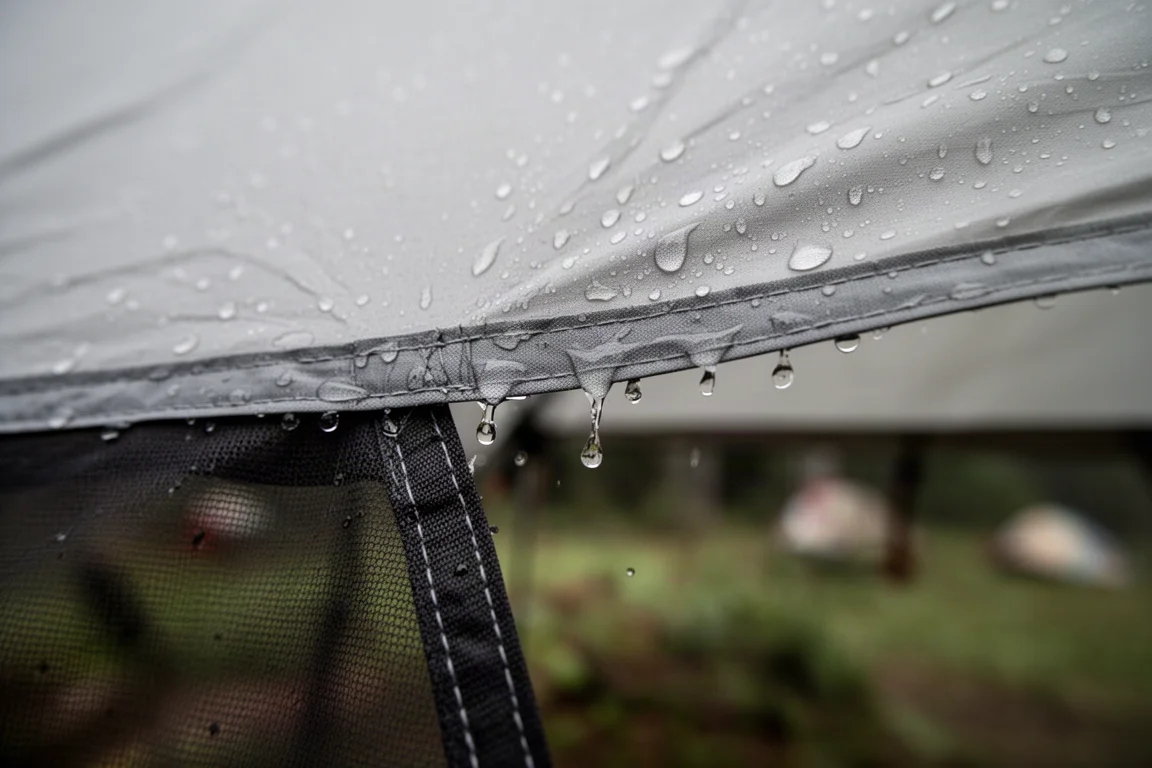
Rainy-day ventilation is limited on both. The Red Canyon has three vents and all of them are small. The Montana has no openable windows and no vents at all, so it relies entirely on the rainfly design when the weather turns.
What to Know Before You Buy
One durability note stands out on the Red Canyon: its rainfly fiberglass poles are thin, and one snapped on the first use. Inexpensive pole splints are a sensible add-on and keep that from turning into a trip-ending problem.
Budget time for seam sealing before the first wet trip, and plan on a bit more setup time with the Montana when pitching alone, since the door poles and rainfly pole add steps that the Red Canyon skips.
Buying Advice: Which Tent Fits Your Camping Style
Both tents sell for roughly $150, which is a low price for an eight-person family tent, and both deliver solid value at that number. The choice comes down to which set of features matches your camping.
Pick the Red Canyon if interior space is the priority. Its base area is about 37 square feet larger, its hot-weather ventilation is noticeably better, and it adds two dividers, a gear loft, and a clothesline. Accept the thin rainfly poles and the short front rainfly coverage.
Pick the Montana if you value the hinged door, the shaded porch, and the e-port more than floor area. You give up roughly 37 square feet and some ventilation, and you carry about three extra pounds.
Either way, the practical extras are the same: a pole repair splint, a tube of seam sealer, and a packing routine that keeps the carry bag closable.
Conclusion
The Red Canyon is the better pick for campers who want maximum room and airflow, while the Montana earns its place with a hinged door, a shaded porch, and an e-port. At around $150 each, both are affordable ways to get eight-person capacity, and the right answer depends on whether you would rather have space or convenience features.
Further reading
Related Reviews
Camping Tents
3F UL Gear Taiji Two-Person Tent Review: Field Waterproofing Results and Buying Advice
The Taiji pairs an attached fly with a removable inner, but sustained rain exposed untaped vent seams that need sealing before this shelter can be trusted.
Camping Tents
3FUL Gear Lanshan 2 Pro 4-Season Review: A Sub-$200 Single-Wall Trekking Pole Tent
An early look at the 3FUL Gear Lanshan 2 Pro 4-Season, covering its straightforward pitch, generous interior space, and the condensation and seam-sealing questions that come with any single-wall shelter.
Camping Tents
Alps Mountaineering Lynx 1-Person Tent Review: Big Value in a Small Budget Tent
A close look at the Alps Mountaineering Lynx 1-Person Tent, covering real interior dimensions, materials, setup time, ventilation limits, and who should buy it.