Camping Tents
Coleman Montana 8-Person Tent Review: Space, Setup, and Rain Limits
A practical look at the Coleman Montana 8-Person Tent: setup times, interior space, rain performance, and who it suits best.
Introduction
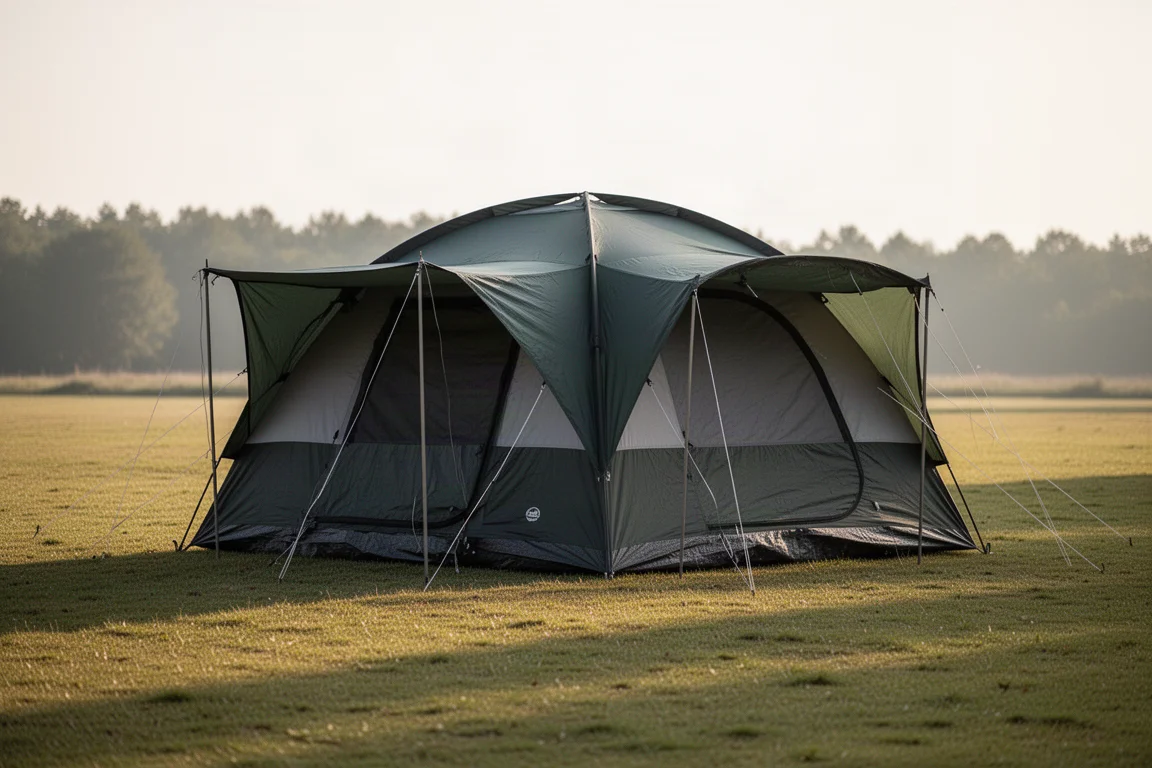
A large family tent has to earn its place. It needs to pitch without a fight, sleep the number of people on the box, and stand up to weather that turns in the night. The Coleman Montana 8-Person Tent takes a clear position on all three. It is a big, cabin-style polyester tent with a hinged front door, a shaded porch, and a price that sits well below premium family shelters. This review walks through how it goes up, how it lives, and where it struggles.
Who This Tent Is For
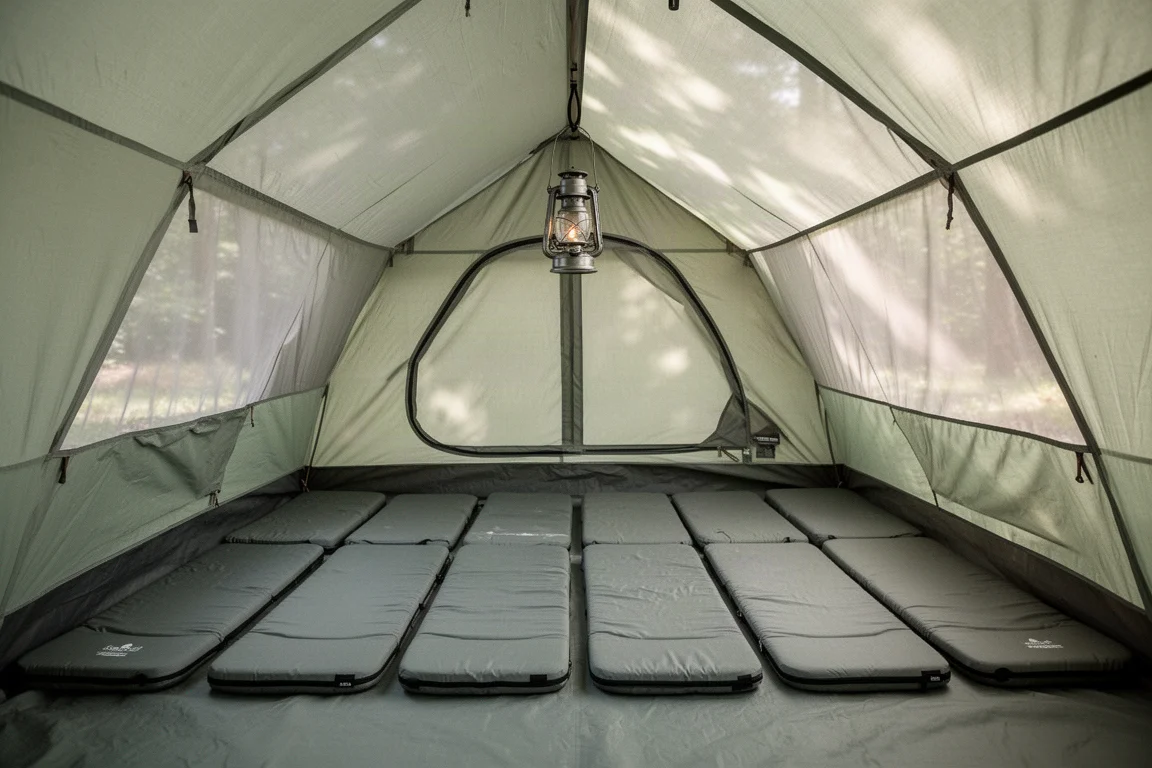
The Montana is aimed at car campers and families who want maximum floor area for a modest outlay. With a packed weight of about 23.5 pounds and a packed size of 26 by 15 by 12 inches, it is not a backpacking tent; it belongs in the boot of a car or on a wagon. Eight people fit, but only just: with eight regular sleeping pads, occupants sleep shoulder to shoulder with no floor space left for gear. Three queen-sized camping mattresses are a more comfortable configuration, though they also leave little room for luggage.
Main Strengths
The standout feature is the hinged D-door, which is uncommon among tents at this price. Two dedicated fiberglass poles slot into the door sleeves, and the result works like a household door, complete with a handle on the outside and another inside. It measures roughly 46 inches long, 27 inches wide, and 58 inches from floor to top, so adults will still need to duck on the way through. To hold it open, the panel tucks behind the black fiberglass pole.
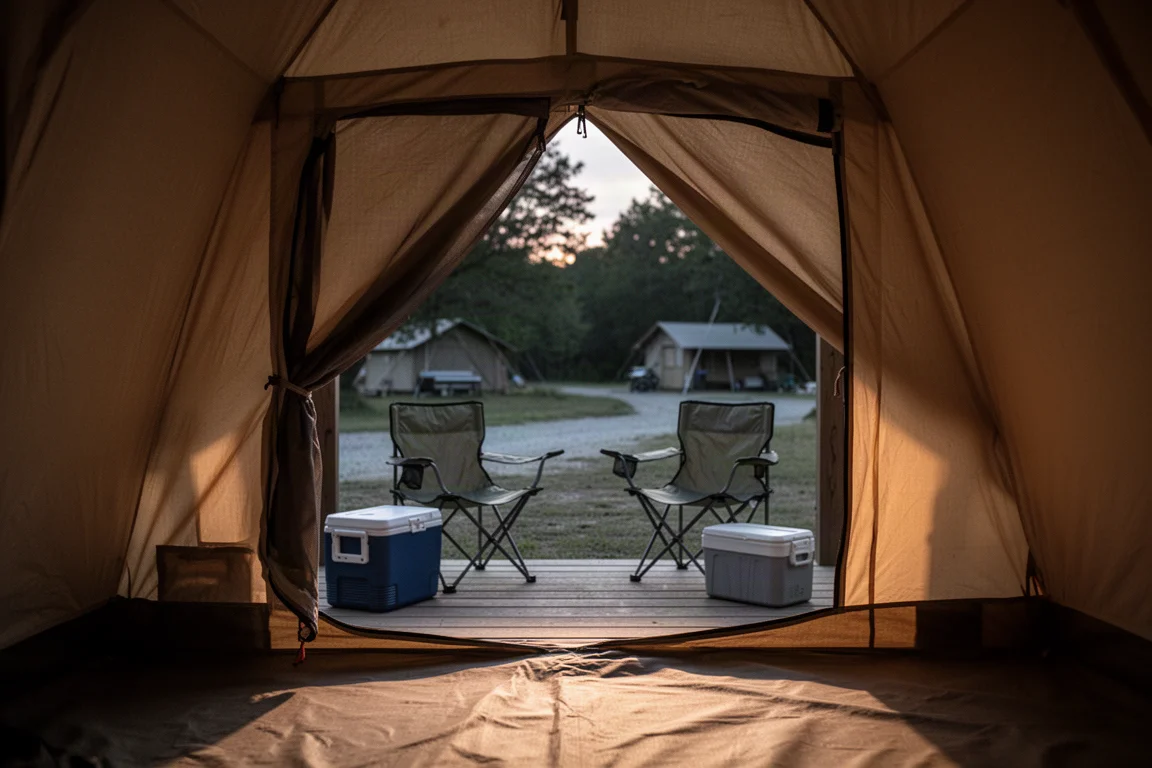
Second is the porch. The extended front awning covers an area of about 103 by 32 inches, and it provides meaningful shade on hot days. It is a practical place to leave footwear and gear, and items stored there stay noticeably cooler than they would in direct sun.
Third is structure. Four fiberglass poles around the body keep the walls as upright as possible, which translates into usable interior volume rather than a tent that sags inward.
Finally, value. The feature set is unusually generous for the money, and build quality across the body, rainfly, and zippers is solid rather than premium.
Living Space and Interior Layout
Peak height is about 74 inches at the exact centre, enough for a standing adult. Step a few paces toward either side and the roof mesh droops to roughly 61 inches, which is where a standing head makes contact. A small triangular zone near the corners offers only about 44 inches of clearance and very little livable space.
The floor plan measures about 15 feet 4 inches long by 6 feet 9 inches wide. Corners slope inward noticeably, so anyone sleeping there may find it tight, and sitting up in a corner brings a head into contact with the wall.
Storage is modest. There are two interior pockets, each about 10 by 7 inches, plus a single loop at the centre of the ceiling for hanging a lantern. There are no loops for a room divider or a gear loft. A zippered e-port at the bottom of the tent handles cable routing.
Weather Protection and Ventilation
The floor is polyethylene with a bathtub wall that rises about seven inches, and no water seeped through it during 20 minutes of heavy rain. The main body and rainfly are polyester, in the region of 68D.
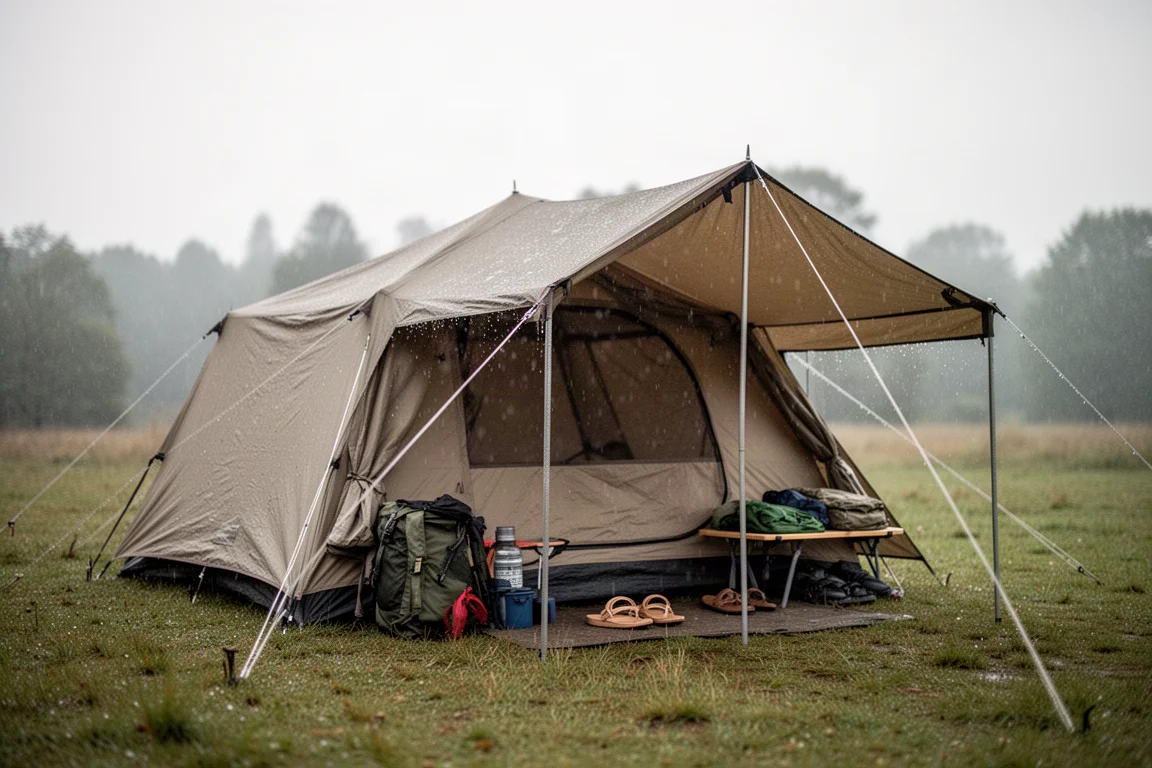
In light rain the tent performed well. Fifteen minutes of steady light rain left the interior dry, and the mesh windows can stay open while footwear sits outside on the porch. Heavy rain is a different story. Water began entering after roughly 15 to 20 minutes, mainly through the seam that joins the tent body to the bathtub floor, a seam the rainfly does not cover. Windows have to be zipped shut in those conditions, and the porch floor and door mesh can get wet when wind drives rain under the awning.
Ventilation depends heavily on the roof mesh, which is extensive, and the rainfly is removable from the outside for stargazing on clear nights. Beyond the ceiling, the three windows are small, and there are no dedicated vents. When heavy rain forces most windows closed, airflow drops sharply.
Seams are inverted rather than taped. Double stitching is consistent, with only occasional loose threads and stray mesh, and the mesh around the ceiling varies in quality, with openings too large to keep out no-see-ums. Zippers are decent and ran catch-free.
Setup, Packing, and Portability
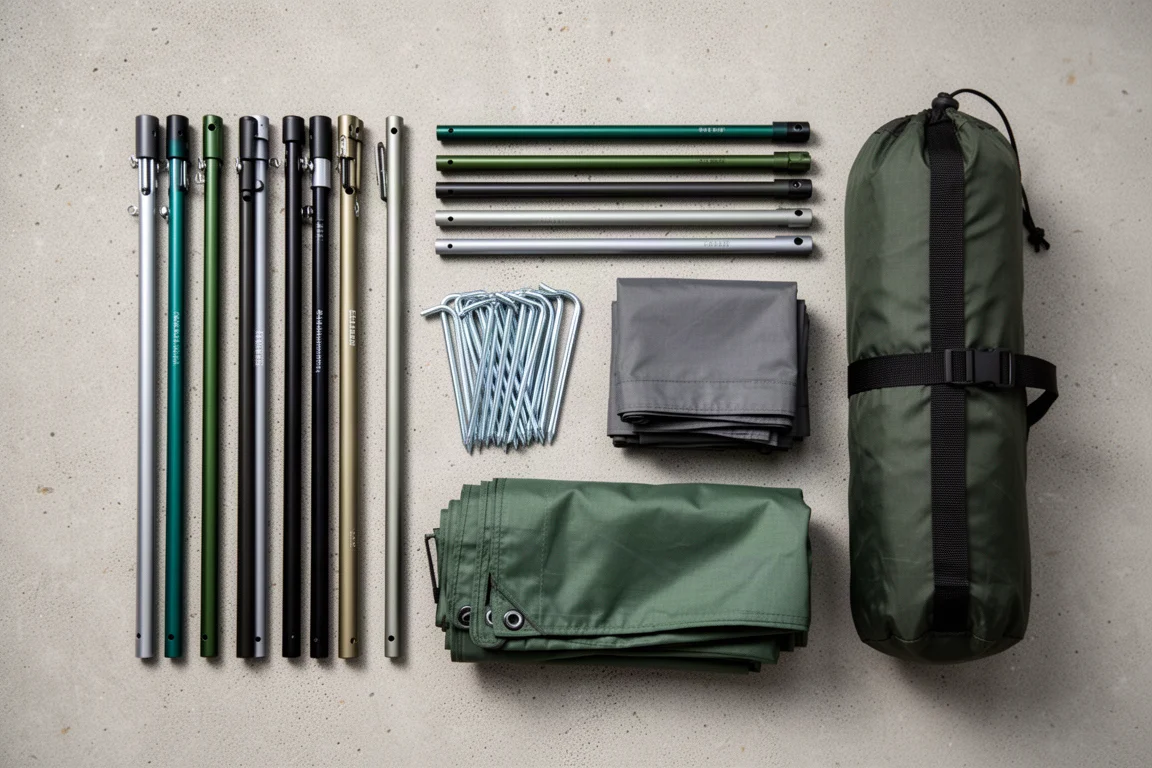
Setup follows a colour-coded sequence. The two longest black fiberglass poles feed into the two green sleeves at the centre to form the main body. The two grey poles support the side windows on each width of the tent. The two shortest and thinnest poles build the hinged door, and the final black pole, marked with a red ring, goes into the red-tipped sleeve on the rainfly. Every pole seats into a pin, the rainfly clips to the rings with two S-hooks per ring, and the tent is finished by staking the rainfly edges and tensioning nine guy lines.
Two people completed the full pitch, staking and guying included, in about 11 minutes. Solo, the same job took roughly 22 minutes, with the two long black poles proving awkward and collapsing a couple of times before they seated properly. Take down and pack up ran to about 7.5 minutes with two people and about 14.5 minutes alone. Repacking needed some persuasion: a strip at the bottom of the carry bag had to be torn out before everything fit. The bag strap is too short to sling over a shoulder, and all seven poles are fiberglass, which is serviceable but not the sturdiest material.
Things to Consider Before Buying
Three trade-offs deserve attention. First, an eight-person tent with a single front door means all traffic funnels through one opening, and that door is the only way in or out. Second, interior storage is limited to two small pockets, which is thin for a tent this size. Third, heavy-rain performance is the weakest area. Waterproofing spray on the rainfly and on the green fabric at the base, plus seam sealant along the seam joining that fabric to the bathtub floor, is a sensible addition for anyone camping in wet climates. Larger windows and an extra vent would also help on hot, still days.
Buying Advice
Choose the Montana if you want a large, affordable family tent for fair-weather and light-rain camping, and if you usually pitch with a second pair of hands. The hinged door, the shaded porch, and the generous interior volume are the reasons to buy, and they are unusual at this price.
Look elsewhere if you camp regularly in sustained heavy rain, need two doors, want extensive interior storage, or expect to pitch alone on every trip. For everyone else, the practical approach is simple: treat the seams and rainfly before the first wet trip, keep the pitching job to two people, and this tent covers summer family camping comfortably for the money.
Conclusion
The Coleman Montana 8-Person Tent is not a top-tier shelter, and it does not pretend to be. What it offers is a feature-rich, genuinely spacious family tent for a modest price, with a hinged door and a porch that most tents in this bracket lack. Treat the seams before a wet trip, plan on two people for setup, and it delivers considerably more than its price suggests.
Product link
View more details for Coleman Montana 8-Person Tent
This product is mentioned in the review. Check the specifications, options, and compatibility before buying.
View more details for Coleman Montana 8-Person TentFurther reading
Related Reviews
Camping Tents
3F UL Gear Taiji Two-Person Tent Review: Field Waterproofing Results and Buying Advice
The Taiji pairs an attached fly with a removable inner, but sustained rain exposed untaped vent seams that need sealing before this shelter can be trusted.
Camping Tents
3FUL Gear Lanshan 2 Pro 4-Season Review: A Sub-$200 Single-Wall Trekking Pole Tent
An early look at the 3FUL Gear Lanshan 2 Pro 4-Season, covering its straightforward pitch, generous interior space, and the condensation and seam-sealing questions that come with any single-wall shelter.
Camping Tents
Alps Mountaineering Lynx 1-Person Tent Review: Big Value in a Small Budget Tent
A close look at the Alps Mountaineering Lynx 1-Person Tent, covering real interior dimensions, materials, setup time, ventilation limits, and who should buy it.