Camping Tents
Coleman Evanston vs Carlsbad: Which Coleman Tent Should You Buy?
A side-by-side look at the 6-person Coleman Evanston and the 4-person Coleman Carlsbad, covering setup, interior space, dark room fabric, rainfly coverage, and value.
Introduction
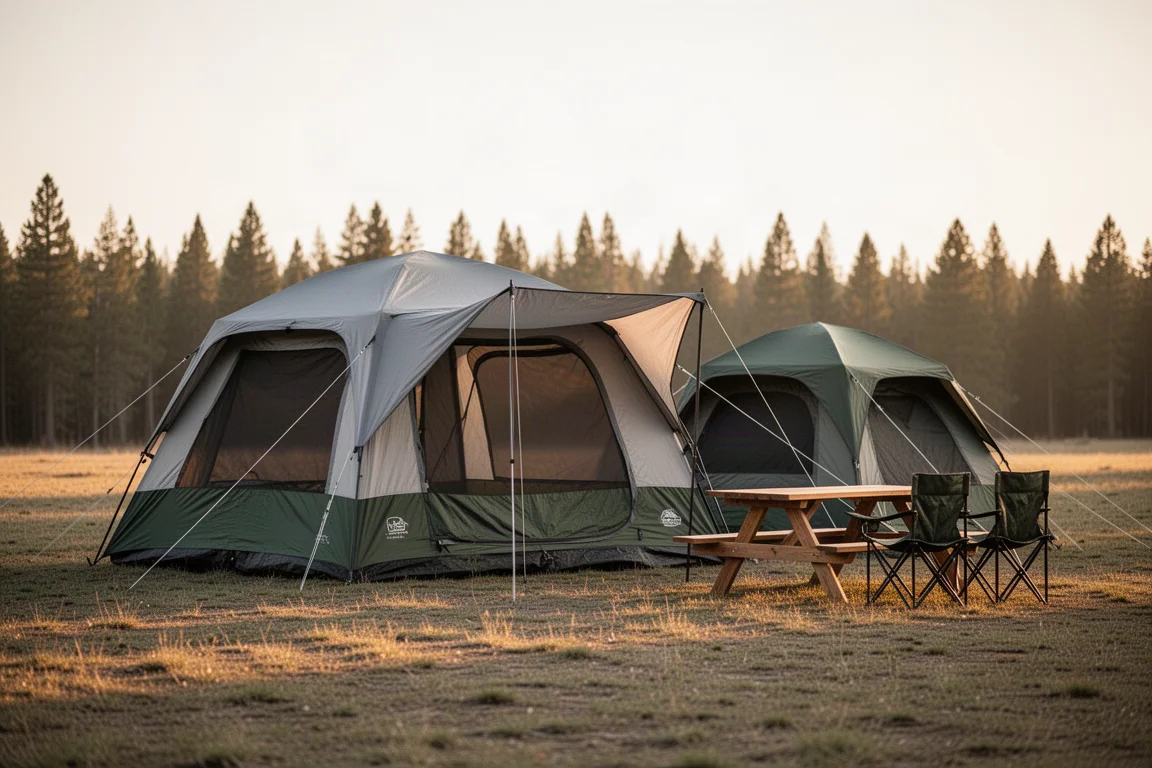
Coleman builds plenty of tents that look similar on paper, and the Evanston and the Carlsbad are a good example. Both use a screen room, both pitch with four poles, and both cover the same footprint at the same person count. The real differences live in the details: setup hardware, door width, rainfly coverage, and whether the tent uses dark room fabric.
This comparison puts the 6-person Evanston next to the 4-person Carlsbad, looking at setup, interior space, weather protection, and price so you can decide which one matches the way you camp.
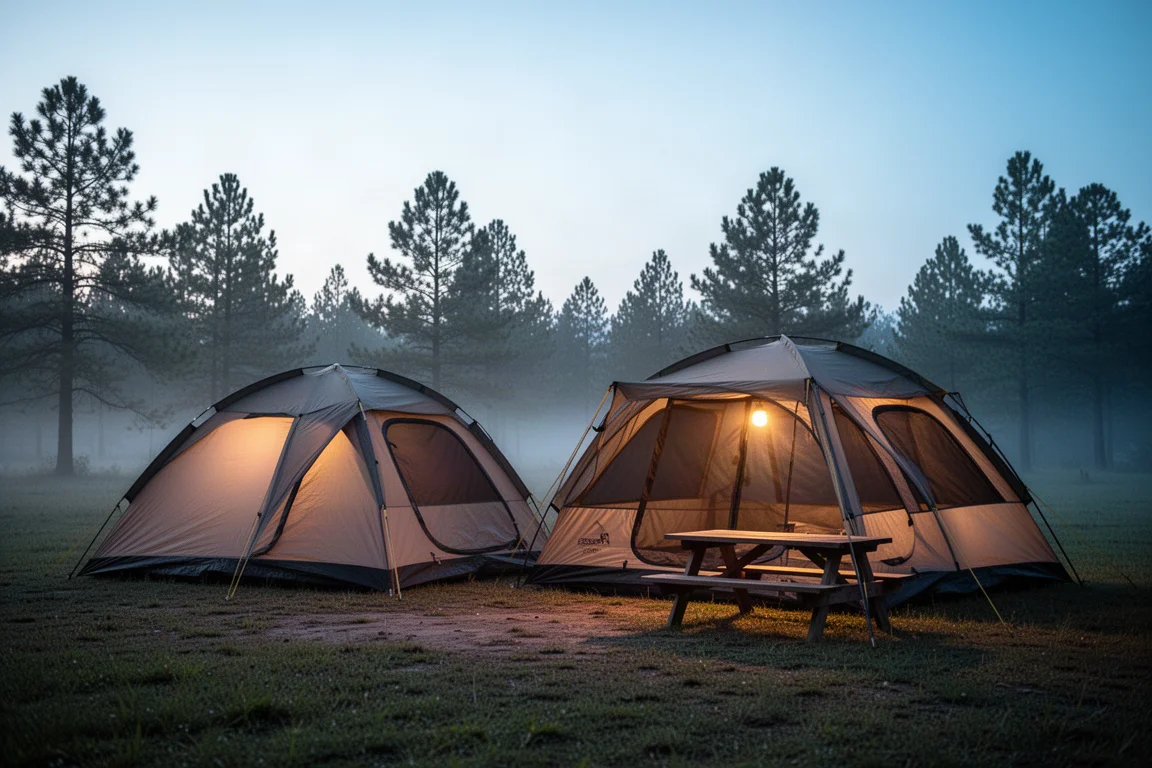
The two tents are close enough that either one can work for a weekend car camping trip. The decision usually comes down to three questions: do you want a blackout interior, do you plan to spend time in the screen room, and do you care about standing up inside the tent?
Setup and Shared Features
Both tents use four poles. Two form the main body, one supports the screen room, and one holds the rainfly. That shared layout means the pitching process feels familiar on either model.
The hardware differs in small but noticeable ways. The Carlsbad has a red-colored webbing loop under the pin, which the Evanston does not have. The Evanston instead offers partial color coding on its poles, with a gray pole reserved for the screen room, while all of the Carlsbad poles are green. The screen room pole sleeve is also longer and snaggier on the Carlsbad, where the Evanston uses a shorter sleeve and adds extra pole clips.
Those details add up at pitch time. The Evanston is a little easier to set up overall. Measured timings reflect the size gap as much as the hardware: the smaller 4-person Carlsbad went up in about 11 minutes, while the 6-person Evanston took roughly 17 and a half minutes.
Storage and lighting are otherwise matched. Each tent has two pockets and two lantern loops. The Carlsbad adds one e-port for routing a power cord, and the Evanston has none.
Coleman Evanston 6-Person Tent: Space, Value, and Setup
The 6-person Evanston peaks at about 68 inches, or 5 feet 8 inches, with a base of roughly 10 by 9 feet. That floor area fits almost two queen-sized mattresses. The screen room on the 6-person version adds 10 by 5 feet of separate space. One thing to plan for: Coleman tents tend to run slightly small, so real dimensions come in a little under the marketed numbers.
Setup took about 17 and a half minutes, longer than the smaller Carlsbad, though the extra size explains most of that. The screen room sleeve is short and feeds through with little snagging, and the tent includes extra pole clips rather than relying on the sleeve alone. An extra stake loop under the screen room door keeps the door steady while you zip and unzip it.
The rainfly extends a green panel over part of the screen room, and because that panel can be removed, the screen room opens up for stargazing with a clear view. The main door measures 47 inches long by 26 inches wide, narrower than the door on the smaller Carlsbad. There is no e-port, and the interior stays bright during the day because there is no dark room fabric.
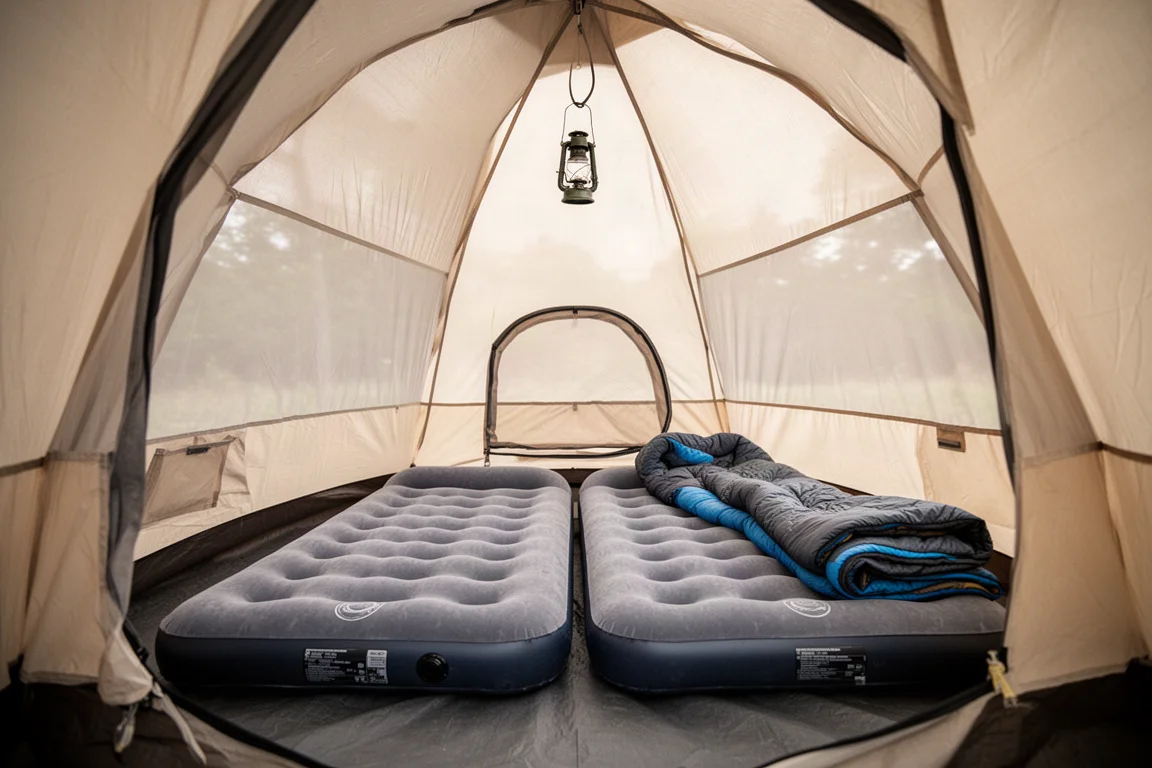
For campers who want room to move, the tall peak is the headline. Standing under the highest point is comfortable, and the screen room gives gear or muddy boots a place to live outside the sleeping area.
Coleman Carlsbad 4-Person Tent: Dark Room Comfort
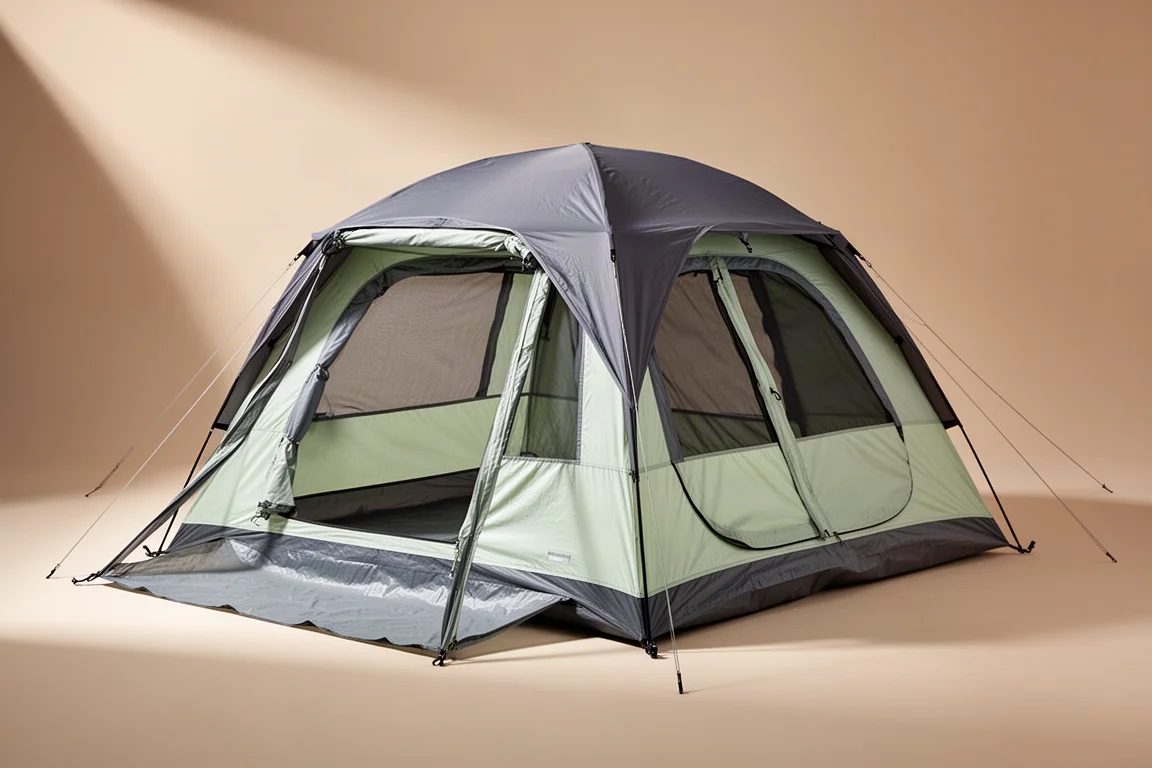
Dark room fabric is the Carlsbad’s signature feature. It blocks a meaningful amount of daylight, so the interior stays noticeably darker than a standard Coleman tent during the day. On the unit tested here, part of the dark room fabric was slightly defective: the panels should have been as dark as the windows but were not, so it is worth checking the fabric right after purchase.
The 4-person Carlsbad peaks at 60 inches with a base of about 9 by 7 feet, enough for four single sleeping pads or one queen bed. The screen room measures 9 by 4 feet. Its main door is 47 inches long and about 35 inches wide, which makes it wider than the door on the larger Evanston. The Carlsbad also includes an e-port, and storage matches the Evanston with two pockets and two lantern loops.
Two omissions are worth weighing. The rainfly stops just before the screen room begins, leaving only a small piece of fabric over that area, and that panel cannot be removed, so the screen room is not a good spot for stargazing. There is also no extra stake loop under the screen room door, so the door often needs a foot to hold it down before it will zip smoothly.
Weather Protection and Screen Room Differences
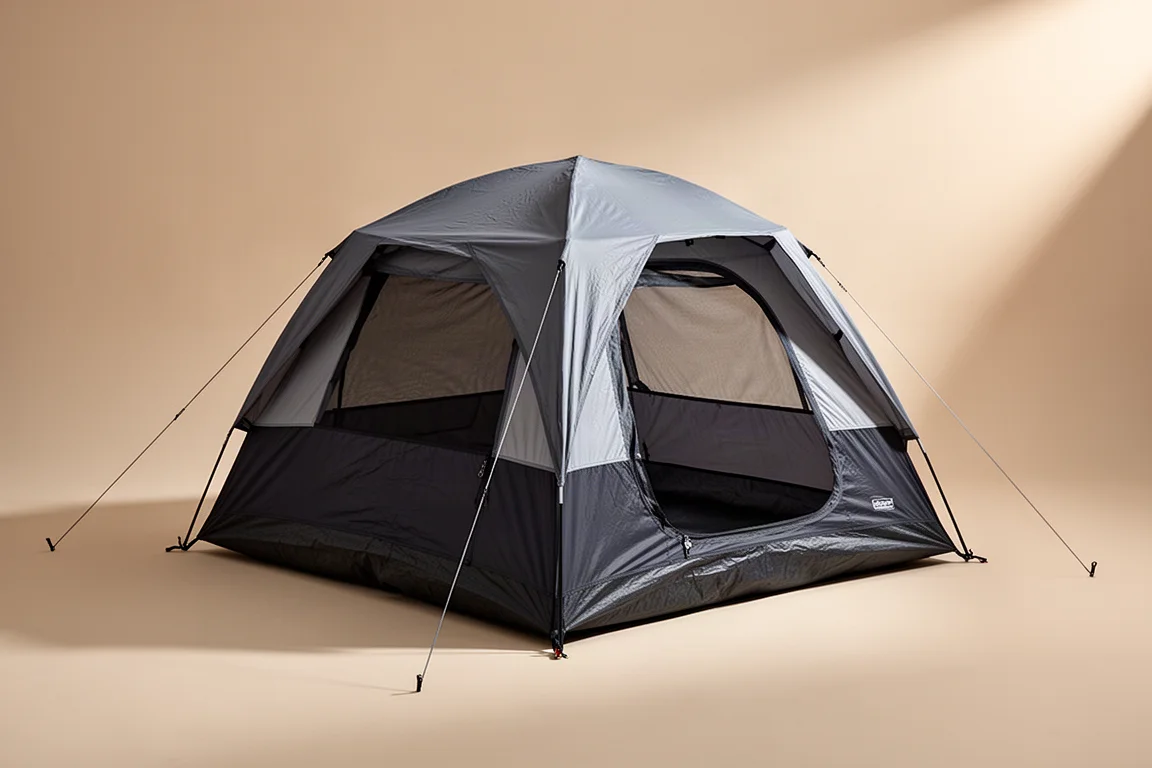
Ventilation and rain protection are roughly equal across both tents. Rainfly coverage is where they diverge. The Evanston’s rainfly extends a green panel over part of the screen room, while the Carlsbad’s stops short of it.
The practical difference shows up once the rainfly comes off. On the Evanston, the screen room opens up for stargazing. On the Carlsbad, the fabric over the screen room stays in place.
Both tents offer little to no rainfly protection over the screen room, so water can reach that area even in light rain, and heavy rain makes it worse. If keeping the screen room dry matters to you, plan on an additional tarp or canopy.
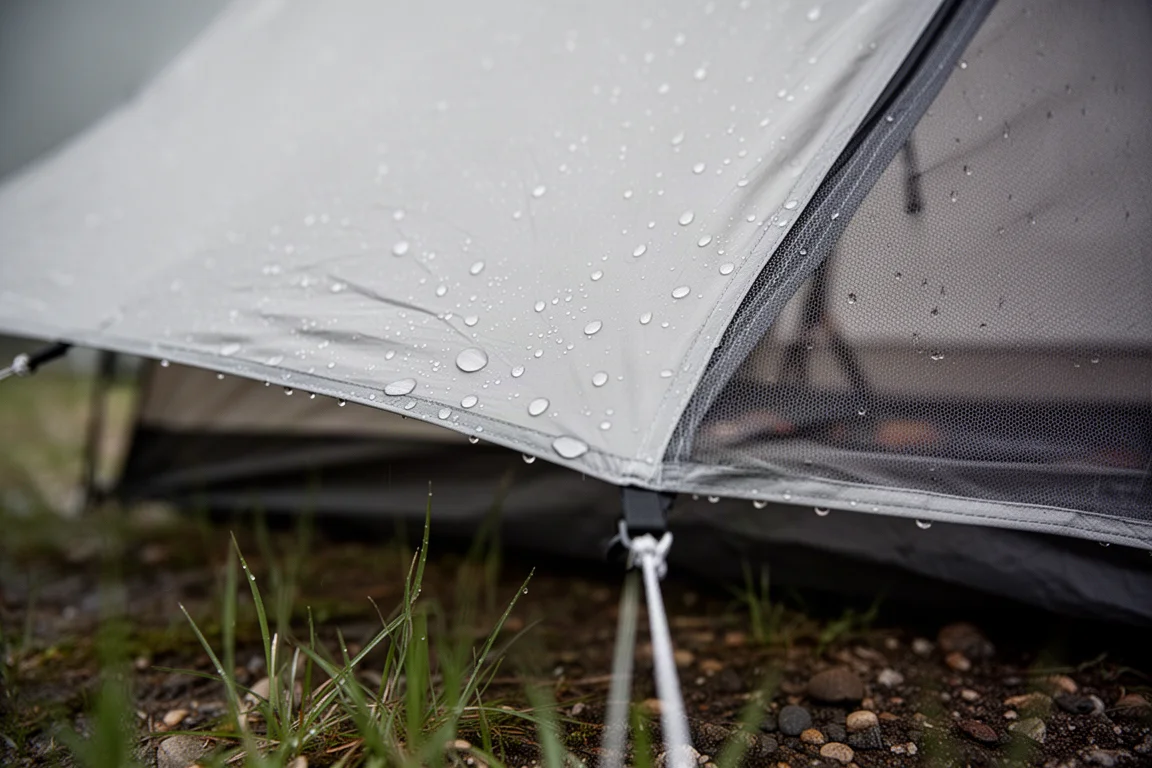
That is a shared limitation rather than a point in favor of either tent, and it is the single most useful thing to know before you buy. A separate shelter over the screen room is the straightforward fix.
Pricing and Value
Both tents were purchased for slightly over $100 each, which makes the comparison unusually direct. The 6-person Evanston delivers more floor area, a taller peak, and a screen room that can be opened at night for about the same money, so it is the stronger value on space alone. The Carlsbad’s price buys dark room fabric and an e-port instead.
Buying Advice: Which Coleman Tent Fits You
Start with size. A 4-person tent like the Carlsbad is tight for adults: at 60 inches of peak height, standing up is not possible, and both the main door and the screen room door require ducking, which gets tiring over a full weekend. A 6-person tent such as the Evanston lets you stand under the peak, and that alone changes how comfortable the tent feels.
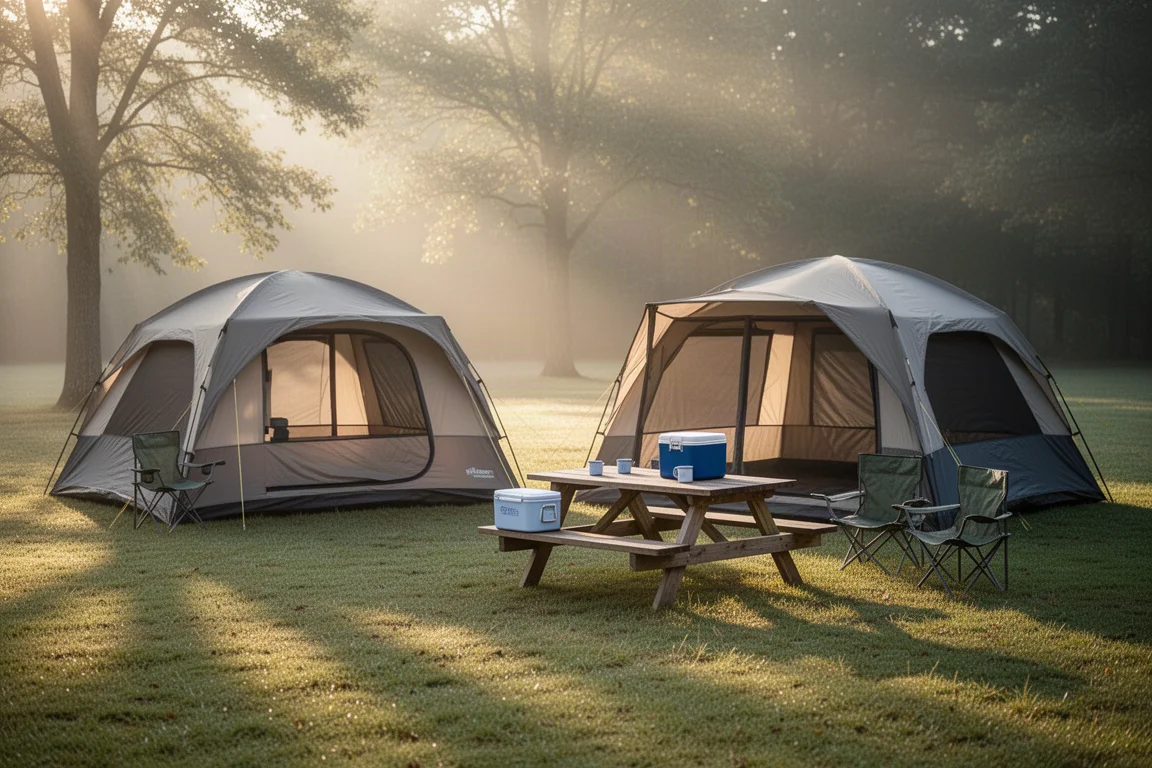
If a darker, cooler interior matters to you, the Carlsbad is the clear pick, and the dark room fabric deserves a careful check right after it arrives. If budget, easier pitching, and an open screen room for stargazing matter more, the Evanston is the better fit.
Either way, plan for rain over the screen room. Neither tent keeps that area dry on its own, so a tarp or canopy is a sensible addition if you expect wet weather.
Conclusion
The Evanston and the Carlsbad are close in dimensions, setup layout, and price, so the choice comes down to priorities. The Evanston gives you more space for the money, an easier pitch, and a screen room you can open up at night. The Carlsbad gives you dark room fabric and an e-port in a smaller package. Campers who want to stand up and sleep two on queen mattresses should lean toward the 6-person Evanston, while anyone who wants a dimmer interior for daytime sleep should look at the Carlsbad and inspect the dark room fabric on arrival.
Further reading
Related Reviews
Camping Tents
3F UL Gear Taiji Two-Person Tent Review: Field Waterproofing Results and Buying Advice
The Taiji pairs an attached fly with a removable inner, but sustained rain exposed untaped vent seams that need sealing before this shelter can be trusted.
Camping Tents
3FUL Gear Lanshan 2 Pro 4-Season Review: A Sub-$200 Single-Wall Trekking Pole Tent
An early look at the 3FUL Gear Lanshan 2 Pro 4-Season, covering its straightforward pitch, generous interior space, and the condensation and seam-sealing questions that come with any single-wall shelter.
Camping Tents
Alps Mountaineering Lynx 1-Person Tent Review: Big Value in a Small Budget Tent
A close look at the Alps Mountaineering Lynx 1-Person Tent, covering real interior dimensions, materials, setup time, ventilation limits, and who should buy it.