Camping Tents
Coleman 4-Person Pop Up Tent Review: Fast Setup, Budget Price, Fair-Weather Limits
A practical look at the Coleman 4-Person Pop Up Tent: 15-second setup, real interior space, ventilation strengths, and the rain limits worth knowing before you buy.
Introduction
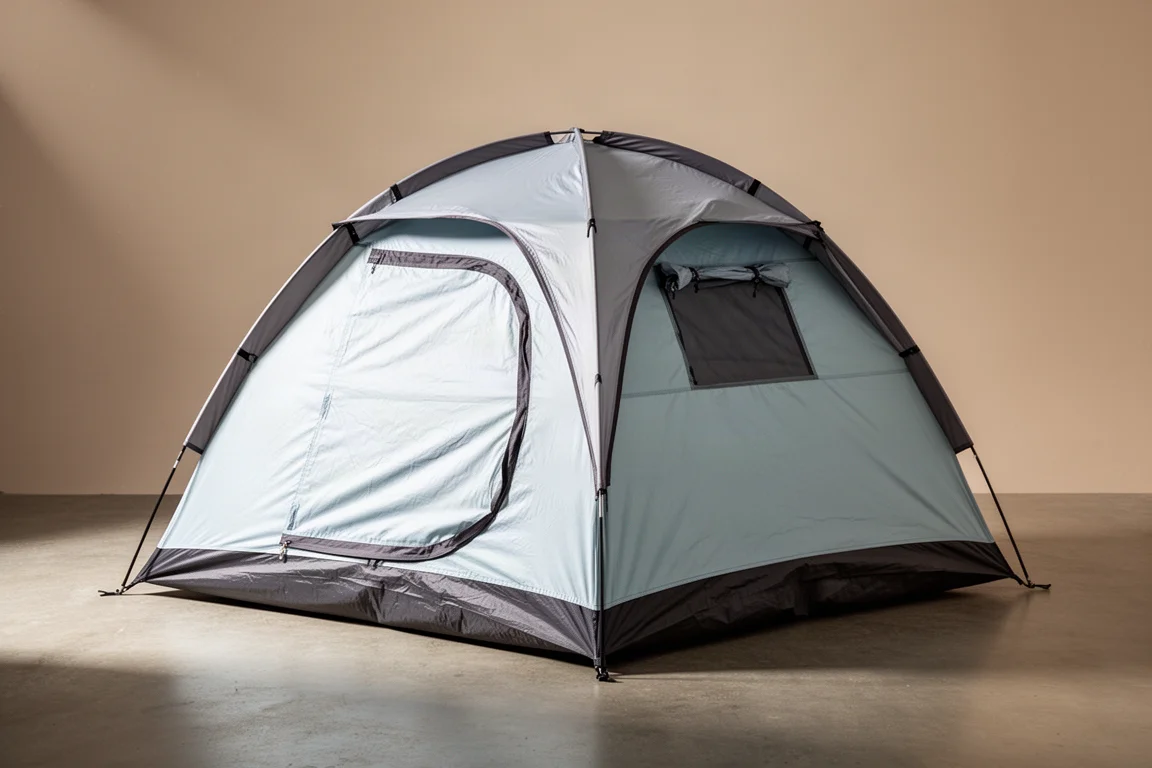
Pop-up tents trade refinement for speed, and the Coleman 4-Person Pop Up Tent commits to that trade fully. The box contains the tent, a carry bag, stakes, guylines, and instructions, and the core promise is simple: pull the tent from the bag, release the strap across the folded body, and let the frame open itself.
The interesting question is not whether it opens quickly, because it does. The question is what you give up in weather protection, interior layout, and build quality to get that speed at a budget price. This review walks through setup and pack-down, usable space, comfort features, ventilation, rain and wind behavior, quality, and portability so you can judge whether it matches the way you actually camp.
Who This Tent Is For
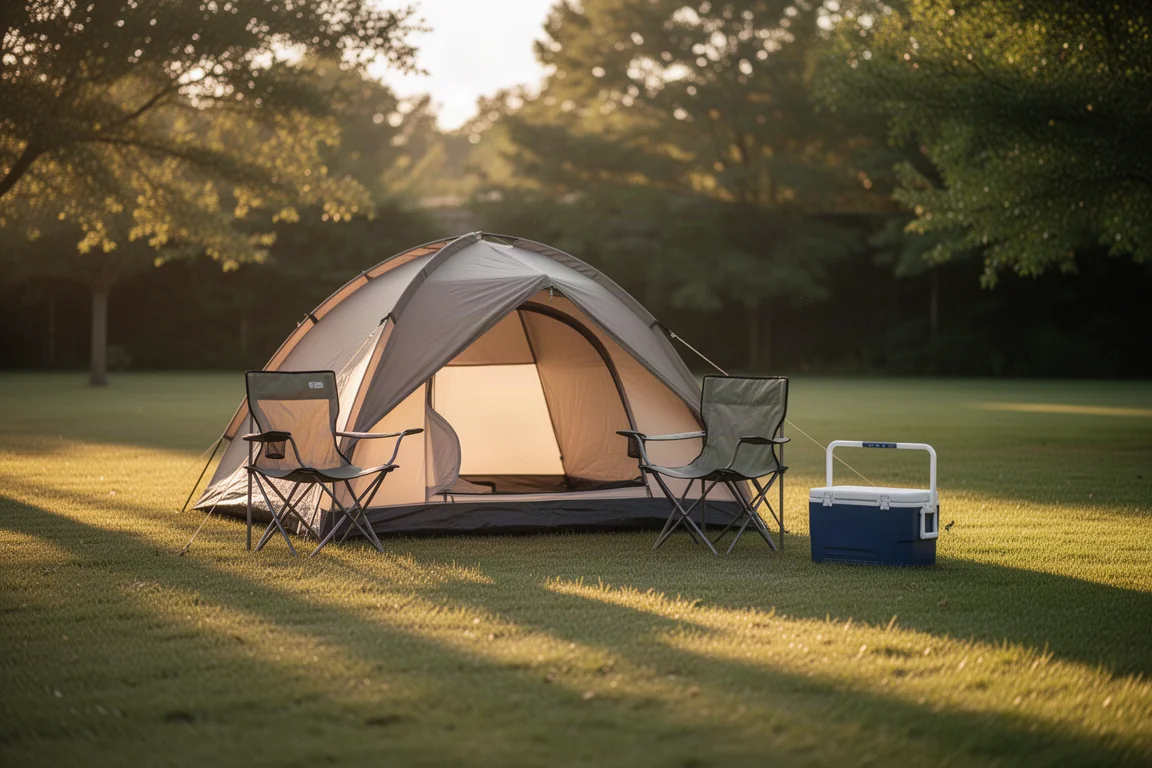
The clearest fit is backyard camping in summer under clear skies, along with short fair-weather trips where a fast pitch and a low price matter more than storm readiness. Buyers who want a repeatable routine with almost no practice will get the most from it, and the size difference between this model and its smaller sibling does not slow that routine down.
It also works for campers who want a simple base for two adults plus gear, or two adults and two children when the children are small and the gear load is light. Anyone who expects a true four-person floor plan, a vestibule for muddy footwear, or reliable performance in sustained rain should look at a different style of tent.
Think of it as a warm-weather, low-cost shelter that happens to sleep more people than its two-person counterpart while taking almost exactly the same time to set up and take down.
Setup and Pack-Down: What the Process Looks Like
Setup starts by removing the tent from the carry bag, taking off the black strap that wraps the folded body, and letting it pop open. That opening step runs about 15 seconds. If you plan to stake the tent out, zip the door and window panels closed first, because staking adds tension to the fabric and makes the zippers noticeably harder to run.
From there, three stakes go into the left side, three into the right side, and the two pre-attached guylines anchor both sides. Staking and guying add roughly a minute and 15 seconds, which puts a full setup at about a minute and a half once the process is familiar. If you skip stakes and guylines entirely, the tent is standing in seconds and can be moved around the site without unpacking anything.
Packing down takes more practice. Remove the stakes and guylines, unzip both the window and the door panels, then fold the tent until the poles form a taco shape and stand it on one end. That stage takes about a minute. Grip the middle of the folded tent with one hand, reach as far as possible to the far end with the other and fold it back toward you, kneel and press that end down with a knee, then push the remaining poles together until the tent collapses into a smaller circle. Refit the black strap and pack the tent with the stakes, which adds another minute. Total pack-down lands around two minutes, or about a minute and a half without stakes and guylines.
Main Strengths
Speed is the headline. Opening the tent takes about 15 seconds when it is not staked down, and pack-down stays close to two minutes even with a full stake-out. What matters more is that the larger four-person body sets up and packs down in almost exactly the same way, and in almost exactly the same time, as the smaller two-person version, so stepping up in size does not mean a slower, more fiddly routine.
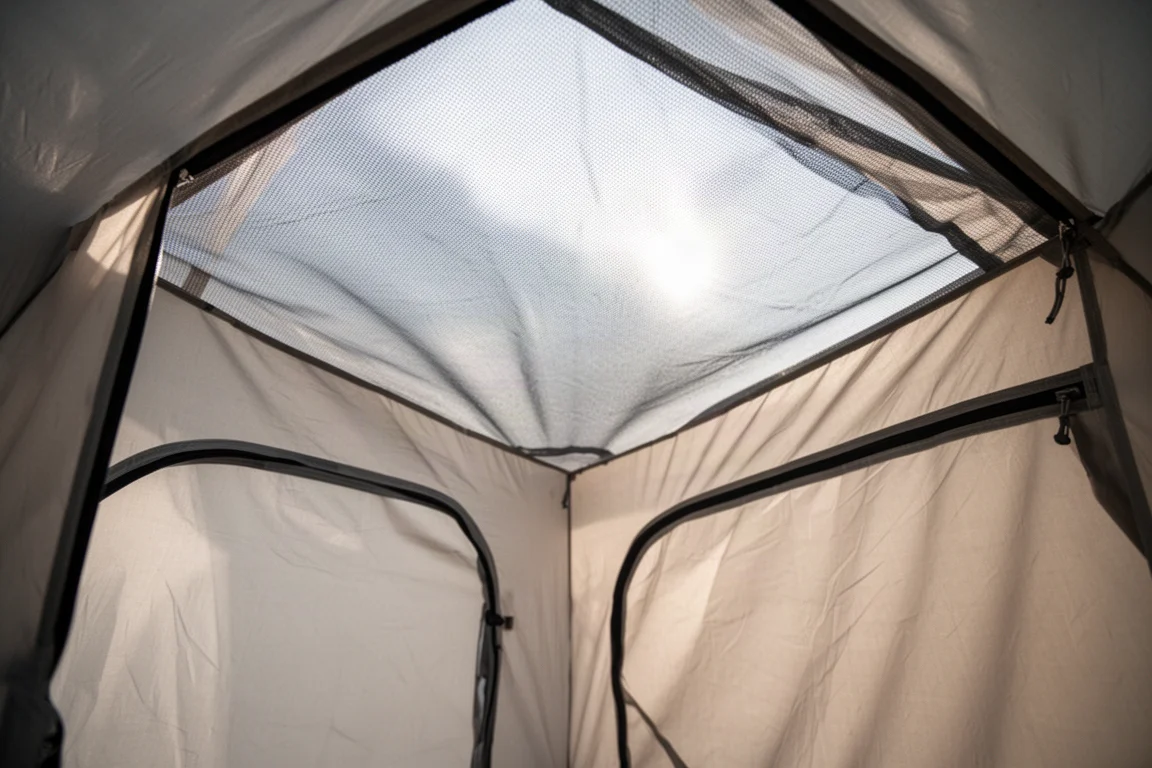
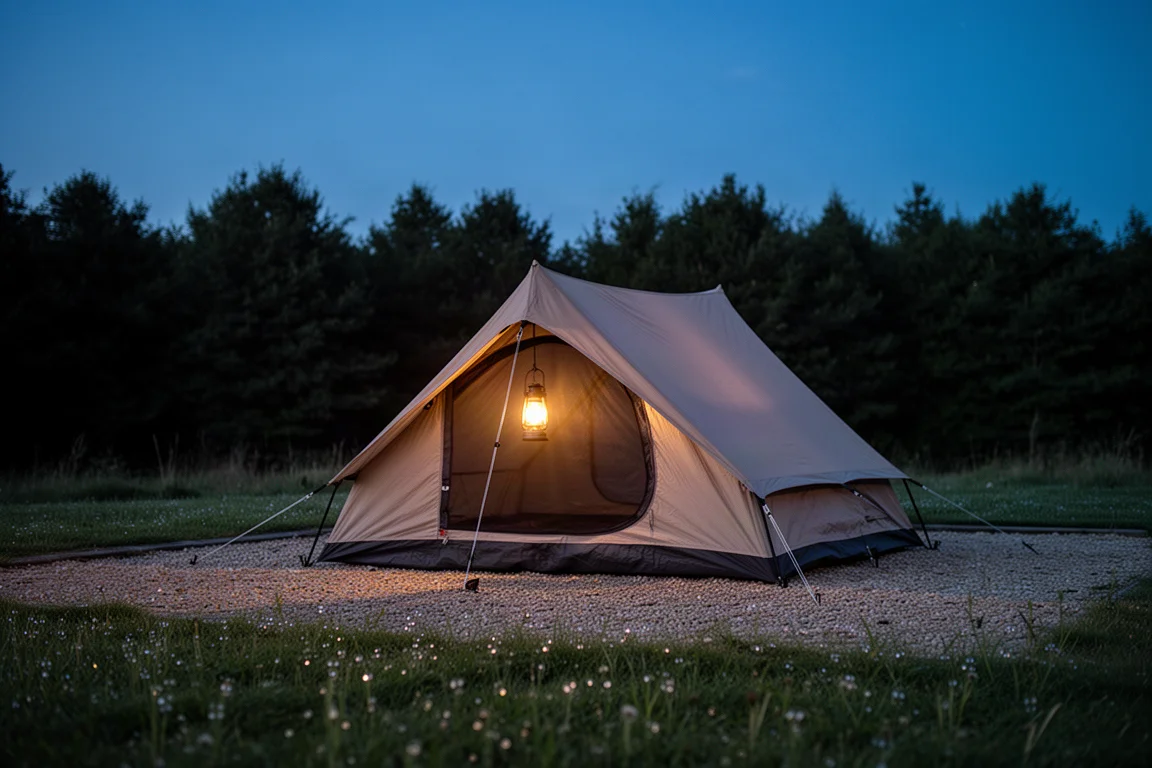
Ventilation on warm, dry days is the second strength. The rainfly can be swept back without pulling the guyline stakes: unhook the four S-hooks at the front, undo the Velcro attachments near the guylines, and fold the fly toward the rear, where it can be tied off or simply left hanging. With the fly out of the way and the door fully open, the ceiling mesh and the open doorway move a genuinely useful amount of air.
Value is the third pillar. The tent is positioned as a very affordable option, and for fair-weather camping it delivers more function than the price suggests, which is why it earns a place as a sensible budget pick rather than a compromise purchase.
Room, Height, and Comfort
The longest interior length measures about 9 feet 1 inch and the longest width about 6 feet 8 inches, but the base is oval rather than rectangular, so usable floor area is smaller than those figures suggest. With inflatable sleeping pads, three pads fit at most, which works out to a maximum of three adults plus space for gear. Two adults and two children also fit, though with little room left for gear. A near-queen-size camping mattress fits with plenty of space remaining for gear, which makes the tent genuinely comfortable for two. There is no vestibule, so footwear has to stay inside or under the fly.
Peak height at the center is about 39 inches. On a pad with roughly 4 inches of loft, an adult can sit upright without touching the top of the tent. On a 6-inch-thick air mattress, the head touches the mesh ceiling when sitting upright, so keeping mattress height at 6 inches or less preserves livable headroom. Lower pads naturally open up more sitting space.
The single door sits on the front length of the tent and measures about 41 inches by 35 inches. The inner window mesh panel measures about 35 inches by 17 inches and can be zipped shut in place of the door when you want airflow without an open doorway. Both the door and the window use two zippers, and each zipper can be operated from the inside or the outside. Latches let either panel be tied open for maximum ventilation, and there is one interior pocket split into two sections, measuring about 17 inches by 8 inches. There is no lantern loop, but a lantern can hang from the window and door latch attachment.
Things to Consider Before Buying
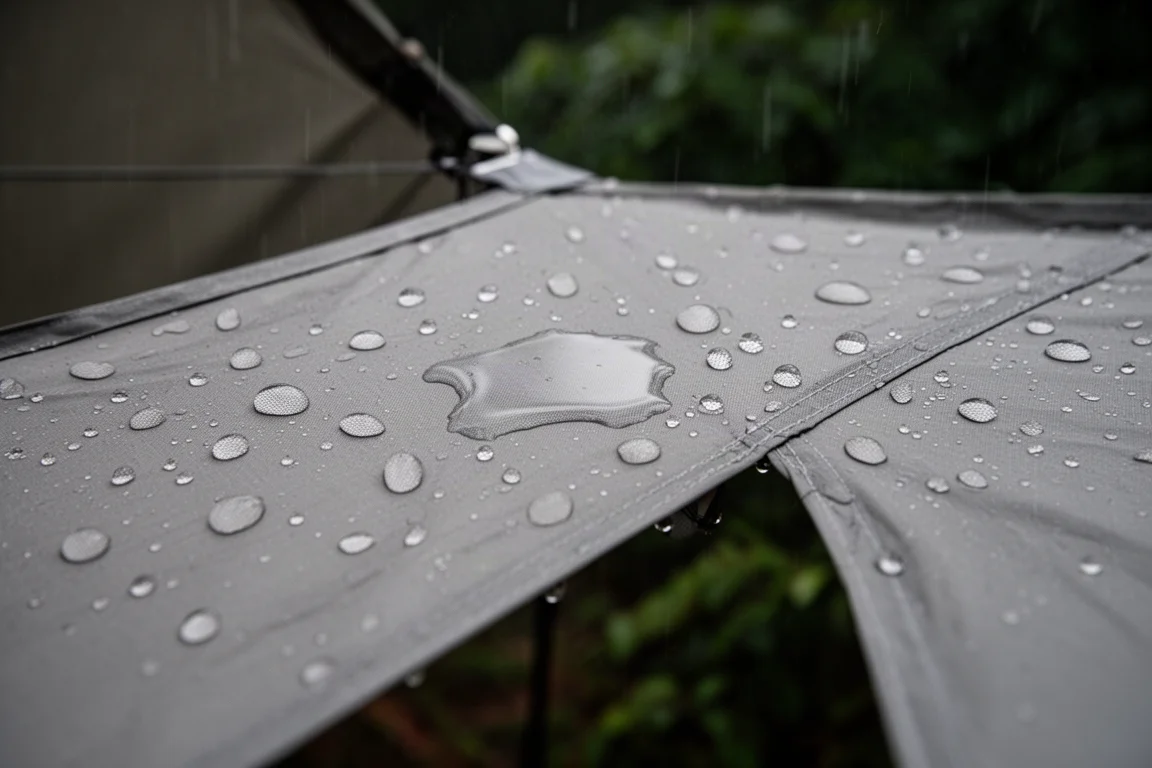
Weather protection is the main limitation. After about 10 minutes of light to moderate rain, the rainfly collected a small pool of water, which was not a serious problem on its own, but the tent body did not stay fully dry. A little water seeped through the white fabric near the bottom of the tent and felt slightly damp. Water also worked through the holes along the flooring seam. Seam tape kept most of it out, yet a small spot came through the tape itself, and that seam looks likely to leak more over time. The flooring does not appear to be polyethylene and is likely polyester, and it has no bathtub-style edge, so it offers less rain protection than a tub floor.
Rainy-day ventilation is limited in the same way. The rainfly has to stay in place and the door has to stay closed, and there are no vents, so airflow drops to almost nothing once the weather turns.
Wind stability is adequate rather than reassuring. There are only two guylines, and the tent feels only reasonably stable when guyed out and shaken, though the low peak height should help it handle light to moderate winds.
Build quality is acceptable for the price. Most seams are taped, apart from the ceiling mesh and the door seams. Stitching is mostly double stitched and sound, with some sections that look less consistent and a few loose threads. The zippers are not especially smooth and show tension when the door and window are zipped, which is exactly why staking the tent only after closing those panels is worth the extra step. The fiberglass poles have held up through light use over a couple of years without issues. The carry bag is good quality and correctly sized for the packed tent.
Buying Advice
Choose this tent if speed, low cost, and warm-weather comfort matter more than storm readiness. It suits backyard camping, short fair-weather trips, and buyers who want a routine simple enough to repeat without practice. Skip it if you camp in sustained rain, need genuine four-person sleeping capacity, or want a bathtub floor and generous internal storage.
Portability is reasonable for the format. The packed size is about 36 by 36 by 5 inches, and the tent and carry bag weigh roughly 7 pounds on their own. The eight stakes add about 1.2 pounds separately, for about 8.2 pounds altogether. For a sense of scale, the packed bundle sits close in footprint to a Coleman 2-Person Sundome Tent, with a 32-ounce Nalgene bottle as a useful reference point.
Read the specification honestly before ordering: this is a three-person tent in practice, with a low peak height and a single small pocket, and its rain performance is the weakest part of the package. Buy it as an affordable fair-weather shelter that opens in seconds, and it will meet expectations rather than fall short of them.
Conclusion
The Coleman 4-Person Pop Up Tent earns its place through speed and price. Opening takes about 15 seconds, a full stake-out setup lands near a minute and a half, and pack-down stays around two minutes, with the larger body behaving almost identically to the smaller version. Warm-weather ventilation through the ceiling mesh is genuinely good once the rainfly is swept back, and a near-queen mattress fits with room left for gear, which makes it a comfortable two-person tent.
The trade-offs are clear and consistent: rain protection is weak, the floor plan is closer to three-person, storage is minimal, and the zippers and stitching are merely adequate. For backyard camping in summer with clear skies and a very affordable budget, those compromises are easy to accept, and the tent remains a functional, recommendable choice for the right camper.
Product link
View more details for Coleman 4-Person Pop Up Tent
This product is mentioned in the review. Check the specifications, options, and compatibility before buying.
View more details for Coleman 4-Person Pop Up TentFurther reading
Related Reviews
Camping Tents
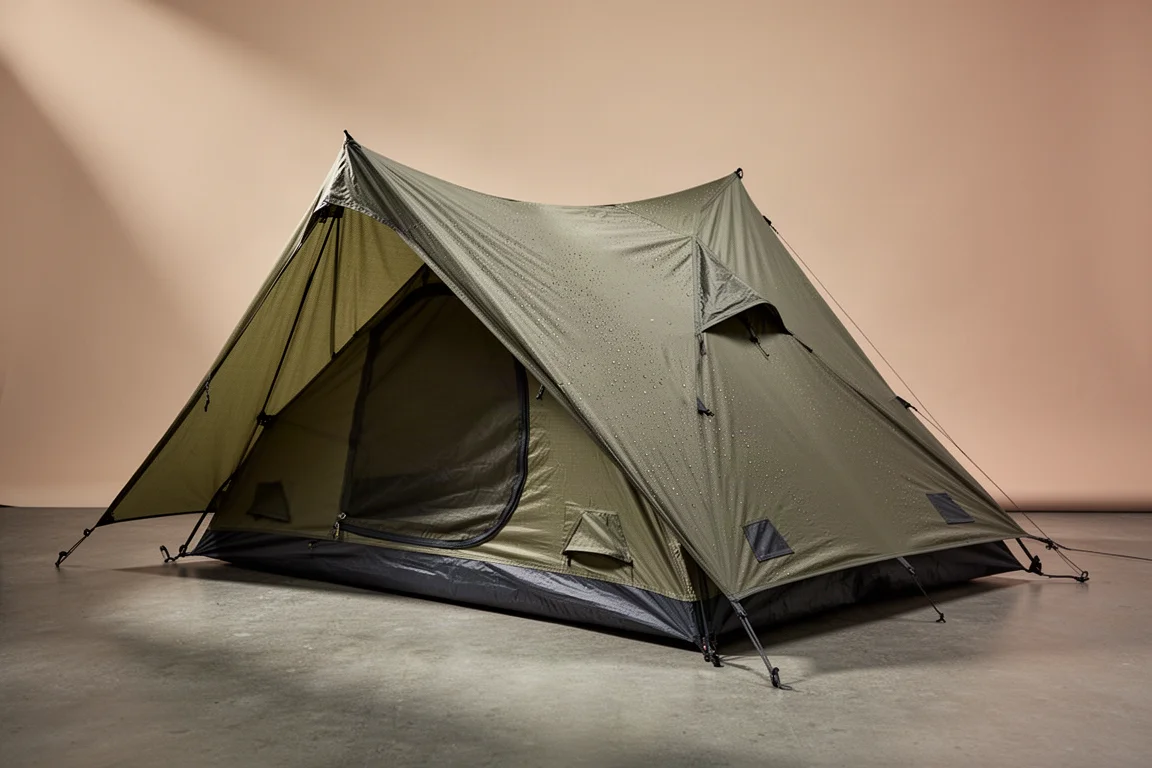
3F UL Gear Taiji Two-Person Tent Review: Field Waterproofing Results and Buying Advice
The Taiji pairs an attached fly with a removable inner, but sustained rain exposed untaped vent seams that need sealing before this shelter can be trusted.
Camping Tents
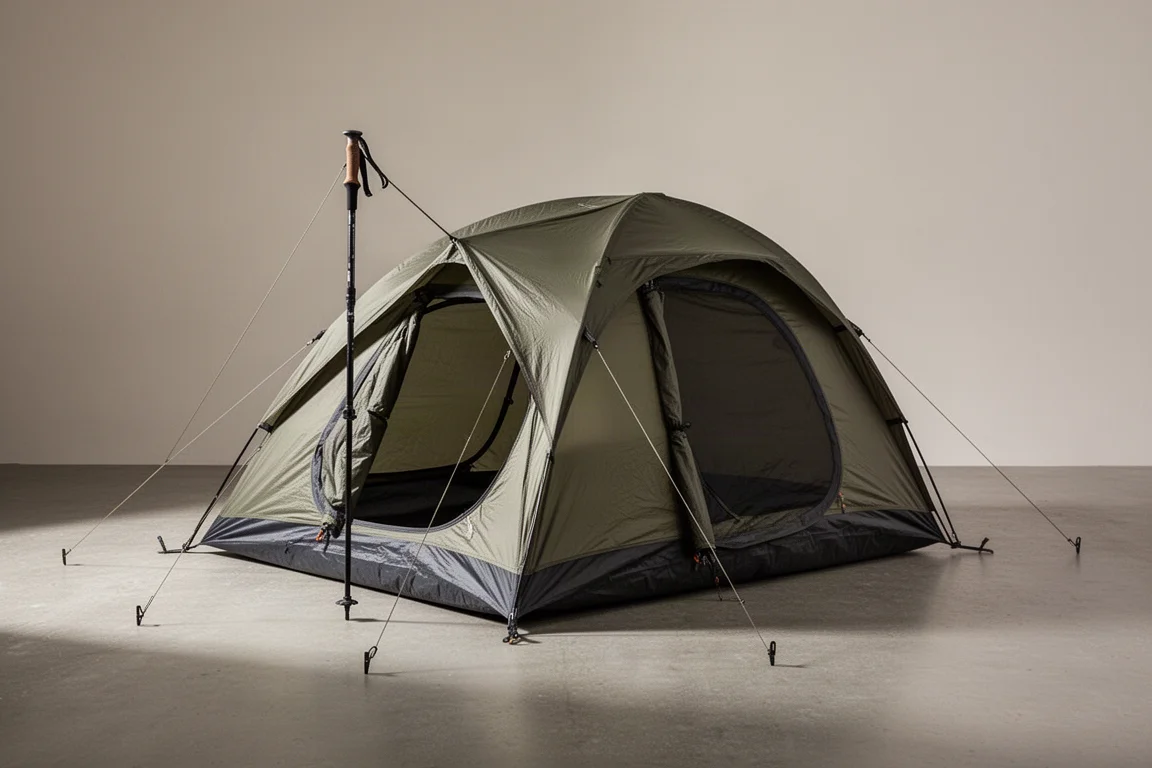
3FUL Gear Lanshan 2 Pro 4-Season Review: A Sub-$200 Single-Wall Trekking Pole Tent
An early look at the 3FUL Gear Lanshan 2 Pro 4-Season, covering its straightforward pitch, generous interior space, and the condensation and seam-sealing questions that come with any single-wall shelter.
Camping Tents
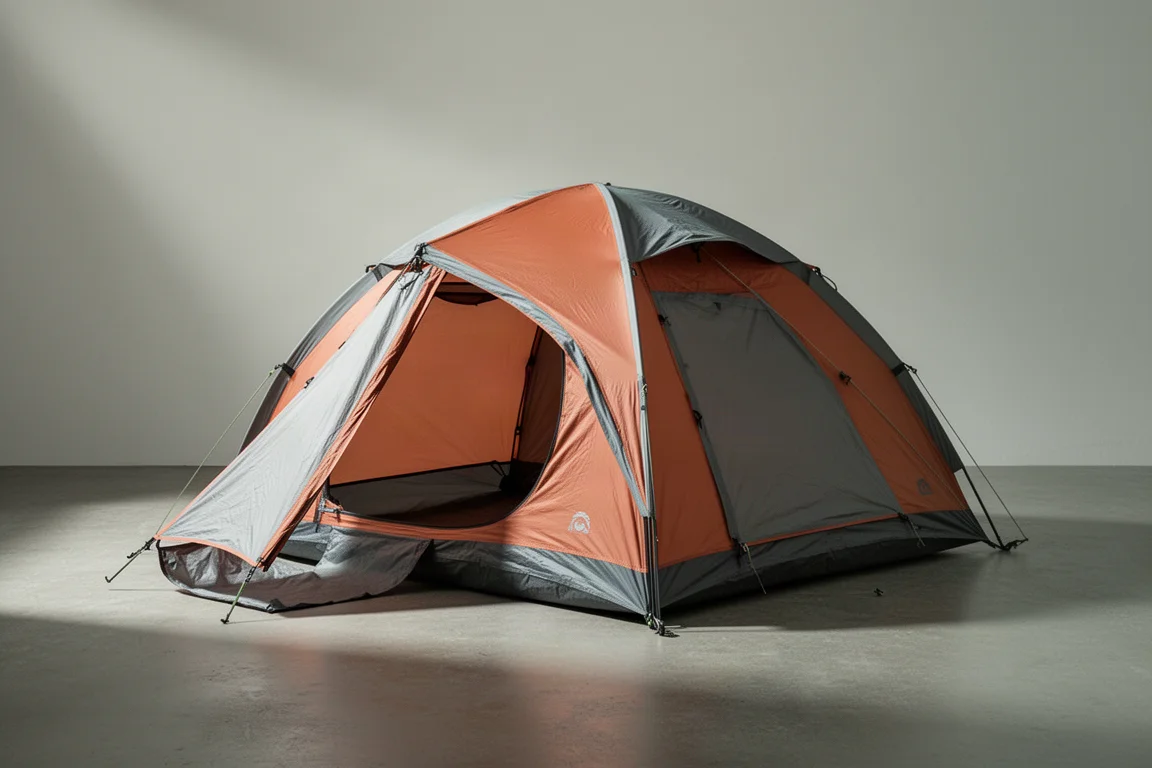
Alps Mountaineering Lynx 1-Person Tent Review: Big Value in a Small Budget Tent
A close look at the Alps Mountaineering Lynx 1-Person Tent, covering real interior dimensions, materials, setup time, ventilation limits, and who should buy it.