Camping Tents
Coleman 2-Person Pop Up Tent Review: 15-Second Setup, Fair-Weather Limits
A budget pop up tent that pitches in about 15 seconds, with a low peak height and limited rain protection that make it best for dry-weather camping.
Introduction
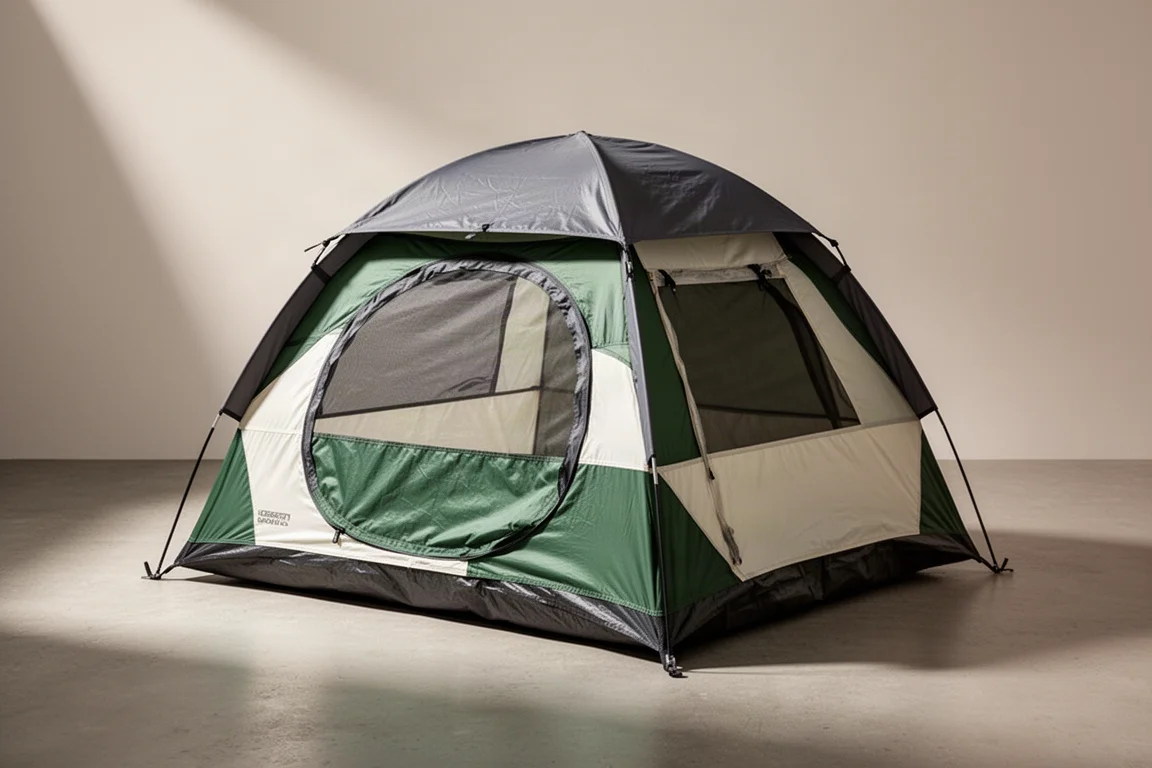
The Coleman 2-Person Pop Up Tent is built around a single idea: getting a tent standing almost instantly. The poles and the rainfly come pre-attached, so the shelter springs open in about 15 seconds once the strap is released. That speed is the headline feature, and it arrives with a very low price tag. The compromises show up in interior height and weather protection, both of which matter a great deal if you plan to sleep in exposed conditions. This review walks through setup and pack-down timing, interior space, ventilation, rain performance, build quality and portability so you can judge whether it matches the camping you actually do.
Who This Tent Is For
This tent makes the most sense on dry-weather trips where pitching speed counts for more than interior volume. It is a strong fit for backyard camping in summer with clear skies, and for casual car camping where a house or a vehicle is close enough to retreat to if the weather turns. Because the whole package is inexpensive, it also works well as a spare tent for guests or as a first tent for someone testing whether they enjoy sleeping outdoors.
It is a much weaker fit for anyone who expects to ride out rain. The fabric, the door design and the rainfly all struggled badly in wet conditions, and there is no vestibule, so anything left outside the sleeping area gets wet.
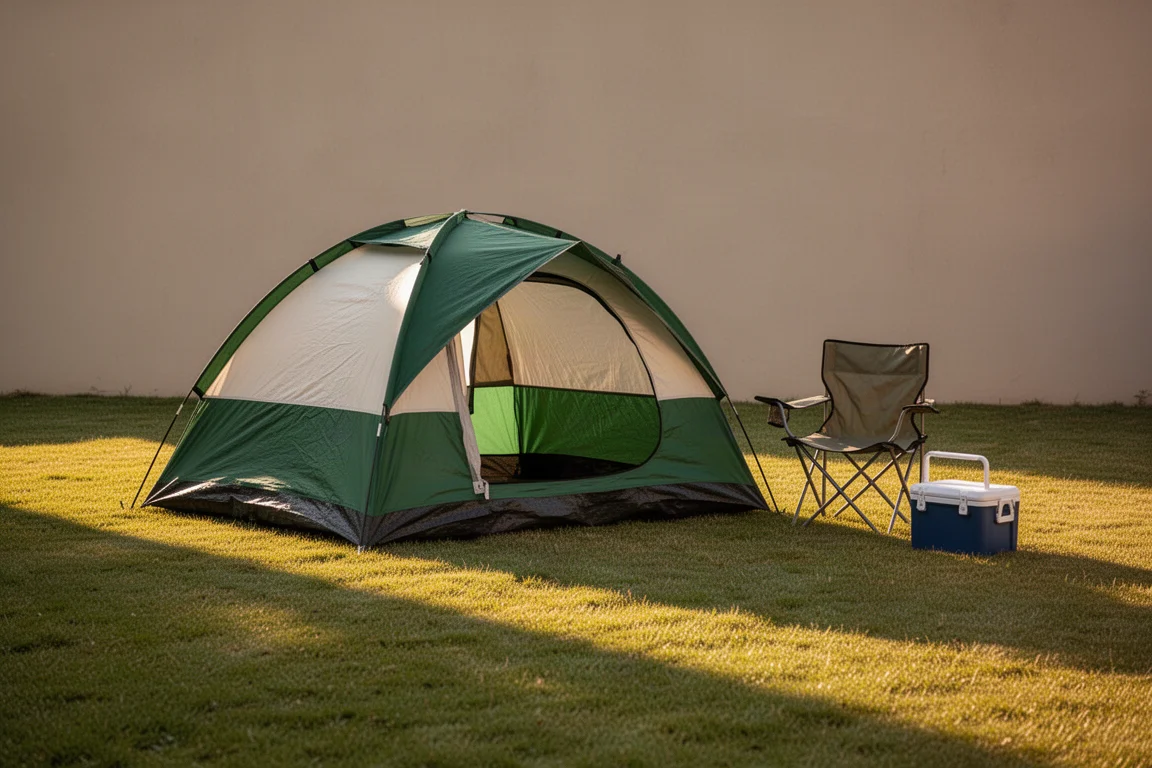
The low peak height also narrows the audience. Campers who want to sit up fully, change clothes standing, or sleep on a thick airbed will find the interior restrictive. If those points are dealbreakers, look elsewhere. If they are not, the setup speed is genuinely difficult to beat at this price.
Setup and Packing Speed
Setup is quick by design. Take the tent out of the carry bag, remove the black strap, and toss the tent away from you so it pops open. That takes about 15 seconds. From there, zip the window and door closed and stake the tent down using six loops, three along the right side and three along the left. Guy out the shelter with the two pre-attached guylines. That second stage adds roughly a minute and 15 seconds, so the entire setup can be done in as little as one and a half minutes.
Pack-down follows a specific sequence. Remove all the stakes, unzip both the window and the door panels, then fold the tent until it resembles a taco and stand it on one end. Reach out as far as possible to the far end and fold it down towards you while dropping to one knee to press that folded end against the ground. Then push the remaining poles down and together until the tent collapses into a smaller circle, refit the black strap, and pack everything away with the stakes.
The full pack-up takes about one minute and 45 seconds, and as little as one minute and 15 seconds if you skip the stakes and guylines. Be prepared for a learning curve: the folding technique takes practice, and a first attempt can be awkward enough to leave a bruised knee.
Space and Interior Comfort
The footprint is an oval rather than a rectangle, with a longest length of 91 inches and a longest width of 54 inches. A double-wide sleeping pad the size of two regular pads put together fits just nicely, with its corners touching the sides of the tent, which leaves a small amount of leftover room for gear. A near-full-size airbed is a different story. One side inflated properly while the other could not be fully inflated, and while the bed remains usable in that state, almost no gear space is left over.
The peak height at the centre is about 32.5 inches. Sitting naturally with a slight slouch on a four-inch-thick pad, the top of the tent does not touch your head, though it does make contact when you sit fully upright. Switch to an eight-inch-thick airbed and the interior feels noticeably more claustrophobic, with the ceiling touching your head even when sitting naturally.
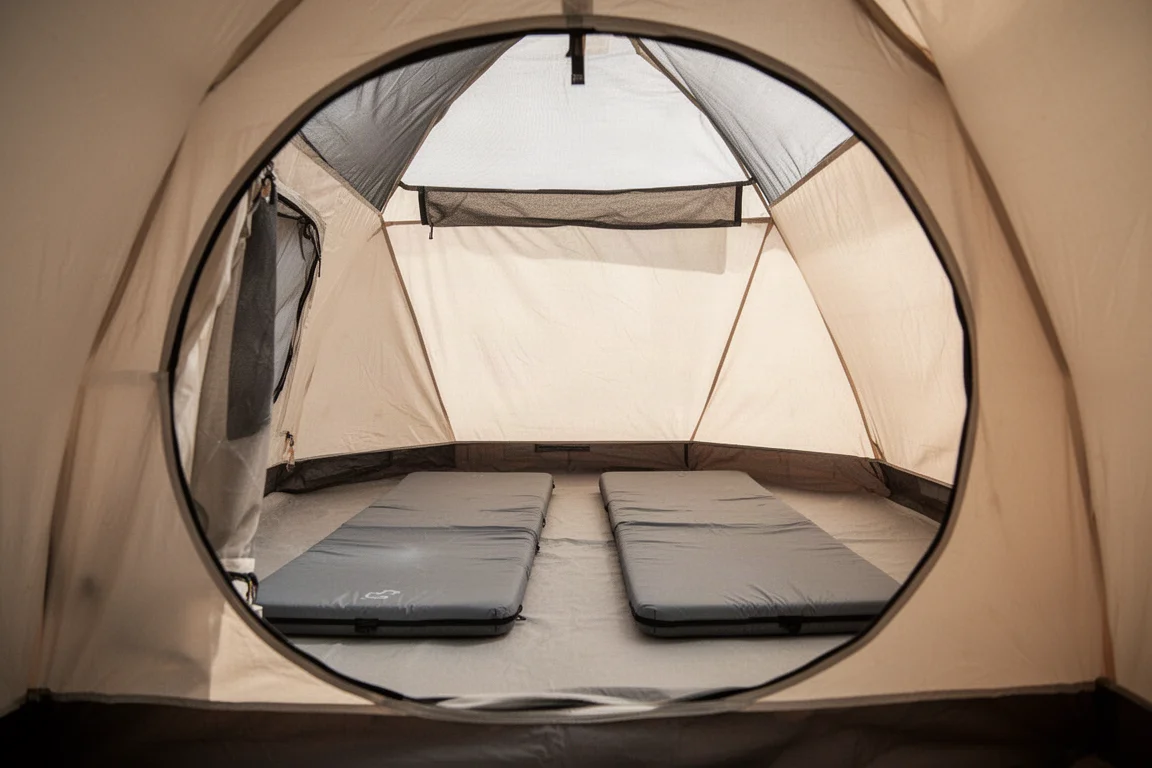
The single door sits at the front length of the tent and measures about 34.5 inches in length and 26 inches in width, making it roughly circular. If you would rather not use the door, the inner window mesh panel, about 30 inches long and 13 inches wide, can be zipped closed instead for extra ventilation. One quirk to remember: from inside the tent, the window has to be unzipped before the door can be zipped. Both the door and the window have two zippers each, and every zip can be opened from either the outside or the inside. Latches are included so you can tie the door and window up for maximum airflow.
Storage is limited. There is one pocket inside, split into two sections and measuring about 16 by 8 inches. There is no lantern loop, although a lantern can be hung from the window and door latch attachment, with both panels open, with only the door closed, or with only the window closed.
Ventilation and Weather Performance
On a hot day without rain, the rainfly can come off entirely without disturbing the guyline stakes. Unhook the four S-hooks at the front, undo the Velcro attachments near the guylines, and sweep the rainfly towards the back, where it can be tied up or simply left in place. The rainfly cannot be removed completely because it is attached directly to the tent at the rear. With the rainfly removed and the door fully open, airflow through the ceiling mesh and the door is decent.
Wet weather is where the design runs into trouble. The rainfly needs to stay in place and the door needs to be closed, and because there are no vents, there is hardly any ventilation at all. An overnight solo test with the rainfly in place and the door closed did not feel too stuffy, and no condensation issues were noticed the next morning, but occasional rain during the night still allowed water inside.
A controlled rain test using a hose to simulate heavy rain produced more serious results. At about 15 minutes in, water was leaking heavily from the door itself, forming large puddles on the floor. Water had also begun seeping through the seam between the flooring and the tent body despite that seam being taped. Both the green and the white tent fabric were soaked through, and the rain cover over the door zip was soaked through as well. Water collected on the ceiling mesh and dripped onto the floor. Lifting the rainfly afterwards revealed a wet underside and a rainfly that had been soaked through entirely.
Stability is acceptable rather than impressive. With only two guylines, a guyed-out tent does not feel especially planted when shaken, but it holds up reasonably well. The low peak height suggests it can handle light to moderate winds without much trouble.
Build Quality and Durability
The flooring does not feel like polyethylene and is most likely polyester, and it does not come across as particularly thick or rugged. The rest of the tent is made from 68D polyester. Most of the seams are taped, but parts of the seam tape are poorly applied, which is a likely contributor to the seam leaks seen in wet conditions. Stitching is double stitched and mostly consistent, with some inconsistent stitching and loose threads found around the tent.
The zippers do not feel especially smooth, and there is noticeable tension when zipping the door and window closed. That tension is the reason it is worth staking the tent down only after the door and window are already zipped, so you do not add further strain to the zips. The poles are fibreglass and have held up through a couple of years of light use without any issues. The carry bag is good quality, sized correctly for the packed tent, and includes a dedicated pocket for the stakes.
Portability
Packed down, the tent measures about 29 by 29 by 3 inches, which makes it notably thin for a two-person shelter. That slim profile is the main reason it travels well in a car boot alongside other gear.
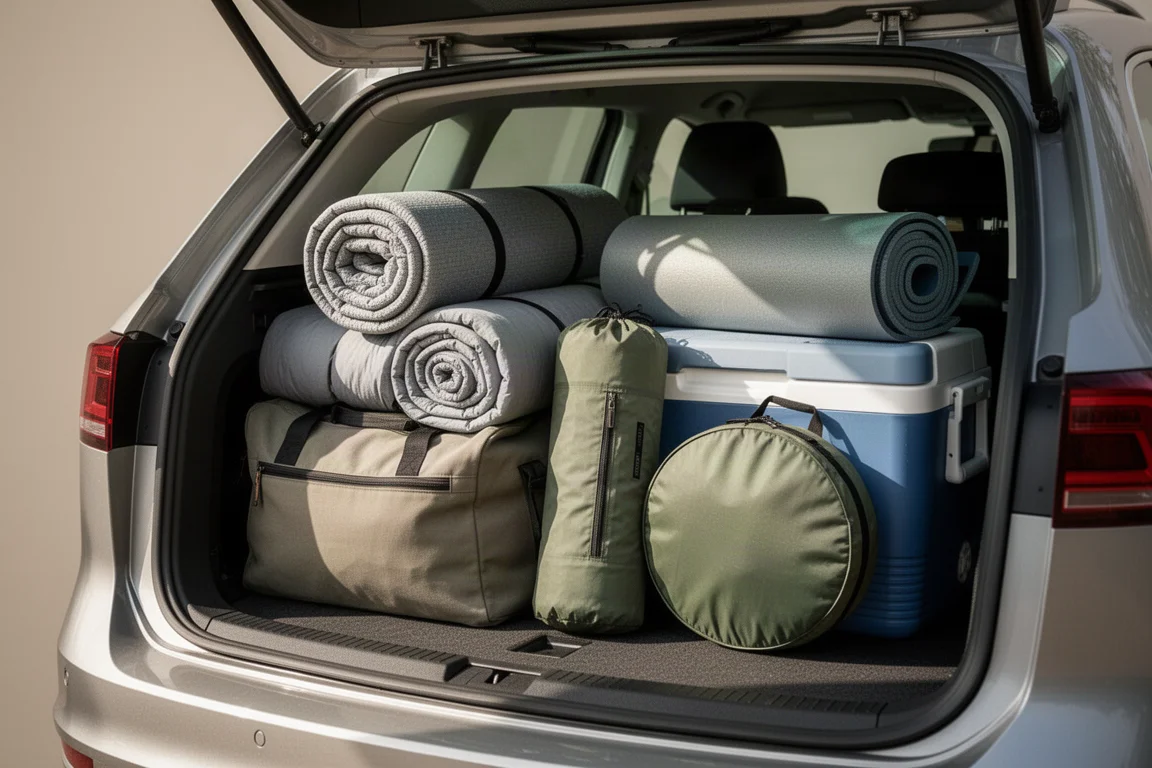
Weight is reasonable for the category. The tent and carry bag alone come to about 5.4 pounds without the stakes, rising to roughly 6.6 pounds once the eight stakes are included. The carry bag has a handle at the top to make the walk from the car to the pitch a little easier.
Buying Advice
The honest summary is that this is a very inexpensive tent that does exactly one thing exceptionally well and several things adequately. It opens in about 15 seconds, packs away in under two minutes with practice, and costs very little. It is not weather resistant, it is not especially spacious, and its hardware and materials are functional rather than refined.
A few habits make ownership easier. Zip the door and window before staking the tent down, so you are not fighting extra tension on the zips. Use the two guylines when there is any breeze. Keep in mind that the rainfly cannot be fully removed, so plan your airflow around sweeping it to the back rather than detaching it. And treat this as a fair-weather shelter: it performs best when the forecast is clear and a house, cabin or vehicle is nearby.
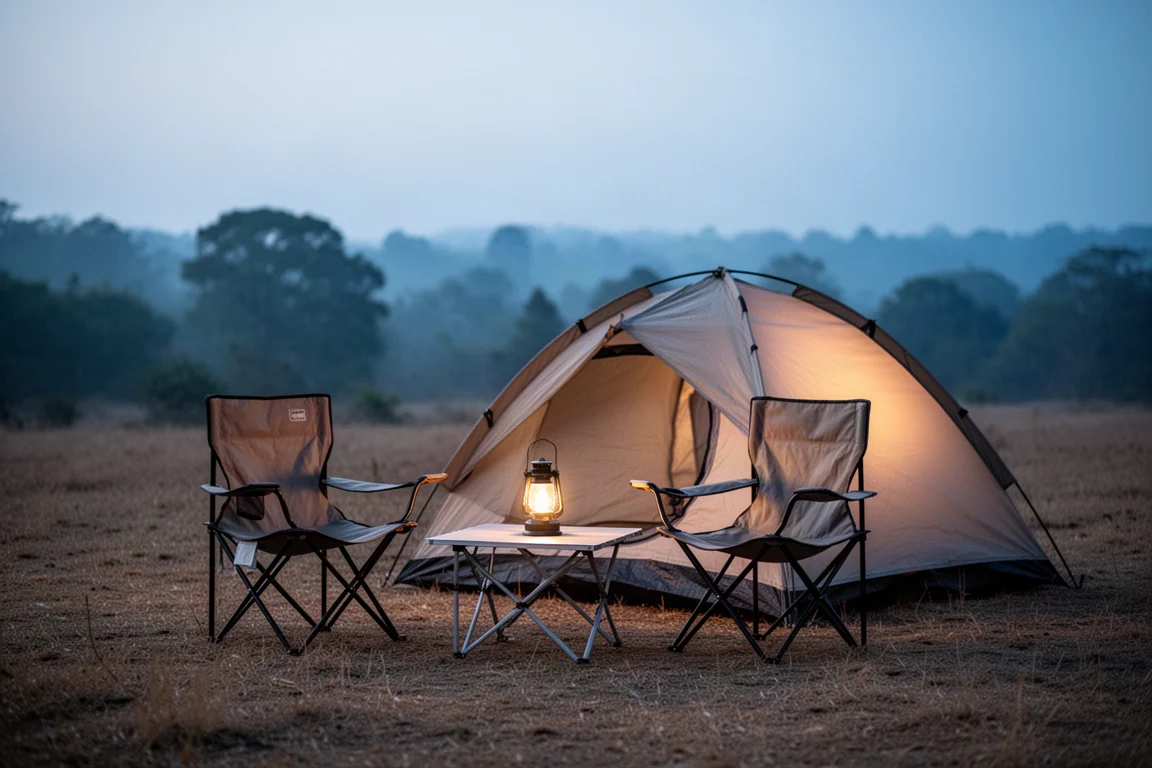
Compared with spending more, you are trading durability, interior height and rain protection for speed and price. If your trips are short, dry and casual, that trade is easy to accept. If you need a tent that shrugs off sustained rain or lets two adults sit up comfortably, this is not the one.
Conclusion
The Coleman 2-Person Pop Up Tent is a genuinely great budget option for backyard camping in summer with clear skies. Its 15-second pitch and sub-two-minute pack-down make it effortless to use, and the low price makes it easy to justify as a spare or starter tent. The caveats are clear and consistent: a 32.5-inch peak height that rules out thick airbeds, limited storage, and fabric and sealing that soak through in heavy rain. Buy it for convenience and dry weather, and it will do its job well.
Product link
View more details for Coleman 2-Person Pop Up Tent
This product is mentioned in the review. Check the specifications, options, and compatibility before buying.
View more details for Coleman 2-Person Pop Up TentFurther reading
Related Reviews
Camping Tents
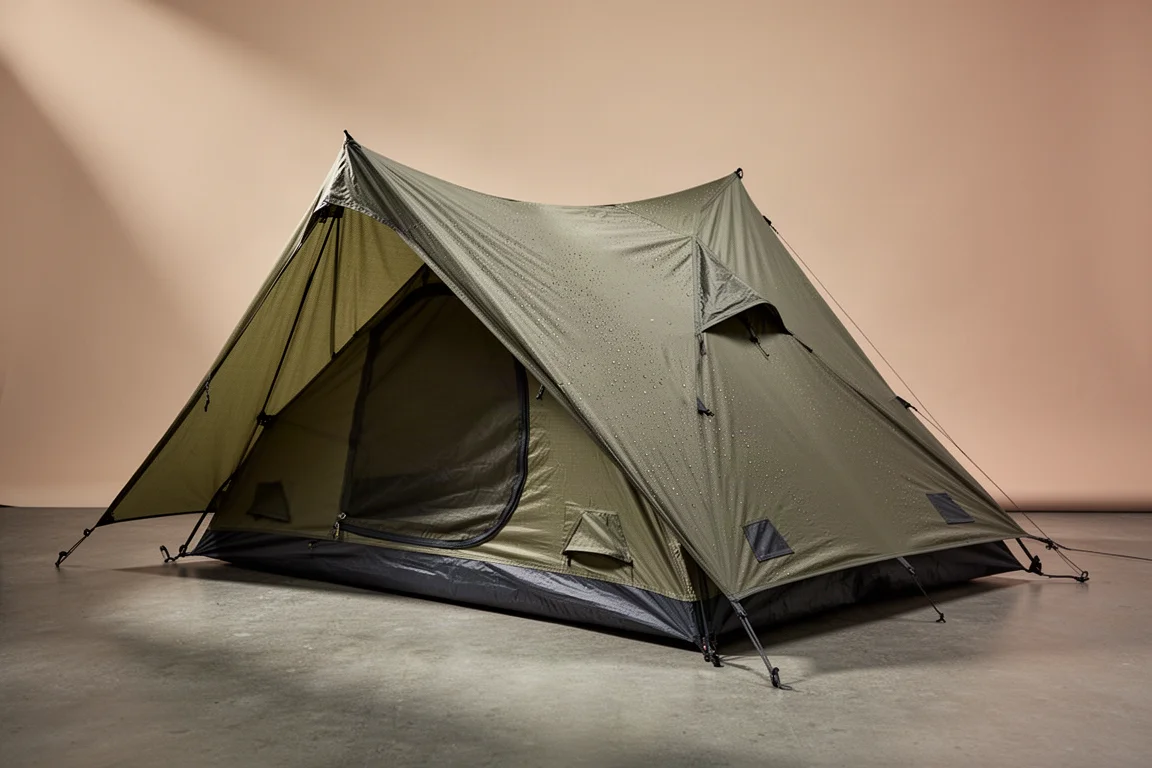
3F UL Gear Taiji Two-Person Tent Review: Field Waterproofing Results and Buying Advice
The Taiji pairs an attached fly with a removable inner, but sustained rain exposed untaped vent seams that need sealing before this shelter can be trusted.
Camping Tents
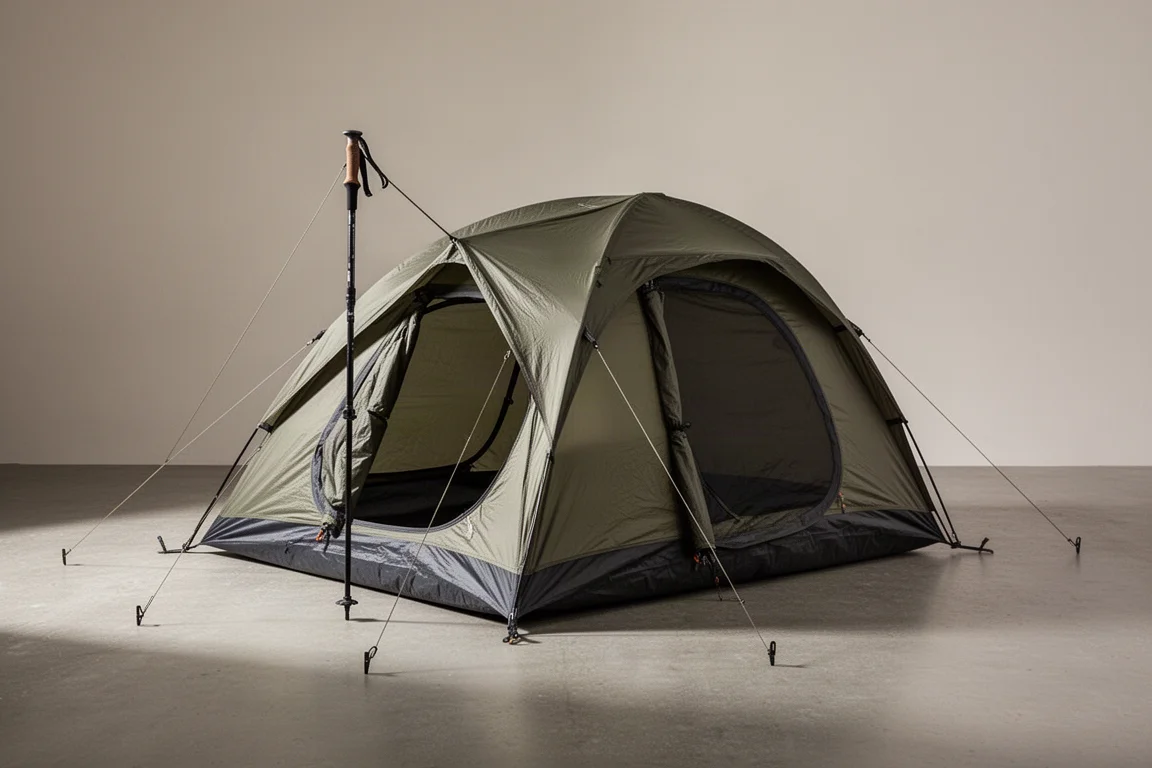
3FUL Gear Lanshan 2 Pro 4-Season Review: A Sub-$200 Single-Wall Trekking Pole Tent
An early look at the 3FUL Gear Lanshan 2 Pro 4-Season, covering its straightforward pitch, generous interior space, and the condensation and seam-sealing questions that come with any single-wall shelter.
Camping Tents
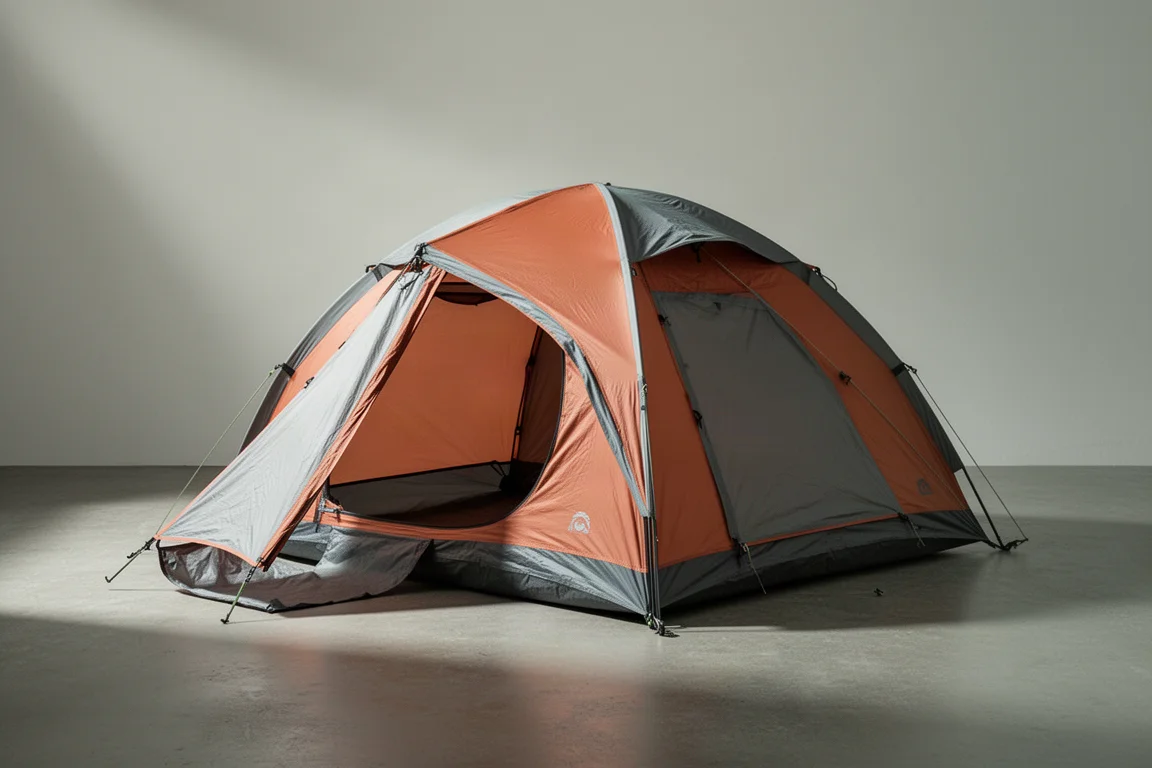
Alps Mountaineering Lynx 1-Person Tent Review: Big Value in a Small Budget Tent
A close look at the Alps Mountaineering Lynx 1-Person Tent, covering real interior dimensions, materials, setup time, ventilation limits, and who should buy it.