Camping Tents
Coleman 10-Person Dark Room Instant Cabin Tent Review: Fast Setup, Dark Mornings, Rain Caveats
A close look at Coleman's 10-person instant cabin tent, covering setup times, dark room performance, real interior space, and how it handles rain and wind.
Introduction
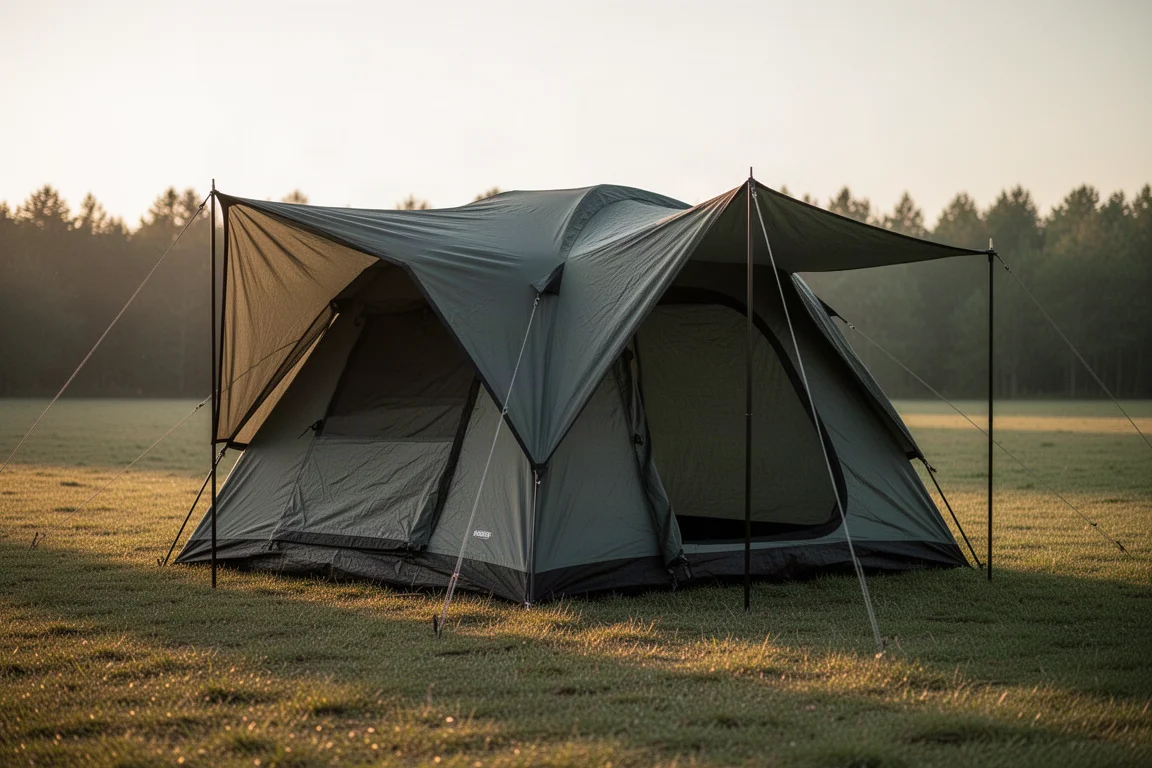
Coleman’s 10-Person Dark Room Instant Cabin Tent is built for car camping trips where setup needs to be quick and morning light should not cut sleep short. It is an instant-style cabin tent, which means the poles stay attached to the tent body and unfold into position instead of being threaded through sleeves. The tent also uses dark room fabric, a light-blocking treatment applied to the walls and roof.
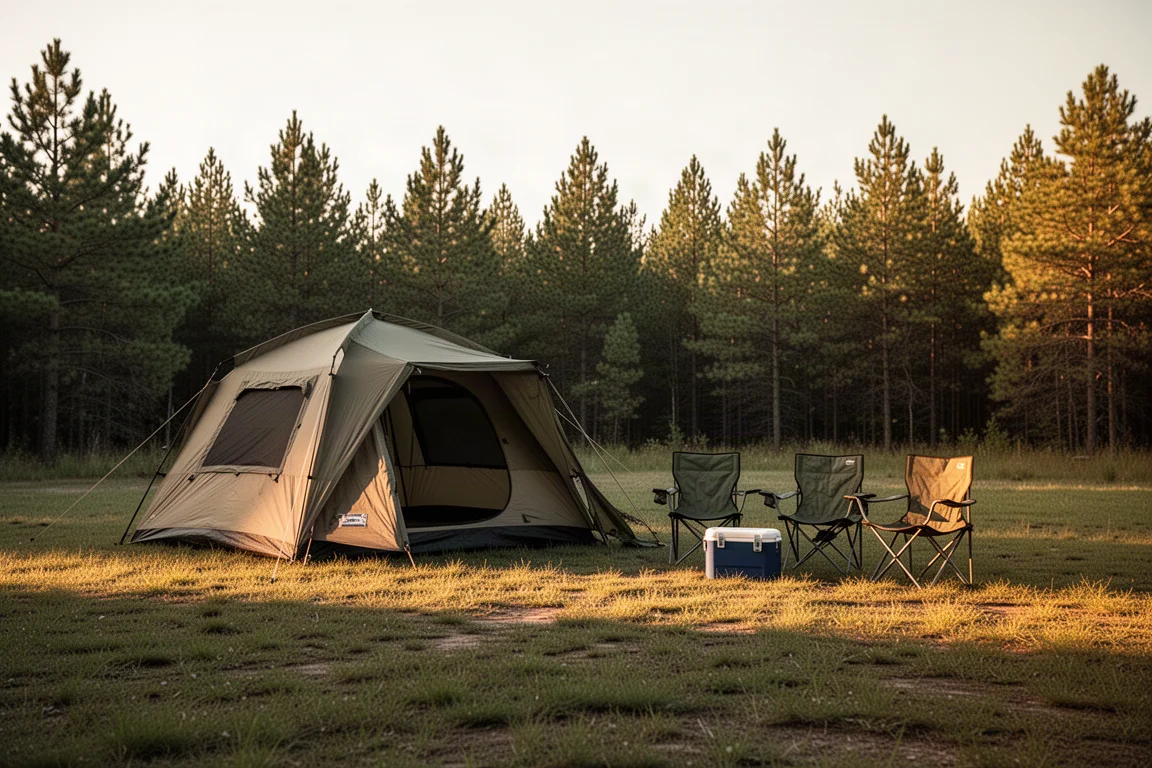
That combination sets the tone for the whole design. Speed and darkness are the headline features, while interior height, wall geometry, and wet-weather protection are the areas where the tent makes compromises. This article covers what arrives in the box, how long setup and pack-down take, how much usable space is really available, and what to expect when conditions turn wet or windy.
Who this product is for
This tent makes the most sense for campers who expect warm, dry weather. The dark room fabric keeps the interior noticeably cooler during the day and much darker at night, which suits summer trips, festival camping, and family holidays where sleeping in matters. The instant frame also helps anyone who camps occasionally and does not want to wrestle with a conventional pole set.
It is a less obvious fit for anyone camping in sustained rain or exposed, windy locations. The cabin shape is not aerodynamic, the pole structure is simple, and the rainfly offers limited coverage. Campers who regularly pitch in wet weather should look at a tent designed around storm protection instead.
Main strengths
Setup speed and the dark room interior are the two features that carry this tent. Both are genuinely useful rather than marketing extras, and both hold up in practice. The interior also ventilates well when the weather is dry, which keeps the tent from feeling stuffy during the day.
The details below explain how the instant frame works, what the dark room fabric achieves, and how the door and window layout affects day-to-day use.
Instant frame setup
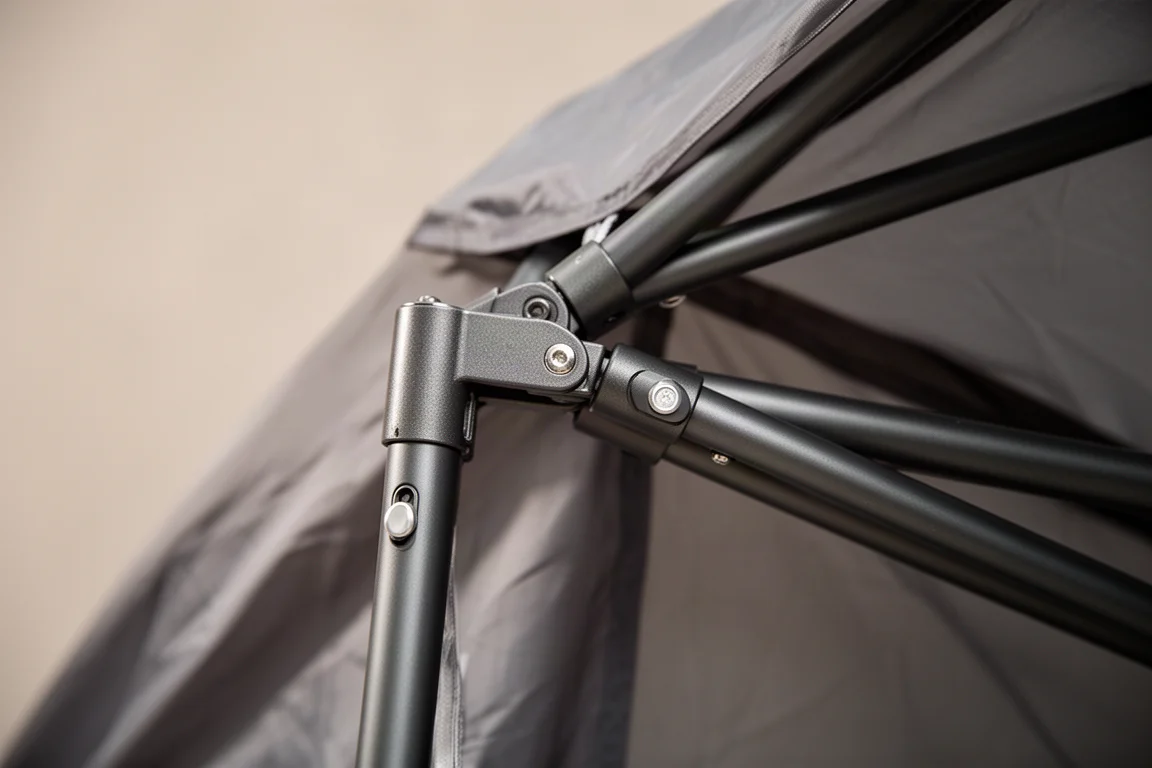
The tent arrives with poles and guylines already attached, which removes the slowest part of pitching a large tent. Setup starts by unfolding the body flat on the ground, then pulling upward on six elbow joints until they sit at roughly a 90-degree angle. The four roof poles extend next, followed by six telescoping wall poles that lock into place with silver buttons.
After that, the rainfly drapes over the top with the green side facing up, and six hooks secure to six loops around the base. Staking uses ten stakes for the tent body, with three at the front, three at the back, one on each side, and two for the small ground sheet, plus six larger stakes for the guylines. The final step is threading the green fiberglass poles through the door sleeve and fixing them to two rubber gaskets to complete the hinged D-door.
Setup takes about seven and a half minutes with two people and roughly sixteen minutes solo. Packing down takes slightly more than five minutes with two people and about ten minutes alone, excluding washing and drying. Compared with a conventional 10-person tent, that is roughly 30 to 90 percent less time.
Dark room technology
The dark room fabric is the standout feature. With every window and door closed, the interior stays considerably darker than a standard tent during daylight hours, and it also runs cooler. At night it becomes close to pitch black inside, even with street lighting nearby.
The blocking is not absolute. A small amount of light seeps through the gap between the roof and the rainfly, and a little comes through at the bathtub flooring. For most sleepers that will be irrelevant, but anyone who needs total darkness should expect those thin slivers of light.
Ventilation and door design
Ventilation is a strength in dry weather. The roof carries a large amount of mesh, and the rainfly is removable from the outside, which opens the tent up for stargazing. Five windows wrap around the body, each with two zippers and a bug net, plus a small latch for tying the fabric out of the way. Mesh openings are on the large side and do not qualify as no-see-um mesh.
There are two doors, one at each width of the tent. The hinged D-door measures about 50 by 34 inches and sits roughly 47 inches from the ground to the top, so it works much like a normal door with no zipping required. The second door is not hinged, closes with a zip, measures about 47 by 46 inches, and stands around 53 inches from the floor to the top. Both require ducking on entry because the side walls lean inward. Each door has bug netting, and two clips hold them open. A lantern loop sits at the centre of the ceiling, and a zippered e-Port at the base provides a cable pass-through.
Things to consider before buying
Interior space, rain behaviour, and build quality are the areas that need realistic expectations. The tent is large, but the usable volume is smaller than the footprint suggests, and the rain protection is basic rather than comprehensive.
The sections below break down how the walls affect livable space, what happens in light rain, and which construction details are worth knowing before ordering.
Interior space and wall geometry
Peak height is about 73.5 inches, and the lowest points at the four corners sit at roughly 59 inches. Anyone around 63 inches tall can stand almost everywhere inside except the corners, and a short step forward restores headroom. The walls lean inward more than expected, the body feels slightly droopy in places, and the number of pole clips is on the low side, all of which trims livable space.
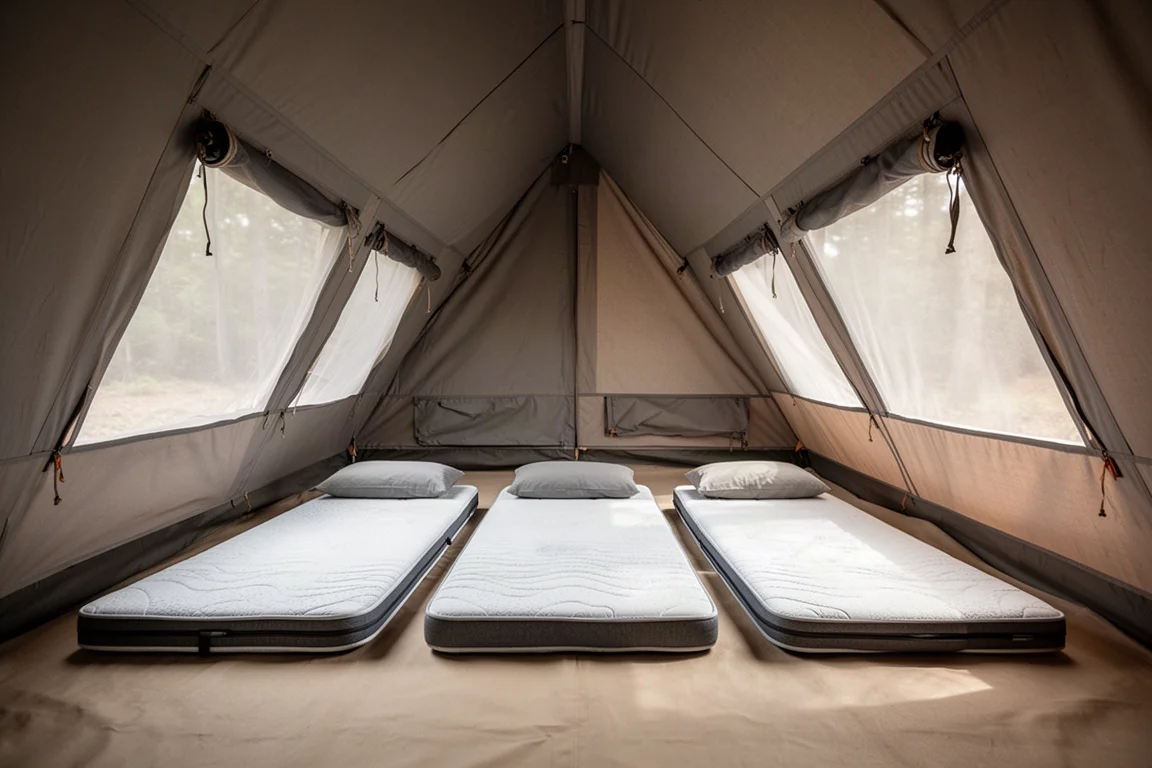
Measured length is about 13 feet 11 inches and width about 9 feet 9 inches, which is slightly smaller than the marketed dimensions. Ten single sleeping pads fit, but ten people sleep nearly shoulder to shoulder with only a narrow strip down the middle for gear. Four queen-sized camping mattresses also fit and take up almost the entire floor, leaving barely any room for equipment. There is no vestibule, so anything left outside the door will get wet if it rains.
A room divider splits the interior into two rooms. Each room holds five sleeping pads or two queen mattresses, and the left room gets three windows and the hinged D-door while the other gets two windows and the zipped door. The divider reaches the floor but leaves large gaps at the sides and is not fully opaque. Storage is limited to two pockets of about seven by eight inches, which is small for a tent this size.
Rain and wind performance
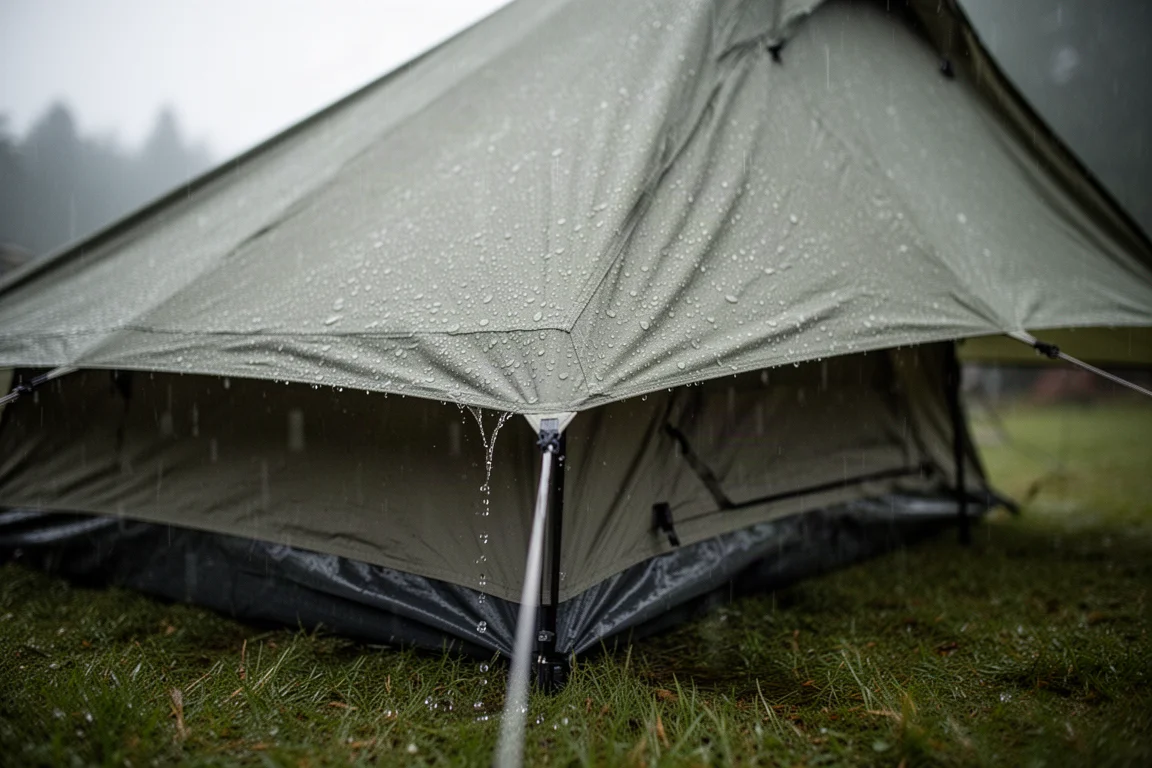
Rain is where the design struggles. During light rain, water began seeping through the inverted seam that joins the black tent fabric to the bathtub flooring within 15 to 30 minutes, and the zip and zippers of the hinged D-door also started leaking. After about three hours of light rain, the inverted seam was thoroughly soaked and the door zip was leaking steadily.
The rainfly provides very little protection, and because the tent body slants outward, water drips directly onto the window and door mesh. In light rain the windows can be cracked open slightly, but in heavy rain they should stay closed. With no ground vents, ventilation during rain is limited to the gap between the roof and the rainfly. Anyone who expects rain should plan on sealing the inverted seam before the trip.
Wind is a similar story. A cabin tent has no aerodynamic shape, the pole structure is simple, and there are only six guylines across a very large body, so strong winds are likely to be a problem.
Build details and packed size
The floor uses polyethylene with a bathtub wall that extends about four inches up the sides, and it stayed dry after three hours of light rain with no water passing through. The main body and rainfly appear to be polyester, though no denier or water resistance rating is published. The interior of the main body also stayed dry after three hours of light rain.
Out of the box there were loose threads and excess material on the floor. Stitching is generally consistent with no large holes, though some light passes through the seams, which is more noticeable here because of the dark room fabric. Seam tape around some windows was applied poorly, catching the zipper and making it less smooth. The non-hinged door snags from the outside against its yellow rain cover, and the mesh holes are too large to block no-see-ums, with a couple of small holes found in one window’s mesh.
The instant mechanism is convenient but not flawless. Elbow joints occasionally jam and need to be folded back before they will prop up correctly, and one pole arrived attached the wrong way so it could not extend or retract. Instant tents also pack considerably larger than standard tents of the same capacity, which matters for smaller vehicles.
Buying advice
For hot, dry summer camping, this tent is a strong choice. The dark room interior is genuinely effective, the mesh panels keep air moving when the rainfly comes off, and the instant frame saves real time on both setup and pack-down. Two people can pitch it in about seven and a half minutes, and one person can manage alone in around sixteen.
Buy it with a clear view of the trade-offs. If rain is likely, budget time to seal the inverted seam and expect limited airflow once the tent is closed up. If your trips involve sustained rain or exposed, windy sites, a tent built for weather protection will serve you better. Campers who need generous interior height, vertical walls, or plenty of storage pockets should also weigh those points, since this design favours speed and darkness over maximum livable volume.
Conclusion
The Coleman 10-Person Dark Room Instant Cabin Tent does two things very well: it goes up fast, and it keeps the interior dark and cool. Those strengths make it a natural fit for warm-weather group camping where sleep quality and quick setup matter most. Its limits are equally clear, with inward-leaning walls that reduce usable space and rain protection that needs seam sealing and offers little ventilation once the tent is closed. Choose it for dry summer trips and it will do its job well.
Product link
View more details for Coleman 10-Person Dark Room Instant Cabin Tent
This product is mentioned in the review. Check the specifications, options, and compatibility before buying.
View more details for Coleman 10-Person Dark Room Instant Cabin TentFurther reading
Related Reviews
Camping Tents
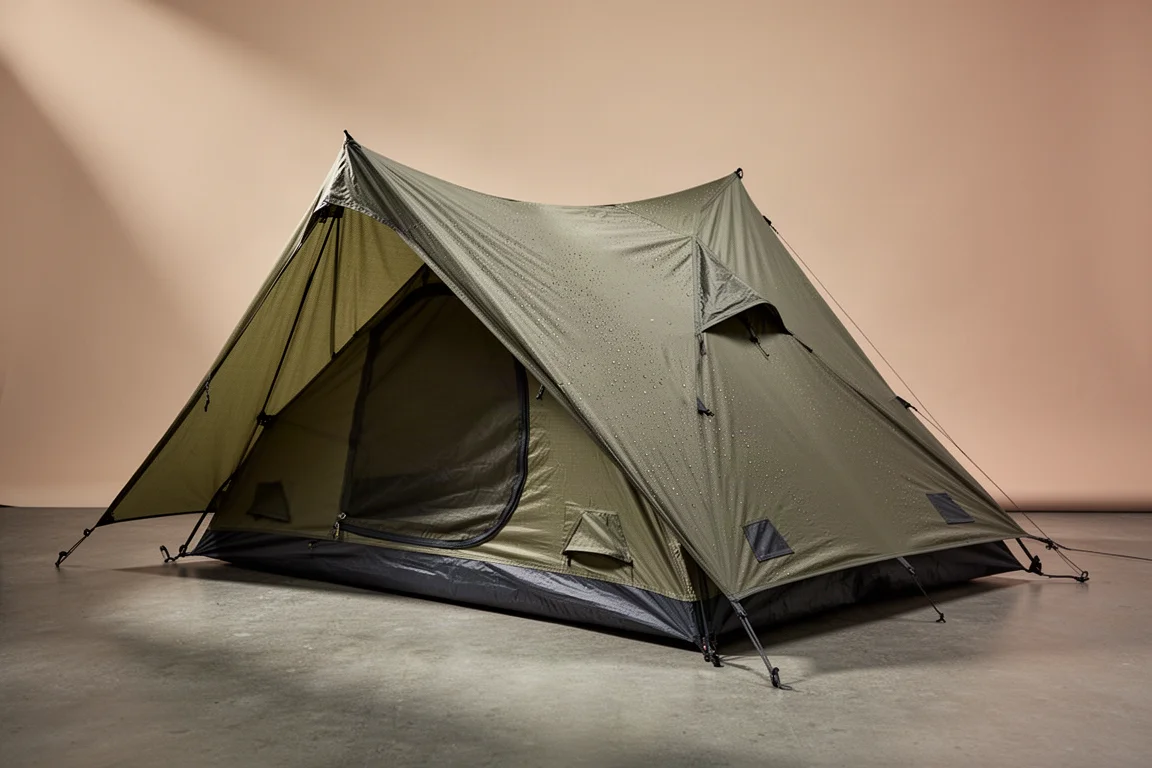
3F UL Gear Taiji Two-Person Tent Review: Field Waterproofing Results and Buying Advice
The Taiji pairs an attached fly with a removable inner, but sustained rain exposed untaped vent seams that need sealing before this shelter can be trusted.
Camping Tents
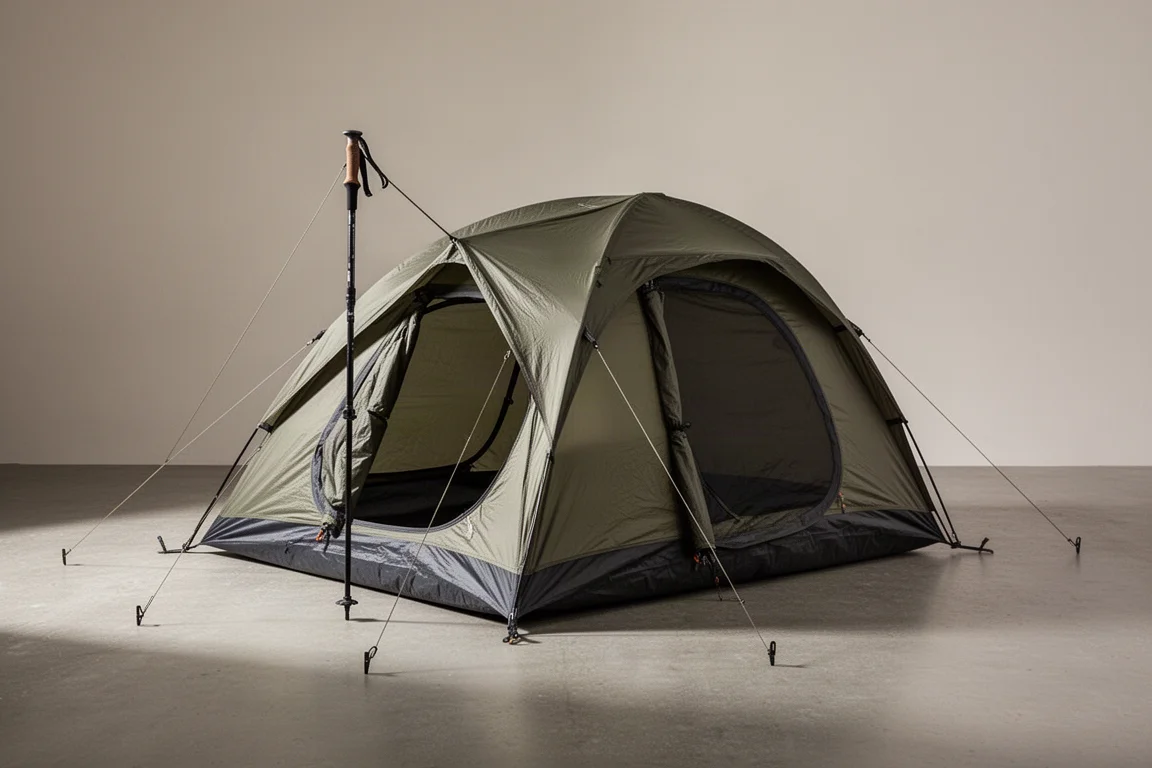
3FUL Gear Lanshan 2 Pro 4-Season Review: A Sub-$200 Single-Wall Trekking Pole Tent
An early look at the 3FUL Gear Lanshan 2 Pro 4-Season, covering its straightforward pitch, generous interior space, and the condensation and seam-sealing questions that come with any single-wall shelter.
Camping Tents
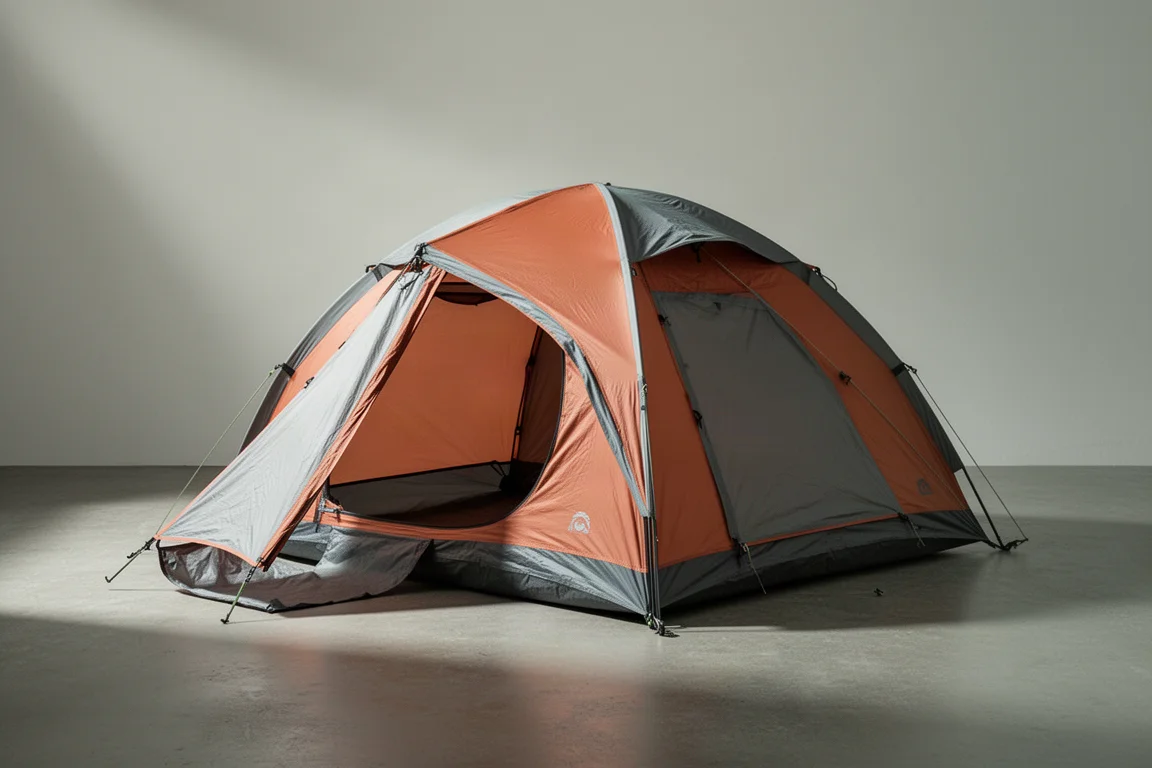
Alps Mountaineering Lynx 1-Person Tent Review: Big Value in a Small Budget Tent
A close look at the Alps Mountaineering Lynx 1-Person Tent, covering real interior dimensions, materials, setup time, ventilation limits, and who should buy it.