Sleeping Pads
Cold Weather Sleeping Pads Compared: Three Pads Tested on Snow and Ice
Three cold weather sleeping pads with bold R-value claims go head to head on frozen ground, with one clear value winner and one clear miss.
Introduction
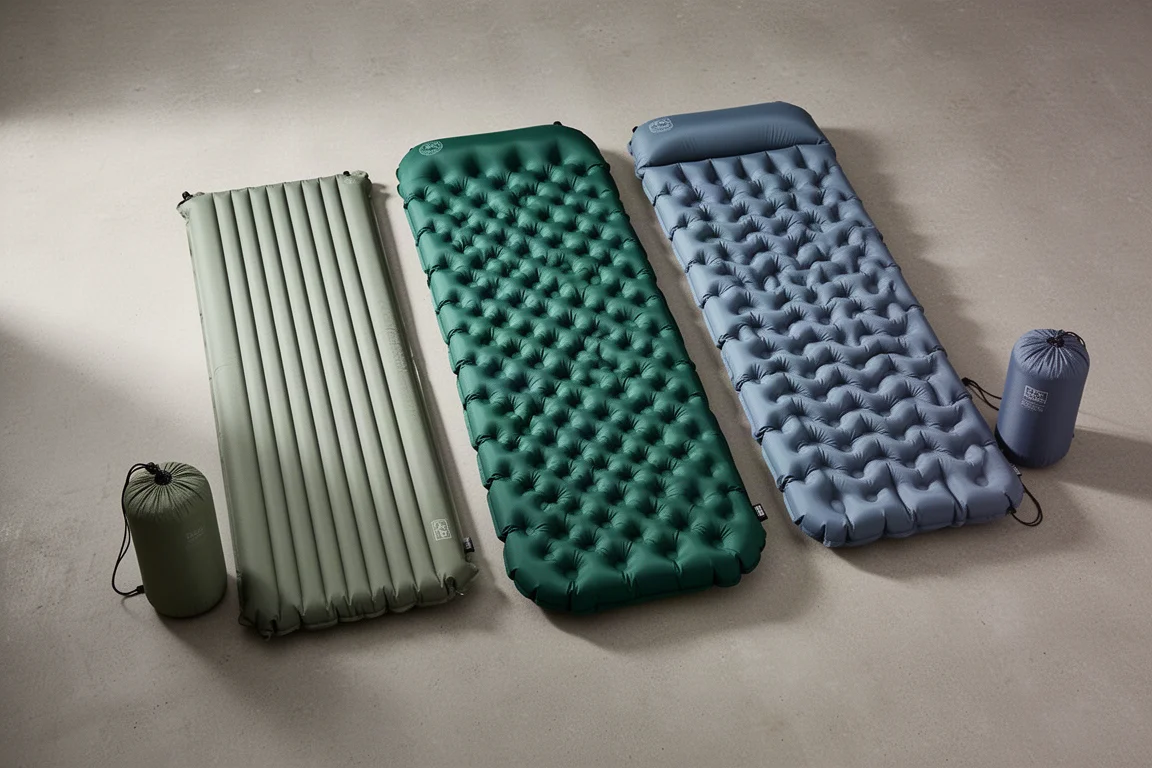
Three sleeping pads arrived recently with claims that read like a spec-sheet dream: an ultra-light pad with a 6.9 R-value, a $110 pad promoted as one of the warmest and most comfortable options available, and a $40 pad carrying the highest R-value of the group at 7.6. Numbers like these are easy to print and much harder to deliver, especially when the ground beneath you is ice.
All three pads were taken into the Canadian Rockies in winter and tested on frozen ground, with air temperatures starting near -5°C and falling to a low of -13°C overnight. The results were not what the specs suggested. One pad failed completely, one did not hold up as a winter pad but still makes sense for three-season use, and one turned out to be the most impressive of the three.
What These Three Pads Are and How They Were Tested
Every pad was tested the same way. The first round allowed 30 to 40 minutes on each pad, starting with the lowest R-value and working upward, because a sleeping pad can take 15 to 30 minutes to warm up before it becomes clear whether heat is escaping into the ground. The pads were paired with the same cold-weather quilt and used on the same ground surface: ice beneath the tent, which pulls heat away faster than snow.
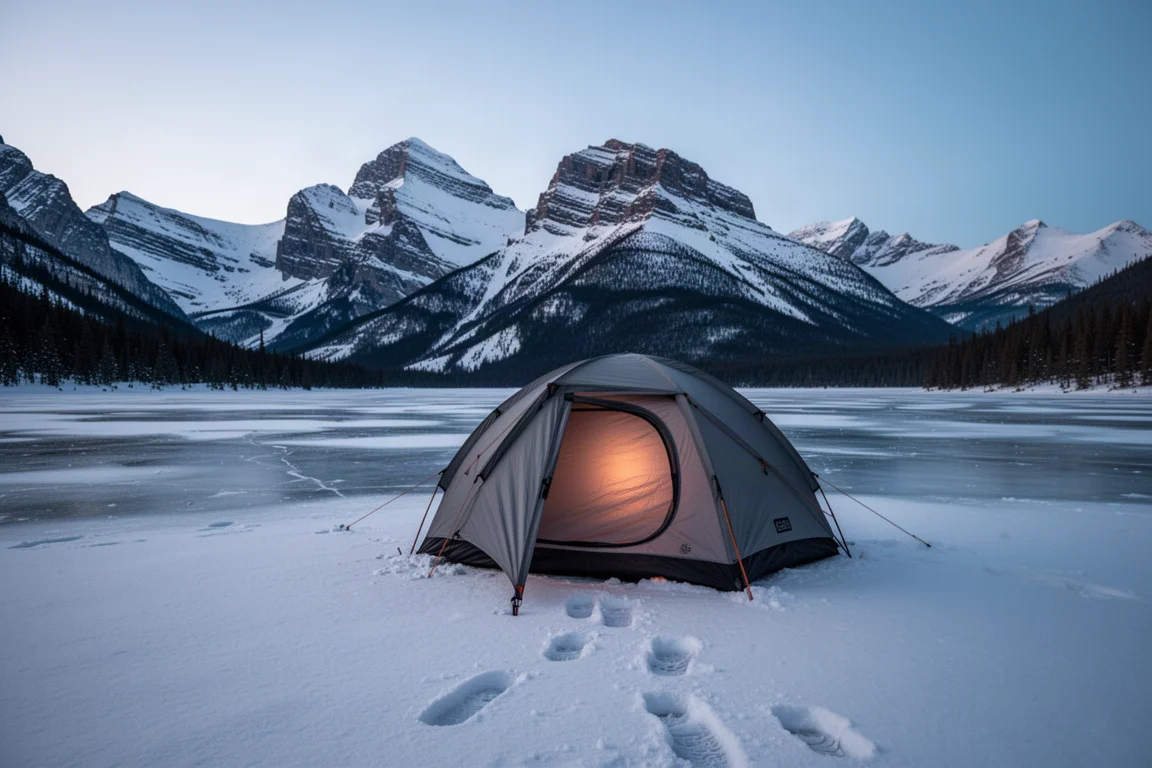
The initial round was followed by a longer overnight test. The Exped Ultra 6.5R was used as temperatures dropped from -5°C to -7°C and -8°C, and the Bestway Alpenlite was used for the remainder of the night as the temperature fell to -10°C and eventually -13°C. Combining a cold air temperature with a very cold ground surface is the fairest way to separate pads that genuinely work in winter from pads that only look capable on paper.
Exped Ultra 6.5R: The Lightest Option
Weight is the reason the Ultra 6.5R stands out. In the medium wide rectangular size it weighs 551 g, which is remarkably light for a pad rated at 6.9 R. Against the same size in the Exped XTRM range, it is about 100 g lighter, roughly a 5 percent gain in warmth-to-weight.
Its insulation is built differently from most pads. A sheet of synthetic insulation is welded to the top surface, with a reflective film welded beneath it, so insulation sits only in the upper section while the lower part is air. The idea is to reduce the influence of cold air on the side walls, a common reason pads sleep colder than their R-value suggests. Each vertical baffle is also separated from its neighbours, which should limit convective heat loss between chambers.
Comfort has been a consistent strength of the Ultra line, and this pad continues it. The stretchy top fabric and vertical baffles worked well for both side sleeping and back sleeping.
In the first round of testing it took about 15 minutes to warm up, after which the cold spots disappeared and the warmth felt close to what the Bestway offered. The overnight test told a different story. At -5°C the pad felt warm, but as the temperature fell to -7°C and -8°C, heat loss through the pad became noticeable and it was no longer comfortable enough to sleep on.
That does not rule the pad out. Read as a three-season pad rather than a winter pad, it makes a lot of sense: lighter and more compact than the older Ultra 5, about on par for warmth and just as comfortable, with a weight similar to three-season pads such as the Tensor AllSeason and the XLite while being more comfortable than either.
OneTigris Noble Jade: Warmth Claims That Did Not Hold Up
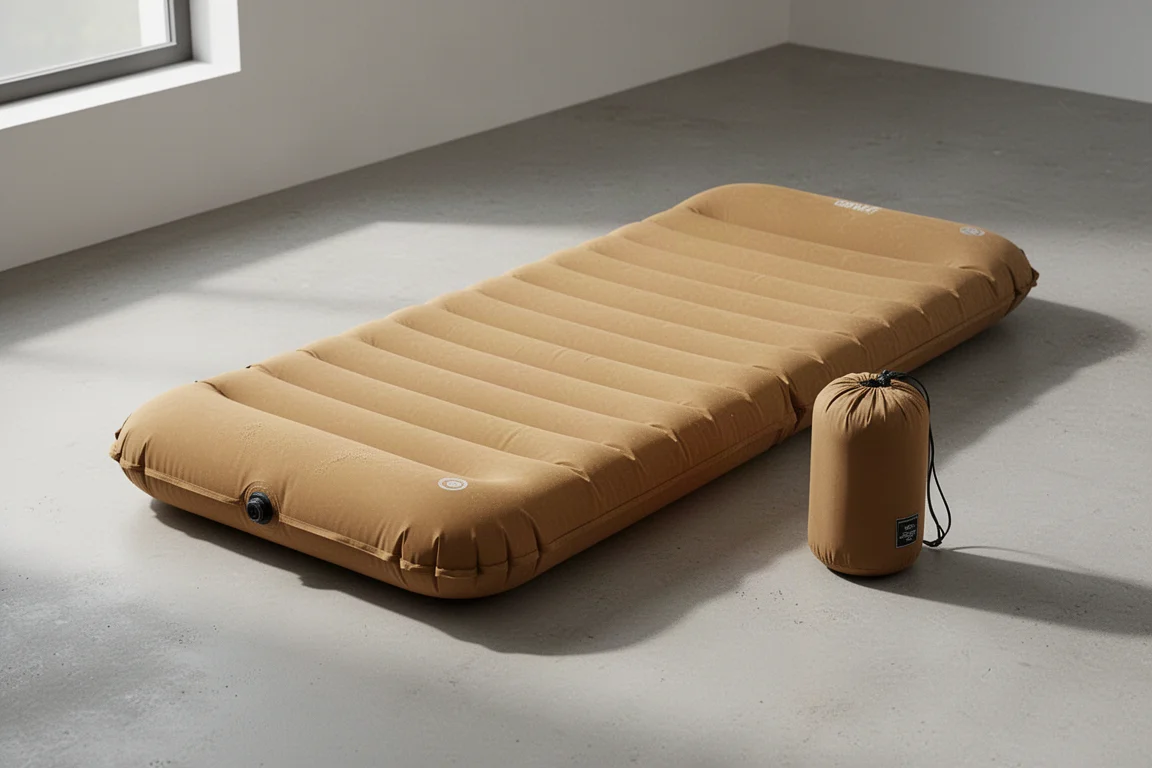
The Noble Jade is sold with a 7.3 R-value at $110, a price that rose from $80 once demand picked up. Its advertised weight is 710 g, but the pad measured 767 g in testing, which is a real gap for anyone watching pack weight.
Comfort is where the pad delivers. The dimpled baffle pattern provides good pressure relief, and it felt fine on both the side and the back.
Warmth is where it falls apart. From the moment of lying down until roughly the 30-minute mark, cold from the ground came straight through the pad, and it never felt warm at any point. That is a different outcome from the other two pads, both of which warmed up and held heat for a period. A 7.3 R-value should have handled these conditions comfortably, and it did not come close. An earlier OneTigris model was comfortable but ran cold at around freezing, and the Noble Jade repeated that pattern at a higher R-value.
The weight also limits where the pad makes sense. At 767 g it is heavy for summer use, and there are other options around $100 that are about as comfortable.
Bestway Alpenlite: The Budget Performer
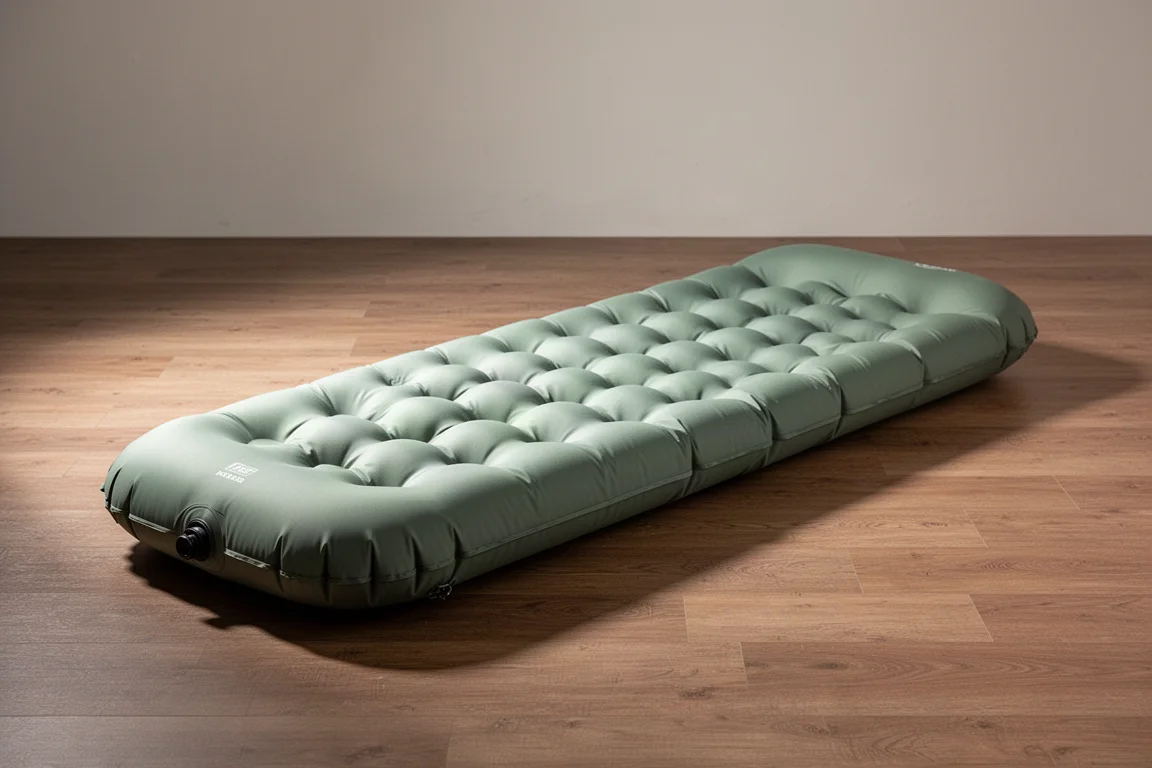
Bestway is best known for pool toys, and this pad is not widely distributed. It has mostly been sold in the UK and was found on Amazon. What makes it worth attention is the combination of a 7.6 R-value, the highest of the three, and a $40 price that makes it one of the cheapest pads tested.
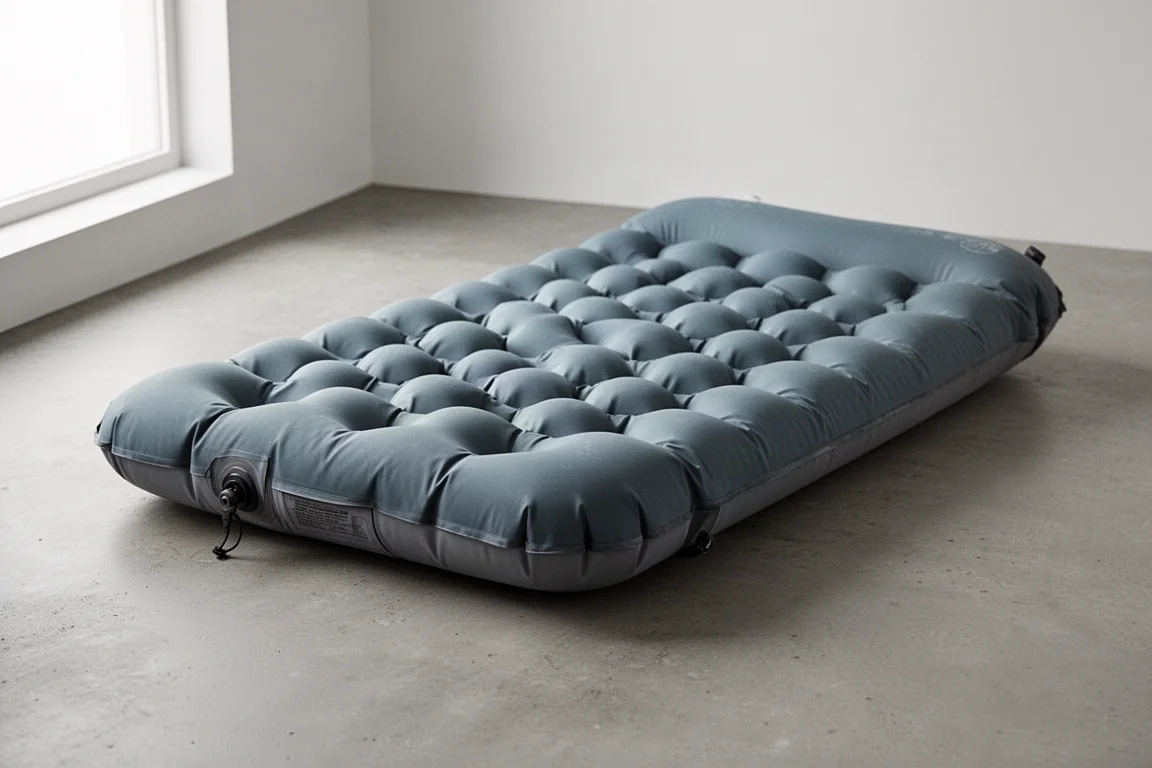
The baffle pattern is similar to the REI Helix, with raised and lowered areas forming a dimpled surface that relieves pressure. At 746 g it is only slightly heavier than the Helix, while carrying a much higher R-value at a fraction of the cost.
Testing went better than the price suggests. It took about 10 minutes to warm up, and once warm there were no cold spots anywhere on the body and no sense of heat leaking into the ground. Warmth was essentially on par with the Exped, and it was the most comfortable of the three pads, with the dimpled baffles working well in both sleeping positions.
Overnight it stayed warm at -7°C and continued to hold heat at around -10°C on frozen ground. Between -10°C and -13°C heat loss became noticeable and it was uncomfortable enough to wake on, which marks the practical limit of the pad. That places it as a three-season-plus option, or a borderline four-season pad, rather than a true winter pad, and at this price the performance is genuinely surprising. Even at $100 it would still be a strong buy, though budget pads have a habit of climbing in price once they gain attention.
Warmth Performance on Snow and Ice
Judged purely on warmth, the three pads sorted themselves clearly. The Noble Jade failed first, with cold coming through the ground from the first minute and no warmth at any stage. The Exped Ultra 6.5R started strongly and held heat through the first round, then lost ground as temperatures slipped below -7°C. The Bestway Alpenlite stayed comfortable down to around -10°C and only became uncomfortable near -13°C.
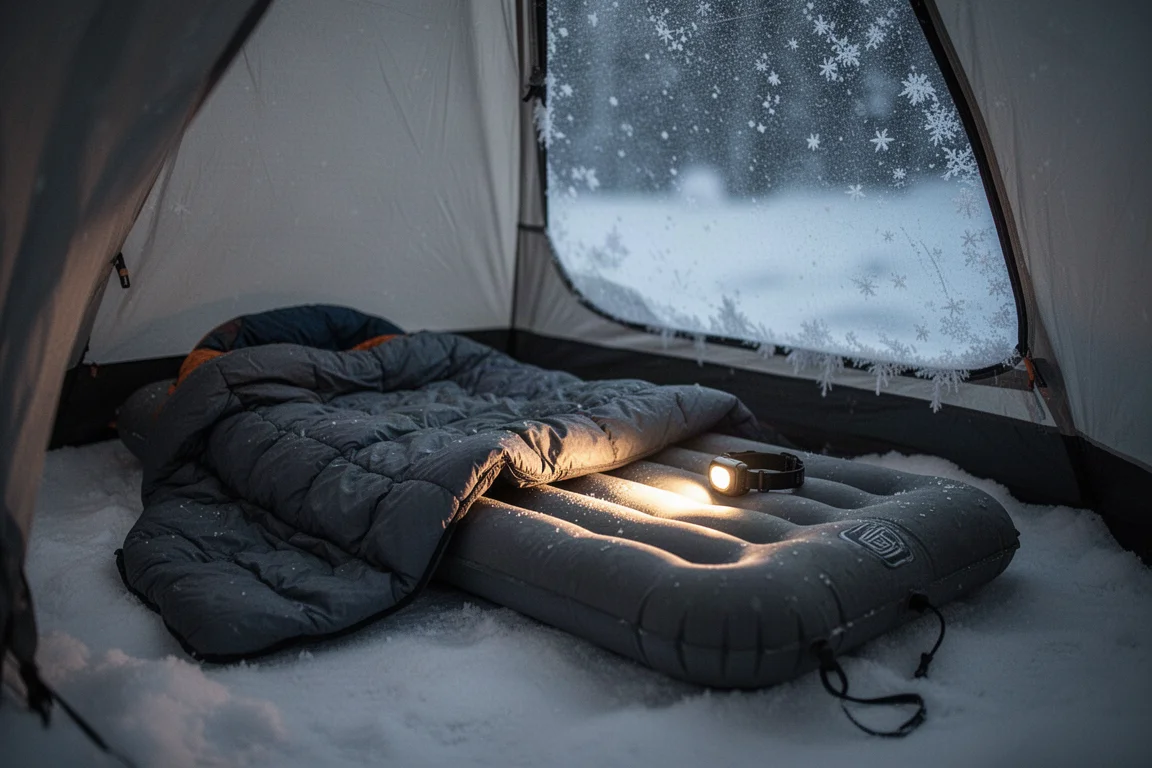
It is worth noting that the ground itself was ice rather than snow. Ice conducts heat away from a sleeping pad more aggressively than a snow layer, which insulates slightly. A pad that feels marginal on ice may feel perfectly adequate on snow or on a forest floor, so these results describe a worst-case surface for cold-weather camping.
Comfort and Baffle Design
Comfort separated the pads less than warmth did. The Bestway Alpenlite was the most comfortable of the three, and its dimpled pattern came closest to the feel of a well-regarded pressure-relief design. The Exped Ultra 6.5R was close behind, with a stretchy top fabric and vertical baffles that worked for side sleeping and back sleeping alike, and it remains more comfortable than the lighter three-season pads it competes with on weight. The Noble Jade was comfortable too, with dimpled baffling that relieved pressure well in both positions.
The difference is that comfort alone does not justify the Noble Jade’s weight or price, while the Bestway combines the best comfort of the group with the lowest price and the strongest warmth result.
R-Value Ratings Versus Real-World Warmth
All three pads carry R-values produced by the same standardised laboratory testing, and that testing is carried out at room temperature. Room-temperature measurement tends to flatter pads designed for cold conditions, because it does not account for how a pad behaves when the ground beneath it is frozen.
The gap between rating and reality was widest with the Noble Jade, whose 7.3 rating did not translate into usable warmth on ice. The Exped’s 6.9 rating also overstated its winter ability, even though the pad performed well as a three-season option. The Bestway’s 7.6 rating came closest to matching what the pad actually delivered, although even that number suggests more cold-weather range than the testing showed.
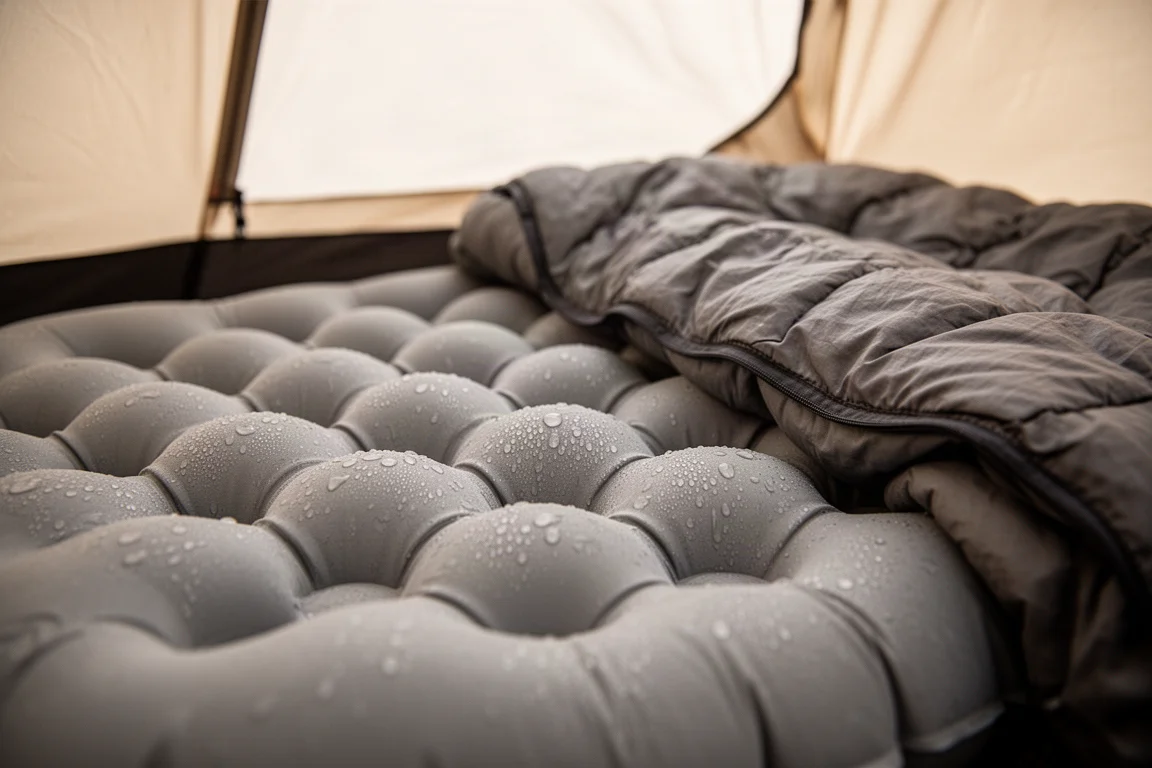
The practical lesson is simple: treat an R-value as a starting point rather than a promise, and pay attention to how a pad is built, since insulation placement and baffle construction appear to matter as much as the number on the label.
Weight, Packed Size, and Portability
Weight is the clearest objective difference between the three. The Exped Ultra 6.5R is the lightest at 551 g, and it is also more compact than the older Ultra 5, which makes it the easiest of the group to carry. The Bestway Alpenlite comes in at 746 g, and the Noble Jade measured 767 g against an advertised 710 g.
For backpacking, that spread matters, and it is also the reason the Noble Jade struggles to justify itself as a warm-weather pad: it is too heavy for summer trips and not warm enough for winter ones.
Buying Advice: Matching the Pad to Your Season
Start with the conditions you actually camp in. If your trips involve sustained temperatures below -10°C on snow or ice, none of these three pads is a genuine winter solution, and it is worth looking at pads built and rated specifically for that range.
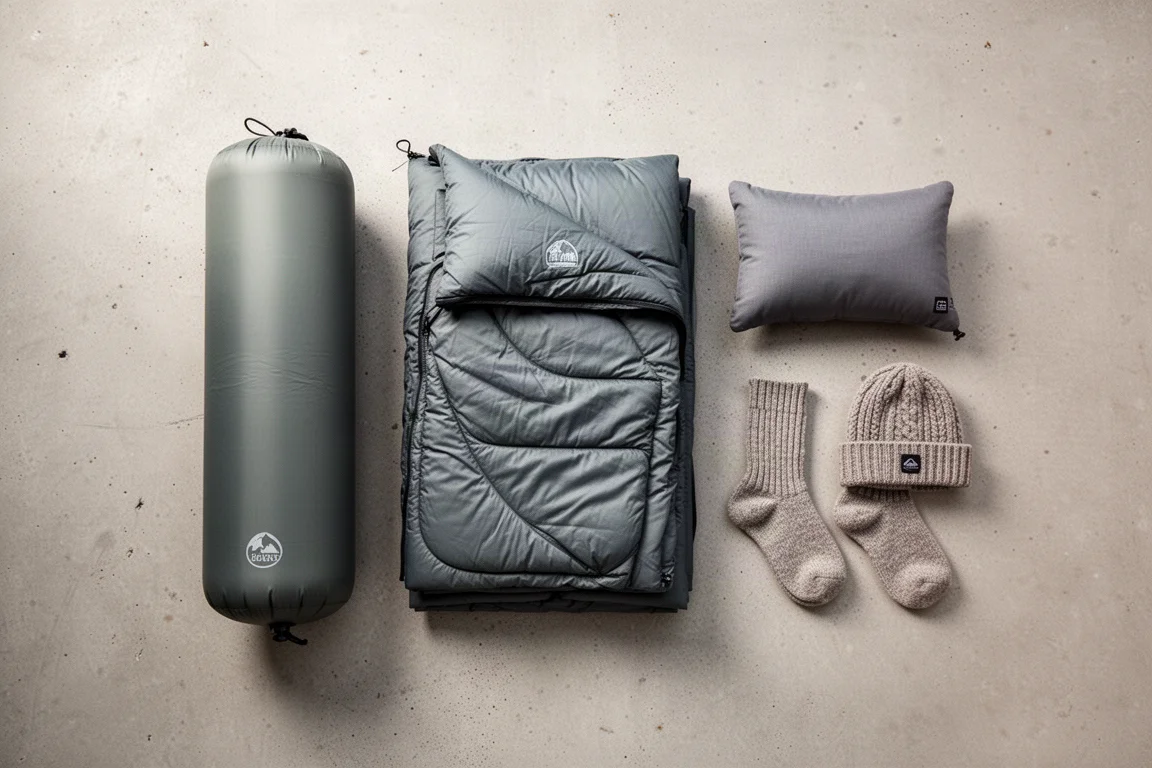
If your camping sits in the three-season window, with occasional nights near freezing, the Bestway Alpenlite is the standout of this group. It offers the best comfort, warmth that held to around -10°C on frozen ground, and a $40 price that is hard to argue with, and it would still be a good buy at a higher price. The Exped Ultra 6.5R is the better choice for anyone who has to carry the pad and wants a light, comfortable three-season option, as long as the 6.9 R-value is not read as a winter guarantee. The OneTigris Noble Jade is difficult to recommend at $110 given its weight and its performance on cold ground, even though the comfort is real.
Conclusion
Three pads, three very different outcomes. The Noble Jade did not deliver on its warmth claim and carries too much weight for what it offers. The Exped Ultra 6.5R is an excellent three-season pad that fell short of the winter use its rating implies. The Bestway Alpenlite, at a fraction of the price, turned out to be the most comfortable and among the warmest of the three, and that combination makes it the one worth considering first.
Further reading
Related Reviews
Sleeping Pads
Best Backpacking Sleeping Pads 2026: Nine Pads Rated on Price, Comfort, Warmth, and Weight
Nine backpacking sleeping pads compared on price, comfort, warmth, and weight, from a $65 summer pad to a year-round option rated at R-7.3.
Sleeping Pads
Best Backpacking Sleeping Pads: Comfort, Warmth, and Weight Compared
A practical comparison of the Nemo Quasar 3D, Therm-a-Rest NeoAir XTherm Max, and Big Agnes Rapide SL for backpackers choosing between comfort, warmth, and packed weight.
Sleeping Pads
Best Backpacking Sleeping Pads: Ultralight, Winter, Comfort and Budget Picks
A practical roundup of the sleeping pads that stand out for ultralight weight, winter warmth, pressure relief and value, plus three popular pads that fell short.