Bookshelf Speakers
Closer Acoustics Ogy vs KEF LS50 Meta: Single-Driver vs Coaxial Bookshelf Speakers
A close look at two compact point-source bookshelf speakers: the crossover-free single-driver Closer Acoustics Ogy and the coaxial KEF LS50 Meta, and which one suits your amplifier, room, and music.
Introduction
Two compact bookshelf speakers, one shared goal: a single point source that images with unusual precision. The Closer Acoustics Ogy and the KEF LS50 Meta reach that goal in very different ways, and the difference shapes everything from amplifier choice to how much bass you get.
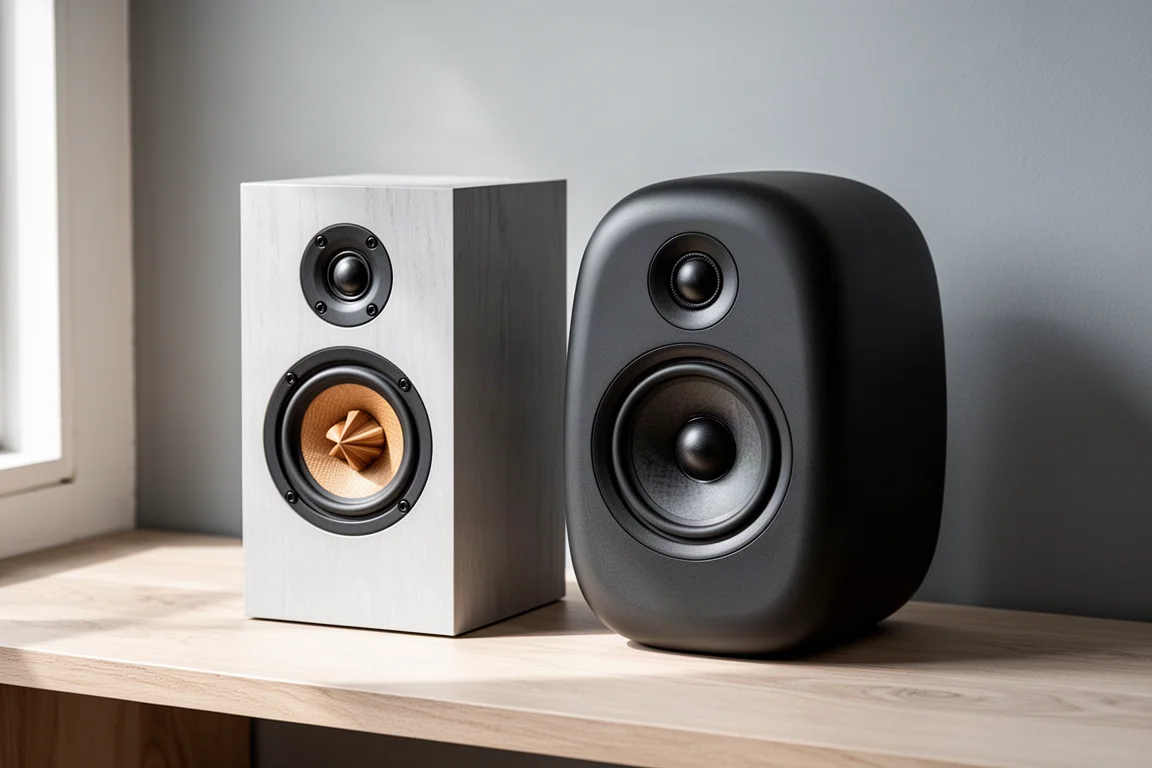
The Ogy is built around a four inch wide-band driver from EMS, a French specialist that has dedicated itself to single-driver design. Each driver is handmade in France, and a single unit covers roughly 40 Hz to 18 kHz without a crossover in the signal path. The LS50 Meta takes the dual concentric approach, with a tweeter sitting at the centre of a mid-woofer and crossed over to it, so the two still radiate from one point.
Both are serious designs, and there is no universal winner. The practical question is which one fits the amplifier, room, and records you actually own.
The rest of this comparison works through the differences in driver design, sensitivity, sound, and setup so you can answer that question for your own system.
What Sets These Two Apart
Sensitivity is the first dividing line. The Ogy is rated at 91 dB at one metre for one watt, while the LS50 Meta is rated at 85 dB under the same conditions. Both are listed as 8 ohm nominal impedance, but the gap in sensitivity matters in practice. The Ogy can be driven by very low powered tube amplifiers, including designs rated at 8 watts and even 3.5 watts per channel. The LS50 Meta asks for more power and current, which narrows the list of amplifiers that will do it justice and usually means a larger, more expensive tube amplifier if valves are the goal.
Cabinet construction is the second difference. The Ogy uses birch plywood rather than conventional MDF, a more expensive and more rigid material, in a slim cabinet available in several finishes at different price points. The white acrylic stone finish is claimed to add mass and further reduce cabinet resonances, which is generous treatment for a four inch driver. Behind the driver, the loading is not a simple port but a more complex transmission line, intended to keep the bass neutral without sacrificing driver efficiency.
Driver philosophy is the third. The LS50 Meta is a coaxial design, with a small gap separating the tweeter from the mid-woofer and a crossover joining them. The Ogy has no crossover at all, so the driver’s own behaviour defines the tonal character. That is difficult to get right, and when it works, the result is unusually pure and transparent to whatever amplifier is connected.
Closer Acoustics Ogy: Single-Driver Sound
On its own, the Ogy does not produce much sub-bass. With room gain it can reach roughly 40 to 50 Hz depending on room size, but a four inch driver will not punch like a larger one. What it does instead is fast, clean bass that stays out of the way of everything above it.
The mid-range is the heart of this speaker. It is neutral and balanced rather than warm or lean, and it comes across as uncoloured and pure, even next to a two-way design known for its own neutral mid-range. The absence of a crossover appears to be part of that. The driver is allowed to play its own clean tone rather than a shaped one.
Treble is crystal clear with strong spatial cues, and it manages clarity without turning bright or aggressive. Above roughly 5 kHz there is a little extra presence, which adds realism to plucked guitar and similar textures, though on some recordings it can read as slightly lean. The speaker responds well to equalisation if you want to trim that region.
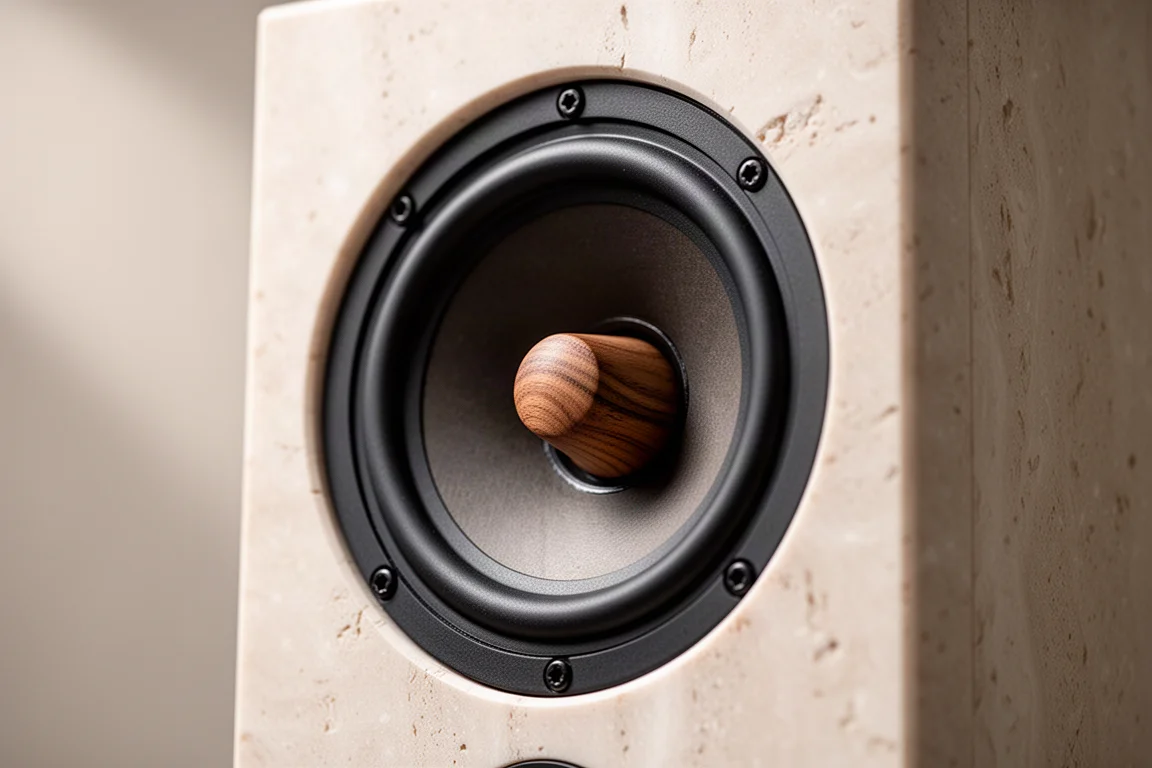
Imaging is where the single-driver layout pays off. Instruments are easy to place within the stage, and the stage itself is wide and deep, sometimes extending beyond the walls of the room on live recordings. A single wide-band driver can beam at high frequencies, but the wooden face plug used on this driver helps here, and the speaker plays plenty loud without the beaming problems that single drivers sometimes bring.
KEF LS50 Meta: Coaxial Coherence
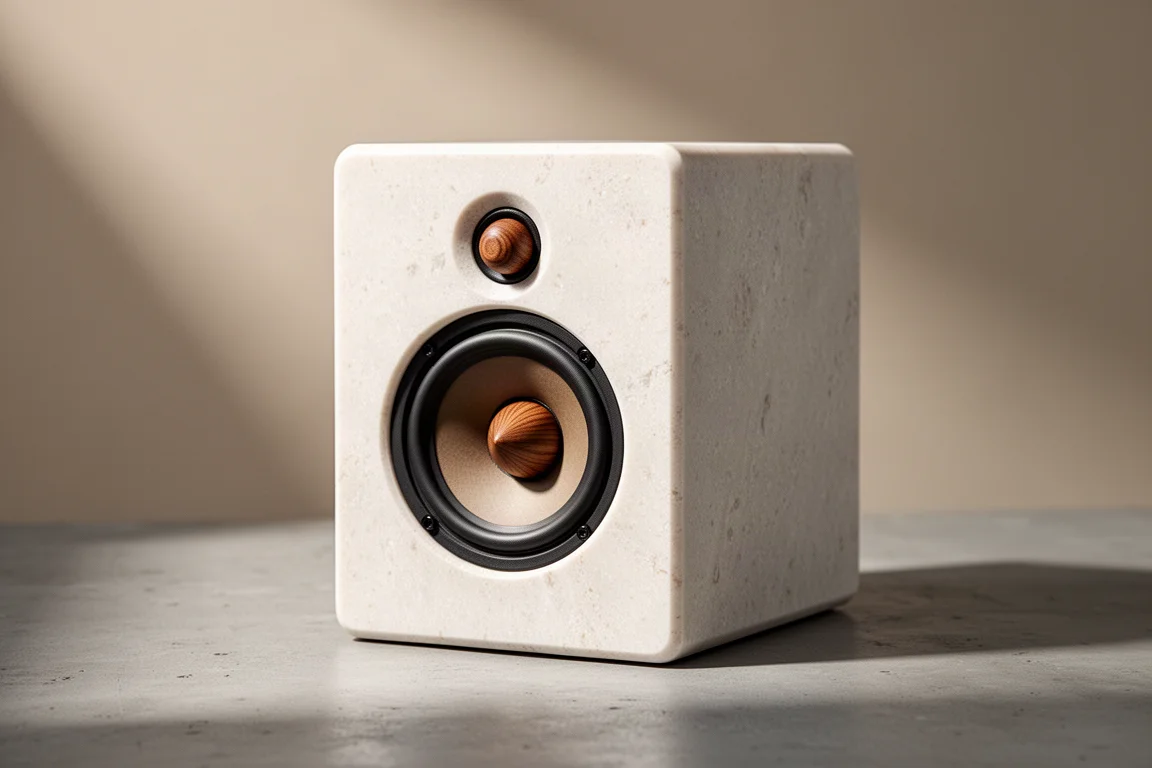
The LS50 Meta is a dual concentric design done properly, and coherence is its defining strength. Because the tweeter and mid-woofer share a single acoustic centre, everything arrives from one point, and the result is spot-on imaging paired with a very neutral mid-range.
The trade-offs sit around it rather than in it. With a sensitivity of 85 dB, the speaker needs an amplifier with real power and current delivery. Low wattage tube amplifiers are not a realistic pairing, and the amplifiers that suit it well tend to cost more. In the same room, its sound stage is also narrower than what the Ogy produces with a low powered tube amplifier.
That is less a criticism of the speaker than a description of its requirements. Give it the right amplification and it behaves as a reference-quality compact monitor.
Amplification and Setup Notes
The Ogy’s efficiency opens up amplifier options that most compact speakers simply cannot offer. It has been driven successfully by an 8 watt tube integrated and by a 3.5 watt single-ended design, and with those low powered valve amplifiers it produces an atmospheric, holographic stage that equalisation alone cannot create. With solid state or hybrid amplifiers the presentation is still good, just less expansive.
If that holographic quality is the goal but the budget is tighter, a well-regarded budget integrated can get close for a fraction of the cost, with a little less midrange fullness and stage depth.
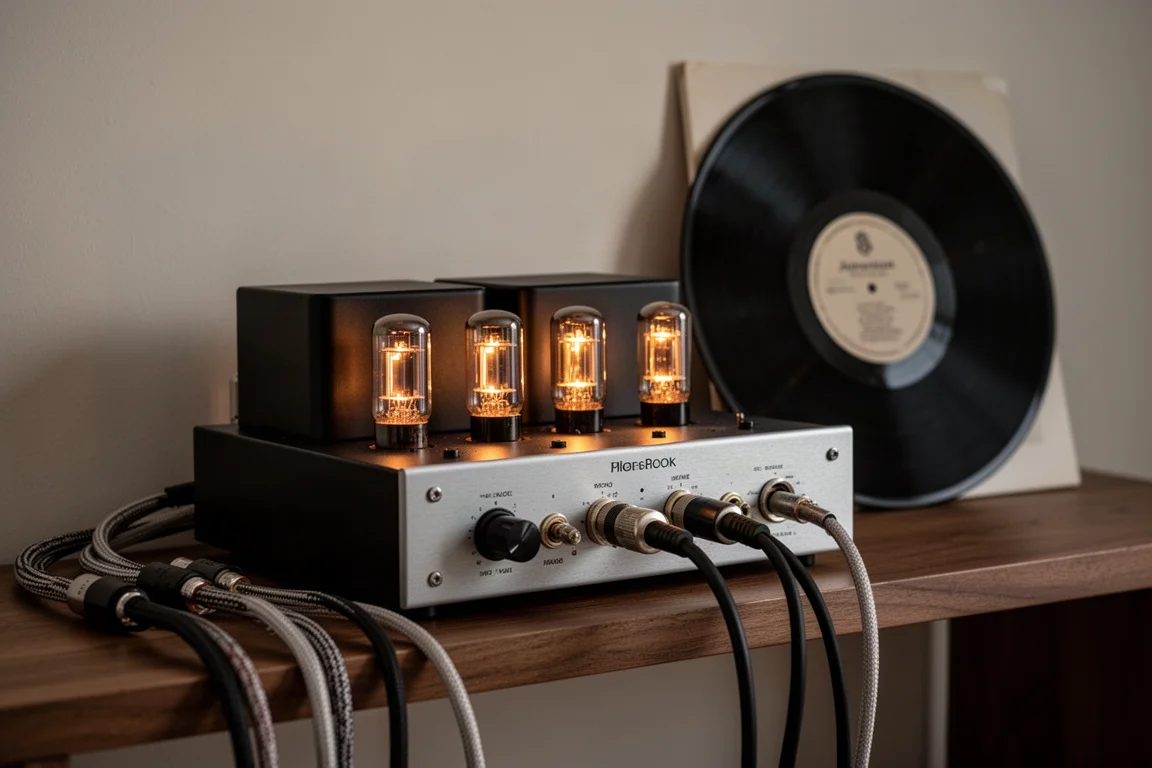
The LS50 Meta sits at the other end of the scale. It rewards current and headroom, so plan for a capable solid state amplifier or a substantially more powerful tube design.
Room Placement, Volume, and Subwoofer Matching
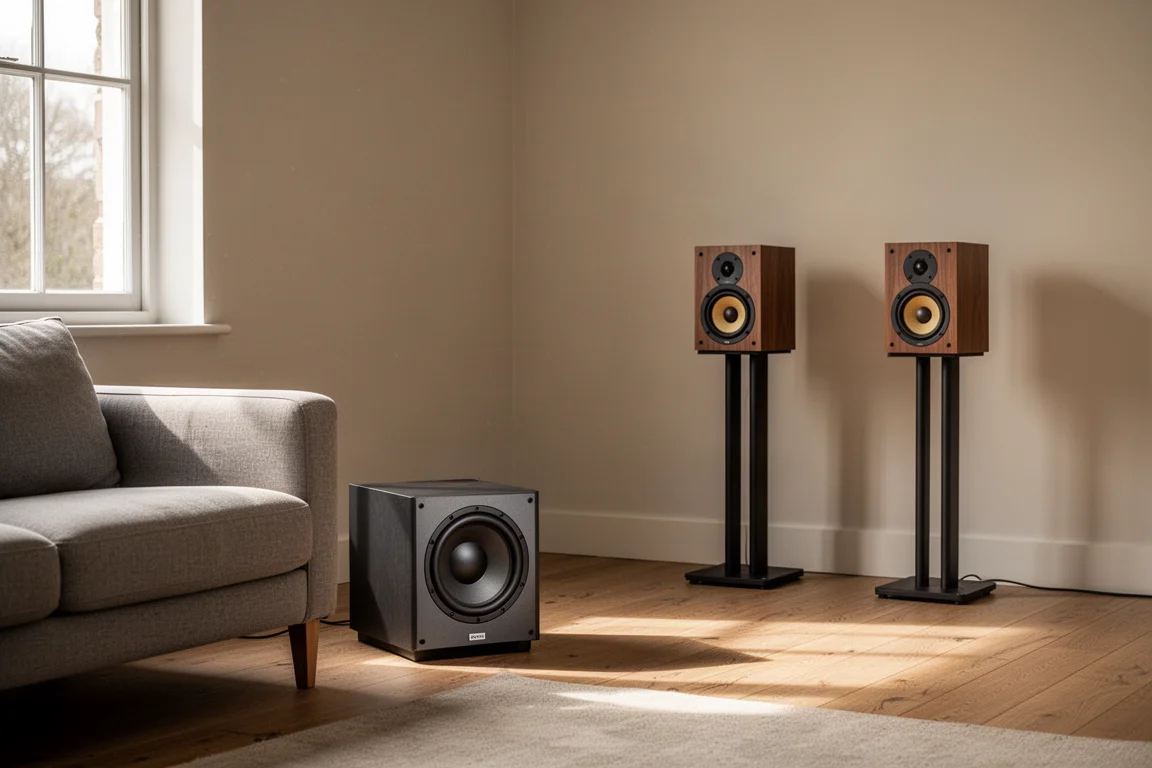
Adding a subwoofer changes how the Ogy should be positioned. Because the sub handles the lowest octaves, the speakers can be pulled well out into the room and away from the boundaries, which improves stage depth, width, and layering. Without a subwoofer, moving them slightly closer to the walls recovers some room gain. Spacing and toe-in are worth experimenting with either way.
The subwoofer itself should augment rather than dominate. Turning it up too far masks the qualities that make the speaker special. Low frequencies are not directional, so the sub does not need to face the listening position. A crossover in the region of 80 Hz worked well, with frequency and Q adjusted through the subwoofer’s control app. Set up carefully, the system can sound like a full-range floorstander while the sound still visibly comes from two small boxes.
Volume behaviour is strong across the range, with low to medium levels being the sweet spot. For genuinely loud playback, a subwoofer is the better answer than pushing the small driver harder.
Genre fit follows the same logic. Jazz, acoustic, vocal, and some classical material suit the Ogy as it stands. Add a subwoofer and it can handle essentially any type of music.
Buying Advice
Choose the Closer Acoustics Ogy if you want a crossover-free single-driver speaker that is easy to drive, works with low powered tube amplifiers, and delivers a wide, deep stage with a transparent mid-range. Budget for a subwoofer if you listen to bass-heavy material or like high volumes, and expect the finish you choose to affect the price.
Choose the KEF LS50 Meta if you want coaxial coherence, excellent imaging, and a neutral mid-range, and you already own, or plan to buy, an amplifier with real power and current delivery. It is the more demanding speaker of the two, and it rewards that demand.
Both are excellent compact speakers. The deciding factors are your amplifier, your room, and how much of your listening depends on deep bass.
Conclusion
The Closer Acoustics Ogy and the KEF LS50 Meta both deliver the point-source imaging that makes compact speakers compelling. The Ogy earns its place through efficiency, a crossover-free single driver, and a stage that few small speakers can match, with the caveat that a subwoofer completes the picture. The LS50 Meta earns its place through coaxial coherence and neutrality, provided the amplifier behind it is up to the task. Match either one to the right system and neither will feel like a compromise.
Further reading
Related Reviews
Bookshelf Speakers
Acoustic Energy A100 Mark II Review: A Compact Standmount With an Expansive Soundstage
The Acoustic Energy A100 Mark II brings clarity, natural tonality and a wide soundstage to an entry-level standmount, with a few setup details worth knowing first.
Bookshelf Speakers
Acoustic Energy AE-100 Mark II Review: Compact Bookshelf Speakers With Standout Imaging
A compact British two-way bookshelf speaker with deep, layered imaging, fast bass, and a slight treble lift to weigh against a crowded $500 field.
Bookshelf Speakers
Acoustic Energy AE100 MK2 Review: Measured Performance and Four Alternatives
A close look at the Acoustic Energy AE100 MK2 bookshelf speaker, what its measured performance reveals, and four alternatives with different trade-offs.