Indoor Gardening
Click & Grow 25 Review: 51 Days From Seed to First Harvest
A hands-on 51-day growing journal with the Click & Grow 25, covering setup, planting, germination results, algae issues, and who should actually buy it.
Introduction
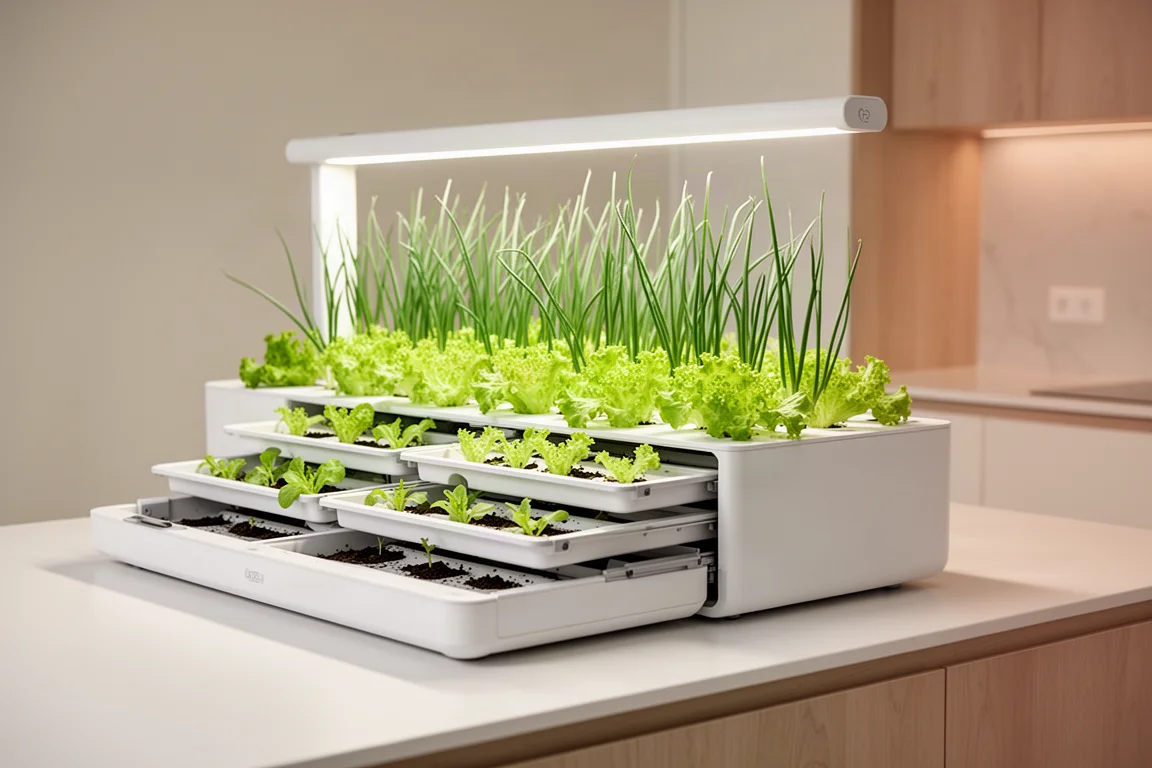
The Click & Grow 25 promises a steady rotation of fresh greens with minimal effort, and the best way to find out whether it delivers is to plant it from seed and wait. This journal follows one unit from the very first pod through 51 days of planting, thinning, transplanting, and the occasional setback, ending at the first real harvest.
The idea behind the machine is succession planting: you fill one tray per week, and five weeks later the first tray is ready to harvest. If you eat a lot of leafy greens, the promise is a continuous supply. Whether that promise holds up for anything beyond lettuce and green onions is one of the things this test set out to answer.
Week One: First Planting and Setup
Getting started is deliberately simple. The reservoir has clear minimum and maximum water marks, and plain tap water works fine, ideally left out for 24 to 48 hours to let some of the chlorine dissipate. Distilled water is an option, but tap water has worked well and costs nothing. Everything the plants need is already in the pods, so no nutrients are added to the water.
Tray orientation matters more than you might expect: the handle notch that lets you pull the trays out always goes at the front. Plant placement is worth planning too. Slow growers like rosemary went at the back where they will not need frequent access, tall green onions in the next row, and the two lettuces at the front for easy harvesting.
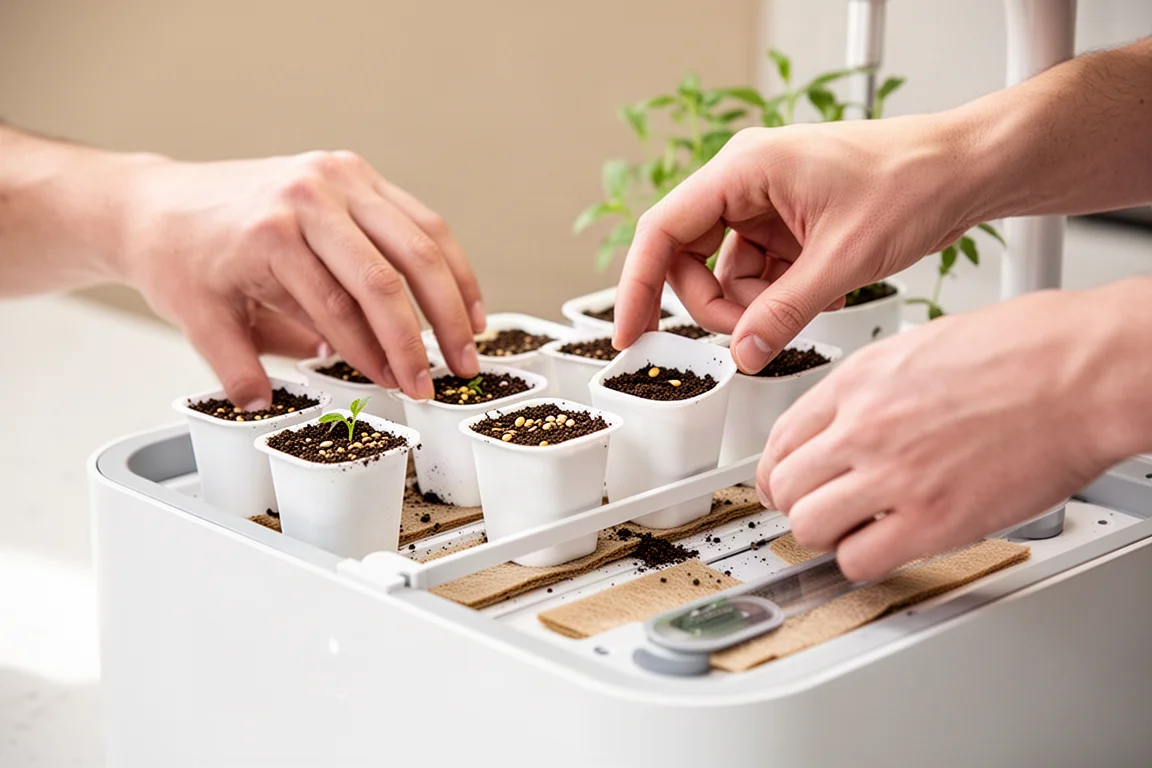
For growers who want to use their own seed, Click & Grow offers what it calls experimental pods: empty pods you fill yourself. These were used for chives, a pelleted lettuce from West Coast Seeds, and buttercrunch lettuce. With older seeds, the practical trick is to simply add a couple of extra seeds per pod to hedge against weak germination. A humidity cover goes on top, and everything gets logged in the companion app so you remember what was planted where.
Week Two: New Varieties and Germination Results
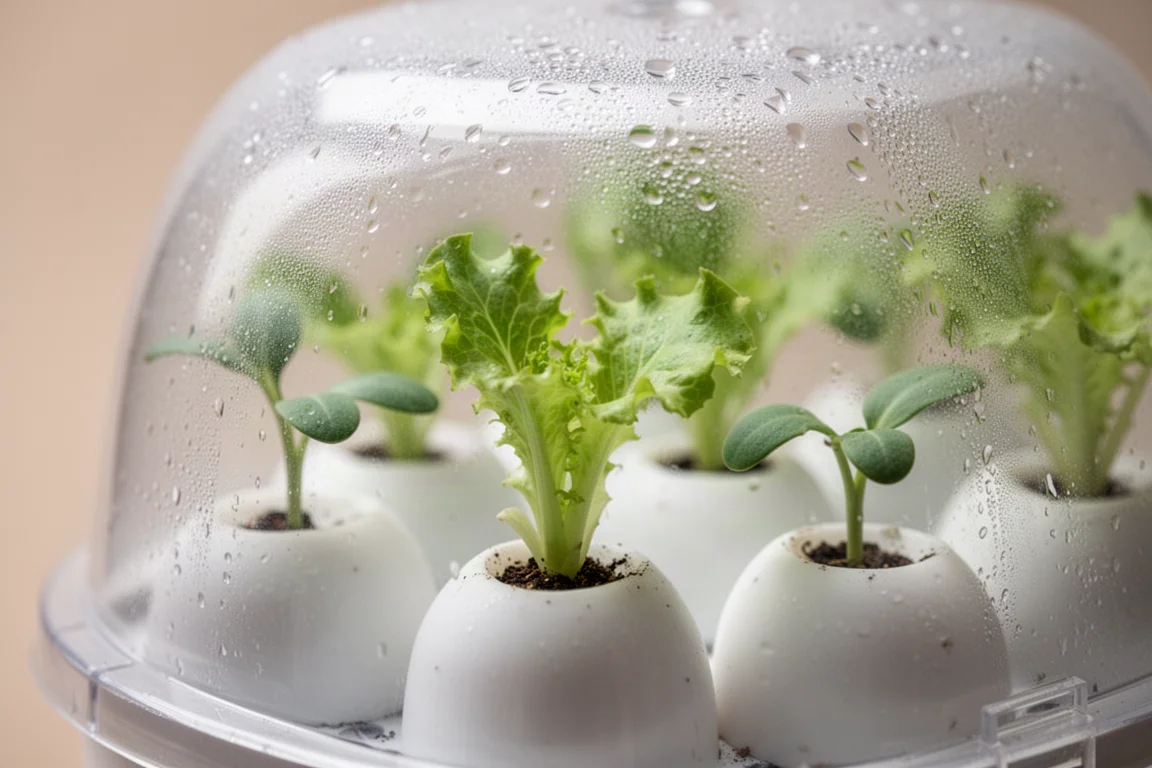
The first check-in brought genuinely good news: germination under the humidity dome was strong. A lettuce was already up, and the green onions showed excellent germination. The chives were silent, though those same seeds had also struggled when started in soil, so a weak seed batch is the more likely culprit than the machine.
Week two also brought a planting lesson about cilantro. What looks like a single cilantro seed is actually a seed pod containing two seeds, and gently crushing the pod between your fingers to separate the halves noticeably improves germination. New plantings this week included Delfino cilantro, another pod of the green onions that performed so well, plus green lettuce, red lettuce, and romaine.
One quirk surfaced here: the app is clearly designed around leafy greens, and several plantings, including green onions, could not be added through it. That is a small friction point if you plan to push beyond lettuce.
Weeks Three and Four: Transplants, Radishes, and Recovery
By this stage the rotation was in full swing, and the lettuces from week one were the standouts, growing thick and green. Smaller or crowded seedlings were pinched out and transplanted into pods that had failed, and remarkably, seedlings that looked flopped over and crispy perked up within days given patience and moisture. Nature, as the saying goes, wants to find a way.
New experiments went in this week: radishes multi-sown five or six seeds per pod, black seeded Simpson lettuce, the frilly iceberg variety Ice Queen, Italian scallions, and thyme. A syringe proved handy for dropping small amounts of water directly onto pelleted seeds to keep the clay coating moist. Moving the trays each week is also the natural moment to check the water level.
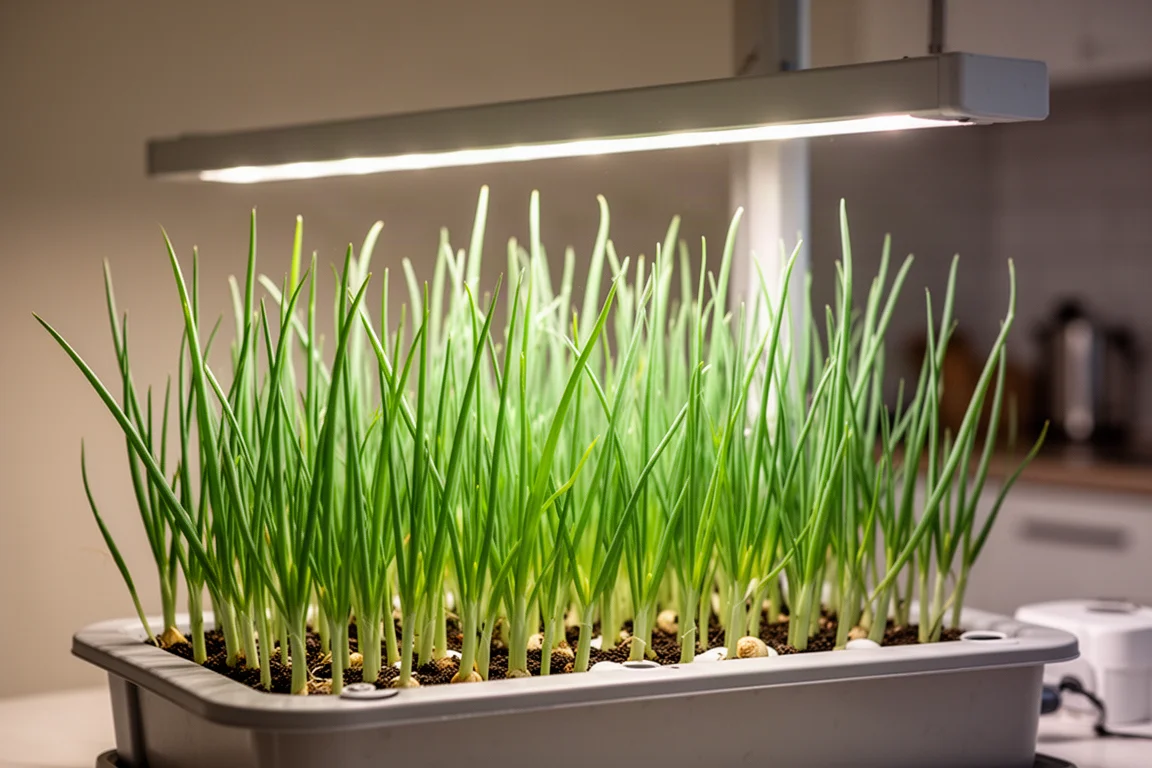
The rosemary struggled, likely with damping off, and was reseeded. The chives produced nothing and were removed. The green onions, by contrast, remained the most reliable crop in the unit, lush and fast. Radish seedlings emerged but grew leggy, an early hint that the light intensity may be tuned more for low, leafy crops than for anything that needs to bulk up.
Week Five and the Final Tray
The last tray went in with Tropicana pelleted lettuce seeds, lollo rossa, buttercrunch, and orange yellow thyme, whose seeds are so small they are nearly impossible to handle individually. By this point the pattern was clear: the lettuces looked harvest-ready, the green onions were lovely, the transplanted seedlings were thriving, and the radishes and cilantro were underperforming.
An unexpected guest also appeared: liverwort, a prehistoric plant lineage that thrives in exactly the conditions hydroponic pods provide, constant moisture, high humidity, and light on a wet surface. It does not attack the plants, but it competes for moisture and nutrients, and it can be scraped off or controlled by letting the pod surface dry slightly and improving airflow.
The Verdict After 51 Days
After 51 days, the overall picture is green, but with important caveats. The lettuces did well, the green onions did fantastically, and the succession-planting rotation works as advertised. But a significant number of pods underperformed, and algae became a real problem.
The algae issue comes down to design: a large portion of each pod is exposed to light, and nutrients plus light plus water is the classic recipe for algae. Other systems cover their pods with stickers, foil, or plastic covers; this unit does not. Food-grade hydrogen peroxide helped somewhat, and dense leafy greens that grow out and shade neighboring pods reduce the exposure naturally. If you stick to leafy greens, the problem is manageable. Branch out, and it gets harder.
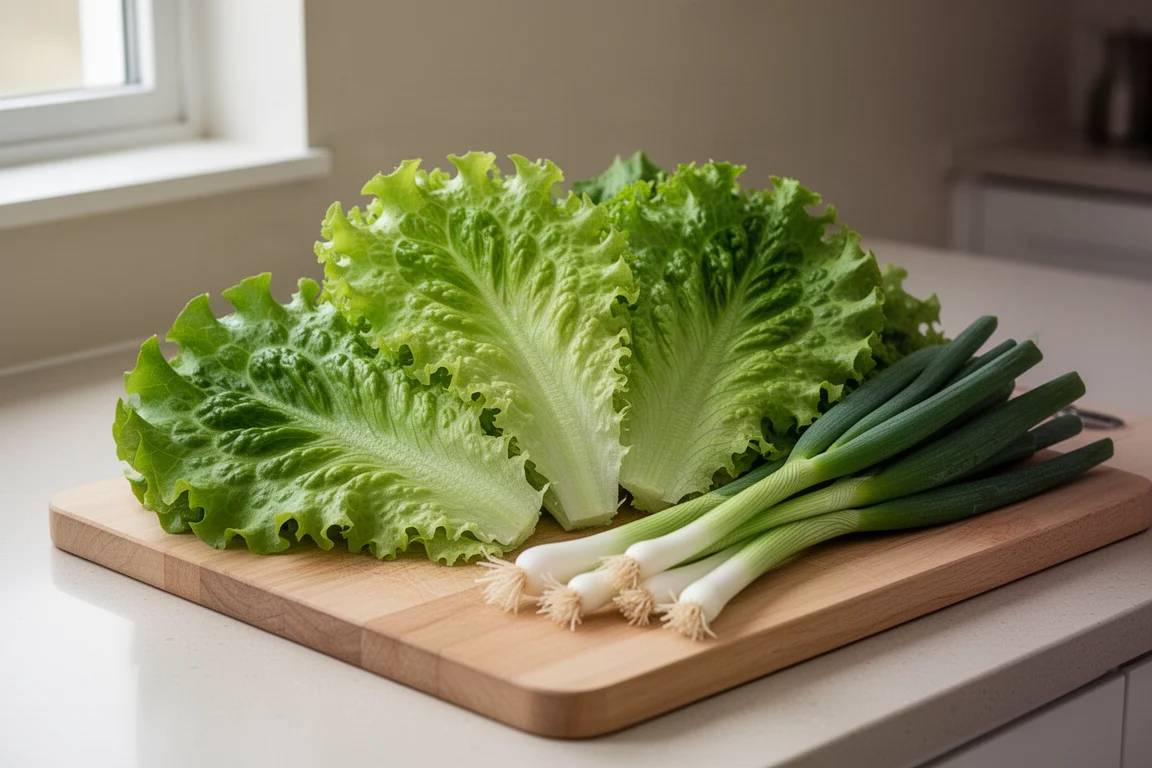
So who is this for? If you genuinely eat a lot of greens, this machine can supply a constant rotation and could meaningfully cut your lettuce and green onion purchases. If you are hoping to grow peppers, tomatoes, eggplants, or other fruiting crops, this is probably not the right unit. It is built for leafy greens, the light appears geared toward them, and pushing the limits proved disappointing for radishes, cilantro, chives, and rosemary.
The honest recommendation: buy it for greens, lean into lettuce, arugula, and green onions, and treat anything else as an experiment rather than an expectation.
Conclusion
The Click & Grow 25 does one job well: keeping a household in fresh leafy greens through simple weekly planting rotations. Green onions in particular thrived, and the lettuce harvest arrived on schedule. Just go in with the right expectations, keep your plantings leafy, watch for algae on exposed pods, and you will get the steady supply of greens the design intends.
Product link
View more details for Click and Grow 25
This product is mentioned in the review. Check the specifications, options, and compatibility before buying.
View more details for Click and Grow 25Further reading
Related Reviews
Indoor Gardening
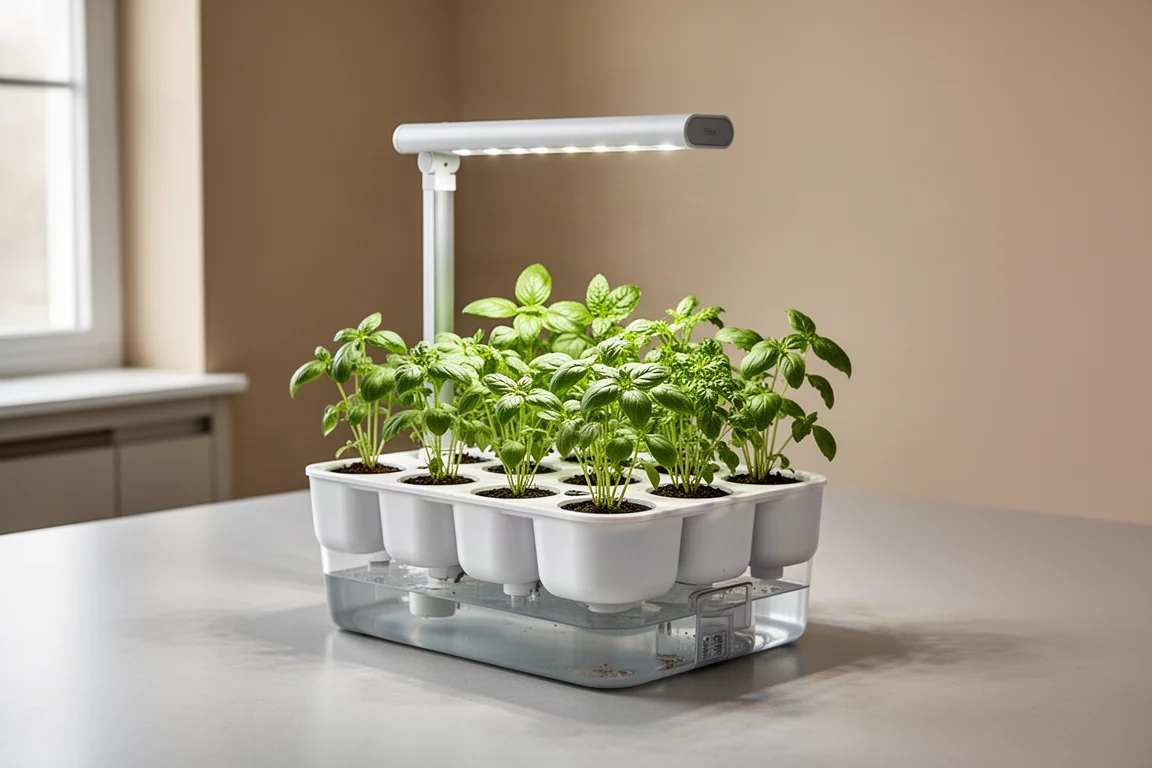
AeroGarden Eight-Pod System Review: A Budget Hydroponic Garden That Works
After a few months of growing dill, a shishito pepper, and micro tomatoes, here is what this eight-pod hydroponic system gets right and what to watch for before buying.
Indoor Gardening
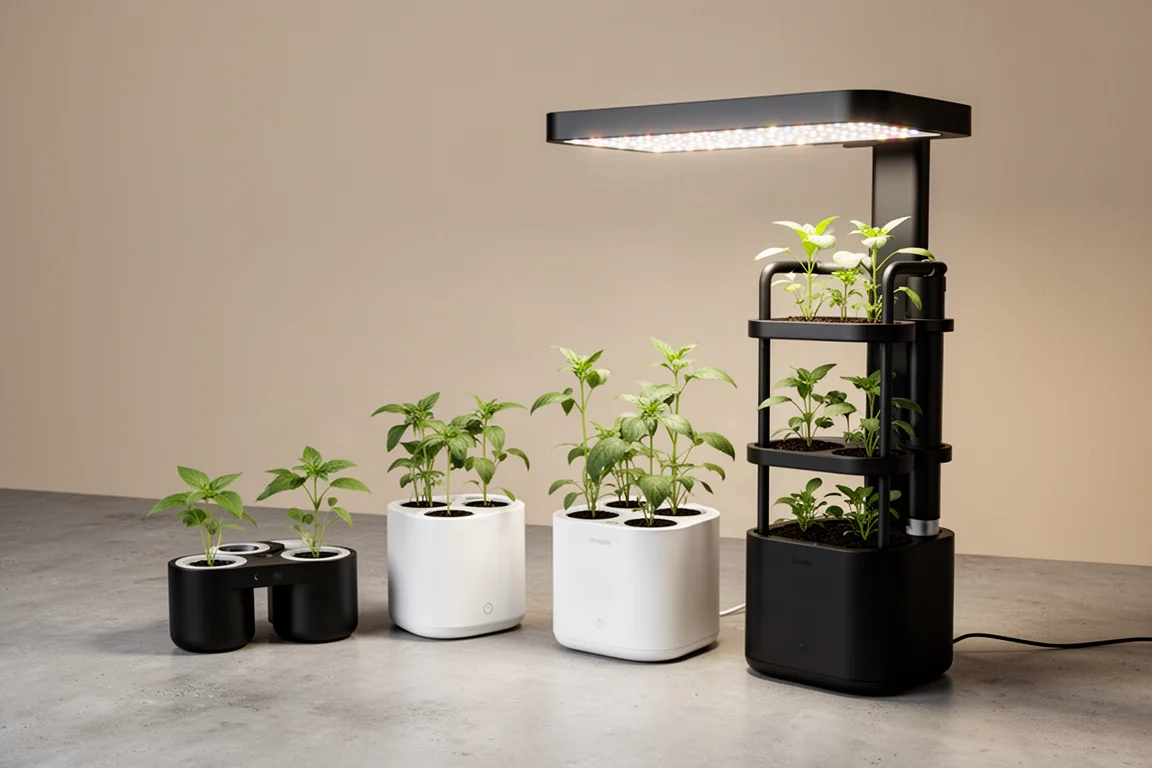
AeroGarden Buying Guide: How to Choose the Right Model for What You Want to Grow
From the 3-pod Sprout to the 24-hole Farm Plus, here is what actually matters when picking your first AeroGarden, plus the growing tips nobody tells beginners.
Indoor Gardening
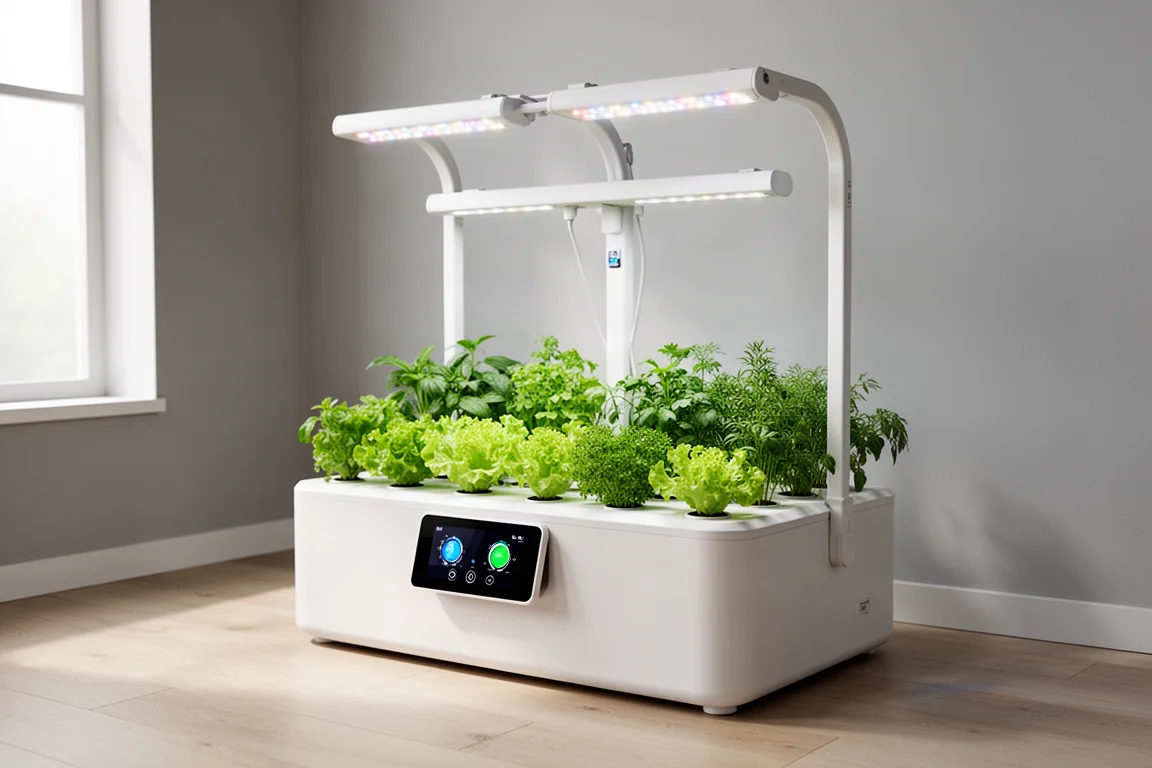
AeroGarden Farm After 8 Years: What I Wish I Knew Before Buying
A long-term look at the AeroGarden Farm, the 12XL alternative, and why a Rise Garden won out on space efficiency.