Hi-Fi Speakers
Clayton Shaw Acoustic Lab Kaladan Review: Open Baffle Sound at a Real-World Price
A close look at the Clayton Shaw Acoustic Lab Kaladan, a $3,000 open baffle speaker with high sensitivity, lively dynamics, and a few character traits worth knowing before you buy.
Introduction
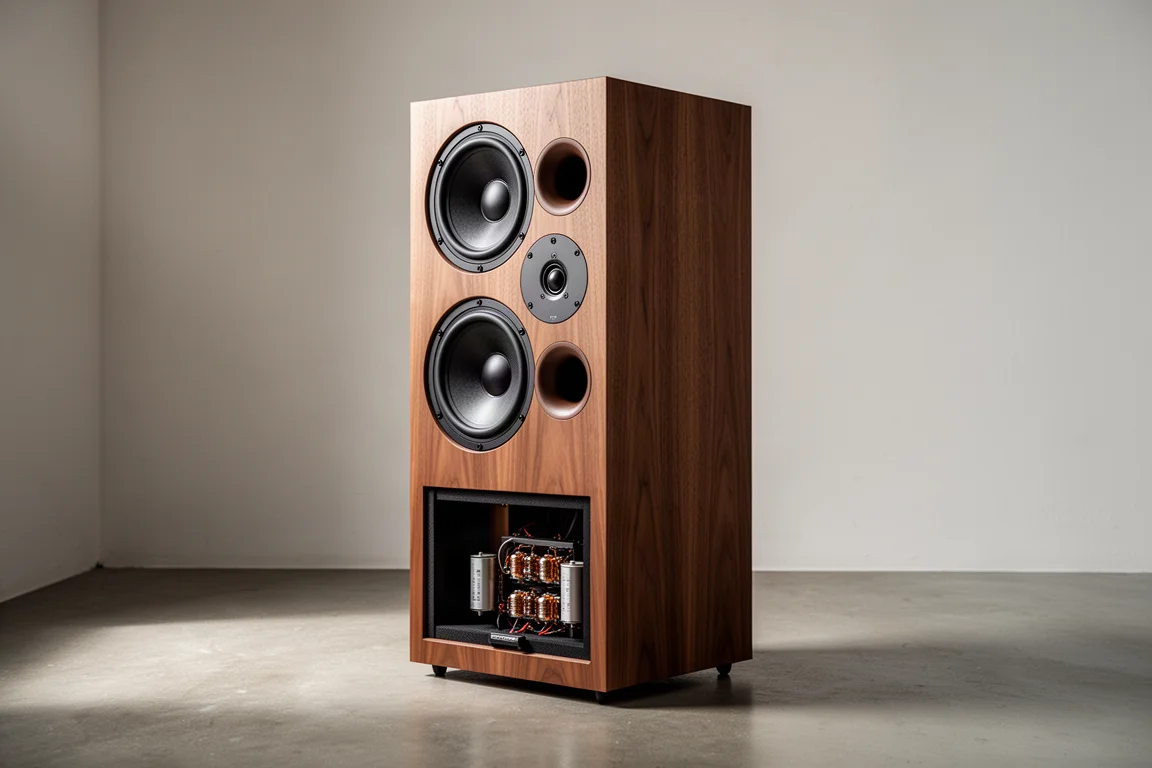
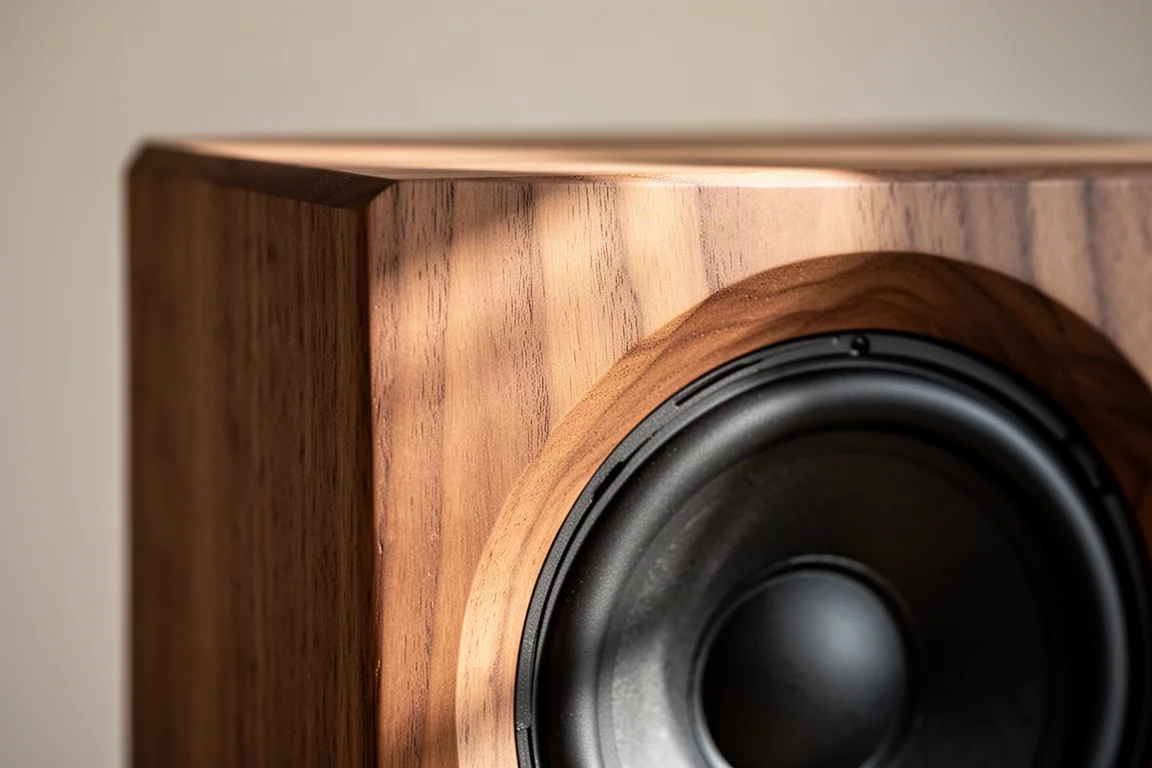
Clayton Shaw has spent a very long time designing open baffle loudspeakers, and the Kaladan is the most affordable one to arrive here yet. At $3,000 a pair in the United States, it undercuts the open baffle designs it sits alongside, and the build quality is exceptional at that price. The baffle is solid hardwood rather than MDF with a veneer on top, the drive units sit in beveled recesses that give the speaker a sculptural look, and the crossover parts are on open display, as they tend to be on open baffle designs. It is a speaker that asks for a little room to breathe and rewards that arrangement with a presentation that feels immediate and alive.
The rest of this review covers what the Kaladan does well, where it asks for care, and which listeners are likely to be happiest living with it.
Design and Build Quality
The Kaladan is built around a thick solid hardwood baffle, offered in oak, maple, cherry, and walnut. Some of those finishes carry an upcharge above the $3,000 base price. Two 12-inch woofers sit in beveled recesses cut into the panel, and they hand off to a 1 1/4-inch tweeter at 1 kHz through a second-order crossover. That is a low crossover point, which means the tweeter carries more of the midrange than most tweeters do.
One detail worth knowing up front: the tweeter is forward-firing only and does not operate as a dipole. The crossover components are visible on the panel and are of very high quality, including a Jupiter capacitor used as a bypass. The binding posts are first rate, and the whole assembly feels solid in the hand.
The review pair was fitted with optional isolation feet, which added $300 to the price. They are well worth the extra outlay if the speaker will sit on a hardwood floor rather than on carpet.
The Kaladan is designed and made in the United States, carries a five-year warranty, and is sold with a 45-day money-back guarantee. For now it is sold only in the United States, with international sales expected, possibly before the end of the year.
Who This Speaker Is For
Sensitivity is rated at 93 dB, which makes the Kaladan unusually amplifier-friendly. Over the course of this review it ran with a Pass Labs XA25, a 20 watt per channel Linear Tube Audio Ultralinear tube amplifier, and a 10 watt per channel First Watt SIT-4. A 2.3 watt per channel single-ended triode amplifier was even pressed into service at late-night levels, and it proved genuinely enjoyable in that role. Listeners in smaller rooms who do not play loudly can get away with surprisingly little power.
This is a speaker for listeners who prize liveliness, dynamics, and a sense of presence over a soft, laidback presentation. It wants to be played at a medium level or above, and it gives back proportionally.
By contrast, listeners who prefer a warm, dark, and distant presentation may find the Kaladan’s forward character less to their taste. It is a design that puts the performance in front of you rather than behind a scrim.
Main Strengths
The first thing the Kaladan gets right is jump factor. It is a very lively, very dynamic speaker that springs to life as the volume rises, and it communicates the energy and pace of a recording with real enthusiasm. Music with rhythmic drive sounds like it is dancing in the room rather than being replayed in it.
Soundstage performance is above average, with good depth, spaciousness, and focus. The Kaladan is more immediate, brighter, and more forward than some of the more laidback open baffle designs it invites comparison with, and that closeness to the music is a large part of its appeal.
Bass is where the Kaladan genuinely surprises. Its definition and precision are excellent, and the leading edge of each note is easy to follow, so every note stays audible rather than blurring into the one before it. Vocals come across with a presence that makes a well-recorded singer feel like they are standing right at the microphone. The overall effect is open and unboxed, which is exactly what an open baffle design should deliver.
How the Kaladan Compares With Other Open Baffle Designs
Against the Pure Audio Project Duet 15, the Kaladan is the more immediate and forward of the two, while the Duet 15 is more laidback and sits further back in the room. The Duet 15’s 15-inch woofers give it a bigger, weightier low end, while the Kaladan is lighter on its feet and arguably quicker. Both are satisfying, but they satisfy different instincts.
The Pure Audio Project Trio 10 H AMT, which costs roughly double, uses an air motion transformer that reaches well down into the midrange. Its overall transparency outpaced the Kaladan, and its twin 10-inch woofers kicked harder than the Kaladan’s pair of 12-inch units.
Against the Magnepan 7X, a low-sensitivity planar magnetic design at around $4,000 a pair, the difference is stark. The Kaladan is livelier and sounds more like live music, while the 7X is darker, less bright, and more refined, with better tonality and a seamless character that makes it sound like one large full-range driver. The 7X trades away dynamics and jump factor to achieve that.
Across all three comparisons, the Kaladan’s case rests on energy and immediacy rather than ultimate refinement, and it costs less than any of them.
Things to Consider Before Buying
The Kaladan can sound bright, particularly when paired with bright-sounding components or with recordings that already lean that way. It will let you hear that character more, not less, so system matching matters.
Very quiet listening is not its strongest suit. At low levels it remains enjoyable but is not at its best. It wants a medium or higher volume before it really opens up, and that is worth factoring into how you actually listen.
Placement matters a great deal. The review setup placed the speakers about 3 feet from the wall behind them, roughly 9 feet apart center to center, and about 9 feet from the listening position, toed in to aim directly at the listener. This is a design that needs space behind it rather than a wall-hugging position.
Availability is currently limited to the United States, and both finish choices and the optional feet add to the base price.
Buying Advice
Pair the Kaladan with an amplifier whose character you already like. It worked well with a Pass Labs XA25, a 20 watt per channel tube amplifier, and a 10 watt per channel First Watt SIT-4, and it even held up at late-night levels with a 2.3 watt per channel triode amplifier. High sensitivity means raw power is not the limiting factor here; the tonal match is.
If the speaker will sit on a hardwood floor, budget for the optional isolation feet. They are a worthwhile addition rather than an afterthought. Buyers in the United States also have a five-year warranty and a 45-day money-back guarantee to fall back on, which lowers the risk of trying an open baffle design at home. International buyers should watch for availability, which is expected to expand.
In short, give the Kaladan room behind it, feed it with components that are not already bright, and it should be straightforward to live with.
Conclusion
The Kaladan is a remarkable design for the money. As the least expensive open baffle speaker covered here, it delivers dynamic life, openness, and a non-box sound at a price that is reasonable for a product designed and made in the United States. It is not the last word in refinement, and it can lean bright with the wrong recordings, but for listeners who want their music to feel immediate and energetic, it is an easy speaker to recommend.
Product link
View more details for Clayton Shaw Acoustic Lab Kaladan
This product is mentioned in the review. Check the specifications, options, and compatibility before buying.
View more details for Clayton Shaw Acoustic Lab KaladanFurther reading
Related Reviews
Hi-Fi Speakers
1723 THX Tower vs 1528 Bookshelf: Which Speaker Fits Your Room?
Two speakers at roughly the same price, built very differently. How the 1723 THX tower and the 1528 bookshelf compare on construction, bass, power needs, and sound.
Hi-Fi Speakers
Acoustic Energy AE 300 Review: Deep Bass From a Compact Standmount
A two-way standmount with real wood veneer, surprising low-end weight, and a warm, easygoing character. Here is what to know before buying.
Hi-Fi Speakers
Acoustic Energy AE1 40th Anniversary Review: A Modern Take on a British Classic
A compact standmount that revives a 1980s favorite with all-new parts, a warm mid-centric balance, and a price of £1,499 per pair.