Hi-Fi Amplifiers
Class D vs Linear Amplifiers: NAD M23, Axiom Audio A1400-8, and Classé CT-2300 Compared
A measurement-led look at three amplifiers: the Purifi-based NAD M23, the eight-channel Axiom Audio A1400-8, and the linear Classé CT-2300.
Introduction
Class D amplification spent years being dismissed as car audio technology and subwoofer duty. That reputation has not caught up with the measurements. Modern class D designs now reach distortion and noise figures that were once the exclusive territory of large, hot-running linear amplifiers, and they do it inside a chassis you can lift with one hand.
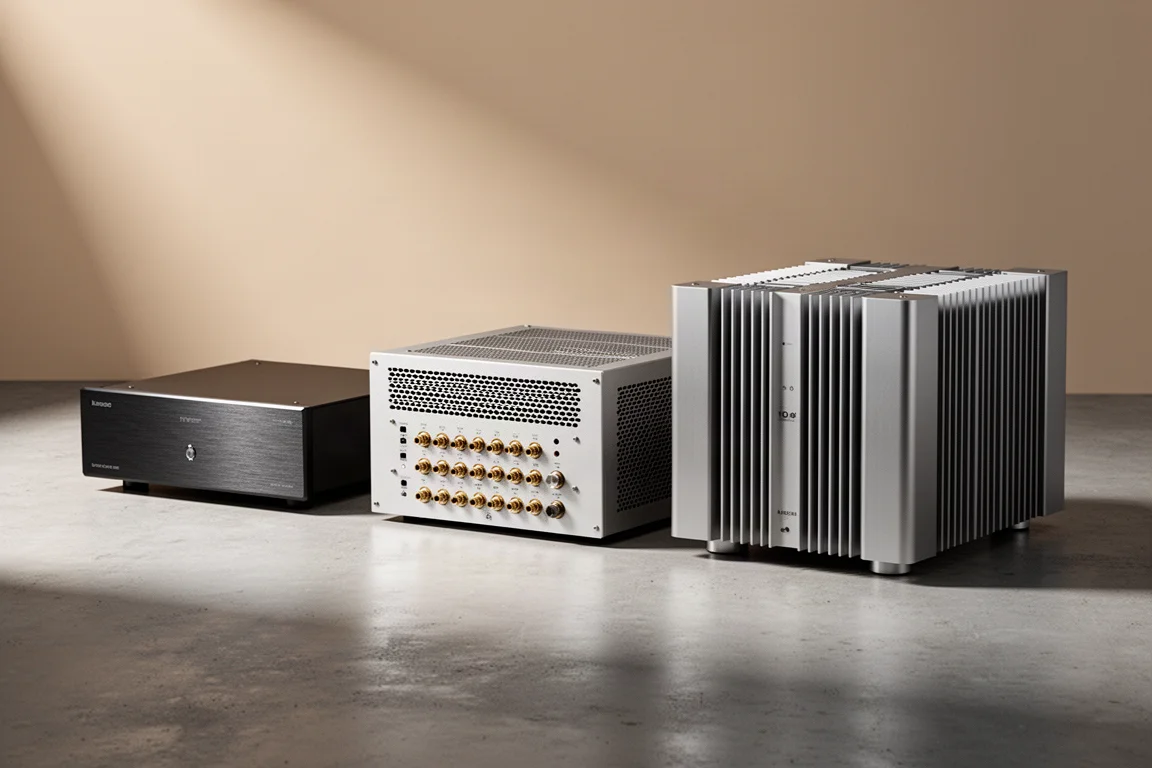
This comparison looks at three amplifiers that sit at different points on that timeline. The NAD M23 is a Purifi-based class D design rated at 200 W into 8 ohms and 380 W into 4 ohms. The Axiom Audio A1400-8 is an eight-channel class D amplifier from more than a decade ago, rated at a genuine 200 W per channel with all channels driven. The Classé CT-2300 is a linear amplifier that shows what careful execution of a traditional design can still achieve.
One thing worth stating up front: class D is not automatically the cheaper option. The technology behind a well-built class D amplifier, and especially its switching power supply, carries real cost.
How These Amplifiers Were Evaluated
Every amplifier here was measured the same way, so the numbers can be read side by side.
- FFT spectra at 1 kHz, taken at 1 W and again at rated power, to show harmonic structure at both ends of the operating range.
- Power versus distortion sweeps, to reveal where distortion starts to climb as output rises.
- Signal-to-noise ratio measured at 1 W, which puts amplifiers of very different power ratings on equal footing. As a rough guide, 80 dB at 1 W is good, above 90 dB is very good, and 100 dB or more is exceptional.
- Frequency response measured with no load, with 8 ohms and with 4 ohms, to test load invariance.
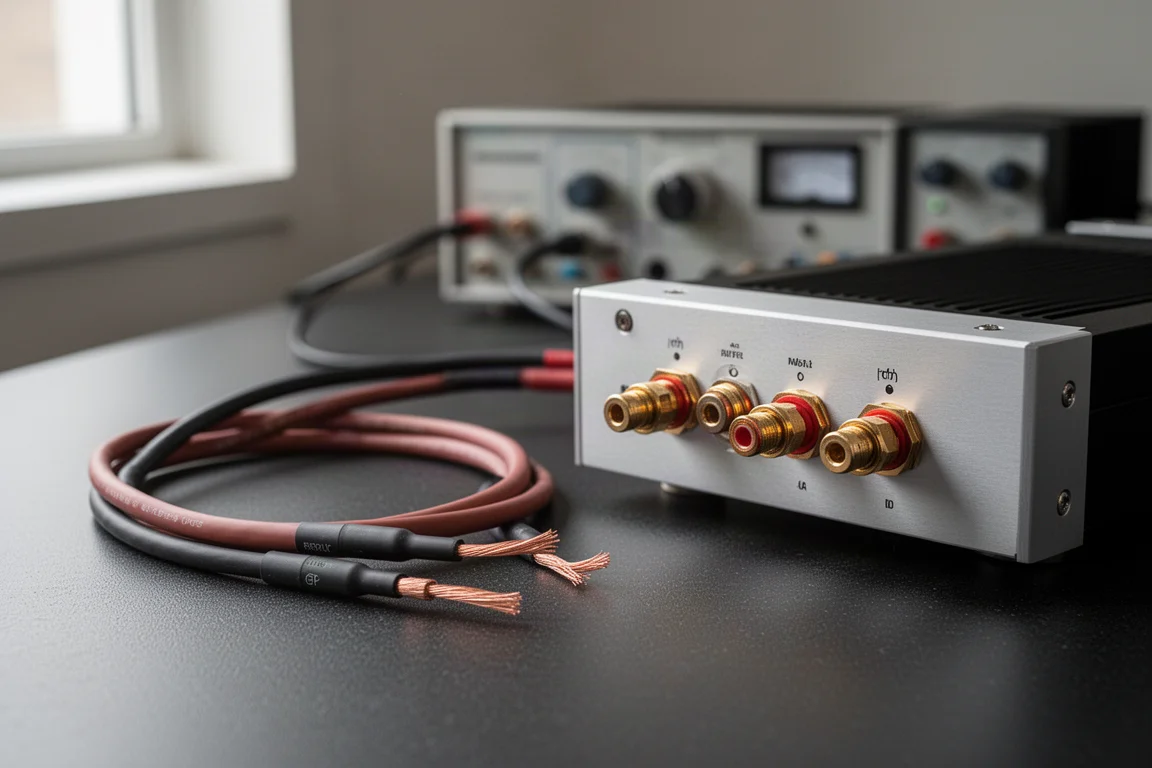
Load invariance deserves its own note. An amplifier that changes its frequency response depending on the impedance of the speaker connected to it is not transparent, because it colours each speaker differently. The best linear amplifiers have held this advantage for years, and it is the single measurement where older class D designs most often fell short. For context, a heavily biased linear amplifier priced around $11,000 measured very cleanly below 100 W but showed rising distortion toward its limits and an 88 dB signal-to-noise ratio at 1 W.
NAD M23 and the Purifi Class D Platform
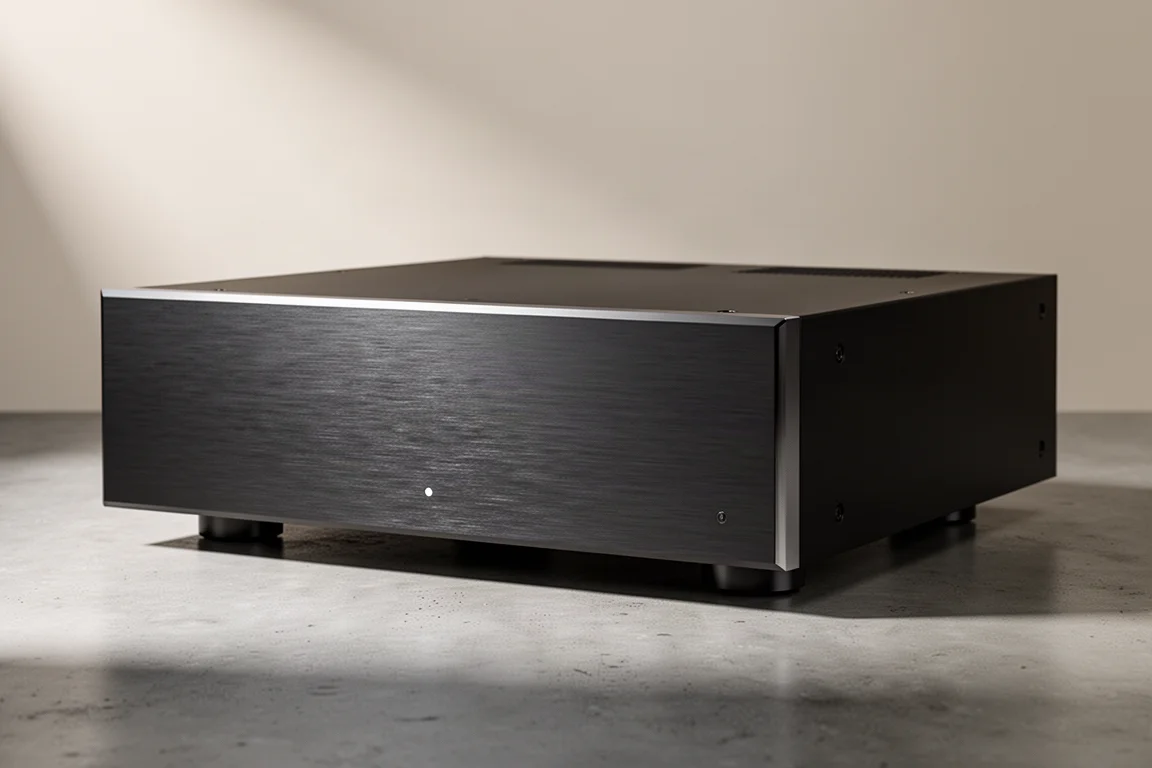
The NAD M23 uses a Purifi class D module and is rated at 200 W into 8 ohms and 380 W into 4 ohms with two channels driven. Its distortion is low enough that the measurement setup itself became the limiting factor: test leads had to be cut short and magnetic alligator clips removed, because the inductance in those clips was adding distortion the amplifier was not.
At 1 W, the 1 kHz spectrum shows no measurable residuals at all, the cleanest one-watt result recorded from any amplifier regardless of price. At the full rated 200 W, the third harmonic sits 113 dB below the fundamental, which is at the noise floor limit of a high-grade audio analyzer. Under the same test conditions, most linear class A/B designs land roughly 30 to 40 dB worse.
Frequency response is identical with no load, with 8 ohms and with 4 ohms, which makes this a genuinely load-invariant design. Credit goes to a very low output impedance and a tightly controlled feedback loop. Signal-to-noise ratio reaches 103 dB at 1 W, a figure that is hard to put into perspective without hearing how quiet the background becomes. Purifi is not the only high-performance module family on the market, since Hypex, Pascal and ICE modules are built to similar goals, but Purifi is likely the lowest-distortion option among them.
The practical side matters just as much. The M23 sells for under $4,000, can be picked up with one hand, and does not get hot in use.
Axiom Audio A1400-8 and Early Class D Design
The Axiom Audio A1400-8 arrived more than a decade ago and deserves credit for ambition. It is an eight-channel class D amplifier rated at a genuine 200 W per channel with all channels driven, which was a serious channel-density proposition at the time.
Measurements show where the design gave ground. At 1 kHz and full power, the spectrum carries a substantial harmonic spread, with the third-order harmonic roughly 80 to 85 dB below the fundamental and a cluster of residuals above 10 kHz. The power sweep is more revealing: distortion rises steeply above about 10 W, though it stays in the region of 0.02%, a level that would not be audible outside lab conditions.
Noise performance is genuinely respectable. The A1400-8 measured 80 dB signal-to-noise at 1 W, which places it in the same territory as a good linear class A/B design.
The larger issue is load invariance. Frequency response changed with the connected load, showing visible peaking, and the amplifier was better suited to 4-ohm speakers than to 8-ohm ones. That means the same amplifier can make two different speakers sound different, which is the opposite of transparency. It remains an instructive example of how much the technology has moved since.
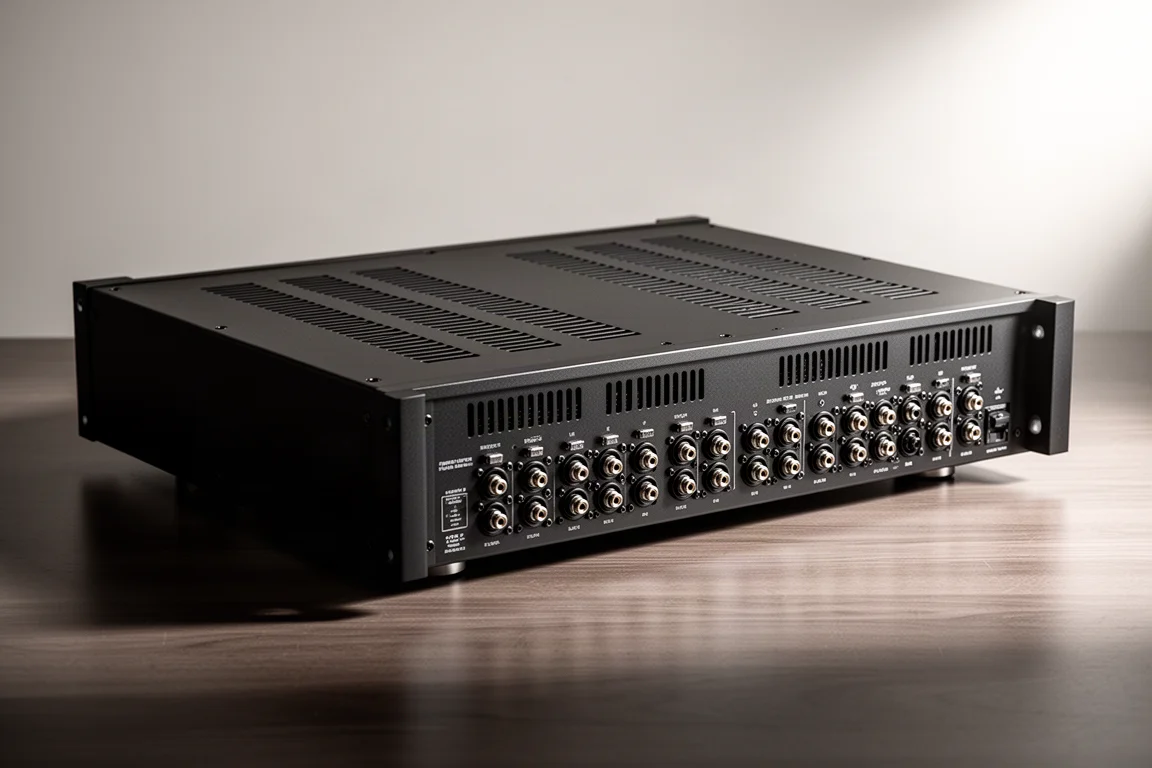
Classé CT-2300 as a Well-Executed Linear Design
The Classé CT-2300 is a linear amplifier, and it shows how much a well-sorted traditional design can deliver. It weighs roughly half as much as the heavily biased linear amplifier it is compared against while offering similar power output.
Its 1 kHz spectrum places the third-order harmonic about 85 dB below the fundamental with no high-frequency artifacts of note, a cleaner result than the eight-channel class D design above. The power versus distortion sweep is the standout: distortion holds constant at about 0.004% all the way to the knee of the curve just before clipping. Frequency response stayed the same regardless of the speaker load connected, which is exactly what buyers pay for in a high-end linear design.
Signal-to-noise ratio measured 92 to 93 dB on one channel and 94 dB on the other at 1 W, a very quiet result. One caveat belongs here: the 1 kHz tone in the spectrum looks slightly fatter than it should because a low sampling rate was used when the measurement was taken, so that particular plot should be read with that in mind.
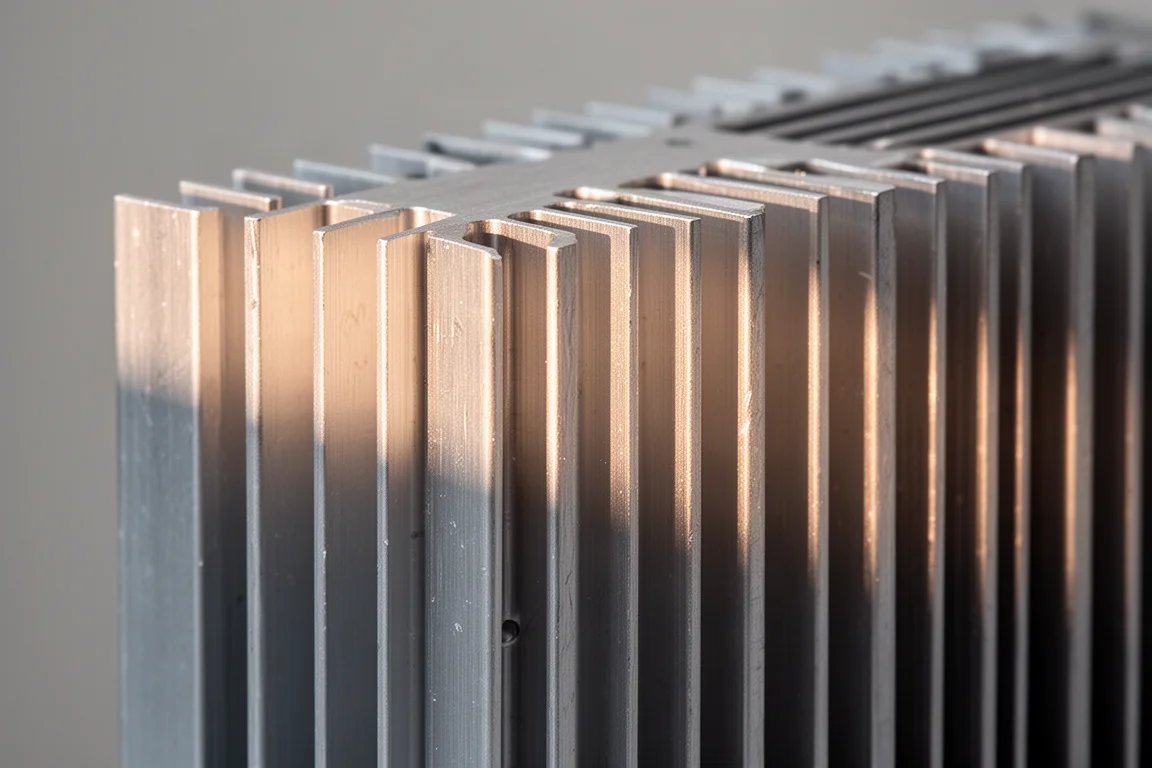
What this amplifier demonstrates is that linear designs still set a high bar for load stability and low distortion. The trade-offs are physical rather than electrical: more weight, more heat, and a larger chassis for the same channel count.
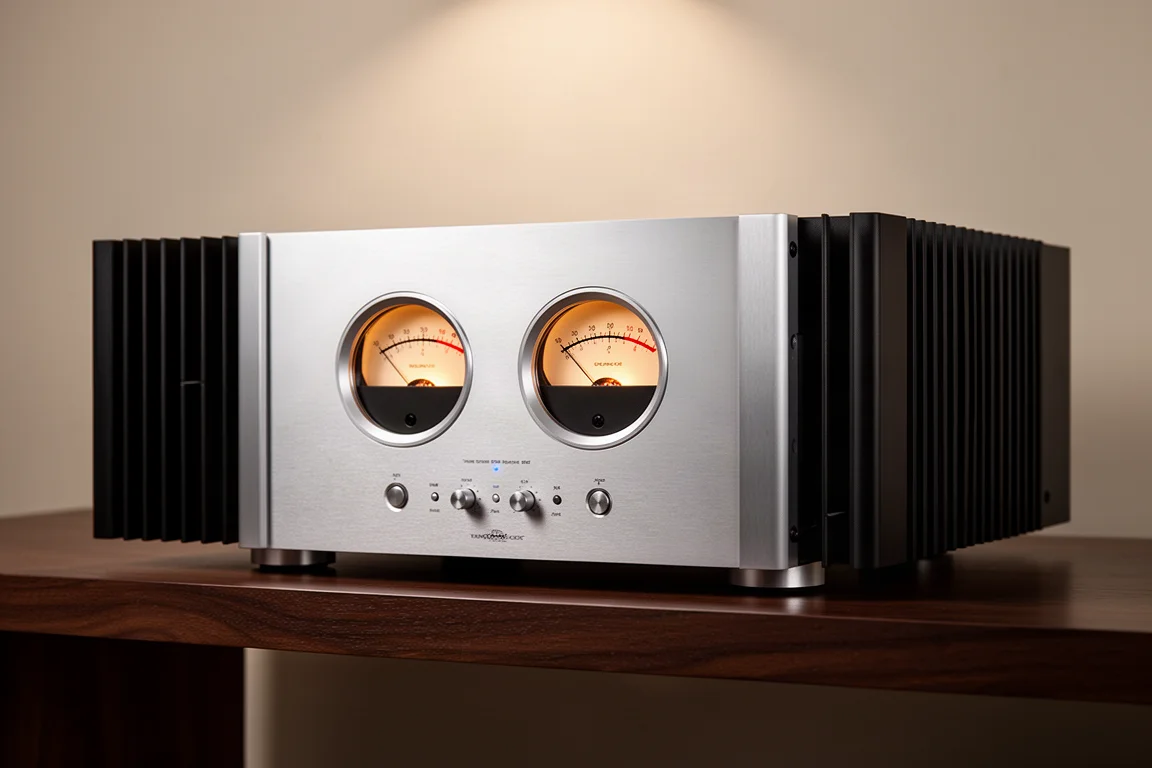
Efficiency, Heat, and Channel Count in Modern Systems
Class D runs at 90 to 95 percent efficiency, while a class A/B design manages perhaps 60 to 70 percent at full power and considerably less at lower output. The difference shows up as heat, and heat is why linear amplifiers need large heatsinks, heavy chassis and generous ventilation. A class D amplifier of comparable output stays cool and stays light.
That matters more than ever as immersive audio systems grow. Once a room needs 11, 13, 16 or even up to 32 speakers, linear amplification becomes impractical, because the channel density simply is not there. Class D makes those systems realistic in a way that a rack of big linear chassis cannot.
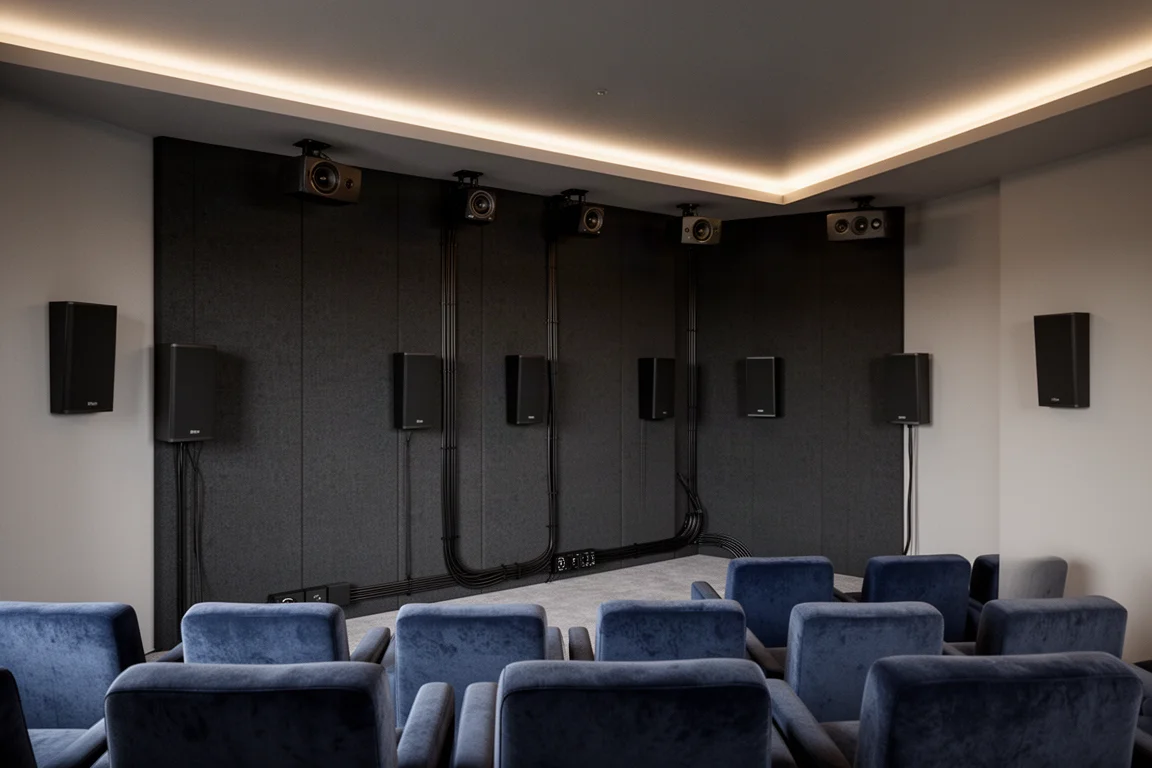
One myth is worth clearing up: class D is not automatically cheap. A switching power supply that is quiet, efficient and dependable costs real money to build, and inexpensive supplies often fail early. Buyers comparing prices should look at the power supply and the feedback topology, not just the module name on the spec sheet.
When choosing between these approaches, three questions do most of the work. How many channels do you need? How difficult is the speaker load, and does the amplifier stay stable and consistent into it? And how much heat and weight can the room and the rack tolerate? Answer those honestly and the choice usually becomes obvious.
Conclusion
Three amplifiers, three different answers. The NAD M23 shows where class D has arrived: distortion at the limit of high-grade test equipment, load-invariant behaviour, a 103 dB signal-to-noise ratio at 1 W, and a chassis that stays cool and light. The Axiom Audio A1400-8 shows how far the technology has come, and how much load invariance matters in daily use. The Classé CT-2300 shows that a well-executed linear design remains a reference for flat distortion and stable behaviour across loads.
For anyone building or upgrading a system today, the useful filters are noise floor, load stability and channel count. Modern class D designs now satisfy all three, and in multi-channel rooms they are often the only practical path. Linear amplifiers still earn their place in two-channel systems, but the assumption that they are automatically more transparent no longer holds up.
Further reading
Related Reviews
Hi-Fi Amplifiers
Accuphase E-280 Review: Entry-Level Accuphase With Flagship Attention to Detail
A close look at the Accuphase E-280 integrated amplifier, covering its champagne build, AAVA volume control, sound quality, and the speakers and sources that suit it best.
Hi-Fi Amplifiers
Advance Paris A10 Classic vs Yamaha A-S301: Two Integrated Amplifiers Compared
A practical comparison of a $350 integrated amplifier and a $2,500 reference model, covering the differences that matter and the ones that do not.
Hi-Fi Amplifiers
Affordable Chinese Amplifiers Worth Buying: Five Budget Hi-Fi Amps Compared
A practical look at five affordable amplifiers, what each one does well, and the trade-offs to weigh before you buy.