Hi-Fi Audio
Class D Amplifiers and Op-Amp Upgrades: 7 Affordable Options Worth Considering
Seven affordable Class D amplifiers and op-amps that let you shape your system now and upgrade it later, with clear notes on what each one changes.
Introduction
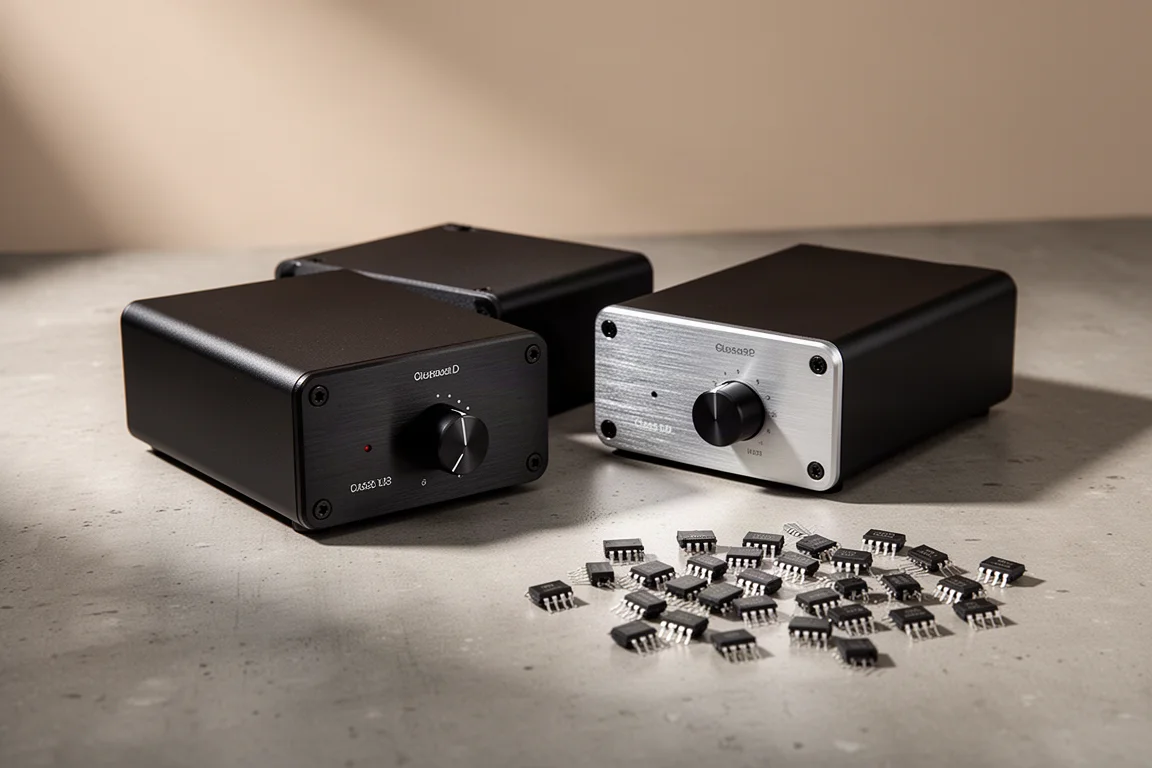
Class D amplification has become the most accessible way into serious Hi-Fi. A compact desktop amplifier can now deliver 70, 80, or even 200 watts per channel depending on the power supply you pair it with, for roughly what a modest used receiver cost years ago. More interesting than the price is the fact that many of these amplifiers are built to be opened up.
The most rewarding modification is op-amp rolling. The small dual op-amps that sit in sockets on the amplifier board shape a good deal of the tonal character, and because they are socketed rather than soldered, they can be swapped in minutes with no special tools. That turns an inexpensive amplifier into a platform you can grow into: run it in stereo first, add a second unit and run both in mono later for better channel separation and a dedicated power supply per channel, then start experimenting with op-amps when the budget allows.
This guide covers three Class D amplifiers that make strong foundations and four op-amps that genuinely change what those amplifiers sound like.
How to Evaluate a Class D Amplifier Upgrade Path
Not every compact amplifier is worth modifying, and not every upgrade path is worth the money. A few practical points separate the good candidates from the rest.
Power supply headroom comes first. The rated output of these amplifiers depends heavily on the supply feeding them, so the same model can behave very differently depending on what you connect. Stereo and mono operation matters almost as much: an amplifier that can be bridged to mono lets you add a second unit later and give each channel its own power supply, which is one of the most effective upgrades available.
Then there is the board itself. Socketed op-amps are essential, and a board with clearly labelled positions makes the job far easier and far less risky. Finally, count how many op-amps you actually need to replace. Depending on whether you listen through XLR or RCA inputs, two or three replacements are usually enough, and the subwoofer op-amps generally do not need changing at all. That keeps the cost of an upgrade surprisingly low.
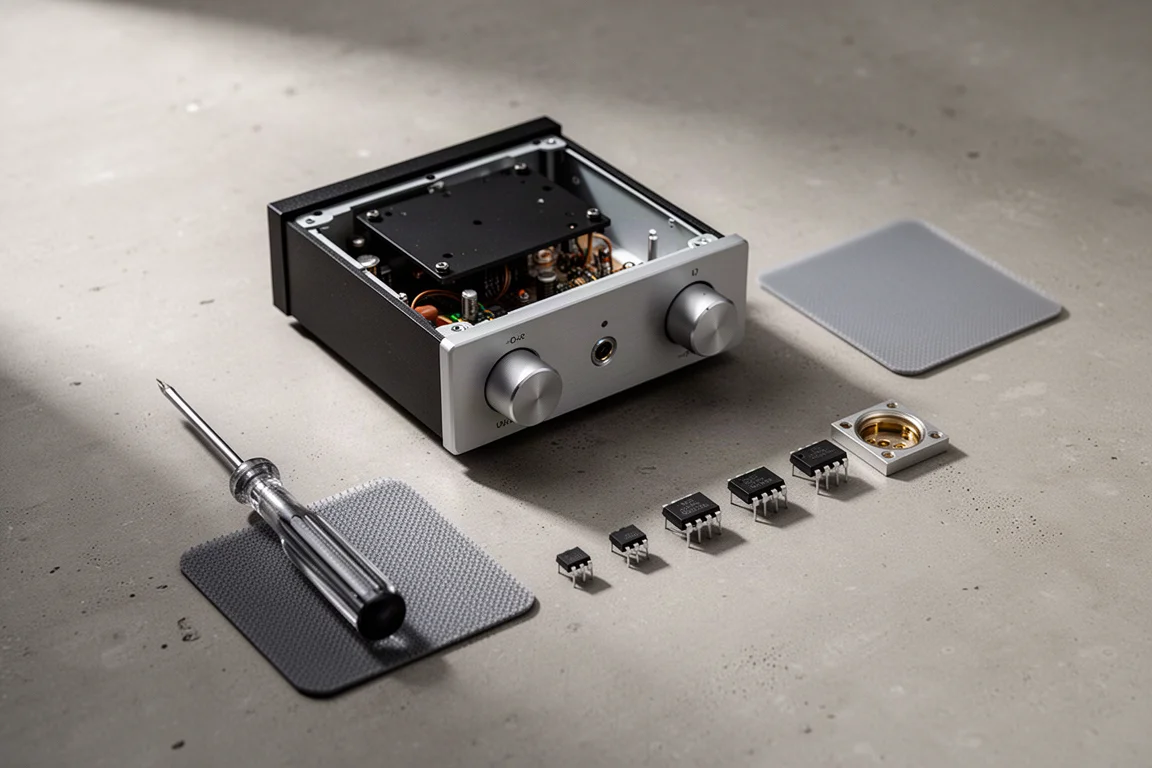
The same DIP8 socket accepts both discrete modules from specialist makers and inexpensive integrated circuits from large semiconductor manufacturers, which means a single amplifier can be tuned in several distinct directions. The differences are not subtle once you compare them directly.
Fosi Audio ZA3: A Flexible Foundation
The ZA3 is one of the most sensible starting points. Its board is well laid out and clearly labelled, so you know exactly which op-amp you are removing and which socket it belongs in. It ships with Texas Instruments 5532 op-amps, which sound clean, even, and dynamic, giving you a neutral baseline before you change anything.
Its real advantage is flexibility. It can run in stereo, and it can also be run in mono, which means a second unit can be added later to improve channel separation and give each amplifier its own dedicated power supply. That makes it a natural first purchase for anyone who wants to build a system piece by piece rather than all at once.
Aiyima A07 Max: Affordable Starting Point
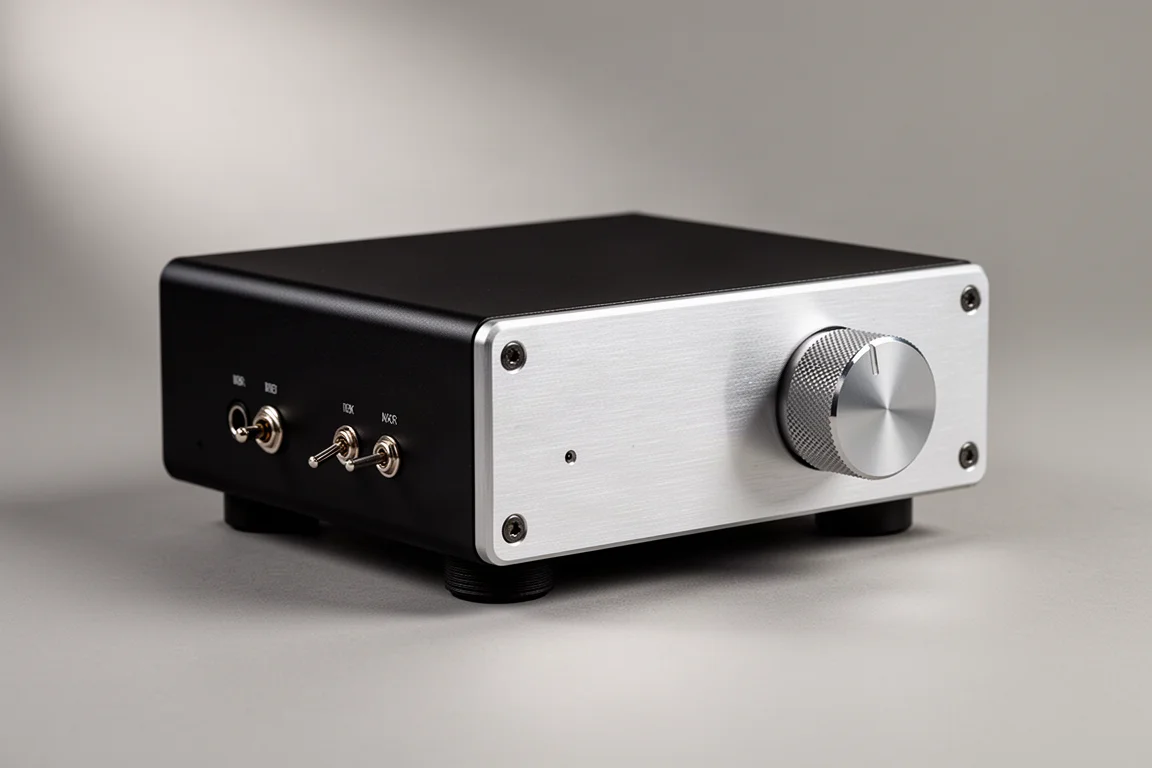
The A07 Max follows the same philosophy at a similar price. It is a straightforward, compact Class D amplifier that does the basic job well and leaves plenty of room to grow, which is exactly what matters when you are assembling a first proper system on a limited budget.
The trade-off is the familiar one with budget Hi-Fi: upgrading an amplifier like this can eventually cost more than the amplifier itself, especially if you buy several discrete op-amps at once. The counter-argument is simple. Not everyone has the full budget upfront, and spending in stages lets you hear each change in isolation rather than guessing at what a single larger purchase would have done.
Fosi Audio V3: Another Inexpensive Base
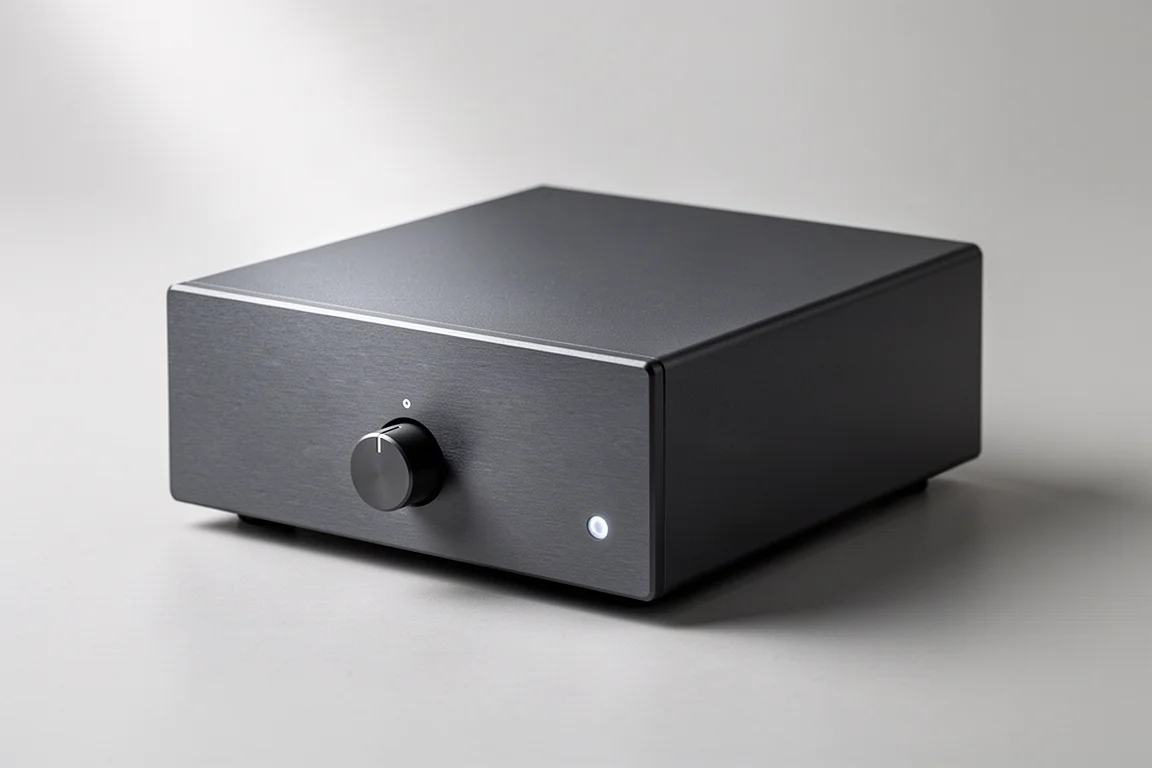
The V3 is the third affordable option here, and it shares the same appeal: a small, inexpensive amplifier with op-amps you can change out when you are ready. The exact op-amps fitted as standard are not as well documented as the ZA3’s, which makes the first swap slightly more of an experiment.
That is not a dealbreaker. If you intend to replace the op-amps anyway, the stock parts matter less than the socket layout and the amplifier’s basic behaviour.
Sparkos Labs SS3602: The Immersive Upgrade
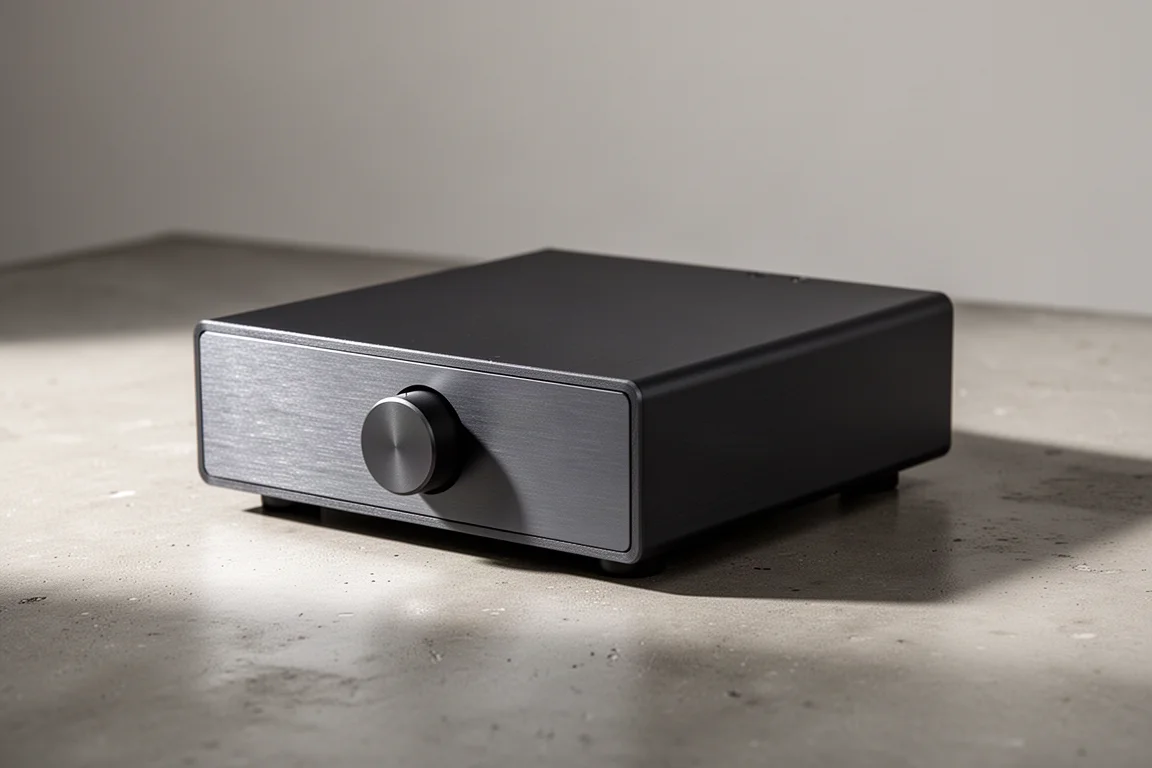
The SS3602 was the most convincing op-amp of the group. Intensity and sound staging are where it separates itself: centre image, image height, and the sense of placement in space all change noticeably compared with the stock op-amps, and the amplifier becomes livelier and more punchy.
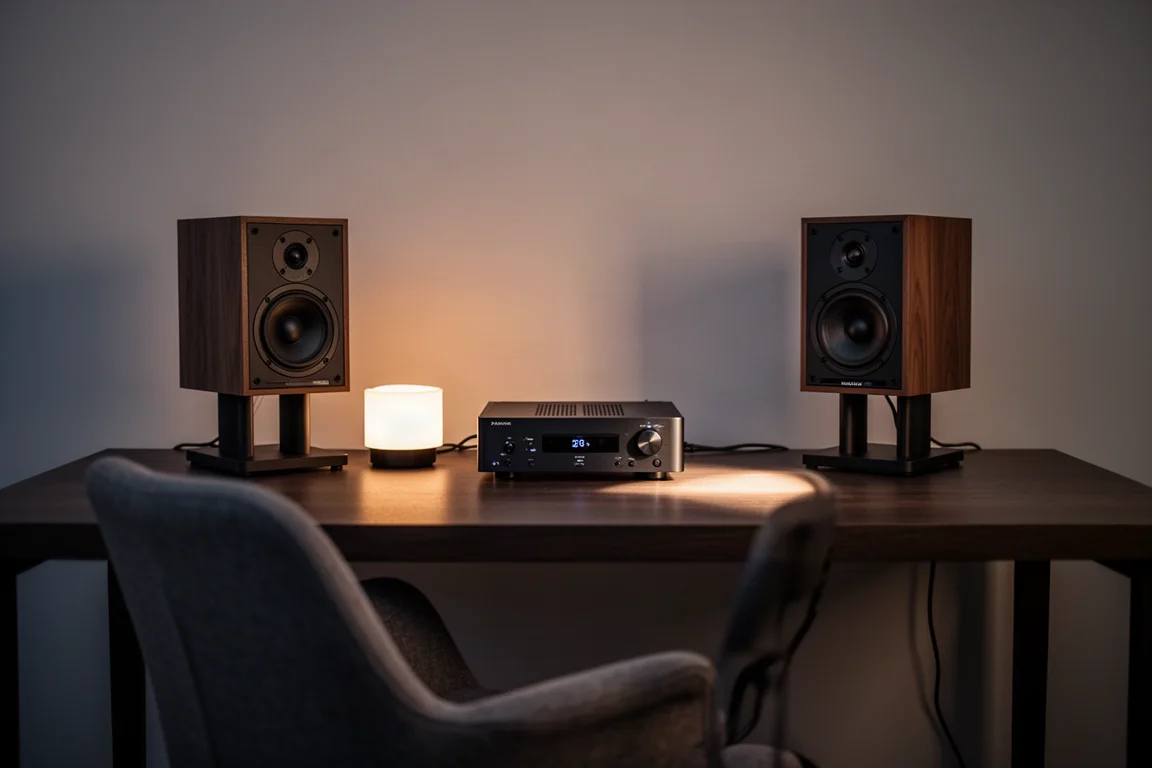
In practical terms, the centre image lifts and moves forward, the stage gets both deeper and wider, and the presentation becomes more dynamic, almost like switching on a widening DSP mode on a home theatre receiver. Bass impact increases but also gets cleaner, instruments separate more clearly, and the highs come across as airier. It is the kind of change that pulls you into the music rather than letting it play in the background.
The cost is the main consideration. A full three-op-amp swap runs to around $240, which is a real premium on top of a budget amplifier. Even so, the improvement is immediate enough to be audible on speakers that do not resolve everything perfectly, and it is especially worthwhile if your room is less than ideal or you tend to listen at lower volumes, where a more immersive presentation is easier to appreciate.
Burson Audio V5i: The Warm Alternative
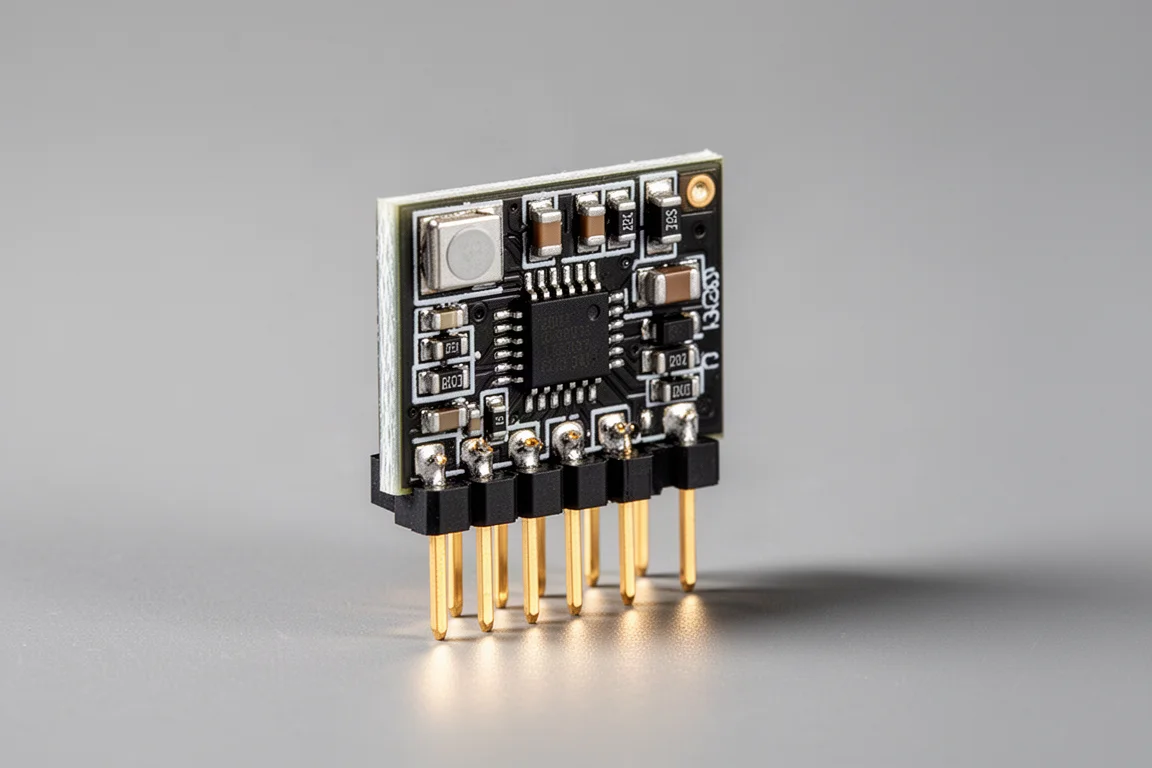
The V5i goes in the opposite direction. It is a smooth operator: you give up some clarity and gain flavour, a warm, laid-back character that is easy to listen to for long stretches.
That makes it the right choice when the problem is brightness rather than detail. If your speakers sound a little harsh or forward, the V5i calms things down without softening the music into mush. These are dual op-amps, so a Fosi Audio amplifier needs two of them.
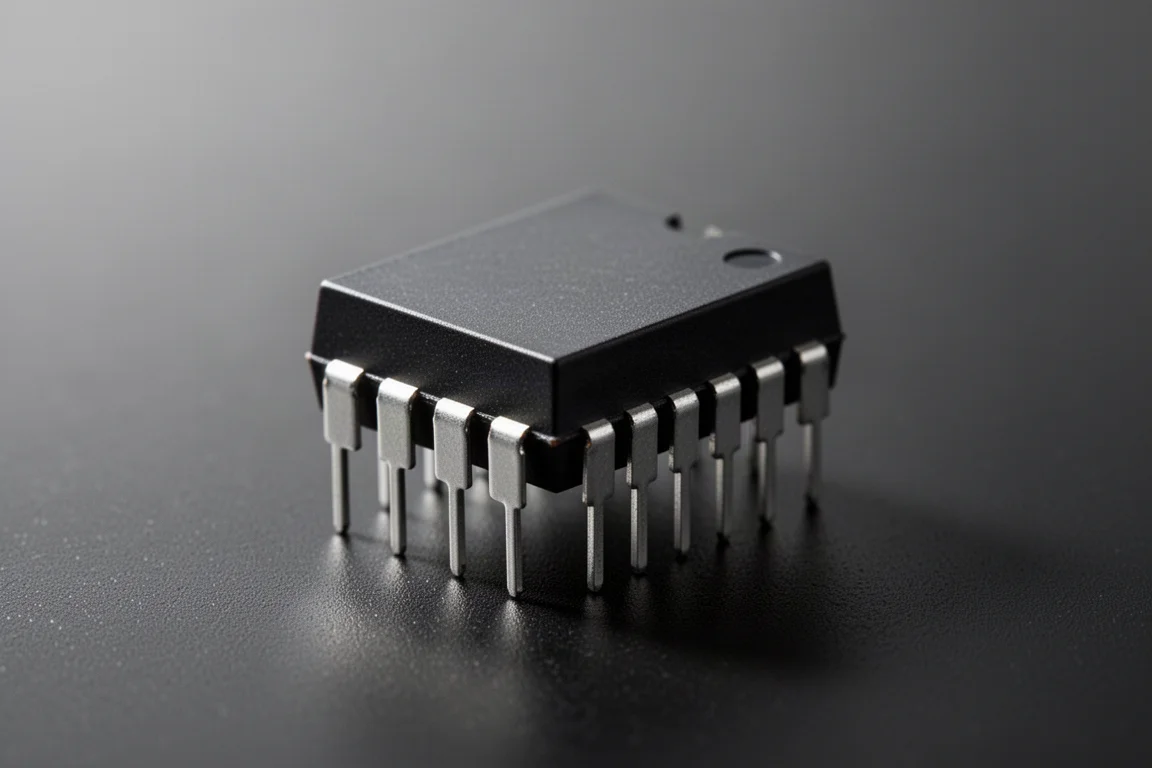
Texas Instruments OPA1656: Subtle Refinement
The OPA1656 takes what the stock 5532 does and pushes it further: more clarity, more dynamics, and more concentration on the top end. If you like hearing reverb and acoustic guitar strings hang in the air a fraction longer, this is the direction to go.
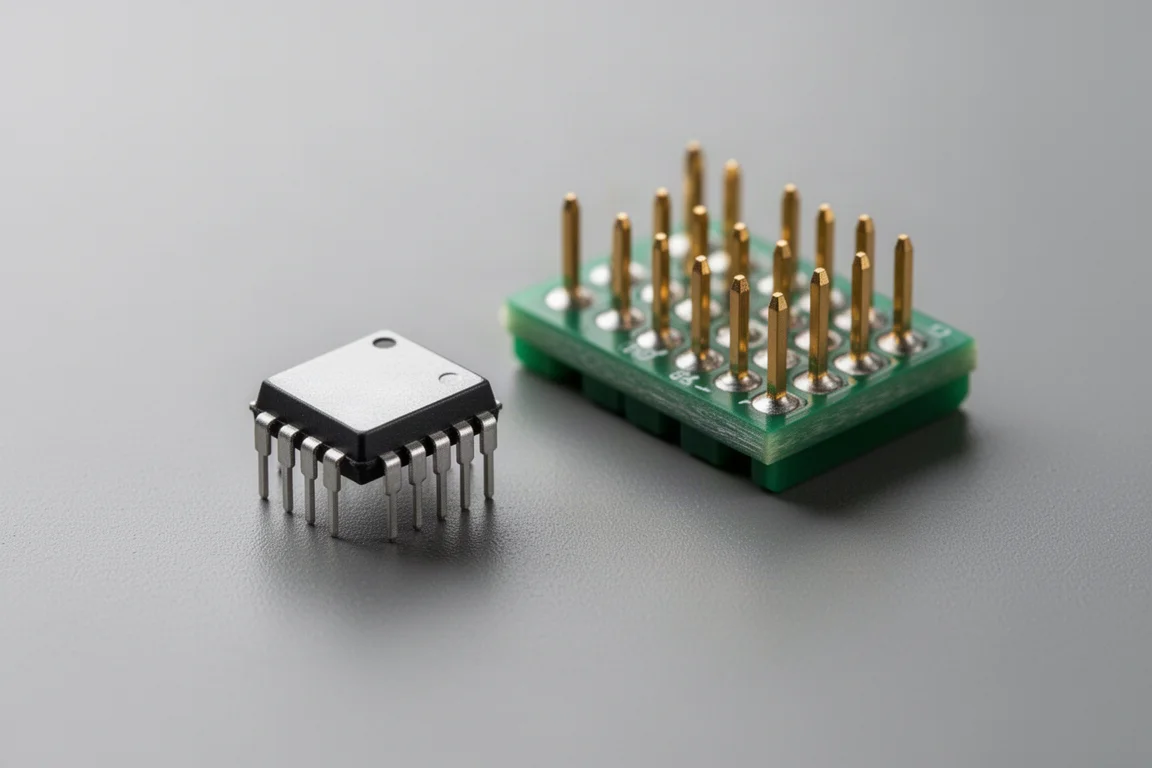
The difference from the stock op-amp is real but not dramatic, which makes it a sensible first experiment. There is one complication. The OPA1656 does not come in a DIP8 package natively, and the smaller chip will not fit an op-amp socket on its own. Versions already soldered onto a DIP8 adapter solve this, and they are widely available, but prices vary widely: the bare chip costs a couple of dollars, while adapter-mounted versions run from roughly $17 to $50 each.
Texas Instruments NE5532: The Stock Baseline
The NE5532 is what you already get in the ZA3, and it deserves more credit than it usually receives. It sounds clean and even, with good dynamics, and it holds up well as a reference point.
Its value is in the comparison. Until you have swapped it out, it is difficult to judge what a different op-amp is actually contributing. Keep the stock parts, and you can always go back to them.
Buying Advice: Matching an Amplifier to Your Upgrade Path
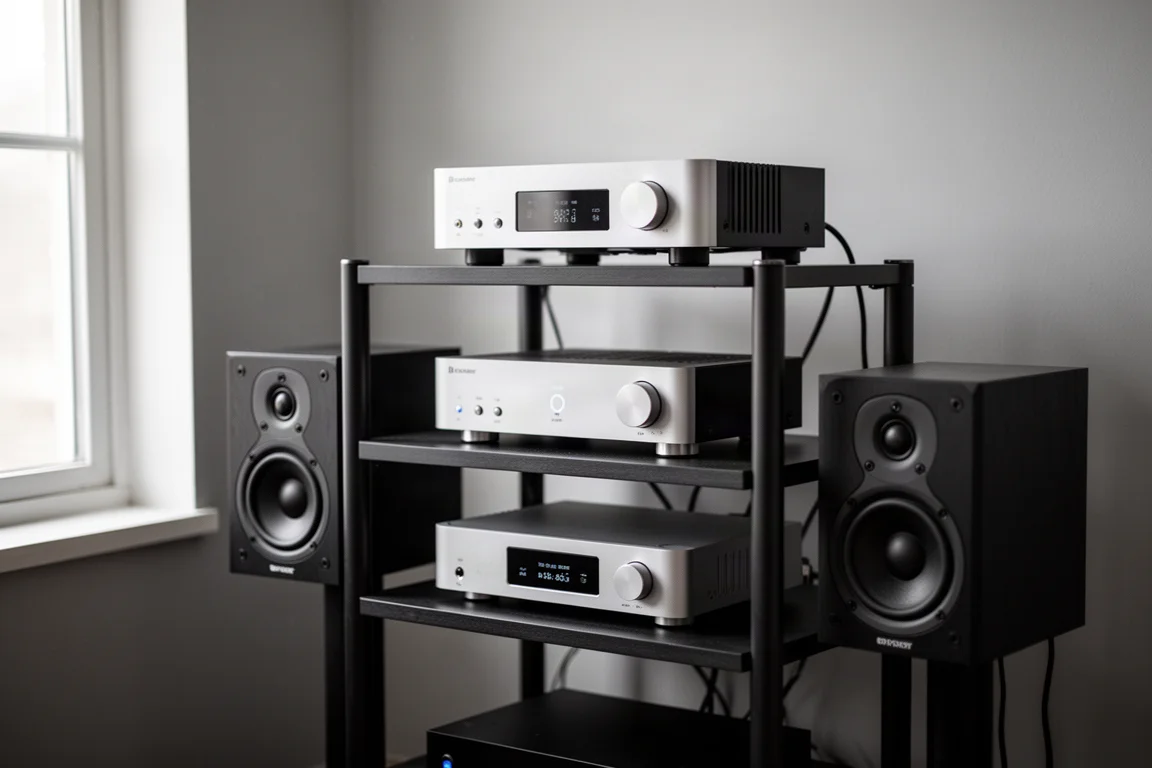
Start with the amplifier, not the op-amps. Any of the three amplifiers here will give you a working system immediately, and all of them can be improved later. Choose the one whose features fit how you intend to grow: the ZA3 is the most flexible of the three because of its mono capability and clearly labelled board, while the A07 Max and V3 are simple, inexpensive places to begin.
From there, match the op-amp to the problem you actually hear. If your system sounds bright, the warm character of the V5i is the obvious first move. If you want a modest lift in clarity for very little money, the OPA1656 is the low-risk experiment. If you want the biggest change in staging and dynamics, the SS3602 delivers it, at a price that reflects what it does. Buying only the two or three op-amps you actually need keeps any of these upgrades reasonable, and because op-amps are socketed, unwanted ones can be resold.
Conclusion
Compact Class D amplifiers have made it possible to build a serious system in stages rather than in one expensive step. Buy a capable amplifier now, add a second unit and run them in mono when funds allow, and use op-amp rolling to fine-tune the sound once the rest of the system is in place. The three amplifiers here are all solid foundations, and the four op-amps show how much of the final character is decided by a handful of small, swappable parts.
Further reading
Related Reviews
Hi-Fi Audio
Accuphase C-57 vs Allnic H-7000V: Two High-End Phono Stages Compared
A fully balanced solid-state phono stage with a pitch-black noise floor meets a tube design built for well-loved records. Here is how to choose between them.
Hi-Fi Audio
Active vs Passive Hi-Fi: Five Components for a Modern System
Five components that define modern active and passive hi-fi systems, with the strengths, trade-offs and setup details worth weighing before you buy.
Hi-Fi Audio
Advance Paris A10 Apex Review: A Hybrid Integrated Amplifier That Covers a Lot of Ground
A French hybrid integrated amplifier with a class A tube preamp stage, analogue power meters, and an internal DAC and phono stage good enough to make extra boxes unnecessary.