Hi-Fi Speakers
Radiant Acoustics Clarity 6.2 and Three Standmount Alternatives
A close look at the Radiant Acoustics Clarity 6.2 alongside three standmount speakers that come up in the same conversation, with notes on power, placement, and subwoofer pairing.
Introduction
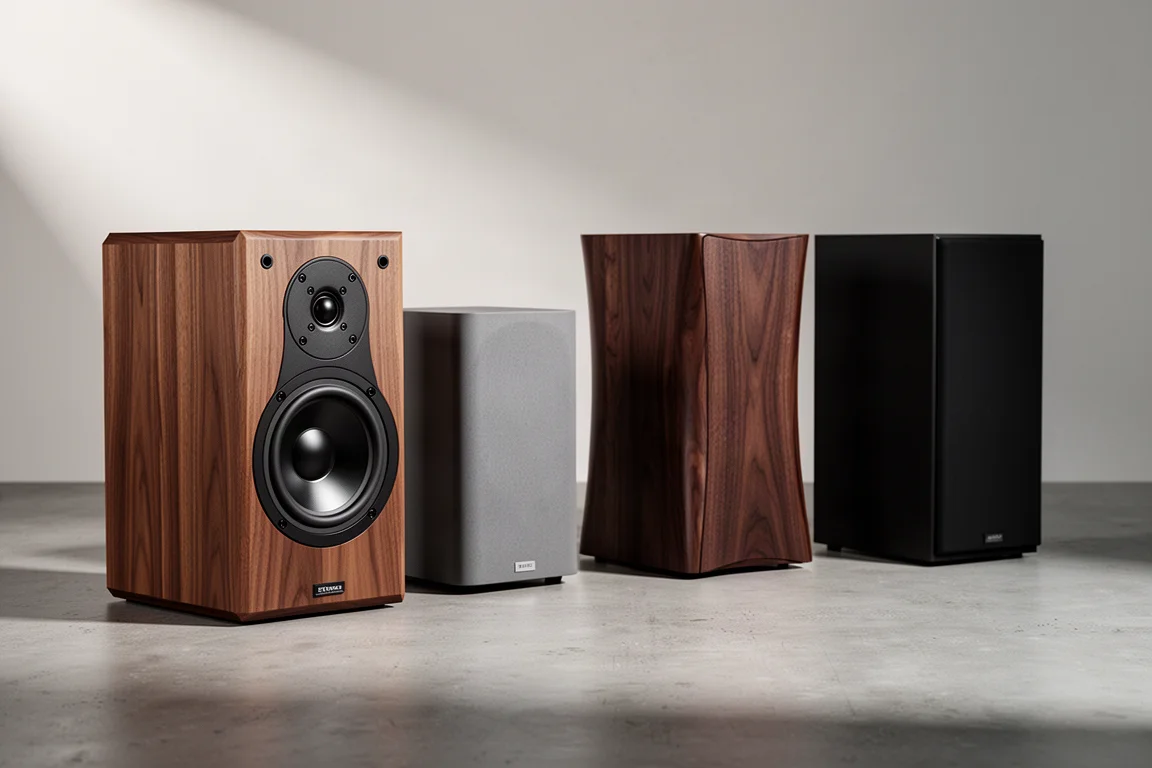
The Radiant Acoustics Clarity 6.2 is a two-way standmount loudspeaker and, as of this writing, the only product the brand makes. It arrives in one of the most competitive corners of the hi-fi market, where a handful of established standmounts already do almost everything well. The Clarity 6.2 does not try to win on features. It wins, when it wins, on neutrality and clarity, and it asks for a serious amplifier and a willingness to listen at realistic levels in return.
That trade-off is the whole story here. The Clarity 6.2 can sound genuinely special, but only when it is driven and positioned properly. Three other standmount speakers keep coming up in the same conversation: the KEF R3 Meta, the Monitor Audio Gold 100, and the ELAC Debut 3.0. This guide covers what each one does well, where each one asks for patience, and who each one actually suits.
What Matters Most at This Price Point
Before comparing individual speakers, it helps to know which variables change the result most.
Amplifier quality comes first. A standmount with low sensitivity and a 4-ohm impedance curve will only reveal what it can do when the amplifier has real headroom and stays stable into low-impedance loads. Underpowered amplification does not simply make a speaker quieter. It makes it sound soft and closed in.
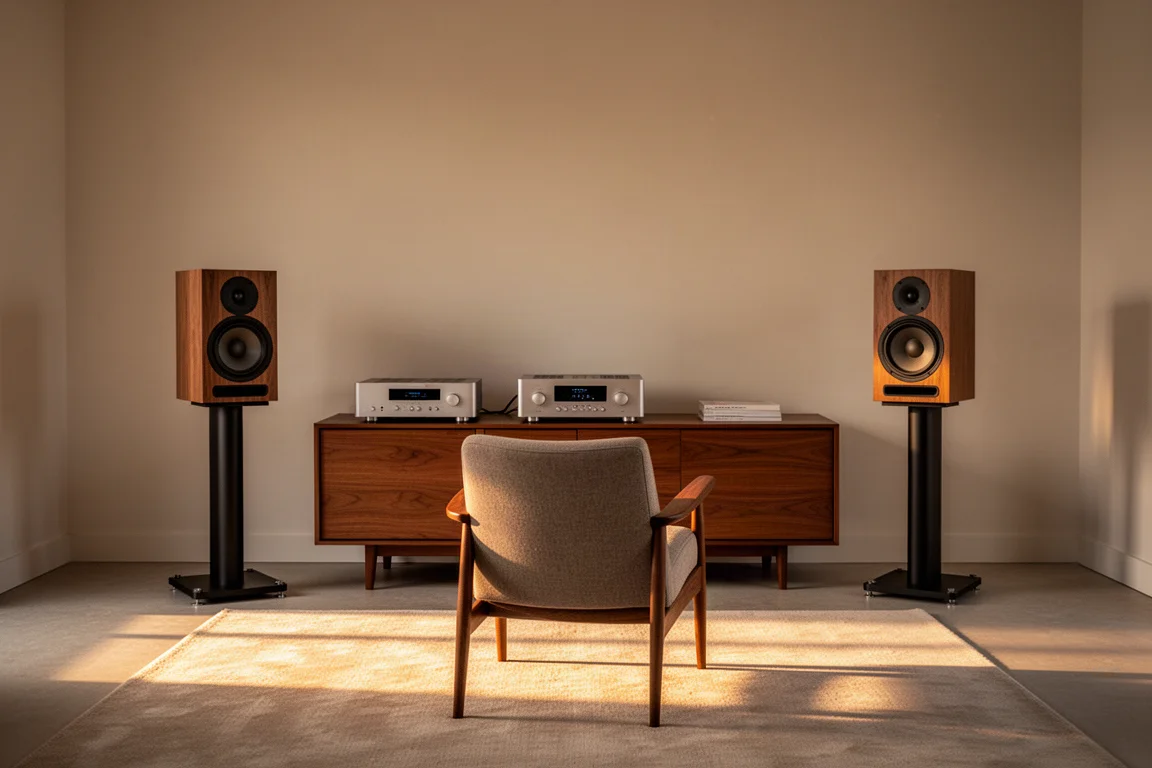
Room placement matters just as much. Distance from the front wall and sidewalls changes bass output and stereo imaging more than most people expect, and tweeter height relative to the listener’s ears determines how much treble detail arrives intact.
Finally, listening level. Several of the speakers here change character noticeably depending on how loud they are played, and a capable subwoofer can turn the smallest of them into something far more complete.
The practical takeaway is that a speaker which measures well can still disappoint if the amplifier, the room, and the listening level are not matched to it.
Radiant Acoustics Clarity 6.2
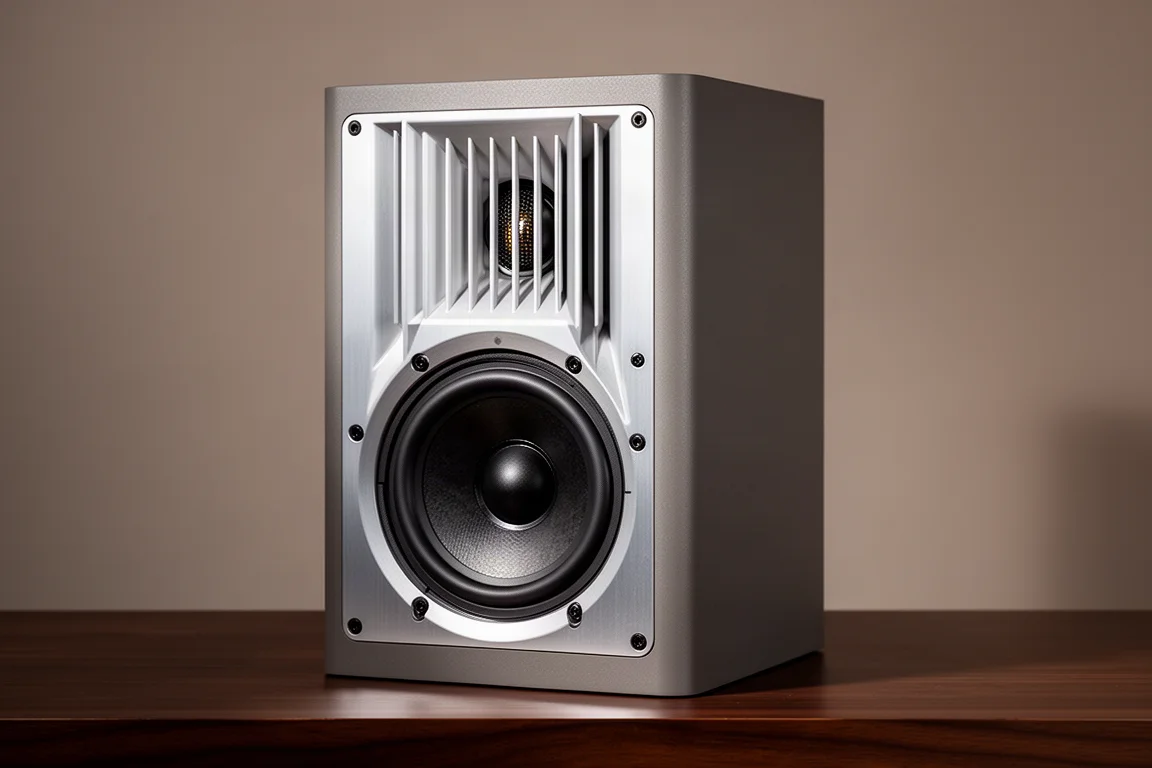
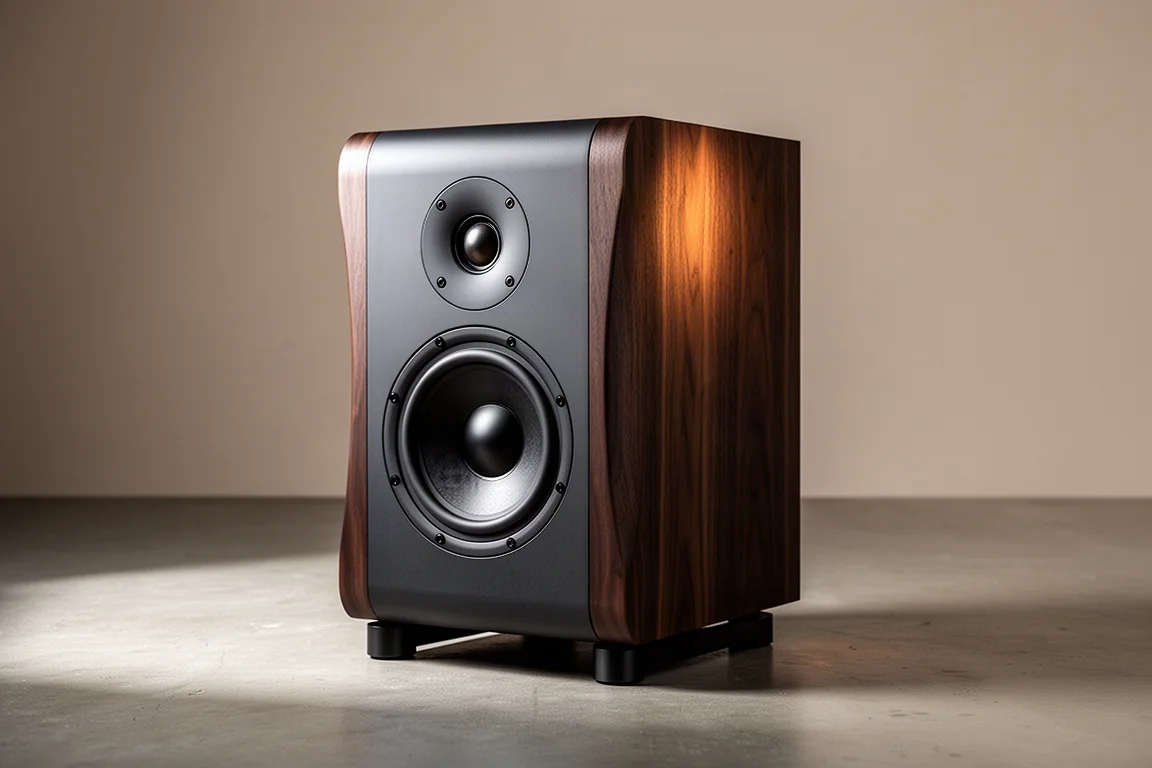
The Clarity 6.2 is a two-way design with a real wood walnut veneer cabinet and a black aluminium front baffle, also available in black or white. Its 6.5-inch woofer uses an unusual surround with asymmetrical ridges intended to reduce distortion, and it is paired with an AMT tweeter mounted behind a horn-shaped waveguide. Two 6.5-inch passive radiators handle the low end. Rated frequency response is 35 Hz to 20 kHz, impedance is 4 ohms, and sensitivity is 85 dB.
In room, the speaker is impressively linear from roughly 200 Hz up through 5 to 6 kHz. Bass extends into the mid-30s Hz, but the speaker is not tuned to sound bass-heavy. There is a lift in the extreme treble from about 10 kHz that adds a touch of brilliance and contrast to recordings.
That balance is where the Clarity 6.2 earns its name. With acoustic piano, jazz, and well-recorded vocals, the midrange is clear, articulate, and exceptional on good material. The AMT tweeter is well behaved and free of distortion, and at higher levels it delivers ambience, air, and detail without sounding artificial.
The catch is that higher levels are not optional. The speaker needs volume to come alive. With average in-room levels around 80 dB and peaks above 90 dB, it grows in scale and brings real heft to its performance, and it will play that loudly without strain if the amplifier can supply the current. Below that, the low bass and lower midrange do not hit with much weight, and female vocals in particular can lack body. Treble below roughly 70 dB loses much of its shimmer. Anything under 100 watts per channel is not worth considering, and the amplifier should be stable into 4 ohms and below.
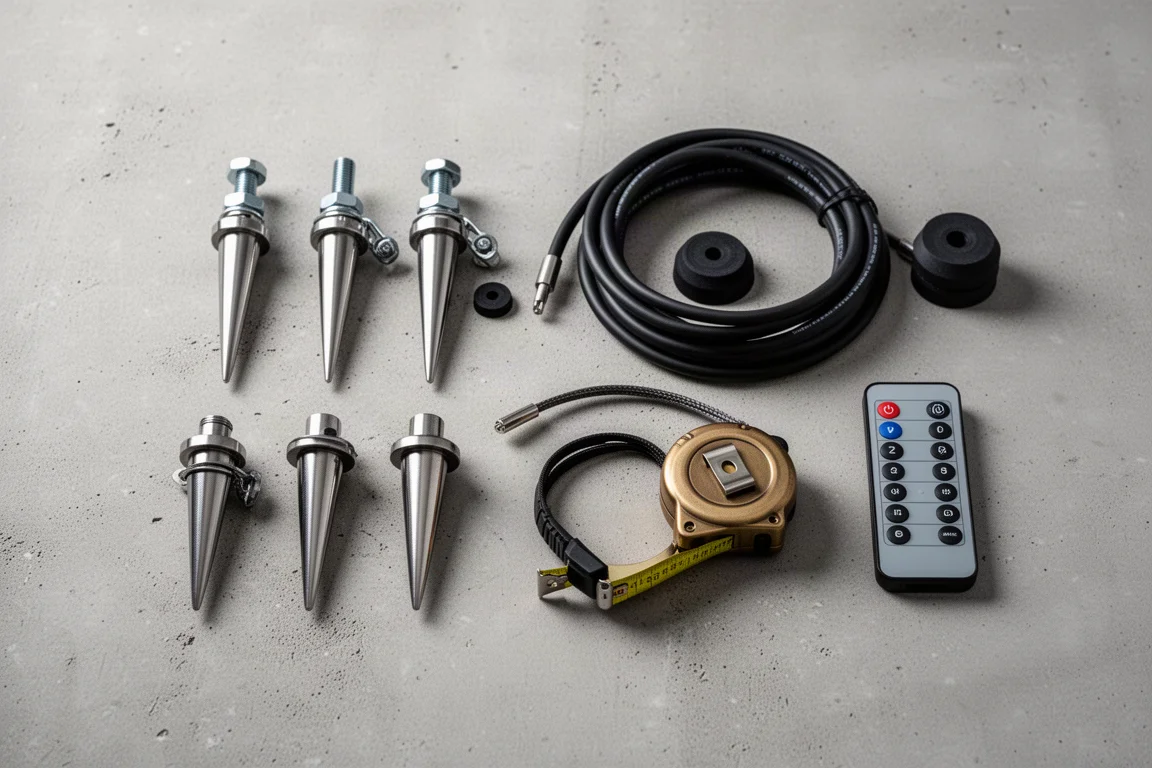
Placement follows the manufacturer’s guidance: keep the speakers between roughly 12 inches (31 cm) and 2 feet (61 cm) from room boundaries, and set the tweeters at seated ear height. In practice, a position about 18 inches off the front wall with 4 feet to each sidewall, forming an equilateral triangle with a listening position around 10.5 feet away, produced the best result. Vertical dispersion is limited, so sitting too low or listening far off axis flattens the soundstage, and the speakers stay locatable within the image rather than disappearing completely.
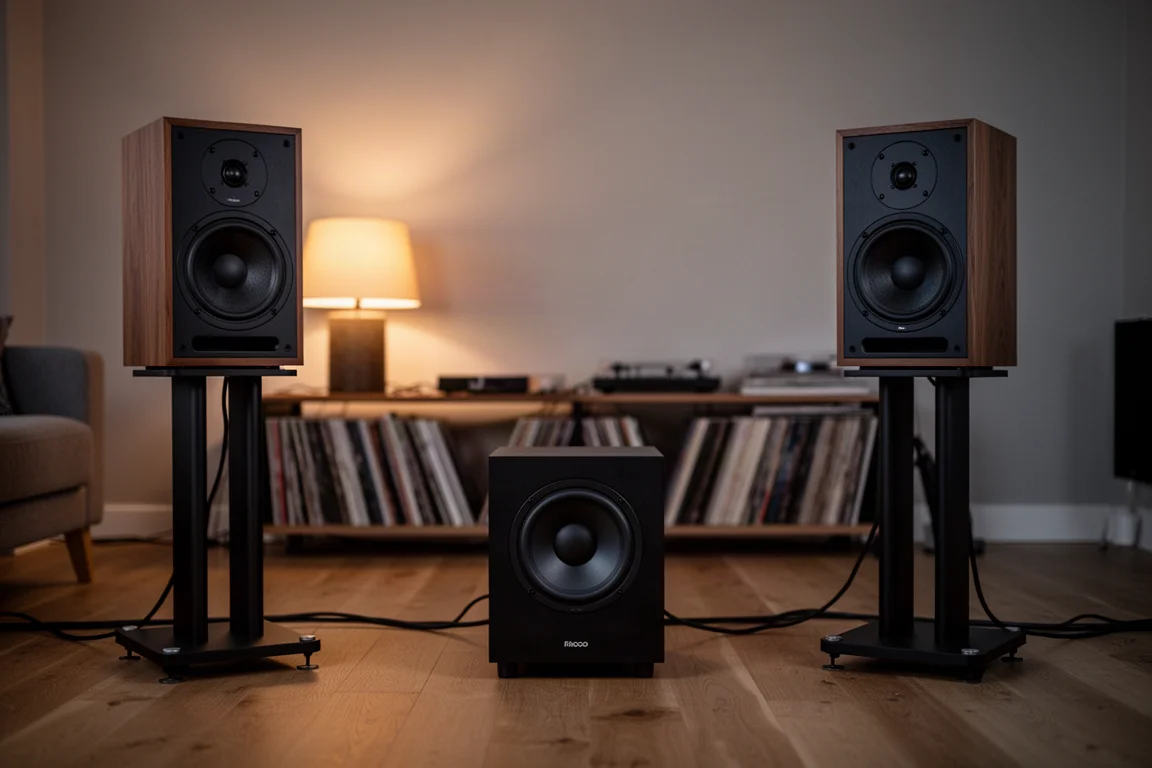
A capable subwoofer changes the equation. Crossed over with a well-built sub, the Clarity 6.2 becomes far easier to drive and its dynamic contrast improves dramatically, moving it from ruler-flat to genuinely special. The trade-off is cost and floor space, since a subwoofer articulate enough to keep up is not inexpensive.
KEF R3 Meta
The KEF R3 Meta takes a similar approach and lands in a similar place. It is impressively neutral and agreeable across a wide range of music, with a midrange character close to the Clarity 6.2. The main difference sits at the top end, where the Clarity 6.2 carries a little more emphasis, which some listeners may hear as greater intelligibility.
Like the Clarity 6.2, the R3 Meta benefits from a subwoofer and comes into its own when it is allowed to play at louder levels. That shared tendency means both speakers tend to appeal to listeners who value measured neutrality first and build the rest of the system around it.
Where the R3 Meta pulls ahead is on budget pressure. If the funds are tight, it leaves room to put money toward a better amplifier or a capable subwoofer instead.
That combination of neutrality and a friendlier entry point makes it the sensible starting place for anyone building a system around a flat, honest midrange.
Monitor Audio Gold 100
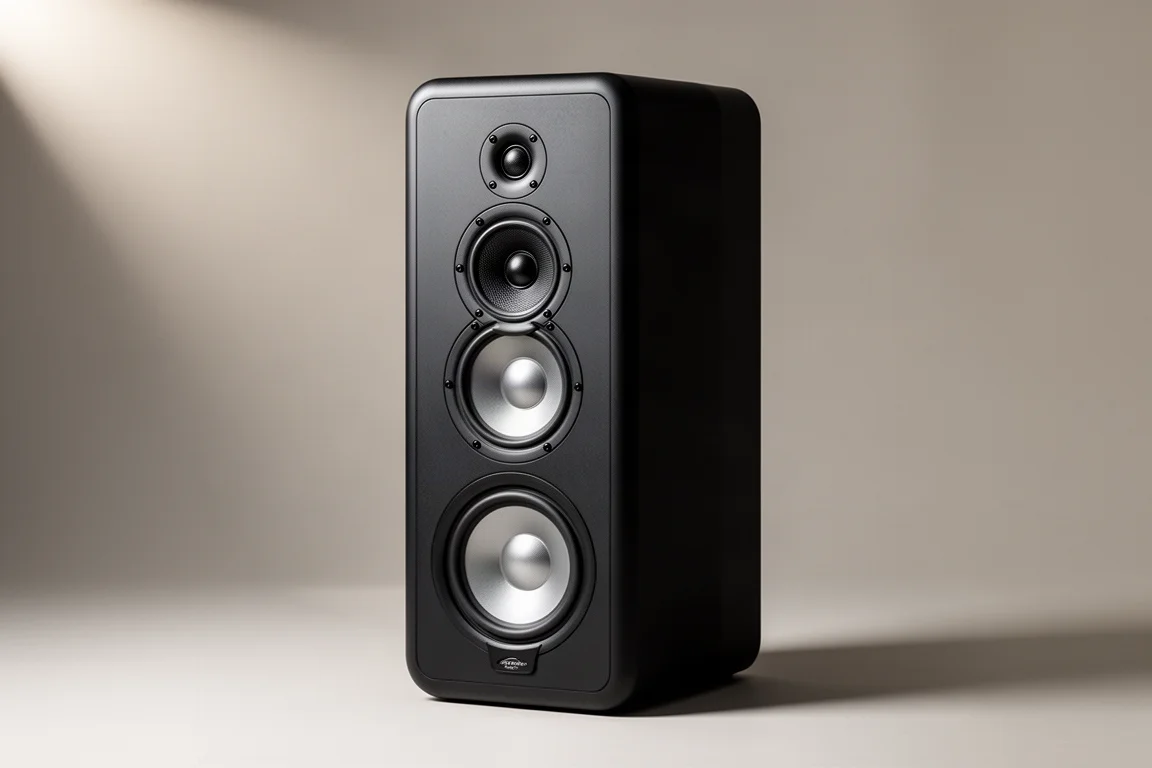
The Monitor Audio Gold 100 is the alternative for listeners who want more weight without giving up neutrality. It sounds more tower-like and fuller range than its cabinet size suggests, with more low-end oomph and an equally neutral midrange.
Its treble is as extended as the Clarity 6.2’s, but without the extra top-end energy that can turn lesser recordings sibilant at higher volumes. That makes it noticeably more forgiving of compressed or aggressively mastered material.
Just as importantly, the Gold 100 is more straightforward to drive. It plays well at everyday volumes rather than demanding to be turned up, and it opens into a wide soundstage at levels that will not upset the neighbours. It also disappears into the room in a way the Clarity 6.2 does not fully manage. For anyone weighing the two directly, the Gold 100 is the more forgiving long-term partner.
ELAC Debut 3.0
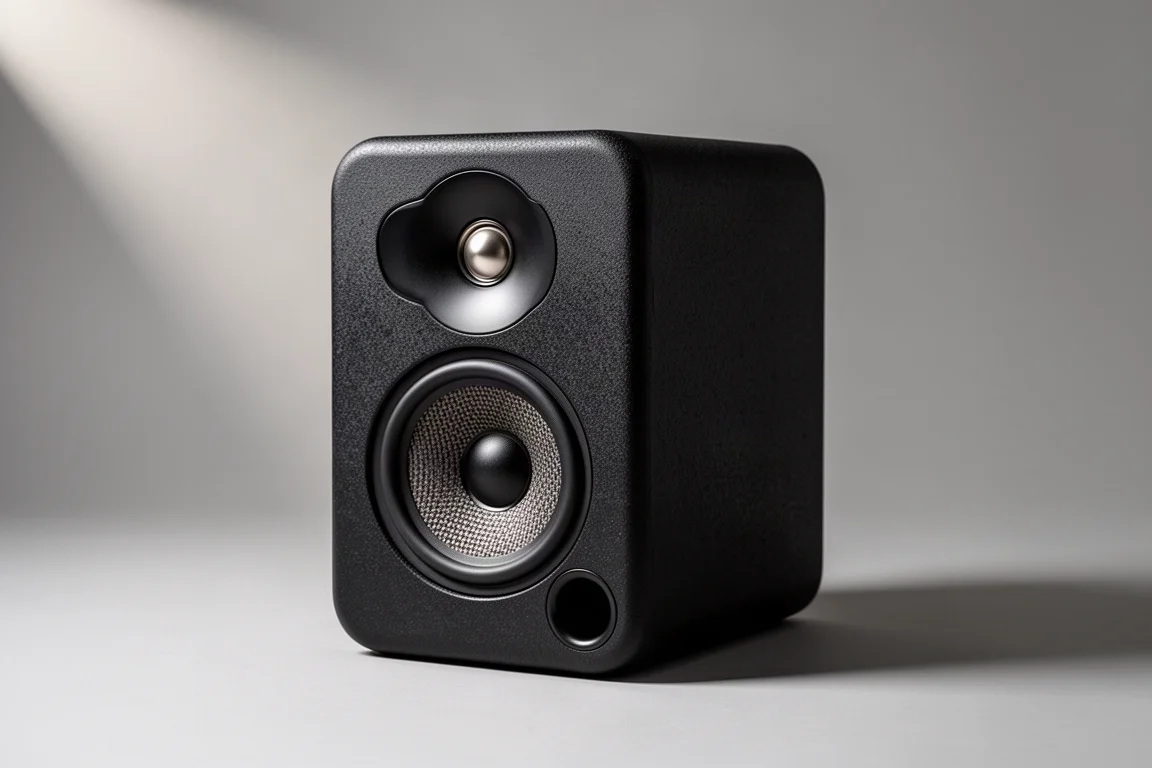
At the other end of the budget, the ELAC Debut 3.0 is a budget-friendly standmount that is not built to the same standard as the speakers above and cannot play as loud without strain or distortion. For listeners who are not trying to push the volume envelope, that trade-off is easy to accept.
The Debut 3.0 is simply easier to live with. It likes a good amplifier, but it can get by with something far less expensive than the high-current integrated amplifiers the Clarity 6.2 requires, which adds to its value. As with the others, a subwoofer brings out its maximum impact.
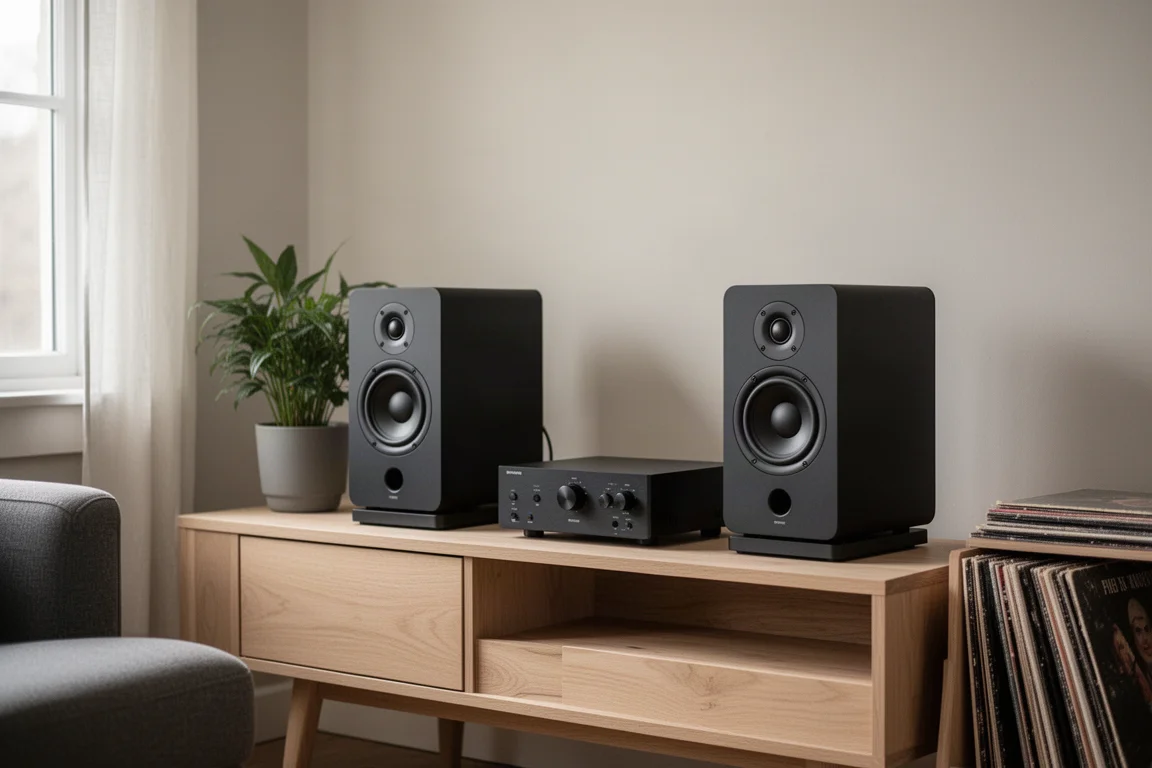
For a first serious system in a smaller room, that combination of modest amplification requirements and a low entry price is hard to argue with.
Matching Speakers to Amplifiers and Rooms
The lessons from these four speakers apply to almost any standmount purchase.
Start with impedance and sensitivity. A 4-ohm, 85 dB speaker needs an amplifier that is comfortable driving low-impedance loads and has enough headroom to stay clean at the levels you actually use. Power figures on paper matter far less than whether the amplifier remains stable when the impedance drops.
Then consider how loud you really listen. If most of your listening happens at low levels, a speaker that only opens up when pushed will frustrate you, no matter how good its measurements look. If you have the freedom to turn things up, the same speaker becomes a very different proposition.
Finally, plan for the low end. Adding a well-built subwoofer relieves the amplifier of the hardest work and fills in the bottom octaves, and in several of these systems it is the single biggest improvement available. Budget for it, and budget for the space it takes up.
Buying Advice
If you have a powerful, 4-ohm-stable amplifier and you listen at realistic levels, the Radiant Acoustics Clarity 6.2 is a genuinely rewarding speaker, with a clarity and midrange articulation that flatters good recordings. Add a capable subwoofer and it becomes far more complete. Go in knowing that it is finicky about amplification, placement, and volume, and that the competition around it is fierce.
If you want most of that neutrality with less fine print, the KEF R3 Meta is the lower-risk choice and leaves money for the rest of the system. If you want more low-end weight and a speaker that is easy to drive at everyday levels, the Monitor Audio Gold 100 is the more forgiving option. And if the budget is the deciding factor, the ELAC Debut 3.0 delivers a very liveable system for far less.
Match the speaker to your amplifier and your room first, and the rest of the decision becomes much simpler.
Conclusion
The Radiant Acoustics Clarity 6.2 is a solid speaker in more ways than one: well made, neutral, and capable of real clarity when it is driven properly and given room to breathe. It is also demanding, and it enters a crowded field of standmounts that ask less of their owners. For listeners with the time, the amplifier, and the funds to build around it, it deserves a place on the shortlist. For everyone else, one of the three alternatives here will likely be the easier and happier purchase.
Further reading
Related Reviews
Hi-Fi Speakers
1723 THX Tower vs 1528 Bookshelf: Which Speaker Fits Your Room?
Two speakers at roughly the same price, built very differently. How the 1723 THX tower and the 1528 bookshelf compare on construction, bass, power needs, and sound.
Hi-Fi Speakers
Acoustic Energy AE 300 Review: Deep Bass From a Compact Standmount
A two-way standmount with real wood veneer, surprising low-end weight, and a warm, easygoing character. Here is what to know before buying.
Hi-Fi Speakers
Acoustic Energy AE1 40th Anniversary Review: A Modern Take on a British Classic
A compact standmount that revives a 1980s favorite with all-new parts, a warm mid-centric balance, and a price of £1,499 per pair.