Aquarium Flow Pumps
CJ's Voyager Flow Pumps Compared: Voyager 2, 3, and 4 for Reef Tanks
A practical look at the CJ's Voyager 2, Voyager 3, and Voyager 4 flow pumps, how the six-outlet flow control works, and how to choose the right model for a reef tank.
Introduction
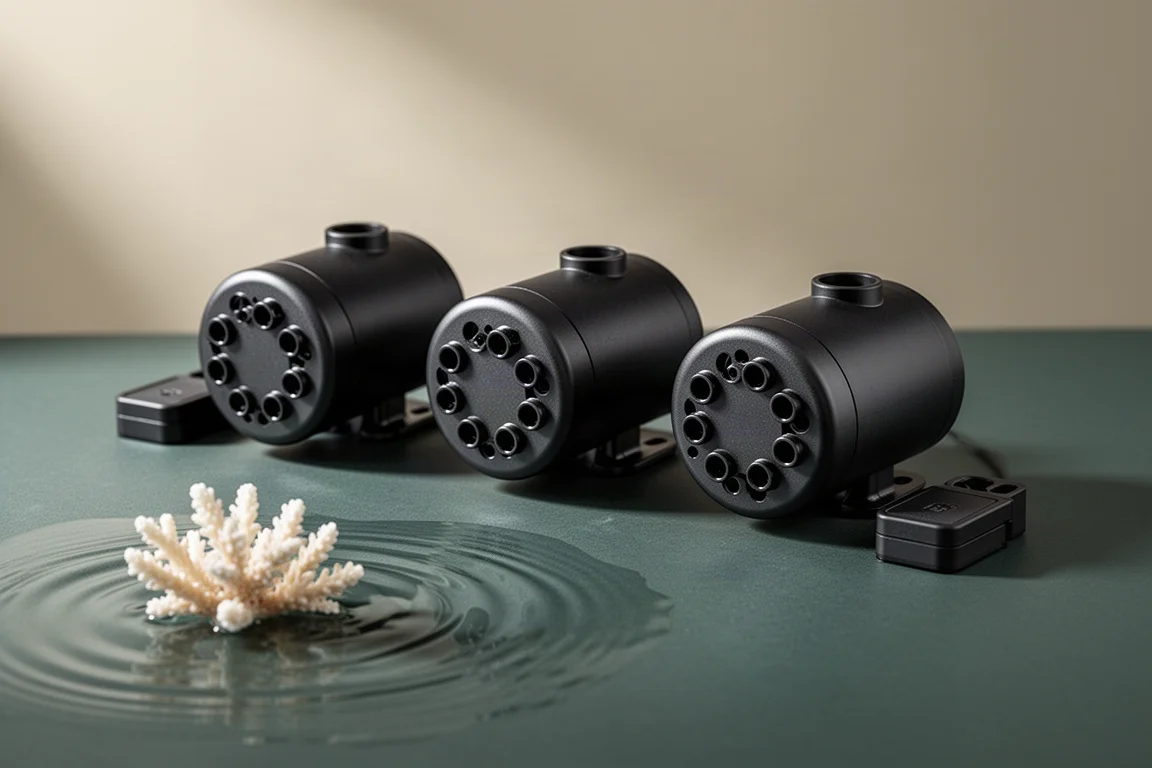
CJ’s Voyager stream pumps take a different approach to constant flow in a reef tank. Rather than a propeller-driven powerhead with a single nozzle, each Voyager pairs a six-outlet front cover with an internal flow manifold and an impeller, so both the shape and the intensity of the water movement can be changed by rotating the face of the pump. The range is currently available in three main models, the Voyager 2, Voyager 3, and Voyager 4, alongside Nano and HP versions that sit outside this comparison. The three standard models are rated at 800, 1,200, and 1,600 gallons per hour and draw 7, 10, and 14 watts respectively. All of them are simple AC pumps backed by a three-year warranty, which matters for equipment that runs continuously.
This guide looks at what each model offers, how the flow control works in practice, and how to decide which one fits a given tank.
What Makes the Voyager Line Different
Three details stand out across the whole range.
The first is efficiency. Drawing 7, 10, or 14 watts depending on the model, these are frugal pumps to run around the clock, and the straightforward AC design keeps the electronics simple.
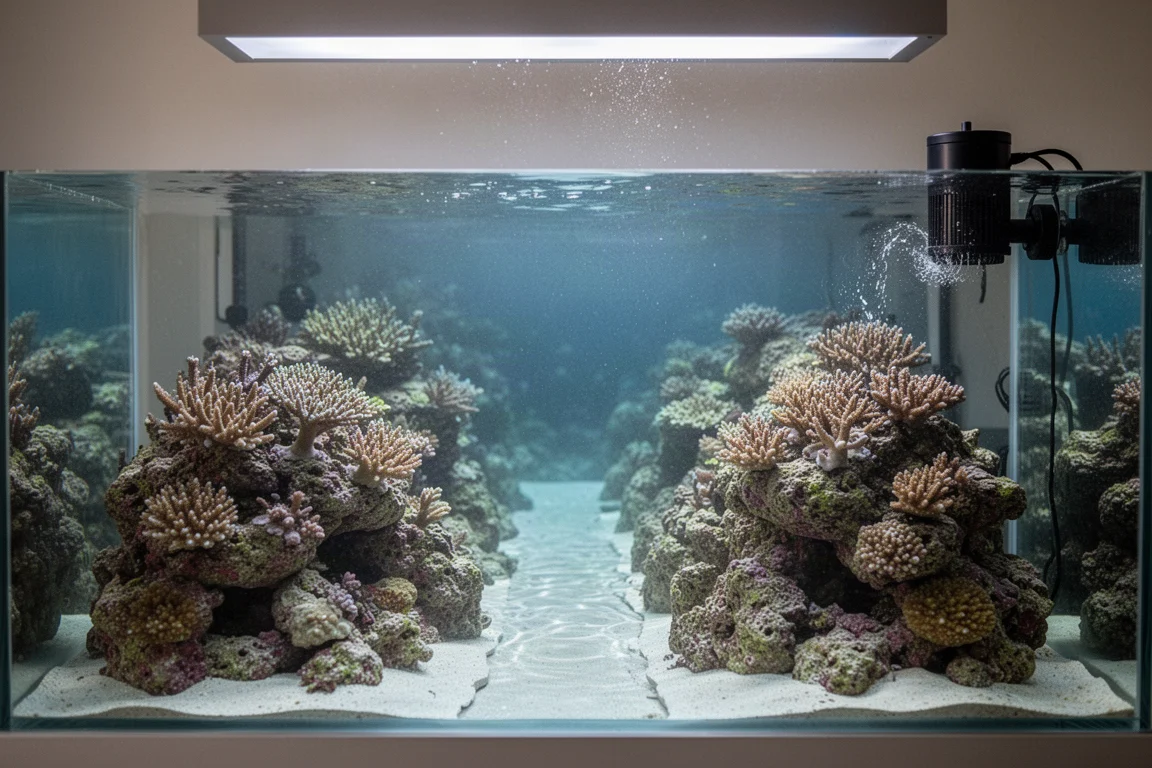
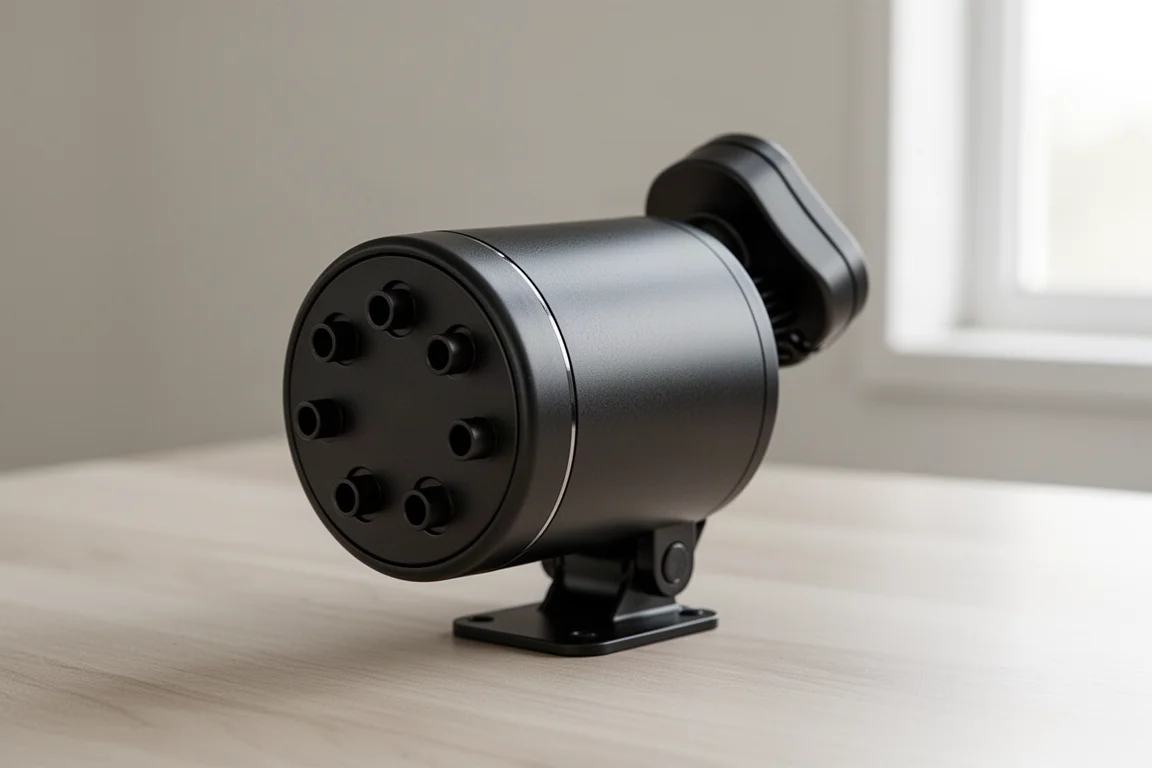
The second is the mounting hardware. A strong magnetic mount holds firm on panels up to three quarters of an inch thick, and plush rubber O-rings keep the pump seated while reducing vibration so it stays quiet. The bracket base turns a full 360 degrees and the pump body tilts more than 90 degrees, which allows flow to be aimed almost anywhere in the tank. A locking wing screw on the side holds the chosen position so the pump is not easily bumped out of place. Because the tilt range is unusually wide, the pump can also be aimed along or across the panel it is attached to, which is a practical way to push water into and behind rockwork without mounting the pump on the side of the aquarium.
The third is the flow control system, which is covered in detail further down.
CJ’s Voyager 2: Compact 800 GPH Flow
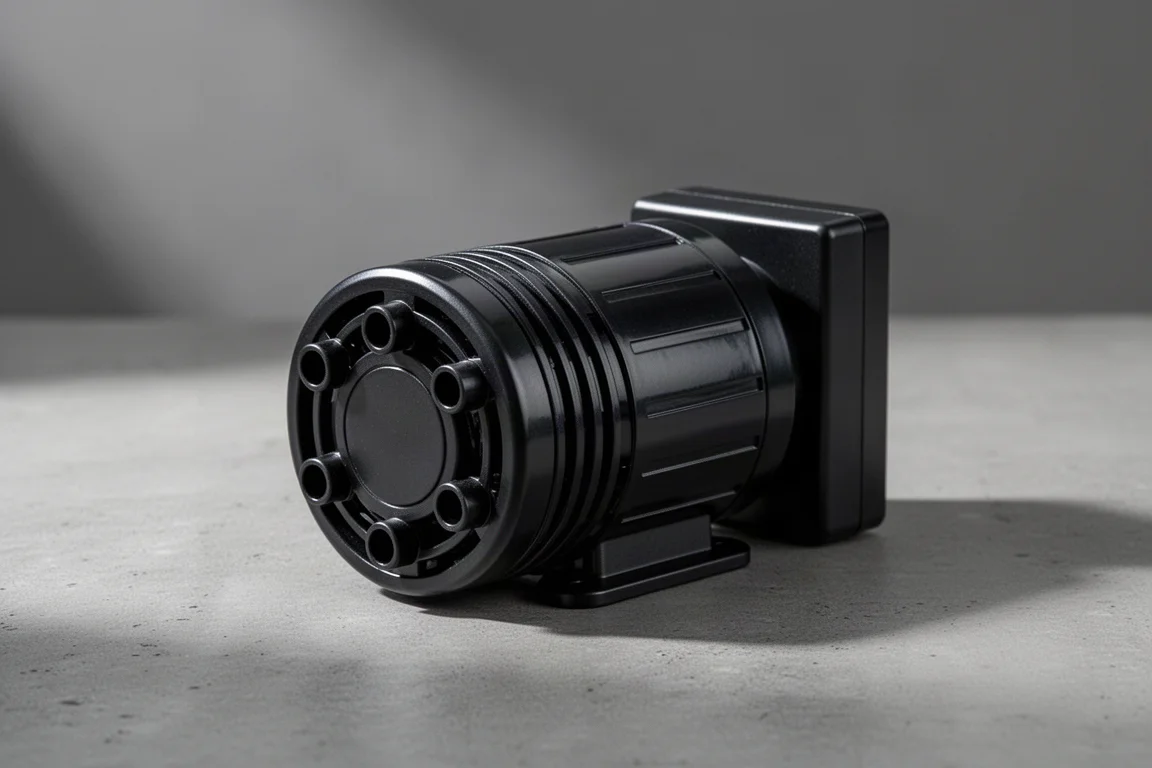
The Voyager 2 is the smallest of the three standard models, with a maximum flow rating of 800 gallons per hour and a draw of just 7 watts. It is the natural starting point for smaller aquariums, or for positions in a larger system where gentle, consistent movement is preferable to a strong current.
Because the cover adjusts both intensity and pattern, the 800 GPH ceiling can be throttled back or spread into a wider turbulent flow, which gives the pump more range than the headline number suggests.
CJ’s Voyager 3: Balanced 1,200 GPH Output
The Voyager 3 sits in the middle of the range with a maximum rating of 1,200 gallons per hour and a 10-watt draw. It is the model to consider when the Voyager 2 feels like too little flow but a larger pump would be more than the tank needs.
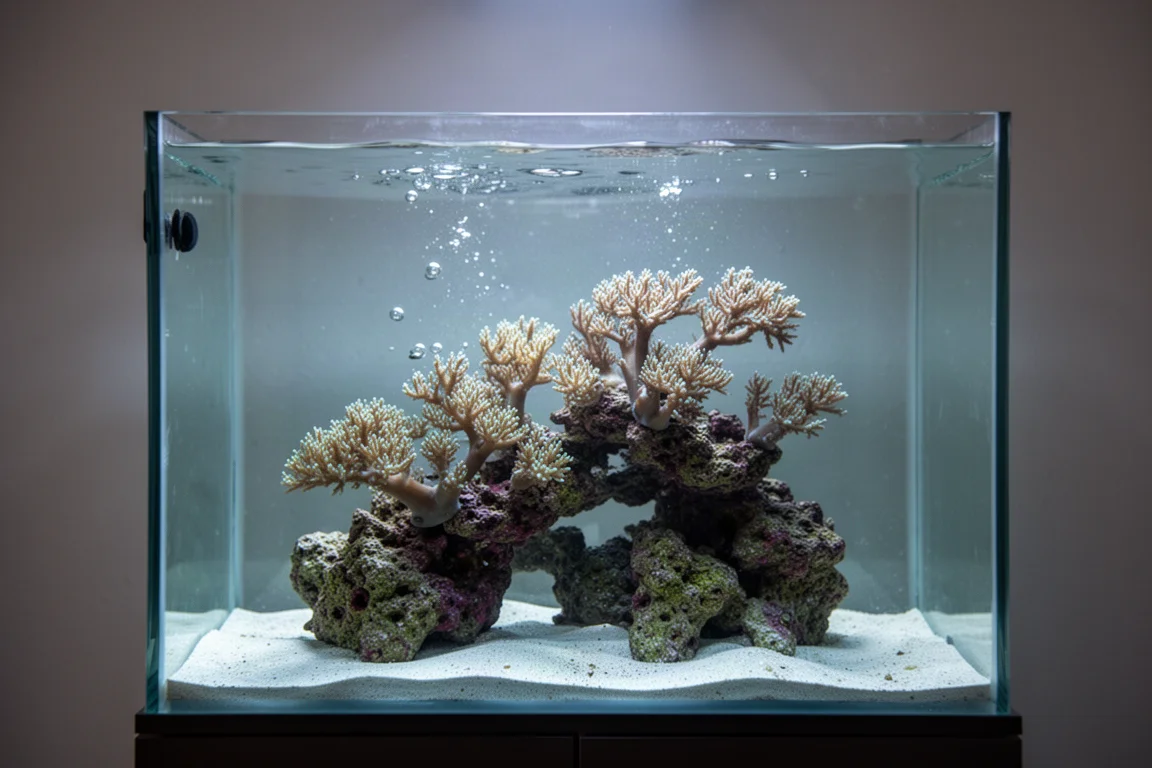
The same cover adjustment applies here: one end of the dial produces a tighter, more directed stream, while the other spreads the water into a broader turbulent pattern at reduced intensity. That range means the pump can be repositioned or retuned as a reef matures, instead of being replaced when flow requirements change.
CJ’s Voyager 4: 1,600 GPH for Larger Systems
The Voyager 4 is the highest-output model in the standard lineup, rated at 1,600 gallons per hour with a draw of 14 watts. It is aimed at larger aquariums and long tanks where flow needs to carry from one end of the system to the other, and the extra headroom is useful when a wide turbulent pattern is spread across a big area.
The mounting system and the six-outlet adjustable cover are shared across the range, so the choice between models comes down to how much flow the tank actually needs.
How the Six-Outlet Flow Control Works
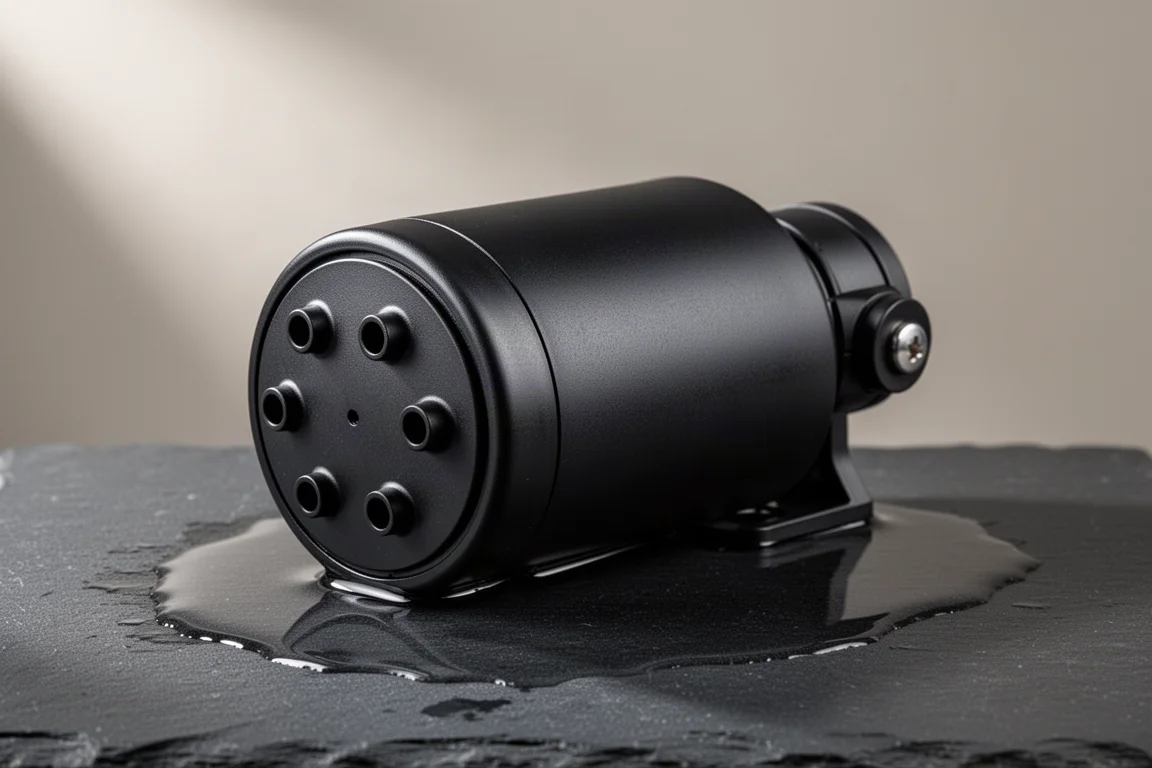
Removing the pump cover reveals a flow manifold that lines up with the six outlets on the cover. Behind that manifold, instead of the propeller found in many pumps of this shape, there is an impeller. Paired with the adjustable outlet on the cover, the two allow the flow to be throttled, converted from a linear stream into a wider turbulent pattern, or both at once.
The cover has five positions. The center position is maximum flow with a linear pattern. Turning the face to the left throttles that linear flow. Turning to the right changes the flow pattern first and then throttles the wider pattern, so the far right position delivers a diffuse, turbulent movement at reduced intensity.
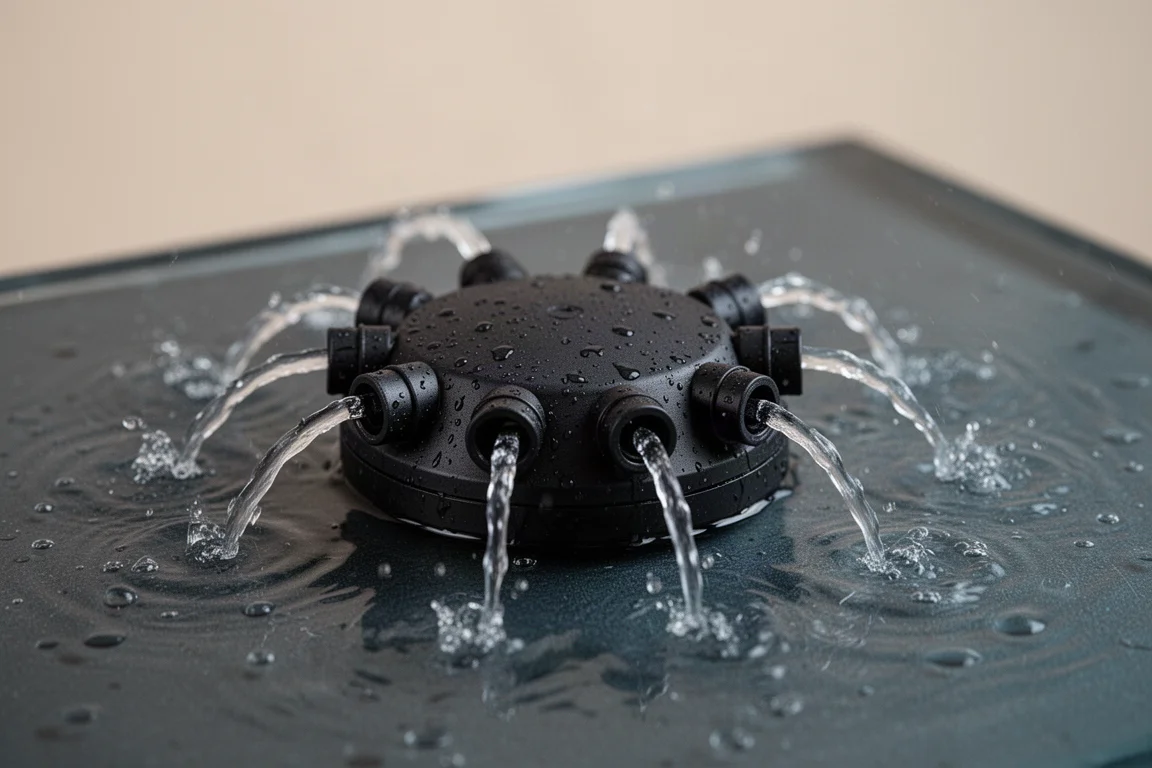
In practice, the positions on the left produce a narrower stream that can travel the length of a long tank, while the positions on the right spread the flow out. That second behavior is what makes it possible to place the pump closer to coral colonies without hitting them with a single concentrated jet.
What to Consider Before Choosing a Model
A few points are worth weighing before committing.
These are constant-flow pumps. If you want programmable wave cycles or scheduled variation, this is not what the Voyager line is designed for. The appeal here is a simple, reliable AC pump that runs steadily.
Flow changes are made manually at the cover, so the pump needs to be within reach when you want to retune it. Once set, the locking wing screw keeps that setting in place.
Mounting relies on the magnetic bracket, which is rated for panels up to three quarters of an inch thick. Tanks with thicker walls will need a different approach.
Finally, output scales with the model: 800, 1,200, and 1,600 gallons per hour, matched by 7, 10, and 14 watts. Choosing the smallest model that meets the tank’s needs keeps both flow and power draw in proportion.
Matching a Voyager to Your Tank
Sizing is the main decision, and it is simpler than it looks because all three models share the same design and controls.
If the goal is gentle constant movement in a smaller system, or a supplementary flow source in a specific corner of a larger one, the Voyager 2 covers it at the lowest power draw of the three.
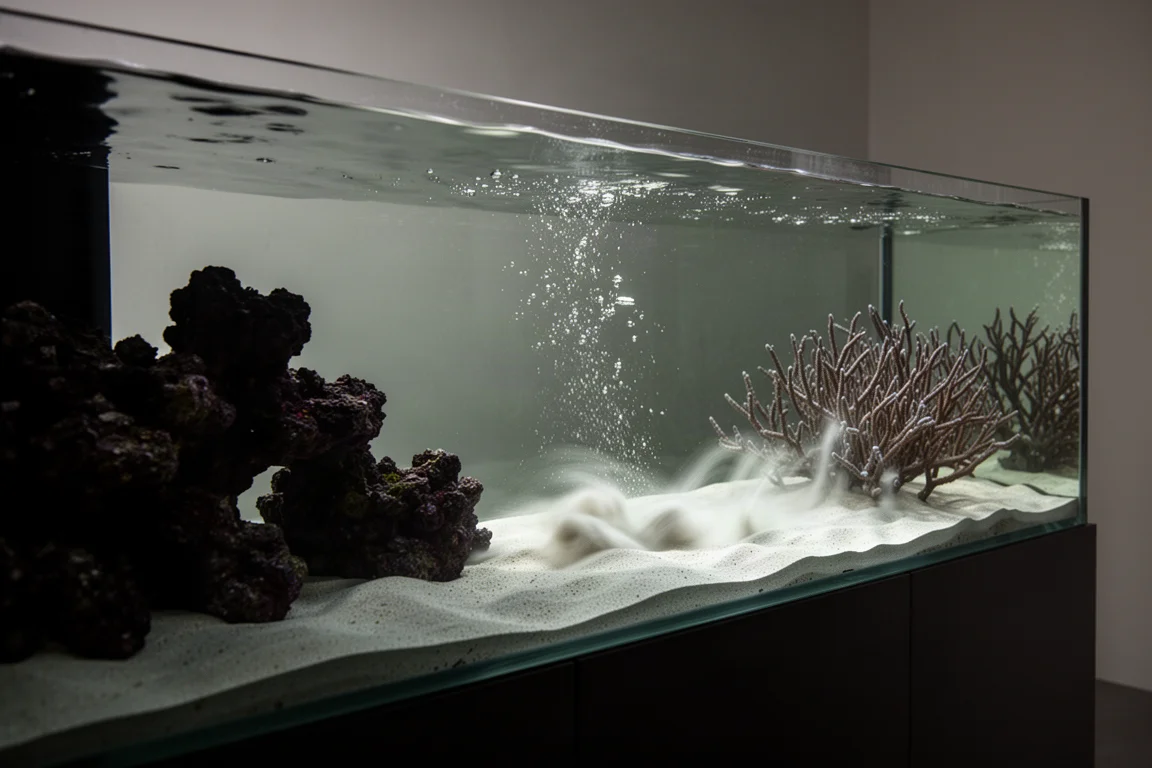
For mid-sized reefs where flow needs to move a decent volume of water without overwhelming the aquascape, the Voyager 3 offers the middle ground.
For long tanks and larger systems where flow has to travel a real distance, the Voyager 4 provides the most headroom and remains efficient for its output at 14 watts.
Whichever model you choose, the adjustable cover lets the pump grow with the tank to a degree, and the three-year warranty adds confidence for a component that runs continuously.
Conclusion
The Voyager 2, 3, and 4 share a design that is unusual in the AC flow pump category: a six-outlet cover, an internal impeller and manifold, and a five-position adjustment that changes both the intensity and the character of the flow. The differences between the models come down to output and power draw, at 800, 1,200, and 1,600 gallons per hour and 7, 10, and 14 watts. Combined with strong magnetic mounting, a wide tilt range, and a three-year warranty, they are a straightforward option for reef keepers who want dependable constant flow that can be tuned to the tank.
Further reading
Related Reviews

Backpacking Gear
Building a 10 lb Base Weight: An Ultralight Backpacking Gear List
A practical walkthrough of the ultralight pieces behind a 10 lb base weight, from a 765 g pack and a roomy one-person tent to a full camp chair and a dependable water filter.

Road Bikes
10 New Road Bikes Worth Watching: Aero, Titanium, Steel and Endurance Standouts
A practical roundup of 10 new road bikes, from aero flagships chasing single-watt gains to titanium, steel and endurance platforms built for real roads.

Bikepacking Gear
11 Bikepacking Essentials for Long-Distance Cycling
Eleven bikepacking essentials for long-distance cycling, from a steel gravel frame and a two-person tent to helmet lights, packable gloves, and a frame bag that puts weight in the right place.