Cycling Components
Choosing Gravel Tires: Hutchinson Toro, Hutchinson Kraken, and Stan's Race Sealant
A practical look at gravel tire selection, covering tread choice, tubeless setup, and three useful options for mixed surfaces.
Introduction
Gravel riding has a way of pulling road cyclists onto surfaces their tires were never designed for. The bike itself usually copes. The tires are where the compromises show up, and choosing the right set can be surprisingly confusing once you move past smooth tarmac. This guide breaks down the practical points that matter, then looks at three specific options worth knowing about.
Match the Tire to the Surface You Actually Ride
Gravel is a loose term. It now covers almost any off-road riding that is not mountain biking, and the surfaces involved can vary enormously. Genuine gravel roads, the kind found in parts of America, South Africa, and mainland Europe, have a very different character from the wet, muddy tracks that dominate many rides in the UK.
The best tire for the job depends on what you are riding, and chances are your choice will change with the seasons. As a rough rule, smaller knobbles roll faster on true gravel, while bigger knobbles cope better with mud and loose ground.
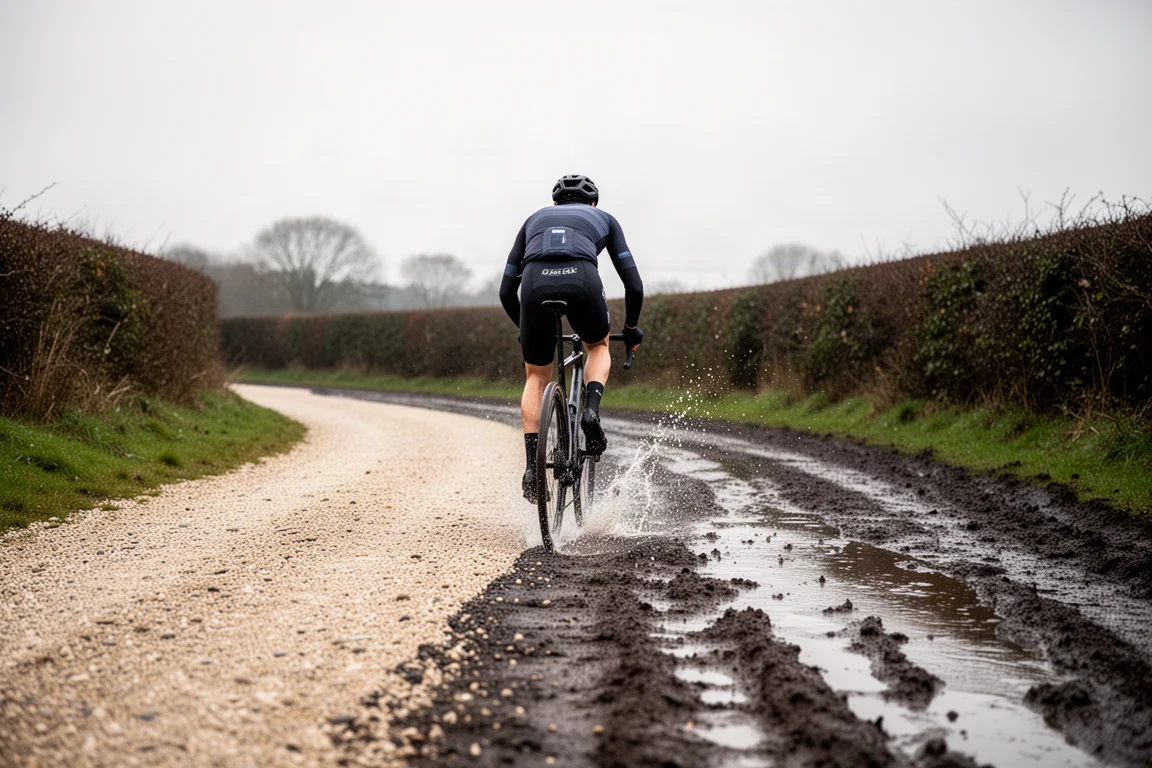
That does not mean you need a different tire for every ride. It means the first question to answer is not which tire is best in the abstract, but what your usual routes actually look like under your wheels.
Why Width and Tread Shape Matter
Width is a topic that deserves its own discussion, but the basics are worth understanding. A wider tire is generally more comfortable because it can be run at lower pressures without the risk of burping off the rim or pinching against the rim. Lower pressures feel smoother over rough surfaces, and a wider contact patch gives more grip and lets the tire deform over obstacles like rocks.
The trade-offs are real. A very wide tire, such as a 2.3 inch mountain bike tire, is heavier because it uses more material and is less aerodynamic. If you are not riding over big rocks and big obstacles, the benefits of extra width matter less, and a narrower tire can make sense for performance gains.
Tread pattern matters just as much. Bigger, more widely spaced knobbles grip better through loose surfaces and mud. When those knobbles squash and deform under load they add rolling resistance, which is why slick tires are so much faster. Tires with very small knobbles can also pack with mud in wet, sloppy conditions, effectively turning into slicks and losing grip.
Most off-road tires use smaller centre knobbles to help acceleration and braking, with larger side knobbles for cornering grip. Engaging those side knobbles takes commitment, and backing the bike into a corner is part of learning how an off-road tire behaves.
Hutchinson Toro: Big Knobbles for Loose and Muddy Ground
The Hutchinson Toro is not quite a mud tire, and it is definitely not a fast-rolling cross-country tire. It sits in the middle of an off-road range, with much bigger knobbles than a typical cross-country design. That makes it slower than a race-focused tire but noticeably more capable when the ground turns loose and wet.
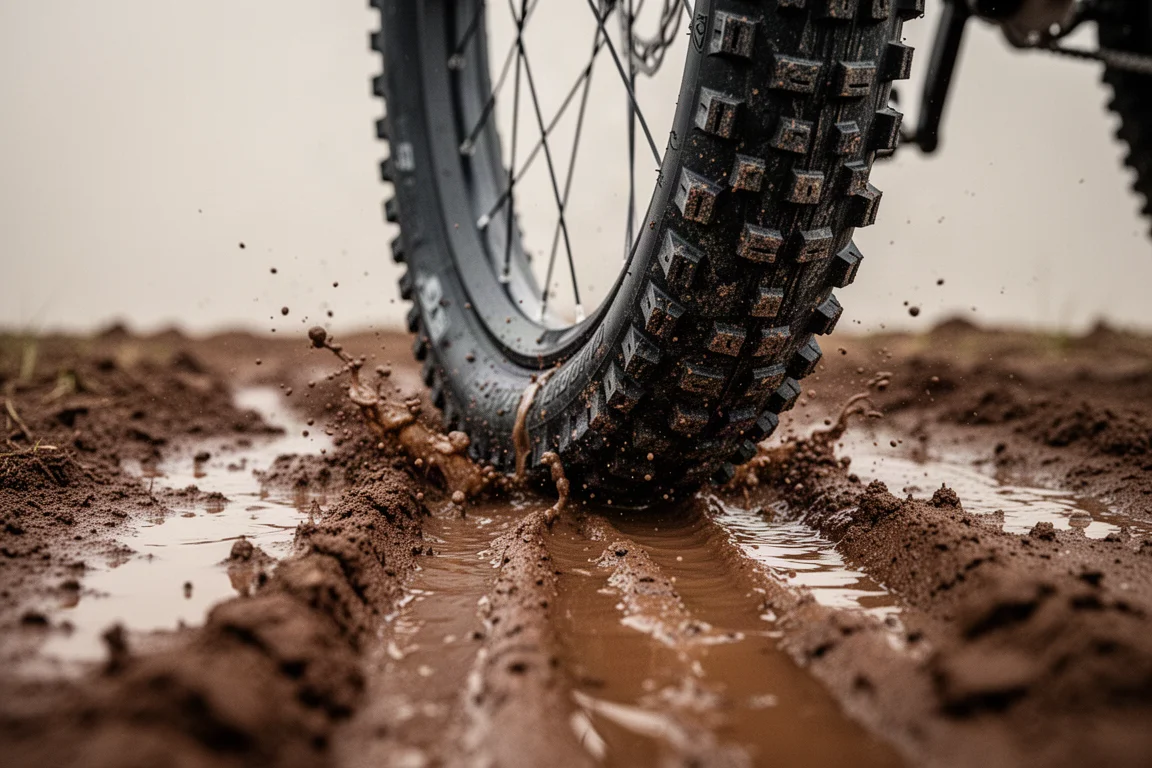
For riders spending time on muddy tracks and soft, sloppy surfaces, the Toro’s larger tread blocks dig in where a lighter tire would struggle. The knobbles are spread out enough to clear some mud rather than packing immediately, and the side knobs provide the cornering bite that smaller tread patterns cannot match.
It is a useful choice for road riders who have started exploring rougher routes and want one tire that handles the messy days without going all the way to a mountain bike tire.
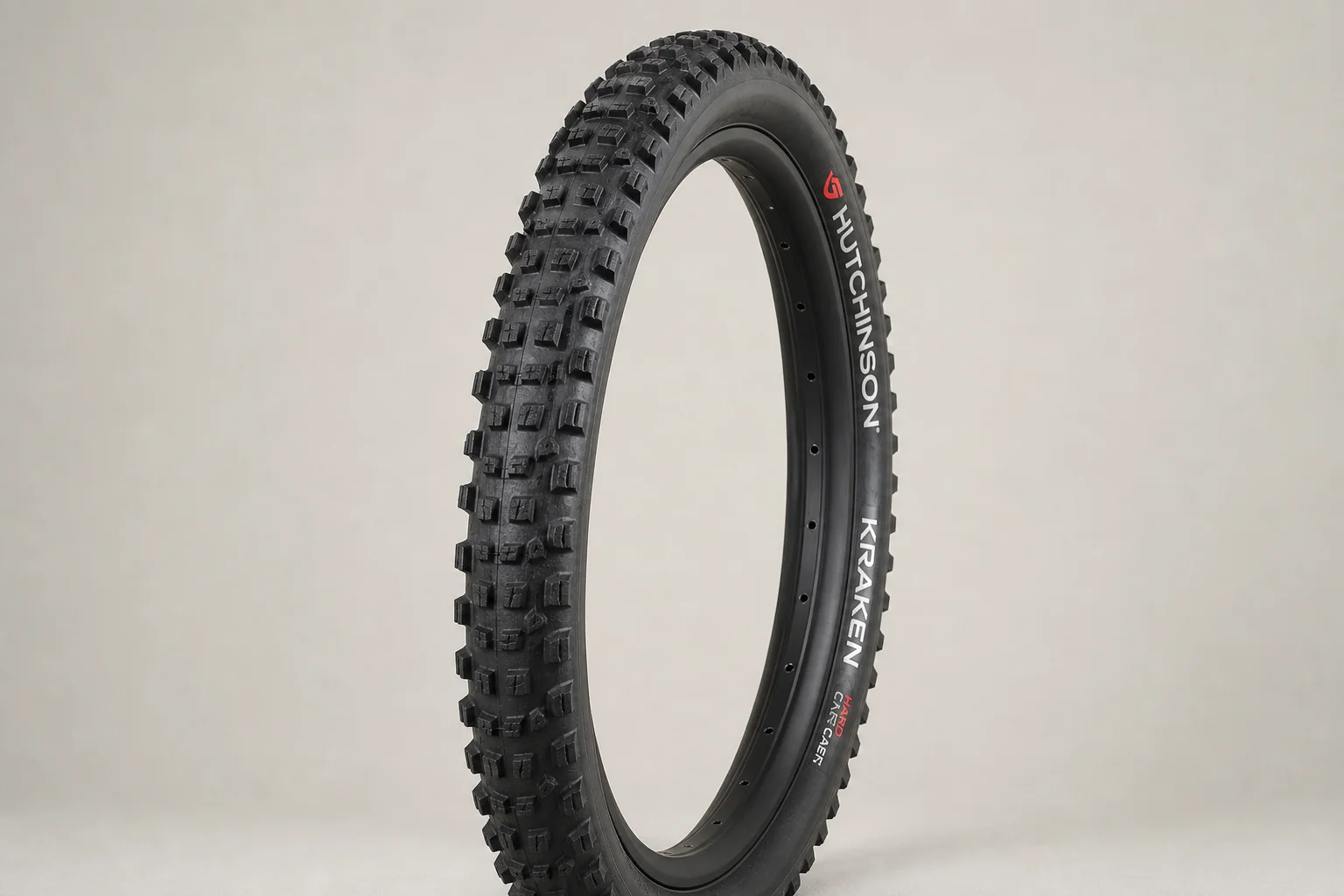
Hutchinson Kraken: The Fast Rolling Cross-Country Option
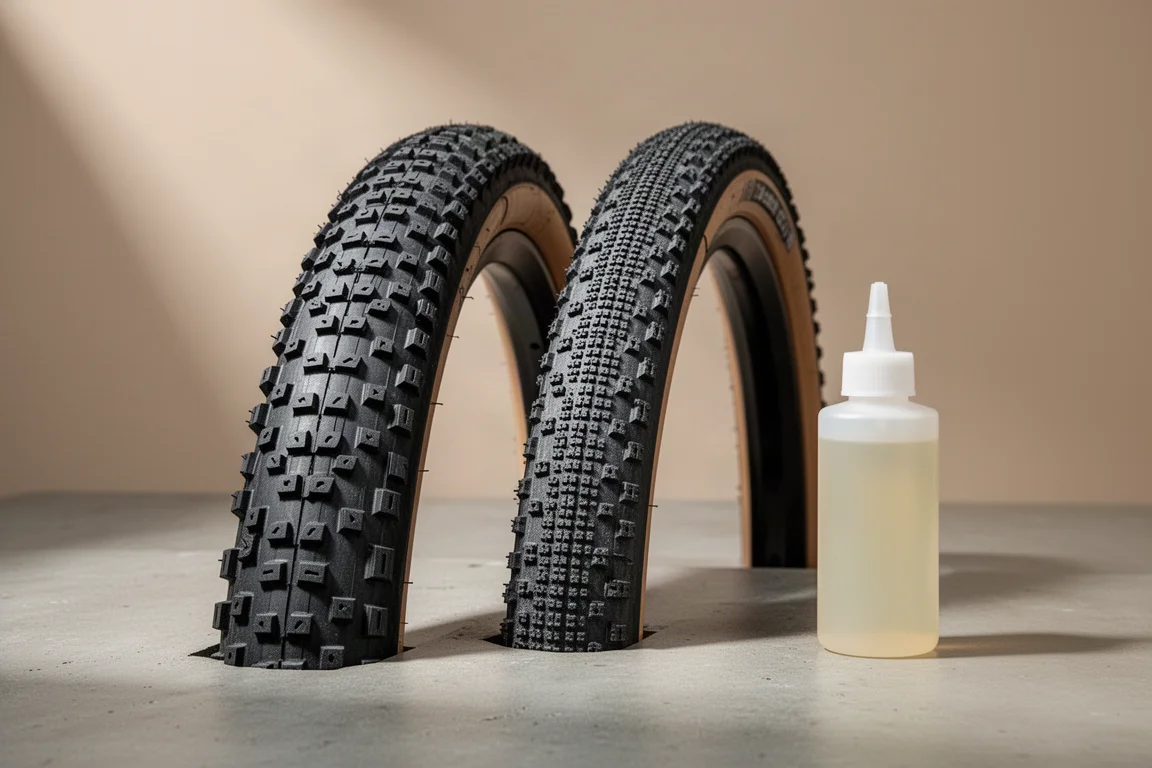
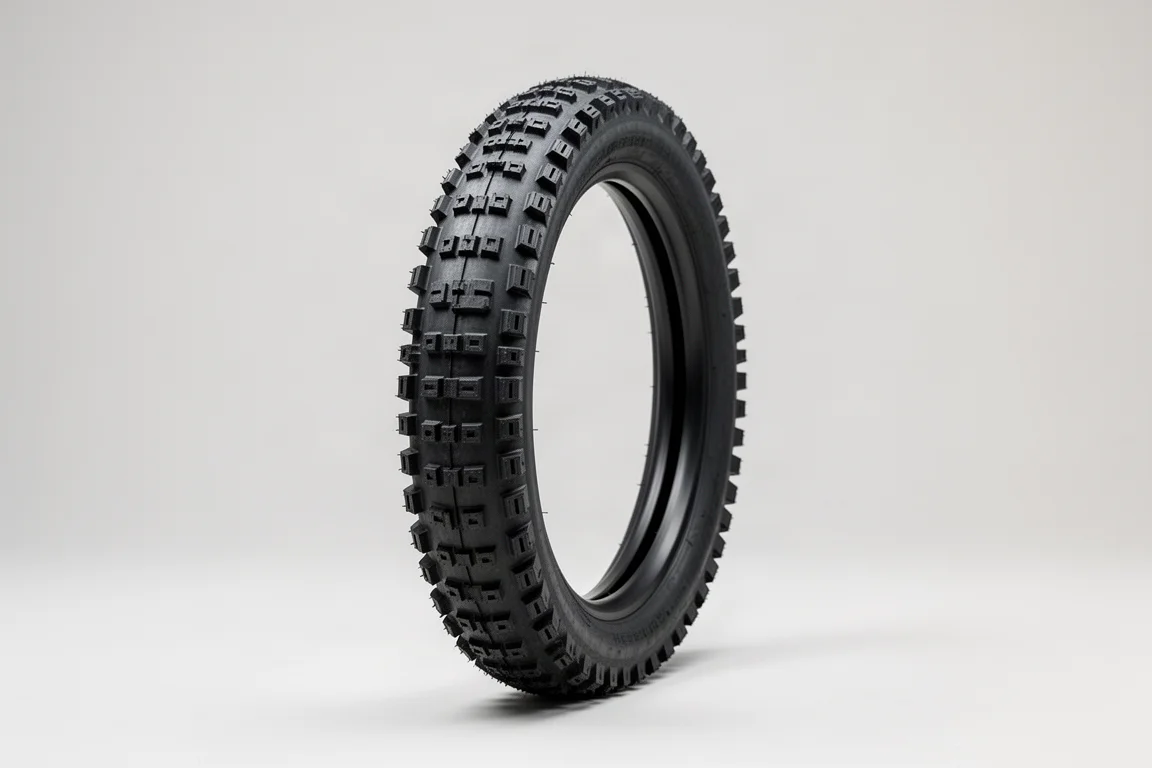
The Hutchinson Kraken takes the opposite approach. This is a cross-country tire built to be lightweight and quick, with a tread pattern that rolls fast on genuine gravel. Compared with the Toro, the knobbles are smaller and the gaps between them are different, which is visible the moment the two tires are side by side.
Smaller knobbles mean less rolling resistance on hardpack and gravel, and the lighter construction helps on longer rides where speed and efficiency matter. The compromise is mud performance. On wet, sloppy tracks, a tire like the Kraken can pack up more quickly and lose the bite that a bigger-knobble design would keep.
For riders whose routes are mostly actual gravel, forest roads, and hardpack towpaths, the Kraken is a sensible fast-rolling option.
Stan’s Race Sealant: Better Puncture Sealing for Tubeless
Tubeless is the standard approach for off-road riding, and there is a reason mountain bikers have used it for years. It allows much lower pressures without the fear of pinch puncturing, and when a puncture does happen, the sealant inside the tire usually seals it while you ride.
The quality of that sealant makes a significant difference. Stan’s Race Sealant is a step up from standard sealant and costs a little more, but it has shown better puncture sealing in practice.
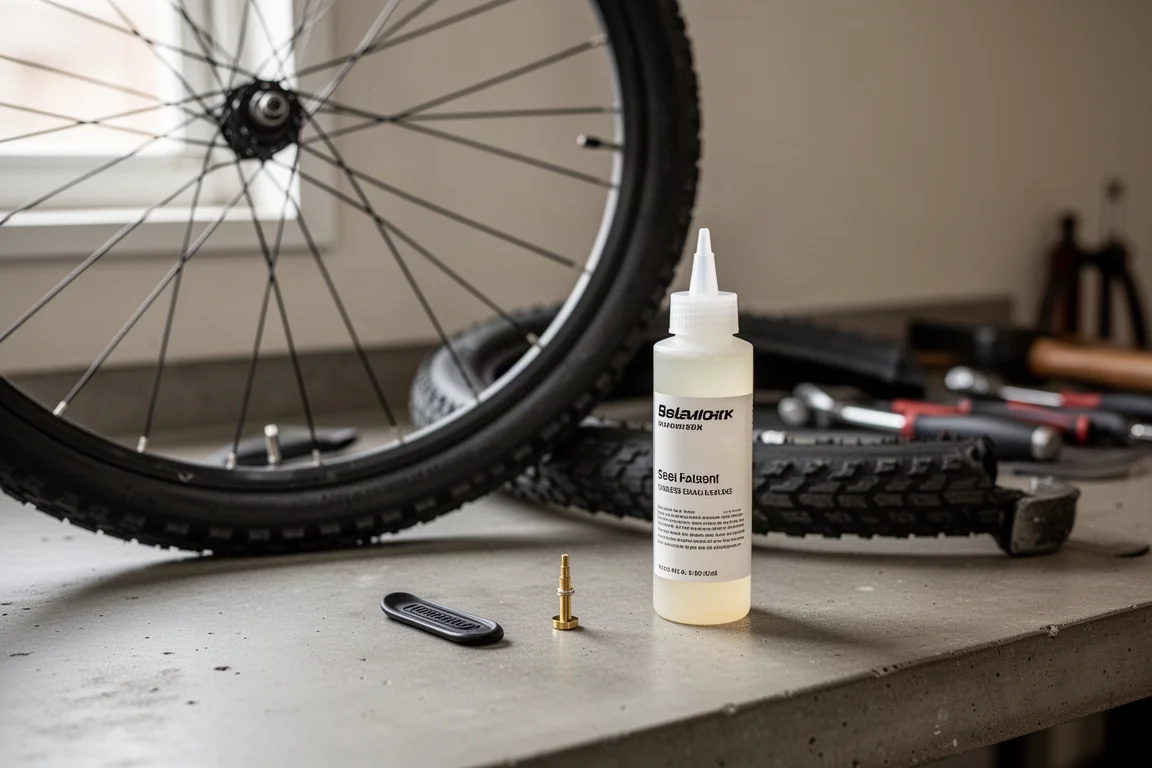
Setting up tubeless takes a little patience the first few times. The tire fits more tightly, a proper layer of tubeless tape and tubeless valves are needed, and the sealant does the work of finding and closing any holes that appear while riding. Most modern tires are tubeless ready, but the wheels need to be tubeless ready as well. The result is generally lighter and smoother-riding than a tubed setup, though the amount of sealant used affects the final weight.

Mixing Front and Rear Tires for Better Control
Because bigger-knobble tires have more rolling resistance, mixing tires front and rear is a common and effective approach. A slower-rolling but grippier tire on the front, paired with a faster, slightly less grippy tire on the rear, gives some of the benefits of both.
There is a practical reason for this beyond speed. More weight sits over the rear wheel, and it is generally easier to keep control when the back of the bike starts to slip and slide than when the front lets go.
Tire direction is also worth checking. Unlike road tires, the direction an off-road tire is mounted genuinely matters. The chevrons in the centre of the tread and an arrow printed on the sidewall usually indicate the correct rotation, but not always. More aggressive and mud-focused tires are sometimes mounted with the rear running the opposite way to the front, and sidewalls may be marked with front and rear rotation guidance. Getting it wrong is not the end of the world. The tire will be faster, just not quite as grippy in mud and loose surfaces.
Buying Advice
The clearest advice is to start with the surfaces you actually ride. Wide tires with big knobbles suit muddy, loose, UK-style tracks, and there is no reason to be afraid of fitting mountain bike tires to a gravel bike if they fit with enough clearance for mud. Medium-width tires with smaller knobbles are a better match for genuine gravel and hardpack, and on routes that mix paved sections with hardpack towpath, a wide 30 millimetre road tire may well be the fastest solution.
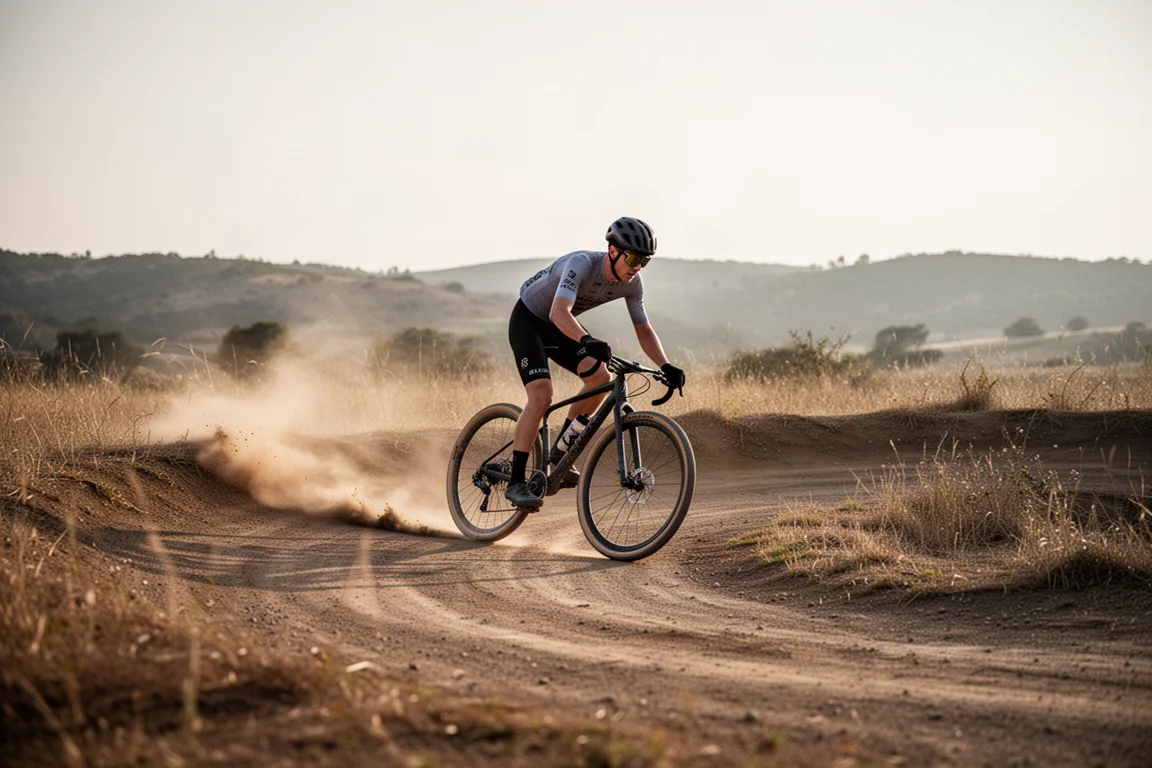
Tire choice is always a compromise on changing surfaces, and the only way to find what works is to try different options and pay attention to how they behave. Width, tread pattern, tubeless setup, and sealant quality all interact, and small changes can make a noticeable difference to comfort, speed, and confidence.
If you are moving from road riding into gravel, it also helps to check frame clearance before committing to a tire size. A smaller wheel size such as 650b can allow a wider tire to fit where a 700c wheel would not, though tight clearance leaves less room for mud to pass through.
Conclusion
Gravel tire choice comes down to matching tread and width to the ground you ride most often. Bigger knobbles and wider casings trade speed for grip in mud and loose conditions, while smaller knobbles and lighter construction favour genuine gravel and hardpack. Tubeless setup and a good sealant complete the picture, and mixing front and rear tires is a practical way to balance grip with rolling speed. Trying a few options and learning how each behaves is part of the fun of riding off-road.
Further reading
Related Reviews
Cycling Components
A 20,000-Mile Budget Race Bike Build: Five Parts Worth Knowing
A rim brake race bike assembled from low-cost components and ridden for 20,000 miles. Here is what delivered real speed, what caused problems, and what to weigh before copying the formula.
Cycling Components
7 Bike Fit Products Fitters Avoid: What to Check Before You Buy
Seven bike components that regularly cause knee, foot and saddle problems, with the specific concerns behind each one and what to look for instead.
Cycling Components
Four Affordable Bike Upgrades That Improve Ride Feel
Four low-cost cycling products that make a real difference to ride feel, plus the free setup changes worth trying first.