Hi-Fi Amplifiers
Choco Sound EME: A Compact Integrated Amplifier Built for Scale and Dynamics
The Choco Sound EME pairs heavy aluminium casework with 138 watts of class AB power, exceptional bass control, and a tonal character that will not suit every system.
Introduction
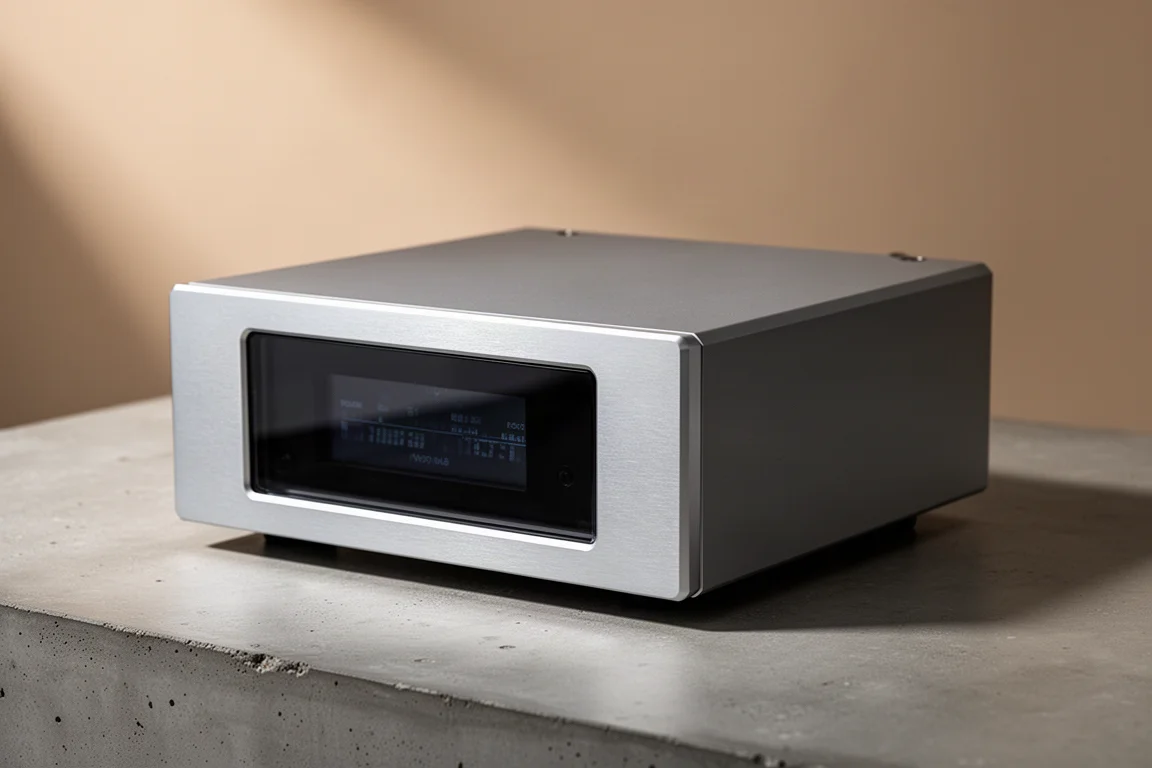
Choco Sound is a subsidiary brand of Kinki Studio, created to offer hi-fi products in a smaller form factor. The EME is a compact class AB integrated amplifier that measures 280 x 310 x 110 mm and still weighs 10 kg, and it sells direct from the manufacturer for $1,694. That combination of a modest footprint and substantial aluminium casework is unusual at this price, and it is the first thing anyone notices about the unit.
The EME is a purist design. There is no DAC and no phono stage, and the feature list is deliberately short: analog inputs, one XLR input, and a K-link port that is intended to connect to future Choco Sound source components. What the amplifier does offer is 138 watts into 8 ohms from a class AB output stage, plus a level of bass control and dynamic capability that is rare in this class.
Who the Choco Sound EME Is For
The EME suits listeners who already own a separate DAC and a phono stage, and who want an amplifier that concentrates on power delivery rather than features. With a small number of analog inputs, it rewards a simple system built around one or two sources.
It is also aimed at people who value scale and dynamics above all else. If your listening priorities are bass weight, rhythmic drive, and a large soundstage, the EME plays to those strengths more convincingly than most amplifiers near its price.
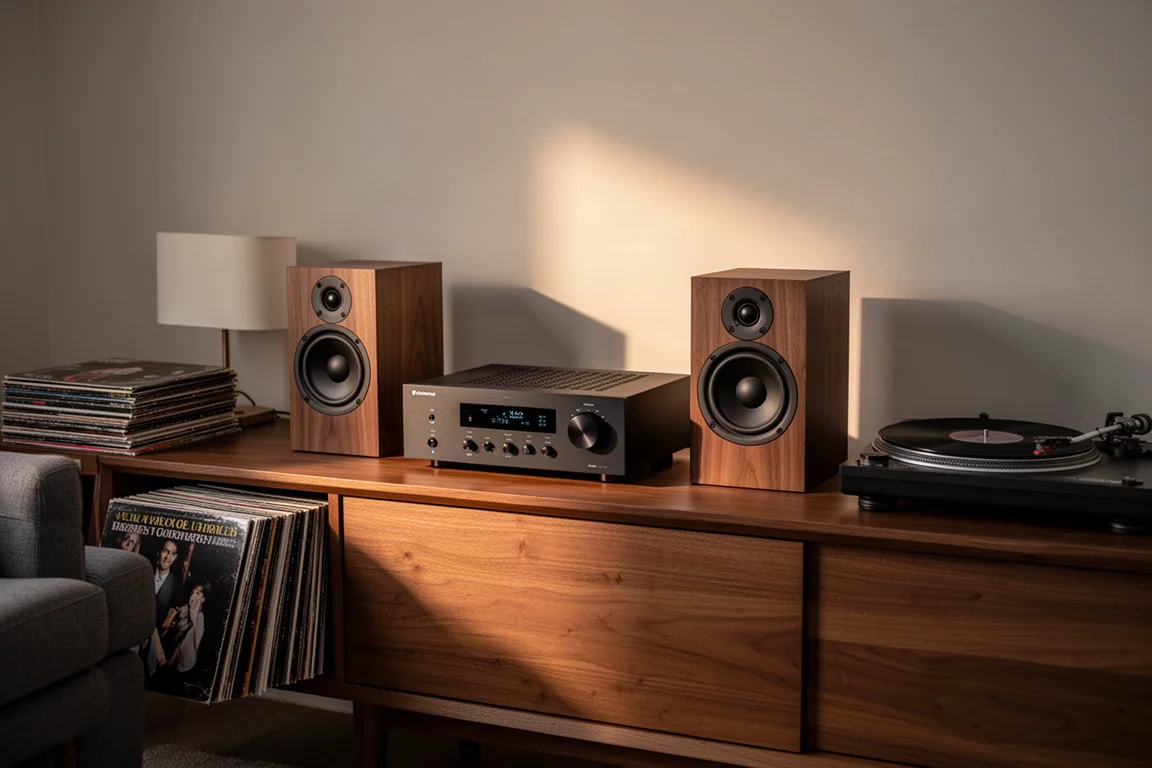
Buyers who need streaming built in, room correction, or a moving magnet input will need to add those elsewhere or choose a different amplifier. The EME assumes the rest of the chain is already in place.
Main Strengths: Bass Control, Dynamics, and Instrument Separation
Bass is the headline. Low frequencies are tightly controlled and carry real weight, with percussive elements delivered with both definition and authority. Comparable solid state amplifiers at this price tend to offer one or the other.
Instrument separation is excellent because the midrange is not polluted by energy from below, and the leading edges of notes are sharply defined. Following individual performers in a dense mix is straightforward.
The amplifier also throws a wide and deep soundstage, with a sense of scale that can rival well regarded valve designs. Macro detail and the resolution of fundamentals are strong, which gives the EME a foundation for genuine dynamic expression.
Sound Character and Tonal Trade-Offs
The EME is not a lean sounding amplifier. The midrange has body, and there is no sense of thinness in the presentation, which is often the weak point of compact designs in this price bracket.
The issue lies higher up. With certain recordings, particularly live vocals, the upper midrange takes on a nasal quality. Electric guitars and piano notes can also arrive with a metallic sheen. It does not show up on every track, but it is consistent enough to matter for listeners who place a premium on natural tone.

Fine detail is the other trade-off. Reverb tails, note decay, and the texture of instruments are not rendered with the same clarity as the fundamentals. It is unusual for an amplifier to resolve the core of the music so well while obscuring these trailing details, and the effect is easy to hear once you know what to listen for.
Build Quality, Design, and Connectivity
The casework is made from thick aluminium slabs with chamfered edges, a K9 crystal glass display screen, and a window that looks onto the power amplifier section. The finish is available in brushed silver or gun metal, and the Choco Sound branding is engraved into a gold anodised heat sink.
The display is clear and understated, and it can be dimmed or switched off with the remote. The volume dial doubles as an input selector, cycling through the analog inputs and the K-link connection. The remote works over Bluetooth rather than infrared, so it operates within roughly 5 m regardless of which way it is pointed. The standard remote is plastic, and a heavier metal version is available for an additional $120.
Inside, a 400 VA main transformer feeds the output stage, with a separate 25 VA transformer handling standby duties. The output stage uses four devices, two per side, and the main supply relies on four 2,200 microfarad filter capacitors, giving 4,400 microfarad per side. That is modest next to the 20,000 microfarad per side found in many amplifiers, including inexpensive ones, so the design leans on other aspects of the circuit to keep the supply stable. Surface mount components are used widely, including on the power amplifier board.
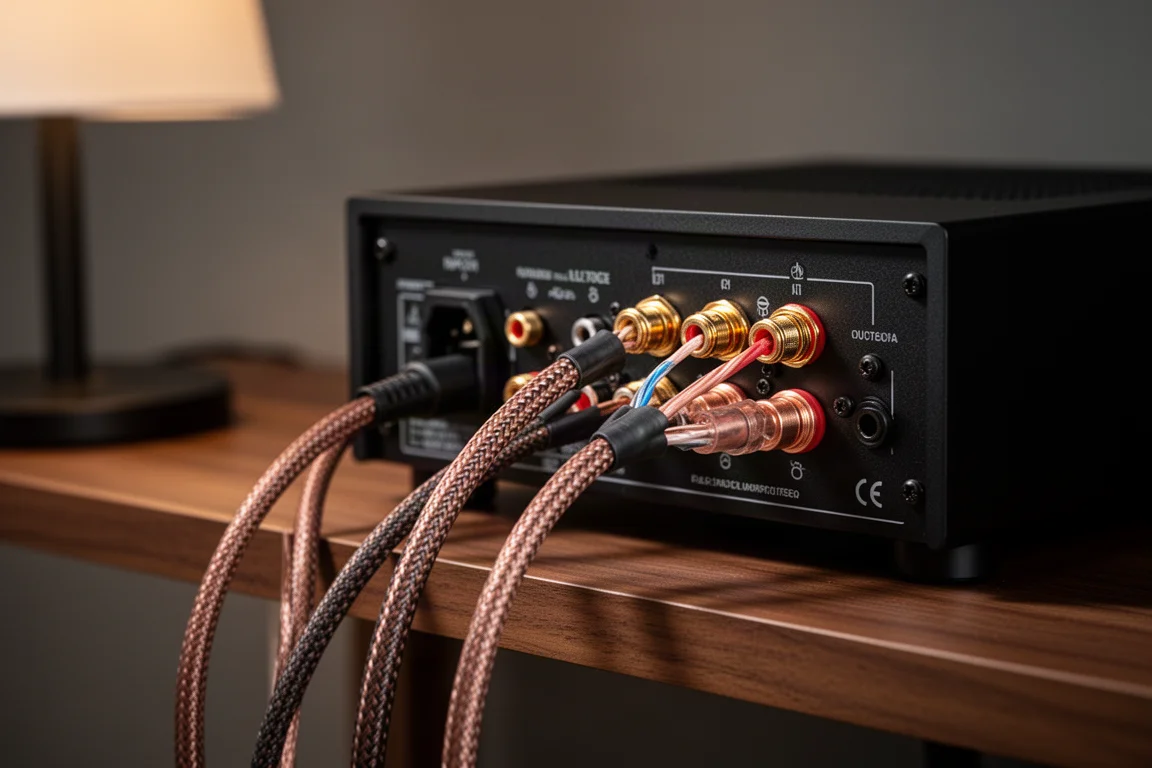
Around the back, the top lid partially conceals the connections. There are two analog RCA connections and one set of balanced XLRs, alongside the speaker binding posts and a six pin K-link terminal for future source components. Because the amplifier is internally single ended, RCA is the sensible choice unless very long interconnect runs are needed.
Speaker Pairing Notes
The EME is more sensitive to speaker choice than most amplifiers at this price. Its revealing midrange and strong bass control mean that a speaker with limited low frequency output can spotlight the tonal quirks in the upper midrange.
Compact standmounts with a punchy, dynamic character and decent bass extension were the most successful match. With that kind of speaker, the midrange balance settles down and the amplifier’s control and drive come to the fore.
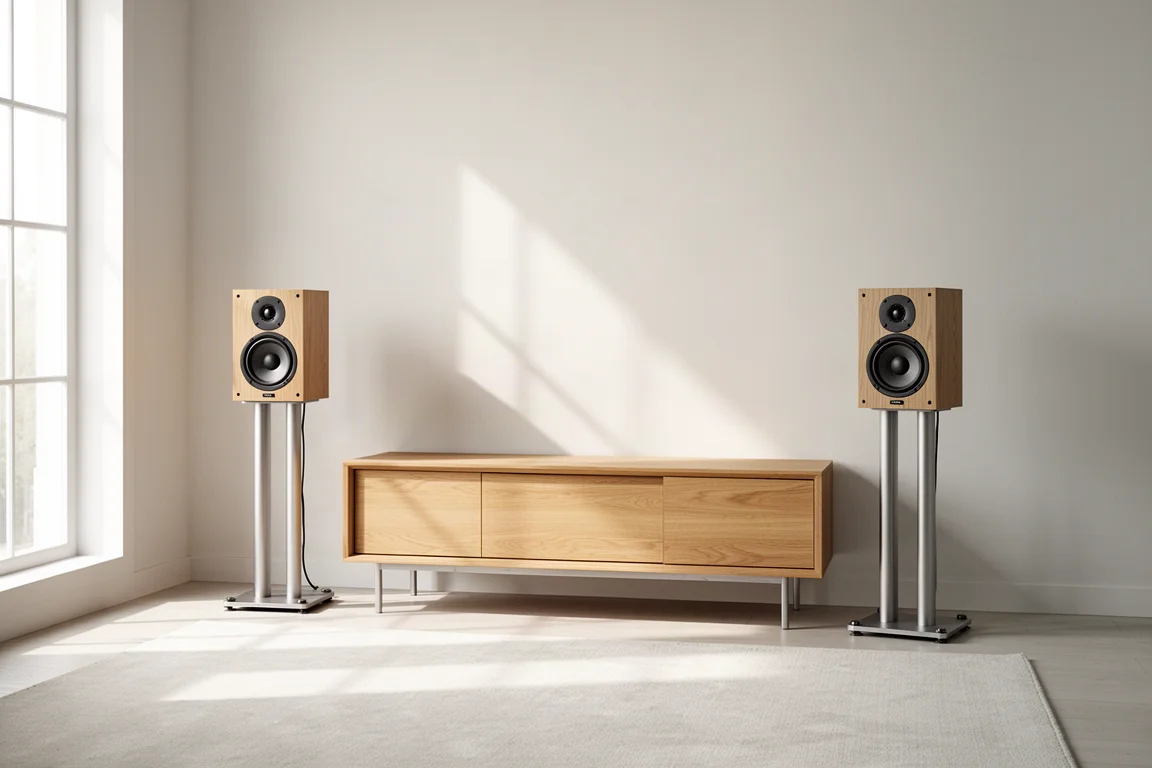
Traditional British monitors, which are usually chosen for natural vocals and acoustic instruments rather than excitement, are a less obvious fit. The priorities of the two designs pull in different directions, so it is worth auditioning before committing.
Things to Consider Before Buying
Connectivity is limited by design. Two analog inputs and one XLR input will not suit everyone, and there is no DAC and no phono stage. The K-link port points to a future ecosystem of matching source components, but those products are not available yet, so it is best treated as potential rather than a current feature.
The tonal character described above is the other consideration. If your priority is the texture and decay of instruments and voices, the EME’s strengths lie elsewhere. If your priority is bass weight, dynamics, and a large soundstage, the trade-off runs the other way.
The plastic remote is also worth noting. It does not match the standard of the amplifier itself, though the metal alternative addresses that for an extra $120.
Buying Advice
The EME makes the most sense for listeners who already have their sources sorted and who want a compact amplifier with genuine bass control and dynamic headroom. At $1,694 sold direct, the build quality and finish are a significant part of the value.
Match it with a punchy, full bodied compact standmount rather than a speaker chosen purely for midrange naturalness, and pair it with a source that does not add brightness of its own. A simple two source system will get the most from it.
If natural tone and fine detail sit at the top of your list, other designs will suit you better. If scale and drive come first, the EME is one of the more compelling options in its price range, and the aluminium chassis is a genuine pleasure to live with.
Conclusion
Choco Sound has produced a compact integrated amplifier with exceptional build quality, strong bass control, and a sense of scale that belies its size. Its upper midrange character and limited low level detail will not suit every listener, but for those who prioritise dynamics, weight, and a simple purist signal path, it earns its place.
Product link
View more details for Choco Sound EME
This product is mentioned in the review. Check the specifications, options, and compatibility before buying.
View more details for Choco Sound EMEFurther reading
Related Reviews
Hi-Fi Amplifiers
Accuphase E-280 Review: Entry-Level Accuphase With Flagship Attention to Detail
A close look at the Accuphase E-280 integrated amplifier, covering its champagne build, AAVA volume control, sound quality, and the speakers and sources that suit it best.
Hi-Fi Amplifiers
Advance Paris A10 Classic vs Yamaha A-S301: Two Integrated Amplifiers Compared
A practical comparison of a $350 integrated amplifier and a $2,500 reference model, covering the differences that matter and the ones that do not.
Hi-Fi Amplifiers
Affordable Chinese Amplifiers Worth Buying: Five Budget Hi-Fi Amps Compared
A practical look at five affordable amplifiers, what each one does well, and the trade-offs to weigh before you buy.