Integrated Amplifiers
Choco Sound EME Integrated Amplifier Review: Small Chassis, Serious Sound
A $1,700 integrated amplifier with separated power supplies, a machined aluminium chassis, and a warm, richly textured sound.
Introduction
Genuinely high-value affordable hi-fi is harder to find than the price tags suggest. Plenty of components hit a target price by cutting corners on the parts that matter, and the result is gear that measures acceptably but never quite convinces. The Choco Sound EME integrated amplifier is a different proposition. At $1,700 it is not inexpensive, but it is built and voiced like something that costs considerably more.
Choco Sound is a sub-brand of Kinki Studio, and the EME is one of the first products to carry the name. It pairs a machined aluminium chassis and a K9 crystal glass display with a separated power supply design and a proper resistor ladder volume control, so the preamplifier section is a real one rather than an afterthought. The result is a small integrated amplifier that behaves like a serious component.
Inside, the design separates the audio power supply from the supply that runs the display and control electronics, an approach usually reserved for far more expensive components. Combined with an output stage rated at 138 watts into 8 ohms, it gives the EME a foundation well beyond its footprint.
Who This Amplifier Is For
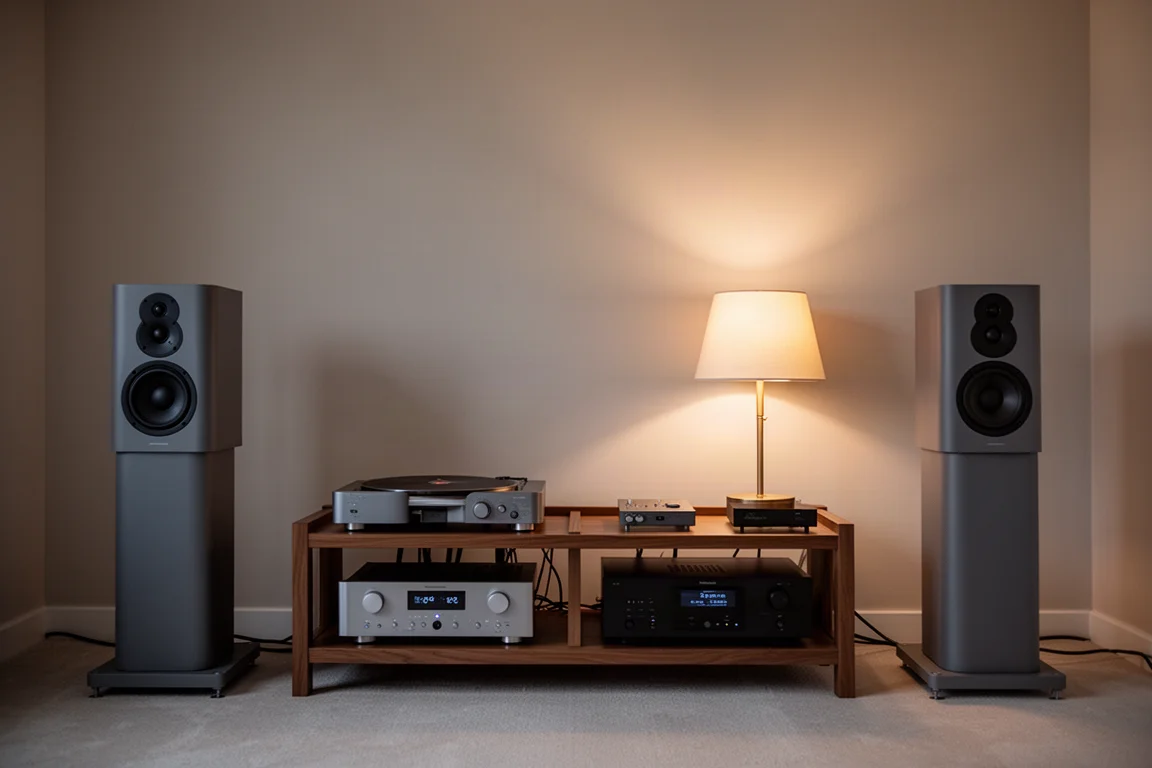
The EME suits listeners who want a complete two-channel front end without a separate preamplifier. Volume control is built in and implemented with a resistor ladder, so a source and a pair of speakers are enough to build a system. That makes it a natural fit for a compact rack, a desk, or a room where a stack of separate boxes is not practical.
Connectivity is deliberately simple: one XLR input, two RCA inputs, and no outputs at all. If the plan is a single digital source and perhaps a turntable stage feeding one pair of speakers, the layout is exactly right. Listeners who want to run several sources at once, or who need a pre-out for a subwoofer or a second amplifier, will find the EME too limited.
The voicing matters here as well. This is an amplifier that leans warm rather than clinical, so it appeals most to listeners who value texture, body, and long listening sessions over a bright, forensic presentation.
Build and Design: Precision Machining in a Small Chassis
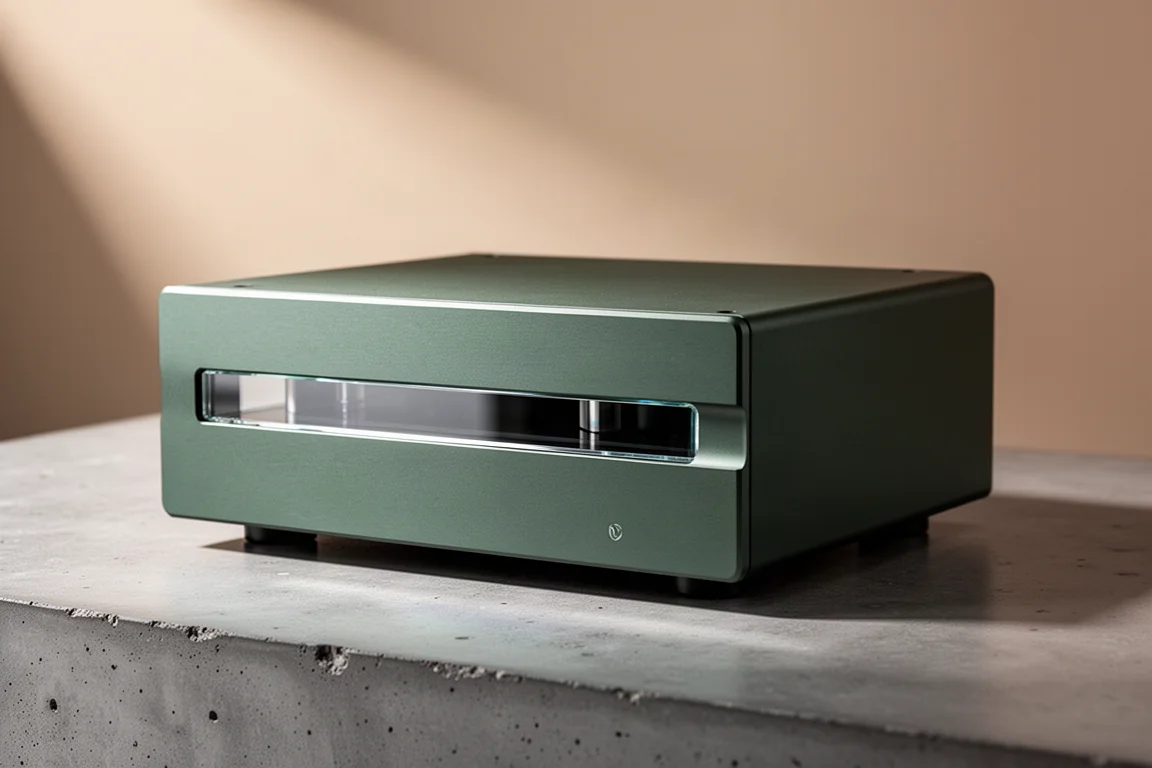
The chassis is machined from a solid block of aluminium, and the finish quality is the first thing that stands out. Panel gaps are tight, the edges are crisp, and the overall feel sits comfortably alongside far more expensive high-end components. This unit came in the gunmetal finish, a turquoise-tinged military green that is unusually hard to pull off on hi-fi equipment but works remarkably well here. A silver finish is also offered for listeners who prefer something more conventional.
The display is another deliberate touch. Rather than ordinary glass, the EME uses K9 crystal glass, which carries contours that meet the rest of the chassis instead of sitting flat and plain against it. A glass panel also covers the top surface, and the branding is hidden beneath it on a gold bar rather than printed across the front. From a normal listening position the top glass largely disappears, and it only becomes visible from above, which is exactly the point.
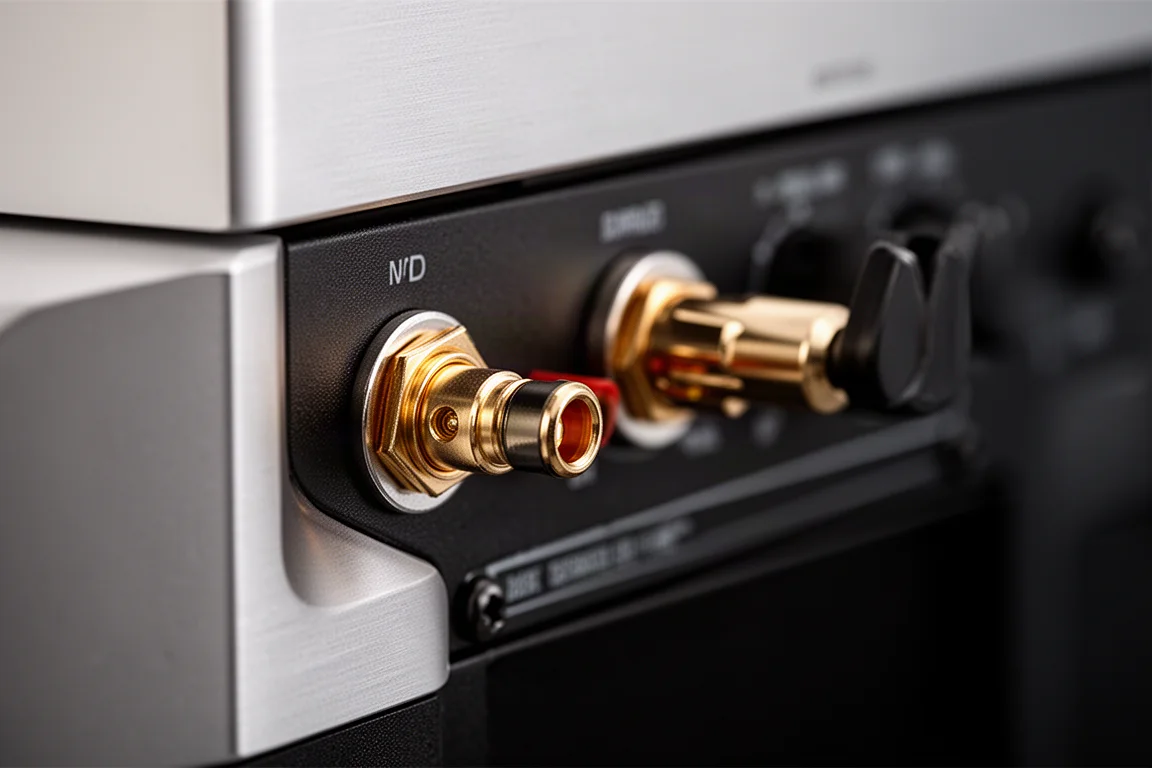
Around the back, the story is more mixed. The speaker binding posts look plasticky and inexpensive, yet they tighten cleanly and hold firmly in practice. The bigger issue is layout: everything is packed tightly together, which makes it awkward to connect cables without them brushing against each other. There is unused space around the rear logo, and spreading the terminals out slightly would have made a real difference to everyday usability.
Inside the Chassis: Separated Power Supplies
Open the EME and the first thing visible is a dedicated toroidal transformer feeding the line stage and output stage. A second, smaller transformer sits to one side and handles the display and control electronics. On a conventional amplifier at this price, a single transformer powers everything. Splitting those duties means the audio section gets a genuinely dedicated supply, an approach borrowed from higher-end designs and intended to keep the noise floor low.
The capacitor reservoir has been increased to 13,600 microfarads, feeding an output stage rated at 138 watts into 8 ohms. That is a substantial figure for a chassis this size, and it explains why the EME never sounds strained. The design is also modular, so boards can be swapped rather than the whole unit being replaced. Owners of the earlier version, which used an 8,800 microfarad reservoir, can order the updated board for $150 including shipping and fit it with a handful of screws. The change is worthwhile: bass weight and dynamic swing both improve noticeably with the new board in place.
Sound Quality: Warm, Rich, and Well Separated
The first surprise is the bass. A chassis this small has no business producing the depth, texture, and nuance the EME delivers, and the quantity and quality of low-frequency output are comparable to amplifiers that weigh many times more and cost several times the price. It is not a slow or sloppy sound either. There is adequate speed, but the emphasis falls on texture, extension, and warmth rather than a lean, athletic grip.
Tonally, the EME sits on the warmer side of neutral, and it is unusually quiet for the money. What keeps it from sounding thick is separation. Instruments remain distinct within a wide and deep soundstage, and imaging is excellent, so detail that would otherwise turn harsh is instead placed neatly in the mix rather than pushed forward. The midrange and upper midrange are smooth and easy to digest, with no shrillness, grain, or edginess even on demanding vocal tracks. High-frequency information is present and well resolved, but it sits further back in the presentation, which makes long sessions effortless.
That combination holds up across genres. Bass-heavy electronic tracks keep their pace and texture without turning muddy, and vocal-led recordings come across as sweet and inviting rather than thin or edgy.

The one genuine caveat is midrange placement. Vocals sit slightly further back than on some comparably priced amplifiers, which adds depth but can feel less immediate. It is a question of taste rather than a flaw, and it is the main reason speaker matching matters so much here.
Speaker Pairing Matters
Because the EME is already warm and rich, pairing it with speakers that lean warm as well can push the system toward a dark overall balance. With an already warm, full-bodied speaker, the combination can tip past neutral. It remains enjoyable thanks to the amplifier’s separation and imaging, but it is a sound that will not suit everyone.
The more rewarding match is a transparent or slightly analytical speaker. The EME then contributes body, liquidity, and texture without removing any of the speaker’s detail, producing a sound that is warm and dynamic but still open and revealing. That kind of pairing gets the best of both characters and is the configuration worth aiming for.
Things to Consider Before Buying
The input count is the most practical limitation. One XLR and two RCA inputs with no outputs means the EME handles one source at a time. There is no pre-out for a subwoofer, no line output for a recorder, and no way to feed a second amplifier. Anyone running a larger system with several sources should plan around that.
The rear panel is cramped, and connecting stiff cables takes more patience than it should. The binding posts work well but do not look like they belong on a component of this quality. Owners of the earlier version also need to factor in the $150 board upgrade to get the larger capacitor reservoir, which is a modest but real additional cost.
Finally, the warm tonal balance deserves an honest mention. Listeners who prefer a bright, forward, detail-first presentation may find the EME too relaxed, and its strengths are best appreciated with speakers that already deliver transparency and detail.
Buying Advice
At $1,700, the EME has to be judged as a complete component rather than just an amplifier, and that is where the value case becomes strong. A comparably priced separate power amplifier around $1,500 still needs a preamplifier to function, and matching one to the EME’s level of performance would cost considerably more than the $200 difference between them. The EME includes a genuinely good resistor ladder volume control and a well-executed preamplifier section, so that entire expense and an extra pair of interconnects disappear from the equation.
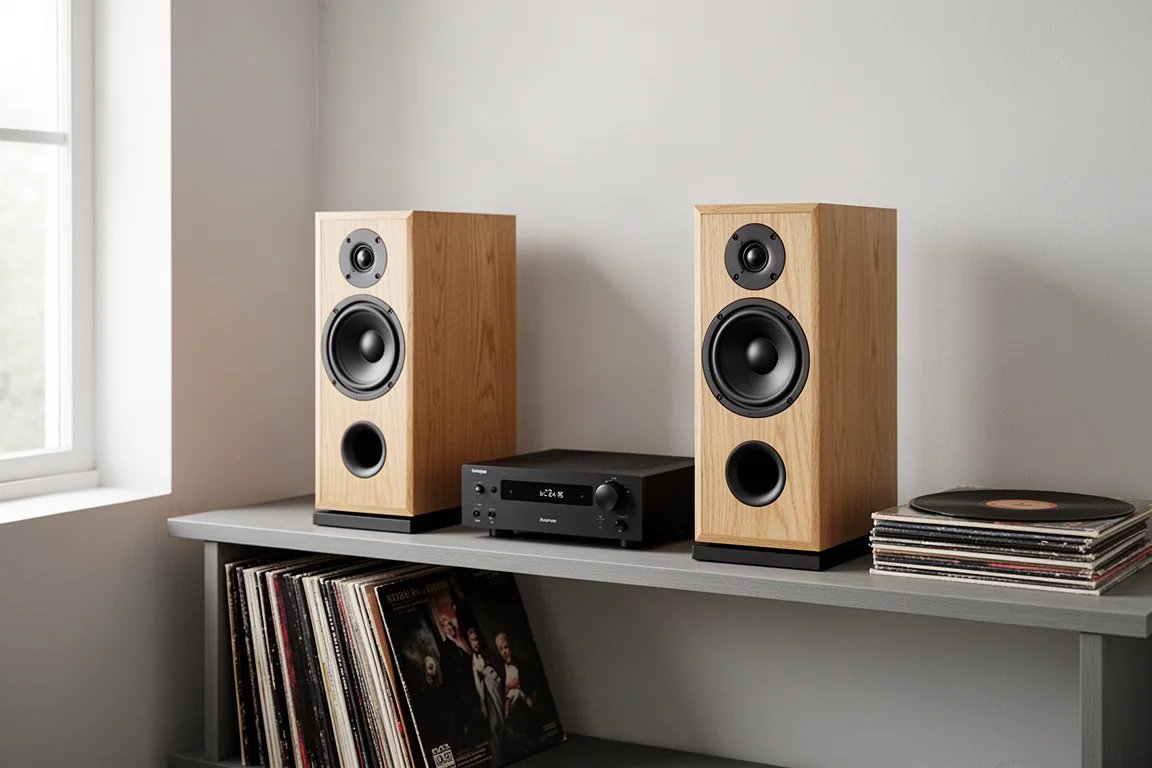
Set against far more expensive amplifier and preamplifier combinations, the EME stays competitive on bass texture, separation, and soundstage depth, which is an unusual position for a component at this price. The case for buying is strongest for listeners building a compact, high-quality two-channel system around one or two sources and a transparent pair of speakers. In that context the EME delivers a level of build and sound quality that is difficult to match without spending substantially more.
Conclusion
The Choco Sound EME is one of those rare components that earns attention on merit rather than price. Its machined chassis, crystal glass display, and separated power supplies give it the feel of a much more expensive amplifier, and its warm, richly textured sound comes with the separation and imaging needed to keep that warmth from becoming a limitation. The limited inputs and tight rear panel are real compromises, but they are the kind that make sense in a small integrated amplifier. For listeners who value body, texture, and a relaxed high-frequency presentation, and who are willing to pair it thoughtfully, the EME represents outstanding value at $1,700.
Product link
View more details for Choco Sound EME
This product is mentioned in the review. Check the specifications, options, and compatibility before buying.
View more details for Choco Sound EMEFurther reading
Related Reviews
Integrated Amplifiers
Advance Paris A10 Classic Review: Vintage Looks and a Lively, Punchy Sound
The Advance Paris A10 Classic pairs glowing blue VU meters and a tube stage with one of the widest input sets on any integrated amplifier. Here is what it does well and what to weigh before spending $2,500.
Integrated Amplifiers
Advance Paris A12 Apex Review: A Modern Integrated Amplifier With Vintage Character
A dual mono integrated amplifier with 180 watts per channel, a tube front end, VU meters, and a connectivity list that covers turntables, televisions, computers, and headphones.
Integrated Amplifiers
Advance Paris Nova Range Review: AI130, AI190 and Modular Upgrades
A practical look at the Advance Paris Nova range, including the AI130 and AI190 integrated amplifiers and the modular streaming, Bluetooth and remote accessories that expand them.