Cycling Components
Cheap vs Premium 3D Printed Saddles: Trek Aeolus RSL and Riot Compared
A £32 AliExpress 3D printed saddle against a £329.99 flagship model. Here is what the price gap actually buys, and where a budget saddle still makes sense.
Introduction
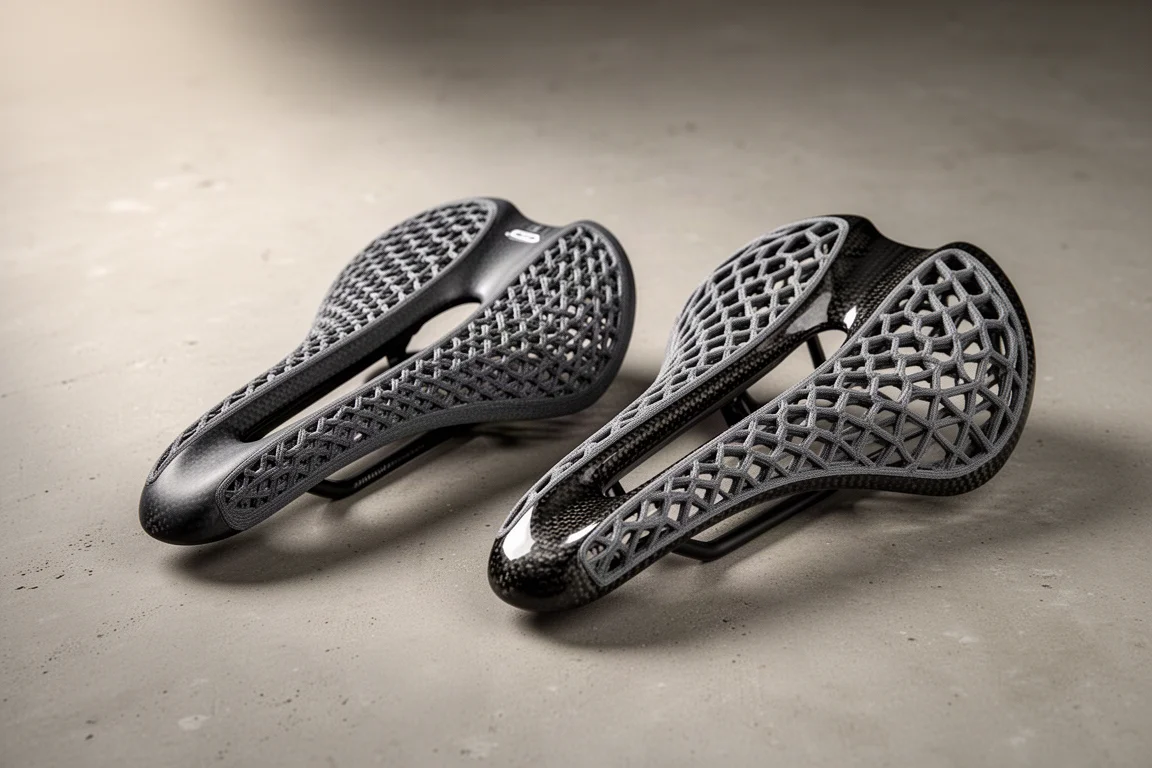
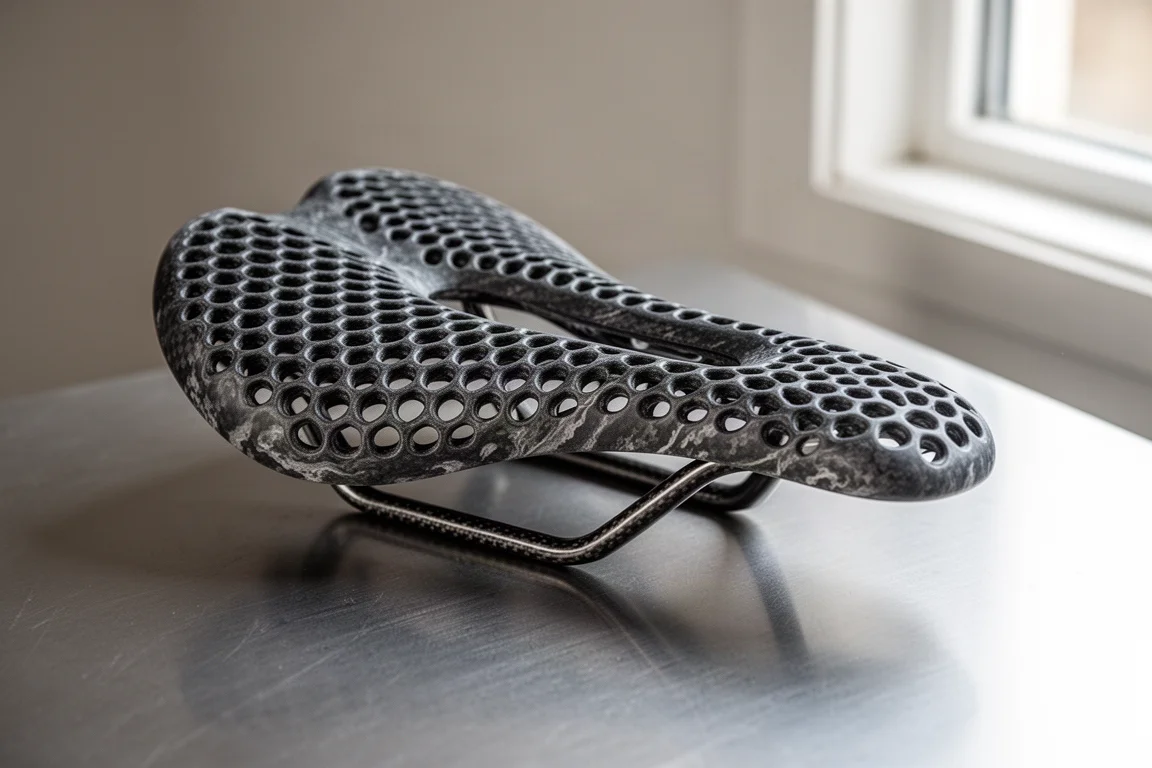
Two 3D printed saddles, one price gap of roughly ten times. At one end sits the Trek Aeolus RSL 3D Printed Saddle at £329.99 RRP. At the other sits a Riot 3D printed saddle picked up for £32, with a carbon-style base, a printed lattice upper, and a claimed weight of just 152 g.
That combination is worth taking seriously, because a £32 saddle that looks this well made raises a fair question: is the premium tier buying genuine comfort, or mostly a badge, a lower weight, and a little more polish? The short answer is that the expensive saddle does some things meaningfully better, but not everything, and the differences are narrower than the price gap suggests.
What to Look for in a 3D Printed Saddle
The point of printing a saddle rather than moulding a uniform block of foam is that density can be varied across the surface. A brand can make one zone firmer and another softer, and in theory that means better support where you sit and less pressure where you do not want it.
That flexibility also helps manufacturers iterate: printed saddles are quicker to prototype, and some brands offer custom versions shaped around a single rider. Practically, though, the features that matter most to a buyer are simpler. Shape comes first, because a saddle that suits your position will usually feel better than one that does not, whatever it is made from. After shape comes the density map, then rail and base material, then weight, then finish.
It is also worth remembering that a firmer saddle is not automatically a worse one. A very soft upper can compress quickly under load, at which point you are sitting on the hard base underneath rather than on supportive padding. Firmness in the sit zone is often deliberate, not a cost-cutting shortcut.
Trek Aeolus RSL 3D Printed Saddle
The Trek Aeolus RSL looks and feels like a flagship component. The base has a matte carbon finish with neat cut-outs, the rails are long, and the padding is genuinely dual density: noticeably firmer through the sit zone and softer towards the nose, where the aim is to reduce pressure on soft tissue.
There is one practical catch worth knowing before you buy. The saddle carries a warning that it should be used with specific seat posts, so anyone running a different setup should check compatibility first. Finish is another point to weigh up: the epoxy bonding the rails to the carbon base is clearly visible, which reads as slightly handmade rather than rough, and it disappears from view once the saddle is on a bike. On weight, it came in roughly 16 g heavier than the £32 alternative, which is a small margin for such a large price difference.
Riot 3D Printed Saddle
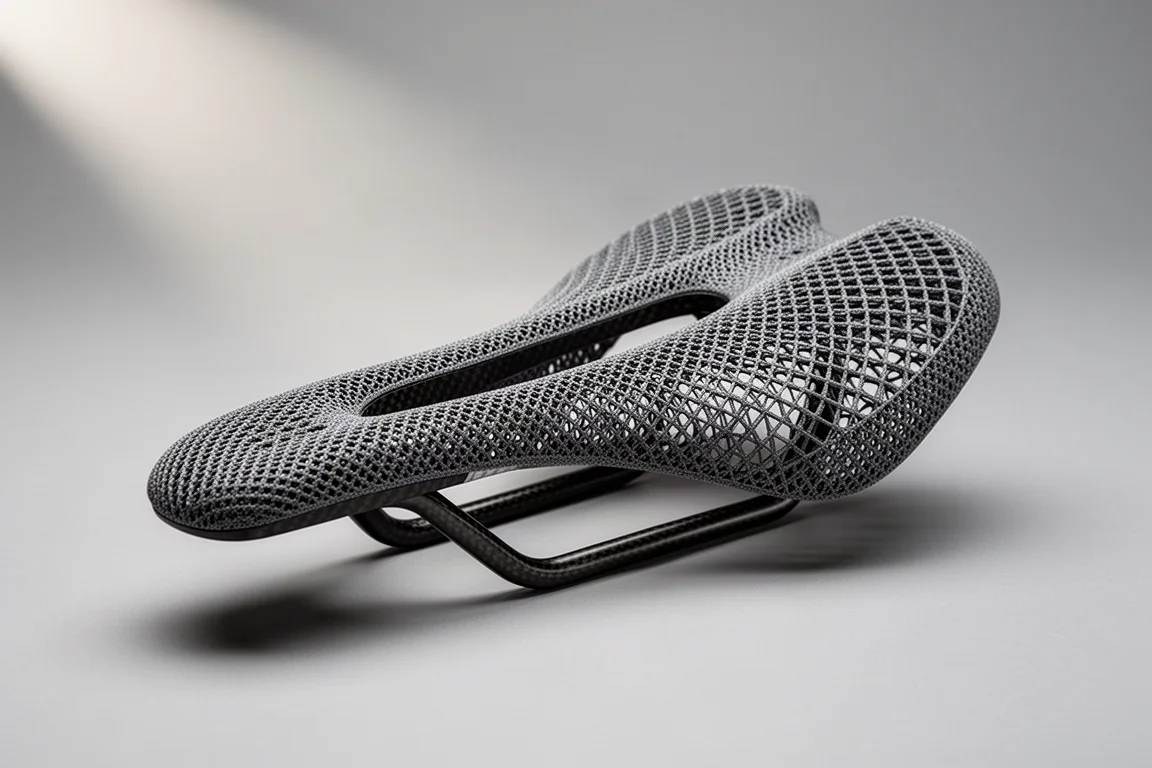
The Riot saddle is the surprise of the pair. The base has the look of forged carbon fibre, and the rails appear almost moulded into it, with no visible epoxy at the joint. The printed lattice on top is a fairly traditional open pattern and noticeably uniform in firmness across the width rather than mapped like the Trek. At 152 g it is lighter than the premium saddle, which is remarkable at this price.
It is also available in a range of shapes, so you can choose the profile that matches your position rather than accepting a single option. On the road, the differences show up in two places. The rear is softer under the sit bones, which some riders will like and others will find less supportive, and the surface is noticeably grippier, so sliding around on the saddle takes more effort.
Towards the nose the padding is thin and firm, which becomes obvious when you get low into the drops and pressure builds on soft tissue. That is the opposite of the premium saddle’s approach, which is firmer where you sit and softer at the front. Riders who spend most of their time upright may never notice, while those who ride aggressively will.
Riding Impressions: Firmness and Support
Back to back, the differences are real but modest. The Trek felt firmer under the sit bones and slightly more supportive overall, while still comfortable over a normal ride. It also handled an aggressive, tucked position well, with no noticeable pressure at the nose.
The Riot felt softer at the rear and, for a lighter rider around 65 kg, the hard base became noticeable fairly quickly as the padding compressed. Down in the drops the thin nose padding was clearly firmer than the Trek’s, and less comfortable as a result. Even so, it was never outright uncomfortable, and the shape itself was praised as genuinely good.
Neither saddle produced a dramatic transformation compared with a standard foam saddle of the same shape. That is a useful reality check: if you already like your saddle’s profile, a printed upper is a refinement rather than a reinvention.
Shape, Weight, and Build Quality
The single biggest takeaway from this comparison is that shape matters far more than material. The Trek’s Aeolus profile, a short-nose design with a generous cut-out, a moderate width and a scooped rear, is a known quantity and works well for riders who get on with that geometry. The tested Riot was chosen precisely because it was the closest available match to that shape.
Weight tells a similar story. The Riot came in at 152 g, and the Trek was about 16 g heavier. Paying ten times more for a saddle that is slightly heavier is a hard case to argue on numbers alone, although weight is rarely the main reason anyone chooses a premium saddle.
Build quality runs in both directions. The budget saddle has the cleaner rail-to-base junction, while the premium saddle shows its epoxy but offers a more considered density map. Neither detail is likely to change how the saddle feels under you, but both are worth knowing if you care about finish.
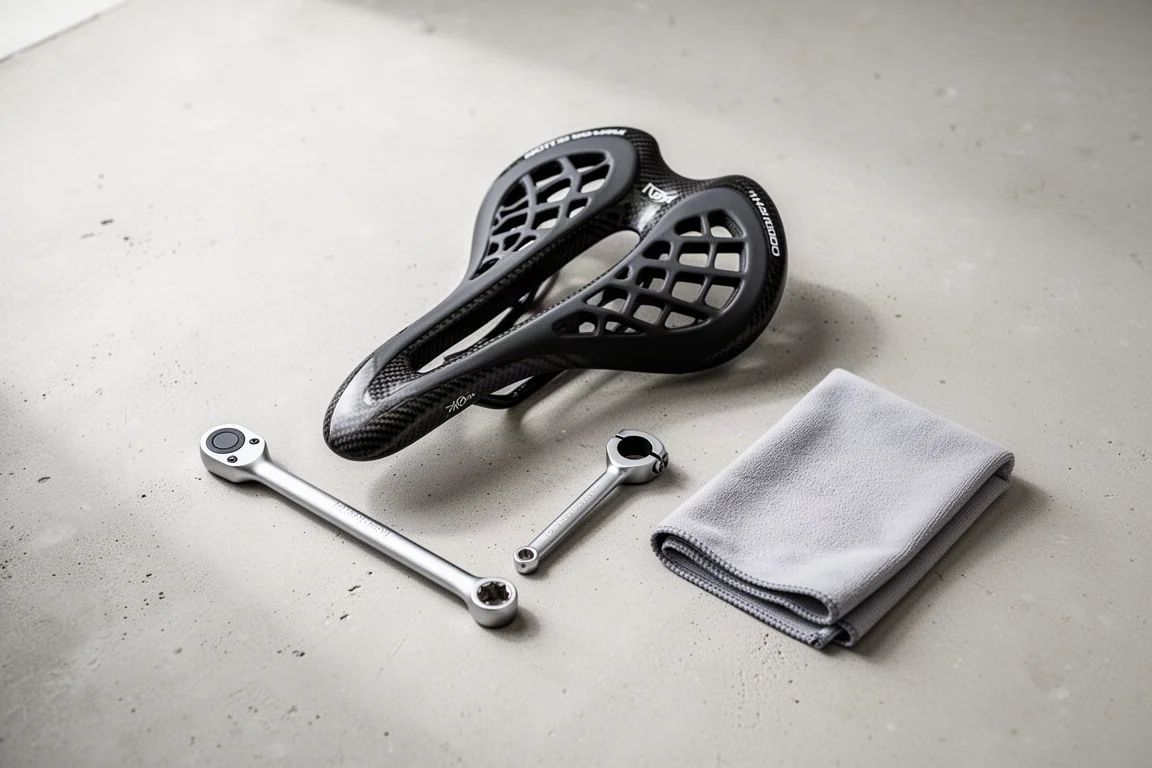
One further point on comfort problems: if you feel pressure at the nose, the usual culprits are saddle height or reach rather than padding density. Adjusting position costs nothing, and it is worth doing before spending heavily on hardware to solve a fit issue.
What Still Needs Testing: Durability
Durability is the one question neither saddle answered. A printed lattice, a carbon base and bonded rails all experience fatigue over time, and that applies just as much to a £329.99 saddle as to a £32 one. The Riot’s grippier surface may also wear shorts faster, though that is speculation rather than a measured result.
For now, the sensible position is that both saddles are promising and neither has proven itself over a full season of riding. Long-term testing is what will settle it, and that is exactly the kind of question a buyer should keep in mind when weighing a very cheap component against a very expensive one.
Buying Advice
If you already know the Aeolus shape works for you, want a dual density upper with a softer nose, and do not mind the seat post compatibility note or the visible rail bonding, the Trek Aeolus RSL 3D Printed Saddle is a comfortable, well-resolved component. It is a considered purchase rather than an obvious value one, and the weight argument alone does not justify the outlay.
If you are curious about printed saddles, ride in a fairly upright position, or simply want a light, well-finished saddle for a fraction of the cost, the Riot is a genuinely impressive option at £32, provided you accept a softer rear, a firmer nose and an unanswered durability question. Riders who spend long stretches low in the drops are the most likely to prefer the premium option. Everyone else can reasonably start at the budget end and upgrade only if comfort demands it.
Conclusion
A £30 saddle is not as good as a £300 one, and this comparison does not pretend otherwise. The premium option has the better thought-out density map and the better nose comfort for aggressive positions. But the cheap saddle is not ten times worse. It is lighter, the shape is good, and the finish is cleaner at the rail joint than you would expect at the price. Buy the premium saddle if you know the shape suits you and you want the softer front end. Buy the budget one if you want most of the experience for a tenth of the money, and treat durability as the open question it still is.
Further reading
Related Reviews
Cycling Components
A 20,000-Mile Budget Race Bike Build: Five Parts Worth Knowing
A rim brake race bike assembled from low-cost components and ridden for 20,000 miles. Here is what delivered real speed, what caused problems, and what to weigh before copying the formula.
Cycling Components
7 Bike Fit Products Fitters Avoid: What to Check Before You Buy
Seven bike components that regularly cause knee, foot and saddle problems, with the specific concerns behind each one and what to look for instead.
Cycling Components
Four Affordable Bike Upgrades That Improve Ride Feel
Four low-cost cycling products that make a real difference to ride feel, plus the free setup changes worth trying first.