Aviation
Cessna Citation 501P Review: Why Owning This Private Jet Is Cheaper Than You Think
A closer look at the real ownership economics of the Cessna Citation 501P, from single-pilot operation and used-parts maintenance to surprisingly low registration fees.

Introduction
Private jet ownership has a reputation for eye-watering costs, and often that reputation is deserved. But the Cessna Citation 501P tells a more nuanced story. After several months of ownership, this small legacy business jet has turned out to be far more economical to run than most people would expect, and in a few specific areas it is genuinely cheap. From fuel and insurance to registration and parts, here is where the money goes, and where it surprisingly does not.
Why the 501P Stands Out
The biggest selling point of the Citation 501P is that it is certified for single-pilot operation straight from the factory. Many other Citation 500-series aircraft require a single-pilot exemption on your certificate or a second crew member entirely. Flying solo means no co-pilot to hire, and that adds up fast: a qualified right-seat pilot typically runs at least $500 to $1,000 per day. On a plane designed to be simple to fly, that saving is one of the strongest arguments for the 501P over its 500 and 550 counterparts.

Flying it economically also matters at altitude. The jet burns fuel quickly when it is held low, so climbing as high as possible as early as possible makes a real difference in range and economy. At cruise with a solid tailwind, ground speeds can comfortably push past 400 knots, making the 501P a genuinely quick and efficient cross-country machine once it is up high.
Fuel Is Cheap Right Now
Jet fuel prices have dropped substantially, and one fill-up was recently logged at $3.79 per gallon, helped along by a fuel membership that offers discounts at hundreds of airports across the country. The math is compelling: the 501P holds 564 gallons, so a $2 per gallon saving means roughly $1,000 saved every fill-up.
Yes, older jets burn more fuel than their modern efficient counterparts. But when fuel is cheap, that drawback matters far less, and it makes the 501P noticeably more reasonable to operate than its thirsty reputation suggests.
Hangar Costs Can Be Surprisingly Low
Storage is usually one of the painful line items, especially in hot markets like Arizona and California, where hangar space can run $3,000 to $6,000 per month. But the 501P is a very small jet, and that works in your favor. It fits in compact spaces; it can even park under the wing of a much larger aircraft like a Global 7500. A hangar spot at $700 per month, including tug access and unrestricted in-and-out privileges, is exceptional and was secured through a long-standing personal connection. The lesson: the small footprint of this jet opens the door to reasonably priced parking if you find the right situation.

Insurance Hinges on Experience
A quoted policy came in as low as $10,000 for the year, which works out to under $1,000 per month for a jet. That rate depends heavily on pilot experience, hours, and ratings, so this is one area where your background directly shapes your cost. Interestingly, aviation insurance does not penalize young pilots the way car insurance does. Experienced pilots with strong hours can secure very reasonable rates, and the final policy was chosen slightly above the lowest quote to include some desired coverage tweaks.
Registration Is Shockingly Cheap
This is the part that surprises everyone. Airplanes do not have titles. Transferring ownership is done with a simple signed document, and the FAA fee to register the transfer is just $5. Not $5,000. Five dollars.
State registration can also be advantageous. In Arizona, private-party aircraft purchases are exempt from the 8.5% sales tax, which on a jet represents tens of thousands of dollars saved. On top of that, aircraft over 40 years old are capped at a flat $25 registration fee, whether it is a jet or a small single. That means the entire transfer and registration process cost just $30 total, a one-time fee for the FAA portion. Newer aircraft pay a percentage-based fee, which can still reach thousands on a jet, but the 501P’s age works entirely in its owner’s favor here.
Maintenance: Manageable With the Right Shop
The first service bill stung at $27,000, including a $10,000 nitrogen bottle. But a subsequent visit to a Citation-specialist shop on an Arizona airfield told a very different story. Two troubleshooting jobs, a wing leading-edge heating fault traced to improperly secured wiring, and a co-pilot gyro problem caused by a clog in the vacuum system, were each resolved for 10 hours of labor at $150 per hour, or $1,500 each. Smaller phase inspections added a few hundred more, and with those inspections complete the aircraft is set for roughly six to seven months of flying with no scheduled maintenance on the horizon.
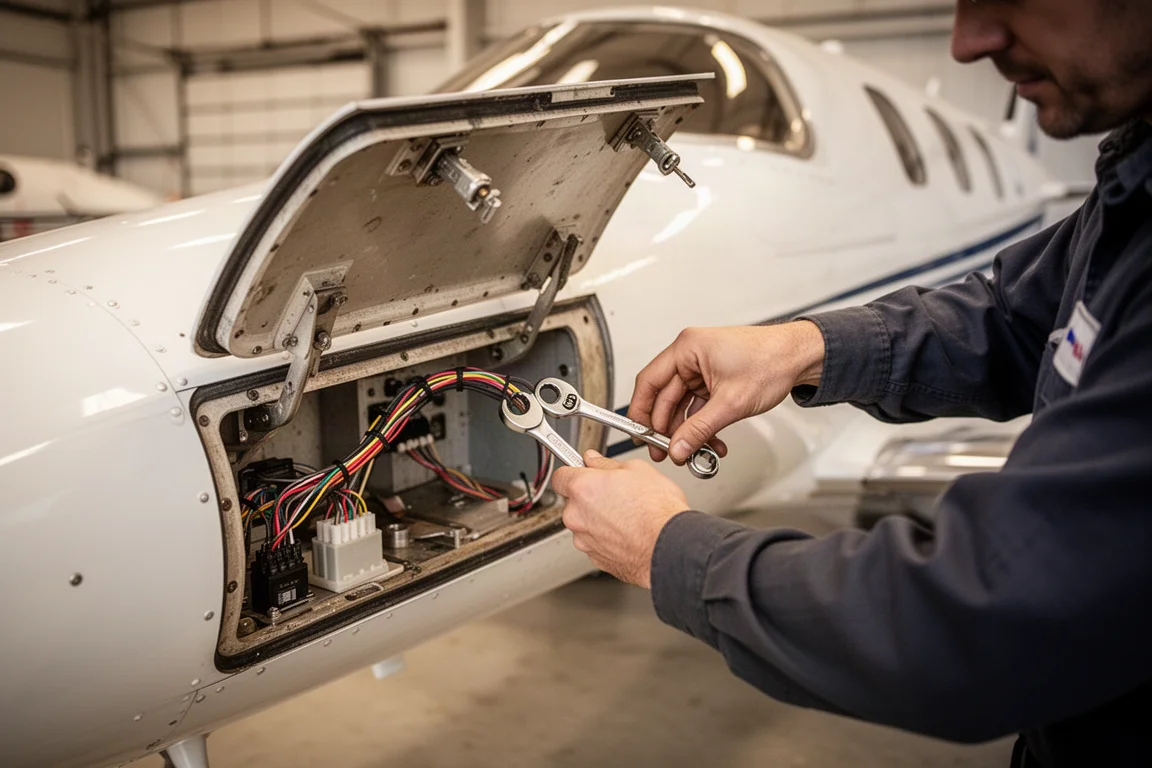
The real cost saver is used parts. Large aircraft salvage businesses part out retired Citations, and because so many 500-series jets were built, there is a deep supply of quality used components. Real examples: a missing fuselage strip for $35 instead of unavailable new stock, a broken whiskey compass mount for $100 instead of $1,000, a warped fuse panel for $600 instead of $4,000, and a backlighting panel swap for $400. A complete used interior in good condition is also available as a bolt-in upgrade, versus $50,000 or more for a new interior. Altogether, used parts have saved several thousand dollars right out of the gate, and salvage suppliers typically offer guarantees and return policies on their parts.
The Bigger Picture: Value in Legacy Citations
Landing at high-altitude mountain airports like Vail demands a solid game plan, known missed-approach procedures, and good weather, but the 501P handles it confidently. It is a small, capable jet that flies exactly as asked, and there is a strong case that it is one of the most underrated aircraft values in its class. Values are starting to climb as more people recognize just how much airplane you get for the money.

For anyone considering private jet ownership without a Fortune 500 budget, the 501P deserves a serious look. The headline costs, fuel, hangar, insurance, registration, and routine maintenance, can all be tamed with the right choices, and the single-pilot capability removes one of the largest recurring expenses in jet ownership entirely.
Conclusion
The Cessna Citation 501P is proof that private jet ownership does not always mean uncontrolled spending. Single-pilot certification, inexpensive fuel in the current market, small-footprint hangar options, experience-based insurance rates, a $30 registration bill in favorable states, and a deep used-parts ecosystem all add up to a surprisingly economical package. It is not free to own, but it is far cheaper than the stereotype suggests, and for the right pilot with the right hours, it may be one of the smartest bargains in aviation today.
Product link
View more details for Cessna Citation 501P
This product is mentioned in the review. Check the specifications, options, and compatibility before buying.
View more details for Cessna Citation 501PFurther reading
Related Reviews
Aviation
Aero Technics ACH 212 Solo Review: A Carbon Fiber Solo Kit Aircraft You Can Build Fast
A nearly 30-year-old Czech design still offered only as a kit: 90% carbon fiber, quick-release wings, a 350 to 400 hour build, and performance that surprises.

Aviation
Aeropilot: The 80% Scale Cessna-Style Light Sport Aircraft Winning Over Flight Schools
A full-carbon, two-seat light sport aircraft modeled after the Cessna 182, with a larger cabin, big climb performance, and fuel burn that flight schools love.

Aviation
Aeropro A22 and A32: Two Light Sport Aircraft Worth a Close Look
A side-by-side look at the Aeropro A22 and A32, covering performance, pricing, customization, and what buyers should know before ordering.