Bookshelf Speakers
Cerwin-Vega LA 165 Review: Punchy Bookshelf Sound With Real Compromises
The Cerwin-Vega LA 165 brings genuine mid-bass punch and a lively top end at about $270 per pair, but a recessed mid-range, limited deep bass, and measured sensitivity below its rating make it a difficult pick for listeners who want accuracy.
Introduction
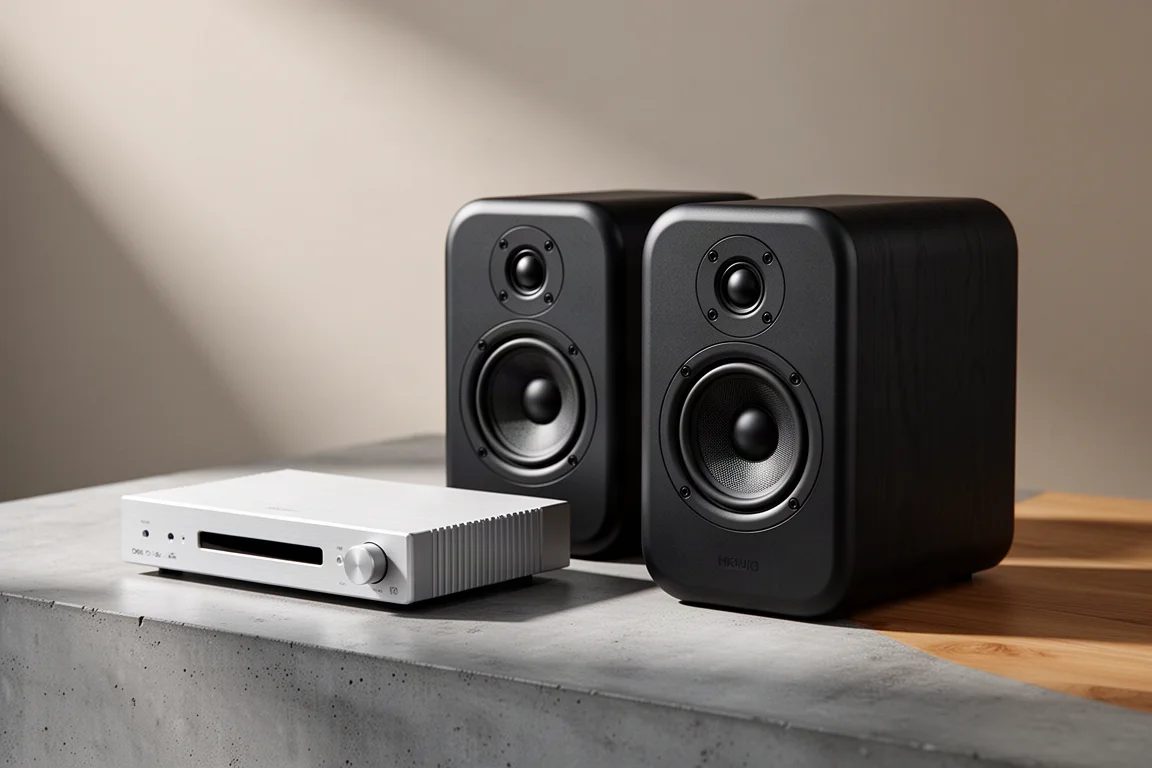
The Cerwin-Vega LA 165 is a passive bookshelf speaker that sells for about $270 per pair. It is built for listeners who want a compact speaker with a lively, punchy character rather than a strictly neutral, monitor-style presentation.
The quoted specifications look promising: a frequency response of 33 Hz to 20 kHz, 150 watts of power handling, a sensitivity rating of 90 dB at 1 watt and 1 meter, and an impedance figure of 4 to 8 ohms. Measured performance fills in the details the spec sheet leaves out, and several of those details matter a great deal in a real room.
The short version: the LA 165 has real mid-bass kick and an energetic top end, but its mid-range is recessed, it produces almost nothing below about 60 Hz, and its measured sensitivity sits well under the rating. At this price, that combination is difficult to recommend for anyone chasing accuracy.
Who this product is for
This speaker suits listeners who want punch and a bright, forward top end without spending much. Its mid-bass emphasis around 100 to 120 Hz gives drums and bass lines a solid kick, and the lifted upper treble can read as detail or resolution to ears that prefer that character. For movies, casual music listening, and social gatherings, that combination can be genuinely enjoyable.
It is a poor match for anyone who wants a neutral speaker, a warm mid-range, or deep bass from a standalone pair. The mid-range is recessed where vocals live, and there is no meaningful output below roughly 60 Hz in a typical room, so a subwoofer is effectively part of the package.
Placement can soften some of these issues. Pushing the speakers closer to a wall adds a little lift in the low end, which can partly offset the hollow mid-range, and the cabinet is forgiving enough to work on a desk or a shelf.
Main strengths
The strongest quality of the LA 165 is its mid-bass punch. There is a solid thump in the 100 to 120 Hz region that gives percussion and bass instruments a sense of drive, even though the low end does not extend far.
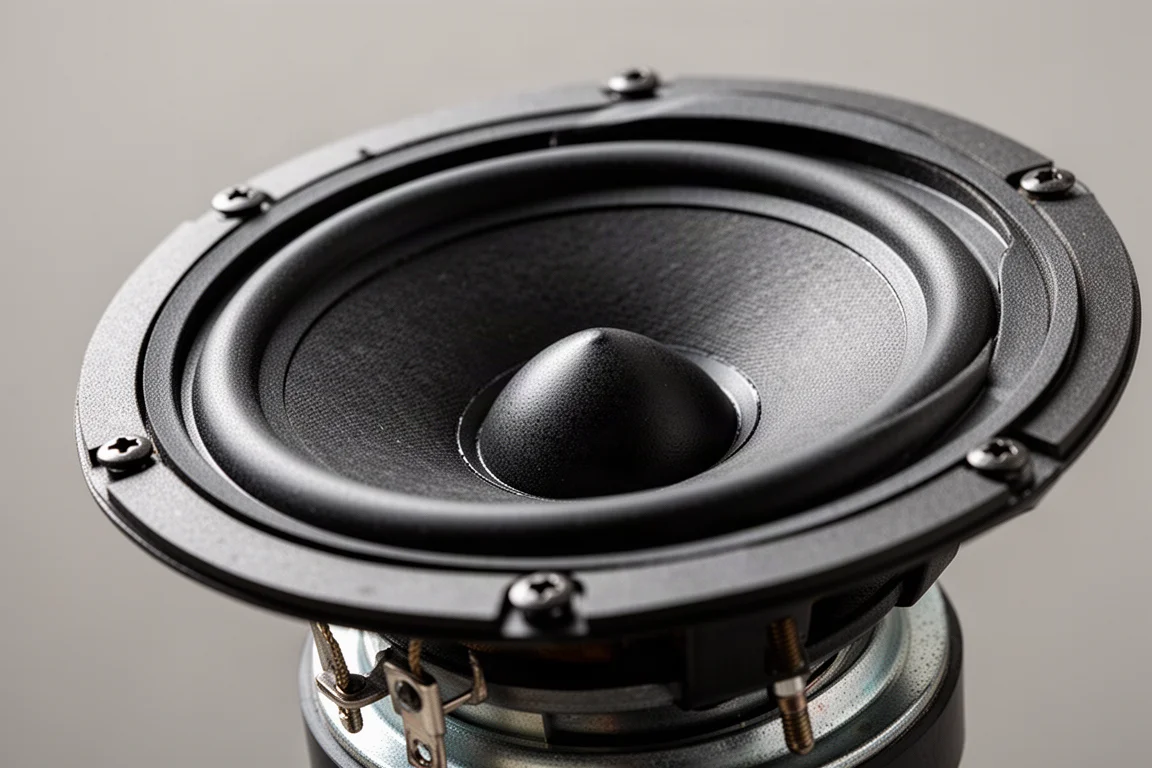
The cabinet is better executed than the price suggests. The internal walls are lined with batting material of the kind used to absorb internal reflections and standing waves, and the tweeter, the port, and the enclosure itself all behave sensibly. The midwoofer uses a stamped steel basket, a cost-driven choice that is reasonable at this price, even if it signals a lower grade of construction than a cast frame.
Horizontal coverage is also a reasonable match for typical rooms, landing in a useful 60 to 70 degree window so the speaker does not throw excessive energy into the side walls. The stated 4 to 8 ohm impedance should not trouble most receivers or integrated amplifiers.
Build quality and specifications
The LA 165 is a passive two-way bookshelf design measuring roughly 203 x 347 x 315 mm and weighing about 13.5 kg, or 29.8 lb. Power handling is rated at 150 watts, sensitivity at 90 dB for 1 watt at 1 meter, and impedance at 4 to 8 ohms.
Measured sensitivity comes in at 86.2 dB at 2.83 volts and 1 meter. If the 90 dB rating assumes a 4 ohm load, the equivalent figure at 2.83 volts would be about 93 dB, so the measured result falls well short of the claim under either interpretation.
Bass extension is the other area where the numbers and reality diverge. The quoted 33 Hz figure is not bounded by a tolerance window, and the measured F3 is about 67 Hz with F10 around 47 Hz, which leaves the speaker roughly 19 dB down at 33 Hz. In a typical room, usable in-room extension lands closer to 60 Hz.
Internally, the design shows several resonances worth knowing about: an enclosure resonance near 300 Hz, a cone and surround resonance near 700 Hz, and another around 1 kHz. The midwoofer cone and its surround can move out of phase at certain frequencies, which adds peaks and dips further up the range and colours the overall tonality.
For listening position, ears level with the tweeter give the most consistent result.
Things to consider before buying
Tonality is where the LA 165 is furthest from neutral. There is a 2 to 3 dB cut running through the mid-range, right where male and female vocal fundamentals sit, which leaves voices sounding hollow. A dip between 2 and 4 kHz removes attack and dynamic bite, so snares lose their snap and saxophones lose their zing. At the other end, the upper treble is lifted enough to sound sibilant or edgy to listeners who prefer a calmer top end.
Deep bass is simply not available from the speaker alone. A subwoofer is required for anything below about 60 Hz in most rooms.
Distortion behaviour is the more serious concern. Distortion rises from around 1 to 2 kHz, a range where hearing is especially sensitive. At 96 dB and 1 meter, there is peaking near 1 kHz along with elevated distortion in the mid-bass, and multi-tone testing passes the 3 percent threshold, which shows up as graininess through the mid-range and upper mid-range. High-passing the speaker when a subwoofer is in use reduces some of the mid-range distortion, but not the upper mid-range portion.
Compression measurements add another wrinkle. Sustained playback shows about 1 dB of compression in the lower mid-range and mid-bass, with roughly 2 dB of enhancement higher up, and instantaneous compression loses a little over 3 dB at the low end while showing around 3 dB of expansion in the lower treble. In practice, the top end can sound louder than the rest of the spectrum during demanding passages.
Equalisation is not a full solution either. The lower and upper treble show nonlinearity, and that is precisely where EQ cannot help, since pulling those frequencies down also reduces the direct sound. Absorbing that energy acoustically is the only real fix, and few buyers at this price will want to invest in room treatment.
Setup and room placement
Placement decisions do a lot of work with this speaker. Ears level with the tweeter give the most balanced tonal result, and a little extra distance from side walls keeps reflected energy from smearing the mid-range in livelier rooms. Moving the speakers closer to the wall adds low-end lift that can make the sound feel fuller, though it does not create the deep bass the speaker lacks.
Coverage is roughly 60 to 70 degrees to the sides, which is wide enough for a sense of envelopment without overloading a reflective room. In the lower and upper treble, however, some of the sound radiated to the sides is louder than the sound sent directly to the listener, and no equaliser setting can correct that without also reducing the direct sound.
A subwoofer is the single most useful addition. It restores the bottom octaves and reduces some of the mid-range distortion, though the upper mid-range behaviour remains.
Buying advice
At about $270 per pair, the LA 165 is a fair amount of cabinet and hardware for the money, but the tonal balance and measured behaviour involve real compromises. Buyers who want a punchy, bright, high-energy speaker and who already plan to add a subwoofer can enjoy what it does well. Buyers who want neutrality or a warm mid-range will find it frustrating.
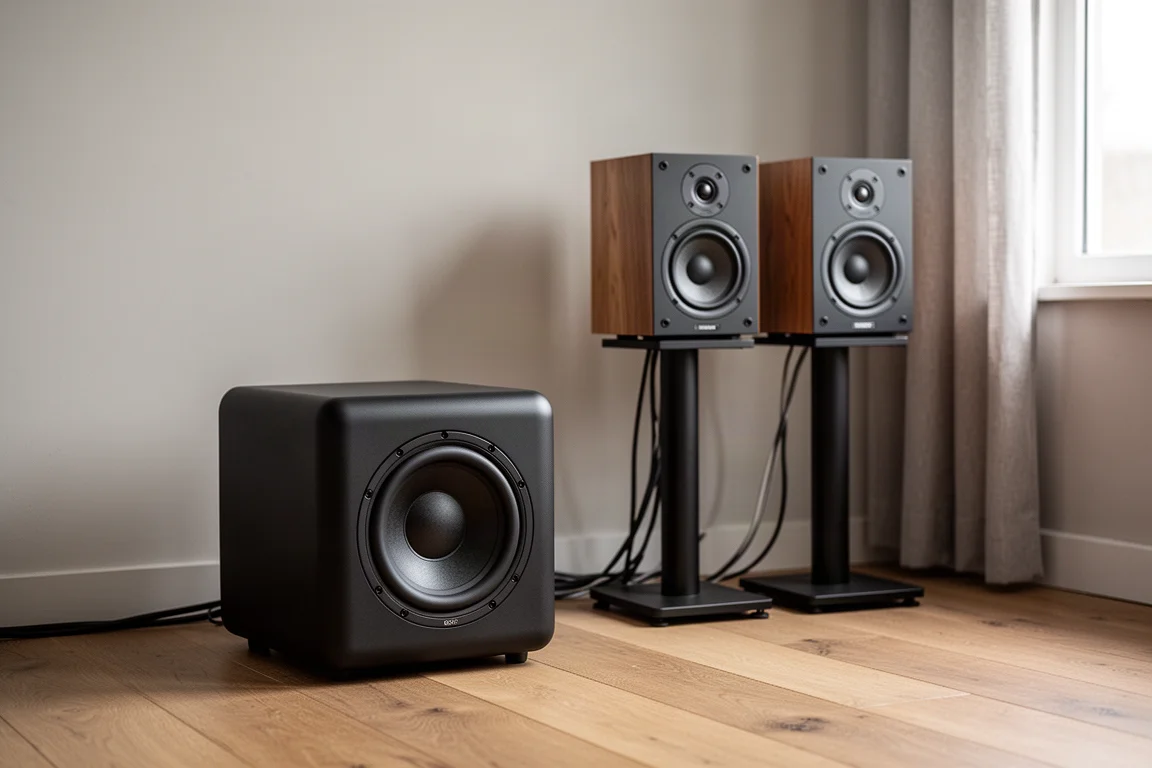
It is also worth comparing carefully at this price. The Polk XT20, a competing bookshelf pair at around $250 per pair, measured with better linearity at a similar sensitivity, extended lower with an F3 of 63 Hz and an F10 of 42 Hz, and showed lower distortion overall, which makes the value calculation harder to justify for the LA 165 on accuracy grounds alone.
If the appeal is brand familiarity or a lively, loud presentation in a living room, that is a legitimate preference. Just go in knowing that a neutral, accurate sound is not what this speaker delivers, and budget for a subwoofer from the start.
Conclusion
The Cerwin-Vega LA 165 gets the fun parts right: a punchy mid-bass, a lively top end, and a cabinet that is better built than its price implies. The rest of the picture is less flattering, with a recessed mid-range, a dip that removes attack and bite between 2 and 4 kHz, no usable output below about 60 Hz, measured sensitivity roughly 4 dB under the rating, and distortion that becomes audible at higher levels.
For listeners who want that specific lively character and will pair the speakers with a subwoofer, the LA 165 can be an enjoyable budget option. For anyone shopping for accuracy at this price, better-balanced speakers exist at similar money, and that is the comparison worth making before you buy.
Product link
View more details for Cerwin-Vega LA 165
This product is mentioned in the review. Check the specifications, options, and compatibility before buying.
View more details for Cerwin-Vega LA 165Further reading
Related Reviews
Bookshelf Speakers
Acoustic Energy A100 Mark II Review: A Compact Standmount With an Expansive Soundstage
The Acoustic Energy A100 Mark II brings clarity, natural tonality and a wide soundstage to an entry-level standmount, with a few setup details worth knowing first.
Bookshelf Speakers
Acoustic Energy AE-100 Mark II Review: Compact Bookshelf Speakers With Standout Imaging
A compact British two-way bookshelf speaker with deep, layered imaging, fast bass, and a slight treble lift to weigh against a crowded $500 field.
Bookshelf Speakers
Acoustic Energy AE100 MK2 Review: Measured Performance and Four Alternatives
A close look at the Acoustic Energy AE100 MK2 bookshelf speaker, what its measured performance reveals, and four alternatives with different trade-offs.