Astrophotography
Central Obstruction in Astrophotography: What It Really Costs You
A practical look at how a telescope's central obstruction affects resolution, narrowband filter performance, and effective light gathering speed.
Introduction
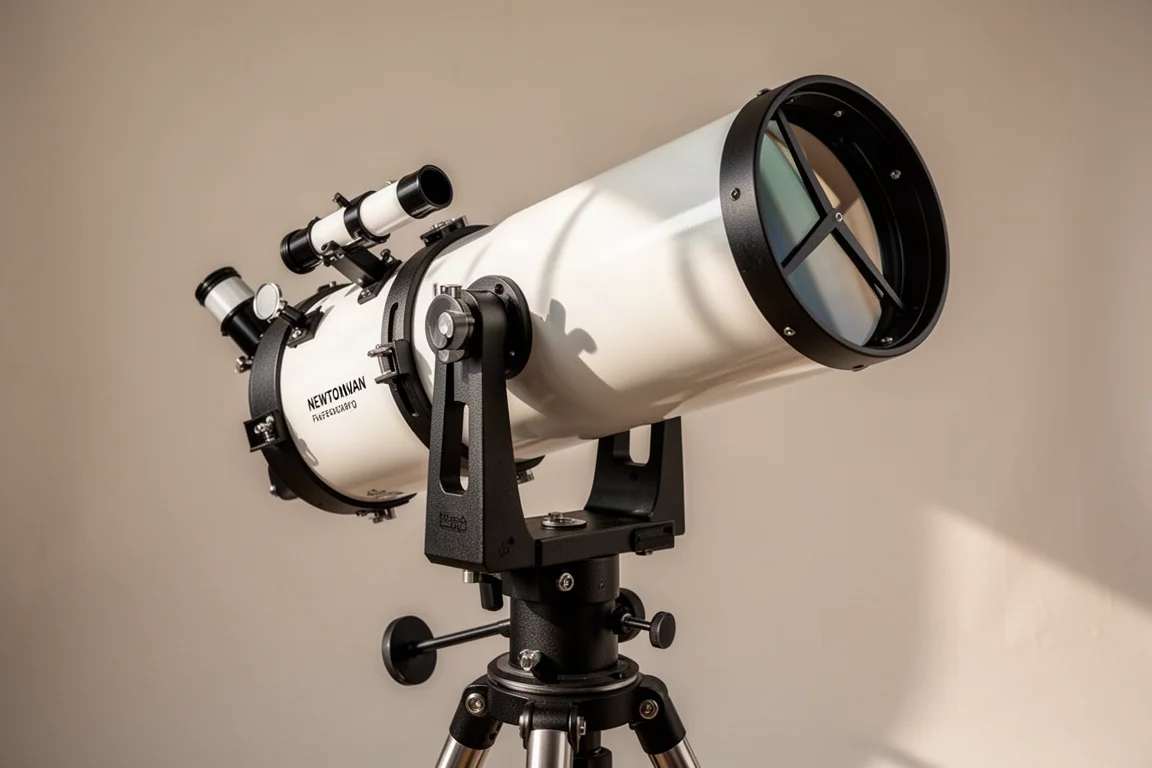
If you are not using a refracting telescope for astrophotography, you are likely using a mirror-based design such as a Newtonian, a Schmidt-Cassegrain, or a Maksutov-Cassegrain. All of these share one feature: a secondary mirror sitting on the aperture that creates what is known as a central obstruction.
On a typical Newtonian, the secondary mirror holder and the mirror itself sit at roughly 45 degrees to the primary mirror, reflecting the image back to the camera below. That secondary mirror casts a shadow across the primary mirror, and that shadow is the central obstruction. It takes up a certain diameter and surface area from the main light-collecting area of the telescope.
The common wisdom is that the central obstruction only matters for visual astronomy, causing a loss of contrast, and that imagers should not worry about it. In practice, the central obstruction has three main impacts that go beyond contrast, and they are worth understanding before you commit to a mirror-based telescope for deep-sky imaging.
What Is a Central Obstruction?
A central obstruction is the shadow cast by the secondary mirror holder across the primary mirror of a reflecting telescope. Looking straight into the telescope, you can see the primary mirror at the back and the central obstruction taking up a portion of the aperture.
The size of that obstruction varies significantly between designs. Some telescopes have very large central obstructions. For example, the Sharpstar SCA 310 has an aperture of 310 mm and a central obstruction of 184 mm in diameter. That obstruction is larger than the entire aperture of many small Newtonians. The RASA 8, another popular imaging telescope, has a 203 mm aperture and a 93 mm central obstruction.
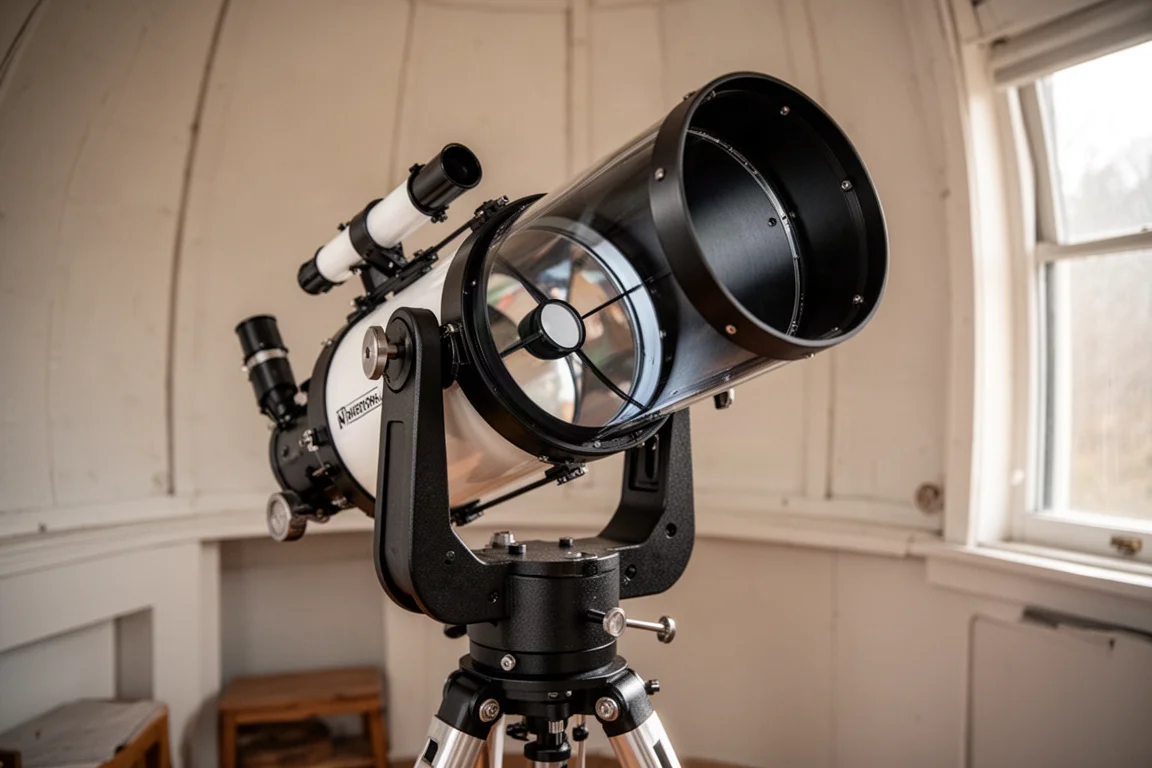
The first impact of a central obstruction is on the maximum theoretical resolution of the telescope. The exact effect is difficult to quantify with simple formulas, and the impact on the Dawes limit is not entirely clear. In practical terms, the resolution loss is probably not enough to worry about for most astrophotographers, especially since even a modest Newtonian still beats most refractors on the market in terms of aperture.
The second impact is on narrowband filter performance, which is more significant and easier to quantify. The third impact is on light gathering efficiency, which affects the effective speed of the telescope.
Impact on Narrowband Filters
Narrowband filters are very sensitive to the angle of incoming light rays. They perform best when light arrives at exactly 90 degrees to the filter surface, which means light coming from the center of the optics. A central obstruction blocks those central rays entirely, so all remaining light arrives at a non-square angle.
This has a measurable effect on transmission at the target wavelength. Using a narrowband filter calculator, you can see the impact clearly. For the Sharpstar SCA 310 with a 3 nm sulfur-2 filter and a peak transmittance of 90 percent, the calculation shows that even without a central obstruction, the fast optics already reduce total transmittance to about 75 percent across the entire aperture. Adding the 184 mm central obstruction drops transmission by almost 10 percent immediately.
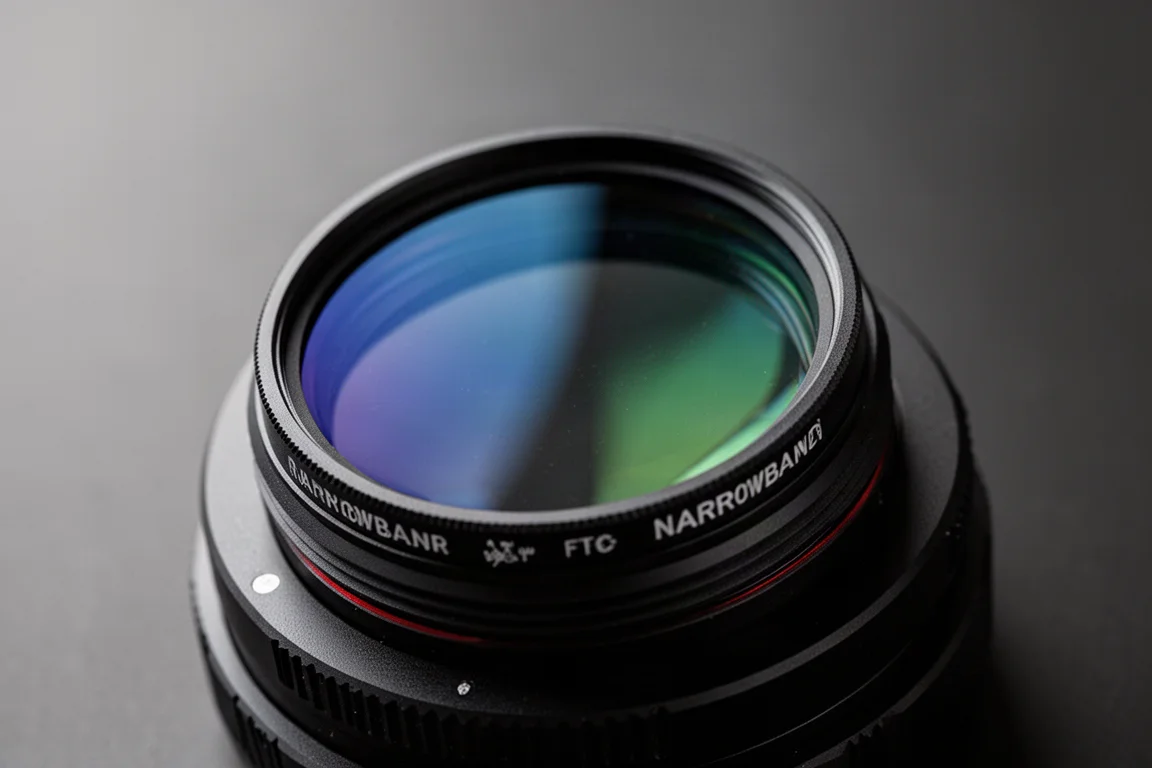
This effect is much less pronounced with a wider bandpass filter. With a 7 nm filter, the SCA 310 with its central obstruction sits at about 90 percent transmission, which is essentially no issue. The practical takeaway is that a telescope with a large central obstruction restricts your choice of narrowband filters. A 3 nm bandpass filter would probably not be a good match for this telescope, especially a lower-quality one.
A high-quality filter with better refractive index and peak transmittance performs much better. With a premium filter, the difference between having and not having the central obstruction is small. The point remains that the central obstruction limits your filter options.
The RASA 8 shows an even more dramatic effect. With a 7 nm filter and no central obstruction, transmission across the whole aperture is only 52 percent because the optics are so fast and the light rays arrive at steep angles. Adding the 93 mm central obstruction drops that to 42 percent, a loss of 10 percent.
The Real Speed of Your Telescope
The third impact of a central obstruction is on light gathering efficiency. The shadow cast by the obstruction means that part of the primary mirror is never used, reducing the number of photons collected per pixel per second. This means that even with a very fast focal ratio, a large central obstruction lowers the effective speed of the telescope.
To quantify this, you can compare the useful surface area of a mirror-based telescope to the equivalent refractor aperture. For the Sharpstar SCA 310, the primary mirror has a diameter of 310 mm, giving a surface area of pi times 155 squared. Subtracting the central obstruction surface area, which has a radius of 92 mm, leaves a useful surface area equivalent to a refractor with a diameter of about 250 mm.
That means the SCA 310, with its on-paper focal ratio of F3.8, is equivalent in light gathering to a refractor with a focal ratio of F4.7. In photography terms, this is the difference between an F-stop and a T-stop, where T stands for transmittance and accounts for all light losses across surfaces.
Adding realistic mirror reflectivity losses of around 95 percent brings the T-stop to about 5.2. If you then add a low-quality narrowband filter with 66 percent transmission, the T-stop increases to about 7.9. Even without an inappropriate filter, the telescope is not as fast as it appears on paper.
The RASA 8 fares better. Its 203 mm aperture with a 93 mm central obstruction is equivalent to a refractor with an aperture of about 180 mm. That hypothetical refractor would have a focal ratio of F2.2, compared to the RASA 8’s on-paper F2. The impact is less dramatic than with the SCA 310, but it is still measurable.
What This Means for Your Next Telescope
When comparing telescopes for astrophotography, the focal ratio alone is not a reliable indicator of speed if the telescope has a central obstruction. The effective light gathering capability is reduced by the obstruction, and the real speed is better described by the T-stop.
For narrowband imaging, a large central obstruction restricts your filter choices. Wide bandpass filters such as 7 nm are safer, while 3 nm filters can cost you significant transmission, especially with lower-quality filters. Premium filters with better refractive index mitigate the problem but do not eliminate it.
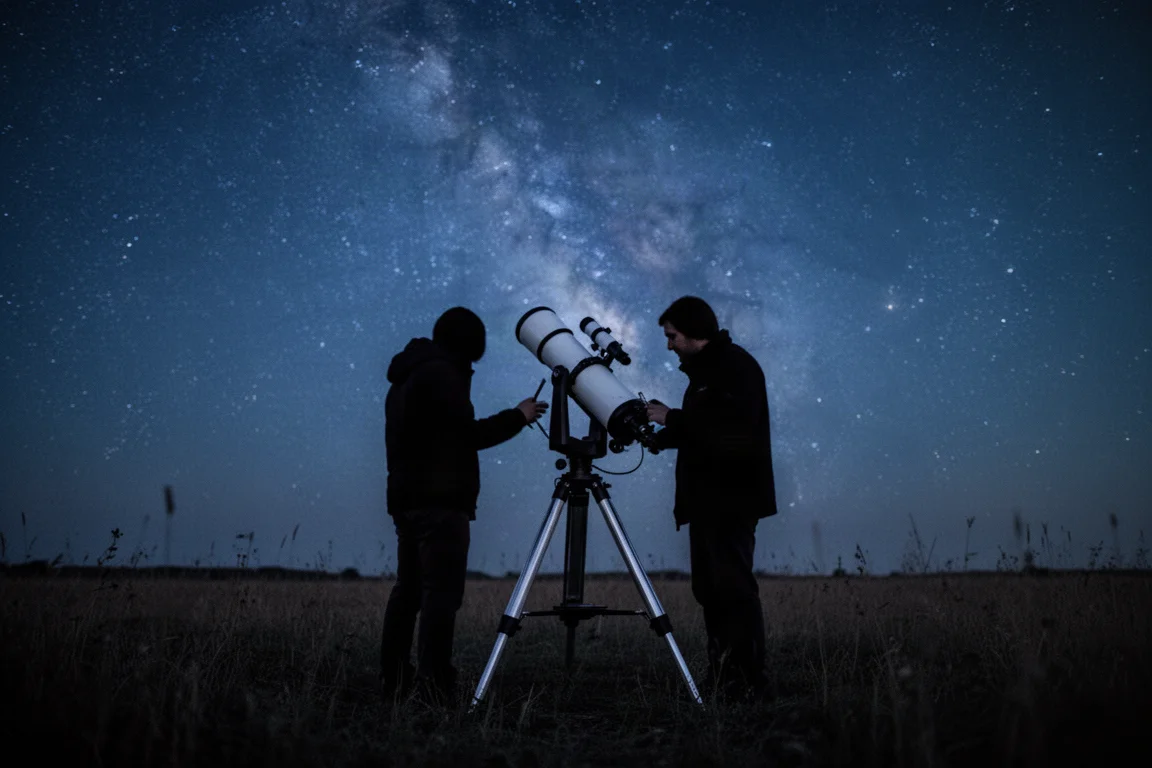
The central obstruction does not appear in final images because it is out of focus. The shadow spreads across the entire sensor, making the image slightly less bright rather than showing a visible dark shape. That subtle brightness reduction is exactly the loss of photons per pixel per second that comes with the obstruction.
Conclusion
The central obstruction is more than a contrast issue for visual observers. It affects narrowband filter performance, reduces effective light gathering, and changes the real speed of the telescope. Understanding these impacts helps you choose the right telescope and filters for your imaging goals.
For the Sharpstar SCA 310, the massive 184 mm central obstruction means the telescope is effectively a 250 mm refractor in light gathering terms, with a T-stop around 5.2 before considering filters. The RASA 8 is closer to its on-paper speed, equivalent to a 180 mm refractor at F2.2.
If you plan to shoot narrowband, pay close attention to the central obstruction size and choose filters accordingly. If you want the fastest possible system, a refractor with no central obstruction will always have an advantage in transmission efficiency.
Product link
View more details for Sharpstar SCA 310
This product is mentioned in the review. Check the specifications, options, and compatibility before buying.
View more details for Sharpstar SCA 310Further reading
Related Reviews
Astrophotography
ASKAR FRA400C Review: A Versatile 400mm Refractor for Astrophotography and More
The ASKAR FRA400C is a compact 72mm refractor that balances reach, versatility, and portability for astrophotographers and visual observers.
Astrophotography
Askar SQA106 Review: A Premium 106mm Astrograph With Exceptional Optics
The Askar SQA106 is a premium 106mm quintuplet astrograph with impressive sharpness across full-frame sensors, though its price and weight demand careful consideration.
Astrophotography
Astro Imaging Gear 2026: Eight New Products Worth Watching
A look at the most interesting new astrophotography and astronomy products announced this year, from fast telescopes to smart cameras and wireless accessories.