Hi-Fi Audio
Cambridge Audio Evo CD and Pro-Ject RS2T: Two CD Transports for Streaming Amplifier Owners
Two very different CD transports for owners of streaming amplifiers: one designed to hand conversion and metadata to the amplifier, one compact flip-top design that stays flexible.
Introduction
If you run a Cambridge Audio Evo 150 or Evo 75 streaming amplifier, the CD you just bought raises a practical question: how do you actually play it? Almost any CD or Blu-ray player can feed the Evo’s analog inputs, or send a digital signal into its coaxial or optical sockets. Two transports take more interesting routes.
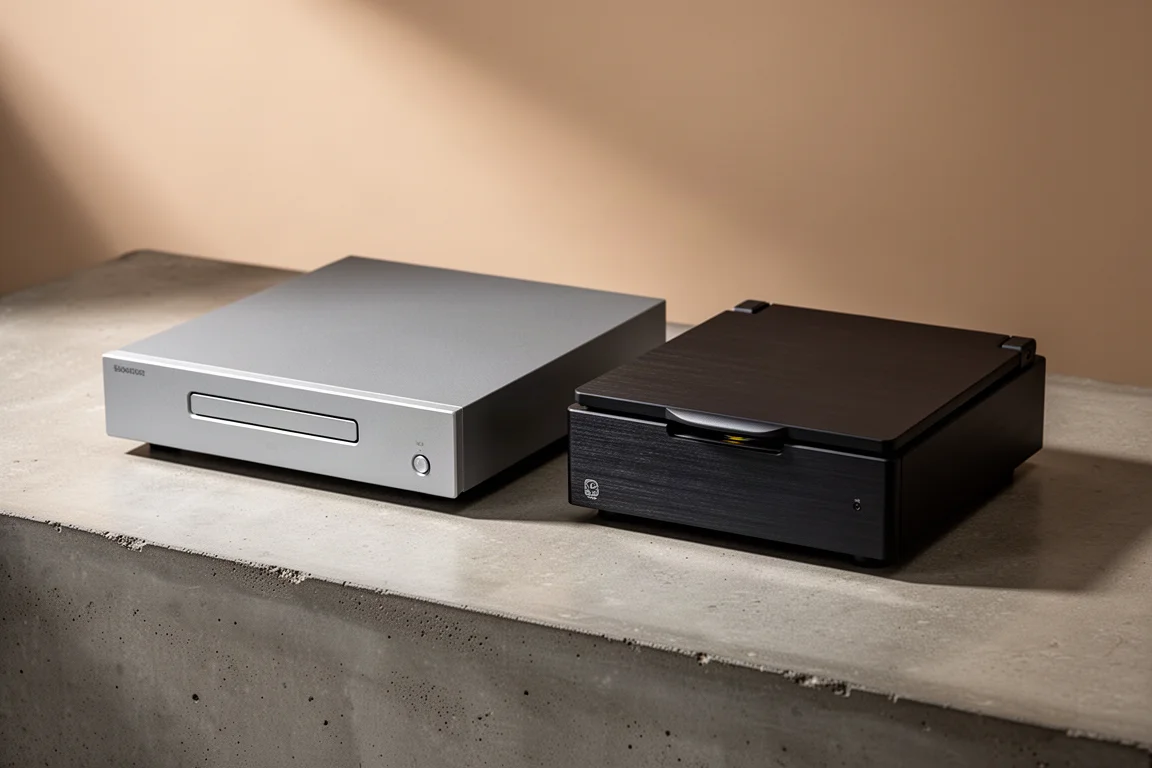
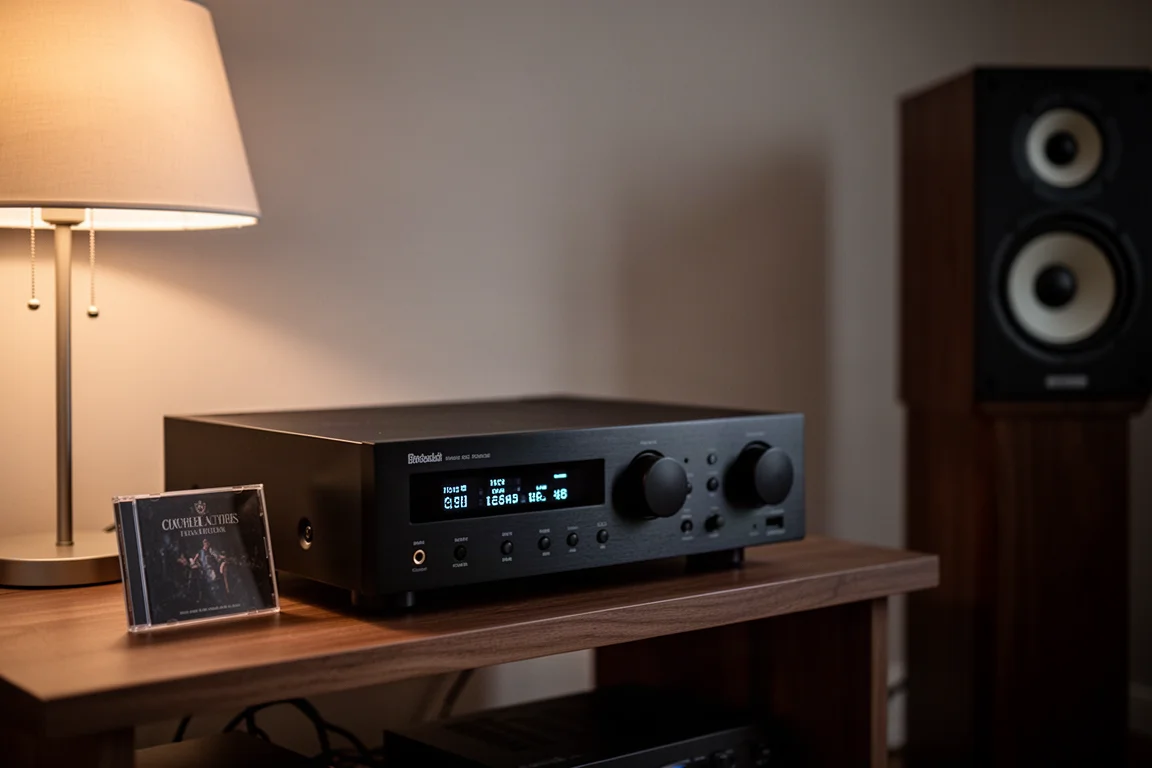
The Cambridge Audio Evo CD, at €1,200, was designed specifically for the Evo 150 and Evo 75. It has no DAC, no analog outputs and no coaxial or optical sockets. The Pro-Ject RS2T, at €3,000, is a compact transport with a flip-top lid and a coaxial output, and it works with any amplifier that accepts a coaxial digital input. Both deliver digital data to the amplifier. They differ in everything else they bring to the system.
Why CDs Still Earn Their Place Next to Streaming
There are practical reasons to keep a CD transport in a streaming system.
First, some releases simply are not available on streaming services. Box sets and deluxe editions are common examples, particularly when the extra discs carry live recordings or remixes that never made it into the streaming catalogue.
Second, the version on a streaming service is often not the version you remember. Original masters have frequently been replaced by remasters, and remasters often reduce dynamic range, so quiet passages and loud passages sit closer together. That can sound exciting for the first twenty minutes and tiring after that, because the contrast that makes music breathe has been squeezed out of it.
Two albums illustrate the point. James’s Laid, produced by Brian Eno, sounds superb on the first CD edition: it plays quietly at first and rewards you for turning it up, because the dynamics are intact, while the later remasters do not sound as good. Peter Gabriel’s fourth album, released in America as Security, follows a similar pattern: the original CD master is less detailed than later remasters but has the widest dynamic range.
Third, reissues sometimes change the running order. John Cale’s Fragments of a Rainy Season was originally a twenty-song album, and that sequence is the one many listeners grew up with. The 2016 deluxe reissue adds songs and rearranges the programme.
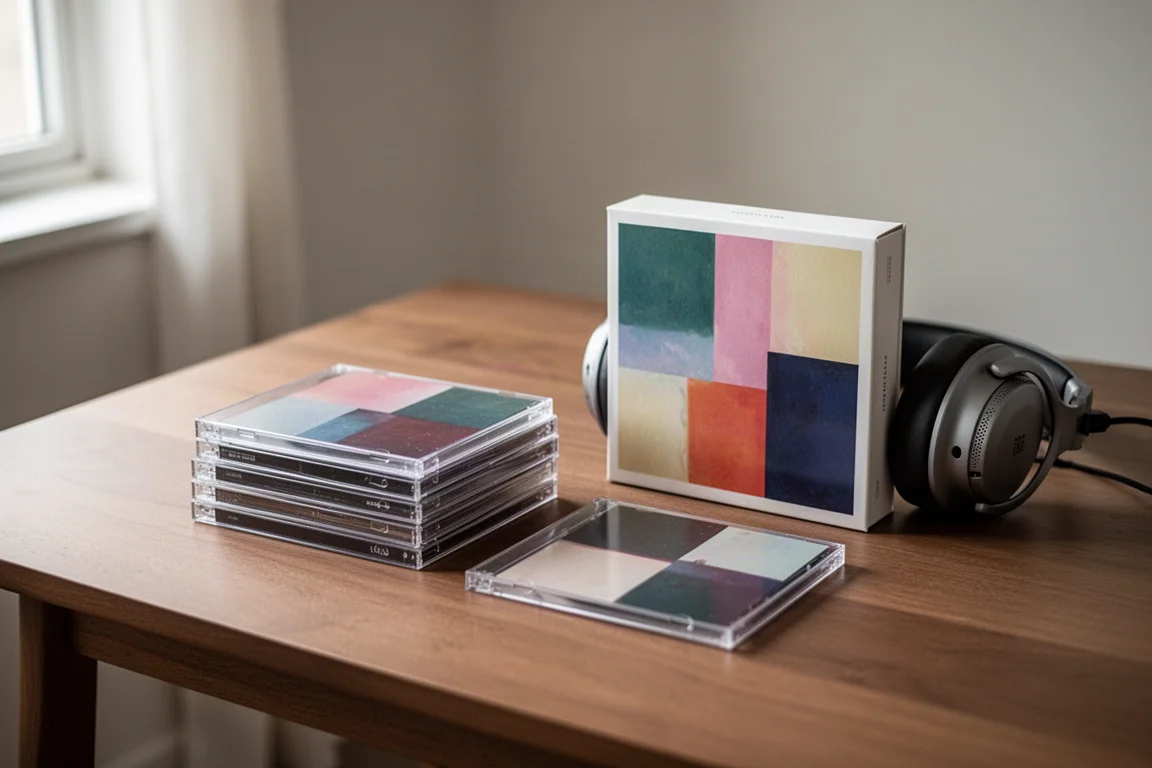
None of this makes streaming the wrong choice. It simply means a CD transport still has a job in a system built around a streaming amplifier, and it remains the only way to hear certain masters and certain running orders exactly as they were issued.
What to Look For in a CD Transport for a Streaming Amplifier
- Digital connection. A coaxial or optical output can feed any DAC-equipped amplifier. A proprietary link ties the transport to one brand’s ecosystem.
- Conversion. If the amplifier already has a DAC, paying twice for digital-to-analog conversion inside the transport is unnecessary.
- Metadata. Some transports hand album and track information to the amplifier, which then displays cover art and song titles. Others pass audio only.
- Controls. Check whether playback, track skipping and disc eject are available from the amplifier’s remote or its companion app.
- Build. The drawer or lid mechanism is the part you touch most often, so it is worth assessing before you commit.
Cambridge Audio Evo CD: Designed for the Evo 150 and Evo 75
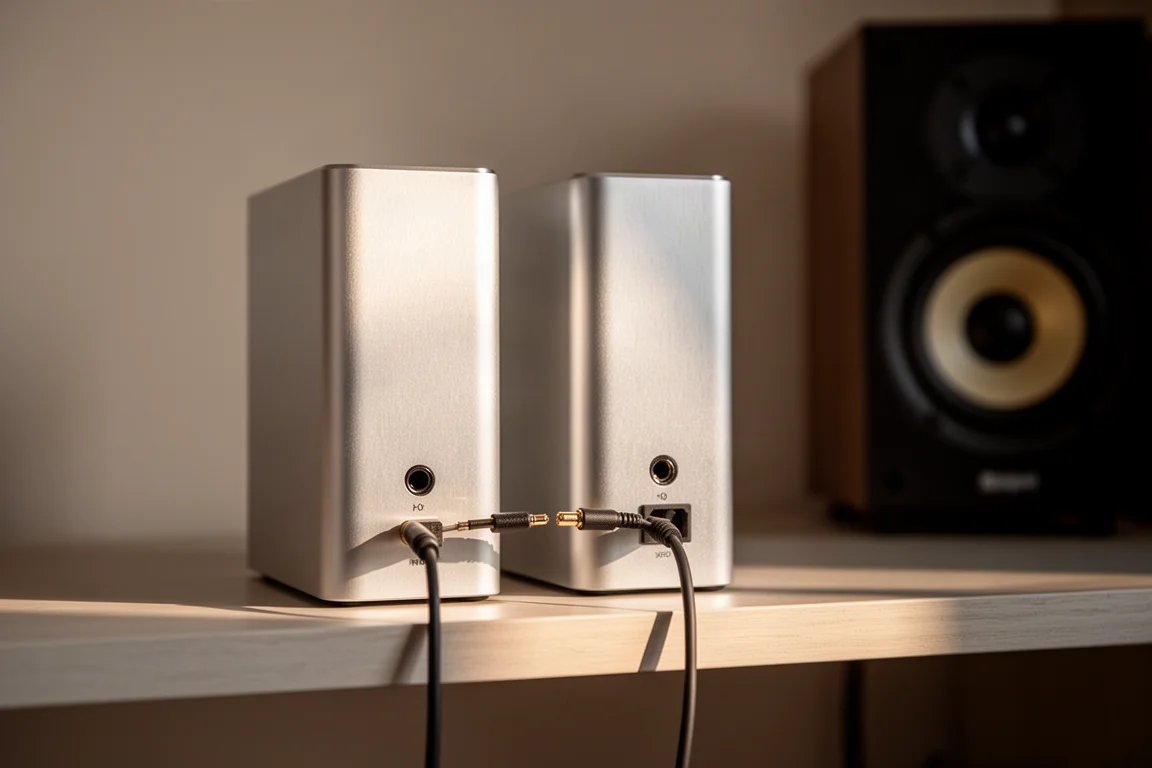
The Evo CD is built around a single idea: let the amplifier do the work. The back panel has no analog outputs, no coaxial socket and no optical socket, because there is no DAC inside. It connects to the Evo 150 or Evo 75 with one digital umbilical cable.
The front panel reflects that philosophy. There is no power display and only one button, for opening and closing the drawer. When a disc is loaded, the Evo CD reads its table of contents and sends that over the link. The amplifier then looks the album up in the MusicBrainz database and pulls back the album name, artist, track titles and cover art, all of which appear on its front panel screen. The lookup is quick in practice.
Playback is handled from the Evo’s front panel buttons, its remote control, or the StreamMagic app on a phone, where the same cover art and track information appear. Skipping moves through song titles rather than track numbers, which makes it far easier to jump straight to the track you want. If you did not know a disc was playing, you might assume the amplifier was streaming, apart from the small CD symbol on the display.
Living With the Evo CD: Metadata, Track Titles and Daily Use
Sonically, the Evo CD and a stream of the same album ripped to a hard drive are close. Playing the disc gives a slightly more vivid, more present result, but the gap is small rather than dramatic.
The listening experience is where the difference shows. Cover art, artist, album and track names on the amplifier’s screen make a CD feel less like an anonymous silver disc. Two caveats are worth knowing before buying. The disc tray feels less robust than the rest of the unit, which is a shame on a component at this price. And the artwork database is not complete: the occasional album arrives with no cover art at all, and the screen shows whatever it has.
For owners of an Evo 150 or Evo 75, the appeal is straightforward. The Evo CD gives the system a deliberate, physical way to play discs, and it keeps digital conversion and metadata lookup in one place instead of duplicating a DAC across two boxes.
Pro-Ject RS2T: A Compact Flip-Top CD Transport
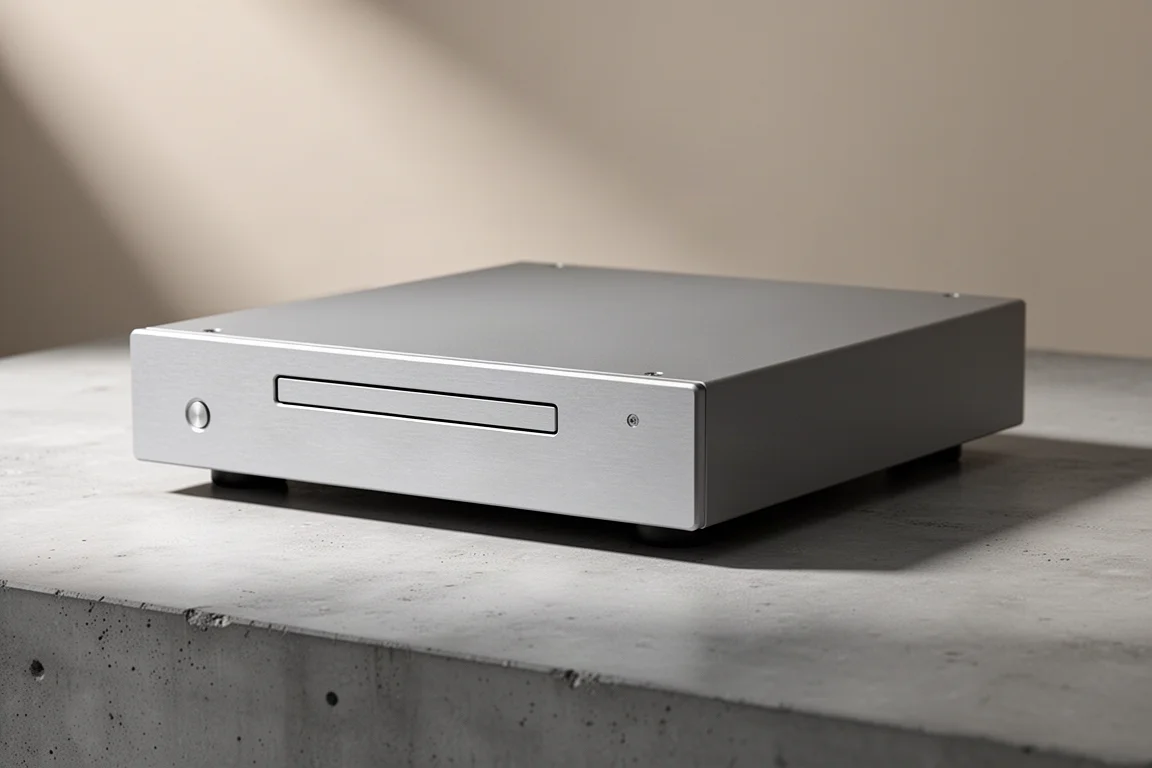
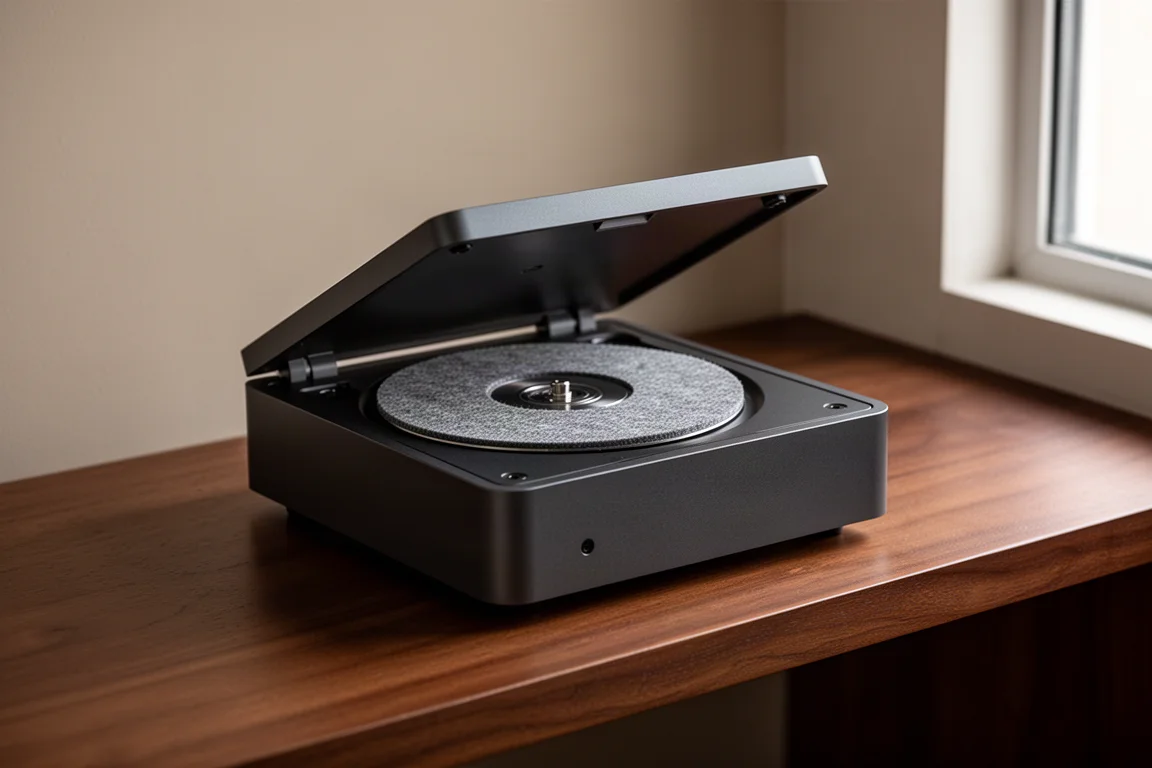
The Pro-Ject RS2T approaches the same job from the opposite direction. It is a very small unit with a flip-top lid that you lift by hand to load a disc, and it outputs a digital signal over a coaxial socket. Fed into the coaxial input of an Evo 150, it works well.
Its footprint is its clearest advantage. The flip-top mechanism is simple and direct, and the transport asks nothing of the amplifier beyond a digital input. Because the output is standard coaxial, it can also feed any other amplifier or DAC with a coaxial input, which makes it a more flexible component in a mixed or changing system.
What it does not do is metadata. No cover art, no track titles and no album information are passed to the amplifier. You get the audio on the disc and the track numbers on the amplifier’s display.
On sound, the two transports could not be separated. Despite using different connection types, the RS2T and the Evo CD produced no meaningful difference in this system, which suggests that once a transport delivers a clean digital signal, the amplifier’s conversion and output stage dominate the result.
What the Differences Actually Amount To
Both transports deliver digital data to the amplifier, and in this system they sounded the same. The decision therefore comes down to integration, flexibility and price.
The Evo CD is the integrated option. It is designed for the Evo 150 and Evo 75, it uses a single proprietary cable, and it turns the amplifier’s screen into a proper display for the disc: cover art, album, artist and track titles. It also lets the amplifier handle conversion, which avoids paying for a second DAC. The trade-offs are the tray’s feel, the occasional gap in the artwork database, and the fact that it only makes sense if you own one of those two amplifiers.
The RS2T is the flexible option. It is compact, it uses a standard coaxial output that any DAC-equipped amplifier can accept, and its flip-top mechanism keeps the design simple. It costs more than the Evo CD here, and it leaves metadata entirely to you, with no cover art or track names on the amplifier’s screen.
Buying Advice: Choosing Between the Two
Choose the Cambridge Audio Evo CD if you own an Evo 150 or Evo 75 and want the CD experience to match the rest of the system: cover art and track titles on the front panel, control from the remote or the StreamMagic app, and digital conversion handled by the amplifier you already paid for. At €1,200 it is the more affordable of the two, and the integration is the reason to buy it.
Choose the Pro-Ject RS2T if you value a small footprint, a tactile flip-top lid and a transport that will work with whatever amplifier or DAC you own now or later. At €3,000, the flexibility and the mechanism are what you are paying for, and you should be comfortable living without on-screen metadata.
If you are unsure, the useful question is whether your amplifier has a screen and a streaming platform behind it. If it does, the Evo CD turns that hardware into a genuine advantage. If you would rather keep the transport independent of one brand’s ecosystem, the RS2T is the simpler answer.
Conclusion
CDs occupy a niche, and neither of these transports is for everyone. For listeners who still buy discs, who want the original master or the original running order, and who run a streaming amplifier, both options solve the same problem in a considered way. The Evo CD makes the amplifier the brain of the system and gives CDs a proper interface. The RS2T keeps the transport small, simple and independent of any one brand. Both delivered the same sound in this system, so the choice is about how you want your system to work rather than about which one plays a disc better.
Further reading
Related Reviews
Hi-Fi Audio
Accuphase C-57 vs Allnic H-7000V: Two High-End Phono Stages Compared
A fully balanced solid-state phono stage with a pitch-black noise floor meets a tube design built for well-loved records. Here is how to choose between them.
Hi-Fi Audio
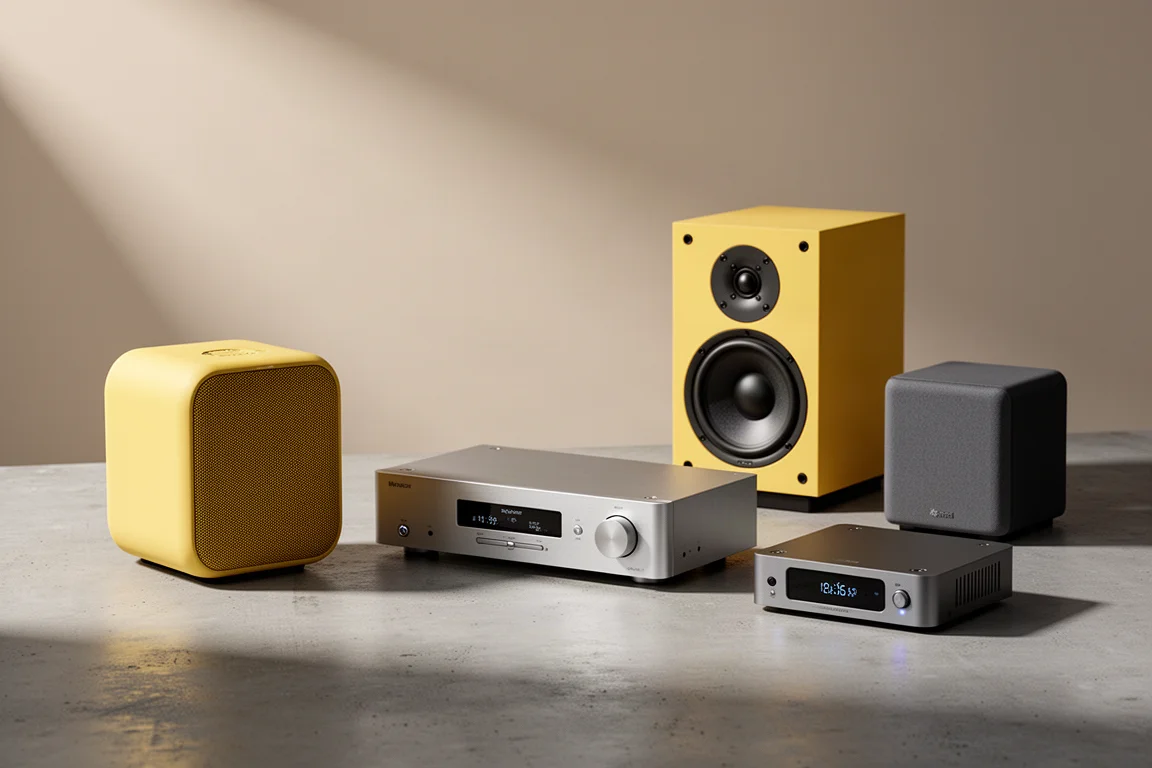
Active vs Passive Hi-Fi: Five Components for a Modern System
Five components that define modern active and passive hi-fi systems, with the strengths, trade-offs and setup details worth weighing before you buy.
Hi-Fi Audio
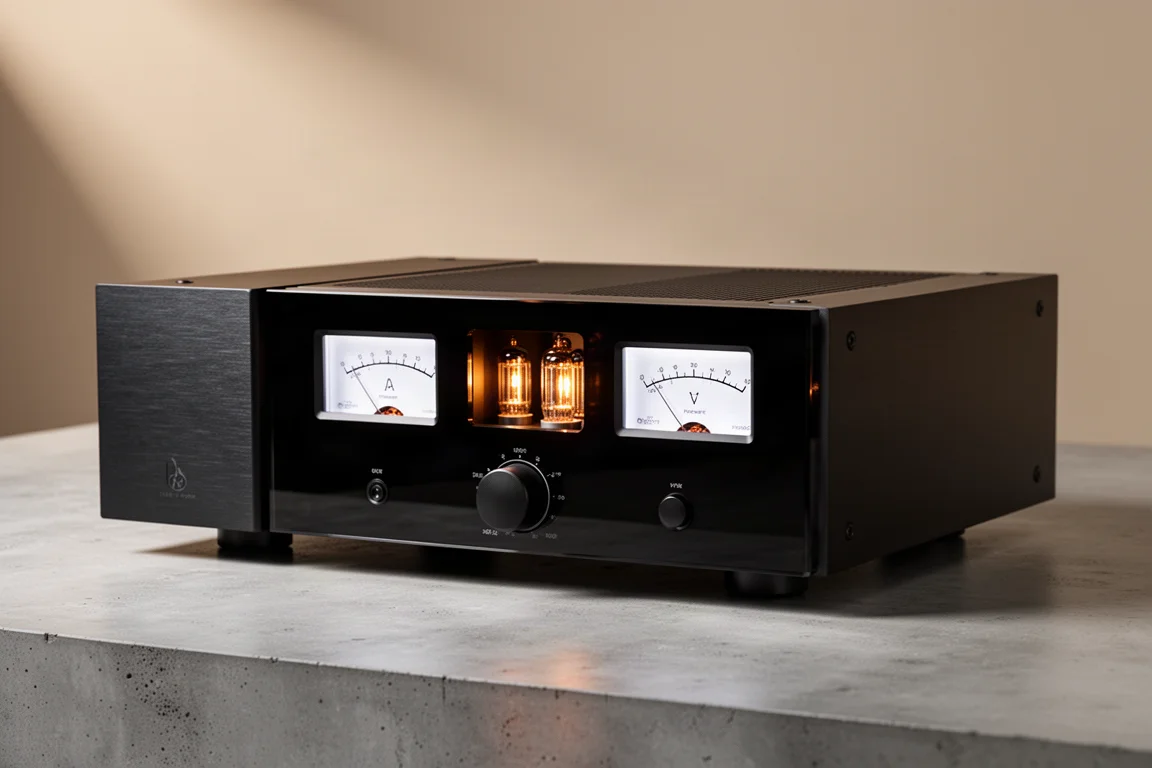
Advance Paris A10 Apex Review: A Hybrid Integrated Amplifier That Covers a Lot of Ground
A French hybrid integrated amplifier with a class A tube preamp stage, analogue power meters, and an internal DAC and phono stage good enough to make extra boxes unnecessary.