Hi-Fi Speakers
Castle Windsor Earl Review: A British Stand-Mount Speaker With Real Weight and Warmth
The Castle Windsor Earl brings UK-built cabinets, hand-finished veneers and a warm, full-bodied sound to a classic stand-mount format. Here is what to know before buying.
Introduction
Britain has an unusually deep loudspeaker tradition, and much of it traces back to public broadcasting. During the 1960s the BBC’s engineering teams pushed loudspeaker design forward, and companies such as Rogers, Stirling, Goodmans and Ram built loudspeakers for the corporation under licence. The best known of those designs, the LS3/5a, is still produced under licence more than 50 years later. Engineers from that world went on to found Harbeth, Spendor and PMC, while KEF grew directly out of producing drive units for BBC monitors.
Plenty of those names have since disappeared or moved production overseas, and several British brands now survive in name only. Castle is one of the exceptions. IAG, the group that also owns Wharfedale, Quad, Audiolab and Mission, has expanded its premises to 25,000 sq ft to include a 9,000 sq ft production facility. The two newest Castle models, the Windsor Earl and the larger Windsor Duke, are the first Castle speakers to be fully manufactured in the UK in almost 20 years, with cabinets, drive units and crossovers all made in house.
The Windsor Earl is the smaller of the pair, offering 60 percent of the cabinet volume of the Duke, and it sells for £3,849.
Who This Product Is For
The Windsor Earl is a stand-mount speaker for listeners who value tone and body over forensic analysis. Its voicing leans warm, with a smooth and saturated midrange of the kind that has long defined the best British monitors, but it is not as cosy or relaxed as some older Castle stand-mounts. The bass has genuine weight behind it, and the treble is open enough that the speaker does not sound shut in.
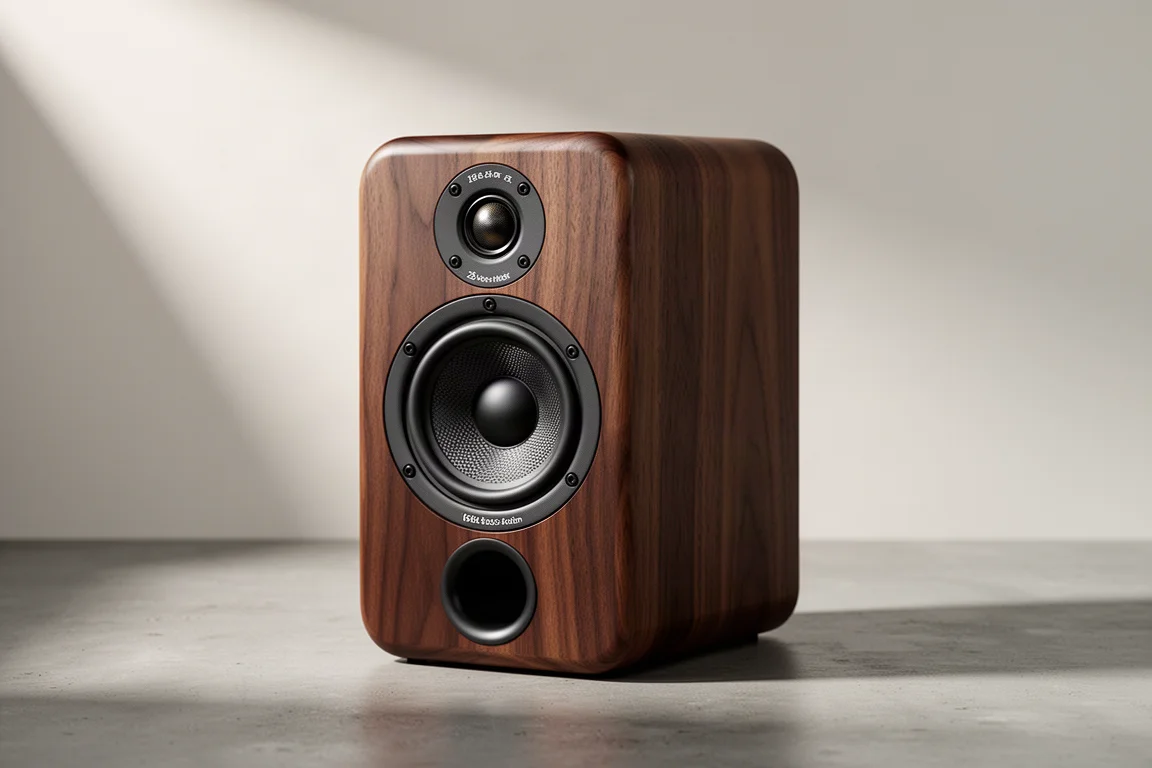
That combination suits people who want to listen for hours without fatigue, and it also appeals to buyers who would normally dismiss a traditional British stand-mount as too polite in the lower registers. The Earls measure 430 x 240 x 260 mm and weigh 11 kg each, which is substantial for the format but still easy to place on a good pair of stands.
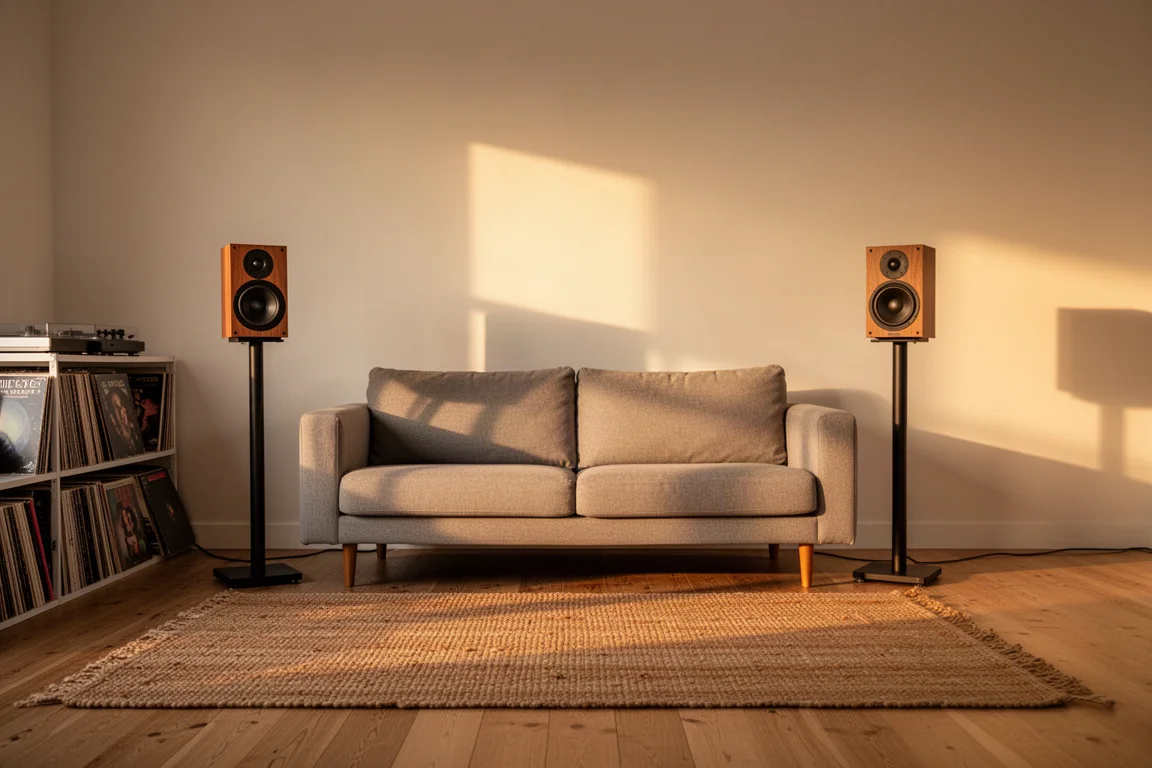
The trade-off is that this is a speaker with a point of view. If your priority is maximum transparency and the smallest possible gap between the recording and what you hear, the Earls ask you to accept a little colour in exchange for their warmth. If your priority is a rich, full-bodied presentation that makes almost any recording enjoyable, they land much closer to the mark.
Main Strengths
Dynamics are one of the Earls’ strongest cards. The mid-bass arrives with a sense of attack that speakers of this size do not always manage, and the low end carries enough weight to keep a track moving. Castle rates the design down to 58 Hz at minus 3 dB, and while the bass does give up a little definition and speed as a result of that weight, the overall balance stays convincing.
Tonally, the Earls are warm without tipping into sluggishness. They retain a smooth, organic character while pulling back from the overly comfortable presentation of older Castle stand-mounts. Up top, the 28 mm tweeter is judged carefully: high frequencies are open and extended with good refinement, and upper harmonic structures are preserved well enough for the speakers to image and soundstage close to the best designs of this size.
Just as importantly, the Earls sound like considerably larger speakers than they are. Bass, dynamics and midrange openness all suggest a bigger cabinet, and the speaker is not fussy about what drives it. That combination makes it easy to live with over long sessions rather than something that only flatters a handful of well-recorded albums.
Design and Build Quality
Castle has always been prized for its cabinets, and the new Windsor models are no exception. The enclosure uses a sandwich construction of two MDF layers separated by a thin layer of acoustic glue, which helps absorb cabinet vibrations and dissipate them as heat. Castle states this is especially effective through the midrange. Point-to-point bracing stiffens the enclosure and damps resonances, particularly in the bass region.
The 165 mm mid-bass driver was developed specifically for the Earls and uses a woven polypropylene cone rather than the more common vacuum-formed variety. Precision-cut strips are woven into a thin sheet, pressed into shape and trimmed to size, which changes the rigidity of the cone and how it interacts with the voice coil and surround. Castle’s literature credits the process with reduced resonances and a flatter frequency response. The motor assembly includes an aluminium compensation ring intended to flatten impedance and reduce harmonic and intermodulation distortion, and the tweeter adds a copper cap on the pole piece for the same reason.
Notably, the driver design avoids ferrofluid cooling, which can dry out over time, so dynamic range and resonance behaviour should hold up well into the future. The crossover is a fourth-order Linkwitz-Riley design, which gives steep slopes outside each driver’s intended range and should keep breakup modes well controlled, though steeper slopes also mean more components in the signal path. The cabinet is a bass reflex design with a single wide aperture port, and the rear panel carries one set of premium binding posts above a declaration that the speakers are made in Britain.
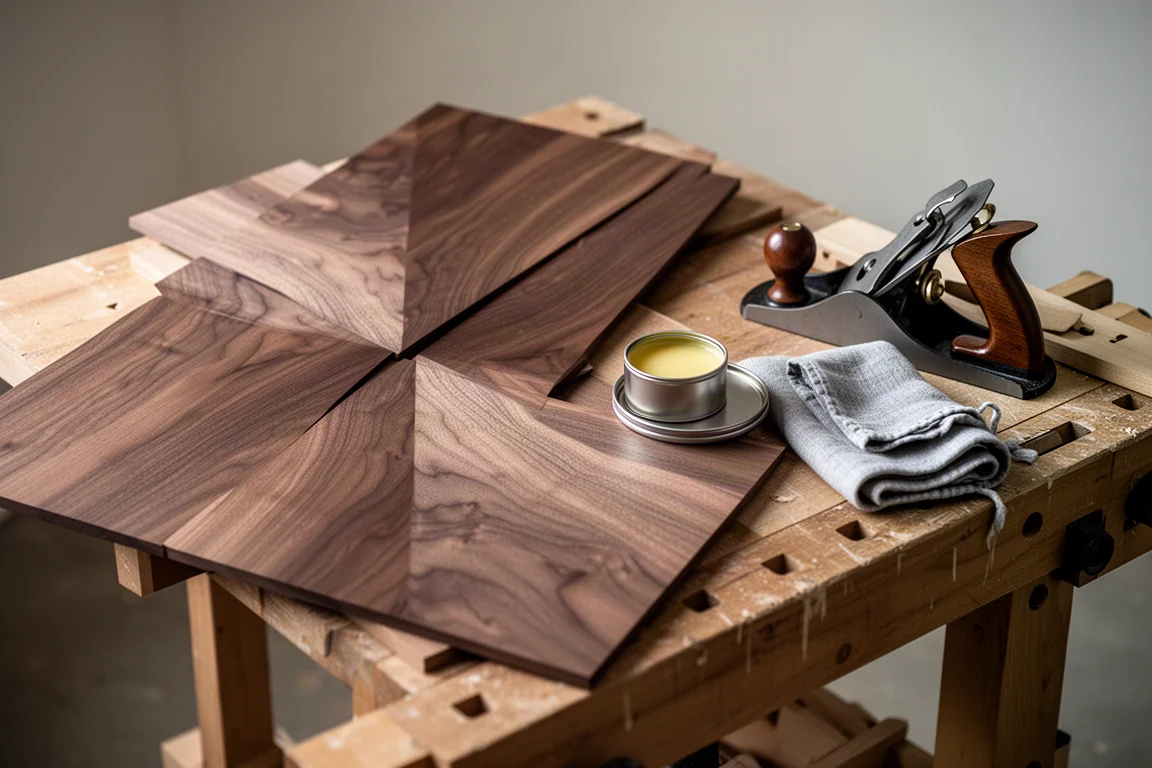
The cabinets themselves use architectural grade veneers from sustainable sources. Book-matched, mirror-finished walnut or rosewood real wood veneers are hand finished through a labour-intensive sealing and waxing process, so each pair has a genuinely furniture-grade appearance. The design work, meanwhile, was handled by an external German design consultancy rather than in house, with the brief being to make sensible choices rather than reinvent the wheel.
Sound Character and Performance
The Earls are unambiguously bass and lower-midrange led. Your attention goes to the weight and texture in that region first, and it is hard not to conclude that the voicing was deliberate: a slight softening in exchange for a liquid, saturated midrange that many listeners find irresistible. Despite that, the speakers are not dark. The top end is open, extended and refined, which keeps detail available without pushing it forward.
Compared with a pair of ProAc Response 1 stand-mounts, the Earls sound like much bigger speakers, with more bass, greater dynamics and a more open midrange. The ProAc digs out a little more information from recordings, with crisper transients and notes that fall away into a darker space, but the differences in detail are not large. What is obvious is the difference in presentation: the Earls are tonally warmer and richer, and they deliver what they have in a more effortless manner.
The result is a speaker that is genuinely fun to listen to, which is not always a given at this level. It is more accurate to describe the Earls as trading some transparency for a more dynamic, colourful presentation than to dismiss them as merely entertaining. Listeners who lean analytical may prefer a more revealing design, but those who want to hear everything without having it pushed at them will find the balance here very well judged.
Placement and Partnering Equipment
The Earls need room to breathe. There is a fair amount of mid-bass energy to keep in check, and placed too close to a wall the bass thickens and bleeds into the midrange, obscuring detail and upsetting the tonal balance. In practice, that means positioning them a meaningful distance out from the wall behind them, measured from the centre line of the front baffle rather than the rear of the cabinet. Toe-in ended up fairly standard, with the speakers pointing wide of the shoulders, though rooms differ and your own setup will need adjusting by ear.
Amplifier matching is less of a headache than the placement. The Earls were not particularly fussy about partnering equipment during testing. A warm, high-powered integrated drove them well but did not have the resolution to get the best from them, while a more revealing integrated exposed their detail and character at a small cost in dynamics and scale. The most neutral amplifier on hand combined the insight of the one with the drive of the other and proved a very satisfying match, and a vintage pre and power combination opened up the space between performers even further.
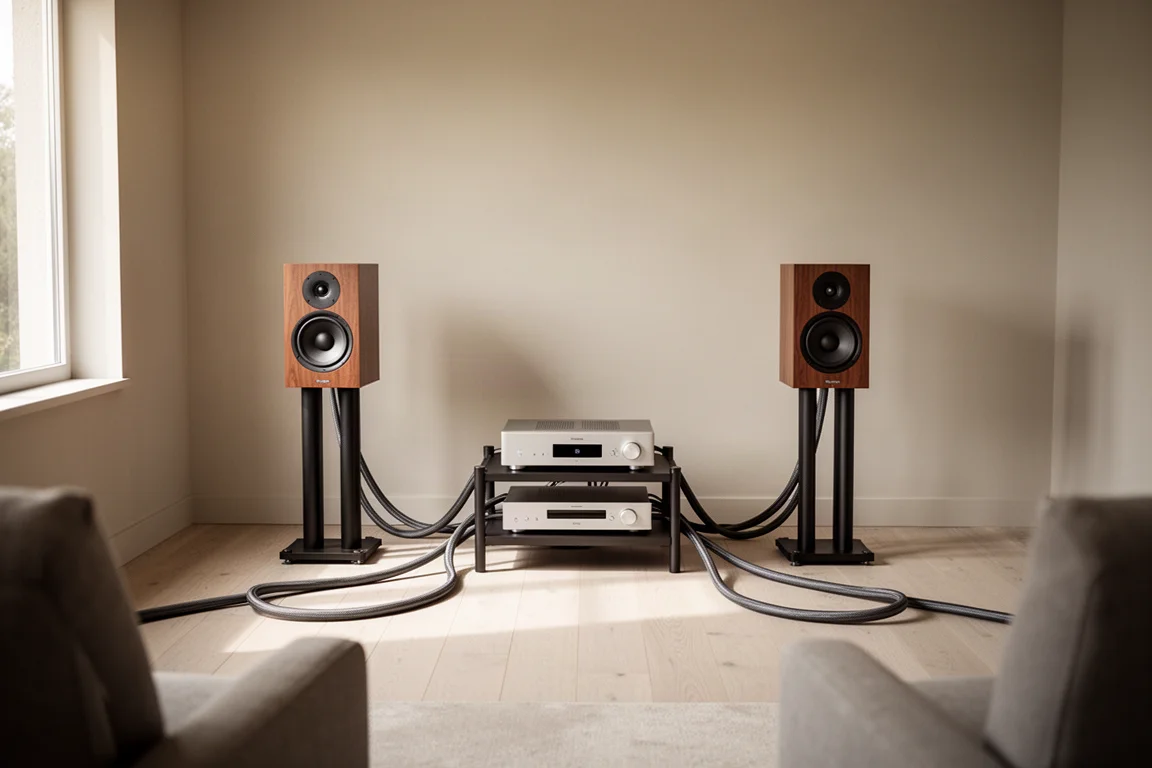
A 25 watt class A integrated demonstrated that high wattage is not a requirement here, which widens the pool of suitable amplifiers considerably. If you have the option, cooler-sounding amplification is worth trying, and amplifiers from the same group as Castle are an obvious candidate for an audition. Warmer amplification will lean into the speaker’s natural character, so the choice comes down to whether you want to reinforce that warmth or balance it.
Things to Consider Before Buying
The most important consideration is the voicing itself. The Earls prioritise weight, warmth and smoothness, and they give up a small amount of resolution and speed to get there. If your reference point is a lean, hyper-transparent monitor, this is a different proposition, and it is worth being honest about which presentation you actually enjoy over a long evening.
Placement is the second factor. These are not speakers that reward being pushed into a corner or up against a wall, so a room that allows some space behind the speakers will get far more out of them than a tight one. Budget for a decent pair of stands as well, since the cabinet is substantial and the speaker deserves a stable platform.
It is also worth listening to alternatives at the price. The Neat Elite Classics, at £3,250 in the wood finish, offer similar levels of midrange resolution but a more neutral tone and a brighter, more revealing AMT tweeter, along with more polite bass. More revealing stand-mount designs exist further up the market, generally trading the Earls’ colour and body for greater transparency. None of that diminishes what Castle has done here, but comparisons make the decision easier.
Buying Advice
The Windsor Earl makes the most sense for a listener who wants a traditional British stand-mount sound with real low-frequency substance. Pair it with neutral or moderately warm amplification, give it space behind and around it, and it will reward long listening sessions rather than demanding constant attention to recording quality.
Ownership looks straightforward as well. The absence of ferrofluid in the driver means one common long-term degradation mechanism is off the table, and the hand-finished real wood veneers should age into their surroundings rather than date. This is a speaker built like a piece of furniture, and the beauty is not only skin deep.

If you are weighing the Earls against a more analytical design, the deciding question is simple: do you want your speakers to open a window on the recording, or to make the music sound full, warm and effortless? The Earls answer the second question convincingly, and they do it while still offering enough refinement at the top and punch at the bottom to keep the result engaging.
Conclusion
Castle has returned to UK manufacturing with a speaker that upholds the brand’s reputation for furniture-grade cabinets while sounding considerably more capable than its size suggests. The Windsor Earl delivers solid bass, a rich and smooth midrange, and an informative, refined treble, all in a package that is easy to drive and comfortable to listen to for hours.
At £3,849 it asks for a commitment, and it does want space around it to perform at its best. Buyers who prioritise warmth, weight and a full-bodied British monitor character will find a great deal to like here, and the extra bass and treble ability extends its appeal well beyond listeners who chase midrange tone alone.
Product link
View more details for Castle Windsor Earl
This product is mentioned in the review. Check the specifications, options, and compatibility before buying.
View more details for Castle Windsor EarlFurther reading
Related Reviews
Hi-Fi Speakers
1723 THX Tower vs 1528 Bookshelf: Which Speaker Fits Your Room?
Two speakers at roughly the same price, built very differently. How the 1723 THX tower and the 1528 bookshelf compare on construction, bass, power needs, and sound.
Hi-Fi Speakers
Acoustic Energy AE 300 Review: Deep Bass From a Compact Standmount
A two-way standmount with real wood veneer, surprising low-end weight, and a warm, easygoing character. Here is what to know before buying.
Hi-Fi Speakers
Acoustic Energy AE1 40th Anniversary Review: A Modern Take on a British Classic
A compact standmount that revives a 1980s favorite with all-new parts, a warm mid-centric balance, and a price of £1,499 per pair.