Sleeping Bags
Carinthia Defense One Review: A Military-Spec Sleeping Bag at a Civilian Price
A practical look at the Carinthia Defense One, a synthetic-fill military sleeping bag with a 39°F comfort rating, a modular design, and honest value for warm-weather camping.
Introduction
Carinthia is a European military contractor whose equipment is widely recognised inside the tactical world and far less familiar to civilian campers outside Europe. That reputation has a practical side effect: several Carinthia designs are relabelled and sold by American brands under their own names, including the Defense Four, which appears elsewhere as the Eberlestock Revelli.
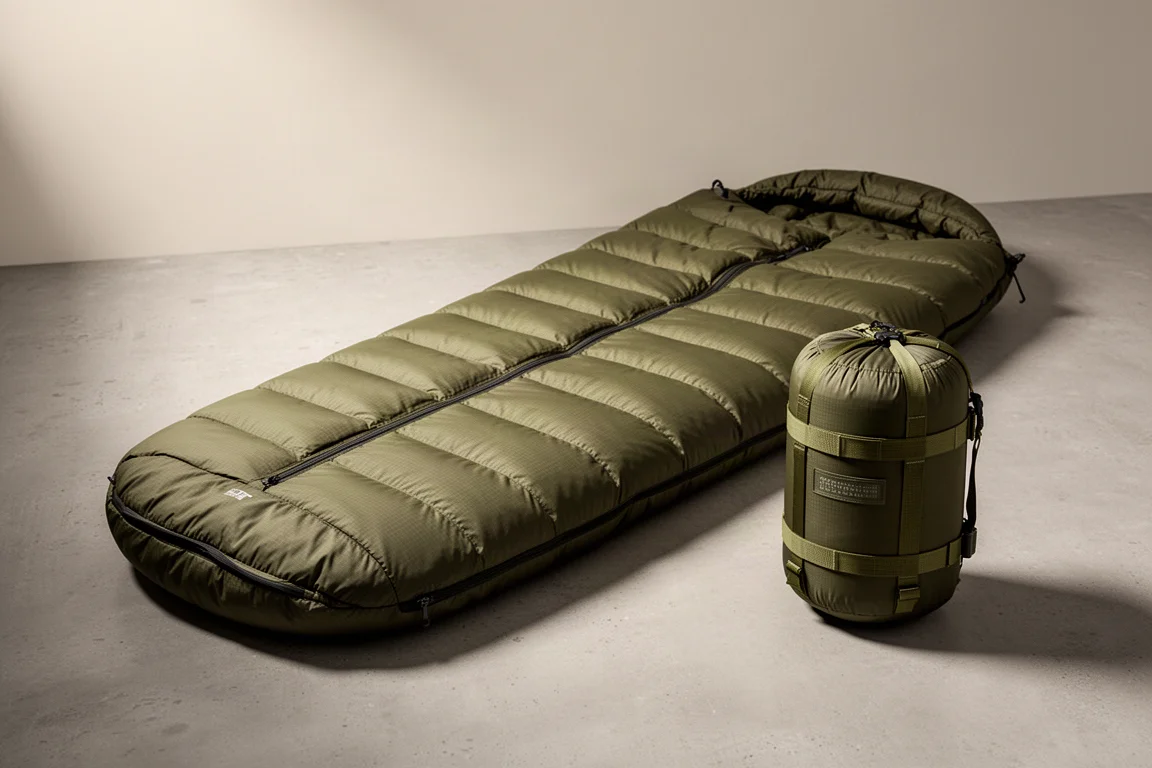
The Defense One is the warm-weather member of the same family. It is a synthetic-fill mummy sleeping bag with a 39 degrees Fahrenheit comfort rating, a 14 degrees Fahrenheit extreme rating, two sizes and a single olive colourway. Brand new examples sell for around $117, which is a modest figure for a bag built to military specification. The more interesting question is not the price, but how much thought went into a bag designed to be compressed, carried and depended on.
Who This Sleeping Bag Is For
The Defense One comes in two sizes. The medium is intended for sleepers up to 6 feet 1 inch, measures 7 feet long and 33.5 inches wide, and weighs 2.3 pounds. The large is intended for sleepers up to 6 feet 7 inches, measures 7 feet 6.5 inches long and 34.5 inches wide, and weighs 2.6 pounds.
Those dimensions look generous for the recommended heights, and that is deliberate. Each bag leaves extra room at the foot so you can keep boots, shoes or a clothing bag inside with you, warm and dry, instead of leaving them outside in the cold. A six-foot sleeper effectively gets a seven-foot bag with a storage compartment at the bottom.
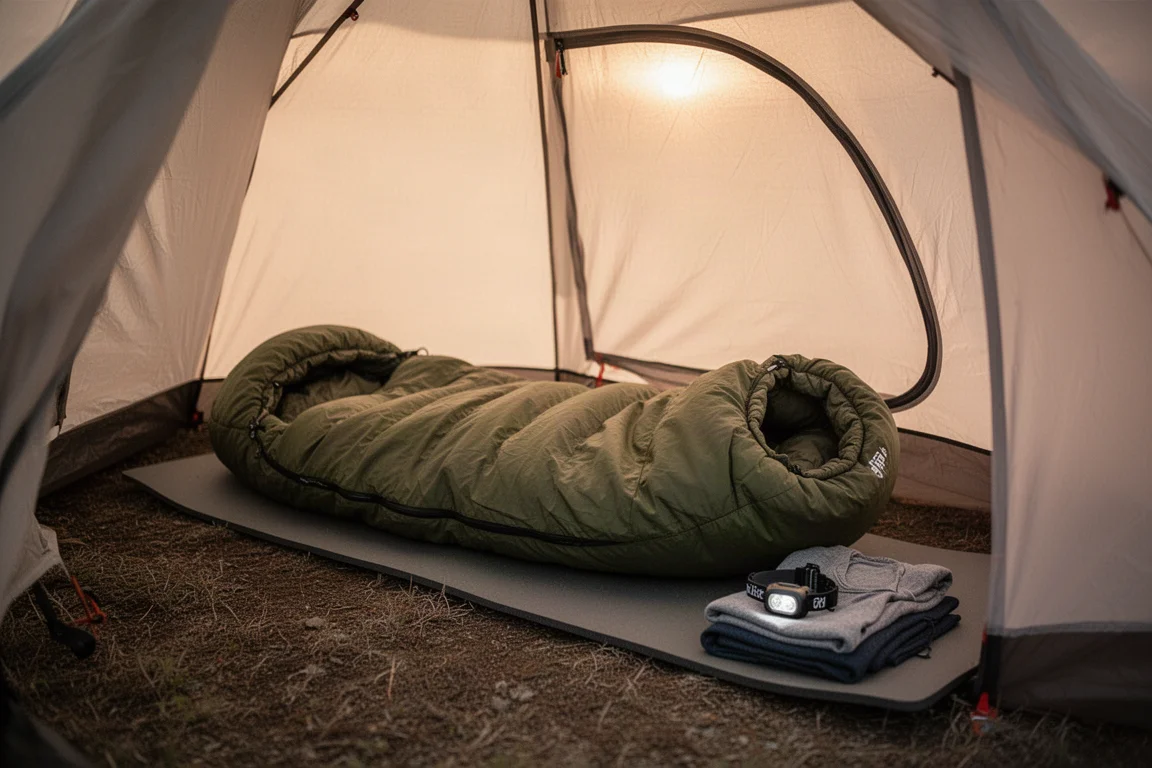
Both sizes share the same olive shell and the same comfort rating, so the decision comes down to your height and how much gear you want to keep at your feet. Used as intended, the Defense One covers late spring through early autumn in most temperate climates. If you sleep cold, it is better understood as one component of a layered sleep system than as a standalone three-season bag.
Design and Materials
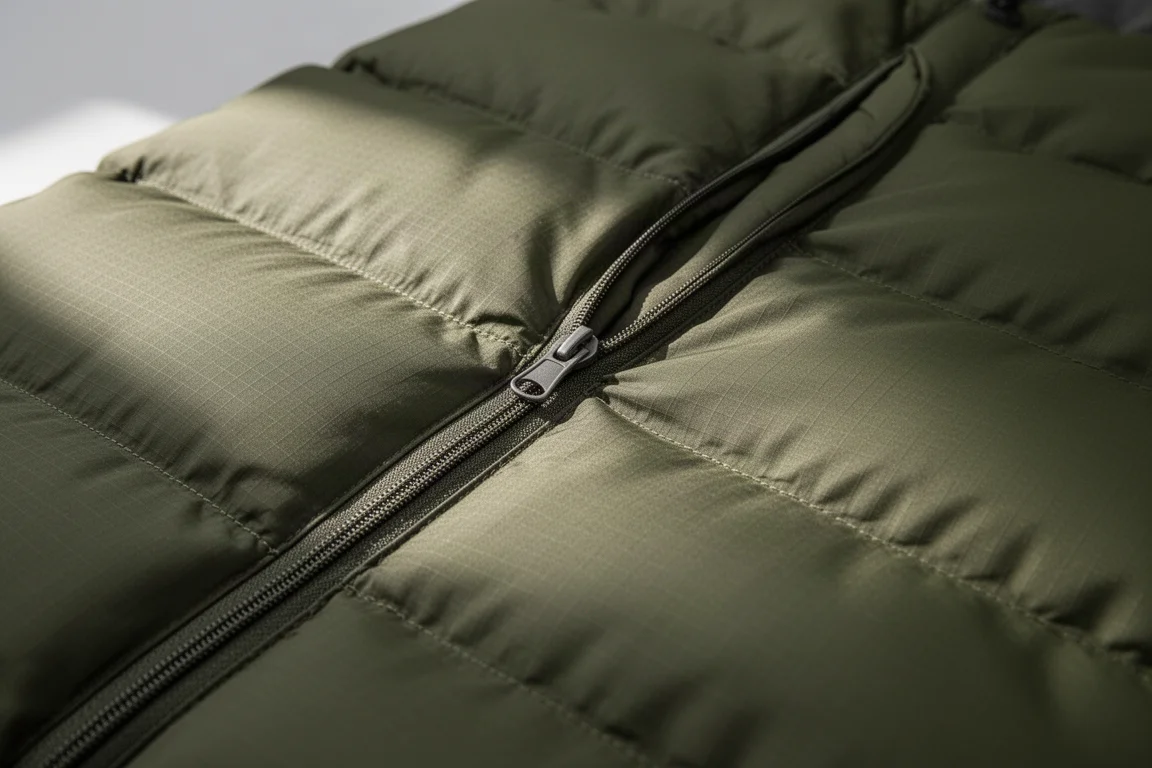
The outer shell is a polyamide ripstop that is both wind and water resistant, with a 1,000 millimetre hydrostatic head rating, and it remains breathable. The inner shell is also polyamide ripstop, with moisture-wicking properties.
The insulation is Carinthia’s own G-LOFT, a hollow fibre made in Austria. It is highly compressible and has a strong weight-to-insulation ratio, and it is specifically chosen because it performs well in very moist conditions. G-LOFT is a well-established insulation used in sleeping bags and jackets alike.
Inside the bag, a layer called Thermoflect sits behind the insulation. It is a very thin, lightweight aluminium material that reflects body heat back toward the sleeper, and it is claimed to raise the bag’s heat retention by roughly 11 percent. It is an unusual feature and one that is not commonly seen in this category.
The detailing is equally deliberate. There is a centre zip with a wind block that runs over the top and is held in place with velcro patches. The two EZ zippers are comparable to YKK units and have good pulls, and because they are two-way you can open the bag from the bottom to vent around your feet and legs. Behind the zipper there is a draft collar. Two draw cords, one on each side of the head, let you cinch the hood snugly around your face. Horizontal baffles run across both the top and the bottom of the bag. Packed into its stuff sack, the bag measures roughly 10 inches by 7 inches, and the sack uses a five-way compression system with three horizontal and two vertical straps, which lets it be squeezed down considerably.
Main Strengths
Construction quality is the first thing that stands out. The stitching is even, there are no loose threads, and no insulation works its way through either the shell or the lining. The zippers run smoothly and do not catch. The bag feels strong and durable in a way that reflects its military origins, and that build quality translates directly into a long service life.
Weight is reasonable for a military-spec synthetic bag, and the price is genuinely strong for what you get. The Defense One is also designed to work with the rest of the family: it can be combined with other Defense sleeping bags, so an existing bag can be pushed into much colder territory by pairing the two together. It is a well-thought-out piece of kit that is simple, light enough to carry, warm for its rating, highly compressible and affordable at the same time.
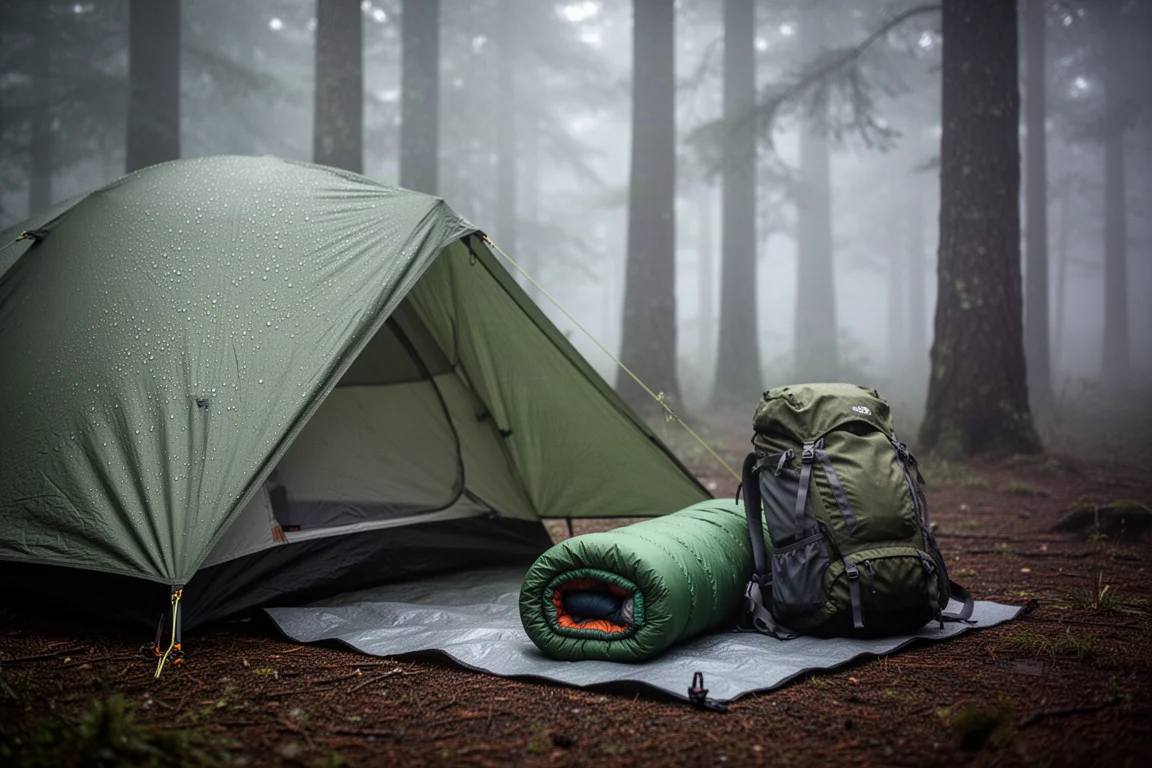
The synthetic fill also brings a practical advantage over down. Moisture is far less of a concern, the bag tolerates damp conditions, and it can stay compressed for long periods without the worries that come with a down bag.
Temperature Ratings and Real-World Comfort
Carinthia rates the Defense One at 39 degrees Fahrenheit for comfort and 14 degrees Fahrenheit as the extreme limit. Those two numbers mean very different things. The comfort rating is the temperature at which the bag is meant to keep an average sleeper comfortable. The extreme rating is a survival figure: at that point you will be cold and you will shiver, but you will not be in danger.
In extended use, the comfort rating has proven to be honest rather than optimistic. The bag is warm and comfortable at 39 degrees Fahrenheit, and sleepers who run warm can reasonably push it lower. That matters, because sleeping bag ratings are often generous on paper and disappointing in the field. Here the published number reflects what the bag actually delivers.
Things to Consider Before Buying
There is little to criticise at this price, but two things are worth understanding before you buy.
The first is weight. A synthetic bag of this rating is heavier than an equivalent down bag, and that is simply the trade-off for the material. Down is lighter, but it is also more sensitive to moisture. The synthetic fill here keeps working when damp, can stay compressed for long stretches and does not require the same care.
The second is that the Defense One is, by design, built for military use. For casual civilian camping it can feel overbuilt. That is not a flaw so much as an indication of longevity: this is a bag that will keep going for a very long time.
It is also worth remembering that the 14 degrees Fahrenheit figure is not a comfort target. If you plan to camp below the comfort rating, treat the extreme rating as a margin of safety rather than a working temperature.
Building a Sleep System
One of the more useful aspects of this bag is that it is not meant to stand alone. The Defense One can be combined with other Carinthia Defense sleeping bags, including the Defense Three and the Defense Four, as well as the relabelled versions sold by American brands. The idea is straightforward: take an existing temperature rating and extend it by pairing a second bag with the first, creating a far warmer system for winter conditions.
For anyone who already owns a colder Defense bag, adding the Defense One creates a genuinely flexible setup that covers mild weather on its own and serious cold when the two are used together. It is one of the reasons this family of bags has such a loyal following.
Buying Advice
At around $117 new, the Defense One is one of the rare cases where a genuinely capable product does not demand a premium. The quality is top-notch, the temperature range is accurate, and the design is versatile enough to be combined with other bags into a much warmer sleep system.
Choose the medium if you are up to 6 feet 1 inch and the large if you are up to 6 feet 7 inches, and factor in the foot space when deciding. If you want a single bag for mild weather camping, this is an easy recommendation. If your goal is cold-weather camping, plan for a second bag to pair with it rather than expecting one bag to cover everything.
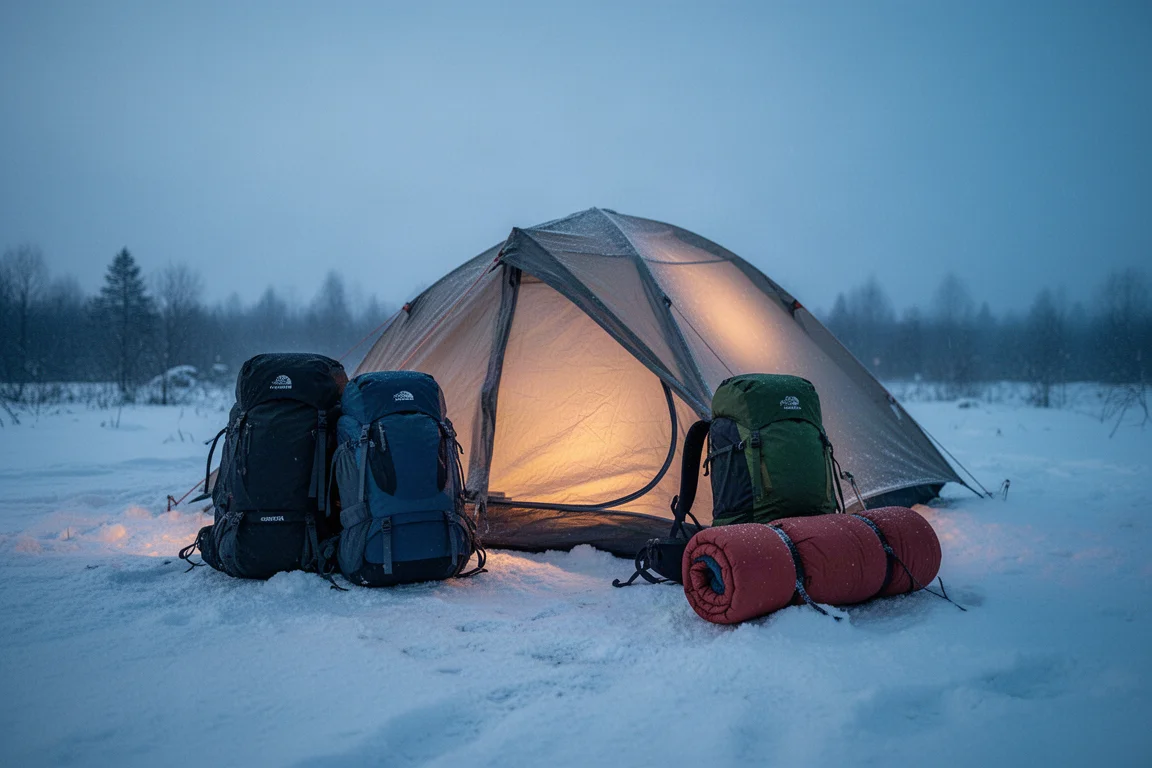
Synthetic fill is the right choice for humid, wet or unpredictable conditions, and this is a well-executed example of it. For a bag that can be compressed small, stored compressed, and used hard for years, the value here is difficult to argue with.
Conclusion
The Carinthia Defense One does what a good sleeping bag should do: it keeps its promises. The 39 degrees Fahrenheit comfort rating holds up, the build quality is excellent, the zippers and hood detailing are well designed, and the synthetic insulation handles moisture without drama. It compresses well, weighs a reasonable amount for what it is, and can be combined with other bags in the family to extend its range into winter.
The considerations are minor and predictable. It is heavier than a comparable down bag, and it is built to a military standard that casual campers may never fully use. Neither changes the conclusion. At this price, with this level of construction and an honest temperature rating, the Defense One is a straightforward recommendation for warm-weather camping and for anyone building a layered sleep system.
Product link
View more details for Carinthia Defense One
This product is mentioned in the review. Check the specifications, options, and compatibility before buying.
View more details for Carinthia Defense OneFurther reading
Related Reviews
Sleeping Bags
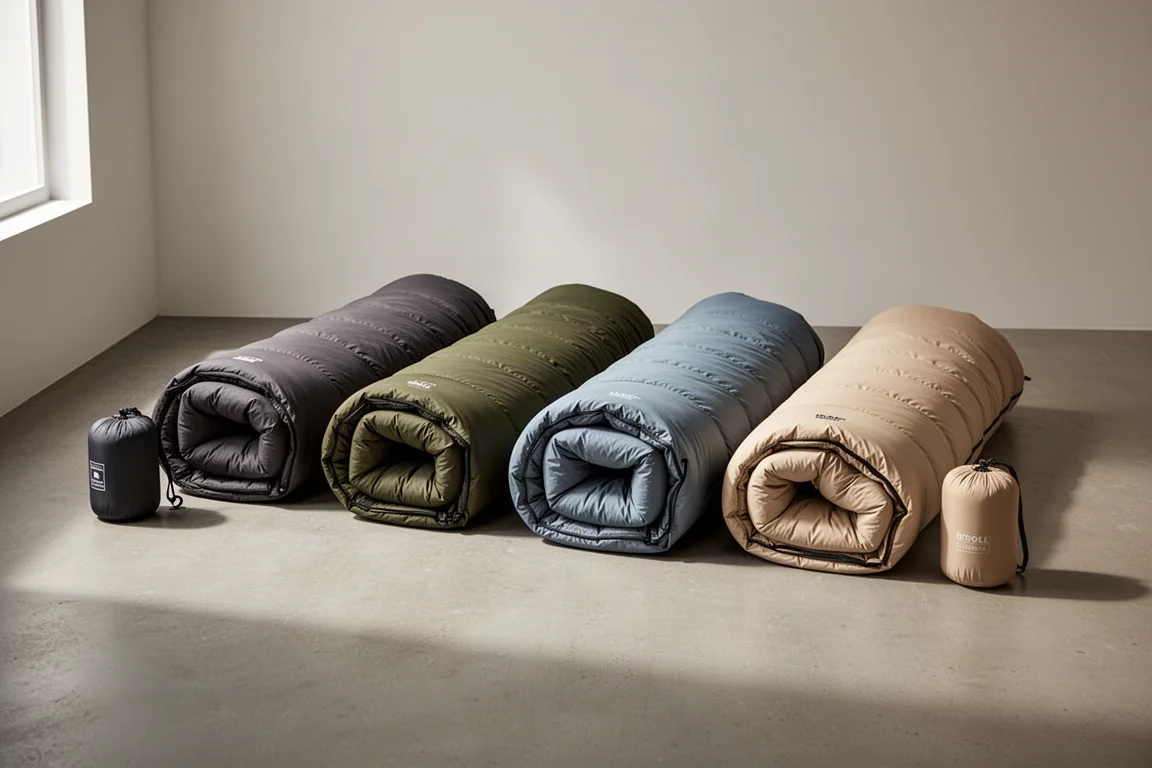
Best Down Sleeping Bags Under $300: Four Backpacking Options Worth a Look
Four down sleeping bags that stay under $300, compared on fill power, baffle design, hood comfort, and packed size.
Sleeping Bags
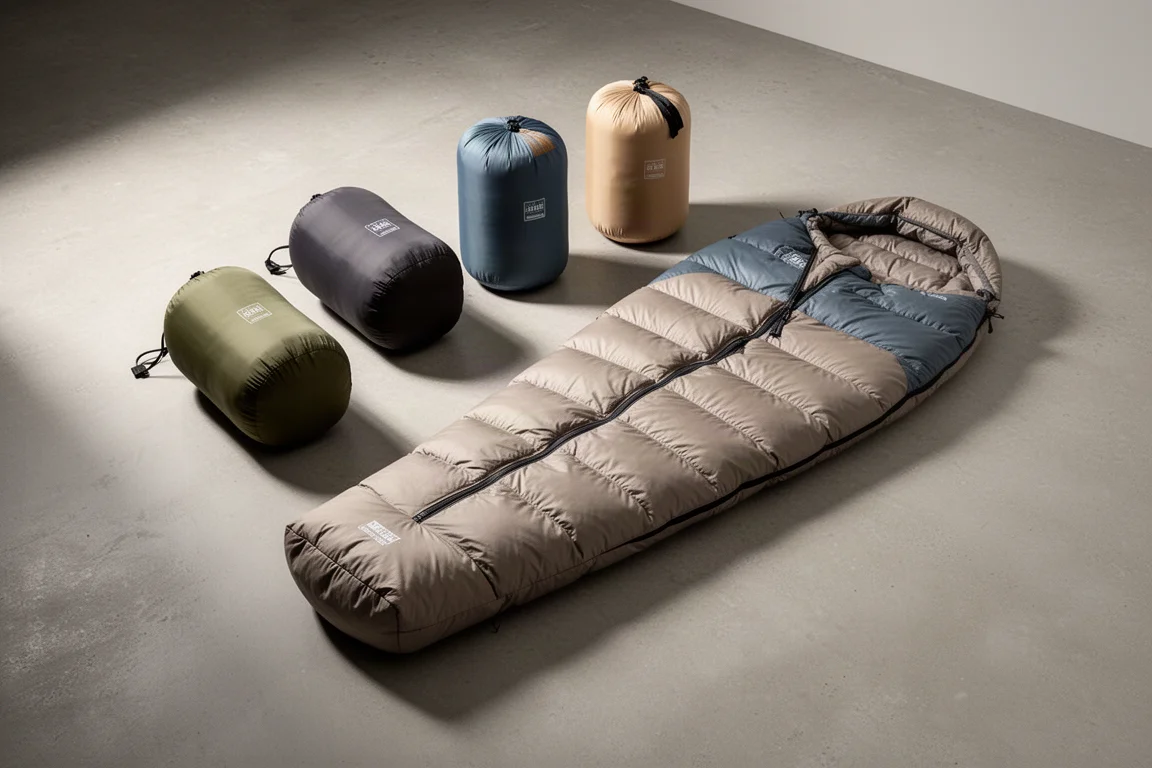
Best Sleeping Bags and Sleep Systems: Five Premium Down Picks Compared
Five premium down sleeping bags and sleep systems compared on warmth, weight, construction, and value.
Sleeping Bags
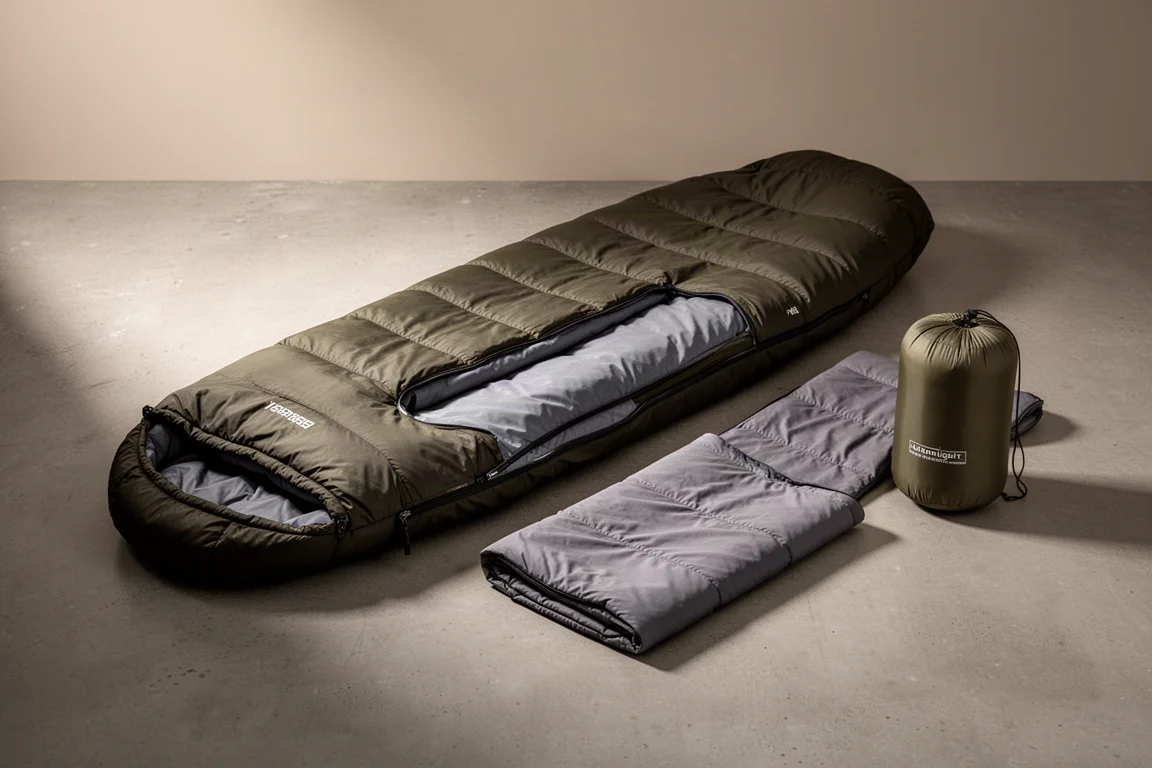
Big Agnes Lost Ranger UL 3-in-1 Sleeping Bag System Review: One Bag, Three Setups
A practical look at the Big Agnes Lost Ranger UL 3-in-1 Sleeping Bag System, covering how the three configurations work, where it shines, and the details worth weighing before buying.