Aquarium Rock
CaribSea LifeRock Shapes Review: Ready-Made Arches, Caves and Tunnels for Reef Aquascaping
A 20-pound box of hand-crafted aquarium rock that arrives as arches, tunnels and caves, so you can place the structures instead of building them.
Introduction
Building a reef aquascape usually means buying rock, then breaking, cutting and gluing it back together until arches, tunnels and caves finally appear. CaribSea LifeRock Shapes takes that work out of the equation. Each box arrives with hand-crafted formations that are already shaped like the structures most reef keepers try to build.
The base material follows the same approach as the wider LifeRock range. It is 97 percent calcium carbonate with trace minerals such as strontium and magnesium, and it offers roughly 50 percent void space that acts as a biological filter, giving the bacteria infused in the rock room to spread through its porous structure. The rock is mined from the ground, though it was ocean rock long ago, so it does not involve removing live rock from reefs. It also arrives covered in natural shades of pink and purple pigment, which means it looks established from day one rather than showing the brown phase that white rock commonly goes through.

Who This Product Is For
This box suits reef keepers who want a natural-looking aquascape without sculpting every structure by hand. If you have ever tried to build a stable arch out of two or three separate rocks, the appeal of a single-piece arch is immediate.
It also works from two different starting points. One box is enough to build a simple scape on its own, and the same shapes can be dropped into an existing layout to add interest between larger boulders. The arches, tunnels and caves cover the forms that are hardest to create manually, which makes the box most valuable to anyone planning an aquascape around openings, overhangs and swim-throughs rather than a solid wall of rock.
Main Strengths
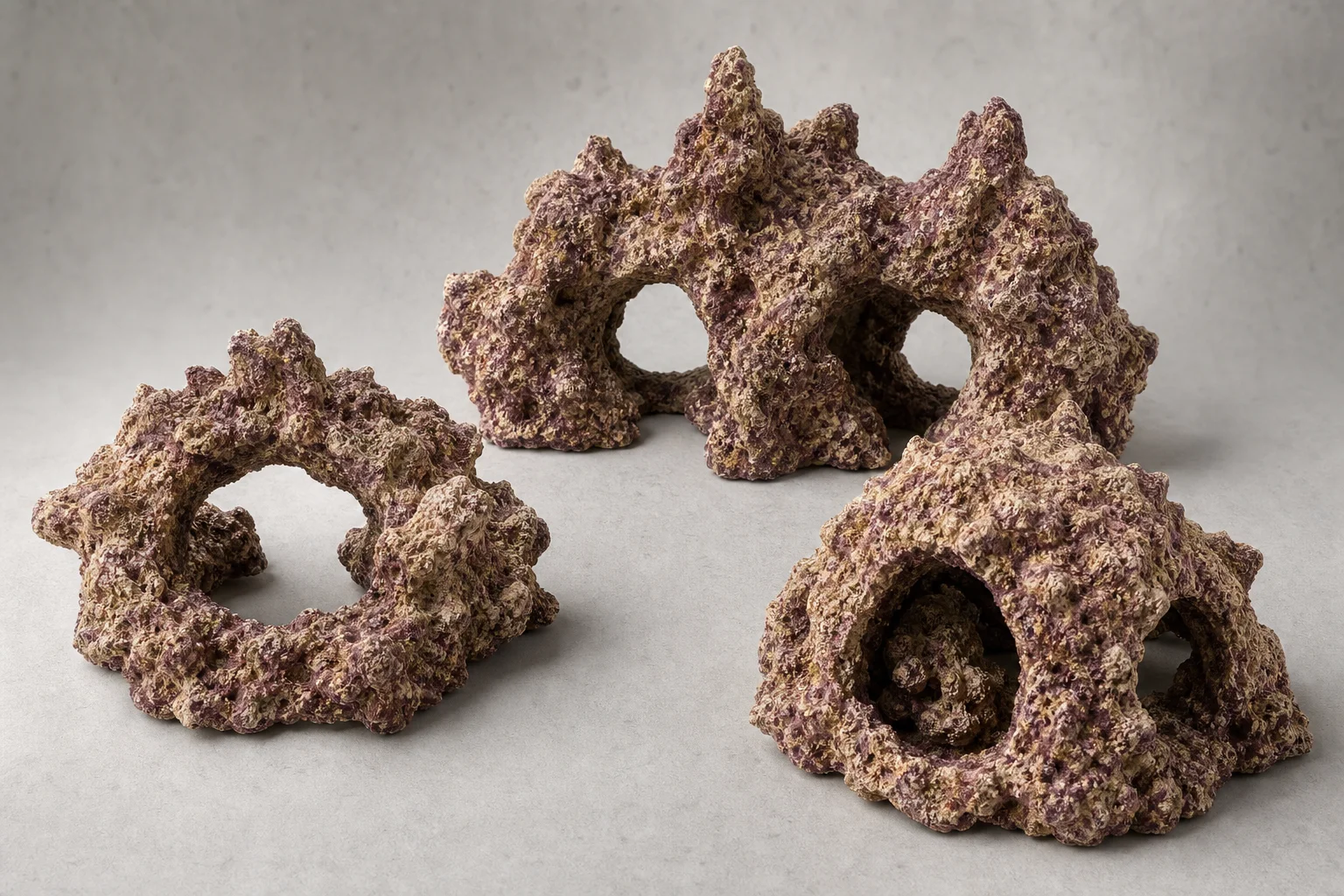
Each box contains 20 pounds of rock, which works out to roughly four pieces on average. The assortment covers arches, tunnels and caves, and because every piece is made from natural rock, no two boxes are identical. In one example, a box held two arches, one donut or tunnel, and one large cave. The pieces are crafted by hand and are roughly uniform in size, but they still look distinctly different from one another.

Arches: Texture, Flow and Coral Mounting Points
Each arch runs around 10 to 12 inches long and roughly eight to 10 inches wide. They are far more interesting than a flat curved rock: mounds and small boulders sit along the top of the arch, creating juts, peaks and recesses that give coral plenty of places to mount. The underside forms a gentle semi-circle. It is flatter to keep the archway feeling open, but it still carries enough texture to look natural. Every arch also has three holes that pass straight through from top to bottom, which helps with flow, provides habitat for small fish, and allows the arch to be used with the rod system found in the various LifeRock tree kits.
Tunnels and Donuts for Flow and Fish Habitat
The tunnels, sometimes described as donuts, measure roughly seven inches wide and seven inches deep from the tip of one jutting peak to the other. Head on, the ring shape is obvious. Viewed from an angle, the small boulders and mounds obscure the hole and the piece starts to look far more random and natural. They are an effective way to allow more flow through an aquascape, and they double as fish habitat, either as the entrance to a simple cave built from a rock pile or as a straightforward pass-through for fish to travel.

Caves: The Most Versatile Shape in the Box
Caves usually measure between 10 and 12 inches long, around eight inches wide and seven inches tall. Each one is essentially a dome-shaped rock with an entrance on both sides and three jutting rocks inside. That makes it extremely versatile. Laid one way, it creates a cave for fish habitat. Turned dome side down, it takes on a cavernous valley look. Rested on either open end, it reads as a recessed wall, with the jutting rocks offering interesting places to mount corals. Cave-shaped pieces have traditionally been hard to find, so having this shape included in the box is a genuine convenience.
Things to Consider Before Buying
Because every piece is natural rock, the exact contents of a box vary. You can expect around four pieces in 20 pounds, but the balance of arches, tunnels and caves is not something you select in advance.
The shapes also do their best work as part of a larger plan. A single box is enough to build a quick aquascape, but the real value appears when the shapes are combined with other LifeRock styles, building up the structure with boulders and then finding the right place for an arch, tunnel or cave.
Buying Advice
If you are starting a new aquascape, one box of LifeRock Shapes gives you a set of ready-made structures that would otherwise take hours of cutting and gluing. Lay the pieces out first, decide which one leads the composition, and build around it. If you are adding to an established tank, look for the gaps in your current rockwork and place a shape where it creates a genuine opening, a swim-through or a shaded overhang instead of simply sitting on top of the pile.

Two features carry the most long-term value here. The porous structure supports the bacteria infused in the rock, and the pre-colored pink and purple pigment means the aquascape looks settled from the first day rather than cycling through the bare white stage. Both are reasons the box makes sense even if you only need one or two of the shapes immediately.
Conclusion
CaribSea LifeRock Shapes solves a specific problem: it turns the structures reef keepers want most into pieces you can place instead of pieces you have to build. The arches, tunnels and caves cover the shapes that are hardest to create by hand, a 20-pound box gives you roughly four of them to work with, and the pre-colored finish means the aquascape looks established from the start. If your plan includes arches and caves, this is a practical shortcut.
Product link
View more details for CaribSea LifeRock Shapes
This product is mentioned in the review. Check the specifications, options, and compatibility before buying.
View more details for CaribSea LifeRock ShapesFurther reading
Related Reviews
Aquarium Rock
Marco Rock and Marco Shelf Rock: A Practical Aquascaping Guide for Reef Tanks
How to get more from Marco Rock and Marco Shelf Rock, from stability and layered structure to mortar, accelerated glue, and dry rock cycling timelines.
Aquarium Rock
Real Reef Rock Review: A Faster, Better-Looking Start for New Reef Tanks
Real Reef Rock arrives wet with bacteria already on it, cycles faster than dry rock, and gives a new tank a natural look from day one. Here is what it does well and what to plan for.
Aquarium Rock
Reef Tank Rock Buyer's Guide: Choosing the Right Rock for Your Aquarium
A practical guide to the most popular reef tank rocks, from budget dry rock to pre-made arches and shelf pieces, plus guidance on how much rock to buy.