Mountain Bikes
Canyon Strive:ON vs Canyon Strive: Electric Enduro Against a Lightweight Race Bike
A back-to-back trail comparison of Canyon's electric Strive:ON and the non-assisted Strive, covering climbing effort, descending speed, and who each bike actually suits.
Introduction
Electric enduro bikes promise to flatten the climbs, but the more interesting question is whether the energy saved on the way up actually translates into faster, more confident descents. To find out, Canyon’s new Strive:ON was run head to head against the brand’s non-motorised Strive on two very different test loops, alternating between the two bikes across eight laps to keep the comparison as reliable as possible.
Both are enduro bikes that share the same suspension travel and both have been raced at the highest level in the Enduro World Series. The structural difference is the motor and the battery. What follows is what that difference actually feels like on the trail, and which rider each bike makes more sense for.
How These Two Enduro Bikes Compare
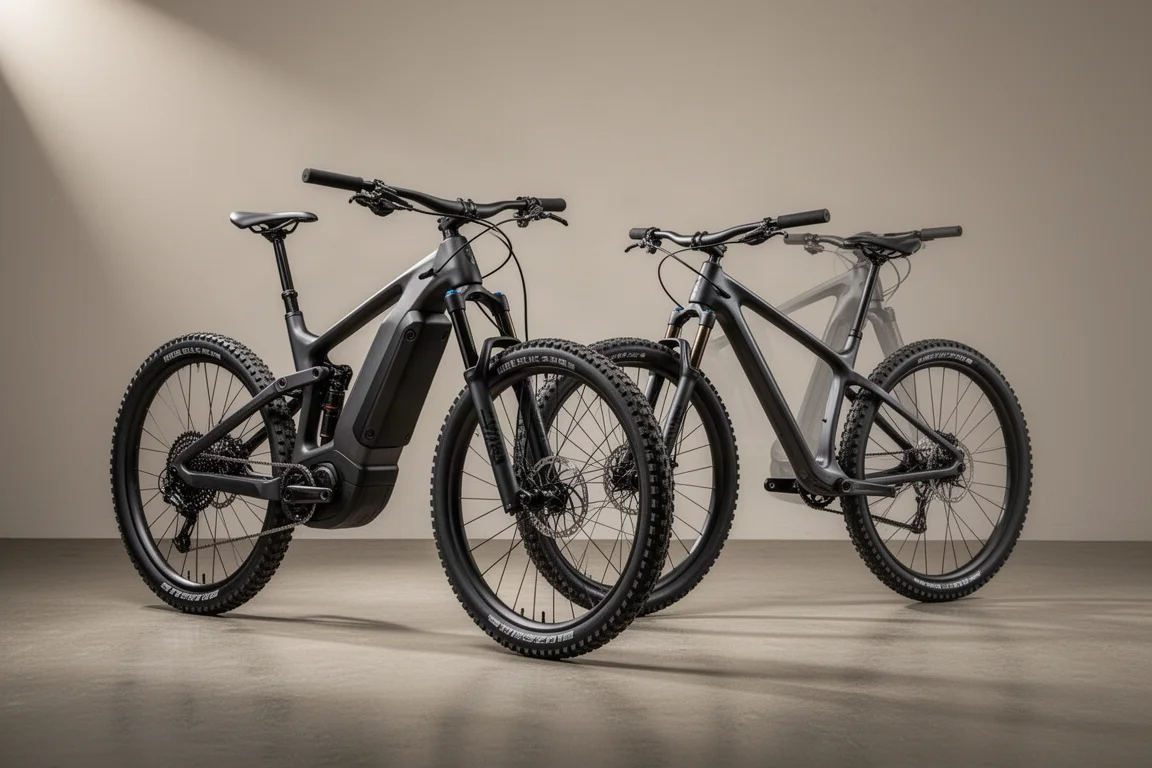
The two bikes share a great deal of DNA. Both run 170mm of fork travel and 160mm of rear wheel travel, both use carbon frames, and both roll on a 29-inch front wheel.
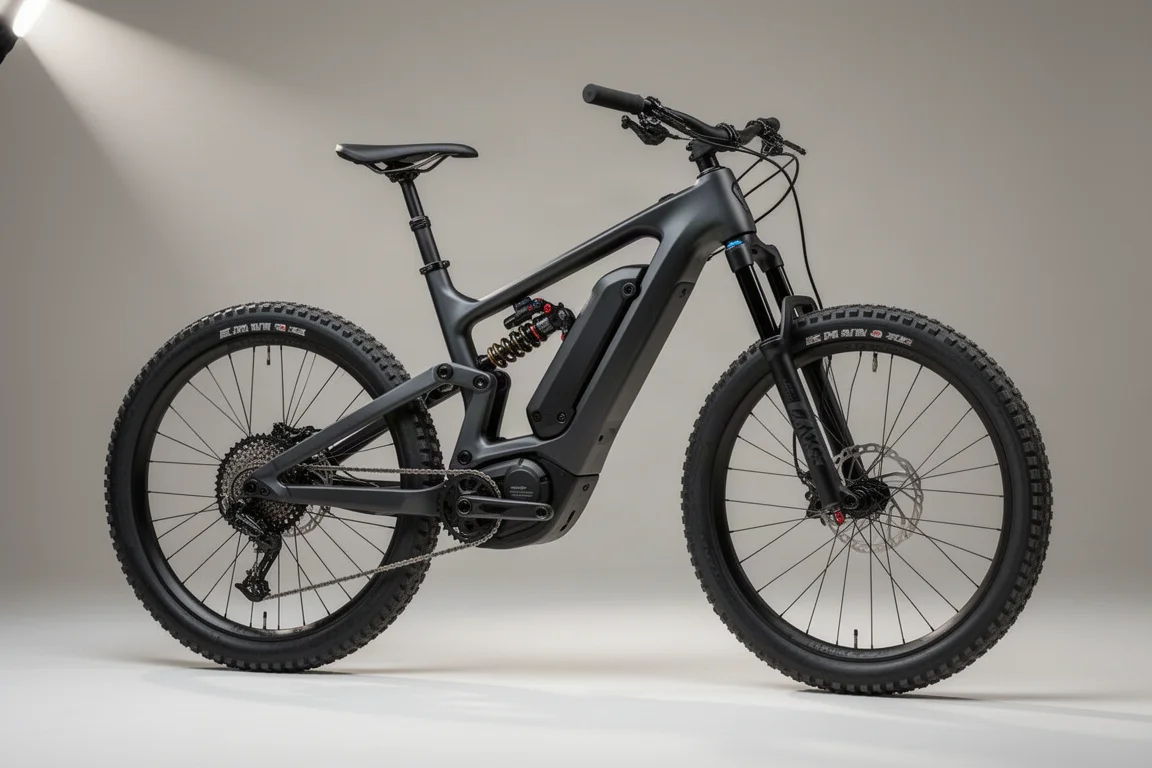
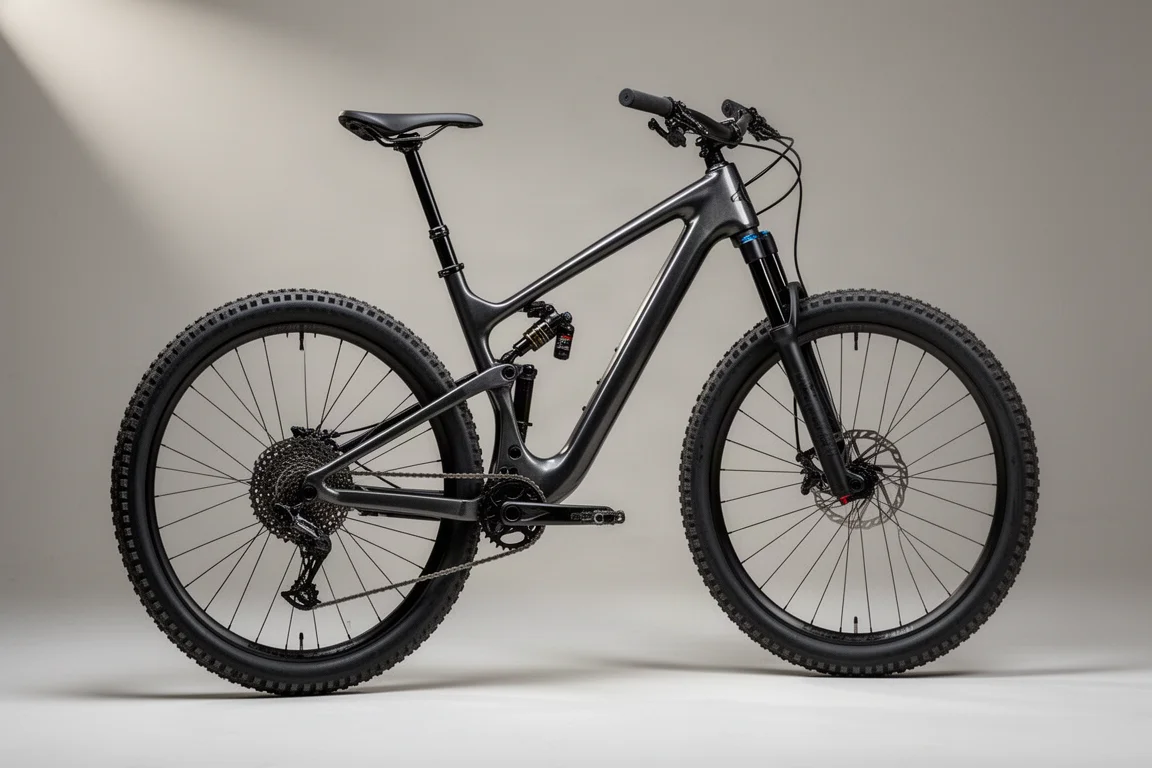
From there they diverge. The Strive:ON weighs in at around 25kg and uses a mullet wheel setup with a 27.5-inch rear wheel, paired with a Bosch CX motor. The non-assisted Strive comes in under 16kg, keeps a 29-inch rear wheel, and uses Canyon’s Shapeshifter technology to switch geometry between shred and pedal modes. Its 2022 redesign turned it into a full race bike.
The testing was built around two loops at Windhill Bike Park in England. The first climbs 73 metres of singletrack before dropping into a tight, technical black-graded descent with off-camber sections, rock gardens, and a few moto works. The second uses a wider fire road ascent before switching onto a red-graded jump line full of berms, step-ups, and step-downs.
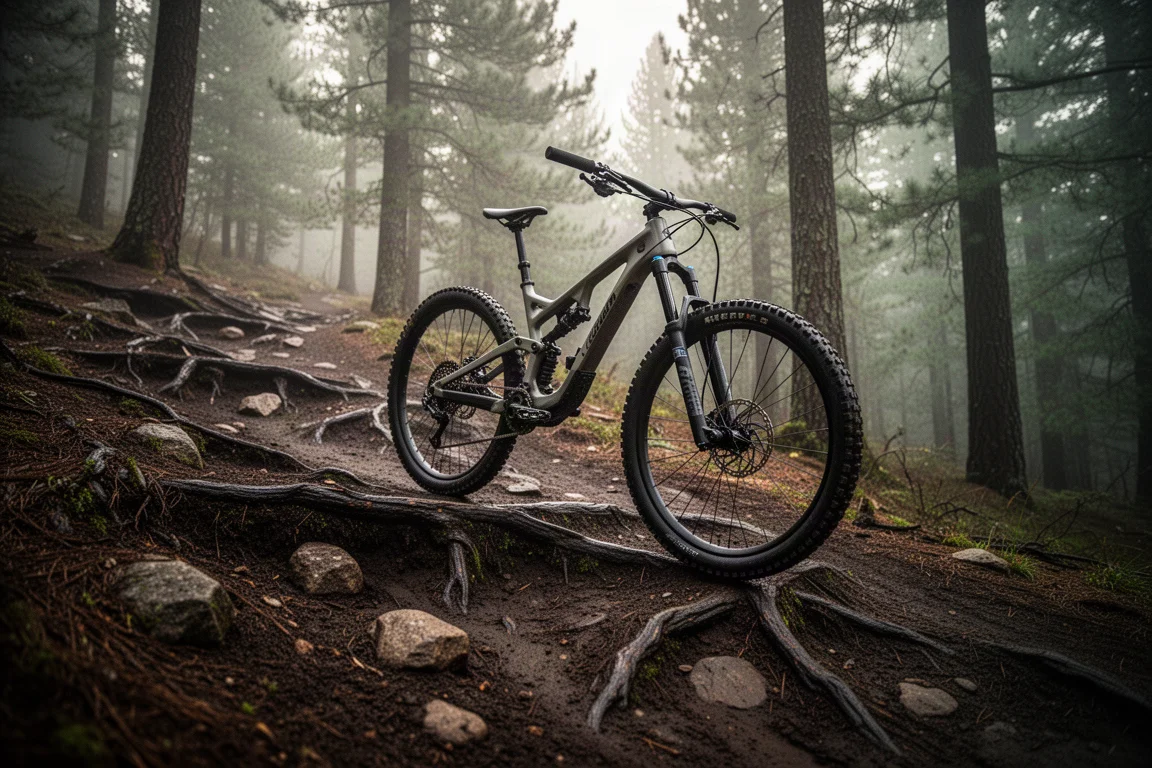
That mix matters because it separates the two traits that define these bikes: raw climbing efficiency and descending composure.
Canyon Strive:ON: The Electric Enduro Option
The Strive:ON is Canyon’s first e-enduro bike, and on the climbs it changes the character of a riding day entirely. With the Bosch CX motor in Boost, the ascent felt effortless, and a full day of riding in that mode still left two of five battery bars remaining.
Climb times tell the same story. On the first loop, the e-bike covered the ascent in roughly three minutes against eight minutes on the non-assisted bike. On the second loop the gap was even wider, around two minutes against seven. Average heart rate on the climbs sat near 145 beats per minute on the Strive:ON, compared with 160 to 165 on the non-assisted bike.
On descents, the extra weight sits low in the frame, and that showed. The bike felt stable through rough terrain, less likely to be kicked offline, and predictable when the trail pushed it off its line. The more linear, race-focused rear suspension made it easy to hold the intended line through raised roots and awkward drop-offs, and the mullet setup let the rider get closer to the rear wheel when squashing drops.
Canyon Strive: The Non-Assisted Race Bike
The non-assisted Strive is a very different proposition. At under 16kg it is roughly 9kg lighter than the e-bike, and that shows immediately: it is easier to pick up over obstacles and builds momentum more quickly when pumping.
On the flatter, jump-focused second loop, that lightness paid off in outright speed. The Strive was consistently faster on both descending runs by around 0.8 seconds, and it felt energetic when pumping and sprinting on flat sections. It was also easier to squat jumps on. Where it gave away ground was in stability through turns, which may come down to the e-bike’s extra weight and its mullet wheel size.
The cost is on the way up. Climbing on the Strive demands real effort, with heart rates in the 160 to 165 range even when taking the ascent as easily as possible in the lowest gear.
Climbing and Fatigue on the Test Loops
Climbing is the clearest dividing line between these two bikes. The e-bike made every ascent effortless, and the reduction in fatigue carried into the descents. Arms stayed fresh and, despite some ache in the quads, it was still possible to push hard late in the day.
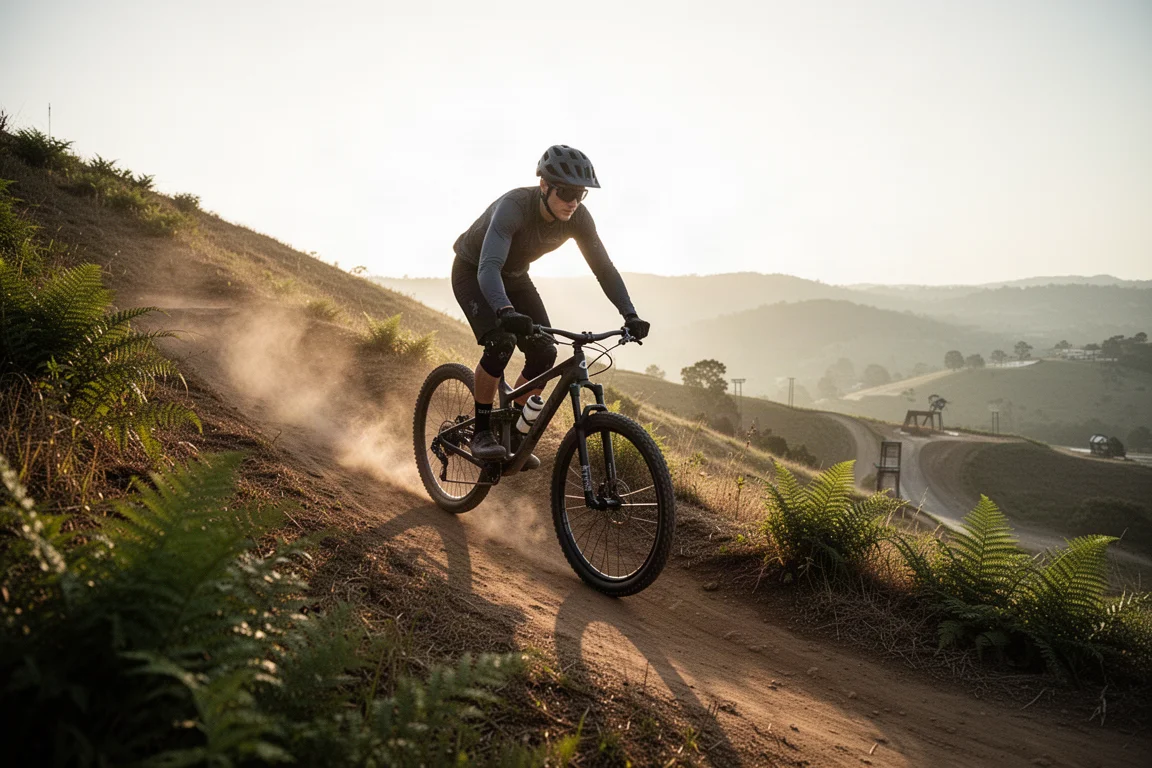
Heart rate data backs this up. Average climbing heart rate on the Strive:ON was around 145 beats per minute on both loops. On the non-assisted Strive it was 160 on the first loop and 165 on the second. Maximum heart rate on the descents reached 190 to 198 beats per minute on both bikes, and 200 on the non-assisted bike during the second loop.
The practical outcome is volume. Using the e-bike makes it easy to fit in roughly four times as many runs in a session, with noticeably less fatigue. On descents around a minute long, that fatigue difference did not dramatically change descending performance. On longer or more pedally tracks, it likely would.
Descending Performance on Rough and Jump Trails
On the first, rougher loop, the two bikes were remarkably close on the opening runs after a sighting lap. Once the pace increased, the e-bike’s stability and forgiving nature on rough terrain came to the fore, helping it hold speed through technical, root-strewn ground.
The mullet setup also made the Strive:ON feel more predictable in corners, with the rear wheel following the front more effortlessly than on the 29er. The extra mass low in the frame reduced the ratio of sprung to unsprung mass, which kept the bike planted in the rough stuff.
On the second, flatter jump line, the picture flipped. The lighter Strive was faster on both runs, generating speed through pumps and rewarding hard efforts on flat straights. Its weakness was turn stability, where the e-bike felt more settled.
Cornering, Stability, and Control
Cornering is where the weight difference is most obvious. The Strive:ON carried its mass low and felt planted through high-G berms, holding a line without much correction. The mullet wheel setup contributed to that confidence, letting the rider get closer to the rear wheel through compressions and drops.
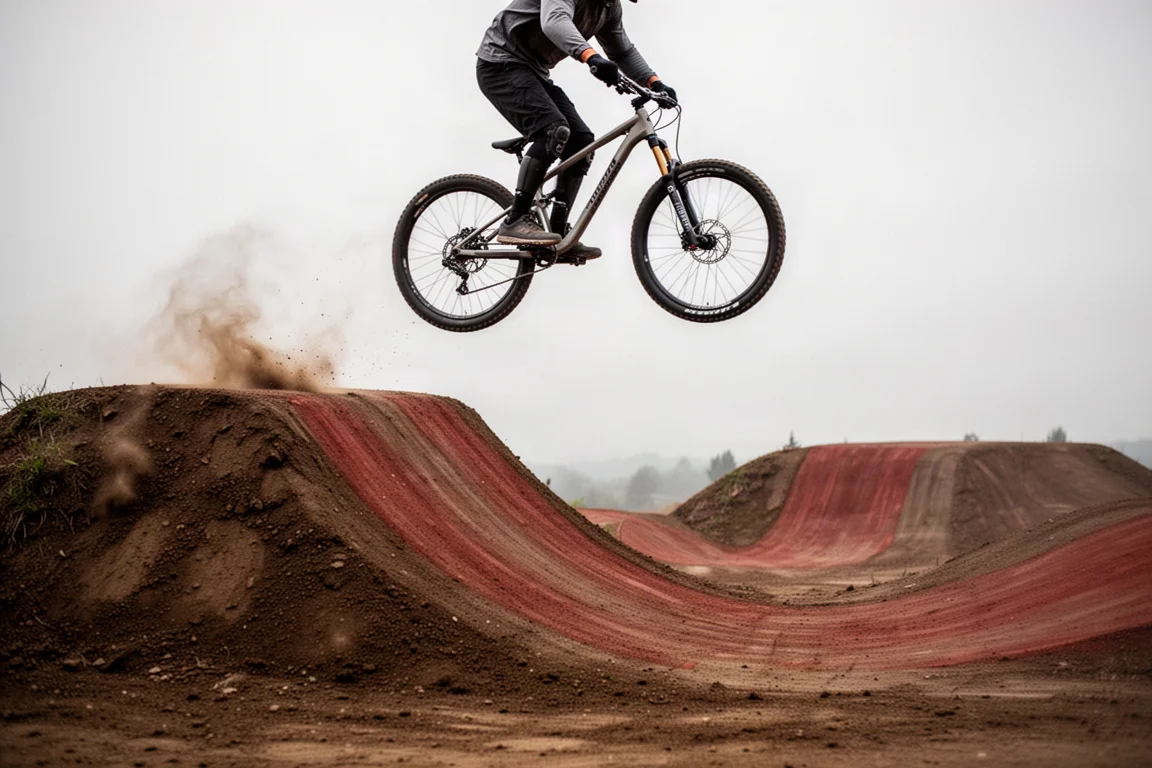
The non-assisted Strive was more nimble but less settled in turns. It accelerates more readily and is easier to maintain speed with, yet it does not have the same composure when the trail loads the bike up.
Jumping was interesting on both. The Strive:ON was easy to jump despite its 25kg weight, while squatting jumps came more naturally on the lighter Strive. Top speed on the jump line reached nearly 40 km/h, well beyond the point where motor assistance cuts out.
Motor Assist, Battery, and Speed Limits
One detail worth understanding before choosing the e-bike: motor assistance stops once you exceed 25 km/h. On the jump line, almost the entire run was ridden above that threshold, which meant no assistance from the motor for the rest of the descent. The benefit on that kind of trail comes from the initial boost off the line rather than from continuous power.
On climbs, the opposite is true. The Bosch CX motor in Boost mode did the heavy lifting all day, and after a full session in Boost there were still two of five battery bars left.
Overall Buying Advice
The right choice depends on the trails you actually ride and what you want from a session.
If your days are built around long, steep climbs and rough, technical descents, the Strive:ON earns its place. It turns climbing into a non-event, lets you fit in far more runs, and its low-slung weight and mullet setup make it stable and predictable when the trail gets hostile. The trade-offs are the 25kg weight, the fact that assistance disappears above 25 km/h, and a price that sits above the non-assisted model.
If your local trails are flatter, jump-focused, or reward pumping and sprinting, the non-assisted Strive is the sharper tool. It is lighter, more nimble, faster to accelerate, and was consistently quicker on the jump line. It asks more of you on the climbs and it is less composed in turns, but it rewards effort in a way the e-bike cannot.
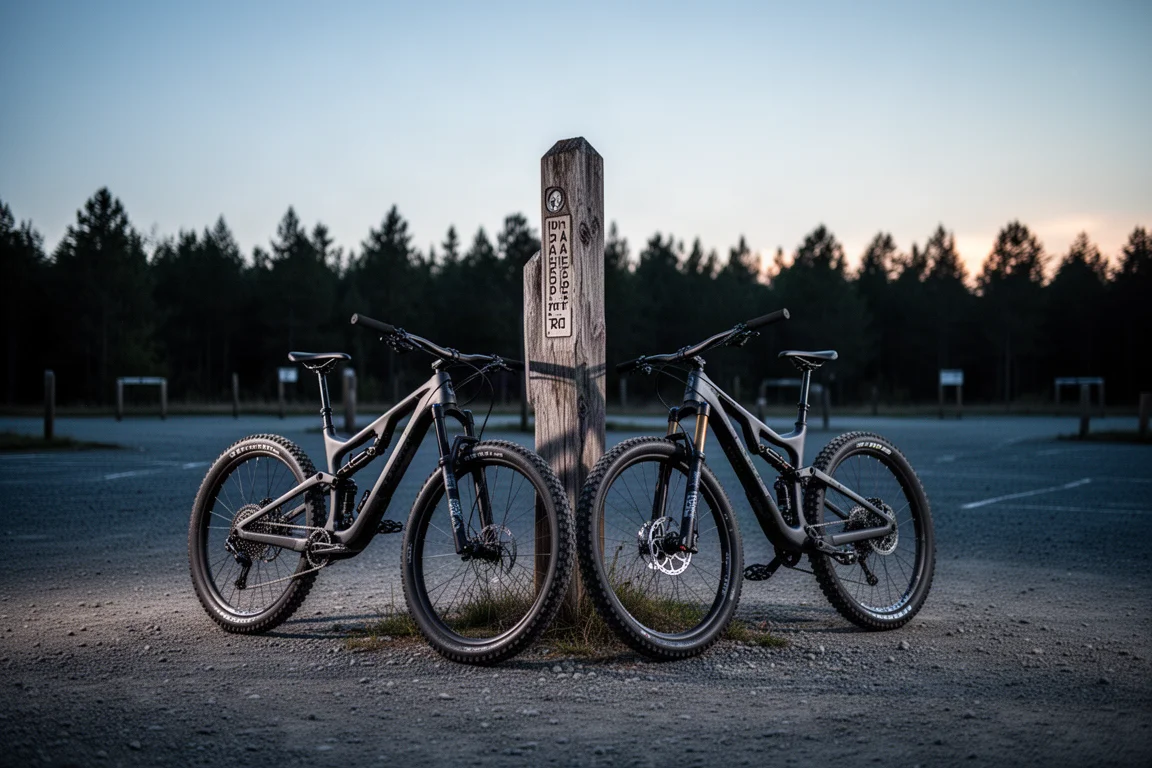
Both bikes are extremely capable enduro machines. Neither is a compromise. They are simply tuned for different priorities, and matching the bike to your terrain matters far more than the headline spec sheet.
Conclusion
Climbing on the Strive:ON is a joy, and the e-bike proved faster and more forgiving on rough terrain thanks to its extra sprung weight and mullet wheel setup. The non-assisted Strive is lighter, more nimble on flatter tracks, quicker to accelerate, and more efficient to keep moving. Choose based on the terrain you ride most and how much you value fitting more runs into a single day.
Further reading
Related Reviews
Mountain Bikes
Atherton AM.130 Review: 3D-Printed Titanium Lugs and a 130mm Trail Bike That Descends Like a Bigger Machine
The Atherton AM.130 pairs 3D-printed titanium lugs with carbon tubes and a DW6 suspension platform. Here is how it rides, what the build delivers, and who it suits.
Mountain Bikes
Beginner Mountain Bike Buying Guide: What to Look For in a Trailworthy Hardtail
A practical framework for evaluating beginner mountain bikes, whether new or used, by examining key components that indicate real trail capability.
Mountain Bikes
Best Aluminum Mountain Bikes 2026: Five Alloy Bikes Worth Your Attention
Five aluminum mountain bikes that show how far alloy has come, from a 120mm trail bike and a versatile machined frame to a 180mm freeride machine.