Electric Mountain Bikes
Canyon Spectral:ONfly Review: TQ HPR50 Range and Ride Feel on Real Trails
A practical review of the Canyon Spectral:ONfly and its TQ HPR50 motor, covering app-based tuning, 360 Wh battery range on a climbing-heavy loop, and how the bike rides once assistance fades.
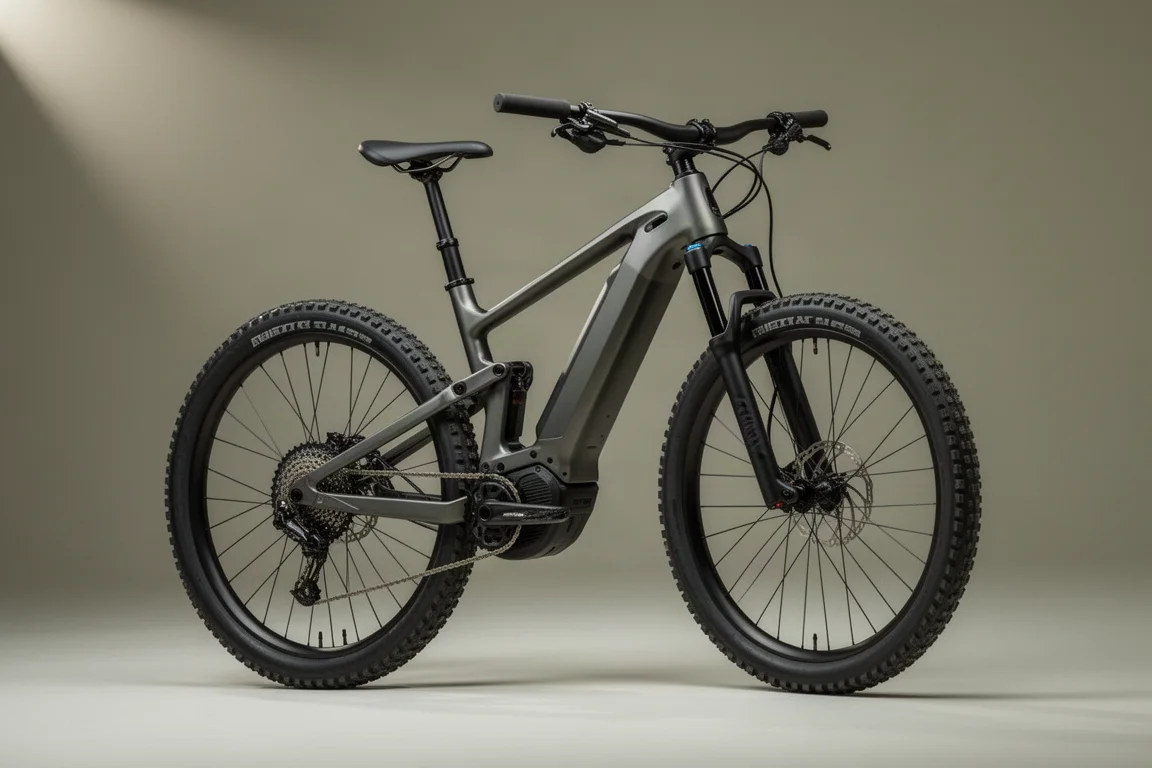
Introduction
Range anxiety is the feeling every electric mountain bike rider knows: the worry that the battery will not last the route, and that the final climb will have to be ridden on a heavy bike with no help at all. The Canyon Spectral:ONfly is an interesting answer to that problem, because the way its TQ HPR50 motor delivers power can be adjusted rather than simply switched between fixed modes.
To find out how much difference that makes, the same mixed-terrain loop was ridden on two similarly equipped Spectral:ONfly bikes, each with a TQ HPR50 motor and a 360 Wh battery. The route took in mellow climbs, light rocky singletrack climbs, steep off-piste descents and fast trail centre tracks. One rider tuned the motor in the companion app and kept a single setting for most of the day. The other rode more by feel, moving between modes as the terrain changed.
It is worth being clear that this was not a controlled test. The two riders differ in weight and the two bikes were different builds, so the day was about the experience and about how far the battery could be stretched with two different approaches.
Who this product is for
The Spectral:ONfly suits riders who want a light, natural-feeling electric mountain bike that still climbs strongly and descends well. It is a good match for people who plan longer days out and would rather influence how the motor behaves than pick between a handful of preset modes.
It also appeals to riders who do not want to be dependent on assistance. Once the battery is finished, the bike is only a little heavier than a conventional mountain bike, which makes the ride home far less of an ordeal than it would be on a heavier electric platform.

It is less obviously aimed at riders who want maximum support all day and never want to think about charge. On a long, climbing-heavy route the 360 Wh battery can be pushed close to its limit, and getting the most from it means paying attention to settings and terrain.
Main strengths
Three things stood out over a full day on mixed terrain: how much control the motor settings give, how efficiently the battery can be used when those settings are tuned, and how the bike behaves once the assistance stops.
Motor Tuning and Assistance Modes
The companion app exposes the underlying behaviour of the TQ HPR50 motor rather than just offering named modes. Assistance level, maximum power and pedal responsiveness can all be adjusted, which means the ride character can be shaped around a route rather than accepted as it comes.
The default mid setting delivers up to 270 W of support. One rider reduced the maximum to around 200 W while leaving the assistance level at 100 per cent and keeping pedal responsiveness high. The effect was a single setting that could be used for the whole ride: short, sharp pedal inputs still produced an immediate response, but the motor drew less from the battery on long drags.
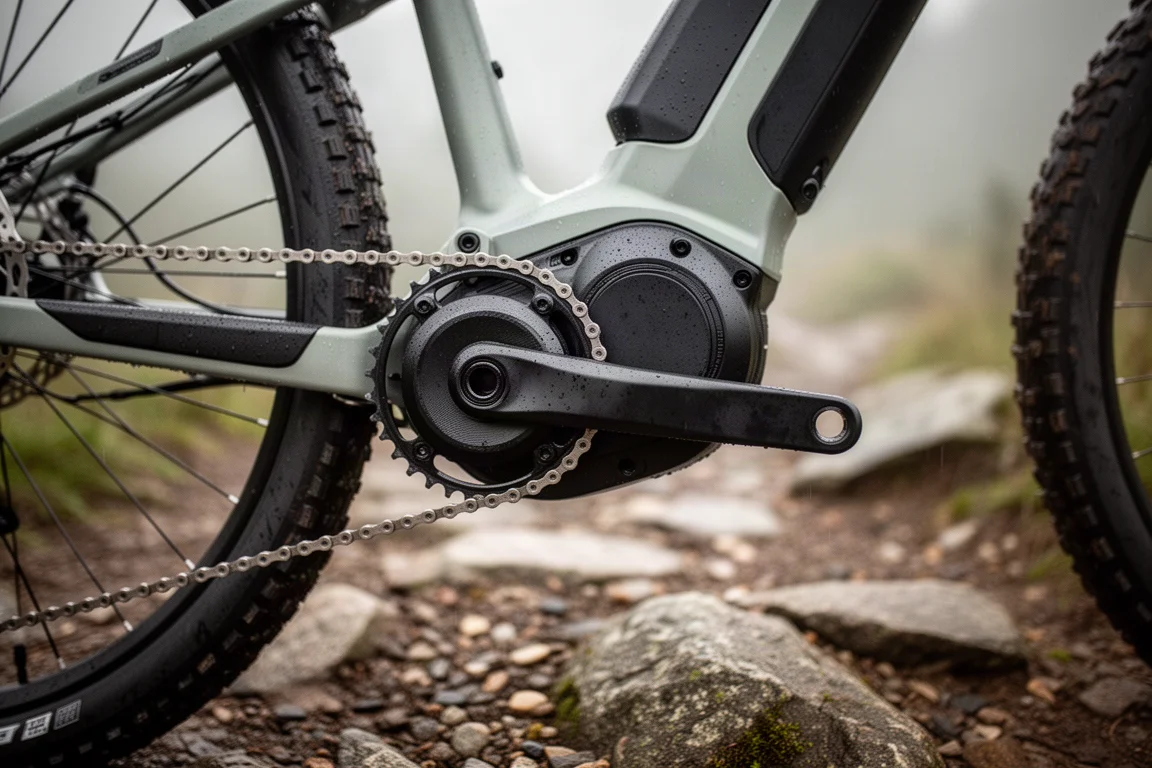
Higher assistance modes remain available for the steepest pitches. Using them deliberately rather than as a default is what makes the range strategy work: the extra power is saved for the sections where it genuinely helps, such as loose, technical climbs.
Battery Range on a Climbing-Heavy Route
On this route, the rider using the tuned mid setting had covered around 670 m of climbing and still had roughly 41 per cent of the battery left. The other rider, who was around 15 kg lighter, had a comparable reserve at that point but was using higher power modes more freely and burning through it faster.
By the final climb the picture had changed. The rider who had managed the motor finished the loop with a small single-digit percentage remaining, while the lighter rider ran the battery down to nothing near the top of the last climb. A limp mode cuts assistance as the charge drops low, which preserves enough capacity to get home, but it also means the closing pitches are ridden with very little help.
Ride Feel When Assistance Runs Out
The Spectral:ONfly is light enough that running out of battery is a manageable problem rather than an ending. The bike is only a little heavier than a conventional mountain bike, so the last part of the ride becomes slower and harder rather than unpleasant.
The motor itself is subtle in character. Above the assistance speed limit it contributes nothing, and even when it is working it blends in rather than announcing itself, adding a useful push on short bursts of power without feeling intrusive.

That combination matters for anyone riding long routes. A bike that remains rideable without assistance, and that can be tuned to conserve charge, reduces the chance that a good day ends in a long, joyless grind.
Things to consider before buying
The 360 Wh battery is the central trade-off. It is enough for many rides and for efficient riders on mixed terrain, but long, climbing-heavy days can bring it close to empty. Riders who regularly ride big elevation or very long distances may want to consider a range extender.
Tuning takes effort. Working out how much power to allow, how much assistance to apply and how responsive the motor should feel is a mental exercise as much as a technical one, and the results only become clear over a full route rather than in the first few minutes.
Results also vary by rider and bike. Weight differences and different builds change how far a battery goes, so the numbers from any single ride should be read as a guide rather than a prediction.
Buying advice
The Spectral:ONfly makes most sense for riders who value a light, natural ride and are willing to spend a little time understanding the motor settings. If that describes your riding, the ability to trade power for range is the feature that justifies the bike, and it is worth setting up a tuned mid mode before a big day out.
If you want maximum assistance available at all times and would rather not think about battery management, a bike with a larger battery may be a better fit. The same applies if your regular routes involve very long climbs, where a 360 Wh battery will always be working hard.
For everyone in between, the practical approach is straightforward: pick a mid setting that feels responsive, reduce the maximum power until it still feels good on technical climbs, and keep the strongest assistance for the pitches that really need it.
That approach is not complicated, but it does reward attention. Riders who get the most from this bike are the ones who treat the motor as something to be configured, not just switched on.
Conclusion
The Canyon Spectral:ONfly is a light, capable electric mountain bike whose TQ HPR50 motor rewards a bit of thought. Tuned carefully, it can carry a rider around a long, climbing-heavy loop with charge to spare, and it stays pleasant to ride once the assistance runs out. Left in the strongest modes, the same 360 Wh battery empties quickly and the final climb becomes a slow one. For riders who want a natural feel and are happy to manage their settings, that flexibility is the whole point.
Product link
View more details for Canyon Spectral:ONfly
This product is mentioned in the review. Check the specifications, options, and compatibility before buying.
View more details for Canyon Spectral:ONflyFurther reading
Related Reviews
Electric Mountain Bikes
Best E-Mountain Bikes: Five Electric Trail and Enduro Bikes Compared
A practical look at five electric mountain bikes, from a lightweight carbon trail build to long-travel enduro machines, with the trade-offs that matter before you buy.
Electric Mountain Bikes
Best Electric Mountain Bikes 2026: Four Price Points Compared
Four electric mountain bikes from £999 to £9,999 compared on motor power, battery capacity, weight, and trail performance.
Electric Mountain Bikes
Best Electric Mountain Bikes: Five E-MTBs Worth Shortlisting
Five full-suspension electric mountain bikes compared, from lightweight trail machines to full-power enduro rigs, with the strengths and trade-offs to weigh before buying.