Mountain Bikes
Canyon Spectral 125 Review: The Short-Travel Trail Bike That Punches Above Its Weight
A 125mm trail bike with progressive geometry and a sharp component spec. Here is what the Canyon Spectral 125 does well and where its reduced travel asks more from the rider.
Introduction
“Trail bike” is one of the loosest labels in mountain biking. It means something different depending on who you ask and where they ride. A trail bike in one region might be a 160mm enduro machine, while somewhere else it is a 120mm bike with race-adjacent geometry.
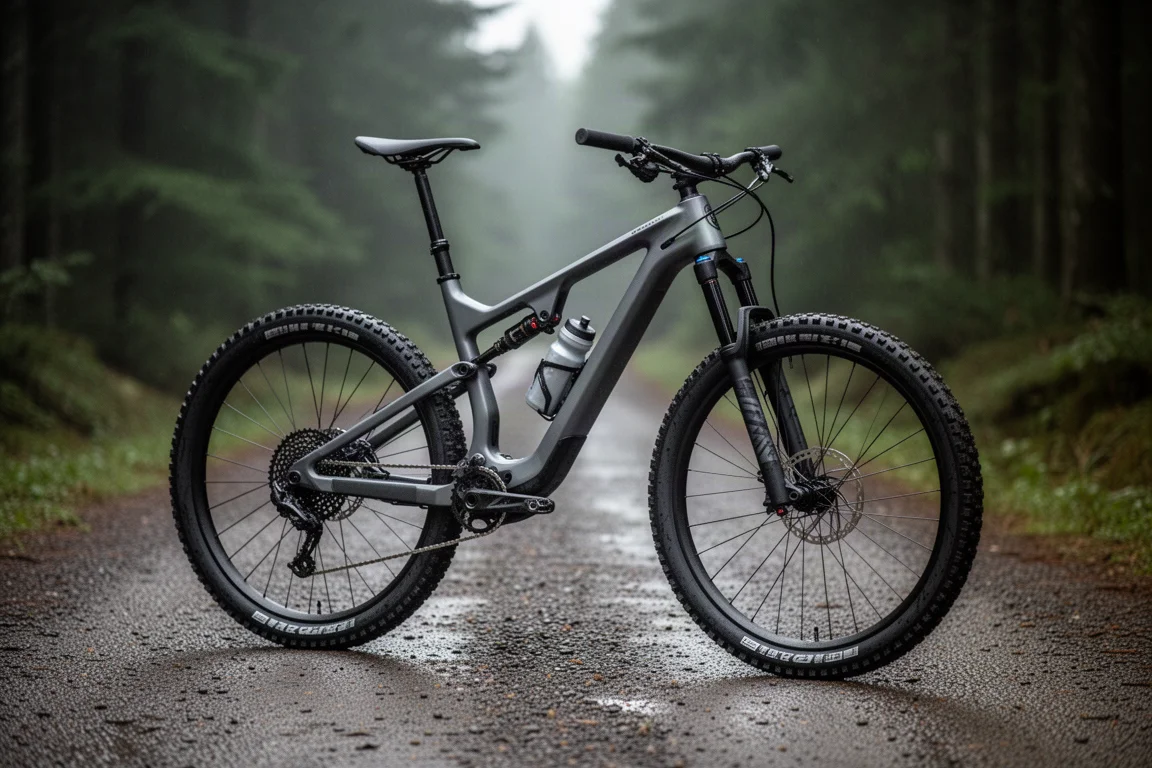
The Canyon Spectral 125 sits deliberately in the middle of that grey area. It takes the existing Spectral platform, a longer-travel 29er trail and enduro bike, and trims the suspension back to 125mm at the rear and 140mm at the front. Rather than simply detuning the bigger bike, Canyon has kept the progressive numbers: a 64 degree head angle, a 76 degree seat angle and a 460mm reach on a size medium.
That combination is what makes this bike interesting. Less travel, same modern geometry, and a build kit aimed at riders who want a bike that climbs from the front door and still feels capable on the way back down.
Who the Canyon Spectral 125 Is For
This is a bike for riders whose local trails do not demand a 150mm or 160mm machine. If your typical rides are rooty, technical woodland loops rather than full-on bike park descents, the shorter travel is not a compromise. It is a better match for the terrain.
There is a real appeal to under-biking. A shorter-travel bike is easier to reach the limits of, which means you do not need extreme speed and commitment to unlock what the bike can do. The reward comes from riding the trail well rather than letting suspension travel absorb everything in front of you.
The reduced travel makes sense for riders who want one bike that handles the climb to the trailhead and the technical descent, without the extra bulk of a longer-travel platform.
Climbing and Pedaling Efficiency
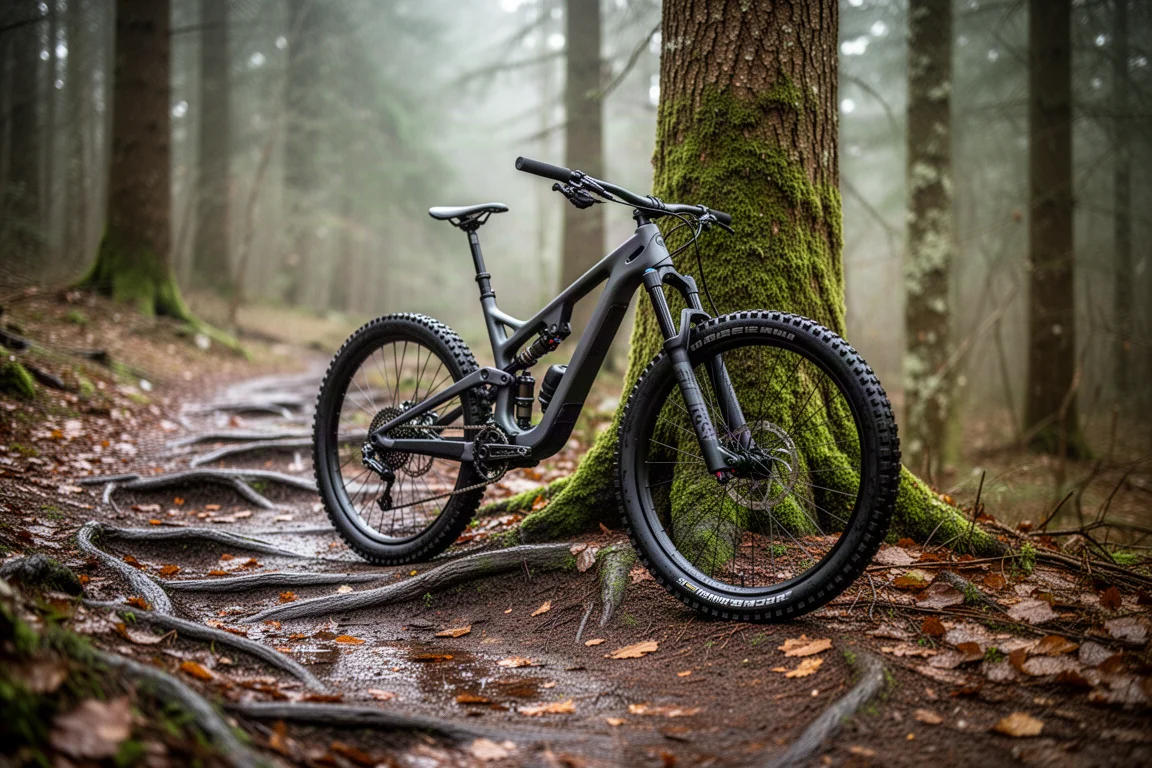
Climbing is a genuine strength here. The bike is light for its category, roughly 30 pounds without pedals and just over that with trail pedals fitted, and the suspension design gives a stable pedalling platform without excessive bob. The three-phase suspension layout means you can simply get on and ride.
Notably, you do not have to reach for a lockout lever. Canyon has kept the setup simple, and the suspension handles both the ups and the downs without the rider needing to adjust settings mid-ride. For anyone who prefers to ride rather than manage levers, that quality matters more than a spec sheet headline.
The gearing supports the climbing story too. A 10-52 cassette gives a very wide range, and there is not much you cannot winch up provided you are willing to put in the effort.

Descending Performance
The Spectral 125 is at its best pointing downhill. It is a genuinely fun bike on off-piste, challenging trails, and it behaves like something with more travel than the numbers suggest. Geometry is doing the heavy lifting here rather than suspension travel alone.
The steeper and rowdier the trail, the more the bike makes sense. It stays composed through rock features, roots and berms, and it rewards a committed rider who picks a daring line. That is the trade-off with reduced travel: you have to read the trail and choose your path more carefully than you would on a bigger-travel Spectral, which can be pointed at a rock garden and left to sort itself out.
Do that work, though, and the bike gives back more than a longer-travel machine might. The satisfaction comes from feeling like an active part of the ride instead of a passenger.
Geometry, Sizing and Frame Details
The Spectral 125 sits at the progressive end of the trail category: longer, slacker and lower, in line with modern mountain bike trends. On Canyon’s size charts, a rider at 181cm or 5 foot 11 can fit either a medium or a large. This medium offers a 460mm reach, and the seat tubes are short enough that riders between sizes can size down for playfulness or size up for stability.
Reach preference is personal. A reach around 475 to 480mm suits riders who want high-speed stability on steep sections. The shorter reach here makes the bike more nimble and easier to move around in tight trees. Riders who want sharper handling on technical trails will appreciate it, while those who prioritise stability at speed may prefer a larger size.
The frame details are thoughtful. Cable routing is internal and fully guided for easier maintenance, the bearings are double sealed, there is a rubber chainstay protector, and there is room for a water bottle inside the front triangle. A flip chip lets riders adjust the geometry to suit conditions.
It is also worth noting where this bike sits relative to Canyon’s Neuron. Both use similar wheel sizes and comparable travel, but the geometry differs substantially. The Neuron is a more traditional trail bike with a steeper head angle and shorter reach, better suited to long-distance marathon riding on smoother terrain. Travel alone does not define how a bike rides.
Build and Component Choices
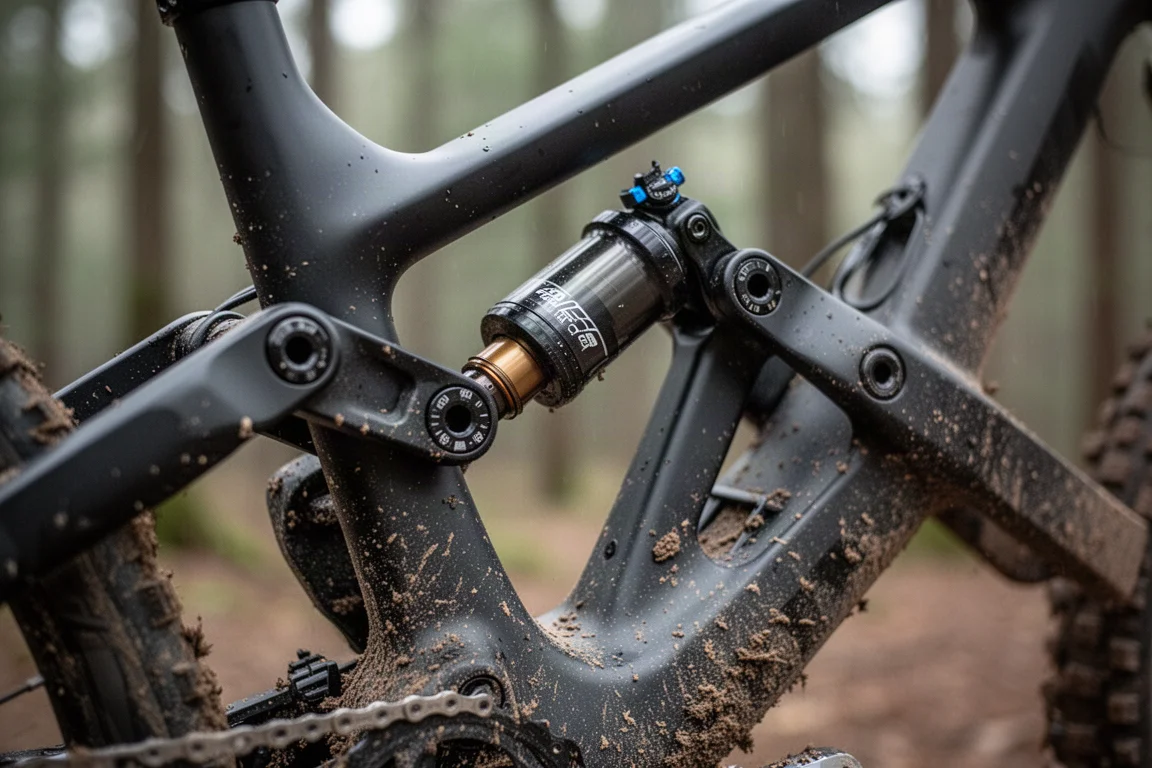
The most affordable carbon model, the CF7, is the version reviewed here and it shows Canyon’s habit of spending money in the right places. The front suspension is a RockShox Pike Select Plus, paired with a matching Deluxe shock. The Pike is a natural fit for a trail bike, and the Charger 2.1 damper in this model performs well across a wide range of conditions.
Drivetrain is SRAM GX Eagle, a well-established and dependable choice that held up even in difficult, muddy conditions. Braking comes from SRAM Code RS with a 200mm front rotor and a 180mm rear rotor, which is plenty of stopping power for this class of bike.
Wheels are DT Swiss M1900, a solid and reliable pairing. Tyres are a Maxxis Minion DHF up front and a Dissector at the rear, both in EXO casing. The EXO casing saves weight, though riders who want more protection may prefer a burlier casing or tyre inserts.
Canyon’s own G5 components fill out the cockpit and the dropper post. The 780mm handlebar and the G5 dropper both performed smoothly through repeated rides and jet washing, and the dropper lever has a comfortable ergonomic shape.
Things to Consider Before Buying
The main consideration is the travel itself. A 125mm rear and 140mm front setup demands more careful line choice than a longer-travel bike. If your regular terrain is rocky, fast and unforgiving, a bigger Spectral may be the better answer.
Casing choice is another point to weigh. The EXO tyres save weight but offer less protection, and riders in sharp, rocky areas may want to change tyres or fit inserts.
Pricing spans a wide range. The lineup starts at £2,449 and runs to £5,649, with this CF7 carbon model at £3,399. The entry carbon bike offers strong value, but buyers should confirm which build level matches their budget and priorities.
Finally, sizing deserves attention. Riders between sizes need to decide whether they want the nimble feel of a shorter reach or the stability of a longer one, because both are available within the same model.
Buying Advice
Choose the Spectral 125 if your riding is mostly technical woodland trails and you want a bike that climbs well without feeling overbuilt for the descents. It suits riders who enjoy the challenge of riding shorter travel well and who value a simple setup with no lockout fiddling.
Look at the longer-travel Spectral instead if your local trails genuinely need 150mm or 160mm of suspension, or if you want maximum composure in rough terrain without picking lines. Both are part of the same family, and the right answer depends on what is on your doorstep.
If you are unsure, be honest about the trails you ride most often rather than the ones you ride occasionally. The Spectral 125 is at its best when it is matched to terrain that lets it shine.

Conclusion
The Canyon Spectral 125 carries the character of the Spectral family into a shorter-travel package, and it does so without feeling held back. Progressive geometry, a light frame and a well-chosen build kit combine into a bike that climbs comfortably and descends with far more confidence than its travel figures suggest.
It is not the right bike for everyone. Reduced travel asks the rider to pick lines and stay engaged, and that is precisely the appeal for riders who enjoy under-biking. For technical local trails where a longer-travel bike would be overkill, this is a well-rounded and genuinely entertaining machine.
Product link
View more details for Canyon Spectral 125
This product is mentioned in the review. Check the specifications, options, and compatibility before buying.
View more details for Canyon Spectral 125Further reading
Related Reviews
Mountain Bikes
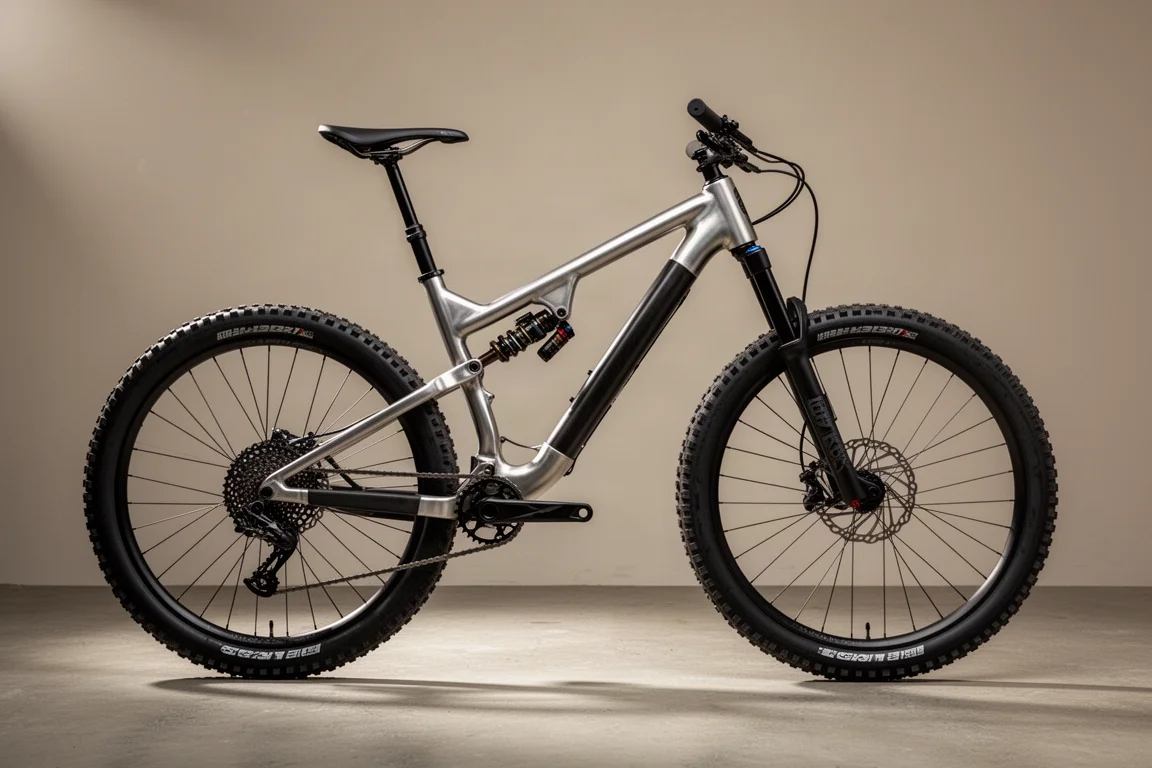
Atherton AM.130 Review: 3D-Printed Titanium Lugs and a 130mm Trail Bike That Descends Like a Bigger Machine
The Atherton AM.130 pairs 3D-printed titanium lugs with carbon tubes and a DW6 suspension platform. Here is how it rides, what the build delivers, and who it suits.
Mountain Bikes
Beginner Mountain Bike Buying Guide: What to Look For in a Trailworthy Hardtail
A practical framework for evaluating beginner mountain bikes, whether new or used, by examining key components that indicate real trail capability.
Mountain Bikes
Best Aluminum Mountain Bikes 2026: Five Alloy Bikes Worth Your Attention
Five aluminum mountain bikes that show how far alloy has come, from a 120mm trail bike and a versatile machined frame to a 180mm freeride machine.