Hi-Fi Speakers
Canton Vento 20, Klipsch RP-600M II, and Buchardt S400 MKII: Three Stand Mount Speakers Compared
Three stand mount speakers with very different priorities: ceramic dome clarity, dynamic punch, and relaxed full-range ease. Here is how to decide between them.
Introduction
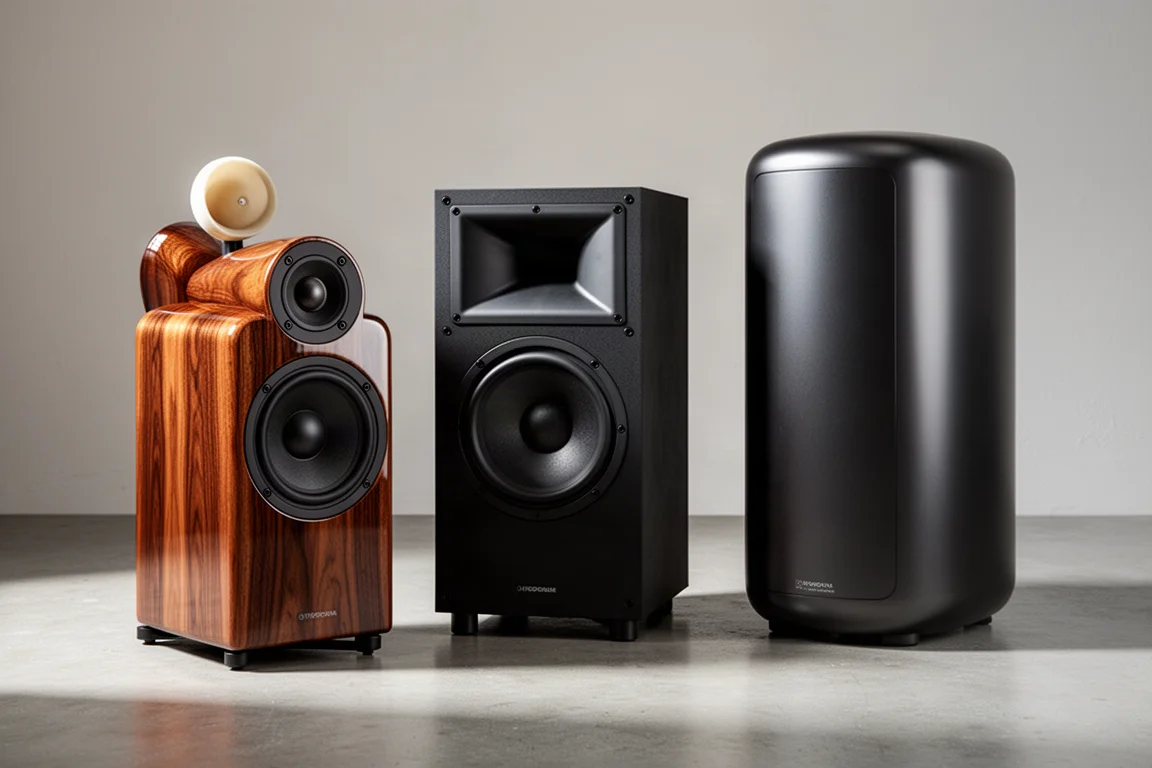
Stand mount speakers at this level rarely compete on features. They compete on character: how much bass they can move, how much detail they resolve, and whether they flatter the music you actually own. Three models make those trade-offs unusually easy to see.
The Canton Vento 20 is a German-built two-way with an in-house ceramic dome tweeter and a cabinet whose curved sidewalls are laminated from six layers. The Klipsch RP-600M II is the full-bodied, high-energy option. The Buchardt S400 MKII is the larger, more easygoing design with a rear passive radiator. All three are serious speakers, and choosing between them is mostly a question of which compromise you can live with.
What to Consider Before You Buy
Bass extension is the first thing to settle. The Canton Vento 20 is rated to a minus 6 dB point of 52 Hz, which is an honest figure rather than a generous one. It never sounds thin or anemic, but it is not a speaker that will pressurise a room on its own, so a subwoofer is a sensible plan if low-frequency weight matters to you.
Sensitivity is the second. At 85 dB, the Vento 20 sits on the low side, which means it asks more of your amplifier than an efficient design would. That is worth knowing before you pair it with a small amp.
The third consideration is transparency. The most revealing speaker here is also the least forgiving, and that cuts both ways depending on your record collection.
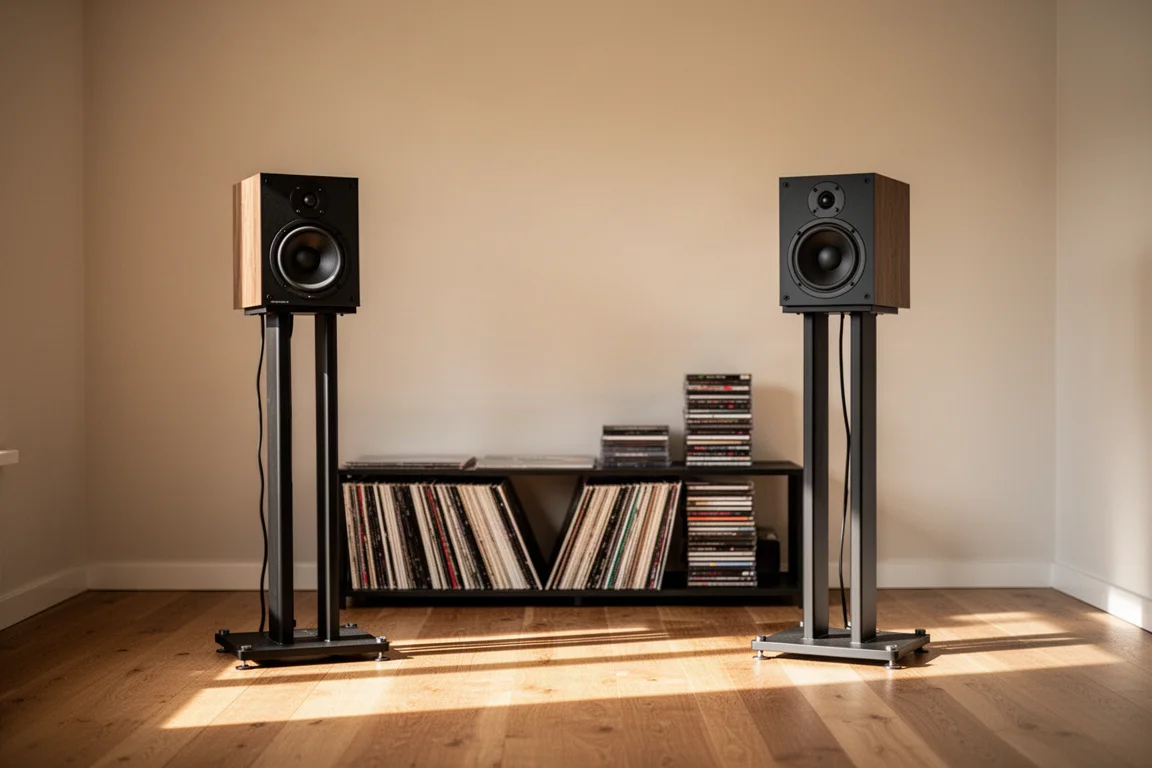
A useful way to frame the decision is to pick the speaker that suits the majority of your library rather than the one that wins on your single best recording. Detail and bass weight pull in opposite directions at this price, and each of these three leans deliberately toward one of them.
Canton Vento 20: Clarity and Imaging First
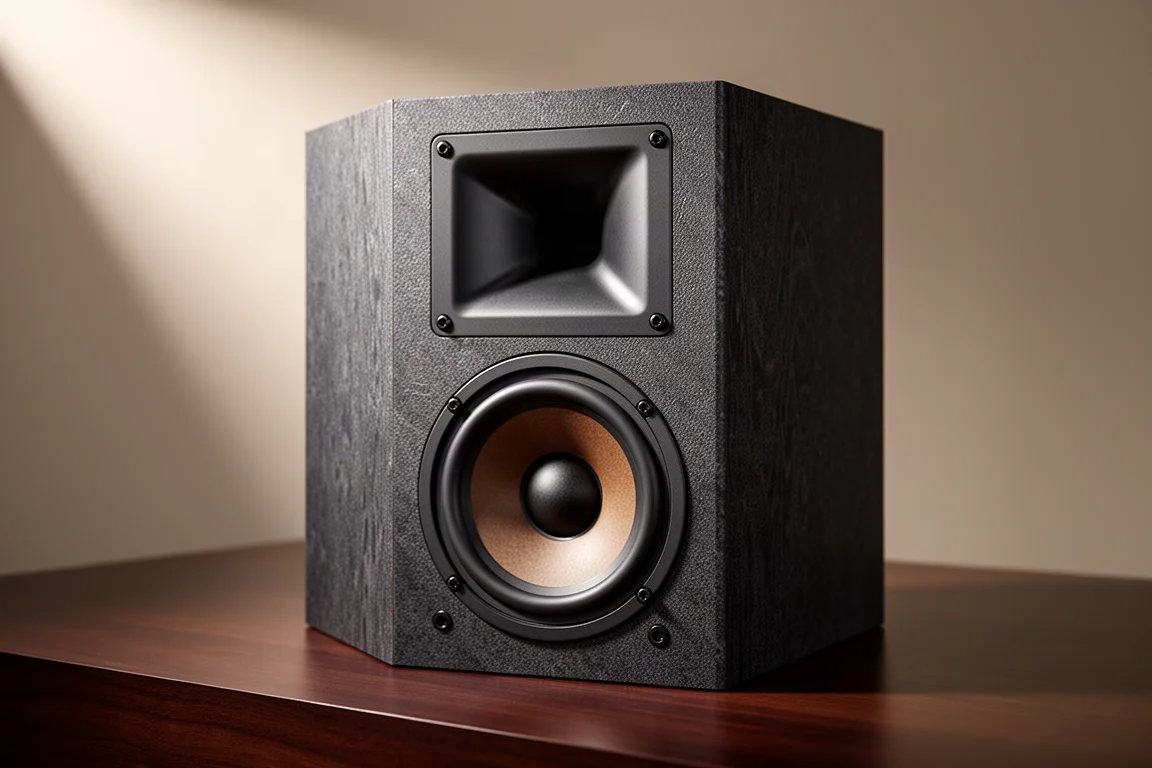
Canton designs and builds its own drivers rather than buying them in, and the Vento 20 shows it. The tweeter is a one-inch aluminium oxide ceramic dome set into a shallow waveguide, and it is the part of the design that does the most to define the speaker’s character. The woofer uses an aluminium titanium graphite composite cone with a triple-fold surround. Inside, the crossover network uses quality parts, and round the back there is a rear port that behaves quietly alongside a set of all-metal binding posts. The terminal block those posts mount to is plastic, which feels out of place at this price.
The cabinet is more ambitious than it looks. The curved sidewalls are built from six laminated layers, which adds rigidity and helps reduce standing waves inside the enclosure. The result is a notably inert, very strong cabinet.
The Vento 20 costs $1,695 per pair in gloss black or gloss white lacquer, or $1,795 per pair in high gloss walnut. The walnut finish is genuinely striking, and the $100 premium is easy to justify if the look matters to you.
On a pair of 24-inch steel stands and driven by a 50 watt per channel integrated amplifier, the Vento 20 does two things exceptionally well: it resolves detail, and it makes the speakers themselves disappear. Dense arrangements open up, the stage goes deep and wide, and vocals sit right where they should. On an all-analog percussion recording captured in a church, the sense of space was the standout quality. On a low-frequency-heavy film score, the speaker held its composure and stayed clear, even though it did not energise the room the way a larger cabinet can.
There is a trade-off worth knowing about. With more power on tap, the bass goes slightly deeper, but the image flattens and becomes more two-dimensional. With a modest 20 watt per channel amplifier, the presentation was more dimensional and more enjoyable despite the lower output. This is a speaker that rewards quality amplification more than raw quantity.
Klipsch RP-600M II: Dynamics and Punch
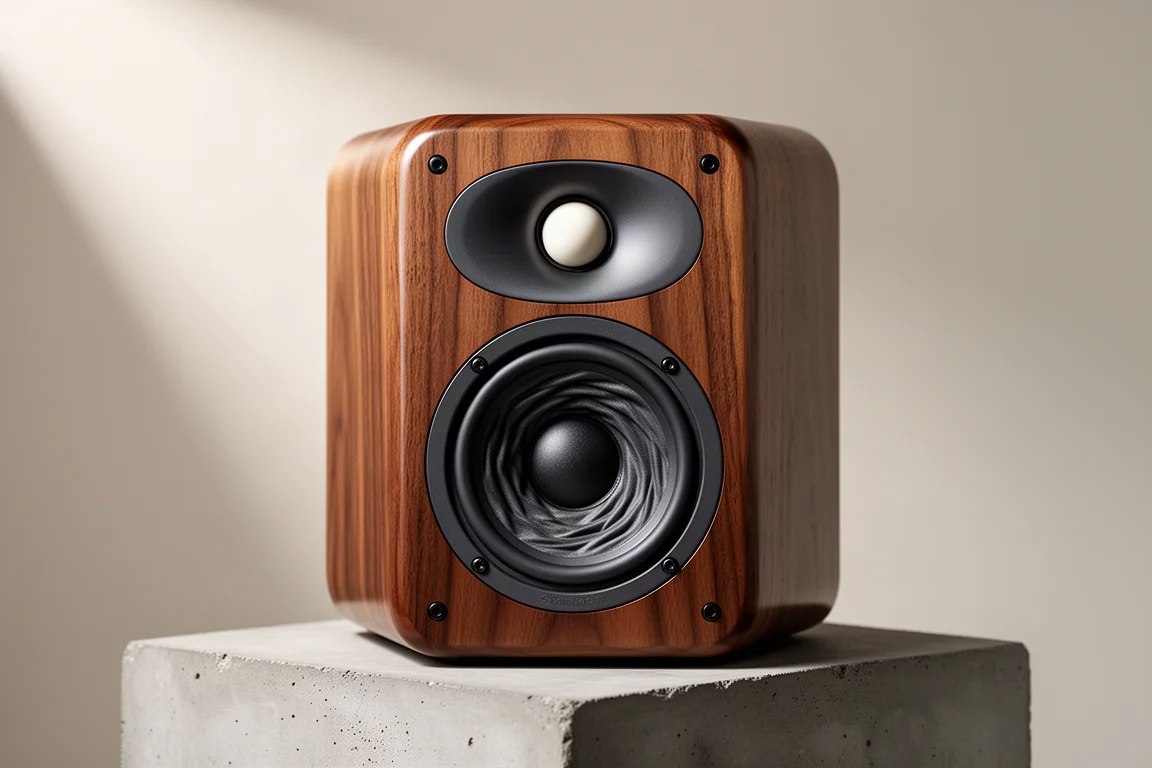
The Klipsch RP-600M II takes the opposite approach, and hearing the two side by side makes the contrast obvious. The Klipsch is far fuller sounding, produces considerably more bass, and is dramatically more dynamic. It kicks harder, and it is the speaker you want if you listen loud and want to feel the music as much as hear it.
What it gives up is cohesion. Its imaging is less together than the Canton’s, and it does not have the same sense of dimensionality. Where the Klipsch wins on weight and impact, the Canton wins on clarity and the precise placement of instruments and voices.
If your library leans toward rock, electronic music, or anything that benefits from chest-level impact, the Klipsch is the more satisfying choice. It is priced close to the Canton Vento 20, which makes the comparison a fair fight between two characters rather than two budget tiers.
Buchardt S400 MKII: Relaxed and Full
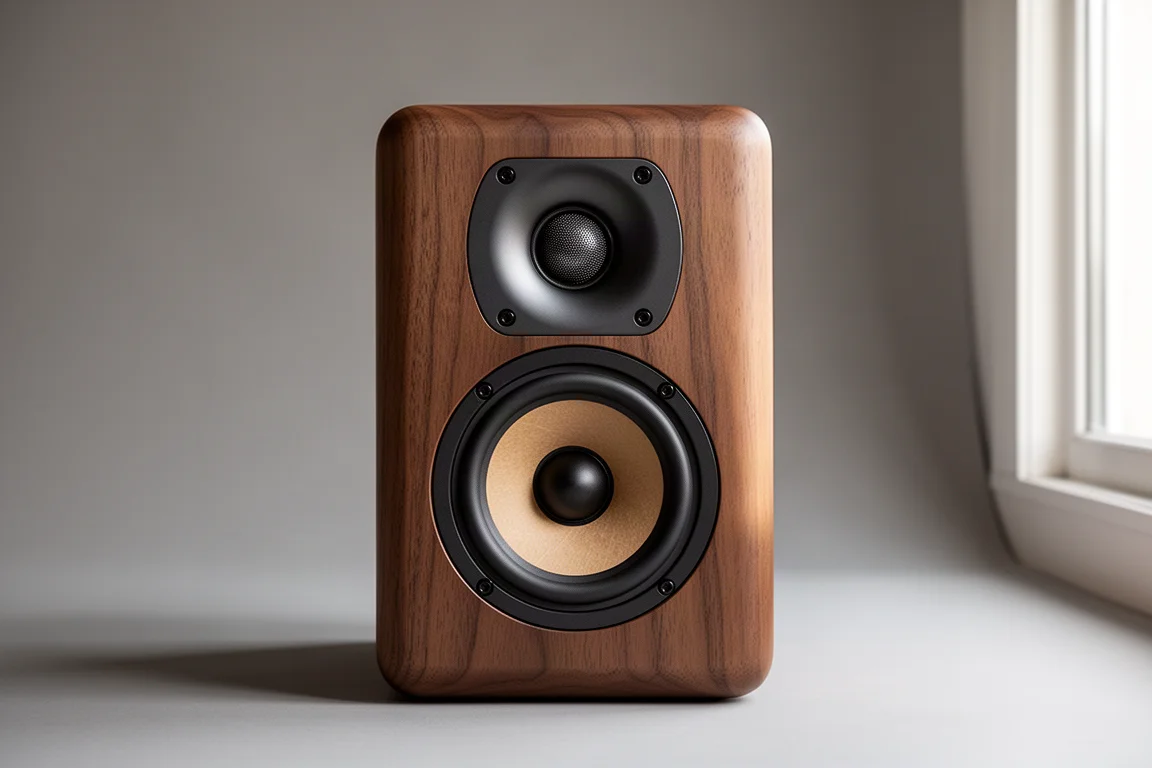
The Buchardt S400 MKII is a larger speaker, though not dramatically so, and it uses a rear passive radiator to produce a lot more bass than the Vento 20. It is a terrific speaker in its own right and no slouch in any respect.
Its character is different again. It is less transparent and less contrasty than the Canton, and it sounds more relaxed and laid back. Transient attacks are not as alive, and that is exactly where the Vento 20 pulls ahead on well-recorded acoustic material.
The Buchardt’s ease is not a flaw, though. On an aggressively bright, compressed and heavily processed pop record, the more relaxed presentation was genuinely complementary. A speaker that softens a hard-edged recording can be the better companion for a large part of a modern collection.
How They Compare on Real Recordings
Recording quality decides which of these speakers you will enjoy most, and it is worth being blunt about that.
On well-recorded acoustic and classical material, the Canton Vento 20 is the most convincing of the three. It reveals the character of a room and the decay around instruments, and it keeps a dense arrangement legible without smearing the details. On heavily compressed, equalised and processed music, that same honesty works against it. Bright, edgy productions stay bright and edgy.

The Buchardt S400 MKII moves in the other direction, softening the tipped-up top end of a hard recording and making it easier to sit through. The Klipsch RP-600M II sits between them in temperament, leaning on weight and drive rather than refinement.
That makes the question fairly simple: do you want the truth about your recordings, or do you want them to sound good? The Vento 20 is the honest one. It suits listeners who mostly play acoustic jazz, classical, or carefully made recordings, and who want to hear what is actually on the disc.
System Matching and Setup Notes
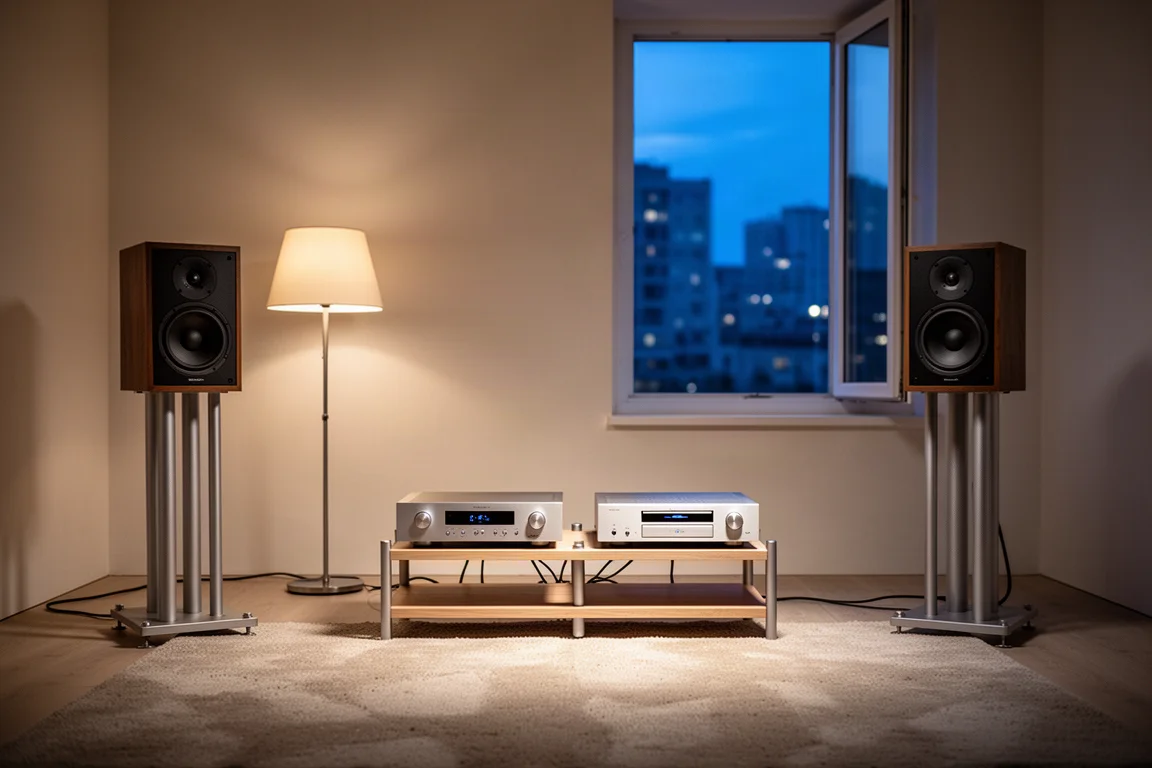
The Vento 20 is straightforward to place. A pair of 24-inch steel stands puts the tweeter at a sensible listening height in a typical seated position, and the rear port does not demand a huge amount of clearance behind the cabinet. Placement is not where this speaker gets fussy.
Amplifier matching matters far more. At 85 dB sensitivity, it needs current, and a 20 watt per channel amplifier will run out of headroom before the speaker does. But raw power is not automatically the answer. In practice, the higher-powered amplifier gave slightly deeper bass while flattening the soundstage, and the smaller amplifier gave up some low-end weight in exchange for a more three-dimensional image.
The practical conclusion is that the Vento 20 rewards a good amplifier rather than a big one. If you already own a quality integrated amplifier in the 50 watt per channel range, you have enough on hand to hear what the speaker can do.
A subwoofer is worth considering as well. The minus 6 dB point of 52 Hz is a realistic specification rather than a marketing number, and adding a sub fills in the bottom octave without asking a two-way stand mount to do work it was not designed for.
Buying Advice
Choose the Canton Vento 20 if clarity, imaging and transparency matter more to you than bass weight, and if most of your listening is acoustic, classical or otherwise carefully recorded. It is the most revealing speaker of the three, and it will make a good system sound exceptional. Budget for sturdy stands and a capable amplifier to get the most from it.
Choose the Klipsch RP-600M II if you want the most bass, the most dynamic impact and the most excitement for your money. It is the speaker for loud listening and for music that lives or dies on drive.
Choose the Buchardt S400 MKII if you want the fullest low end and the most relaxed, forgiving presentation. It is the easiest of the three to live with across a wide range of recordings, particularly compressed modern material.
The Klipsch RP-600M II is priced close to the Canton Vento 20, so the decision comes down to the character you want in your room rather than to what you can afford.
Conclusion
There is no single winner here, and that is the point. The Canton Vento 20 is the clarity specialist, with a ceramic dome tweeter, a stiff laminated cabinet and imaging that makes the speakers vanish. The Klipsch RP-600M II is the dynamic one, fuller and harder hitting. The Buchardt S400 MKII is the relaxed, full-range option with the most bass and the gentlest top end.
Match the speaker to the recordings you actually play, and any of the three will serve you well for years.
Further reading
Related Reviews
Hi-Fi Speakers
1723 THX Tower vs 1528 Bookshelf: Which Speaker Fits Your Room?
Two speakers at roughly the same price, built very differently. How the 1723 THX tower and the 1528 bookshelf compare on construction, bass, power needs, and sound.
Hi-Fi Speakers
Acoustic Energy AE 300 Review: Deep Bass From a Compact Standmount
A two-way standmount with real wood veneer, surprising low-end weight, and a warm, easygoing character. Here is what to know before buying.
Hi-Fi Speakers
Acoustic Energy AE1 40th Anniversary Review: A Modern Take on a British Classic
A compact standmount that revives a 1980s favorite with all-new parts, a warm mid-centric balance, and a price of £1,499 per pair.