Hi-Fi Amplifiers
Canor Virtus A3 Review: A Hybrid Integrated Amplifier With Everything Built In
A hybrid dual mono integrated amplifier with a tube input stage, a built-in ESS DAC, a phono stage and 100 watts per channel. Here is what to know before buying.
Introduction
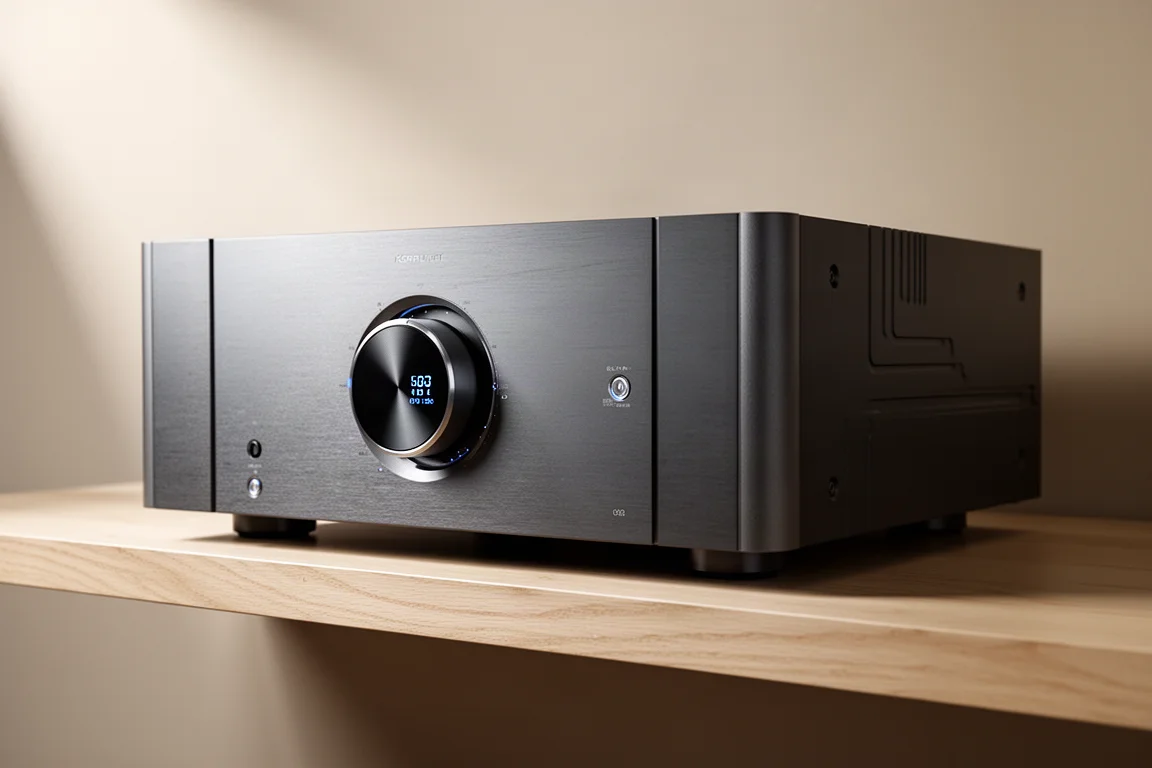
Canor Audio has built its reputation on valve-driven electronics, and the Virtus A3 is the Slovenian manufacturer’s most complete integrated amplifier to date. It pairs a tube input stage with a solid-state output section inside a single chassis, then adds a built-in digital-to-analog converter, a phono stage and a headphone amplifier. The pitch is straightforward: one well-made component instead of a rack of separates.
The brand’s earlier AI 110, an all-analog tube integrated, has since been discontinued, but it spent years serving as a reference amplifier in high-end listening rooms. The Virtus A3 keeps that amplifier philosophy and moves it into a more modern, easier-to-live-with package with digital connectivity on board.
Who This Amplifier Is For
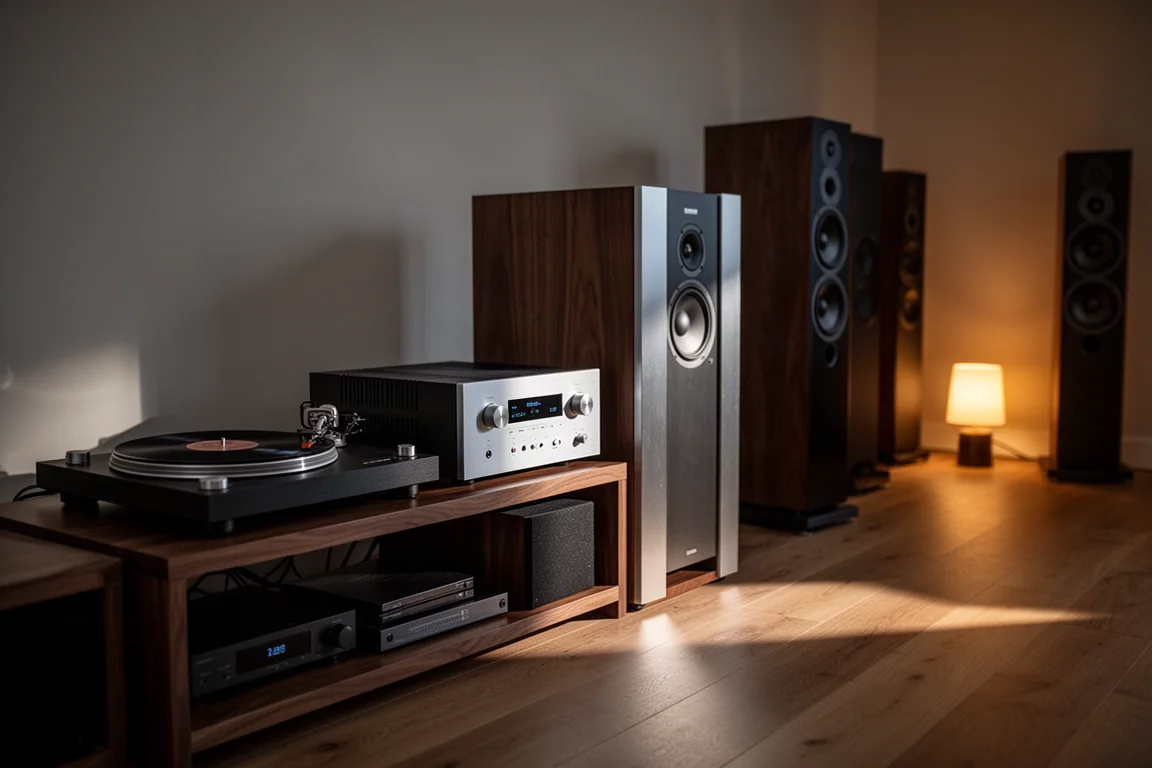
The Virtus A3 suits listeners who want a single box to handle every source in a two-channel system. A turntable connects directly to the built-in phono stage, a CD transport or streamer connects over coaxial, optical, AES/EBU or USB, and balanced or unbalanced analog sources are covered as well. Preamp outputs make it straightforward to add an external power amplifier or a subwoofer later.
It is a natural fit for someone moving on from an all-analog tube amplifier who wants to keep the character of valves while gaining digital inputs and more power. It also makes sense for buyers who would rather not purchase a separate DAC and phono preamp, because both are already inside the chassis.
It is not the right choice for anyone who needs HDMI switching for a television, or who wants to stream music wirelessly from a phone or computer without adding another device.
The hybrid character is itself a reason to choose this amplifier. Listeners who find conventional tube amplifiers too warm or too fussy, and solid-state amplifiers too plain, sit squarely in the middle of what this design offers.
Hybrid Design and Power
The Virtus A3 is a hybrid true dual mono design. Its tube input stage is engineered so that the signal stays clean whether it arrives from an analog or a digital source, with ultra-low distortion characteristics that are not typically associated with tube-based gear.
Power output is rated at 100 watts per channel into 8 ohms and 150 watts into 4 ohms. That proved more than adequate in practice, driving a range of speakers without trouble, including full-range towers rated at 4 ohms.
Sound Quality: Neutral With a Touch of Tube Character
Anyone expecting a vintage-flavoured valve amplifier should recalibrate. The Virtus A3 does not deliver the overly warm or lush presentation often associated with tube designs from the 1960s and 1970s. It is impressively neutral, and it adds no coloration to vocals or instruments, letting the recording and the connected speakers speak for themselves.
Traces of tube character remain. There is a subtle sense of bloom or weight in the bass, and a noticeable air or breathiness in the treble extension. Bass sounds deeper, fuller and weightier than expected, particularly at the extremes, which lends music a sense of extra heft. The trade-off is that low notes are handled with slightly less finesse and precision than the most tightly controlled amplifiers in this class, so listeners who prioritise grip and definition at the bottom end should weigh that carefully.
Midrange and treble are the standout regions. Vocals sound natural and true to the original performance, and high frequencies come across smoothly and clearly. Piano trills and electronic pops and pings each carry air and lightness, with notes lingering a fraction longer than usual. Much of that separation and focus comes from the dual mono construction and the isolation between internal parts.
Soundstaging is another strength. The amplifier does not limit a speaker’s ability to project a wide, boundary-defying stage, and instruments are placed with focus and definition. At loud volumes it is lightning quick, able to start and stop violently. Below roughly 70 dB, some competing amplifiers sound a little more grippy and contrasty, so quieter listening sessions may reveal a softer edge.
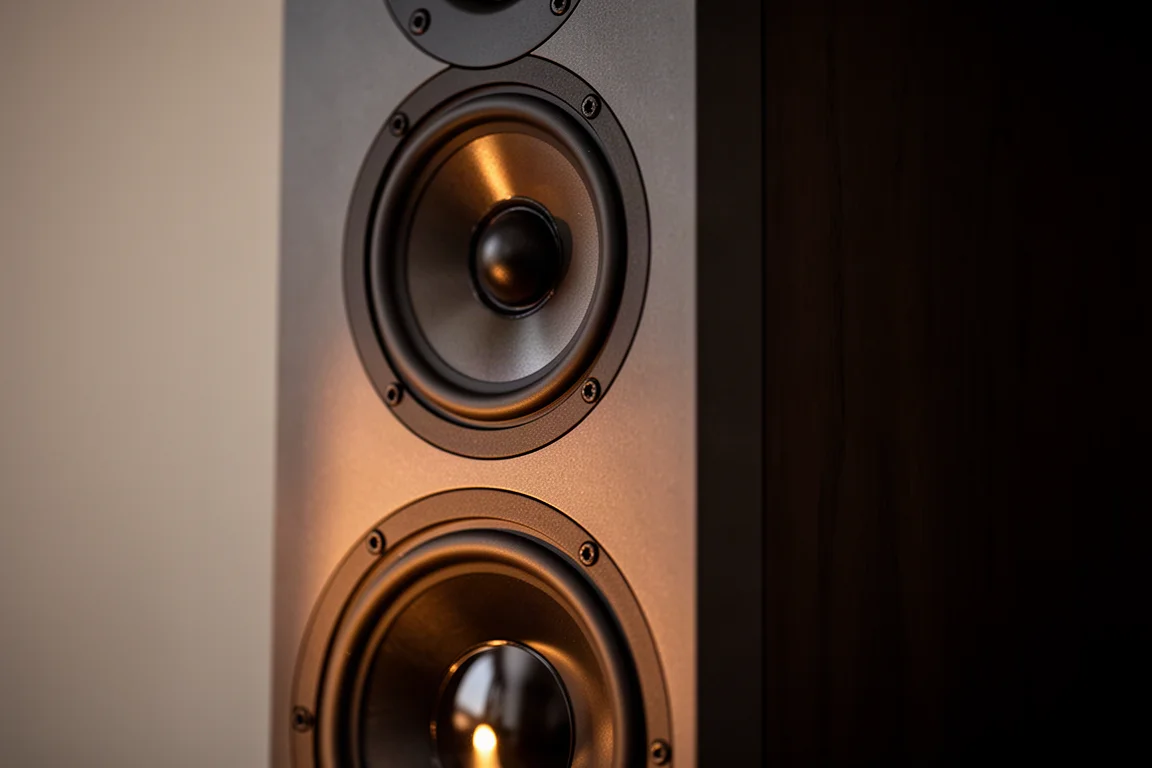
Consistency across different speakers is worth noting. Very different designs, including high-sensitivity horns and full-range towers, changed the size, focus and presence of the image, but those differences came from the speakers rather than from the amplifier altering its response to different loads. That is exactly what a quality amplifier should do, and it means the Virtus A3 is likely to remain a stable foundation as a system evolves.
Built-in DAC, Phono Stage and Headphone Amp
A high-quality built-in dual mono ESS digital-to-analog converter handles digital sources. Set against a high-end external DAC and streamer, the internal converter extracts slightly less nuance from a recording, but the gap is small. In some cases the Canor’s slightly less analytical presentation is the more enjoyable option, particularly with 80s and 90s rock.
The phono stage accepts moving magnet and moving coil cartridges and offers good neutrality and separation. It does not clean up the sound of favourite records the way a top-tier dedicated phono stage can, but it does not render them artificially lush or vague either. Its quality is high enough that a separate phono preamp is unlikely to be necessary while working out which turntable and cartridge combination suits a system best.
A headphone amplifier is built in as well, which adds another way to listen without switching on the main speakers.
Connectivity, Controls and the OLED Dial
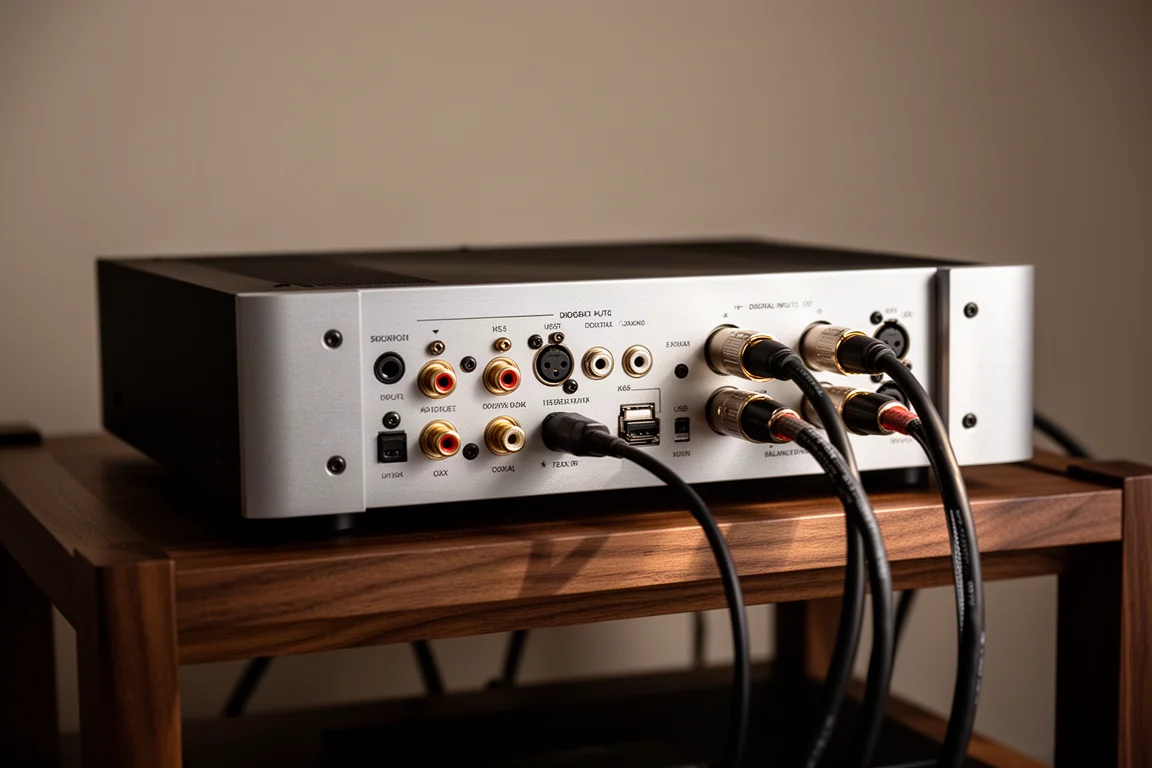
Digital inputs include two coaxial, two optical, a professional AES/EBU connection and a USB port. Analog connectivity covers unbalanced and balanced inputs, and there are balanced and unbalanced preamp outputs for external amplifiers or subwoofers. A moving magnet or moving coil phono input is included too.
Two omissions stand out. There is no HDMI, which is a notable gap given the competition this amplifier faces. There are also no wireless connections: no Bluetooth, no AirPlay, no Ethernet, and no built-in streaming, so music cannot be sent from a phone or computer without an external device. There is no bass management either, which means subwoofer crossover, phase and level need to be set on the subwoofer itself.
The physical interface is more contemporary. A chunky rotary volume dial houses a smartphone-like OLED display, and a quick swipe across it reveals menus and settings such as input sensitivity and home theatre pass-through, along with options to display virtual meters or the brand logo on the volume knob during playback. Both the screen and the dot matrix display can be disabled for a more streamlined look.
Two practical caveats apply here. Basic controls such as balance and tone are not available, and most of the menus reachable by swiping the volume dial cannot be accessed using the included remote, so those settings require a walk to the amplifier.
Things to Consider Before Buying
The most important consideration is system fit rather than sound quality. Buyers who need HDMI switching or wireless streaming will have to add external hardware, which erodes some of the convenience that makes an all-in-one amplifier attractive in the first place. Subwoofer users should also expect to make adjustments on the subwoofer itself rather than from the amplifier.
On the control side, the absence of balance and tone adjustments keeps the signal path simple but removes options some listeners rely on. The remote control limitation is worth knowing in advance, since menu-based settings such as input sensitivity and display preferences must be changed at the unit.
Finally, expectations around bass character matter. The low end is full and weighty rather than ruthlessly controlled, and listeners who value maximum grip and precision at low volumes may prefer a different design. None of these points undermine the amplifier’s core strengths, but each one shapes whether it is the right purchase for a particular room and system.
Buying Advice
Value is where the Virtus A3 makes its strongest case. A well-regarded hybrid integrated from a competing brand sells for just under $10,000 and still requires a separate DAC and phono preamp to match the Canor’s feature set, which pushes the total cost of ownership considerably higher. That rival offers more control, more dynamic snap and greater finesse across the frequency range in absolute terms, but the difference is unlikely to justify the outlay for most listeners, particularly in imperfect rooms.

Another alternative delivers more power and arguably more perfect measured performance, at more than double the price. Measured excellence is a legitimate priority, but the Virtus A3 counters with enough character to make listening feel like an experience rather than an exercise, and it includes digital connectivity without extra spending.
Canor is also a known OEM manufacturer for other audio brands, and the brand is established enough that support and service are unlikely to become a problem. For a buyer who wants valve-influenced sound, modern digital inputs, vinyl support and headphone listening from one chassis, the Virtus A3 is a coherent and cost-effective answer.
Conclusion
The Virtus A3 is an unusually complete expression of what Canor does best: amplifier design and sound quality, packaged in a way that is easier to live with than the all-analog amplifiers that came before it. It is neutral rather than lush, it drives demanding speakers without strain, and it bundles a capable DAC, phono stage and headphone amplifier into a single chassis. Buyers who can live without HDMI and wireless streaming will find a great deal to like.
Product link
View more details for Canor Virtus A3
This product is mentioned in the review. Check the specifications, options, and compatibility before buying.
View more details for Canor Virtus A3Further reading
Related Reviews
Hi-Fi Amplifiers
Accuphase E-280 Review: Entry-Level Accuphase With Flagship Attention to Detail
A close look at the Accuphase E-280 integrated amplifier, covering its champagne build, AAVA volume control, sound quality, and the speakers and sources that suit it best.
Hi-Fi Amplifiers
Advance Paris A10 Classic vs Yamaha A-S301: Two Integrated Amplifiers Compared
A practical comparison of a $350 integrated amplifier and a $2,500 reference model, covering the differences that matter and the ones that do not.
Hi-Fi Amplifiers
Affordable Chinese Amplifiers Worth Buying: Five Budget Hi-Fi Amps Compared
A practical look at five affordable amplifiers, what each one does well, and the trade-offs to weigh before you buy.