Kitchen Knives & Accessories
Canadian-Made Kitchen Gear Worth Knowing About: Boards, Knives, and Workshop Favorites
A roundup of Canadian-made cutting boards, chef knives, knife magnets, and kitchen accessories, from thick side grain boards to handforged blades.
Introduction
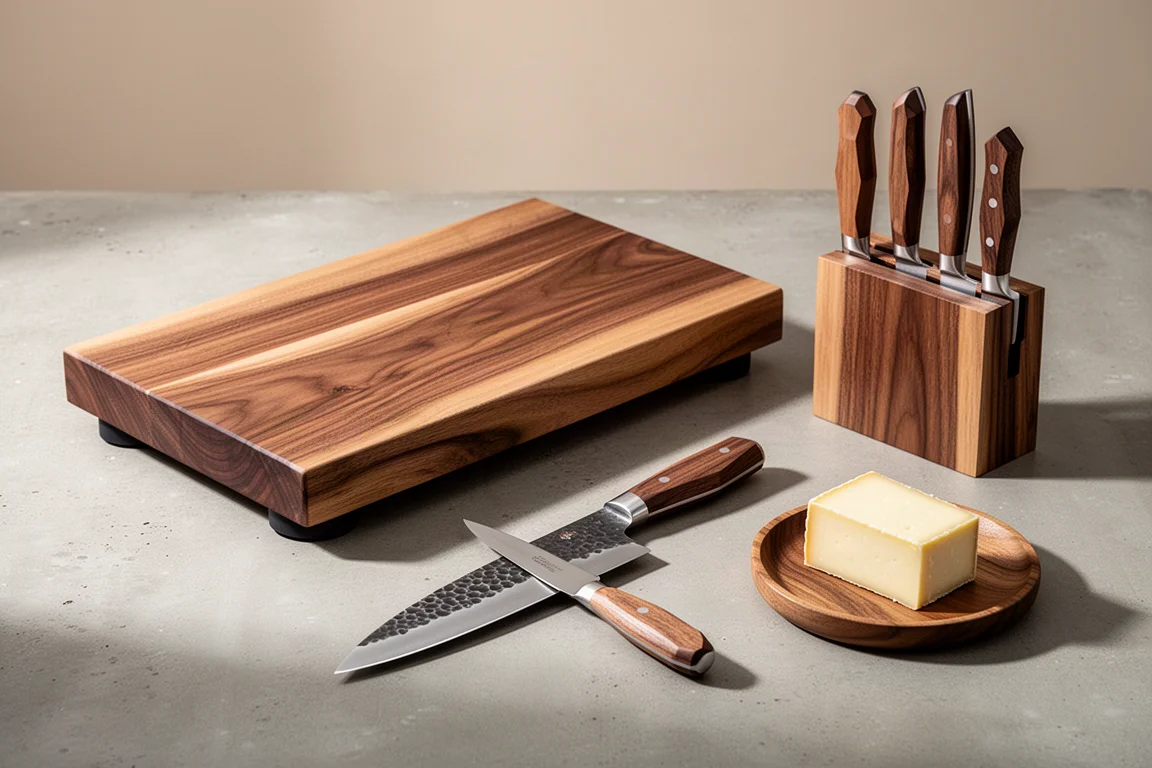
Canada has a long woodworking tradition, and over the past couple of decades a growing group of makers has been turning that craft into serious kitchen gear: cutting boards, chef knives, knife storage, spoons, and care products. This roundup gathers the standouts, from thick side grain boards in New Brunswick to handforged blades ground entirely by hand.
Half of what follows is wood, which tracks. The other half is steel, including two very different approaches to a Canadian-made chef knife: one ground from blanks on belt sanders, the other forged and hammered by a single young blacksmith.
Wood for Chef Side Grain Cutting Boards
Wood for Chef has been operating in New Brunswick for just over 20 years, and quality woodwork is the whole business. Their boards are built to stand up to a home kitchen or even a professional one. These are side grain boards, which makes them more affordable than end grain options, but they are cut nice and thick, so they are sturdy, resistant to warping, and built to last.
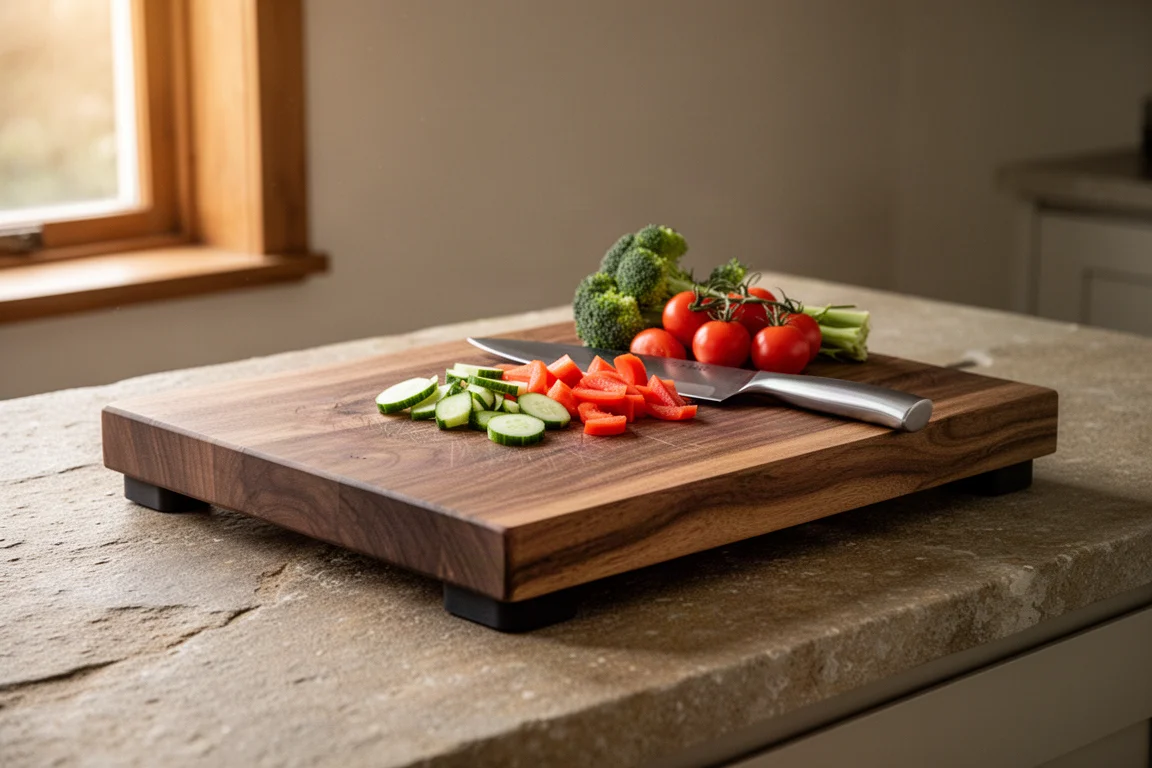
The details are well considered. Rubber feet on the bottom improve stability and keep airflow underneath so the board dries properly. The bottom edge is beveled, which makes the board easier to pick up and easier to slide a pan or sheet pan underneath so you can scrape food straight into it. There is also a custom tapas and steak plate: a wooden serving surface that is much easier on fancy steak knives than ceramic, and looks great for serving cheese or tapas. You can buy the plates individually or as a set of four to save a few dollars. After months of home use, the board has stayed true and been consistently gentle on knife edges, even for a tester who is usually wary of side grain boards warping.
Haki: Japanese Blades, Canadian Woodwork
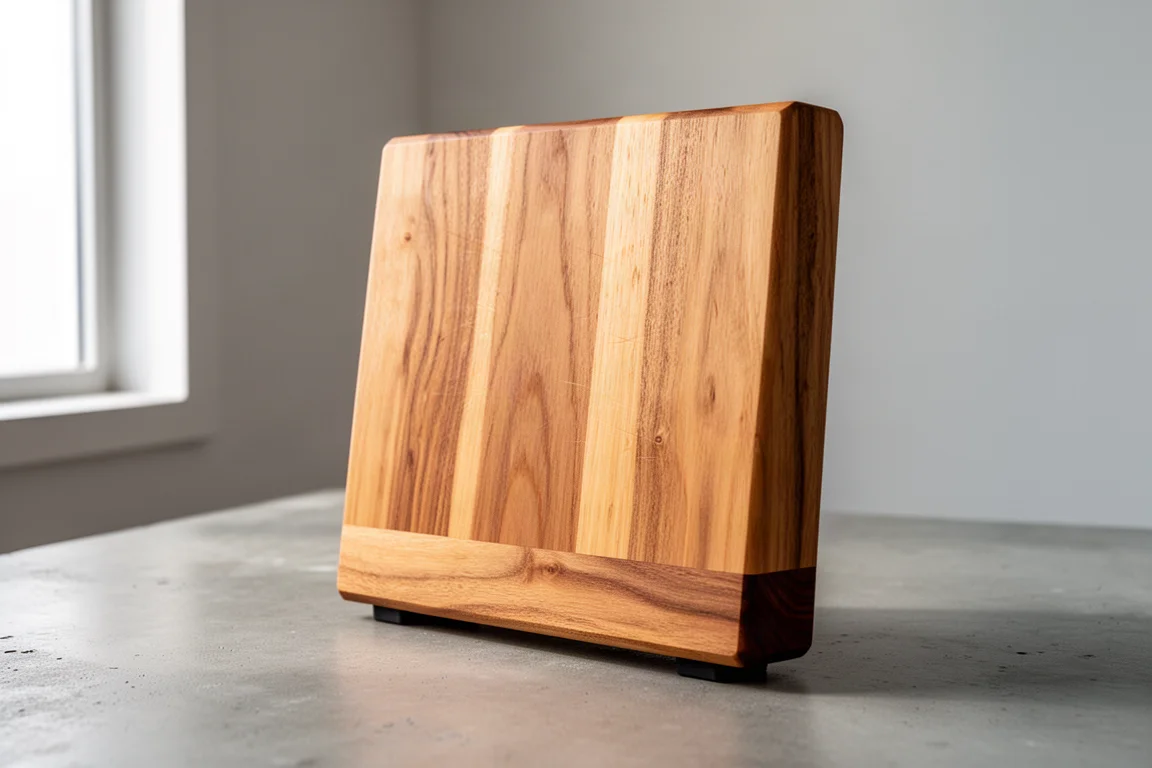
Haki takes a cultural fusion approach: the blades are made in Sakai, Japan, while the handles are made in Quebec. Woodwork is Haki’s specialty, and the combination delivers Japanese cutting performance with Canadian craftsmanship on the handle side.
The brand also makes a genuinely clever double-sided magnetic knife display stand, which works well as both storage and a showcase piece. If you specifically want something 100 percent Canadian made, the knives below are the better fit, since Haki’s blades come from Japan.
Dice Knives Guto Chef Knife
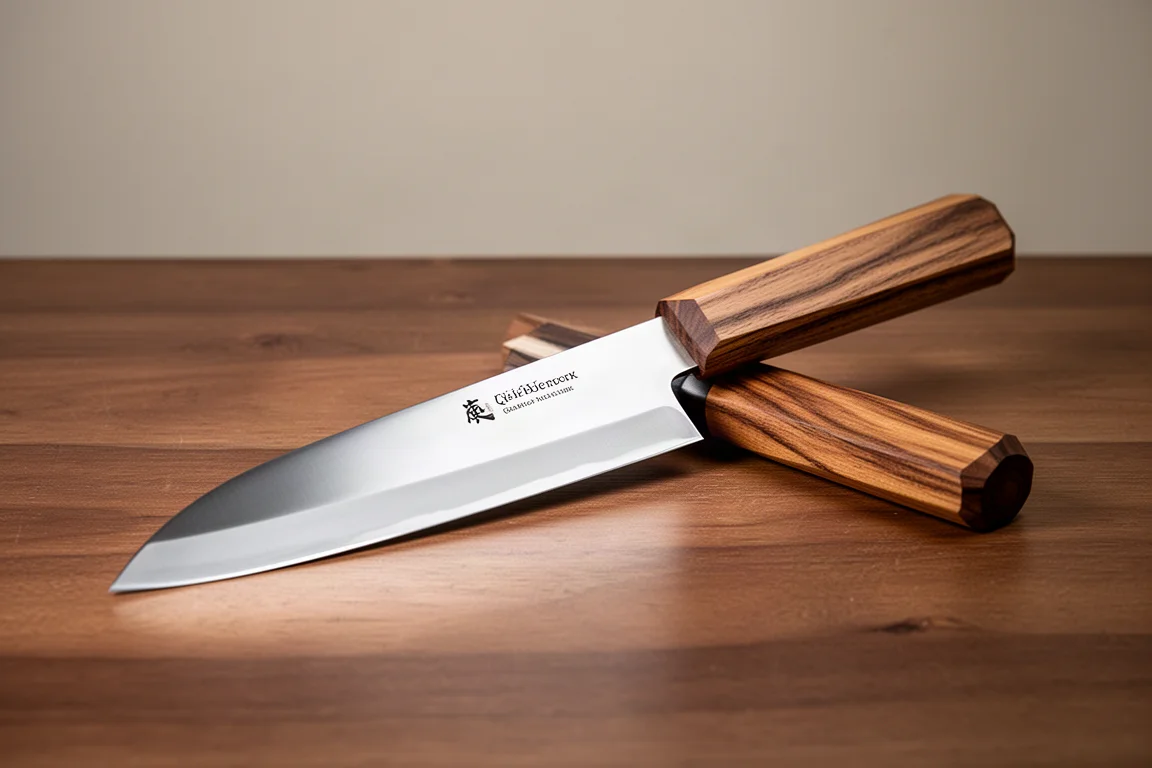
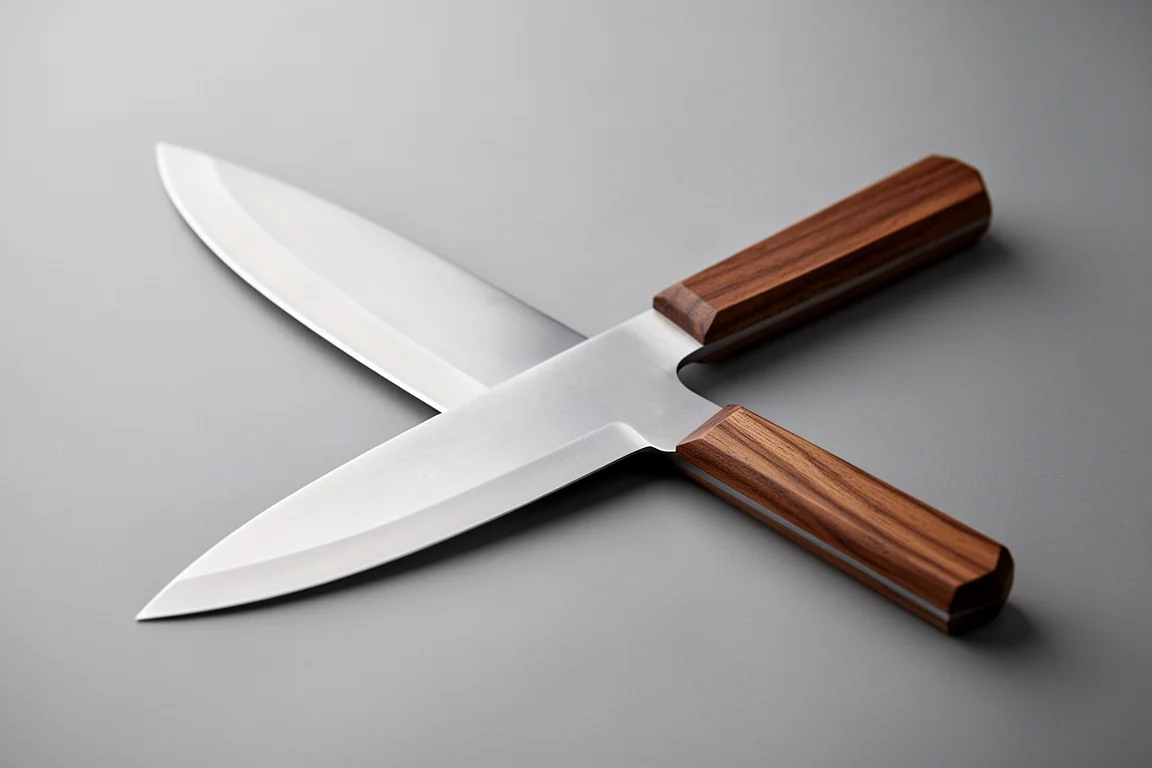
Dice Knives is a West Coast shop making blades out of ABL steel, a steel that performs a lot like the Japanese steels most knife fans are used to, while being relatively rugged. Their boning and butchery knives have already earned a strong reputation, but the Guto chef knife is the one that wins people over. It has a simple, elegant polish that looks understated, almost belying how it performs.
The handle is a Japanese-style octagonal shape, made slightly narrower so it fits smaller hands better while still feeling comfortable in larger ones. Weight and balance are very good: a touch heftier than a typical Japanese knife, but not heavy. There is a healthy amount of steel in the spine that keeps the blade rigid, tapering beautifully down to the edge, so it glides through food without feeling flimsy. The front end is thinned for precise, sharp scoring work.
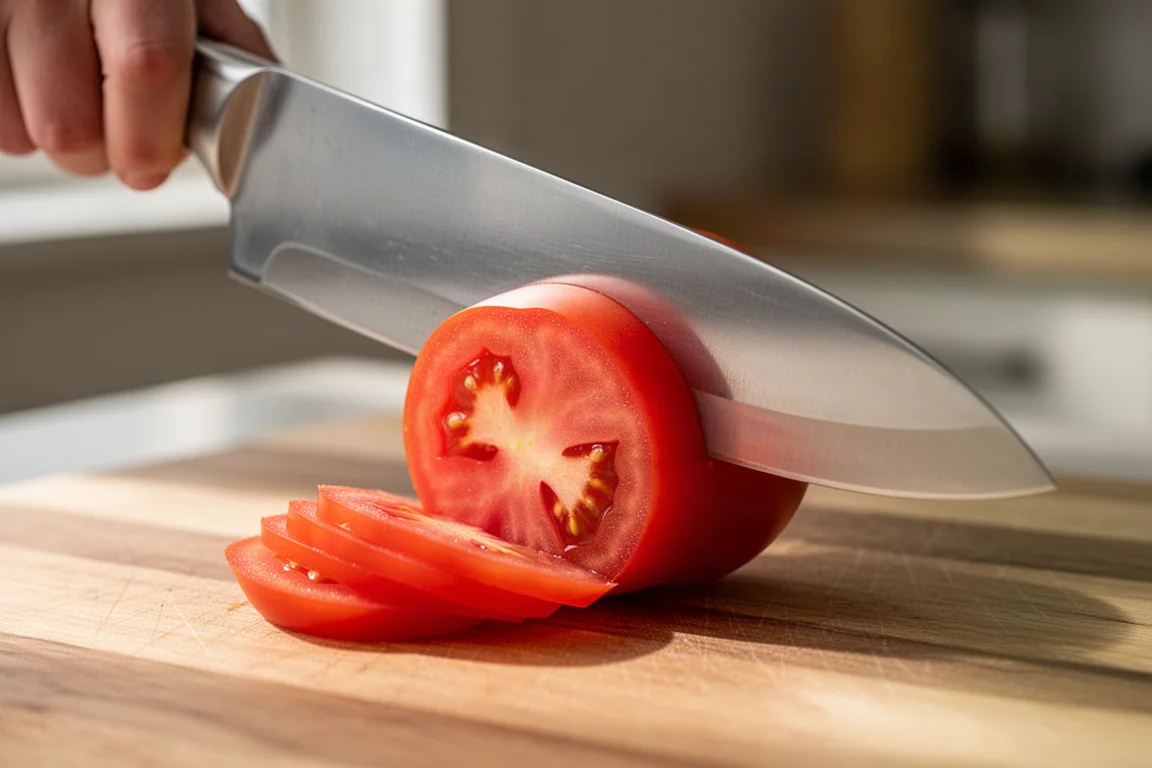
In testing, it handled an overripe tomato with a satisfying bite, sitting in that sweet spot where the edge grips the skin instead of skipping off it. Through dense carrots there is a little resistance, since this is intentionally not a laser-thin blade. That extra structure behind the edge makes it more rugged and better suited to professional kitchen abuse, which suits heavy-handed cutters well. Cucumber released reasonably well at speed, though it is not designed for food to fall away effortlessly. The profile combines enough curvature to rock cut smoothly with an edge flat enough to separate pieces cleanly, so if most Japanese chef knives do not rock enough for you, this is a strong direction to look. It is a workhorse-leaning knife: not the one that falls through a sweet potato like it is not there, but a near-perfect balance of precision and durability.
Hudson Torren Handforged Chef Knives
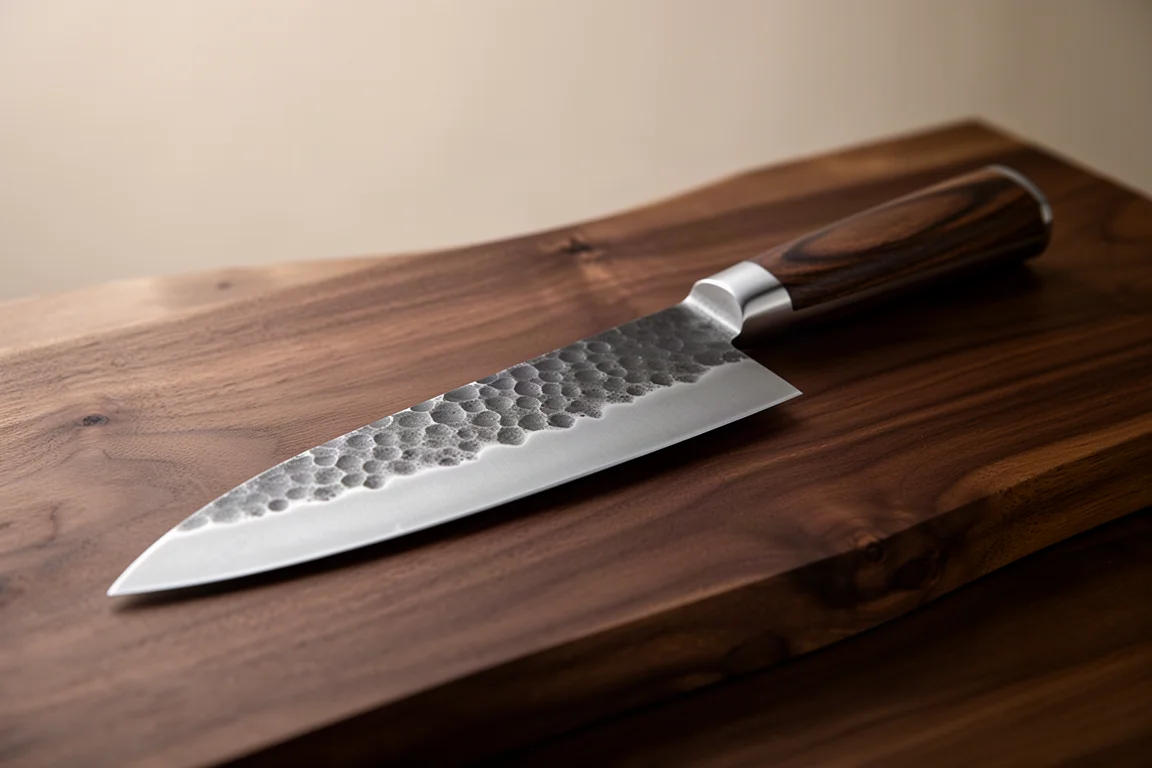
If you want a knife that is truly handforged in Canada, Hudson Torren is the name to know. He is a young blacksmith who has been forging since his teenage years, inspired by competitive forging shows, and he spent about three years refining his blades with feedback from knife specialists before his work was ready for stores. He hammers the middle of the blade to create a subtle hollow that helps food release, does his own heat treatment, and grinds every knife by hand. These are about as handmade as knives get.
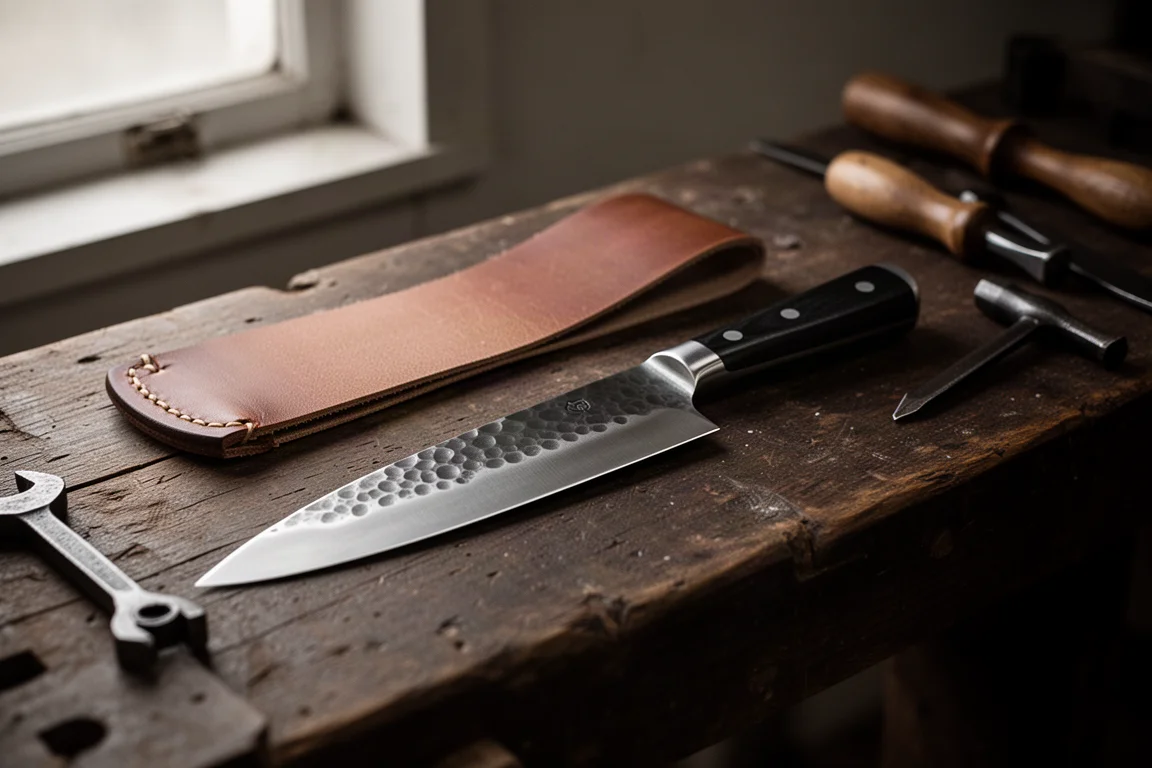
In use, they cut impressively. The blades are ground thinner at the point and glide through carrots with ease, while still keeping a touch of steel behind the edge so they never feel flimsy on the board. Good curvature gives them a nice rocking motion, and they bite into tomato skin confidently. He deliberately avoids over-polishing the edge so it keeps a little extra bite and lasts longer. Food release is notably better thanks to that hollow hammering, and compared side by side, the Hudson is the thinner, smoother cutter of the two Canadian knives, while the Dice Guto is the more rugged workhorse.
Larchwood Canada End Grain Cutting Boards
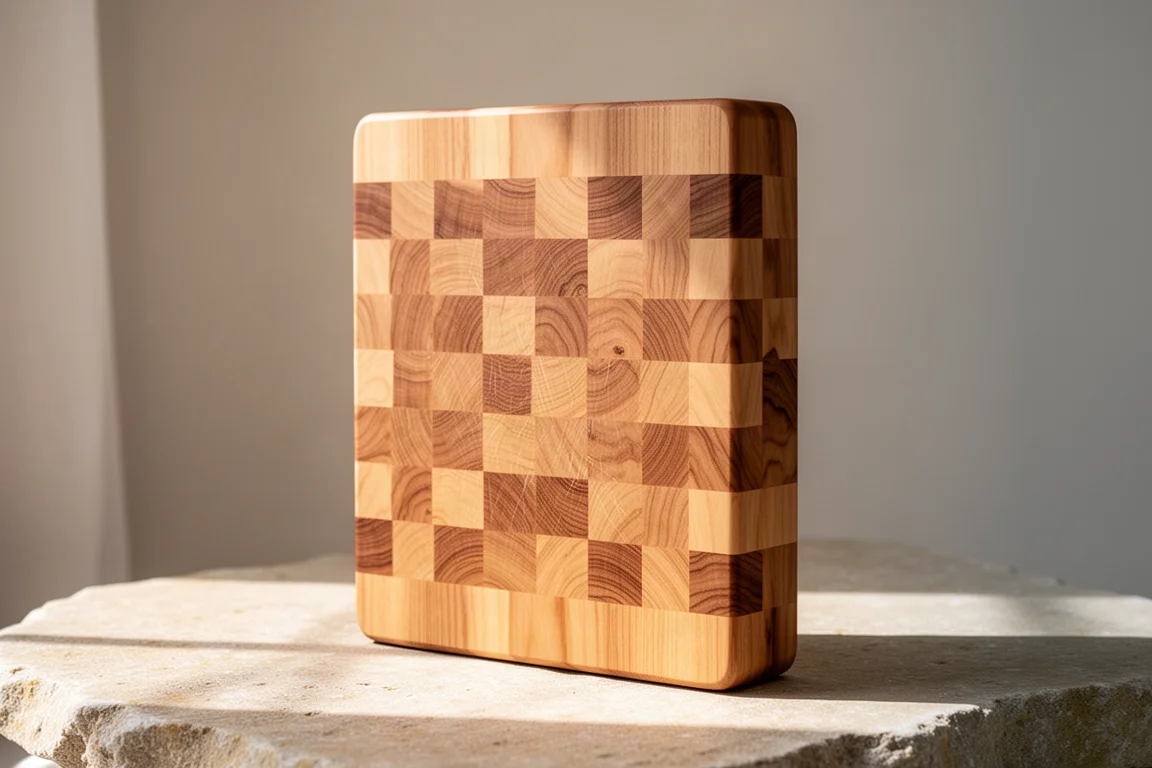
If you want the best of the best when it comes to cutting boards, Larchwood Canada is it. These boards are made in Cape Breton from end grain wood, which means you are cutting between the fibers of the wood. That is the gentlest option for your knife edge and also the construction that lasts the longest. They sit at the top of the cutting board market for good reason.
More Canadian Kitchen Makers to Know
Beyond boards and blades, there is a deep bench of Canadian makers filling out a well-equipped kitchen. Little Deer is a family-owned farm and wood shop in Quebec that has made wooden spoons and spatulas for decades, with sustainable practices where even the wood scrap feeds their vegetable gardens. If you are after a wooden spoon, it does not get much better.
Sticks and Boards, based in the aptly named town of Morewood, Ontario, started as a furniture business using offcuts to make kitchen goods, and the side project grew so much that it became the business. They make attractive knife display stands and small sushi plates. Bog Grain, made by Guil in Quebec, produces a smart knife magnet design: a steel bar screws into the wall, and the wooden board magnetically adheres to it, with options for tile mounting via double-sided tape or drywall installation.
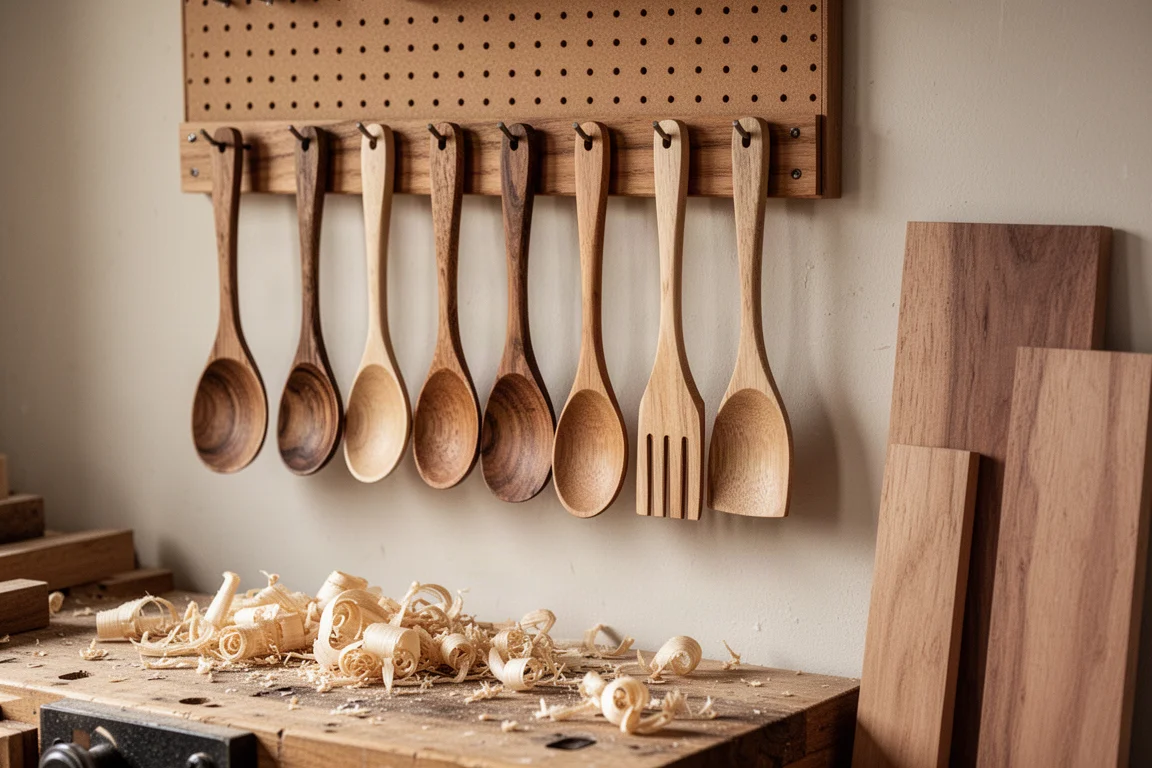
Wooden products need care, and Cosmos Beeswax, a long-running Canadian heritage brand, makes a beeswax and mineral oil blend for conditioning spoons, boards, knife magnets, knife handles, and any unfinished wood. From Calgary, All Things Gel offers a pan seasoning stick with cold-pressed canola oil and beeswax for cast iron, plus a coconut oil board wax if you want to avoid petroleum products. Nordquist makes a super-thin carbon steel spatula with a brass handle that fancy kitchen gear fans will love, and Horus and Jasper craft canvas knife rolls with beautiful leather work.
Buying Advice
If you are choosing between the two Canadian chef knives, think about how you cut. The Dice Guto is the sturdier pick for busy or heavy-handed cooks, and a smart choice for anyone who works in a professional kitchen. The Hudson Torren is the finer, smoother cutter with more artisan character and excellent food release. For boards, Wood for Chef covers the practical everyday tier, while Larchwood Canada is the premium end grain investment. Round everything out with a wood conditioner to keep your boards and handles in good shape for years.
Conclusion
Canada’s kitchen makers cover the full journey from board to blade to care products, with genuine craftsmanship at every tier. Whether it is a thick side grain board with thoughtful details, a fusion knife with Japanese steel and Quebec woodwork, a rugged ground-blade workhorse, or a handforged knife hammered by one dedicated blacksmith, there is something here for cooks who value where their tools come from.
Further reading
Related Reviews
Backpacking Gear
Building a 10 lb Base Weight: An Ultralight Backpacking Gear List
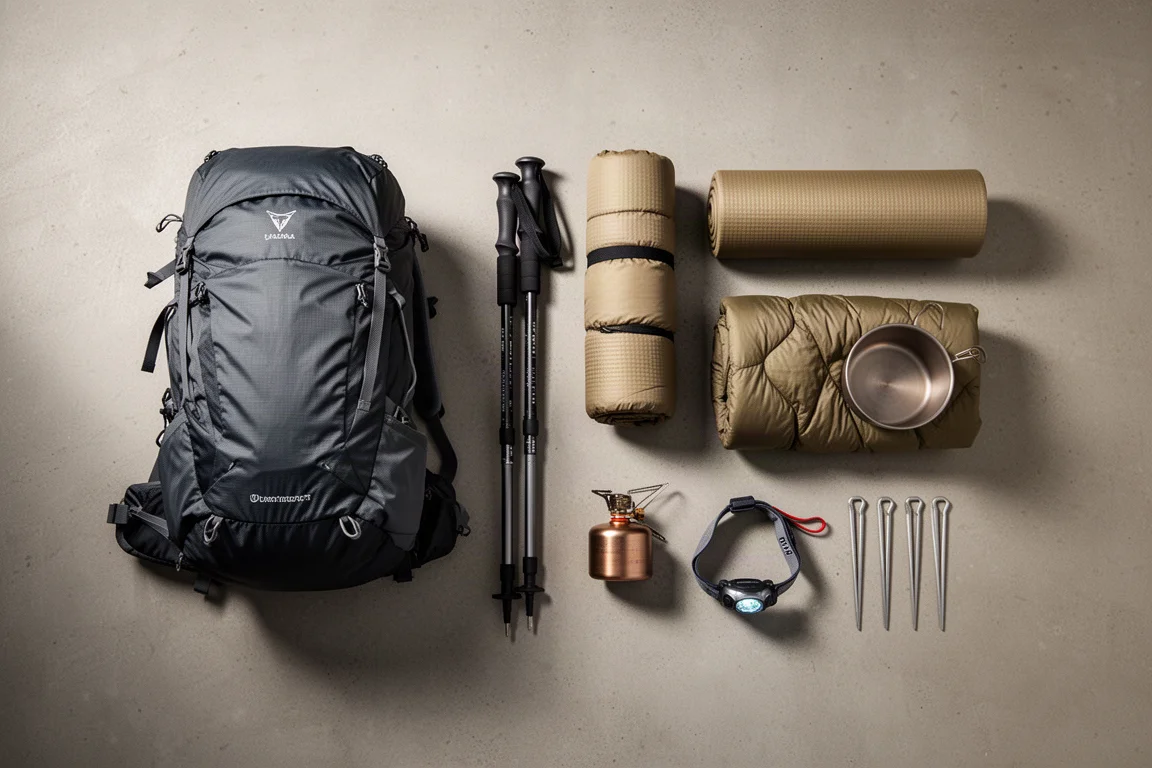
A practical walkthrough of the ultralight pieces behind a 10 lb base weight, from a 765 g pack and a roomy one-person tent to a full camp chair and a dependable water filter.

Road Bikes
10 New Road Bikes Worth Watching: Aero, Titanium, Steel and Endurance Standouts
A practical roundup of 10 new road bikes, from aero flagships chasing single-watt gains to titanium, steel and endurance platforms built for real roads.
Bikepacking Gear
11 Bikepacking Essentials for Long-Distance Cycling
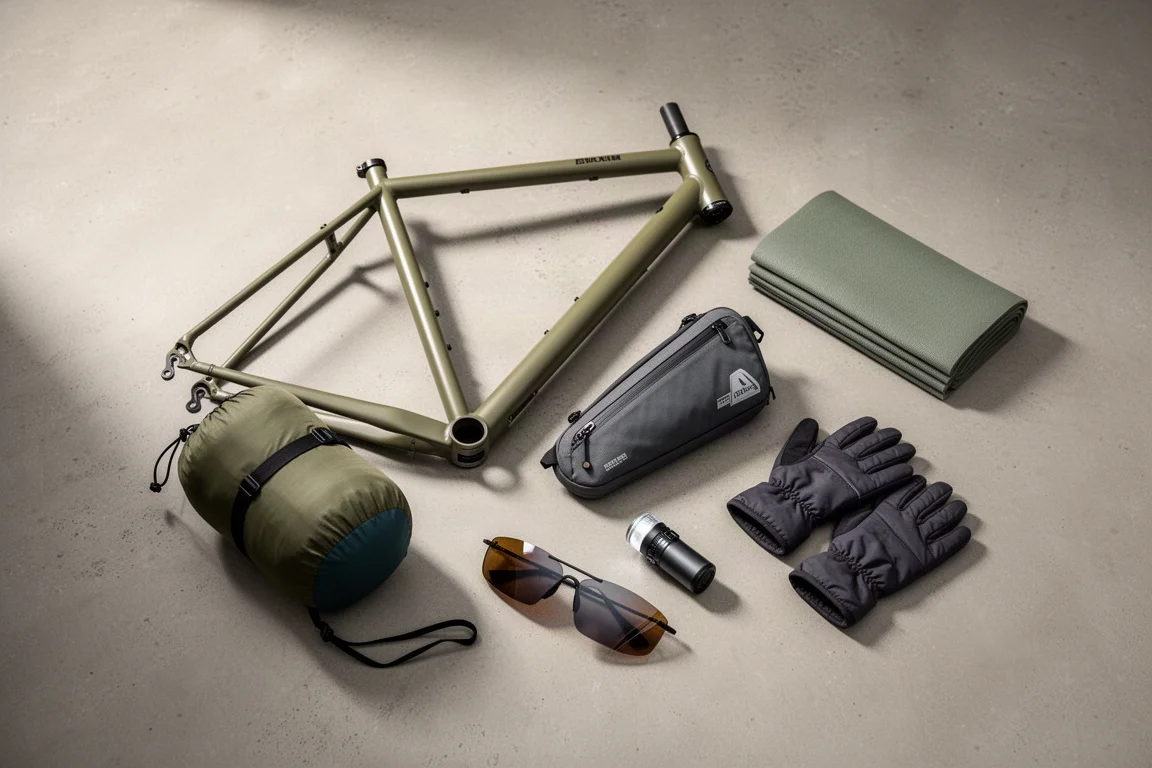
Eleven bikepacking essentials for long-distance cycling, from a steel gravel frame and a two-person tent to helmet lights, packable gloves, and a frame bag that puts weight in the right place.