Backpacking Stoves
Camping Moon XT2F Titanium Stove Review: Ultralight Canister Performance
A hands-on look at the Camping Moon XT2F titanium backpacking stove: 2.3 oz with pot supports, 11,260 BTU, an integrated igniter, and a price below the benchmark ultralight canister stove.
Introduction
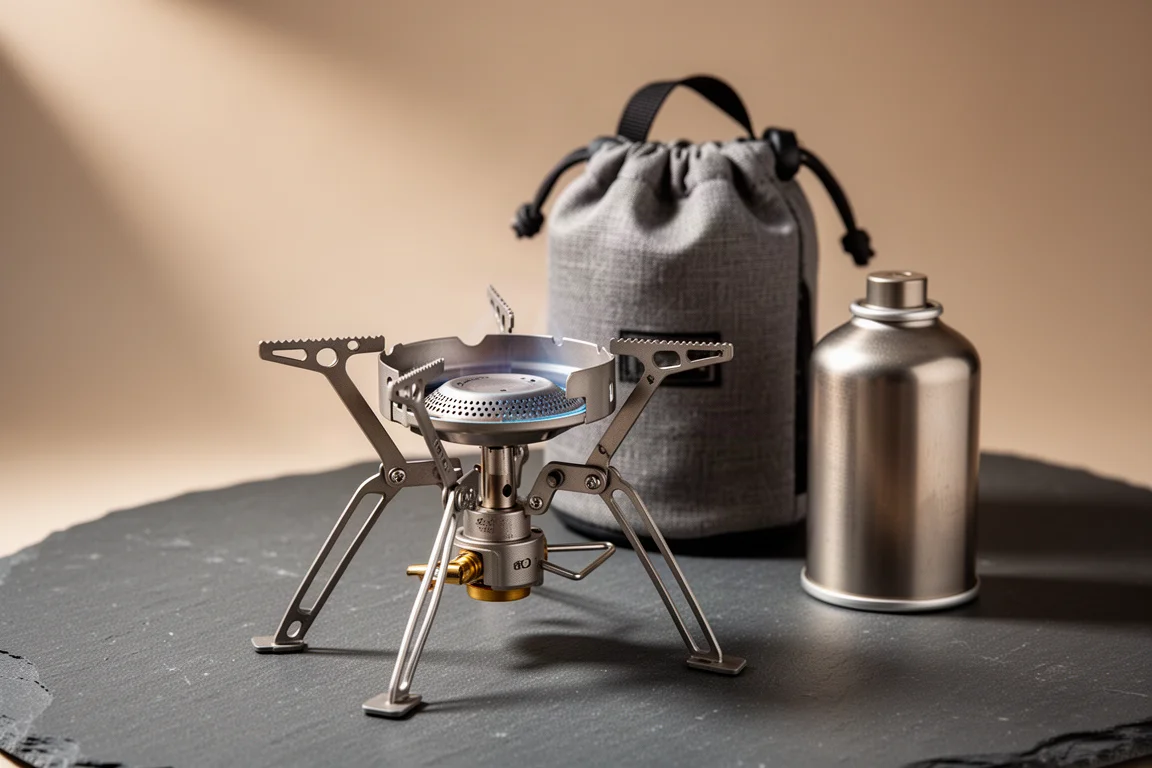
Ultralight canister stoves have a clear benchmark, and the Camping Moon XT2F titanium backpacking stove was clearly built to sit right beside it. The pitch is simple: the same removable, spring-linked pot support system, the same integrated windshield, igniter, and regulator layout, but less weight and a lower price than the well-known Soto WindMaster.
That combination is rare enough to be worth a closer look. Plenty of stoves claim to be lighter and cheaper; far fewer manage it while keeping the boil times and the build quality that make a canister stove pleasant to live with on a long trip.
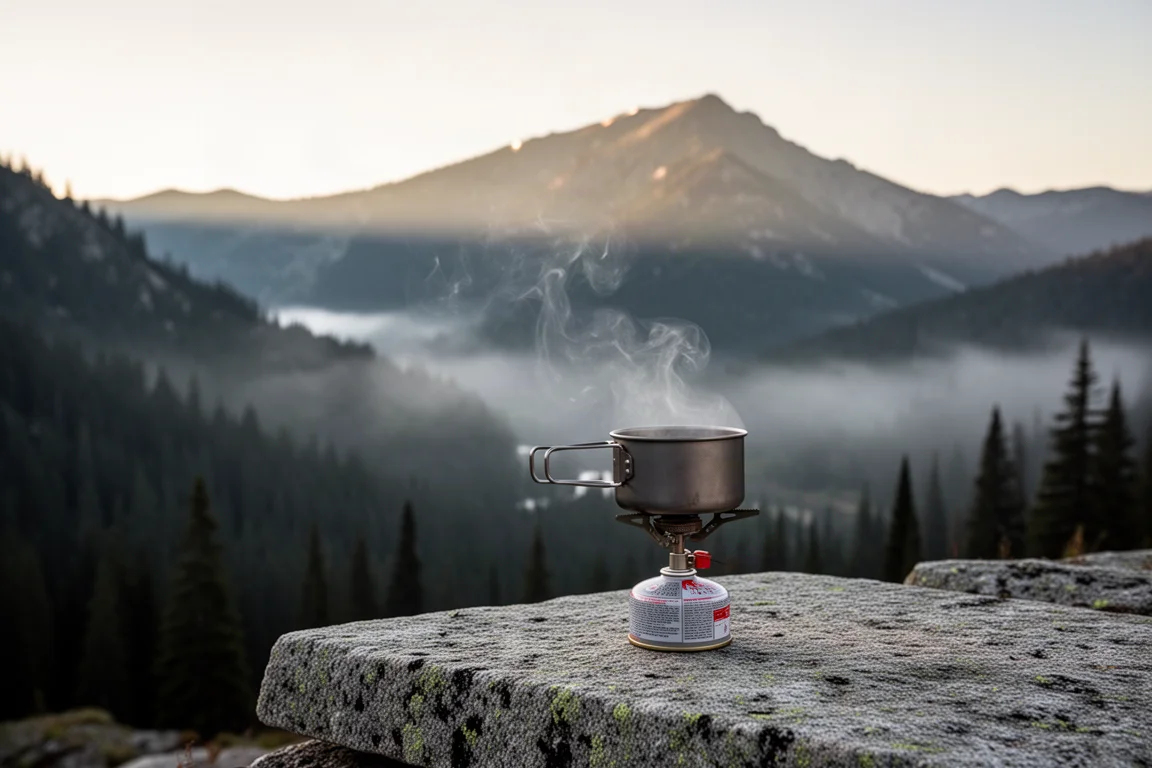
This is an early hands-on assessment based on an initial round of testing. The stove has already completed a timed boil and a full inspection of its parts and storage case, and longer-term durability checks are still ahead.
Who This Stove Is For
This stove is aimed at backpackers who count ounces but still want something that lights reliably and boils quickly. At 2.3 oz with the pot supports attached, it sits firmly in ultralight territory, and the integrated igniter means lighting up does not depend on an external spark source.
It also suits campers who want a compact cooking setup that packs down small. Stored, the stove measures roughly 4 by 2.5 by 2.5 inches. Set up, it stands about 3.5 inches tall with a pot support span of roughly 5.5 inches, which is a wide, stable stance for a stove this small.
Anyone stepping up from a basic pocket stove will notice the difference in how the arms deploy and how steady the pot sits. Anyone stepping down from a larger two-burner setup should expect a focused single-pot cooker rather than a full camp kitchen.
Build Quality and Main Strengths
The stove is made primarily from titanium, with aluminum and brass used in the assembly. In hand, the construction is clean: no sharp edges, no rough machining, and the moving parts line up properly. The flame adjustment valve has a deliberate tension rather than a loose one, which matters when you are trying to hold a low simmer instead of a full roar.
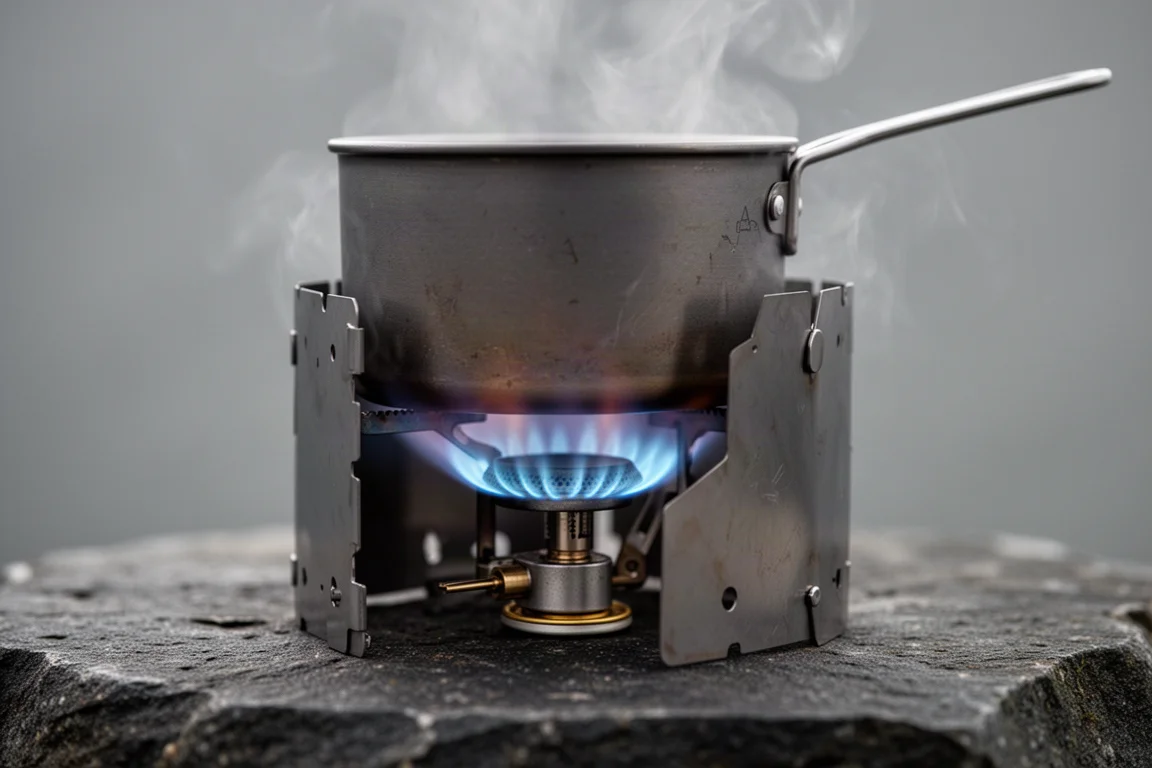
The pot supports are the standout detail. They are removable and held together with a spring, so the arms fold and unfold as a single unit and clip back onto the burner head without fuss. It is the same approach used on the benchmark stove, and it is a smart one: the arms are easy to deploy with cold hands and they settle into position positively.
Performance is the other strong point. The stove is rated at 11,260 BTU, and in testing it boiled two cups of water in 1 minute 25 seconds in somewhat breezy conditions. That is genuinely fast, and it puts the Camping Moon at least on par with the reference model it is competing against, which is rated slightly lower at 11,000 BTU.
Wind Resistance and Fuel Compatibility
The integrated windshield does real work. It shields the burner from moving air and helps the flame stay stable, and the timed boil above was run in breezy conditions without any drama.
It is not, however, a windproof design. In genuinely windy or exposed conditions, a dedicated windscreen is still the sensible addition if you want to protect fuel efficiency and keep boil times predictable. Treating the built-in shield as a complete solution would be a mistake.
Fuel compatibility is where owners need to pay attention. The stove is designed to run on isobutane canisters. With the correct adapter, it can also run on butane. It should not be run on propane; the company warns against it and notes that doing so could cause serious problems, which is a warning worth taking literally.
Storage Case and Packability
Included with the stove is a storage case made from a polyester cotton fabric, with a grab handle at the top, a single zipper running around the body, and an internal sleeve sized for the pot supports.
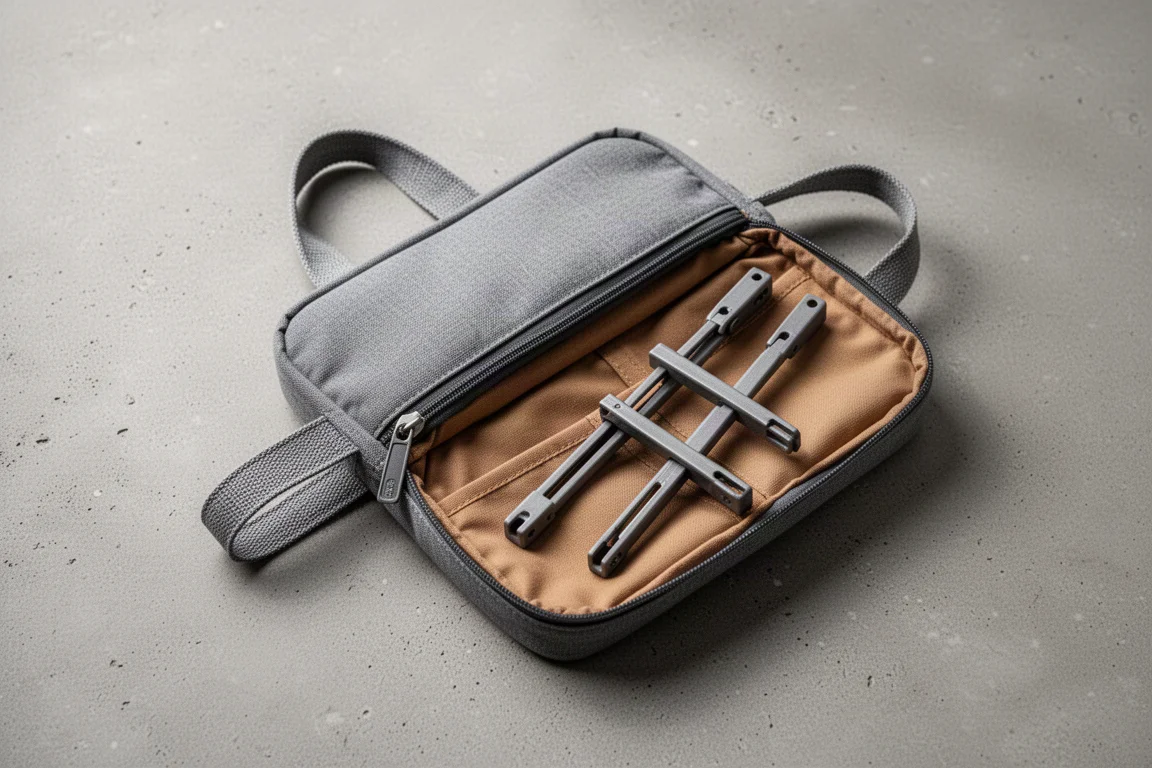
It is a genuinely protective case. The stove nests inside with room to spare, and the sleeve keeps the pot supports from being knocked around inside a pack. The trade-off is weight: the stove with its pot supports comes to 2.3 oz, while the full system with the case comes to 4.5 oz. That is a meaningful jump for ultralight hikers, and the case is heavier than the thin stuff sacks that usually ship with stoves in this class.
Those lighter sacks offer very little protection, though. Pot supports can bend inside a soft bag, and their edges tend to wear through thin fabric over time. The case here avoids both problems, which is why the extra weight is easy to justify for anyone who wants the stove to survive years of packing and unpacking.
Things to Consider Before Buying
The biggest practical hurdle is version confusion. This stove is sold in a wide range of configurations, including stainless steel versions, models with and without an igniter, models with and without canister supports, and various bundles. The titanium version tested here is the XT2F, and that model code is the detail to search for if titanium is what you actually want.
Second, titanium durability remains an open question. Different grades of titanium behave differently under repeated heating, and the long-term check is whether the burner head and pot supports stay true rather than warping or deforming. Nothing in the initial testing suggested a problem, but that is a claim only repeat use can settle.
Third, the wind limitation and the storage case weight are both real considerations rather than flaws. Buyers who hike in exposed terrain should budget for a separate windscreen, and buyers chasing the lowest possible pack weight should plan to leave the case at home.
Buying Advice
At roughly $45 at the time of testing, the Camping Moon XT2F undercuts the Soto WindMaster, which sits closer to $70, while weighing less once the pot supports are attached. The performance gap is negligible: the Camping Moon is rated slightly higher on BTU output and matched the benchmark in a timed boil for two cups of water.
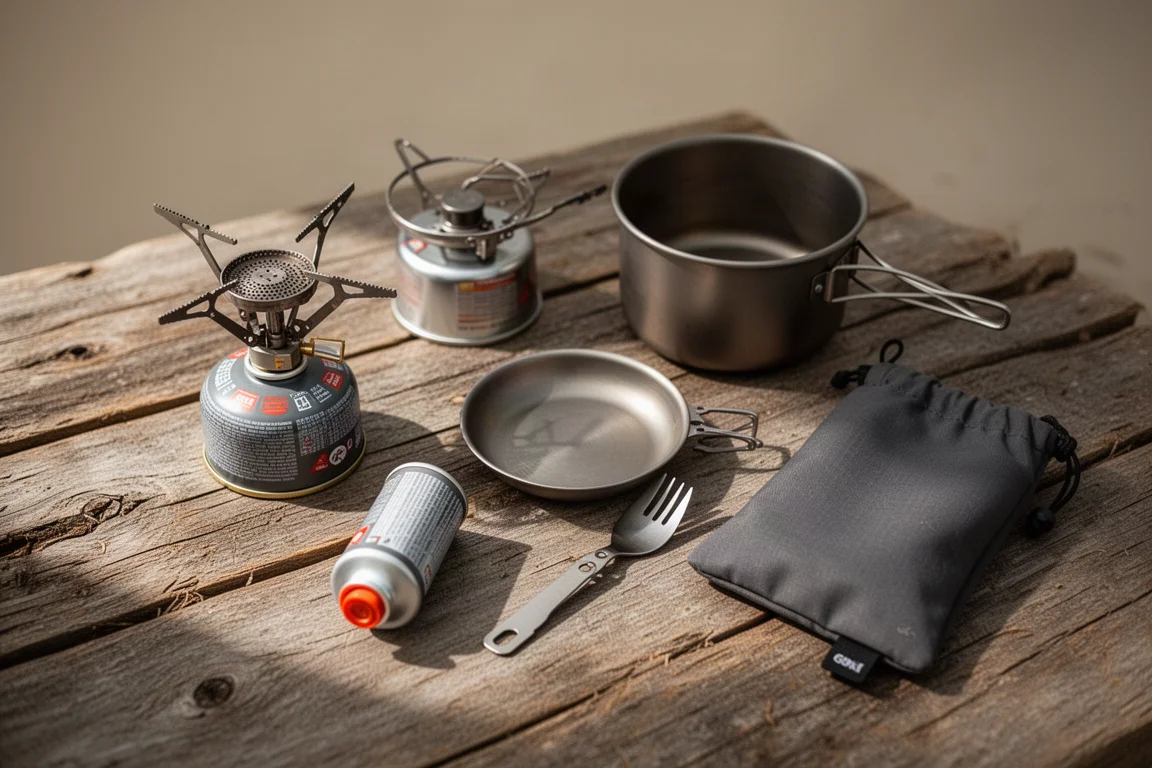
If you want a fast, compact canister stove with an igniter and a regulator, and you are willing to confirm that you are ordering the XT2F titanium model rather than one of the stainless steel variants, this is an easy recommendation to consider. If your trips regularly take you into strong wind, add a dedicated windscreen to the order. And if the lowest possible weight matters more than protection, plan on leaving the cotton case behind.
Conclusion
The Camping Moon XT2F titanium backpacking stove makes a credible case for itself: 2.3 oz with pot supports, 11,260 BTU, a 1 minute 25 second boil for two cups of water in breezy conditions, and an integrated igniter, windshield, and regulator at a price below the established benchmark. The caveats are practical rather than disqualifying, namely version confusion, a heavier-than-necessary storage case, and a windshield that helps without being windproof.
For backpackers who want a light, fast, and affordable canister stove, and who are willing to check the model code before ordering, this one deserves a serious look.
Product link
View more details for Camping Moon XT2F Titanium Backpacking Stove
This product is mentioned in the review. Check the specifications, options, and compatibility before buying.
View more details for Camping Moon XT2F Titanium Backpacking StoveFurther reading
Related Reviews
Backpacking Stoves
Best Backpacking Stove and Pot Combinations: Budget to Premium
A practical look at fourteen backpacking stoves and cook pots, from inexpensive starter pairings to windproof all-in-one systems that cost close to $200.
Backpacking Stoves
Best Backpacking Stove Systems: Five Canister Stoves Compared
Five canister stove and pot systems compared on wind resistance, boil speed, packed size, and cooking control, from a bare titanium burner to a fully integrated cook system.
Backpacking Stoves
Best Backpacking Stoves 2026: Six Stove Types Compared and Ranked
A practical comparison of canister, white gas, wood burning, solid fuel, and alcohol backpacking stoves, ranked on speed, weight, fuel availability, and cost.