Bookshelf Speakers
Cambridge Audio SX60 Review: Budget Bookshelf Speakers With Outstanding Vocal Clarity
A detailed look at the Cambridge Audio SX60, a two-way passive bookshelf speaker that trades deep bass for vocal clarity, mid-range detail, and easy amplification.
Introduction
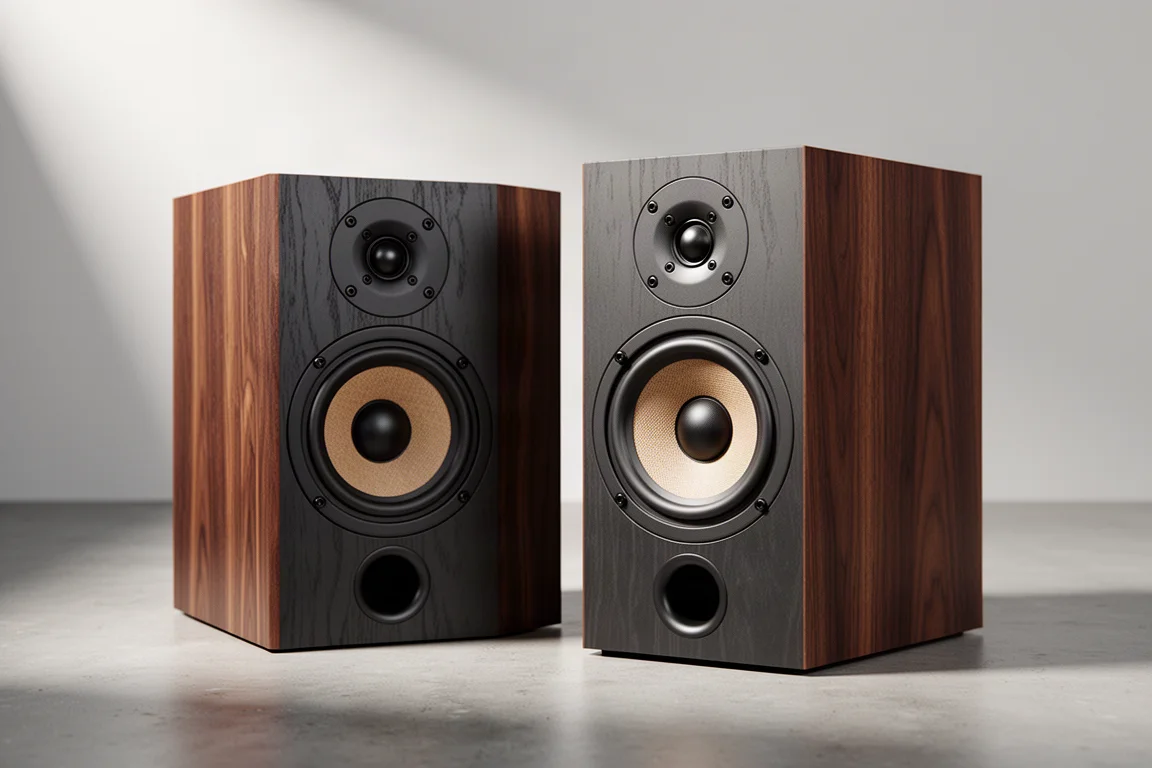
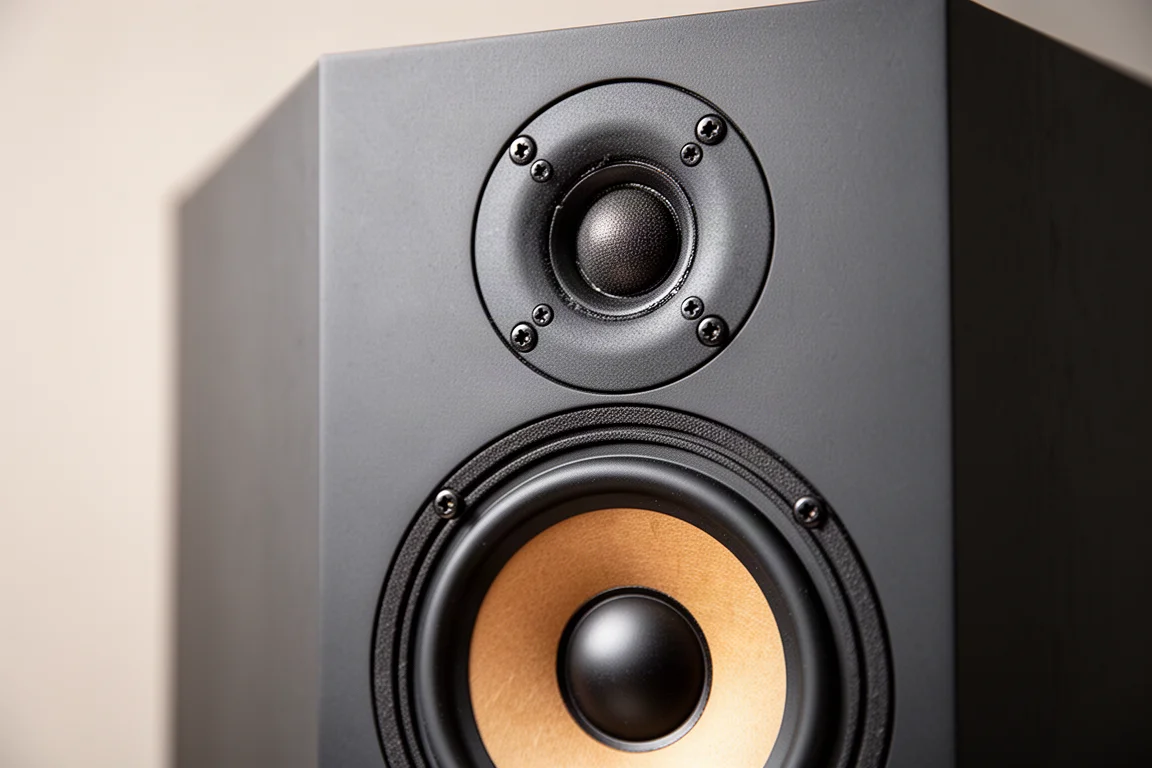
Budget hi-fi has been on a strong run, and passive bookshelf speakers are where that energy is easiest to see. The Cambridge Audio SX60 is a compact two-way design built around a 1-inch silk dome tweeter and a 6.5-inch paper woofer, with a front-facing port handling the low-frequency work. Cambridge Audio rates the speaker at 41 Hz to 21 kHz, with 89 dB sensitivity and an 8-ohm impedance.
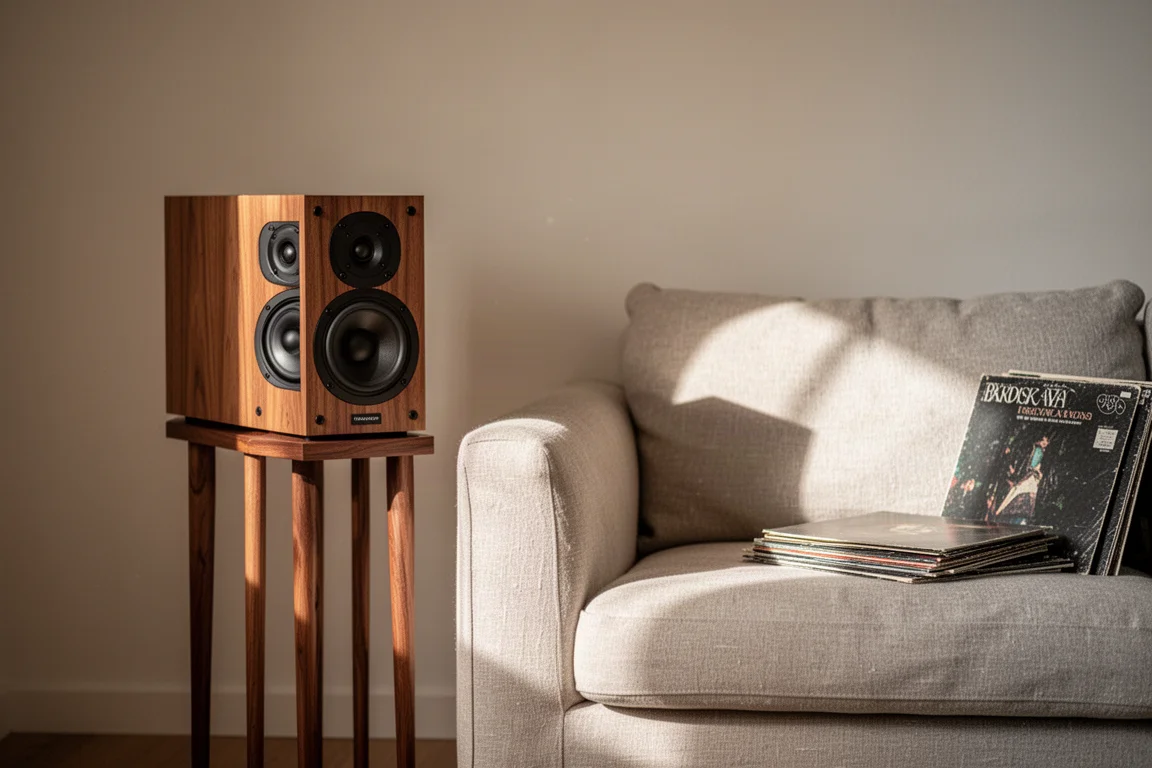
That specification set matters in practice. The SX60 is easy to drive and easy to live with: there is no break-in period to endure and no delicate setup ritual to master. Place the speakers, connect them, press play, and they sound settled within a minute or two. Driven by a Cambridge Audio AXR100 stereo receiver, they respond with detail and energy rather than the thin, cautious sound budget speakers sometimes produce.
This review covers what the SX60 does well, where it falls short, and who should consider it.
Who this product is for
The SX60 is aimed at listeners who care most about clarity. Vocals, spoken dialogue, and the fine detail inside a recording are its strongest suit, which makes it a natural fit for vocal-heavy music and for two-channel film and television listening where dialogue intelligibility matters.
It also suits smaller rooms and modest systems. Sensitivity is rated at 89 dB with an 8-ohm impedance, so the speaker does not demand expensive amplification to perform well. Anyone building a first proper two-channel setup, or upgrading from a cheap all-in-one system, will find it straightforward to integrate.
It is less suited to listeners who want full-range sound from the speakers alone. Deep bass is not the SX60’s strength, and anyone chasing the weight and impact of a bass-heavy soundtrack should plan on adding a subwoofer.
Main strengths
The SX60’s defining quality is detail. From the mid-range upward it resolves texture, breath, and instrumental nuance in a way that makes the speakers feel more expensive than their price suggests. Center imaging is laser-focused once the speakers are toed in, and the soundstage is appropriate for a compact two-way, with performers placed firmly and consistently between the cabinets.
Dynamics are another highlight. The SX60 is involving at low volumes and scales well when pushed, with fast reflexes that keep busy passages from turning muddy. The trade-off appears only at higher levels, where the limited bass becomes more obvious and the overall balance leans slightly forward.
Vocal Clarity and Mid-Range Presence
The mid-range is largely neutral and does not alter the natural timbre of voices or instruments. There is a mild rise in the upper mid-range as the response approaches the treble, and combined with the modest deep bass it can make the speaker sound a little lean next to some other two-way bookshelf designs.
That trade-off pays off in intelligibility, which is why vocals and dialogue come through with unusual presence for this price. Listeners who struggle to follow dialogue in films will notice the benefit immediately.
Dynamics and Detail From the Mid-Range Up
Treble is a touch boosted, which adds a sense of detail and clarity regardless of what is playing. It is not forward or shouty, and the soft dome tweeter keeps the top end from turning metallic, so long listening sessions stay comfortable. The one caveat is extension: at the very top the highest notes do not fully bloom or shimmer the way they do on considerably more expensive speakers. For many listeners that restraint is welcome, since it keeps harsh or brightly recorded material listenable.
Dynamically, the SX60 earns high marks. It sounds fast and responsive and stays enjoyable across a wide range of volumes. As levels climb, the missing low end becomes more noticeable and the presentation skews a little more forward, which is worth knowing before pairing the speakers with a bright amplifier.
Things to consider before buying
Bass is the main compromise. The SX60 needs a subwoofer for true full-range playback. On its own, the low end is usable in a smaller room or at modest volumes, and moving the speakers closer to a wall adds a little boundary reinforcement. Where the speaker does deliver genuinely solid, well-defined bass is roughly the 50 to 60 Hz region; below that, output largely comes from the port, and the deepest notes can sound one-note at the edges of the speaker’s capability. Cambridge Audio offers a matching subwoofer, the SX120, which lists at around $299.
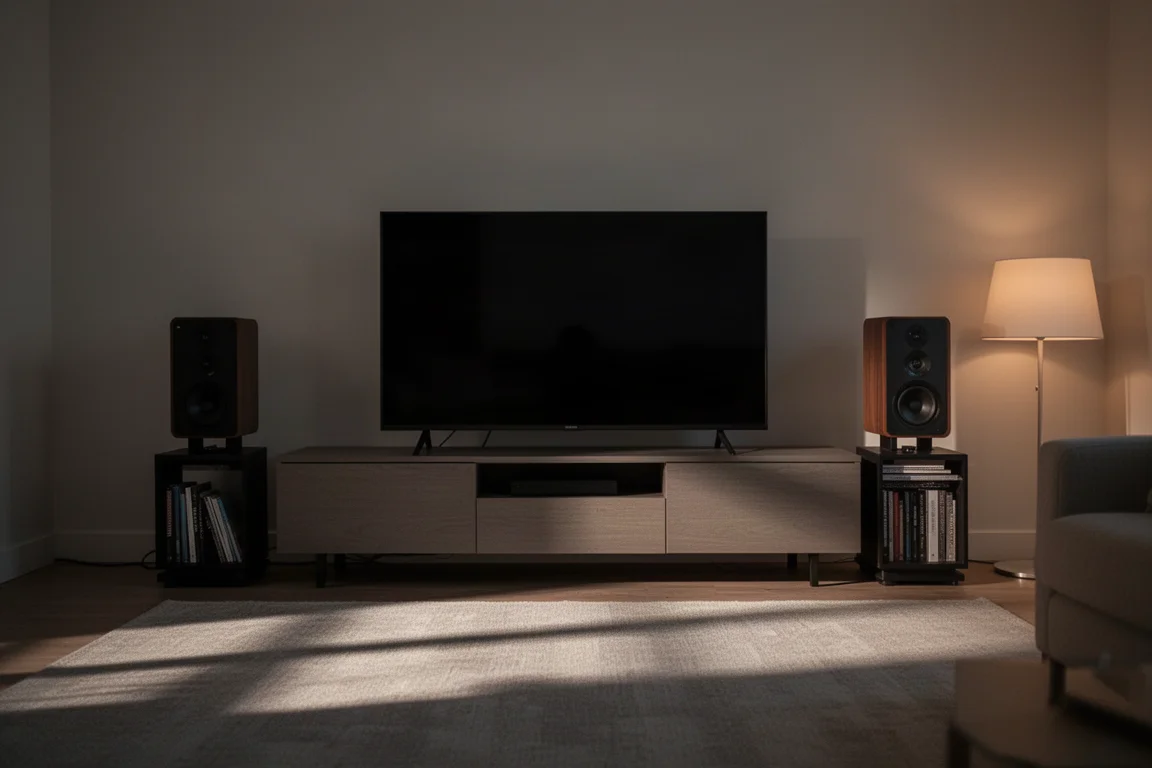
Two smaller points are worth noting. The grilles are included but are not magnetic, a minor inconvenience rather than a real problem. And while the SX series includes a center channel, a tower, and smaller bookshelf models, there are no upward-firing options for height channels, so the range is not a complete home theater solution for listeners who want an Atmos-style setup.
How the SX60 Compares to Other Budget Bookshelf Speakers
The Kanto YU Passive costs less at around $199 a pair and its smaller cabinet is easier to fit on a desk, but the SX60 adds nuance and detail for roughly $100 more and is the better all-round speaker if you have the space. The Polk Audio Reserve R200 costs more, and for that money you get a better-looking cabinet plus a more neutral, more full-range sound. The Klipsch RP-600M offers more bass and a more pronounced top end, which adds detail and definition of its own. The Q Acoustics 3010i is cheaper, though the SX60 is the more captivating listen. The Fluance XL8S remains the value champion at its price, but if you can spend around $100 more and want extra detail through the mid-range and treble, the Cambridge Audio model earns the recommendation. Ultra-cheap bookshelf speakers are best avoided here; their forward, fatiguing character makes the modest extra spend easy to justify.
Buying advice
The SX60 is undemanding when it comes to amplification. It performed well on a budget Cambridge Audio AXR100 stereo receiver and on a compact integrated amplifier, and it also held its own on a high-end integrated amplifier costing many times more. That is reassuring rather than a requirement: the rated 89 dB sensitivity and 8-ohm impedance mean you do not need to spend thousands to hear what the speaker can do.
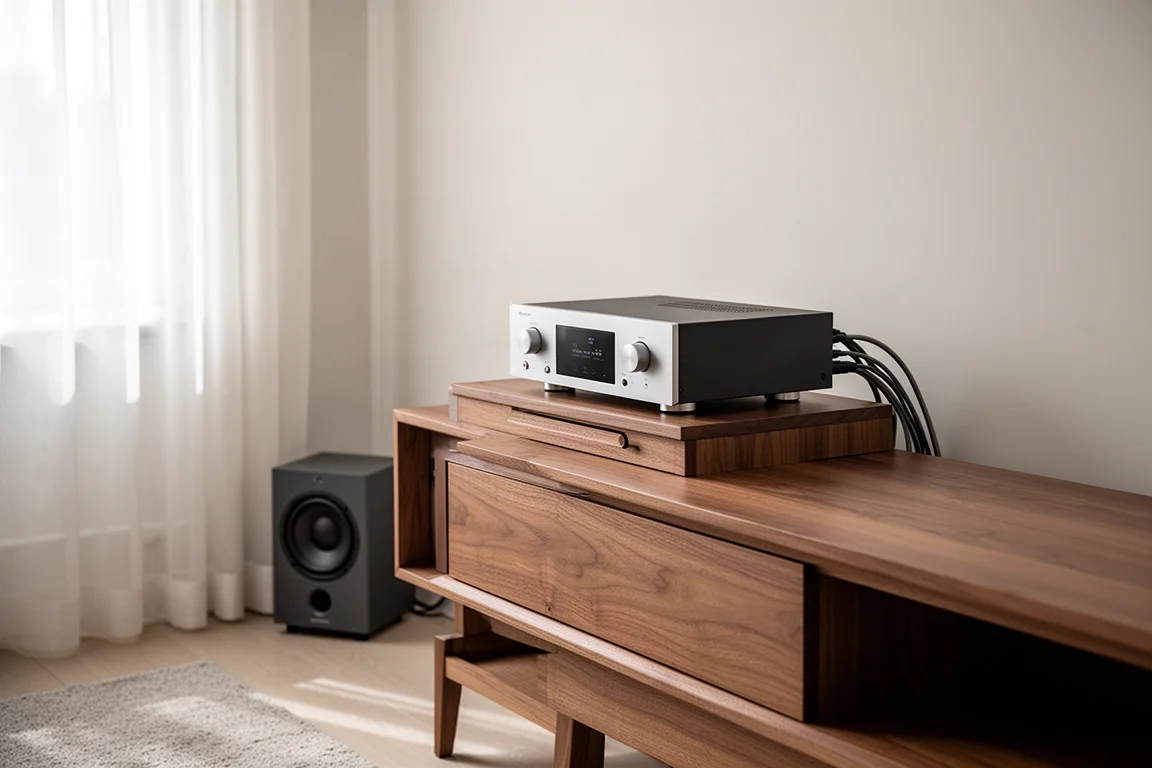
The one cost to plan for is low-frequency support. If the SX60 is going to be a long-term solution for music and film, set aside budget for a subwoofer, either the matching SX120 or a comparable model, and place the speakers with a little wall reinforcement in the meantime. Buyers who mainly listen to vocals, acoustic material, and dialogue at moderate levels can start without one and add it later.
Conclusion
The Cambridge Audio SX60 is not a perfect speaker. It needs a subwoofer for full-range playback, its bass is one-note at the extremes, and its treble stops short of the ultimate extension found further up the price ladder. Where it counts, though, it is special: clarity, intelligibility, detail, and dynamics from the mid-range up, without the premium price that usually accompanies those qualities. For listeners who value vocals and dialogue above low-end weight, it is an easy recommendation.
Product link
View more details for Cambridge Audio SX60
This product is mentioned in the review. Check the specifications, options, and compatibility before buying.
View more details for Cambridge Audio SX60Further reading
Related Reviews
Bookshelf Speakers
Acoustic Energy A100 Mark II Review: A Compact Standmount With an Expansive Soundstage
The Acoustic Energy A100 Mark II brings clarity, natural tonality and a wide soundstage to an entry-level standmount, with a few setup details worth knowing first.
Bookshelf Speakers
Acoustic Energy AE-100 Mark II Review: Compact Bookshelf Speakers With Standout Imaging
A compact British two-way bookshelf speaker with deep, layered imaging, fast bass, and a slight treble lift to weigh against a crowded $500 field.
Bookshelf Speakers
Acoustic Energy AE100 MK2 Review: Measured Performance and Four Alternatives
A close look at the Acoustic Energy AE100 MK2 bookshelf speaker, what its measured performance reveals, and four alternatives with different trade-offs.