Bookshelf Speakers
Cambridge Audio SX50 Review: The Best Budget Bookshelf Speaker Under $200
A compact passive bookshelf speaker with a neutral mid-range, articulate bass, and a detailed top end, limited mainly by how loud it can play.
Introduction
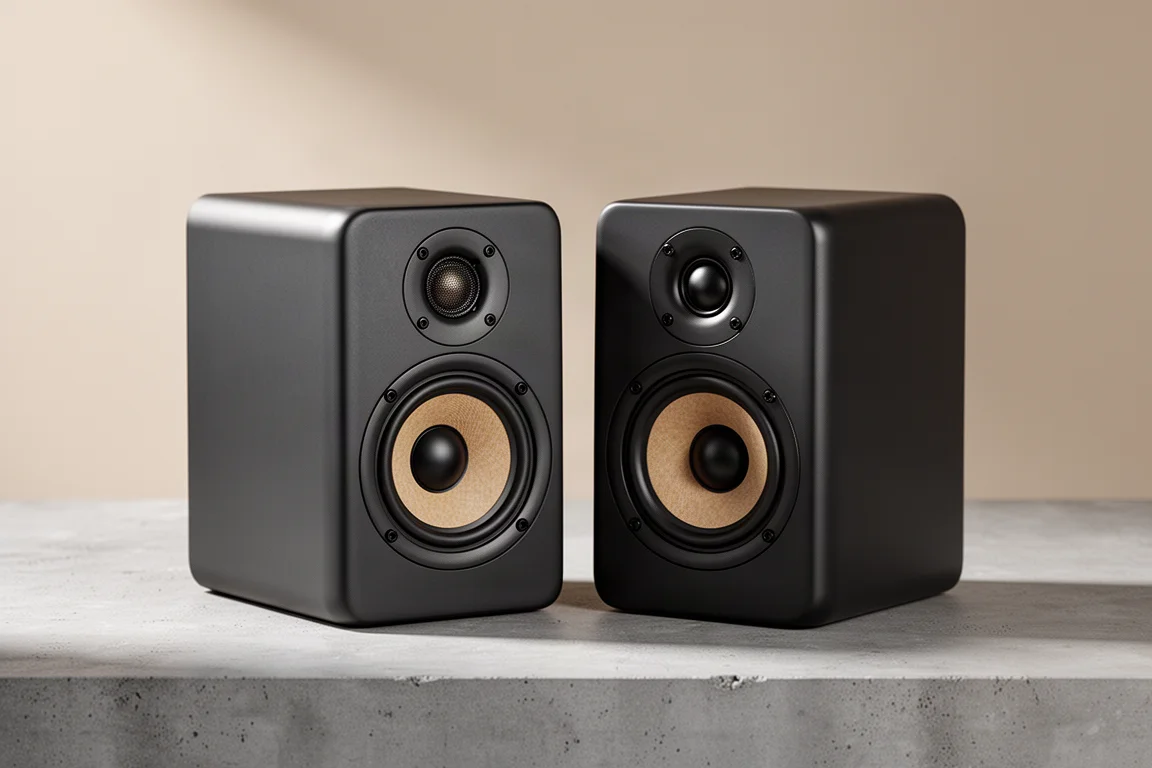
The sub-$200 bookshelf speaker bracket is a hard place to shop. There are not many models to choose from, and most of the ones that exist compromise somewhere obvious: a recessed mid-range, a bright top end, or bass that falls apart the moment the music gets busy. The Cambridge Audio SX50 is one of the few designs in this price band that does not ask listeners to accept that trade-off.
It is a compact passive two-way speaker with a 5.25-inch treated paper cone woofer and a 1-inch silk dome tweeter, finished in a matte black cabinet with a black vinyl wrap. Cambridge Audio still builds it, and at around $200 it remains one of the most convincing arguments for putting a modest budget into a proper pair of passive speakers rather than a single all-in-one box.
Who This Speaker Is For
The SX50 makes the most sense on a desk, or in a small to medium room where the listening distance is short and volume levels stay moderate. Sensitivity is rated at 87 dB and the recommended amplifier power is 10 to 100 watts, so it does not need expensive electronics to reach a comfortable level.
Desktop listeners are the clearest fit. In that setting the bass output is often enough on its own and a subwoofer is not strictly necessary, although a small lift around 70 Hz helps if an equaliser is available.
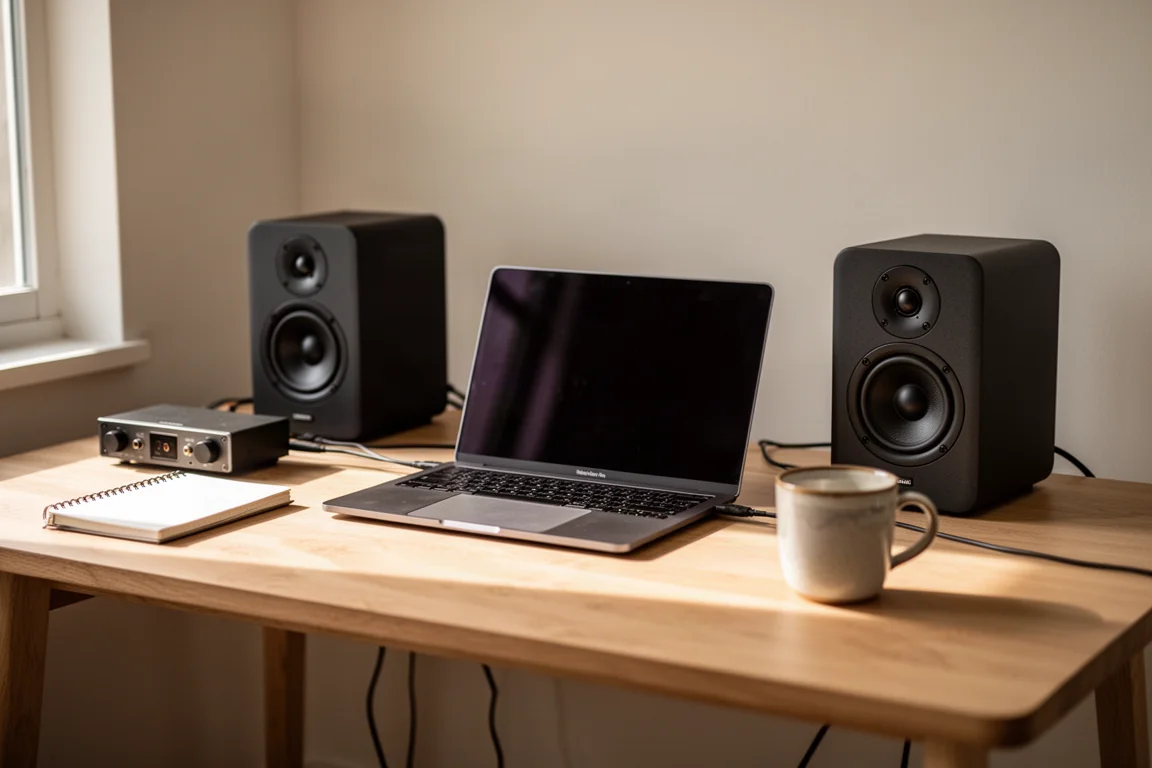
It is not a party speaker. Each cabinet weighs just 6.6 lb and the design is genuinely small, so it is happiest when it is not asked to fill a room at high volume. Buyers who want to play loud for long stretches should look at larger cabinets with bigger woofers, or plan on adding a subwoofer and a high-pass filter.
Main Strengths
Three qualities stand out: the evenness of the mid-range, the quality rather than the quantity of the bass, and a top end that stays detailed without turning harsh.
Mid-range Clarity That Carries the Music
The mid-range is where the SX50 separates itself from most of its competition. It avoids the broad lift between roughly 250 and 300 Hz that many small speakers use to sound bigger than they are. That lift is popular because it adds a sense of scale, but it also smears the texture of electric guitars and pushes vocals forward in a way that becomes tiring.
Because the SX50 stays even through that region, layered guitar recordings keep their bite and their separation, and voices retain detail instead of being flattened into one block of sound.
Vocals in particular benefit. On well-recorded material the speaker resolves small inflections and fine detail, which is the kind of behaviour usually associated with far more expensive designs. The overall tonal character sits closer to large, costly bookshelf speakers than to the budget field, though it cannot match their scale or dynamic reach.
Articulate Bass From a Small Cabinet
A 5.25-inch woofer in a cabinet this size should not produce meaningful low frequencies, yet the SX50 is rated down to 50 Hz and reaches lower in practice than its dimensions suggest. The bass it produces is quick and articulate rather than weighty. Listeners should not expect to feel low notes in their chest, but the low end that is present is clean, tuneful and easy to follow.
On a desktop that balance is close to ideal and a subwoofer is often unnecessary. In a larger room, pairing the speakers with a subwoofer and a high-pass filter lets them concentrate on the range they handle best.
A Top End With Detail and Restraint
The 1-inch silk dome tweeter gives the SX50 a clear, open top end with a high-frequency roll-off at 22 kHz. It is a resolving tweeter rather than a forgiving one: percussion parts that blur together on softer-sounding speakers stay distinct here, and fine cymbal and snare detail comes through without being exaggerated.
Sibilance, which tends to sit between roughly 4 and 6 kHz, is the usual risk with a revealing tweeter. The SX50 approaches that region but pulls back before it becomes uncomfortable, so the result is a pronounced but not brittle treble. The top end is arguably stronger than what the long-standing budget alternative in this bracket offers.
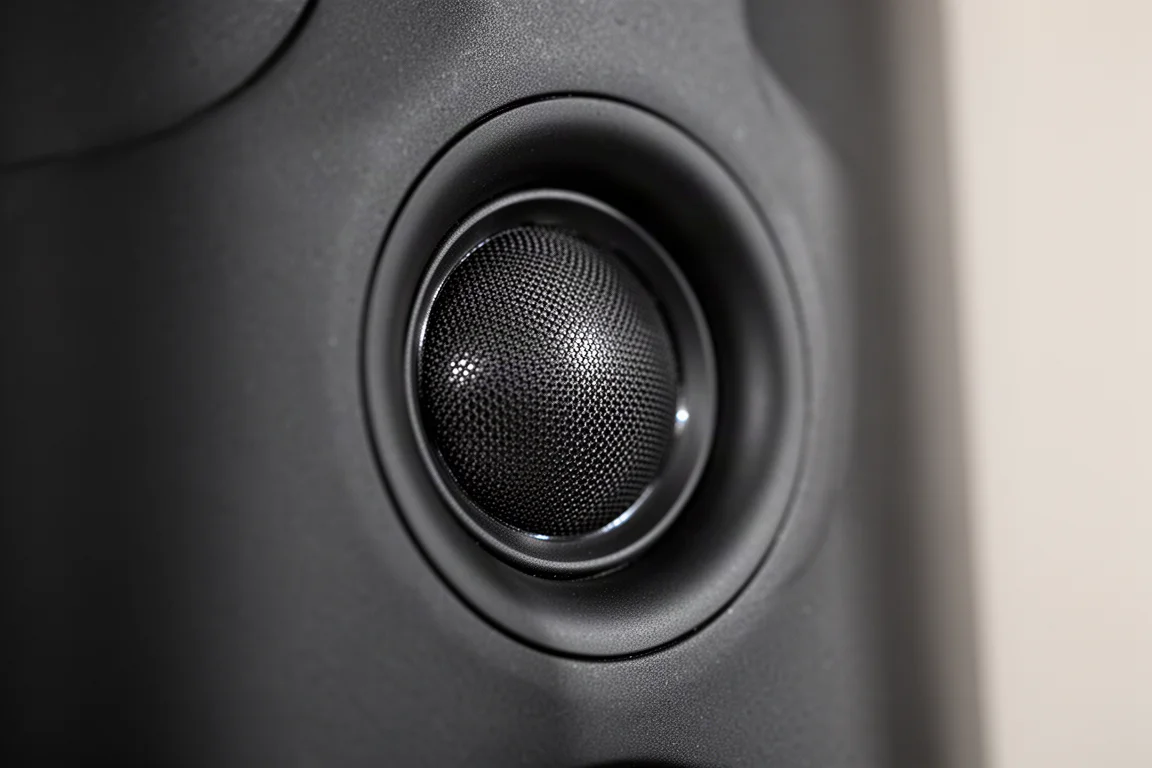
That said, the treble is forward enough that it rewards a little care with placement and volume, which is covered below.
Things to Consider Before Buying
The SX50 has real limits, and they are worth understanding before ordering a pair.
Volume Limits and the 2.5 kHz Rise
This speaker is at its best between roughly 65 and 80 dB SPL. Above 80 dB, composure starts to slip, as it does with almost every speaker at this price. There is also a modest rise around 2.5 kHz that becomes more noticeable as volume climbs, turning the presentation forward and eventually fatiguing above roughly 83 dB.
None of that is a problem at normal listening levels. Listeners who regularly play loud can manage it: a high-pass filter keeps low frequencies out of the cabinet, and pulling 2.5 kHz down by about 1 to 1.5 dB with an equaliser restores the balance. At moderate volumes, no correction is needed.
Placement, Stands, and Amplification
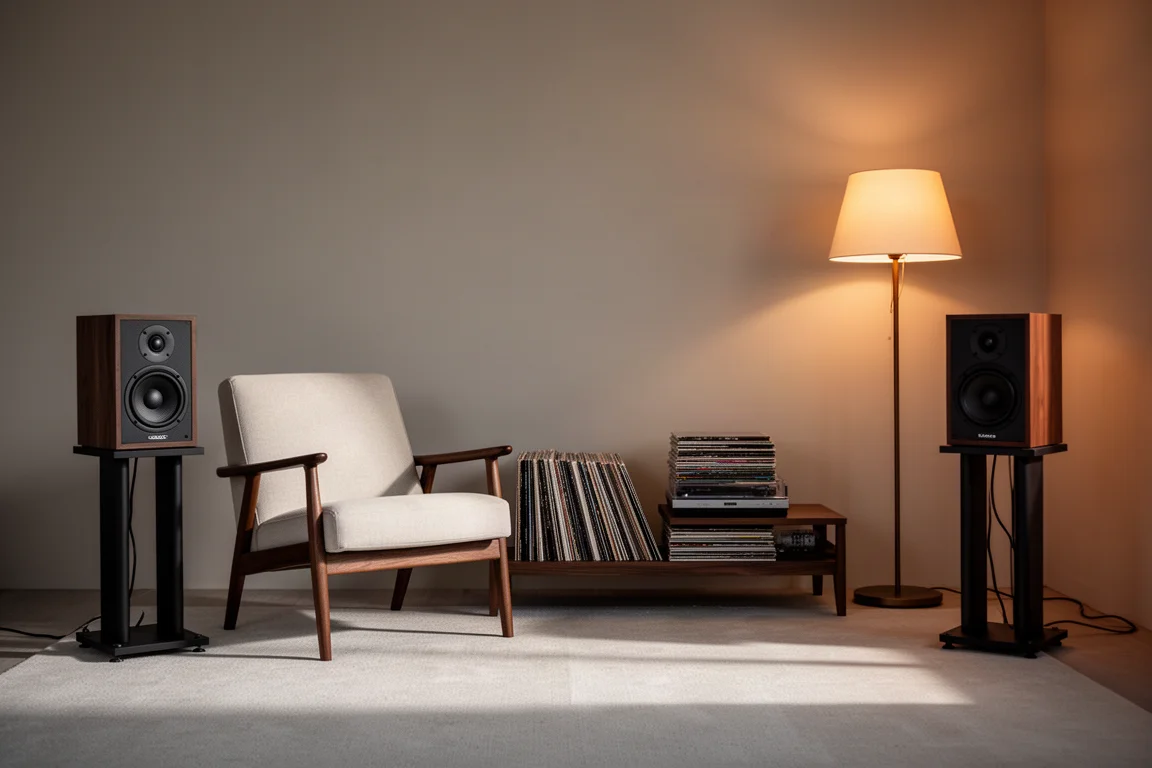
The cabinet is small and light, which makes placement easy but also means stand height matters. On a typical stand, a seated listener’s ears often end up above tweeter level, and that position slightly reduces the prominence of the 2.5 kHz rise. Angling the speakers toward the listening position and keeping them clear of the wall behind them will get the best from the bass.
The SX50 is also more capable of showing off good electronics than its price suggests. It has been run with a high-end integrated amplifier and handled it without sounding out of its depth, which makes it a sensible match for buyers who already own quality amplification and want an inexpensive pair of speakers to go with it.
Buying Advice
At around $200, the SX50 is the stronger recommendation in this bracket. It rarely goes on sale, so waiting for a discount is unlikely to pay off, but open-box examples do surface from time to time and are worth watching.
The obvious comparison is the Sony SSCS5, which has been the default budget pick for years. At its lower price point it remains a good deal, but it has climbed to around $200 at its highest and its mid-range is less even, with a trough that costs some of the texture and nuance the SX50 preserves. Buyers who want a cohesive, neutral sound at moderate volumes will get more from the Cambridge Audio pair.
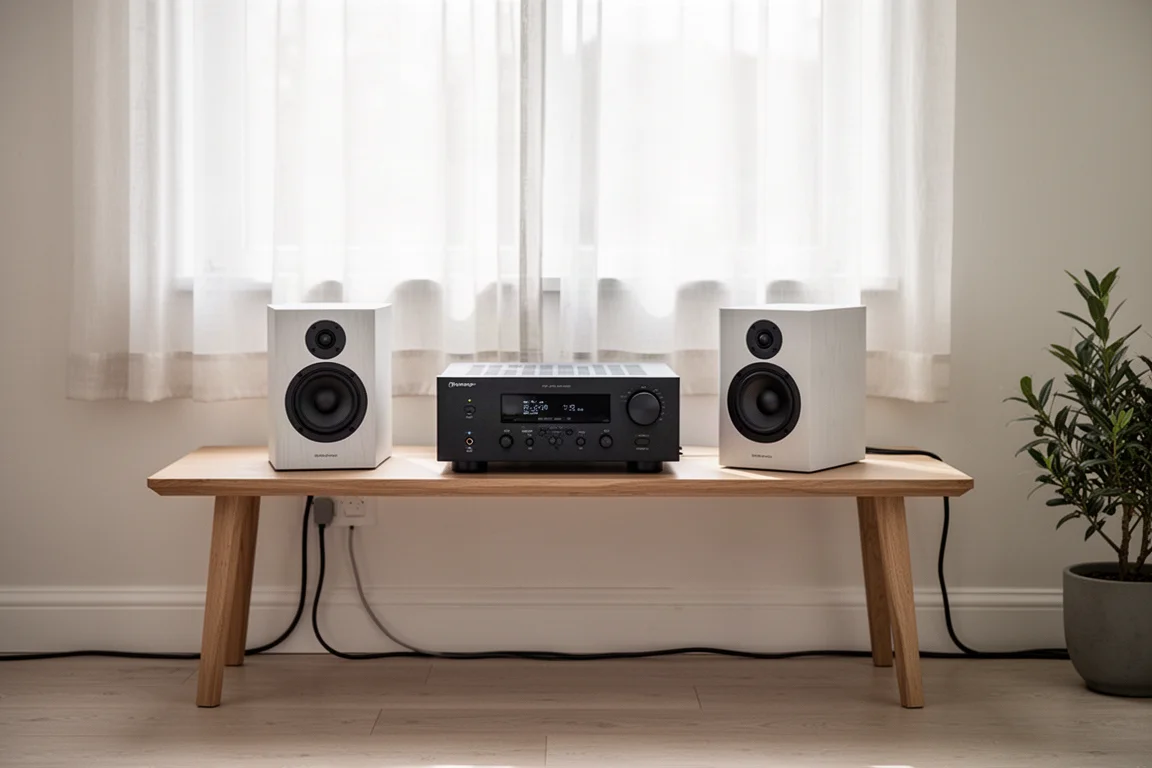
For anyone building a first proper stereo on a tight budget, the SX50 is the safer long-term purchase. It works on a desk, in a small room, and in a larger space once a subwoofer and high-pass filter are added, which means it does not need to be replaced as a system grows.
Conclusion
The Cambridge Audio SX50 is not a dramatic speaker. It is small, plainly finished and honest about its volume ceiling. What it offers instead is a neutral mid-range, bass that stays clean and quick, and a top end with genuine detail, all for around $200. For listeners who keep their expectations realistic about how loud a speaker of this size can play, it is an easy recommendation.
Product link
View more details for Cambridge Audio SX50
This product is mentioned in the review. Check the specifications, options, and compatibility before buying.
View more details for Cambridge Audio SX50Further reading
Related Reviews
Bookshelf Speakers
Acoustic Energy A100 Mark II Review: A Compact Standmount With an Expansive Soundstage
The Acoustic Energy A100 Mark II brings clarity, natural tonality and a wide soundstage to an entry-level standmount, with a few setup details worth knowing first.
Bookshelf Speakers
Acoustic Energy AE-100 Mark II Review: Compact Bookshelf Speakers With Standout Imaging
A compact British two-way bookshelf speaker with deep, layered imaging, fast bass, and a slight treble lift to weigh against a crowded $500 field.
Bookshelf Speakers
Acoustic Energy AE100 MK2 Review: Measured Performance and Four Alternatives
A close look at the Acoustic Energy AE100 MK2 bookshelf speaker, what its measured performance reveals, and four alternatives with different trade-offs.