Music Streamers
Cambridge Audio MXN10 Review: A Warm, Musical Streamer Built for One Job
The Cambridge Audio MXN10 is an entry-level music streamer with a warm, musical tone, consistent performance across its outputs, and an app that keeps things simple.
Introduction
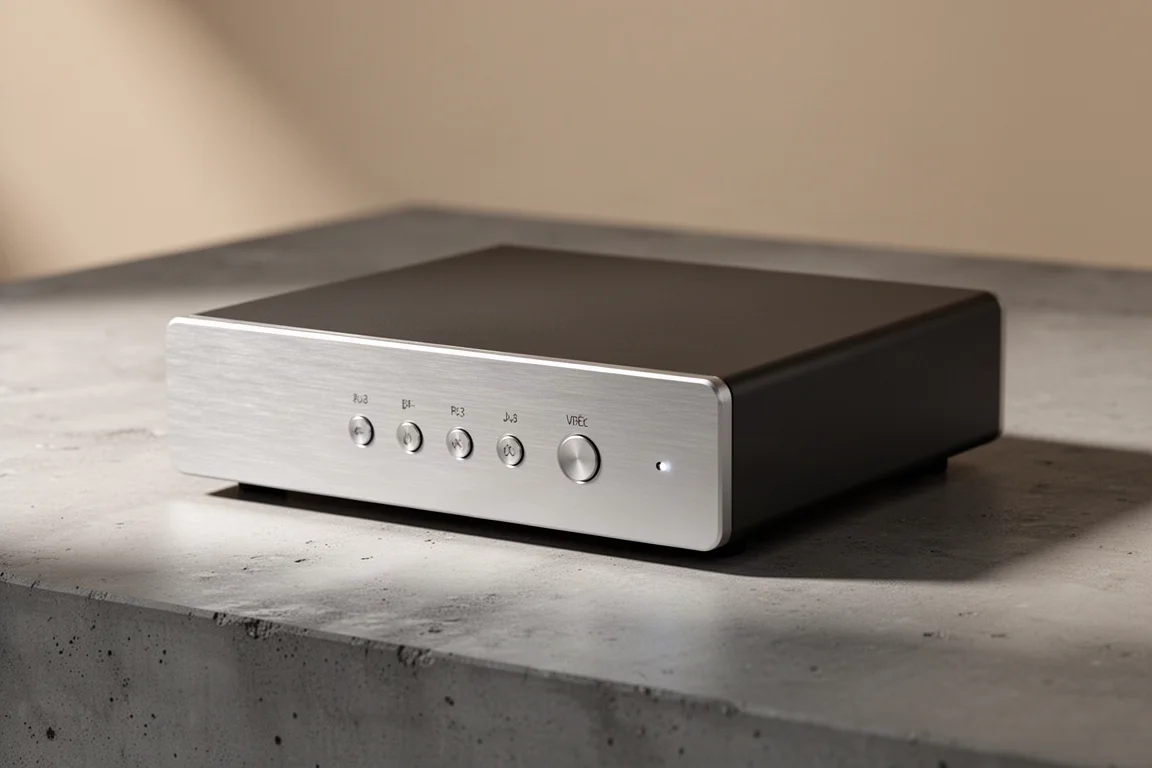
The Cambridge Audio MXN10 is the entry point into Cambridge Audio’s music streaming range, and it is built around a deliberately narrow brief: play streaming music well and leave the extras to other products. There is no display and no remote control, and no attempt to be a full digital hub. What remains is a compact aluminium component with analog and digital outputs, network streaming, Bluetooth, and a control app that stays out of the way.
That restraint has a purpose. Short signal paths, fewer powered sections, and a simpler power supply all reduce the potential for interference inside the chassis, and the MXN10 reflects that approach. It is a streamer for listeners who already own a good amplifier and speakers and simply want a clean, musical digital source to feed them.
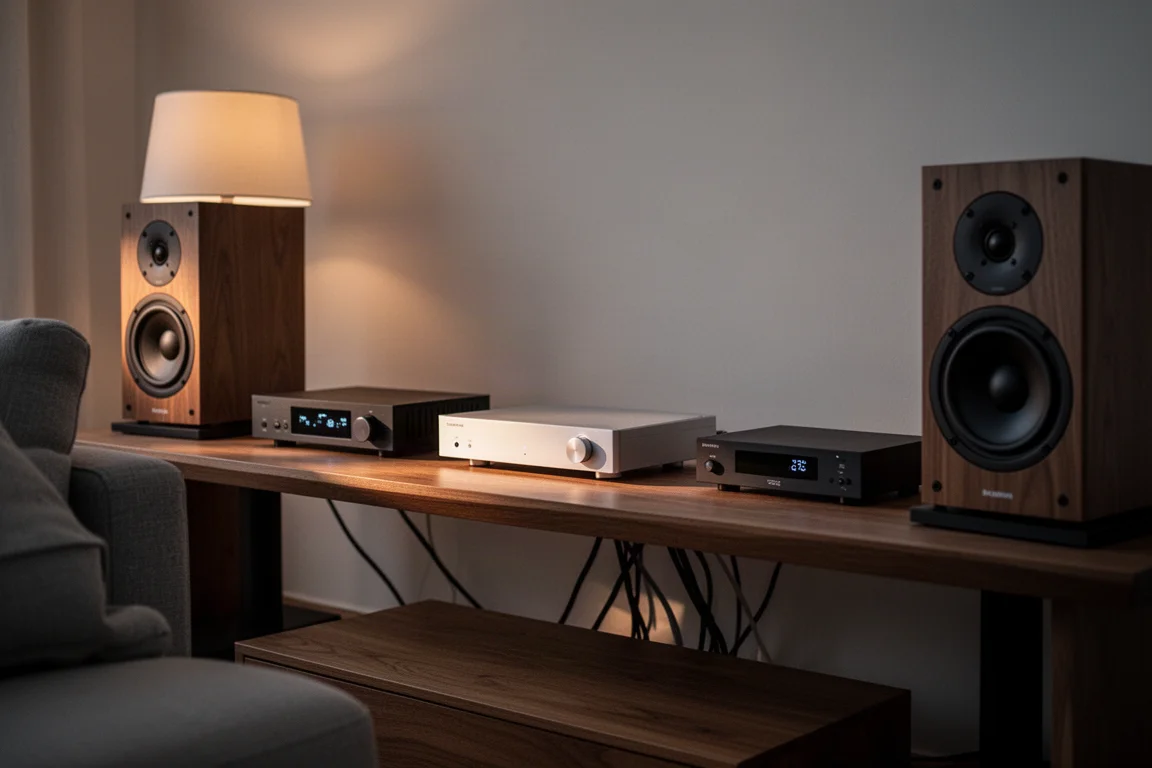
For anyone assembling a first serious two-channel system, or replacing an ageing streamer in an existing one, the real question is whether the MXN10’s sound quality justifies its place ahead of better-equipped rivals. Its tonal character, app stability, and consistency across outputs make a strong case.
Who the Cambridge Audio MXN10 Is For
The MXN10 suits listeners who want a streamer to do one job. It makes sense in systems that already include a capable DAC, whether standalone or built into an integrated amplifier, because it can serve as a transport through its coaxial or optical outputs, or feed an amplifier directly through its single-ended RCA analog outputs.
It is also a natural fit for systems that lean slightly cool or analytical in tonal balance. The MXN10’s warmer presentation is a useful counterweight, and it is comfortable fronting capable amplifiers and speakers, adding richness and a sense of soul without tipping into an overly warm or fuzzy sound.
The rear panel covers analog RCA outputs, coaxial and optical digital outputs, network connections, Bluetooth, and a USB port for drives, so the feature set is focused on music playback rather than video integration. Listeners who rely on parametric EQ or room correction, or who want the widest possible feature list, will find the MXN10 deliberately limited. It is honest about what it is.
Sound Quality: Warm, Musical, and Consistent
The MXN10 is voiced with a touch of richness. Bass is full and well balanced against the midrange, and there is a slight softening to the leading edge of notes, yet timing stays convincing and transients arrive with enough assurance to keep rock listeners engaged. The top end is not the most open available at this price, but it never sounds dark or closed in. The soundstage extends a little beyond the speakers with a modest sense of depth.
On Kari Bremnes’ “Kanskje” from the album Det vi har, the streamer handles deep, weighty basslines with authority while keeping vocals and string instruments realistic and atmospheric. That combination of grip and warmth is what makes the MXN10 easy to live with over long listening sessions.
Performance is consistent across outputs. The analog RCA output and both digital outputs deliver very good detail resolution with the same slightly warm character, and through coaxial the presentation is a touch more open than through optical. Used as a transport into the digital inputs of an Audiolab 6000A Mark II, whose onboard DAC is based on an ESS 9038Q2M chip, the MXN10 finds a little more resolution and neutrality.
Design, Connectivity, and Streaming Support
The chassis measures 215 by 52 by 191 mm and weighs 1.2 kg, so it slips onto a shelf or behind an amplifier without drawing attention. The aluminium front panel carries a standby button whose illumination barely changes between on and standby states, which is a small irritation, along with a Wi-Fi indicator that lights when the unit is powered up and four preset buttons for storing preferred stations.
The rear panel is equally spare. Analog output is single-ended RCA, digital output is available over coaxial and optical Toslink, and the USB port is intended only for music stored on flash drives and hard drives rather than as an asynchronous digital output. Network connection can be made over Wi-Fi or Ethernet, and Bluetooth is included.
Internally the MXN10 uses the StreamMagic Gen4 streaming module, the same module found in the more expensive CXN100. The DAC section differs: where the CXN100 uses an ESS Sabre 9028Q2M design, the MXN10 is built around the 9033Q chip, a more streamlined solution with integrated 2 V RMS line drivers and an internal PLL. Dynamic range drops from 129 dB to 108 dB as a result. The switch-mode power supply is also simpler, with a single output rather than the isolated digital and analog outputs used in the CXN100, and the costlier player adds linear regulators, upgraded capacitors, and better op-amps in its output stage.
Streaming support covers Spotify, Tidal, and Qobuz through the StreamMagic app and directly through their own connect services. Amazon Music, Apple AirPlay, Roon, and Google Cast are supported as well.
Everyday Use: App, Controls, and Presets
The control app is basic, and for listeners who want to stream music rather than configure features, that is part of its appeal. Everything is laid out logically, response is quick, and the connection has proven stable with no dropout issues.
Tone adjustment is limited. There is no parametric EQ and no room correction, but a seven-band equalizer is available, along with a room compensation system that applies DSP presets intended to counteract the reflectiveness of a room. These are best treated as last-resort tools rather than everyday settings.
How the MXN10 Compares With Other Streamers
Compared with the now-discontinued Bluesound Node 2i, which sells for around £300, the MXN10 sounds warmer. Resolution is broadly similar, but the MXN10 keeps better timing and avoids the slower, more coloured character of the Bluesound, while the Node 2i offers a slightly cleaner signal through both its analog and digital outputs. With amplifiers and speakers retailing below £1,000, the differences are subtle, and plenty of listeners may prefer the richer tone of the Cambridge Audio player.
Where the EverSolo DMP-A6 pairs fully featured digital hub functionality, including HDMI ARC and DAC duties, with a lean midrange and a slightly bright upper midrange that can become fatiguing, the MXN10 stays even across the range and avoids both traits.
Within Cambridge Audio’s own range, the MXN10 sits below the CXN100, which has the better DAC, output stage, and power supply, plus a display and more features. The two players nonetheless sound very similar, and the additional circuitry in the CXN100 brings its own noise and interference trade-offs that may offset some of those internal improvements.
Weighed against the compact Bluesound Node Nano, the MXN10 gives away a little outright fidelity, though in most price-appropriate systems the gap is small enough to be hard to hear, and many listeners will prefer the MXN10’s warmer, richer presentation. Moving up to a dedicated streaming transport paired with a separate Denafrips DAC, at around £2,000 for the combination, is a natural step in performance, which underlines how much value the accessible end of the market now offers. Against the WiiM ecosystem, the MXN10 gives up functionality and hardware connectivity but sounds significantly more resolving.
Things to Consider Before Buying
The MXN10 is a focused product, and its compromises are worth understanding before committing.
- There is no display and no remote control, so the app is the only way to operate it.
- Tone shaping is basic, with a seven-band equalizer and a room compensation system rather than parametric EQ or room correction.
- The standby button’s illumination barely changes between on and standby, and the Wi-Fi indicator only lights when the unit is powered up.
- The USB port is for accessing music on flash drives and hard drives, not for use as an asynchronous digital output.
- The DAC’s dynamic range of 108 dB is lower than the 129 dB of the ESS Sabre 9028Q2M used in the CXN100, and the power supply is a simpler single-output design.
- The app is stable and fast but lacks the feature depth of some competing ecosystems.
None of these points undermine the MXN10 at its price. They simply define the kind of system it belongs in, and the kind of listener it suits.
Buying Advice: Where the MXN10 Fits
UK pricing is worth noting. Cambridge Audio’s website lists an original MSRP of £449, but the MXN10 is confirmed to sell for no more than £349, which places it close to the £300 Node 2i and makes it a straightforward value proposition among streamers below £1,000.
It also slots neatly into Cambridge Audio’s compact M series alongside the £349 DacMagic 200M and the £499 MXW70, a Hypex Ncore based power amplifier. Together the trio delivers tighter bass and a bit more midrange resolution than an Audiolab 6000A Mark II, although the lean tone of the power amplifier is not completely offset by the warmth of the streamer and the DAC. Listeners who only stream music can connect the MXN10 straight to the MXW70 and control volume from the app, but the DacMagic 200M adds a worthwhile improvement in sound quality.
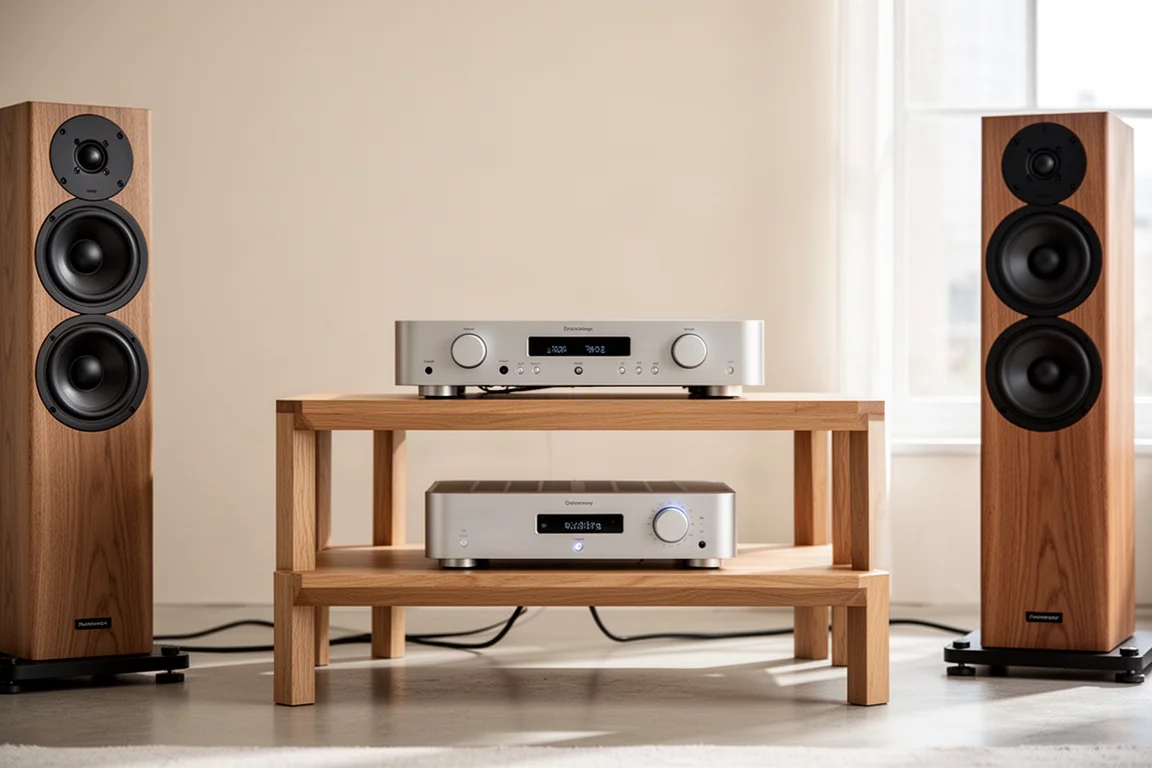
Used purely as a transport, the MXN10 scales up well. It does not feel out of place feeding a Denafrips ENO-15th DAC into an Exposure 2510 amplifier and Dali Menuet SE speakers, even though in that system the streamer would be the first component to upgrade.
For a system built below £1,000, the MXN10 is hard to beat if the priority is a simple, warm, musical streamer with a stable app and consistent performance across every output. Buyers who need room correction, HDMI ARC, or an extensive feature set should look at other options, but those who want a streamer to be nothing more than a streamer will find very little to fault here.
Conclusion
The MXN10 does exactly what it sets out to do. It is tonally spot on, delivering full bass, a balanced midrange, and enough timing and transient assurance to keep demanding material engaging, all through analog and digital outputs that sound remarkably consistent with one another.
It is not the last word in high-frequency openness, and it will not satisfy listeners who want a display, a remote, or a deep feature set. What it offers instead is a stable, fast, logically organised app, support for the major streaming services, and a warm, musical voice that makes digital playback easy to enjoy for hours at a time.
Above all, it takes a serious step up in price to achieve a worthwhile improvement in sound quality over the MXN10, whether from within Cambridge Audio’s own range or from rival brands. For anyone who wants a streamer to do one job beautifully, and who prefers a slightly warm tone, this is one of the most convincing options at its price.
Product link
View more details for Cambridge Audio MXN10
This product is mentioned in the review. Check the specifications, options, and compatibility before buying.
View more details for Cambridge Audio MXN10Further reading
Related Reviews
Music Streamers
Arylic S10 Plus vs WiiM Mini: Two Affordable Music Streamers Compared
A practical comparison of the Arylic S10 Plus and the WiiM Mini, covering connections, apps, tone controls, and how each internal DAC actually sounds.
Music Streamers
Auralic Aries G1.1 Review: A Streaming Transport That Lifts a Resolving System
A close look at the Auralic Aries G1.1 streaming transport, covering its twin-transformer power supply, Tesla G2 processing, Lightning DS app and the systems where it genuinely pays off.
Music Streamers
Bluesound Nano Review: A Compact Streamer That Keeps Things Simple
The Bluesound Nano is a stripped-down network streamer at $299, with a solid chassis, quick setup, and a clean, punchy sound. Here is what to know before buying.