Active Loudspeakers
Cambridge Audio L/RX Review: A Complete Active Hi-Fi System in Two Cabinets
The Cambridge Audio L/RX folds streaming, amplification, speakers and a phono stage into one $2,400 pair. Here is what it does well and what to weigh first.
Introduction
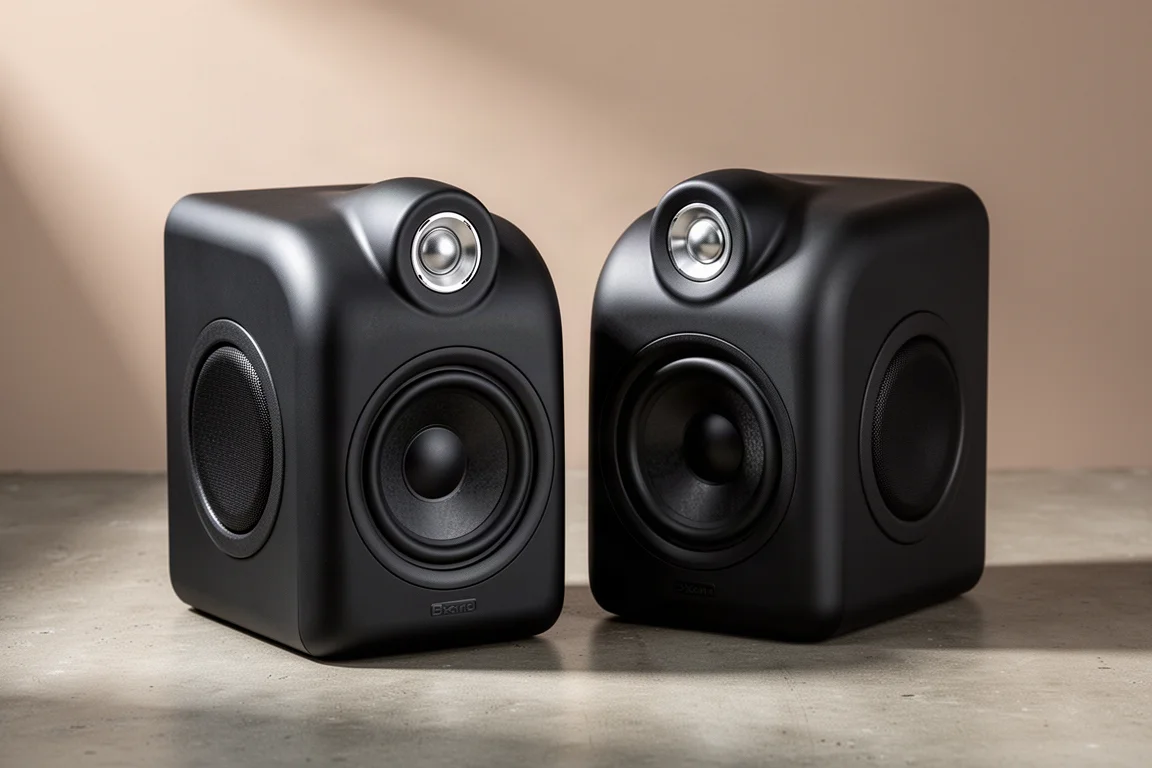
The Cambridge Audio L/RX is the largest model in the company’s L/R series of active loudspeakers, and it takes a deliberately different approach to building a hi-fi system. Rather than asking listeners to assemble a streamer, an amplifier, a pair of speakers and a phono stage, it folds those roles into two cabinets and a single app.
At $2,400 per pair, the L/RX sits well above the entry point of the range, but it also replaces several components that would otherwise occupy a rack. For listeners who want a finished system rather than an ongoing project, that consolidation is the entire point.
Design and Hardware Overview
The L/R series spans three sizes. The compact LRS comes in at $549 per pair, the mid-sized LRM at $1,600 per pair, and the L/RX is the flagship at $2,400 per pair. All three share a modern cabinet language, and the L/RX is offered in orange, green and black finishes.
The speaker spent roughly two years in development at Cambridge Audio. Ged Martin, the company’s long-standing head of design, shaped the industrial design, while Olly Marshall, head of acoustics, led the acoustic engineering. The team behind it has prior experience with active loudspeaker systems at far higher price points, which is a useful signal about the intent here.
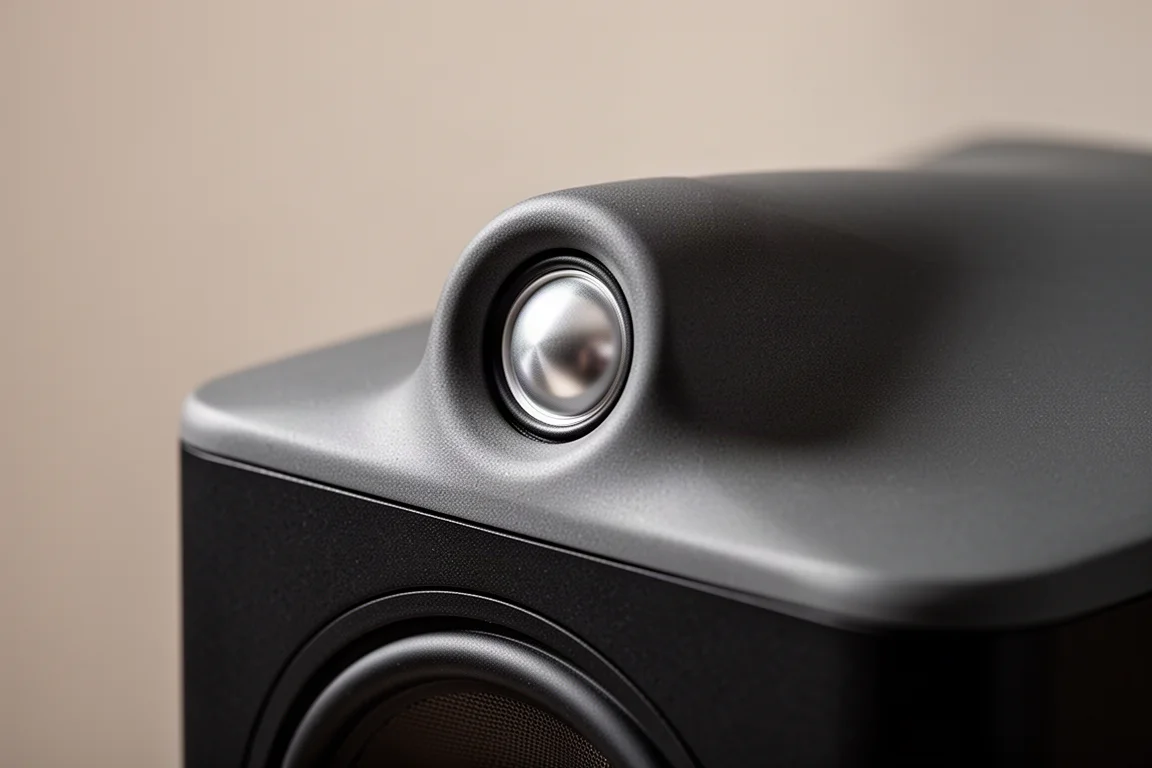
Inside each cabinet you get two 400 W Class D amplifiers, a 1.1-inch aluminum dome tweeter set into a sculpted housing, a 5-inch front-firing woofer, a 5-inch down-firing woofer and two 6-inch passive radiators mounted on the sides. The stated frequency response is 35 Hz to 24 kHz, plus or minus 3 dB, which is a low bass figure for a cabinet of this size.
One cabinet carries the inputs and the controls, and it can be assigned as either the left or the right channel depending on how your room is laid out. There is also an under-glow light in the base with adjustable color. It reads as a styling flourish at first, but it doubles as a status indicator, which is genuinely handy when you are troubleshooting a connection.
Who the Cambridge Audio L/RX Is For
This system is aimed at listeners who want the whole chain in one place. Streaming, amplification, a DAC, a phono stage, HDMI eARC for a television and subwoofer integration are all built in, so there is no matching to do and no cable loom to reason through.
It is also a natural fit for smaller rooms and shared living spaces, where a rack of separate components is impractical. The EQ and room correction tools exist precisely so the system can be tuned to the space it sits in rather than the other way around.
It is a less obvious fit for listeners who enjoy the hobby side of hi-fi. If choosing between amplifiers and swapping phono stages is part of the pleasure, an all-in-one active system removes that entirely, no matter how well it performs.
Sound Quality: The Main Strengths
All listening impressions come from the flat profile, with no EQ applied. Out of the box the L/RX is dynamic, clean through the midrange and noticeably free of the sterile, twangy quality that aluminum dome tweeters can sometimes carry. The top end is subtle and nuanced, and the soundstage is wide with strong instrument separation. Bass stays controlled rather than bloated.
That tweeter is arguably the standout. The dome is set in a sculpted housing, and the result is one of the most convincing implementations of an aluminum dome design around: percussion in particular benefits from the speed and snap of the material without the hardness that usually comes with it.

Material that depends on reverb and separation fares well. On dense rock recordings the trailing reverb and the crack of the snare both come through clearly, and acoustic guitar work sounds open and natural. A demanding low-frequency passage reveals how much the system can do at the bottom end for its size, which comes down to what digital processing makes possible in an active design.
Bass performance will still depend heavily on the room and how the speakers are positioned, and the built-in correction tools are there to help close that gap.
Setup and the StreamMagic App
Setup runs over Bluetooth first: the speaker connects to a phone and then joins the Wi-Fi network. The bundled remote has to be paired, which is a quick step, and after that the system behaves like any other connected source.
The app covers more than the basics. A volume limit can be set, which is useful in a household with children, and there are internal safeguards so that running the system at full output should not damage the drivers. Google Cast is supported, and the whole control layer is developed in-house at Cambridge Audio rather than licensed from another platform.
Room Correction and Streaming Features
The acoustic correction section lets you enter room size and speaker placement, then apply additional compensation based on how reflective the room is. Unlike some competing systems, there is no measurement microphone in the box, so this is a manual process guided by what you know about your space.
Subwoofer integration includes adjustable crossover and subwoofer level, and there is balance control plus a seven-band equalizer with factory presets as well as your own settings. A separate dynamic EQ acts as a loudness control, lifting bass and treble slightly at lower listening volumes.

Streaming is handled by StreamMagic, which brings in Tidal, Qobuz, Spotify and Amazon Music, along with Tidal Connect and Spotify Connect. That last point matters: because connect protocols are supported, you can keep using the app you already prefer rather than switching to StreamMagic for playback.
Because the software is maintained in-house, Cambridge Audio can push updates and add features over time. The company has indicated that more functionality is planned, so the system is not fixed at the feature set it ships with.
Things to Consider Before Buying
The first consideration is the outlay. Even when the value math works in the L/RX’s favour, $2,400 per pair is a large single purchase, and not everyone wants to commit that sum at once. Payment plans exist, but the upfront figure is real.
The design is polarizing by intention. The sculpted tweeter housing and the modern cabinet shape will appeal strongly to some listeners and not at all to others, and that is worth resolving before you order rather than after.
The built-in phono stage is adequate rather than exceptional. If vinyl is your primary source, plan on adding an external phono stage, which is straightforward because RCA inputs are provided. Room correction also relies on manual entry rather than automatic measurement, so it rewards a little patience.
Finally, bass output and overall balance are heavily influenced by the room. The correction tools help, but the system will not sound identical in every space.
Value and Buying Advice
The clearest way to judge the L/RX is to price out what it replaces. There is a streamer, an amplifier, a pair of speakers, a DAC and a phono stage inside, and the streaming technology is shared with Cambridge Audio’s higher-end streamers and amplifiers. Assign rough values to those pieces, say around $1,000 for the speakers, $1,000 for the amplification and $500 or more for streaming, and the $2,400 total starts to look deliberate rather than arbitrary.
The counterargument is that you can build a system for less. A $300 streamer, a $300 amplifier and $500 speakers come in above $1,000 and leave money on the table. What that approach does not buy is a single system designed by one team to work together, with processing that ties the drivers, the amplifiers and the room correction into one coherent whole.
That distinction is what you are actually paying for. The L/RX makes the most sense for a listener who wants one considered purchase, one app and one support path, and who values a system that was tuned as a complete design rather than assembled from parts. For anyone who enjoys swapping components and tuning a stack by ear, the same money buys a very different kind of satisfaction.
If the L/RX is the right shape of product for you but the price is not, the smaller LRS and LRM in the same series offer the same approach at lower cost.
Conclusion
The Cambridge Audio L/RX is a confident piece of engineering. It replaces a rack of components with two cabinets, it handles streaming, television audio and vinyl input, and it sounds dynamic, clean and surprisingly deep for its size. The app is capable and the software roadmap is maintained in-house.
The reservations are just as clear: the price is a genuine commitment, the design will divide opinion, and serious vinyl listeners will want to add their own phono stage. Taken on its own terms, though, this is one of the more complete one-and-done systems available, and for the right listener it removes most of the friction that keeps people out of good hi-fi.
Product link
View more details for Cambridge Audio L/RX
This product is mentioned in the review. Check the specifications, options, and compatibility before buying.
View more details for Cambridge Audio L/RXFurther reading
Related Reviews
Active Loudspeakers
ATC SCM50 Active Review: Analog Tri-Amplification Without DSP
A stand-mounted three-way active loudspeaker with Class AB tri-amplification, an all-analog signal path and a six-year warranty on both the cabinet and the electronics.
Active Loudspeakers
Buchardt Audio A700 Review: An Active Floorstander You Can Re-Tune
A direct-sales active floorstander with user-replaceable amplifiers, downloadable DSP master tunings, and a physical, room-filling sound.
Active Loudspeakers
KEF Koda W Review: Better Sound Without the Streaming Module
A close look at KEF's Koda W active loudspeakers: what you gain in sound when the streaming module is left out, and what you give up.