Active Loudspeakers
Buchardt Audio A700 Review: An Active Floorstander You Can Re-Tune
A direct-sales active floorstander with user-replaceable amplifiers, downloadable DSP master tunings, and a physical, room-filling sound.
Introduction
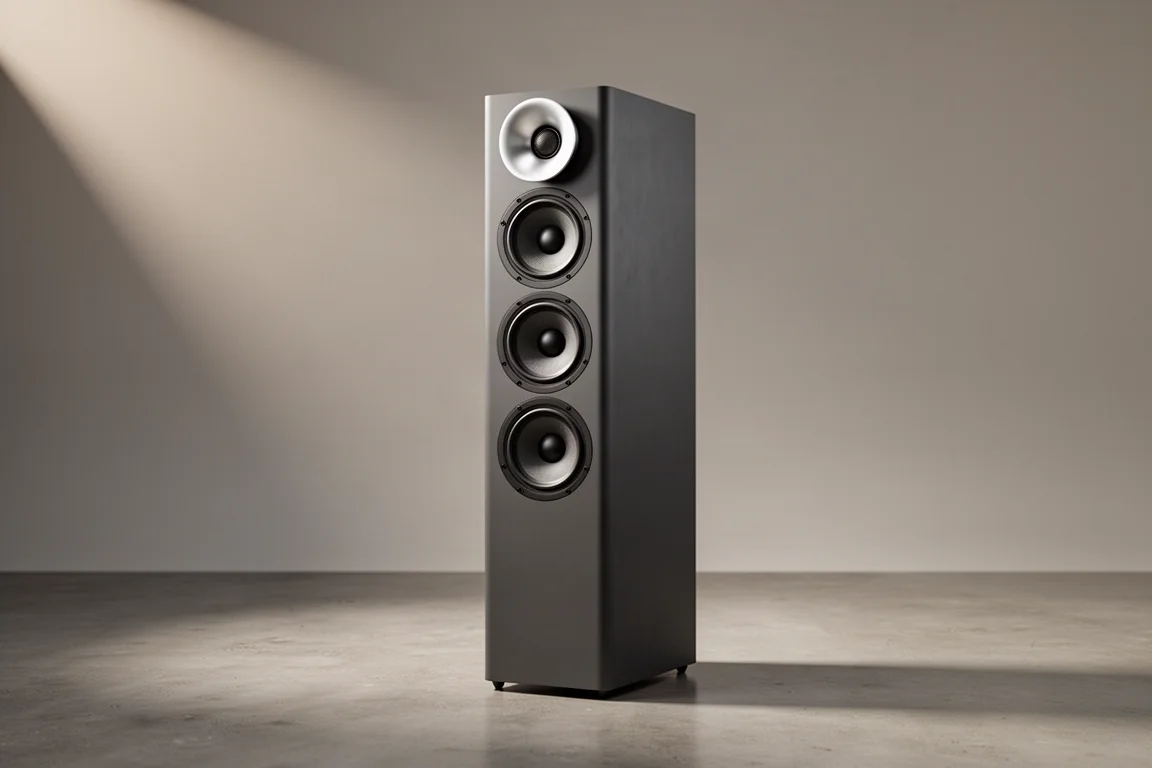
The Buchardt Audio A700 is a tall active floorstanding loudspeaker that sells for around 6,000 euros, and it reaches buyers through an unusual route. It is designed in Denmark and manufactured in China, then shipped directly from the Buchardt Audio warehouse in Denmark to the customer. There is no dealer network, so there is no shop demonstration before purchase. Instead, Buchardt Audio offers a 45-day home trial with two-way shipping covered, and the full purchase price is paid up front to take part.
That direct model shapes nearly everything about the speaker: its price, how it is supported, and how it is meant to be lived with over time. The A700 is also an active design, with amplifiers built into each cabinet, and those amplifier modules are user serviceable and replaceable. Buchardt Audio covers the amplifiers with a four-year warranty and the drivers with a ten-year warranty.
Who the Buchardt Audio A700 Is For
The A700 suits listeners who want a complete system rather than a chain of separate components. Two loudspeakers, a small streaming hub, and the system is running. It also suits anyone who values longevity: because the internal amplifiers can be replaced rather than written off, the speaker is designed to stay serviceable for years.
Film and television use is part of the appeal. With the hub in the chain, the A700 accepts an HDMI ARC feed from a television and sends it wirelessly to each speaker, which makes it a credible two-channel setup for a living room that has to handle both music and movies.
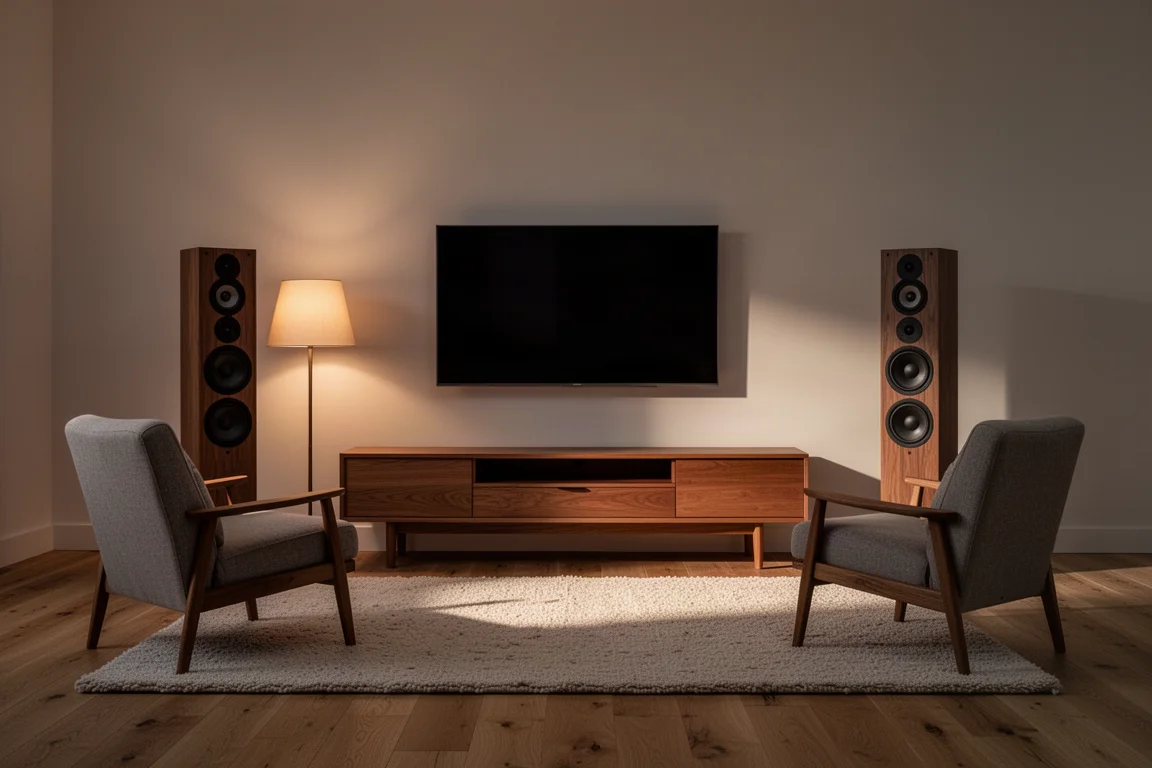
It is a less natural fit for buyers who want to audition a pair in a store before committing, or for whom industrial design is the deciding factor. The trade-off is simple: you get a long home trial and direct support instead of a showroom, and the money that would normally go to distribution stays in the product.
Main Strengths: Sound, Build, and Presence
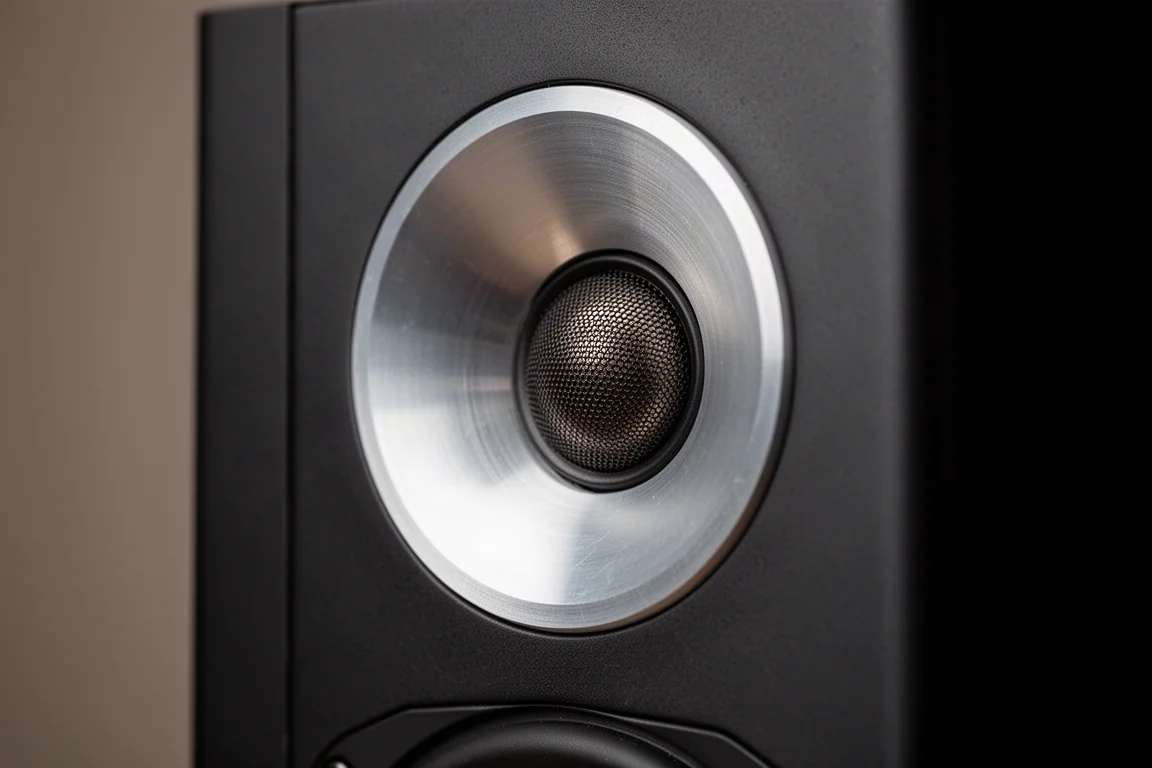
In its default form the A700 is a three and a half way design. A 0.75 inch soft dome tweeter sits inside a large aluminium waveguide, and there are three drivers on the front and two on the back. The top front driver handles midrange, the two below it cover midbass, bass, and sub bass, and the two rear drivers take care of sub bass only. A subwoofer is not needed.
That array gives the A700 a physical, muscular character. It sounds robust and demonstrative in a way that the Dynaudio Focus 30 does not; the Focus 30 is the more polite speaker, and it is the stronger of the two at extracting fine detail and pinning instruments to a precise point in the phantom centre image. The KEF LS60 Wireless has a slight edge on vocal definition, particularly with male voices, and draws a crisper image between the speakers, while the A700’s treble is the smoother of the two.
Where the A700 pulls ahead is with recordings that are less than pristine. A thin, edgy master stays listenable instead of being pushed forward, and the low end is filled out when a mix needs it. The built-in Fletcher-Munson correction lifts bass and treble as the volume comes down, so late-night listening at low levels keeps its weight and shape instead of washing out, which is more likely to happen with the LS60 Wireless or the Focus 30 at the quietest settings.
Master Tunings and DSP Flexibility
The feature that defines the A700 is its master tunings. These are downloadable DSP files published on the Buchardt Audio website, roughly eight to ten of them, and each one changes the crossover slopes, the driver array configuration, and the frequency response. A file is copied to a USB stick, the stick goes into the back of the loudspeaker, the speaker is power cycled, and the new tuning is installed. Each speaker has to be done separately.
The practical result is a speaker that can take on different personalities without any hardware changes. A three way cardioid tuning is useful when the speakers have to sit close to a front wall, with the rear drivers handling cardioid cancellation instead of sub bass. Positioned about 70 centimetres from the wall, that tuning removes a great deal of low end, and a companion cardioid with more bass file puts it back while keeping the cardioid dispersion.
Two further tunings are worth knowing about. One leans toward extra detail and top-end sparkle, bringing the A700 closer to the Focus 30 presentation. Another is a warm tuning, the most impactful and the most forgiving of crunchy guitar records, taking the edge off the top end. Choosing between them is more useful than a blank parametric EQ, because each file was designed by the people who built the crossover in the first place.
Connectivity: The Platin Hub and HDMI ARC
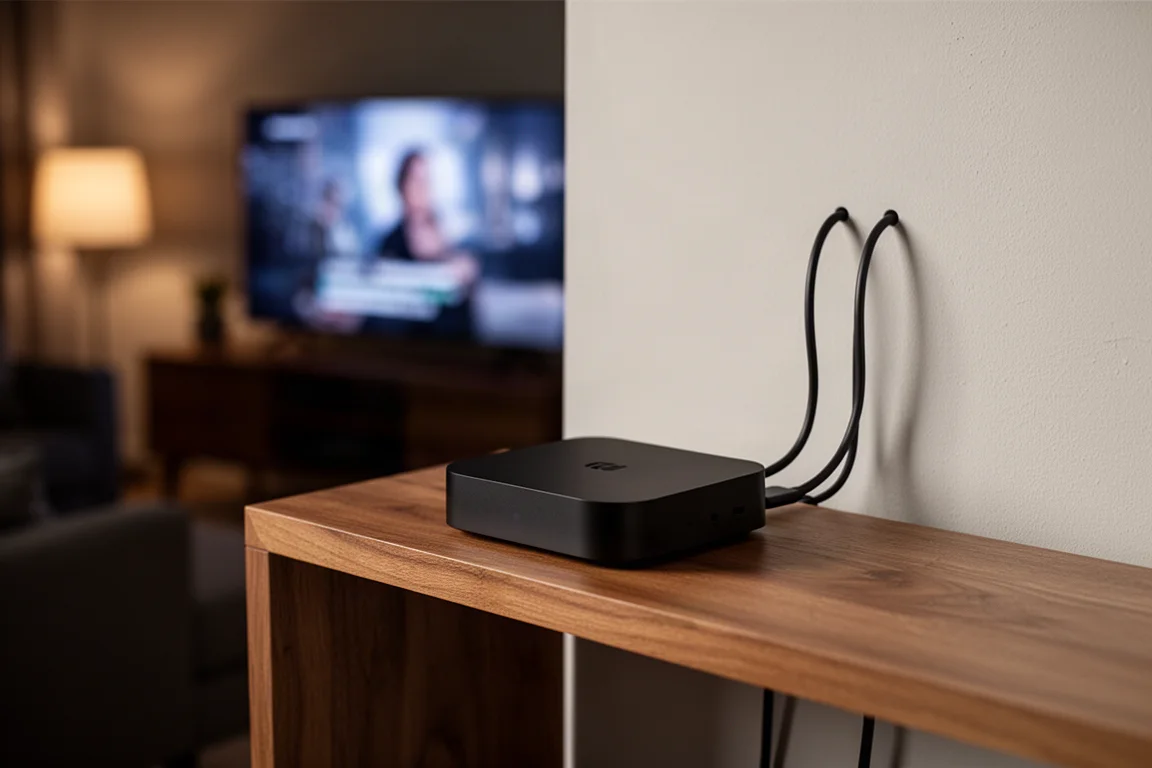
Buchardt Audio recommends pairing the A700 with a small third-party streaming hub, which the company does not manufacture but sells as a bundle and supports with its own branded control app. The hub talks to the left and right speakers wirelessly and independently using WiSA, keeping the two channels in sync. It supports Spotify Connect, AirPlay, Bluetooth, and Google Chromecast, and it does not offer Tidal Connect.
Two inputs matter most. The first is HDMI ARC, which lets a television feed the hub directly, and lip sync held up without visible drift in use. The second is the analogue line level input, which is converted to digital on entry but still preserves the character of the source, with clear differences audible between two different phono preamps.
On the speakers themselves, each A700 has a balanced XLR input, something the Focus 30 and the LS60 Wireless do not offer. Feeding those inputs from an external preamplifier produced an obvious step up in sound quality when moving to a better preamp, so the analogue to digital conversion is not flattening the signal.
The control app is basic. It works, and it is genuinely useful for assigning left and right channels when both speakers insist on the same side during pairing, but it is not as pleasant to use as the apps from KEF or Dynaudio. Room correction is included and is iOS only, since the app relies on a known microphone. In practice it reported a large bass cancellation that other measurement tools did not show, so it was left switched off. The microphones fitted to newer iPhones are also described as less consistent than those in earlier generations, which does not help.
Things to Consider Before Buying
There is no way to hear the A700 in a shop. The 45-day home trial is generous and includes two-way shipping, but it requires paying the full 6,000 euros first. If a dealer demonstration matters to you, this is not that kind of purchase.
Build quality is good without being exceptional. Next to the KEF LS60 Wireless and the Dynaudio Focus 30, the A700 is a small step behind, and its industrial design is fine rather than memorable.
Streaming support has one clear gap: no Tidal Connect through the hub. Room correction is limited to iOS devices and produced questionable results in practice. The app is functional rather than refined.
Buying Advice
The A700 makes most sense when it is judged as a complete system rather than as a pair of speakers. Two active floorstanders with built-in amplification, user replaceable amplifier modules, a four-year amplifier warranty, a ten-year driver warranty, HDMI ARC, balanced XLR inputs, and downloadable DSP tunings add up to something that is difficult to assemble from separate components at this price.
The direct sales model is what makes that price possible. Sold through a conventional distributor and retail chain, the same speaker would likely land somewhere between 9,000 and 10,000 euros. The larger Dynaudio Focus 50, the closer rival in size and ambition, sits higher still, at roughly 10,000 euros or a little above.
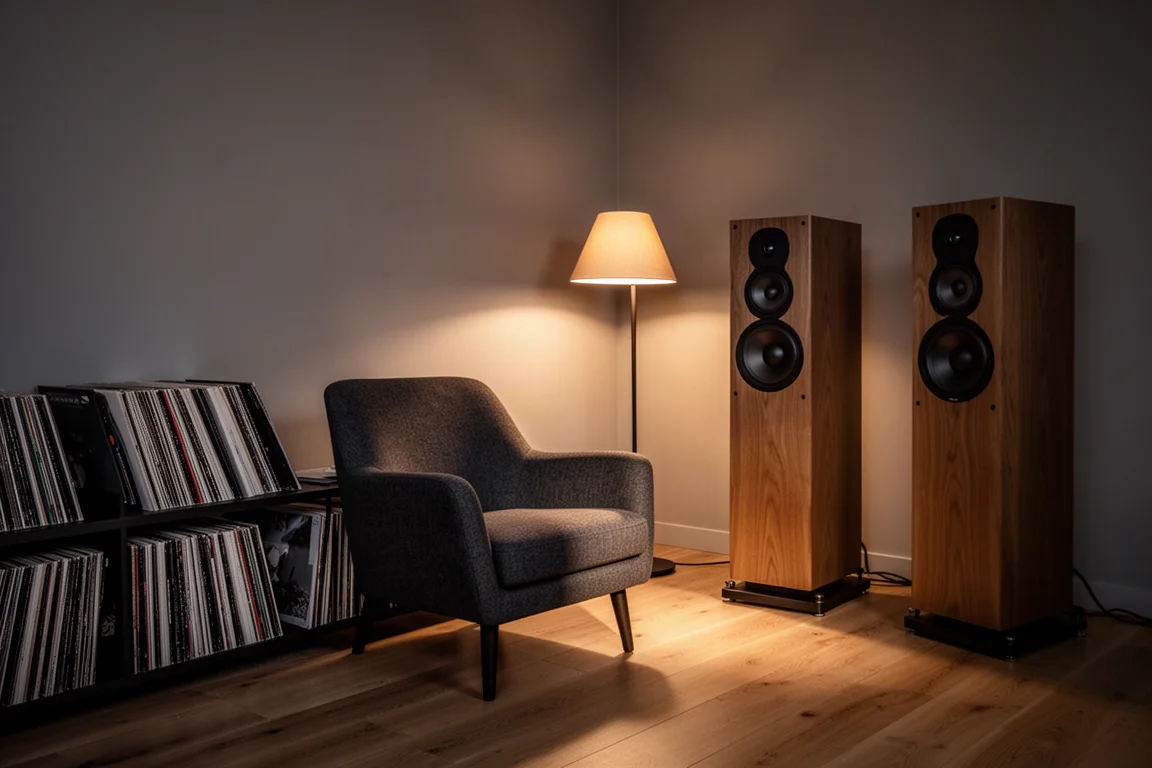
If your priority is the finest detail retrieval and pinpoint imaging, the Focus 30 has the edge, and if you want the sharpest vocal definition and the most striking industrial design, the LS60 Wireless is the stronger pick. If you want a speaker that can be reshaped to suit your room and your taste, and that can be kept running for years with replaceable amplifiers, the A700 is the more flexible long-term proposition.
Conclusion
The Buchardt Audio A700 is a direct sales active floorstander with a physical, muscular sound, a genuinely useful tuning system, and an unusual commitment to serviceability. Its build and its app are ordinary, and the room correction is not a reason to buy it. The master tunings are what make the commitment worthwhile.
Product link
View more details for Buchardt Audio A700
This product is mentioned in the review. Check the specifications, options, and compatibility before buying.
View more details for Buchardt Audio A700Further reading
Related Reviews
Active Loudspeakers
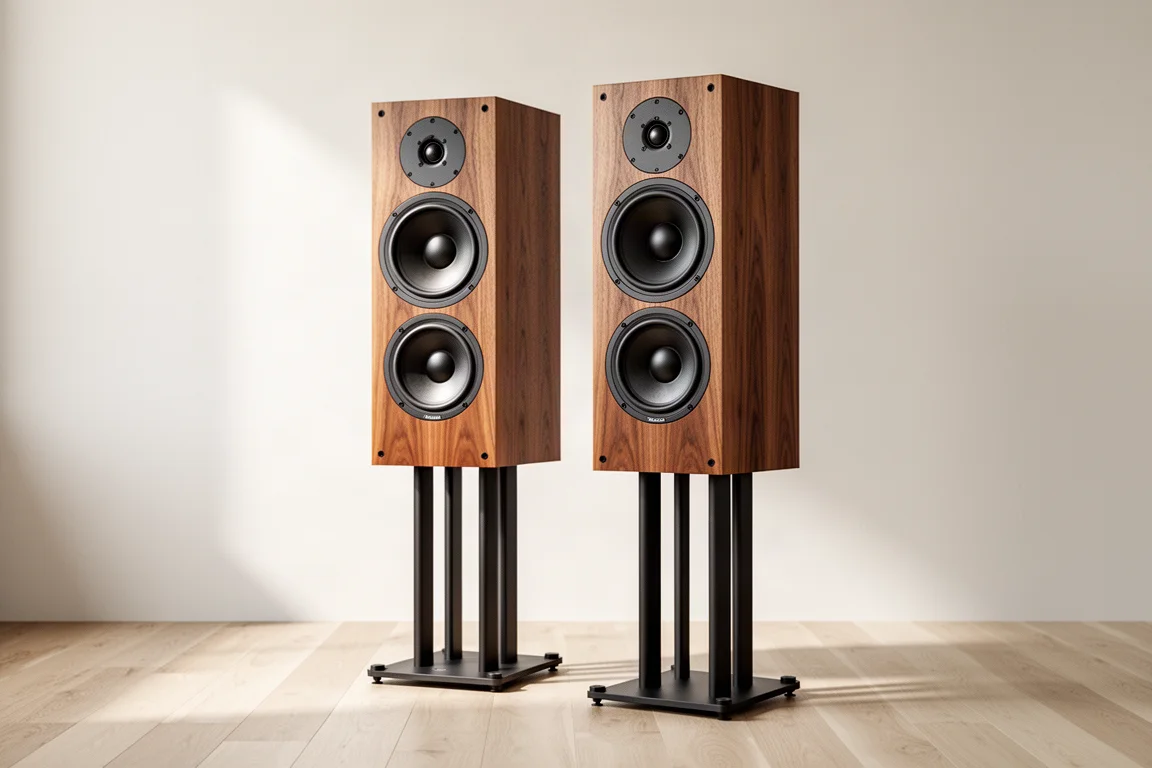
ATC SCM50 Active Review: Analog Tri-Amplification Without DSP
A stand-mounted three-way active loudspeaker with Class AB tri-amplification, an all-analog signal path and a six-year warranty on both the cabinet and the electronics.
Active Loudspeakers
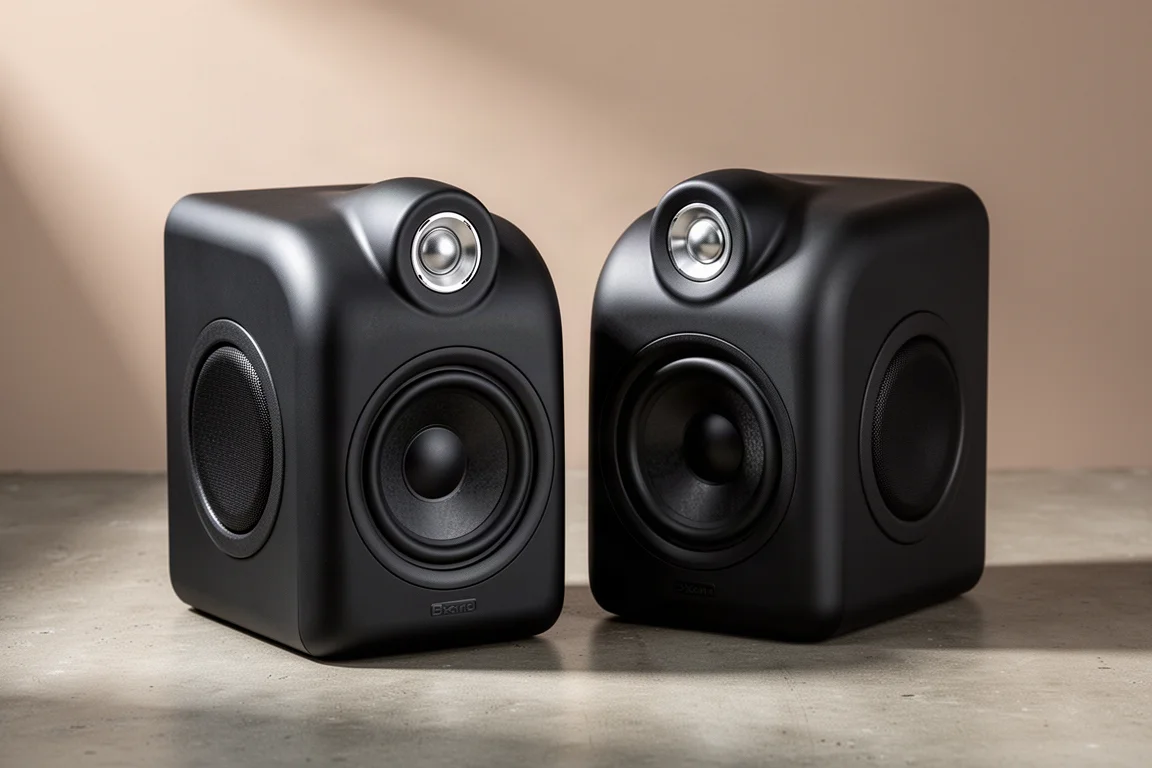
Cambridge Audio L/RX Review: A Complete Active Hi-Fi System in Two Cabinets
The Cambridge Audio L/RX folds streaming, amplification, speakers and a phono stage into one $2,400 pair. Here is what it does well and what to weigh first.
Active Loudspeakers
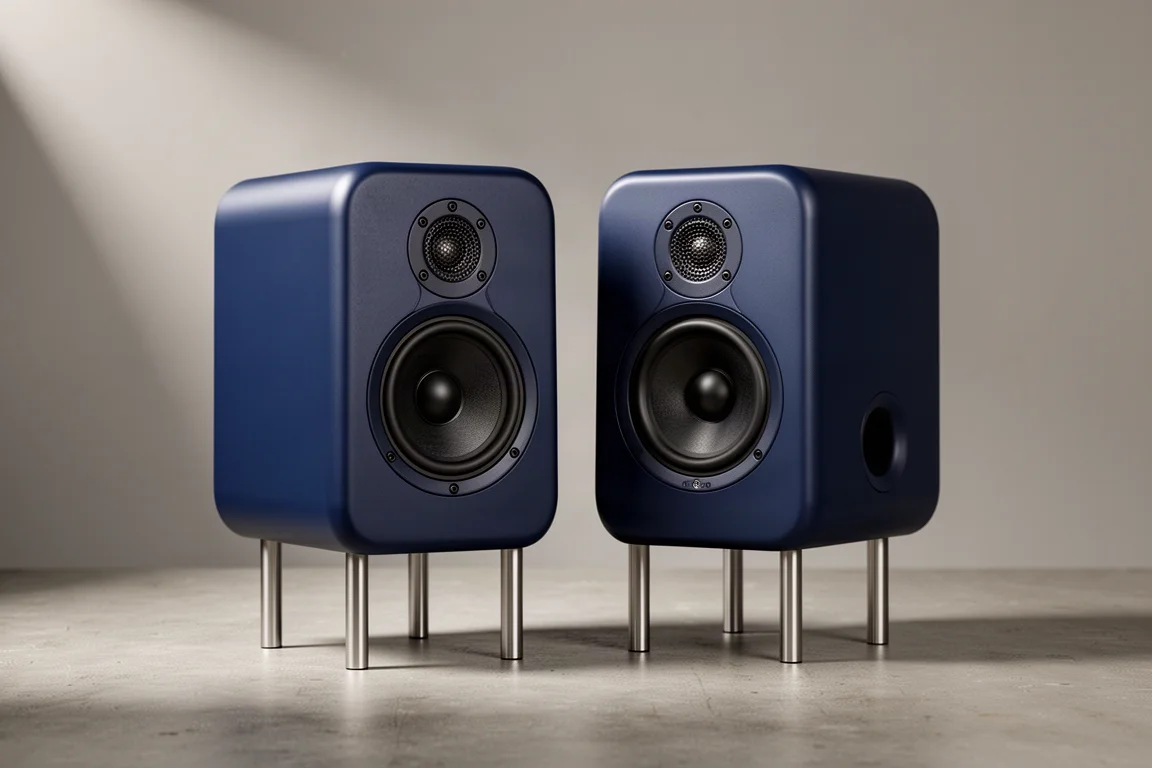
KEF Koda W Review: Better Sound Without the Streaming Module
A close look at KEF's Koda W active loudspeakers: what you gain in sound when the streaming module is left out, and what you give up.