Integrated Amplifiers
Cambridge Audio EXA 100 Review: A Stereo Amplifier That Finally Adds HDMI ARC
A natural-sounding stereo integrated amplifier with HDMI ARC, a slightly more robust chassis, and a feature set that still leaves a few gaps to weigh up.
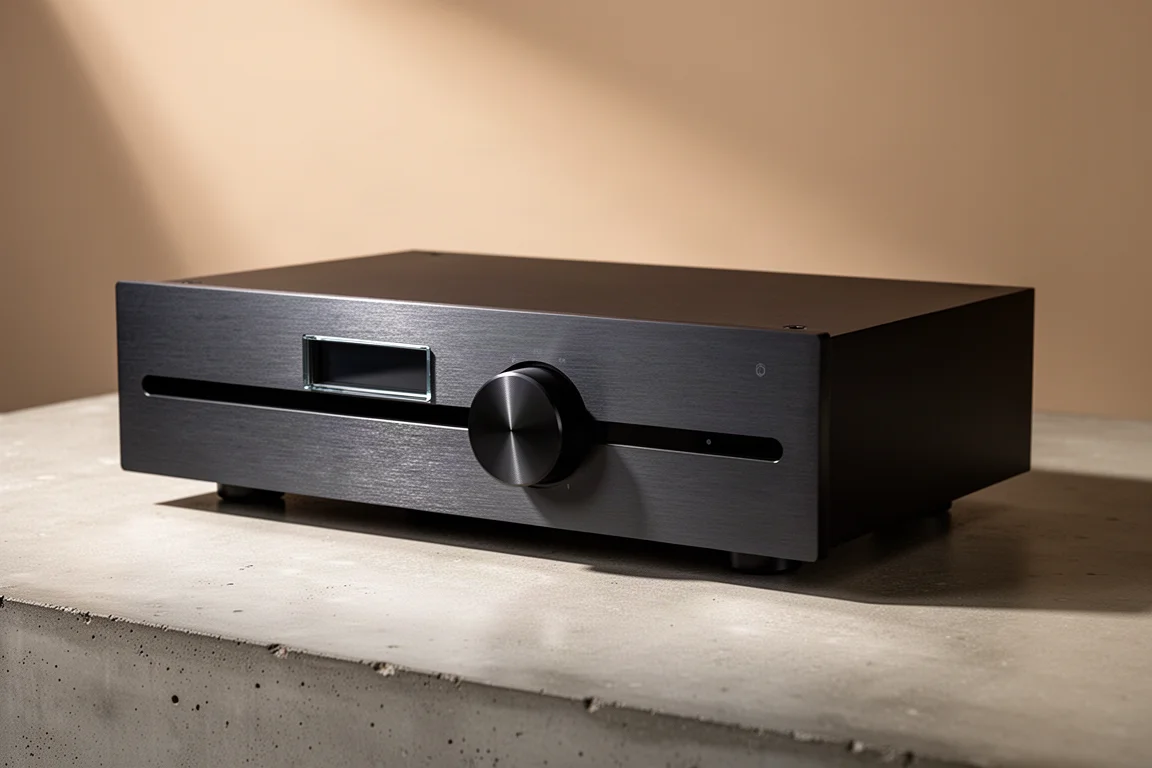
Introduction
The Cambridge Audio EXA 100 is a stereo integrated amplifier that arrives with the one feature the brand spent most of this year saying its customers did not want: HDMI ARC. That reversal is the story of the launch. The EXA 100 anchors a new EX line sitting above the long-established CX range, and it is designed to pair with the matching EXN 100 streamer. Bought together, the two boxes land around the $4,000 mark. Bought on its own, the amplifier is the roughly $2,000 route into the same platform.
That positioning matters, because almost nobody shops in isolation. Anyone comparing amplifiers at this price will also see AV receivers with room correction, bass management and a far broader input list. The EXA 100 takes a narrower approach: a stereo amplifier built around sound quality first, with HDMI ARC added so a television can become another source.
The EX line also arrives after the CXA81 MkII, a release that changed relatively little. That timing makes the EXA 100 feel like the more meaningful step, even if it leaves some buyers wondering why the two launches were not handled differently.
Who the Cambridge Audio EXA 100 Is For
This amplifier is for listeners who want a music-first stereo design and the option of running television audio through the same system, without adding an outboard converter or a separate AV processor. HDMI ARC does the heavy lifting here: the TV becomes a source, and the amplifier handles the rest. For a living room where one system has to cover both music and screen time, that single connection removes a genuine friction point.
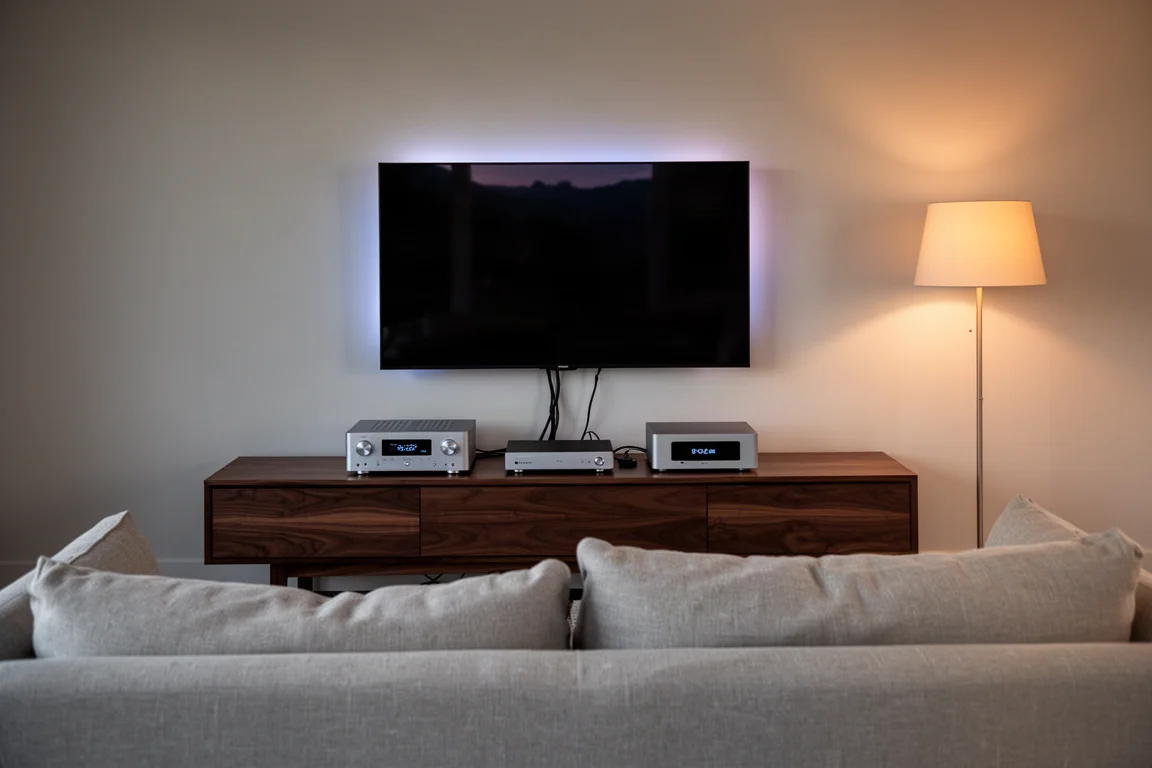
It also makes sense for anyone who wanted a Cambridge amplifier with a genuinely useful feature upgrade over the CX generation. If the absence of HDMI on the CXA81 was the detail that kept you away, the EXA 100 answers it directly while keeping the analogue side simple and uncluttered.
It is a less obvious fit for listeners who expect tone controls, a phono stage, room correction or bass management to be built in. None of those are part of this design, and buyers who need them will find more complete products at the same money.
Main Strengths
HDMI ARC is the headline. For years, Cambridge’s stereo integrated amplifiers asked buyers to choose between a music-first design and easy television integration. The EXA 100 removes that compromise. A television can be connected directly and used as a source without an extra box in the chain.
Build quality has moved forward as well. The chassis feels a little more robust than the CXA81 MkII in places, with more substance to the panels and controls. The differences are not dramatic, but they are noticeable when the two units sit side by side.
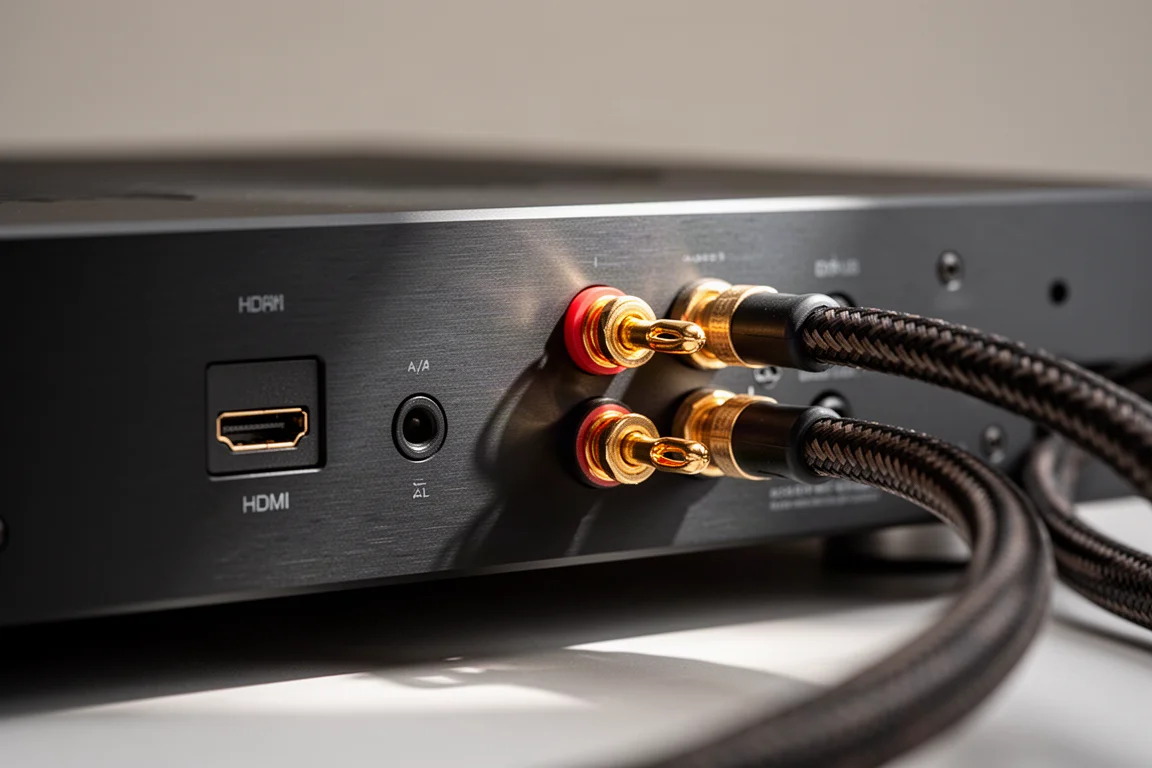
The amplifier is easy to live with day to day. Speech intelligibility through the system is good, and the absence of tone controls was not a practical problem in normal listening. Cambridge’s design language remains among the cleaner ones in hi-fi, and the EXA 100 fits it comfortably.
In the end, the most persuasive argument for this amplifier is the feature set rather than the sound alone. Anyone who wants HDMI in a stereo amplifier and likes the Cambridge presentation has a straightforward reason to buy.
How the EXA 100 Sounds
The EXA 100 has a natural, organic character. Trailing notes on instruments and vocals are not rendered with razor precision, and that slight softness is exactly what makes recordings feel like they occupy a real space rather than a treated control room. Even heavily assembled studio productions can take on a sense of musicians playing together in one room.
Against the more clinical presentation some amplifiers at this price deliver, the Cambridge sounds less sterile and less surgically exact. Listeners moving up from that kind of sound should notice a warmer, more personable result.
There is a caveat worth stating plainly. Moving from a CXA81 or CXA81 MkII to the EXA 100 is not a dramatic sonic transformation. The build improvements and the addition of HDMI are clearer than any change in sound. In character, the EXA 100 sits closer to Cambridge’s more affordable AX line than to the CX range above it.
Power output edges up slightly compared with the CXA81, which helps with the less sensitive speakers that have become common at affordable prices. On genuinely difficult loads there are alternatives with a little more authority, but for most rooms and most reasonably efficient speakers there is enough on tap.
Things to Consider Before Buying
The omissions are the first thing to weigh. There is no phono stage, no room correction and no bass management, and there are no tone controls. There is also no built-in streaming, which matters if you were hoping for a single-box solution rather than an amplifier plus a separate source.
The digital to analogue conversion inside the EXA 100 is the same as the converter used in the CXA81 MkII. It is not the same converter found in the EXN 100 streamer, which sits a step above. In practice the two are very close: apart from a small difference in gain when using the streamer’s internal converter, no meaningful performance difference was heard across three pairs of speakers.
The display and button layout carry over from the CX range, and the blue indicator lighting has drawn criticism from long-time owners. A black bar across the centre of the front panel does not serve a functional purpose here. It would have been a natural home for album artwork, but the EXA 100 does not stream, so it stays decorative.
Pairing the amplifier with the EXN 100 also creates redundancy. The streamer includes HDMI of its own along with a larger screen, so the amplifier’s digital inputs become partly duplicated when the two are used together. If streaming is the priority, a cheaper Cambridge streamer connected over optical cable gets most of the way there for considerably less. Owners of a CXA81 or CXA81 MkII who are happy without HDMI should also think carefully, because the feature differences are far easier to justify than the sonic ones.
How It Compares With Alternatives
The Arcam A25 is a similarly specified amplifier with a built-in phono stage, and it generally costs less. For listeners who prefer to keep streaming and digital duties in separate boxes, it is arguably the more attractive purchase, and it makes a strong case on sound as well.
The Anthem STR sits higher at around $5,000. It lacks HDMI and built-in streaming, but it adds ARC room correction and excellent bass management, and it delivers power with real authority. Given the choice, it would be the pick for anyone who prioritises correction and bass management over connectivity.
The Roksan Attessa is a comparable amplifier, and the right model in that range includes BluOS streaming built in. Listeners who are streamer-centric may find it more affordable overall, while anyone who needs HDMI has little choice but to look elsewhere.
A budget AV receiver remains the most feature-dense alternative. It brings room correction, bass management and a full complement of inputs for less money. For a system split evenly between music and films, that flexibility is difficult to argue with, and the gap in stereo performance is narrower than the old separates-versus-receiver argument suggests.
The Rotel R5000 offered a similar all-in-one experience with outstanding sound quality and control, though its app was limited and it lacked a phono preamp. It is a useful reminder that the closest products to the ideal one-box solution are still a step or two away.
Buying Advice
Buy the EXA 100 if HDMI ARC in a stereo amplifier is the feature you have been waiting for. It delivers that, along with a natural sound, a slightly more robust build than the CXA81 MkII and Cambridge’s familiar design language. At around $2,000 on its own, it is also the cheaper way into the EX line than adding the EXN 100 streamer.
Skip it if you already own a CXA81 or CXA81 MkII and do not need HDMI. The sonic gap is small and the upgrade is mostly about features. If you are coming from the AX line, the EX line is the more natural step and worth the stretch over the CX range.
If you want streaming as well, consider pairing this amplifier with Cambridge’s entry-level streamer over an optical connection rather than buying both EX components. It keeps the total cost down, and the performance difference between that arrangement and the full stack is modest.
Conclusion
The EXA 100 is the amplifier Cambridge should have built earlier. It adds HDMI ARC, a slightly more substantial chassis and a sound that favours naturalness over clinical precision, and it finally gives stereo-first listeners a straightforward way to run music and television through one system. The trade-offs are real: no phono stage, no room correction, no tone controls and no streaming. Buyers who need those features will find better value elsewhere, and owners of recent CX amplifiers have little reason to move. For everyone else, this is a well-judged stereo amplifier with a genuinely useful addition.
Product link
View more details for Cambridge Audio EXA 100
This product is mentioned in the review. Check the specifications, options, and compatibility before buying.
View more details for Cambridge Audio EXA 100Further reading
Related Reviews
Integrated Amplifiers
Advance Paris A10 Classic Review: Vintage Looks and a Lively, Punchy Sound
The Advance Paris A10 Classic pairs glowing blue VU meters and a tube stage with one of the widest input sets on any integrated amplifier. Here is what it does well and what to weigh before spending $2,500.
Integrated Amplifiers
Advance Paris A12 Apex Review: A Modern Integrated Amplifier With Vintage Character
A dual mono integrated amplifier with 180 watts per channel, a tube front end, VU meters, and a connectivity list that covers turntables, televisions, computers, and headphones.
Integrated Amplifiers
Advance Paris Nova Range Review: AI130, AI190 and Modular Upgrades
A practical look at the Advance Paris Nova range, including the AI130 and AI190 integrated amplifiers and the modular streaming, Bluetooth and remote accessories that expand them.