Home Audio
Cambridge Audio Evo One Review: A Flexible All-in-One Music System
A practical look at the Cambridge Audio Evo One, an all-in-one music system with 14 drivers, wide connectivity, and a few expectations worth setting before buying.
Introduction
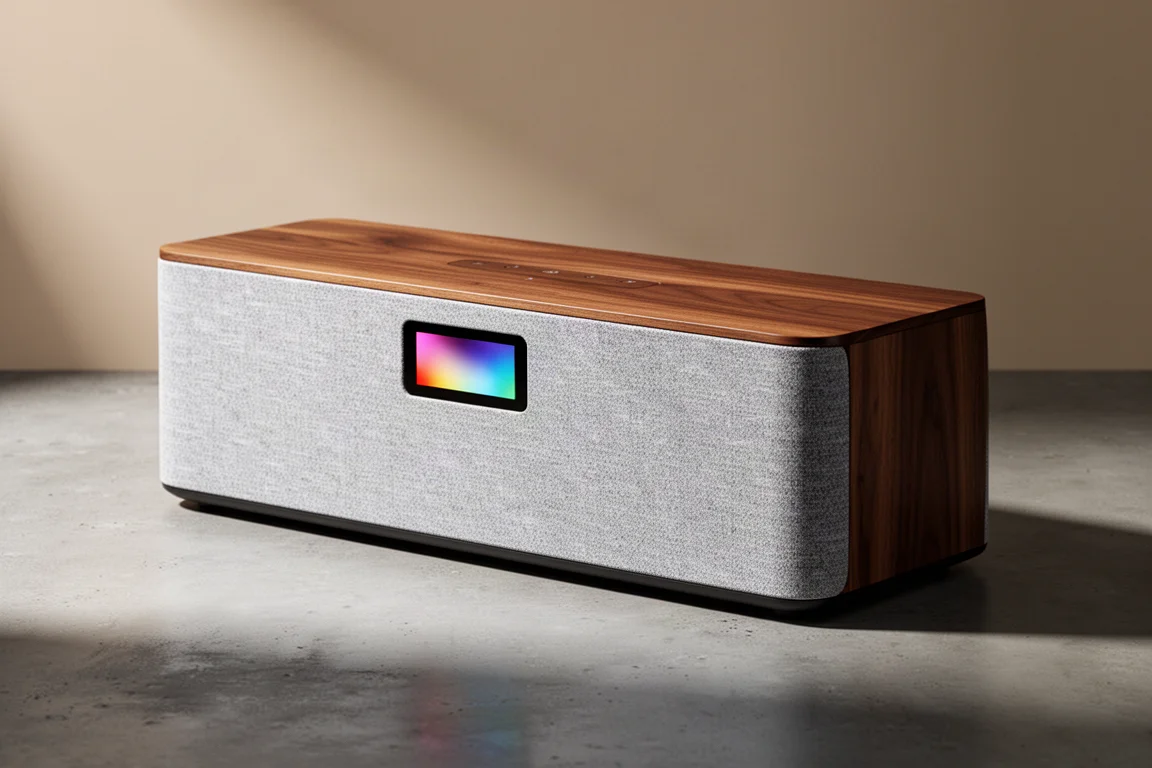
The Cambridge Audio Evo One, announced in late August 2024, is an all-in-one music system that folds the core functions of Cambridge Audio’s music streamers into a single piece of furniture-friendly hardware. Inside the cabinet sit 14 loudspeakers, each driven by its own Class D 50-watt amplifier, for a total of 700 watts of system power.
The driver array breaks down into four 1-inch silk dome tweeters, four 2 3/4-inch aluminum mid-range drivers, and six 2 3/4-inch woofers, with a reported frequency response of 38 Hz to 20 kHz. Around that hardware sits a roughly 7-inch color screen that shows album cover art, metadata, input graphics, and even meters.
This review covers where the Evo One genuinely earns its place, where it asks for compromise, and who should think seriously about buying one.
Who this product is for
The Evo One suits listeners who want one box rather than a rack of components. Because everything is integrated, setup is simple: for streaming-first listeners, the only cable needed is the included power cable. Placement is flexible as well, since the entire system is only slightly larger than a traditional amplifier or integrated amp.
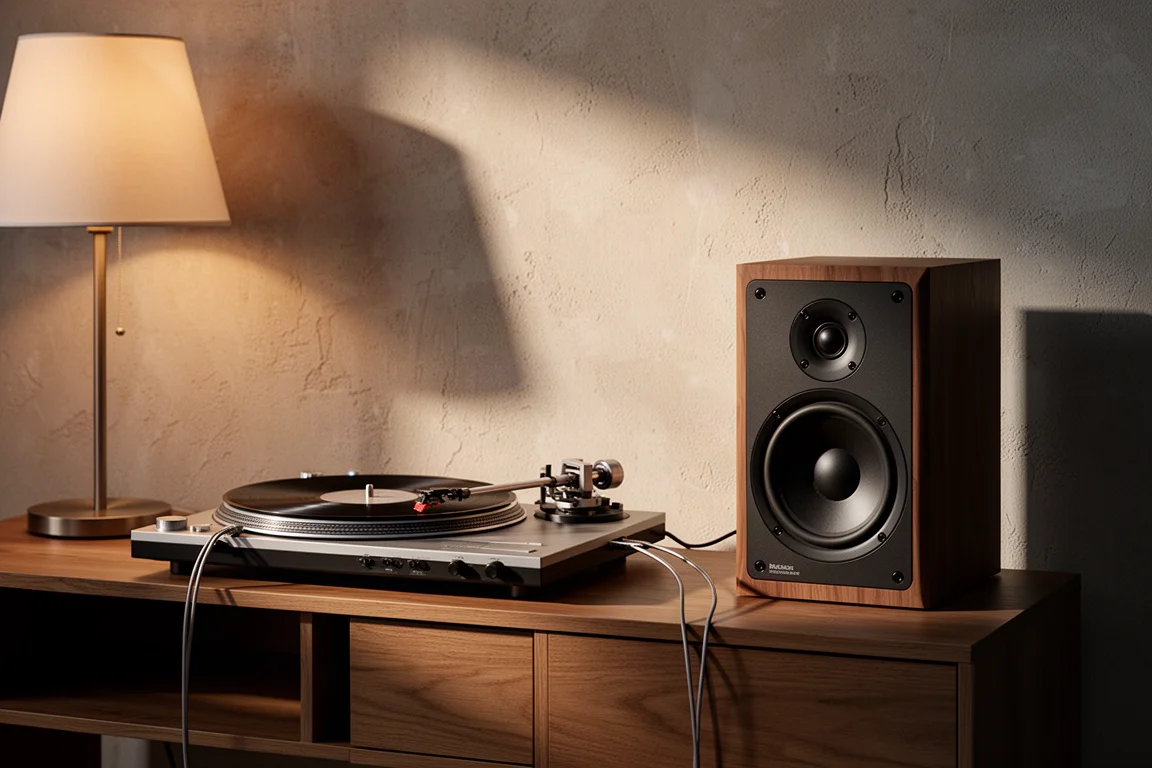
It also makes sense for people who still keep physical media. A moving magnet phono preamp, an analog audio input, an optical input, and USB digital audio mean a turntable, CD player, or media player can join the same system without extra boxes. Streaming listeners get Spotify Connect, TIDAL Connect, Qobuz, Deezer, and Amazon Music through the StreamMagic platform, plus Roon readiness, Google Cast, Bluetooth 5.1, and AirPlay 2.
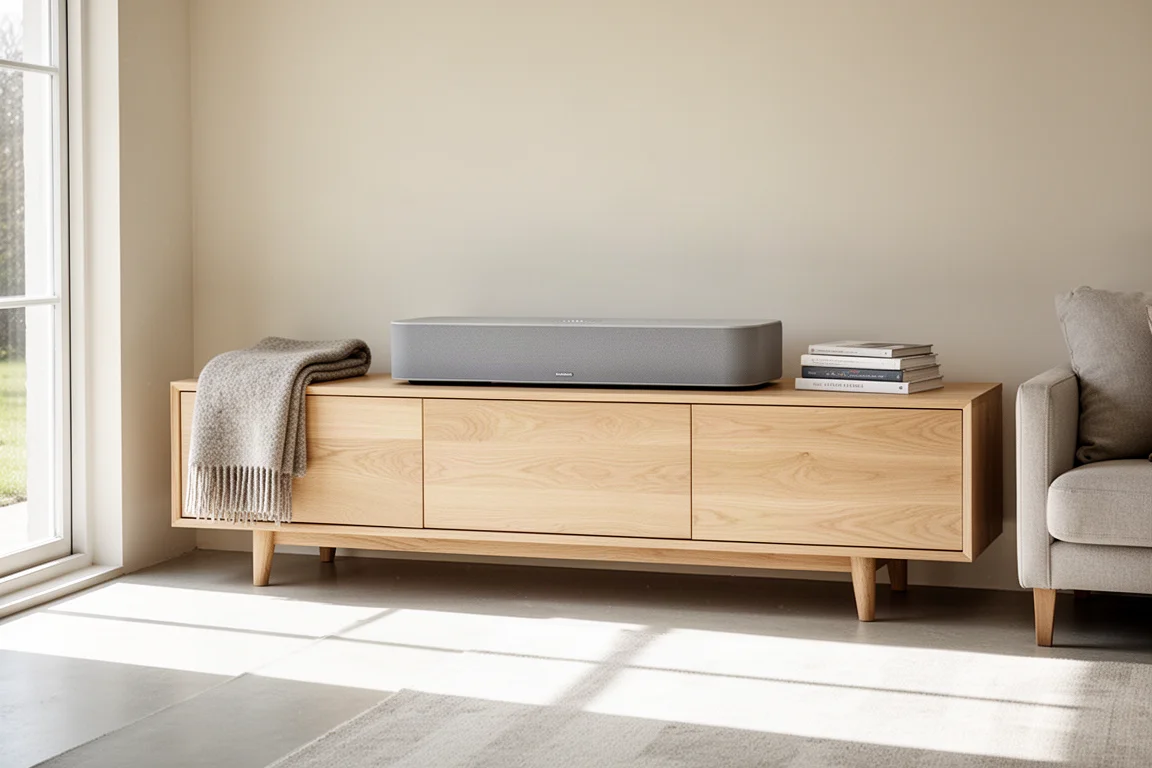
The case is weaker for anyone who wants true stereo separation or surround sound. The Evo One does not process surround, and it does not turn stereo signals into virtual surround, so it is a one-box solution rather than the starting point of a multi-speaker system. It is also a natural fit for a household where most music is played from phones or computer speakers and the goal is simply a better sound.
Main strengths
The connection panel is arguably the strongest part of the pitch. USB digital audio, optical input, analog audio input, a moving magnet phono preamp, and an Ethernet port sit alongside HDMI with eARC, which lets the system act as a basic soundbar for a television. Control runs through the fourth-generation StreamMagic app, which adds a multiband graphic EQ, tone controls, settings, and presets that can be saved for quick recall later.
Physical controls sit beneath the large color screen, and a basic remote is included in the box, but the app delivers the most comprehensive experience.
Sound character
At factory defaults, with EQ and room boundary compensation switched off, the Evo One is not neutral. There is a considerable amount of bass energy, which is typical of lifestyle-oriented speakers tuned for impact. That is manageable: the speaker EQ presets and the multiband graphic EQ can bring the low end down, and the factory presets for dialogue, bass, and treble enhancement measurably change the response.
In practice the sound is easy on the ears. Mid-bass carries enough body to ground the presentation, the bass stays firm and articulate rather than boomy, and the mid-range is intelligible with just a hint of warmth. Treble is softer and mostly grain-free as long as volume stays moderate, which makes long sessions comfortable even if it is not the last word in airiness or extension. The system is fairly agnostic about musical genres, and it rarely becomes fatiguing or shrill.
Connectivity and control
Not everything is covered on the software side. Apple Music listeners still rely on AirPlay, since there is no native Apple Music support inside the app. Room compensation settings are also worth understanding before purchase: they are manual DSP presets that adjust the sound based on the speaker’s proximity to boundaries and the room’s overall reflectivity, moved with a graphical slider. It is closer to a boundary compensation switch on a loudspeaker than to automatic room correction, and it remains genuinely useful for attenuating bass or high frequencies without reaching for additional EQ.
Things to consider before buying
Expectations matter here. The Evo One is more refined and more hi-fi sounding than typical party speakers, but it is not a substitute for a pair of separate stereo speakers driven by a good integrated amplifier. Judged as a small-space system, it holds up well. Judged as a main rig for intense, sit-down listening, it will not always wow.
Placement, scale, and dispersion
Despite side-firing drivers, most of the sound still comes from straight ahead. The presentation grows in a conical fashion toward the listening position rather than escaping the cabinet, so the system never fully disappears from view. Turning the volume up adds intensity, weight, and impact, but the point of origin remains the unit itself. Compared with a quality soundbar, the Evo One does not create the same enveloping, room-filling stage.
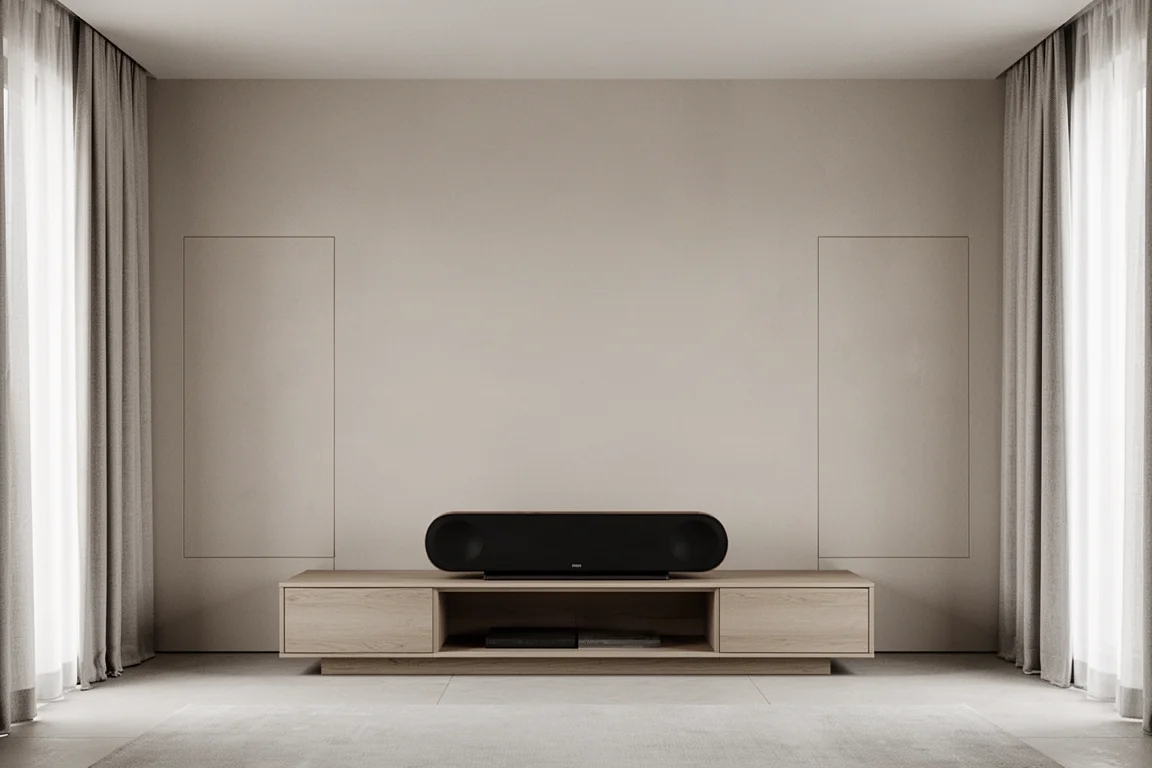
There are practical workarounds. When used with a television, placing the Evo One as close to the bottom edge of the screen as possible makes dialogue sound as though it comes from the picture rather than from several inches below it. Boundary placement options and the room compensation presets also help in corners, against walls, and in reflective rooms where bass tends to build up. Taming the low end through EQ is a better route than overdriving the speaker to compensate.
Construction and long-term use
The cabinet is mostly plastic, which is worth noting for buyers who care about materials. The system is designed to be enjoyed passively rather than studied, and it rewards that approach: as a piece that fills a space without calling attention to itself, it makes a strong case for itself. Buyers who want tactile, metal-and-acrylic build quality and manual controls may find other designs more satisfying on that specific point.
Buying advice
If you want one compact system that handles streaming, records, CDs, and television audio, the Evo One is a well-designed answer. It is at its best when enjoyed passively, filling a room without demanding attention, which is exactly how a system like this tends to be used day to day.
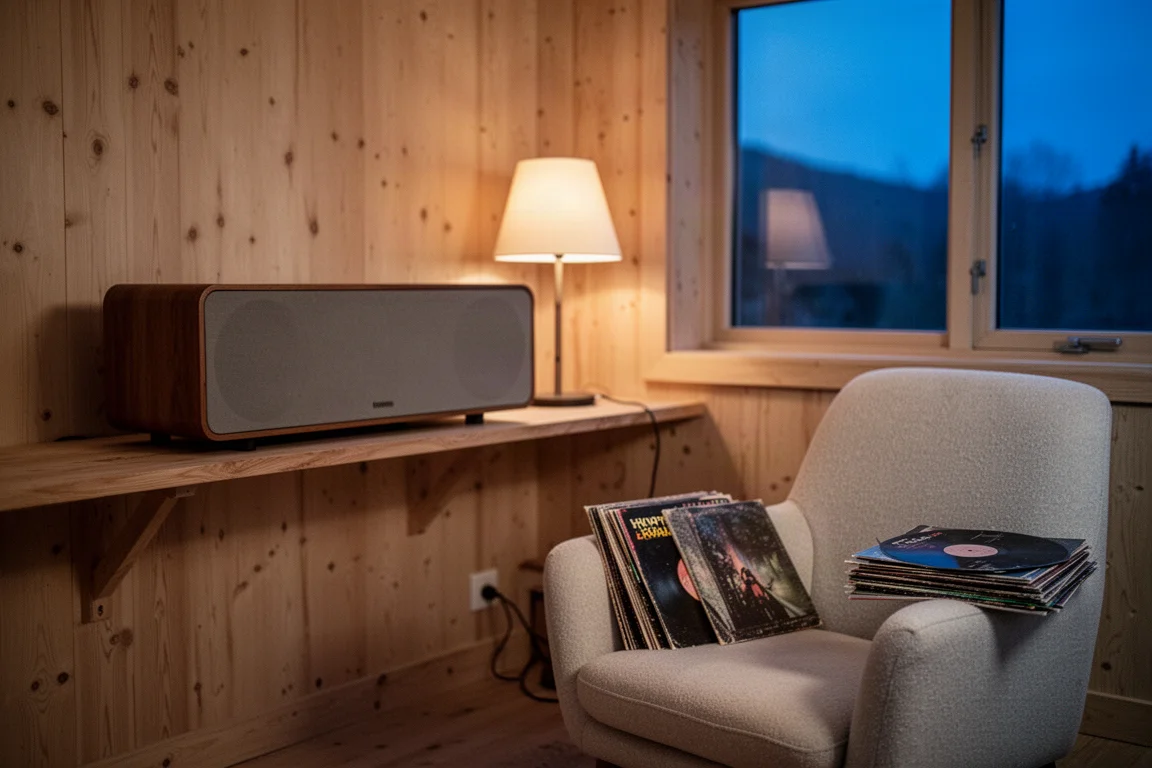
Set against the alternatives, the value case is clear. It offers more connectivity, a built-in phono preamp, HDMI, more drivers, and more power than the Bang & Olufsen Beosound Level, and it costs less, while the Beosound Balance costs considerably more and delivers a more room-filling, omnidirectional presentation. The Naim Mu-so 2 counters with a more substantial aluminum and acrylic frame but fewer connections. The Sonos Arc Ultra creates a more expansive stage for both music and film and can be expanded into a full system over time, though it lacks native inputs for a turntable without an adapter or an additional component. If a single box that also handles TV duty is the priority, the Evo One is the more practical pick.
Conclusion
The Evo One does not rewrite the rules of acoustics, and it does not try to. What it offers is a flexible, well-equipped all-in-one system that covers streaming services, physical media, and television audio in a single chassis, with enough tuning tools to suit a range of rooms. For listeners who value connectivity and simplicity in a space that cannot take a traditional setup, it is a strong option worth shortlisting.
Product link
View more details for Cambridge Audio Evo One
This product is mentioned in the review. Check the specifications, options, and compatibility before buying.
View more details for Cambridge Audio Evo OneFurther reading
Related Reviews
Home Audio
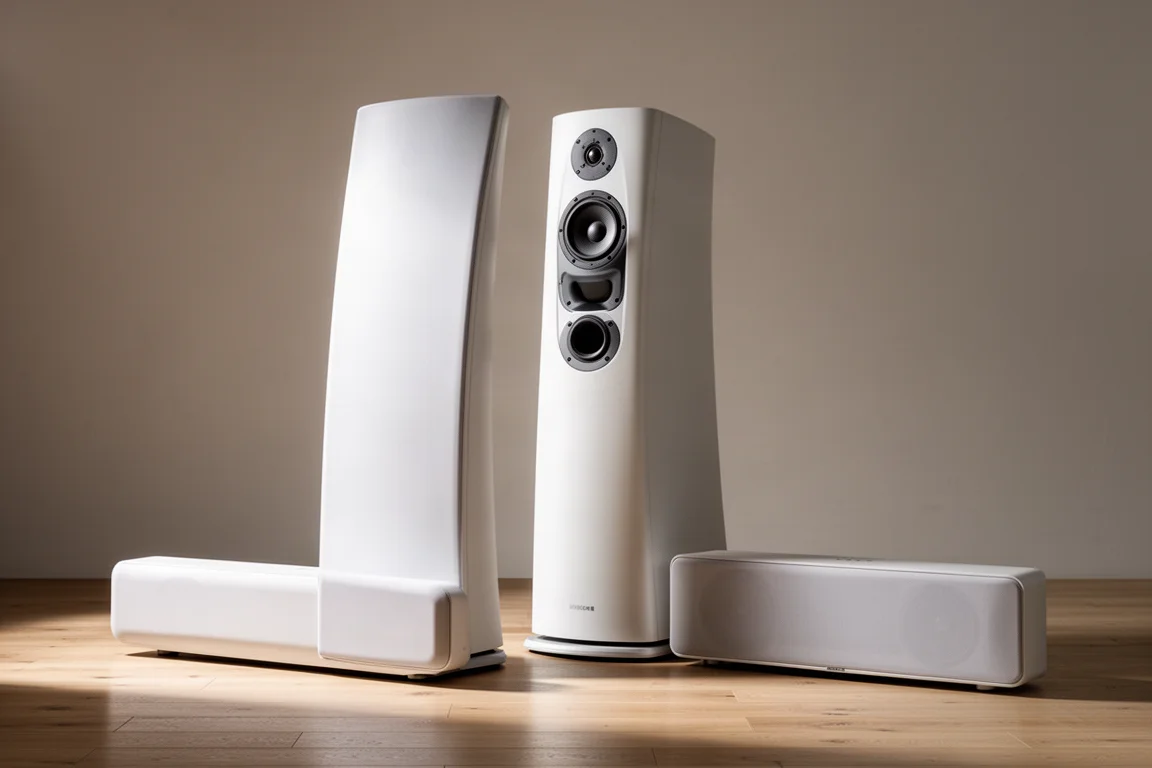
Aperion Novus Tower and Center Review: Punchy Home Theater Sound With Real Refinement
A close look at the Aperion Novus tower and center speakers, from their layered paint finish and punchy bass to the 4-ohm load and what the price actually buys.
Home Audio
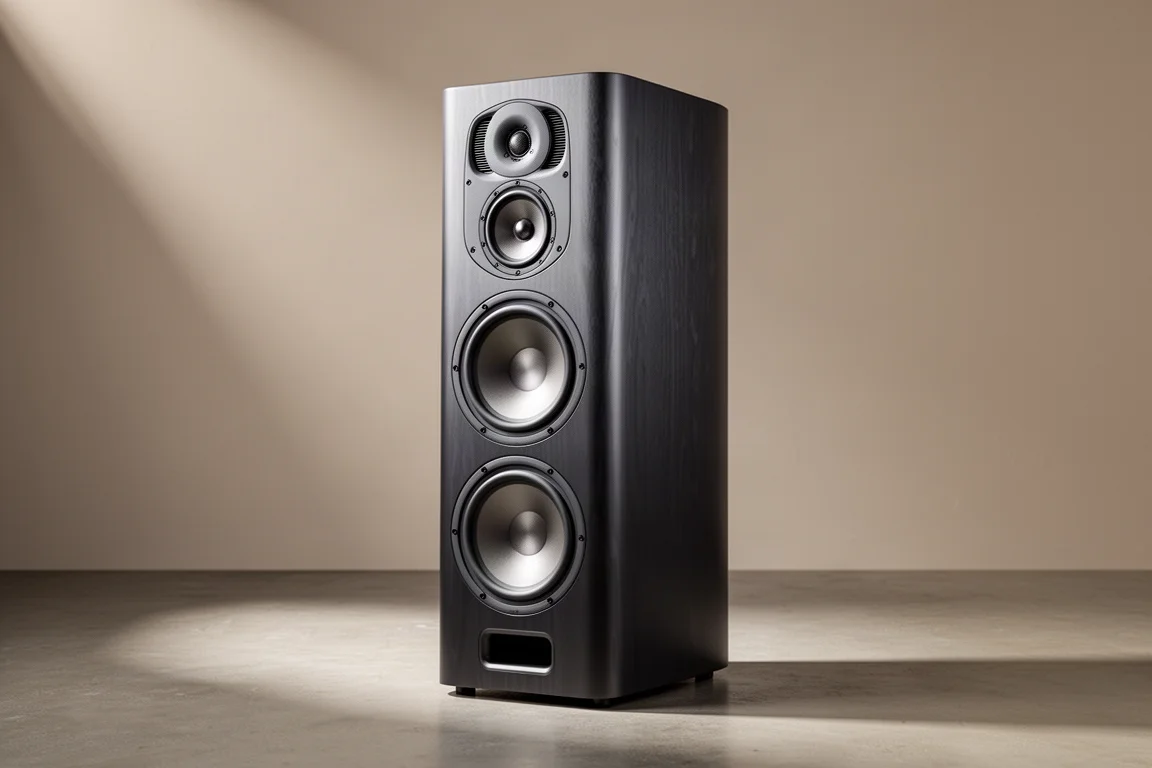
Arendal 1610 Tower Review: Flagship Dynamics in a Room-Friendly Tower
A compact floorstanding tower with three 8-inch aluminium woofers, a 5-inch carbon midrange, and the kind of bass heft usually reserved for much larger speakers.
Home Audio
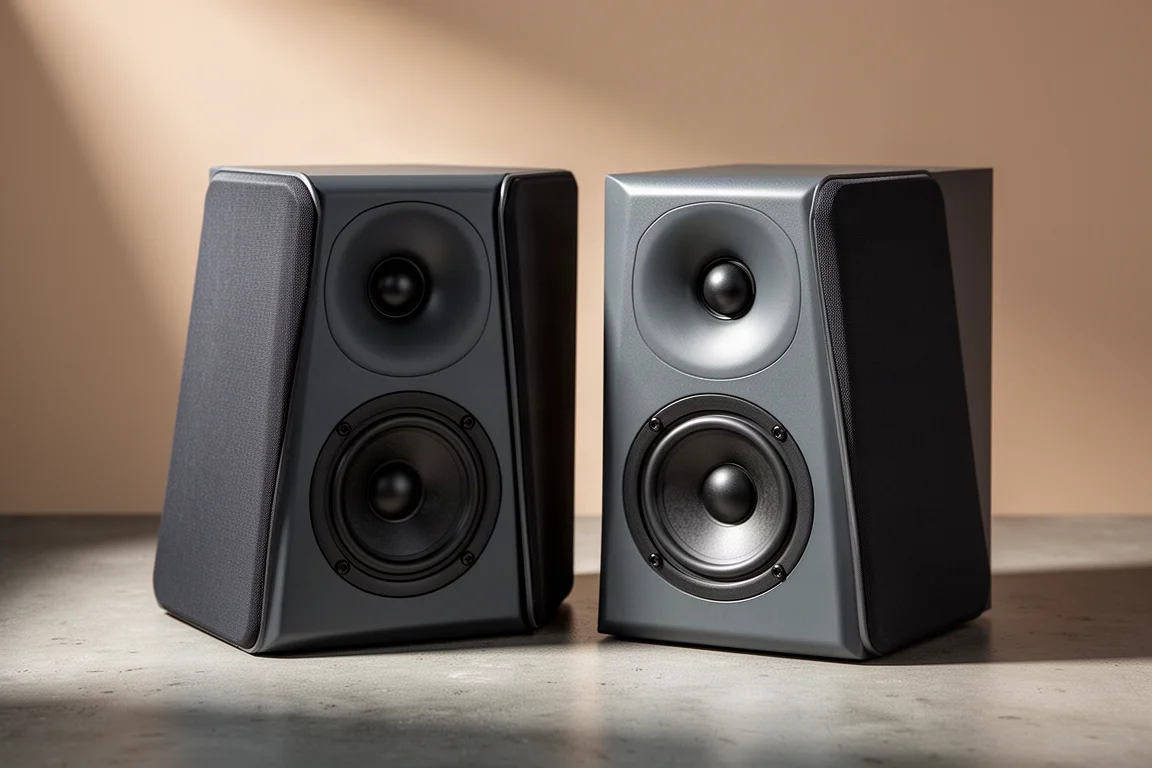
Arendal 1723 S THX Review: A Reference Speaker Built Like a Tank
A practical look at the Arendal 1723 S THX, a sealed, THX-certified speaker with exceptional build quality, a very flat top end, and a midrange that responds beautifully to EQ.